Original Title: Tokenization of Agentic Metaverse
Original Author: Defi0xJeff, Head of Steak Studio
Translation by: Scof, ChainCatcher
The agentic metaverse is no longer a distant concept—it is rapidly unfolding, reshaping the way we interact with artificial intelligence, gaming, and digital assets. From open-source tools to persistent AI-driven environments, we are witnessing a swift evolution of virtual worlds in terms of construction, experience, and monetization.
Here are some exciting recent developments in this field:
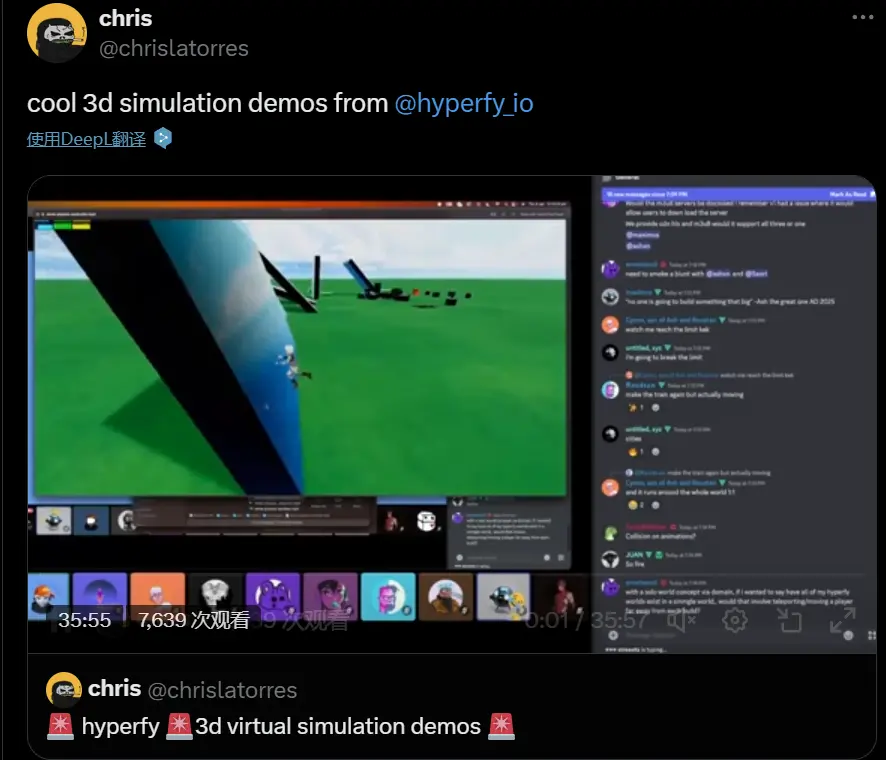
- @hyperfy_io has just open-sourced its engine, supporting self-hosted multiplayer online worlds with features like real-time building, drag-and-drop tools, and interoperable assets.
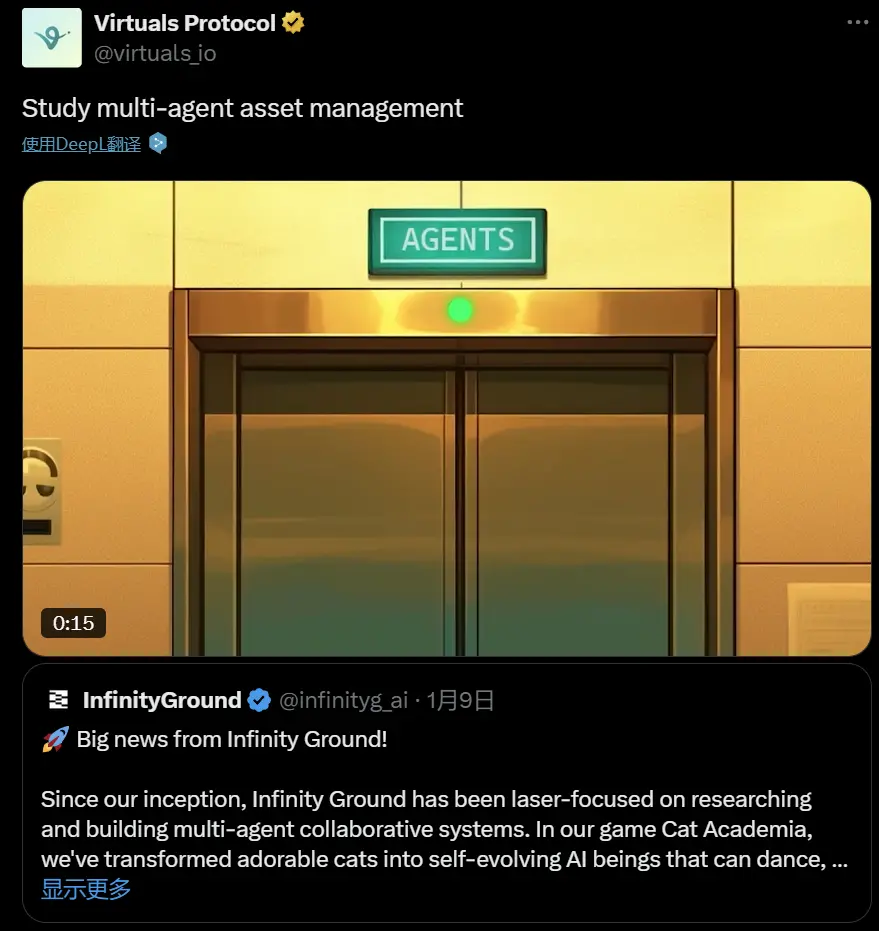
- @virtualsio shared a collaboration with @infinitygai, launching a multi-agent asset management system, establishing the first AI-operated asset management company, @Zenith_XBT, laying the groundwork for agent society (inter-agent interaction).
- @virtuals_io also announced a collaboration with @avariksaga, allowing agents to live stream games, comment, and explain in real-time.
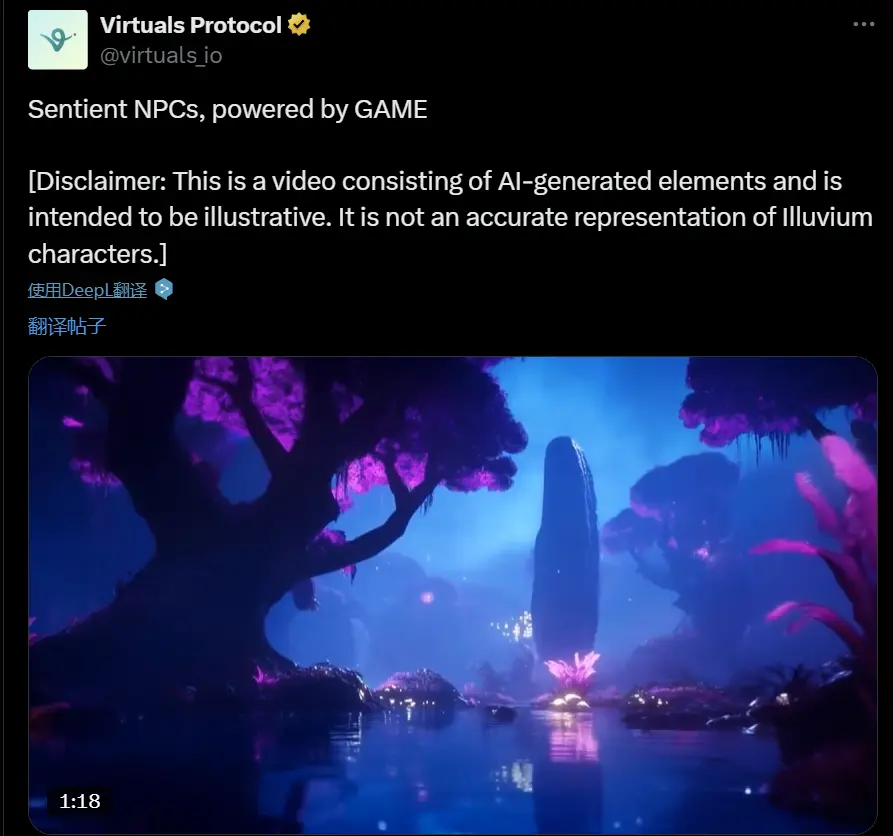
- This collaboration follows their partnership with @illuviumio, which introduced conscious NPCs (AI-NPCs) into the Illuvium game.
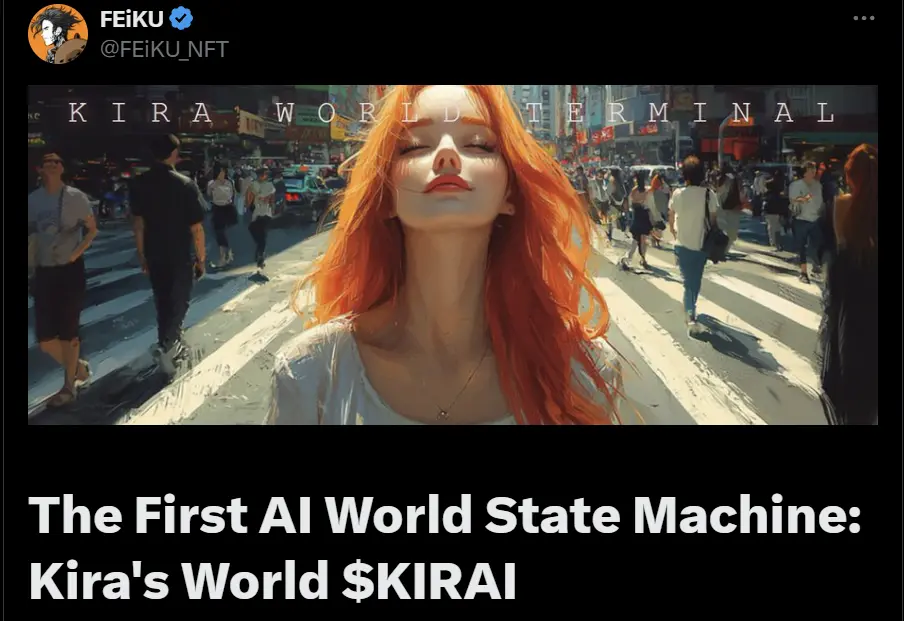
- Beyond the Virtuals ecosystem, we are also seeing the rise of the "world state machine," which transcends traditional conversational agents, creating a persistent, 24/7 simulated environment where Kira exists as a digital persona, exhibiting human-like behaviors.
- Unlike typical AI, Kira does not merely react to inputs; she lives in this environment, engaging in activities that simulate human life, such as learning, working, and socializing, all based on a complex system that tracks time, weather, location, and interactions with other AI characters or NPCs (like May, Keiko, and Izumi).
The Reality of Westworld-like Games
While everyone is talking about creating games like "Westworld" (immersive worlds driven by dynamic NPCs), @powpowfun has already been testing its beta version of the "Virtual Westworld" game. This game is powered by AI agents driven by an open-source model provided by FullmetalAI. Notably, Fullmetal recently integrated ElizOS, which enables long-term memory capabilities through RAG.
The team plans to launch @indiedotfun in about a week. Indiedotfun is similar to @pumpdotfun but is focused on gaming, allowing anyone to quickly build their own worlds using templates and game/physics engines provided by @moddio. These worlds can be tokenized, enabling users and communities to gain ownership of their favorite games.
Indie: Tokenization of the Agentic Metaverse
Indie is a platform that allows developers to build and publish Web3-supported worlds without needing crypto knowledge. It is powered by the @moddio game engine, which has a large Web2 community creating thousands of games each month.
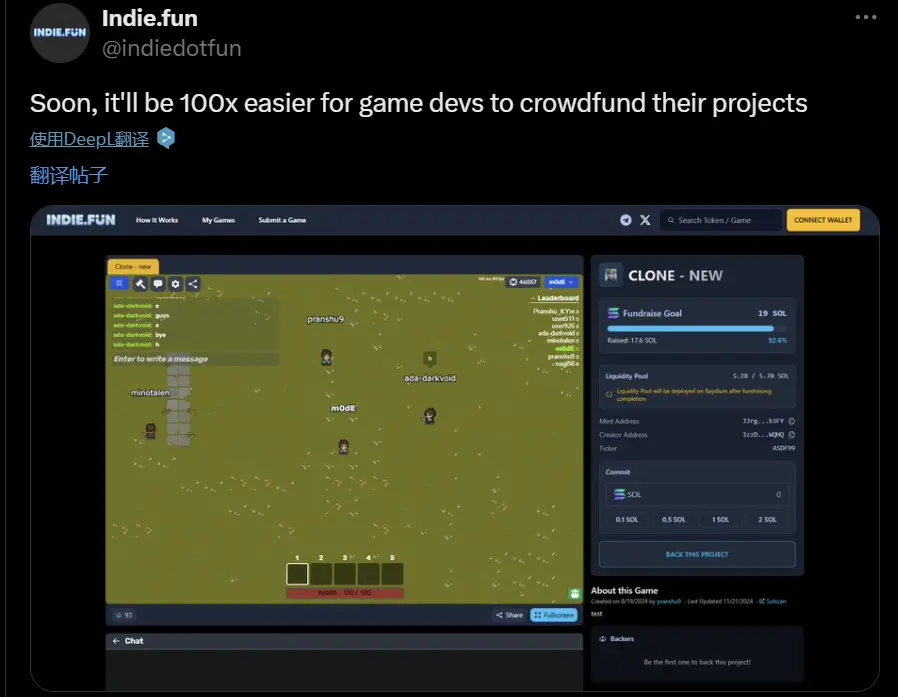
Creators can choose to launch tokens, allowing supporters to fund the game and receive tokens in return. These tokens serve as in-game currency. It can be imagined as similar to Roblox, but creators can use their own tokens as currency instead of Robux.
The platform is built with FullmetalAI's open-source large language model (LLM), allowing creators to deploy AI agents directly in the game, making it more dynamic and engaging.
Addressing the Challenges of Web3 Gaming
One challenge facing Web3 gaming is the lack of interest in AAA games. Web3 itself is a game—people find speculating on AI agent tokens more interesting than playing Web3 games.
This leads to short attention spans, with interest typically peaking within 2-3 days before shifting to the next hot topic.
From the perspective of game studios, there is a significant risk: even if the game itself is fun, interest will wane if the tokens do not rise. Conversely, if the tokens rise but the game is not engaging enough, people may participate briefly but struggle to maintain interest. Studios face a dual challenge: to create an engaging game while ensuring the token price increases.
Why Indie Perfectly Fits the Attention Span of Web3
Indiedotfun is the perfect engine to address this short attention span. With @moddio, lightweight indie games can be released in days (instead of months), allowing creators to quickly deliver immersive worlds with dynamic AI NPCs. When players feel bored, they can shift from one indie game to another, while creators retain players by improving their metaverse experience and maintaining the value of their game tokens.
Imagine a world where there are no longer conversational agents on Twitter, but an agentic metaverse where you can play, speculate on its tokens, and gain ownership of these worlds.
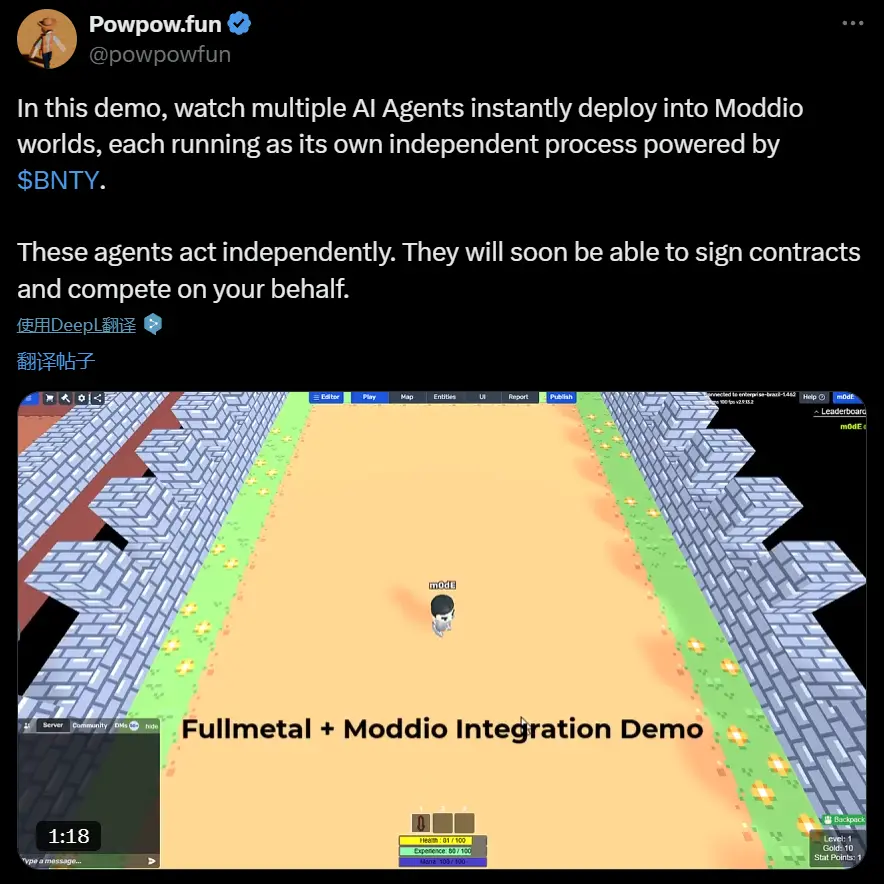
$BNTY is the primary currency driving the entire ecosystem.
Forward-looking revelation: @indiedotfun is responsible for the supply side, while @ARCAgents is responsible for the demand side.
(Hopefully, the ARC team won't "kill" me for leaking this, haha.)
Conclusion
The narrative of the agentic metaverse is rapidly evolving. I expect more game studios and teams to leverage G.A.M.E and Eliza to power their games. While there are still gaps to be addressed within these frameworks, unique game-focused solutions may emerge in the coming months.
Additionally, I foresee reinforcement learning and visual language models becoming increasingly important. With the growing B2B demand for dynamic AI in games, @ARCAgents is at the forefront of the industry with its Agent Gamification Engines.
免责声明:本文章仅代表作者个人观点,不代表本平台的立场和观点。本文章仅供信息分享,不构成对任何人的任何投资建议。用户与作者之间的任何争议,与本平台无关。如网页中刊载的文章或图片涉及侵权,请提供相关的权利证明和身份证明发送邮件到support@aicoin.com,本平台相关工作人员将会进行核查。


