The "Optimized Gleason Grading Annotation of the TCGA PRAD Dataset" is a collaboration between Codatta and DPath.ai, setting a new standard for AI-ready pathology data. By bringing together a community of top pathology experts through the Codatta platform, this dataset surpasses traditional slide-level annotations by introducing ROI-level spatial annotations, enhancing the detail, accuracy, and transparency of diagnoses. With optimized Gleason grading, detailed annotation rationales, and ROI-based Gleason pattern mapping, this dataset becomes a key resource for AI model development and pathology research, addressing the critical challenge of creating high-quality annotated data. Through Codatta's Royalty Model, contributors can maintain ownership of their work, ensuring recognition and ongoing value, while DPath.ai demonstrates how collaborative solutions can drive the advancement of pathology AI.
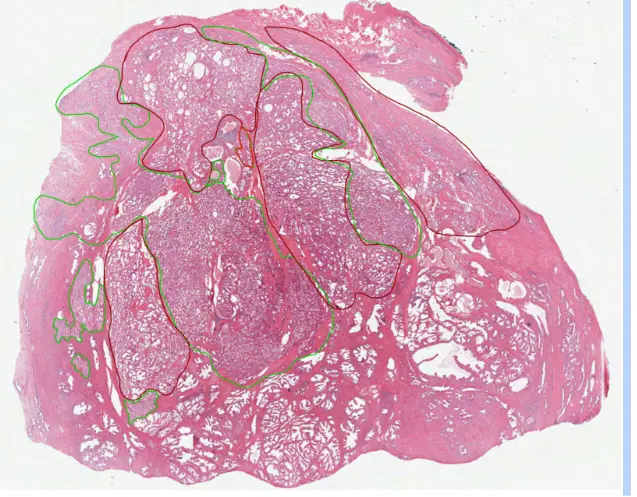
Figure 1: Optimized Gleason Grading Annotation of the TCGA PRAD Dataset. Image source: https://huggingface.co/datasets/Codatta/Refined-TCGA-PRAD-Prostate-Cancer-Pathology-Dataset
What is the TCGA PRAD Dataset?
The optimized Gleason grading annotation of the TCGA PRAD (The Cancer Genome Atlas Prostate Adenocarcinoma) dataset upgrades the original slide-level annotations to include ROI-level spatial annotations. Developed collaboratively by Codatta and DPath.ai, this dataset is created through the cooperation of the pathology community, supporting global participation and ensuring ownership of annotations. This approach enhances the accuracy, detail, and reliability of diagnoses, which are critical elements for AI model training and pathology research.
By organizing 435 TCGA whole slide images, pathologists identified 245 cases needing improved annotations and confirmed the accuracy of 190 cases. The dataset includes slide-level metadata and ROI-level spatial annotations, providing researchers with valuable resources for AI pipeline development, interactive tumor region exploration, and advanced pathology research.
Empowering Pathology AI: Codatta and DPath.ai Join Forces
The "Optimized Gleason Grading Annotation of the TCGA PRAD Dataset" showcases the potential of collaborative, community-driven data creation, while enhancing the accuracy and detail of annotations, making AI model training more reliable and advancing medical research. However, these contributions require domain expertise, time, and effort, necessitating a sustainable incentive structure to recognize and reward the work of skilled professionals.
Royalty Model
Codatta's Royalty Model provides a solution for this. Compared to traditional Web2 models (like Scale AI), it enhances the efficiency of data contribution and acquisition. While Scale AI excels at meeting the immediate liquidity preferences of general users, quickly and efficiently collecting large-scale data, its high costs exclude smaller participants when it comes to domain experts engaging in specialized tasks. Codatta aligns with skilled practitioners and experts by offering conditional and asset-based rewards. As shown in Figure 2 below, these incentives attract contributors willing to invest high-quality professional data, with potentially higher returns despite delayed payouts, making Codatta an ideal choice for vertical AI and advanced applications that require precision and expertise.
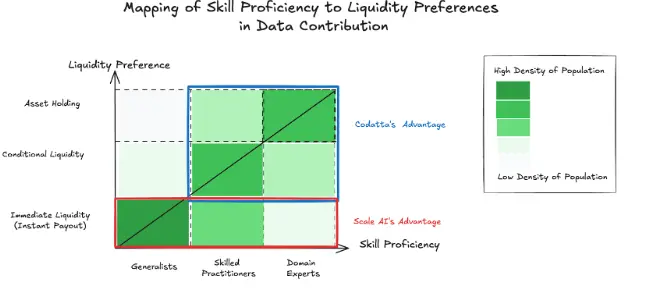
Figure 2: Mapping skill proficiency in data contribution against liquidity preferences
Unlike the high upfront costs of Scale AI, Codatta's Royalty Model eliminates financial barriers for small AI startups by introducing a pay-as-you-go system. This approach democratizes access to critical frontier data without the need for expensive upfront investments, allowing startups to demonstrate their product-market fit and scale. Additionally, by transforming data into liquid assets in a decentralized financial market, Codatta ensures that contributors can balance short-term liquidity needs with long-term asset ownership. Features like contractual transactions and partial ownership further optimize liquidity, making asset-based rewards more attractive to a broader range of contributors. This consistency fosters collaboration, drives innovation in niche AI applications, and creates a diversified investment ecosystem for data creators and startups.
DPath.ai: Collaborative Solutions to Pathology AI Data Challenges
DPath.ai is pioneering a decentralized platform aimed at connecting pathologists, researchers, and AI model developers globally. We are responsible for the acquisition, curation, and exchange of high-quality pathology data, enabling anyone interested in training AI models to participate. The DPath platform leverages blockchain technology to ensure transparency, fairness, and security in data exchanges.
Platforms like DPath.ai can utilize Codatta's decentralized data protocol to collaboratively and transparently acquire annotations:
- Task Definition: Clear annotation standards (such as Gleason grading for prostate cancer) ensure consistency and reliability of resulting data.
- Community Participation: Skilled pathologists worldwide participate through the Codatta platform, incentivized by its Royalty Model, receiving ongoing rewards linked to the future value of the dataset.
- Quality and Integrity: Blockchain-based verification and multi-party cross-referencing ensure traceable high-quality annotations while enhancing annotator accountability.
- Security and Accessibility: Data is stored in a decentralized manner, keeping data ownership secure and accessible to relevant individuals.
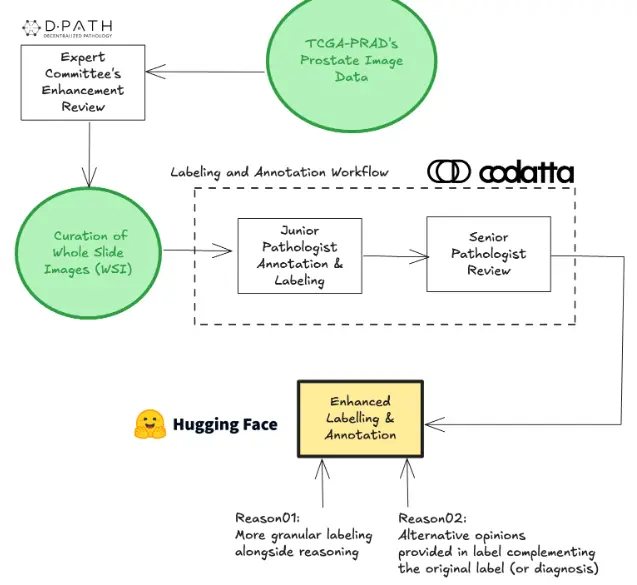
Figure 3: Collaboration between Codatta and DPath.ai. Image source: https://huggingface.co/datasets/Codatta/Refined-TCGA-PRAD-Prostate-Cancer-Pathology-Dataset
By collaboratively acquiring domain-specific data, DPath.ai not only enriches the TCGA PRAD dataset with precise Gleason grading but also demonstrates how the Codatta platform can create frontier data for specialized AI fields. This approach fosters sustainable participation, democratizes data acquisition, and accelerates the development of fair and efficient healthcare AI systems.
Conclusion
The "Optimized Gleason Grading Annotation of the TCGA PRAD Dataset" is a result of the collaboration between Codatta and DPath.ai, enhancing the diagnostic accuracy and detail of pathology AI data through ROI-level annotations with rationales. With the participation of global pathology experts, the project ensures high-quality data while rewarding contributors through Codatta's Royalty Model, providing ongoing value and ownership. This approach also promotes collaboration, improves data liquidity, accelerates the development of healthcare AI, and showcases the power of decentralized, community-driven solutions.
免责声明:本文章仅代表作者个人观点,不代表本平台的立场和观点。本文章仅供信息分享,不构成对任何人的任何投资建议。用户与作者之间的任何争议,与本平台无关。如网页中刊载的文章或图片涉及侵权,请提供相关的权利证明和身份证明发送邮件到support@aicoin.com,本平台相关工作人员将会进行核查。


