Since the advent of Bitcoin, it has been positioned as a peer-to-peer payment system. However, its biggest problem is the high price volatility, which prevents it from serving as a payment currency in specific application scenarios. The emergence of stablecoins can precisely compensate for Bitcoin's shortcomings.
The potential of PayFi and other stablecoin-based application scenarios is enormous, bringing Web2 users into Web3
In October 2024, Stripe acquired the stablecoin platform Bridge for $1.1 billion, marking the largest acquisition in the crypto space, indicating the imaginative space generated by the combination of stablecoins and payments. Additionally, the European Union, Hong Kong, the United States, the United Kingdom, Singapore, and others have also introduced relevant policies for stablecoins, providing policy support for market development.
On-chain, as of December 5, 2024, the total issuance of stablecoins has approached 200 billion. Off-chain, according to World Bank data, only 76.2% of the global population aged 15 and above have bank accounts or mobile accounts, meaning that 23.8% of the global population (aged 15+)—approximately 2 billion people—still do not have bank accounts. This segment of the population can enter Web3 through applications like PayFi, becoming users of CEX, DeFi, and other applications, significantly advancing the process of Mass Adoption.
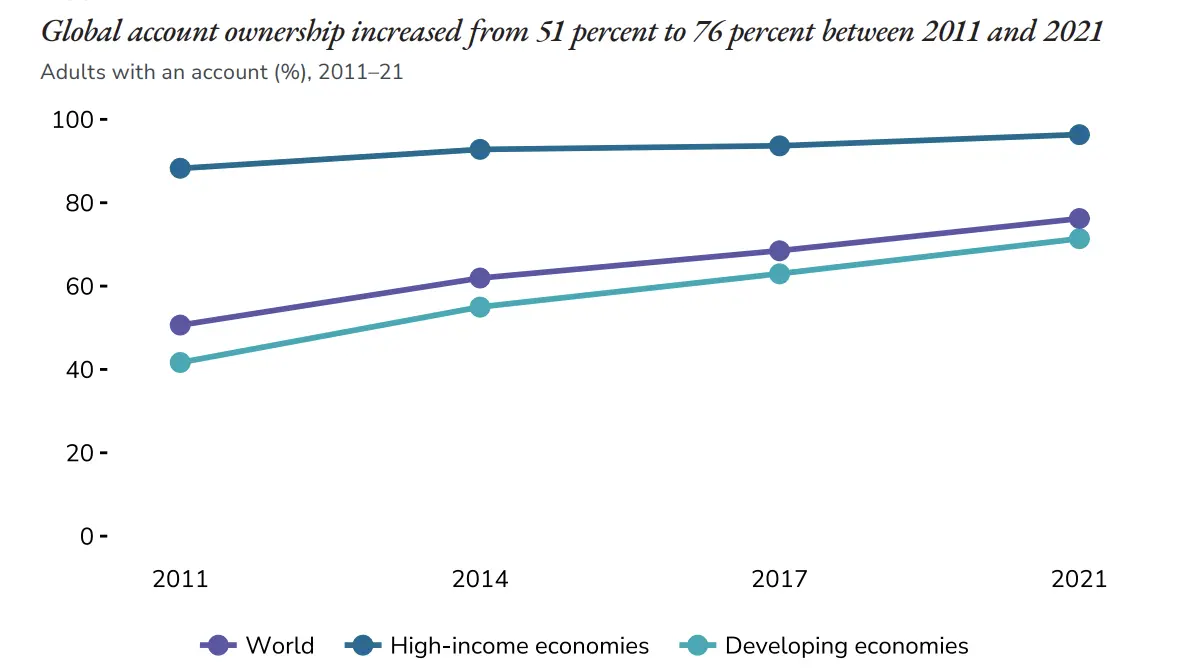
Proportion of the global population with bank accounts in 2021 Source: World Bank Database
Moreover, in the realm of cross-border payments, stablecoins have great potential. According to the Bank for International Settlements (BIS), global cross-border payment amounts exceeded $29 trillion in 2022. Traditional infrastructure is costly and slow, while blockchain-based stablecoin cross-border payments are fast, inexpensive, and can provide 24/7 service.
We believe that stablecoin payments will gradually occupy a larger share of cross-border payments. If they capture 50% of the market, it will expand the overall volume of stablecoin payments by 1.88 times; if they capture 80%, it will triple the payment volume.
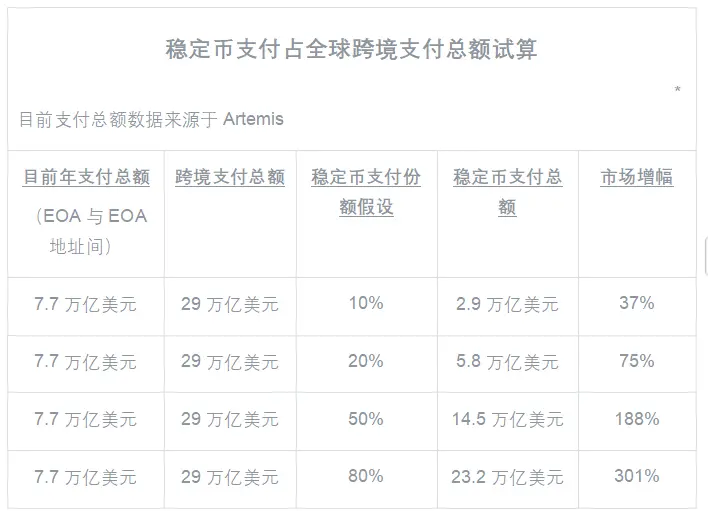
The non-USD stablecoin market also holds significant potential
Recently, a report from Standard Chartered pointed out that non-USD stablecoins are gradually gaining attention, including in economies with significant foreign exchange volatility, such as Turkey, where developing stablecoins can reduce exchange rate fluctuations. Additionally, the BenFen ecosystem not only issues USD stablecoins but also issues stablecoins based on other currencies to capture this market, such as BJPY and BINR.
BenFen Chain is a public chain more suitable for stablecoin application scenarios
In stablecoin-based application scenarios, whether on-chain or off-chain, the primary requirement for infrastructure is security. Once security risks arise, even the tallest building will collapse.
Compared to Ethereum and Tron, which use Solidity and Rust as application development languages, the BenFen Chain uses Move language, which offers higher security. Furthermore, as the infrastructure for stablecoins, it requires higher performance, low Gas fees, and a robust consensus mechanism. The BenFen Chain boasts a throughput of tens of thousands of transactions per second and a latency of 0.5 seconds, making it more suitable for stablecoin application scenarios.
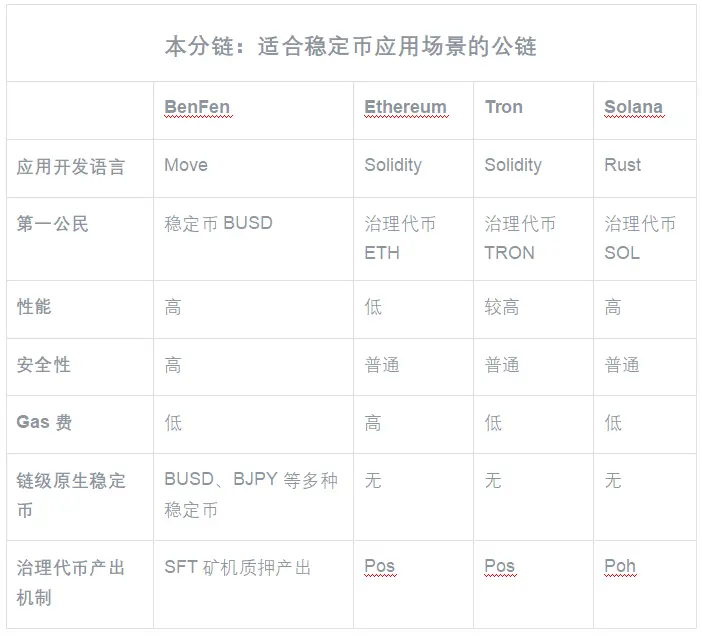
More secure: Using a safer programming language (Move language)
The BenFen Chain is written in Move language, which has a strict type system that can catch many common errors at compile time, such as type mismatches and null pointer references, thereby enhancing code security. Additionally, Move manages assets through the concept of resources, which have strict lifecycle management, ensuring that resources can only be used and transferred as intended, avoiding many security vulnerabilities such as reentrancy attacks and resource leaks. Besides these advantages, Move also has unique strengths in access control, immutability, and formal verification, greatly enhancing its security.
High performance: Achieving sub-second latency and tens of thousands of transactions per second with an enhanced consensus mechanism
The BenFen Chain innovatively employs an enhanced consensus mechanism that combines DAG-based consensus with non-consensus methods, achieving low latency and high TPS while maintaining support for complex contracts, generating checkpoints, and the ability to reconfigure the validator set across epochs.
In terms of latency, the BenFen Chain can achieve a latency of 0.5 seconds, far faster than Ethereum's 12 seconds, and also quicker than Tron and Solana.
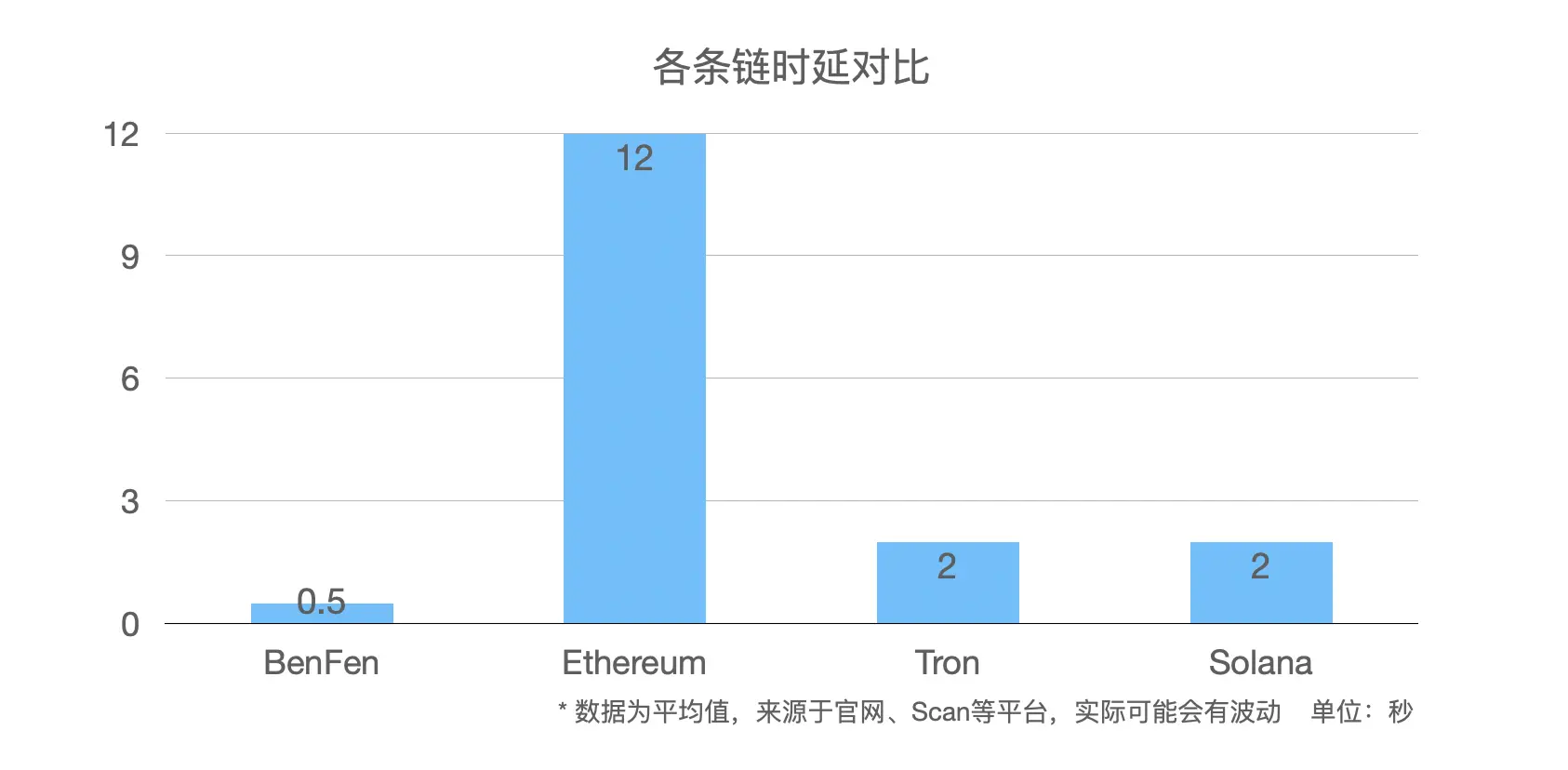
Comparison of latency across chains
In terms of TPS, the BenFen Chain can handle tens of thousands of transactions, surpassing Ethereum, Tron, and Solana.
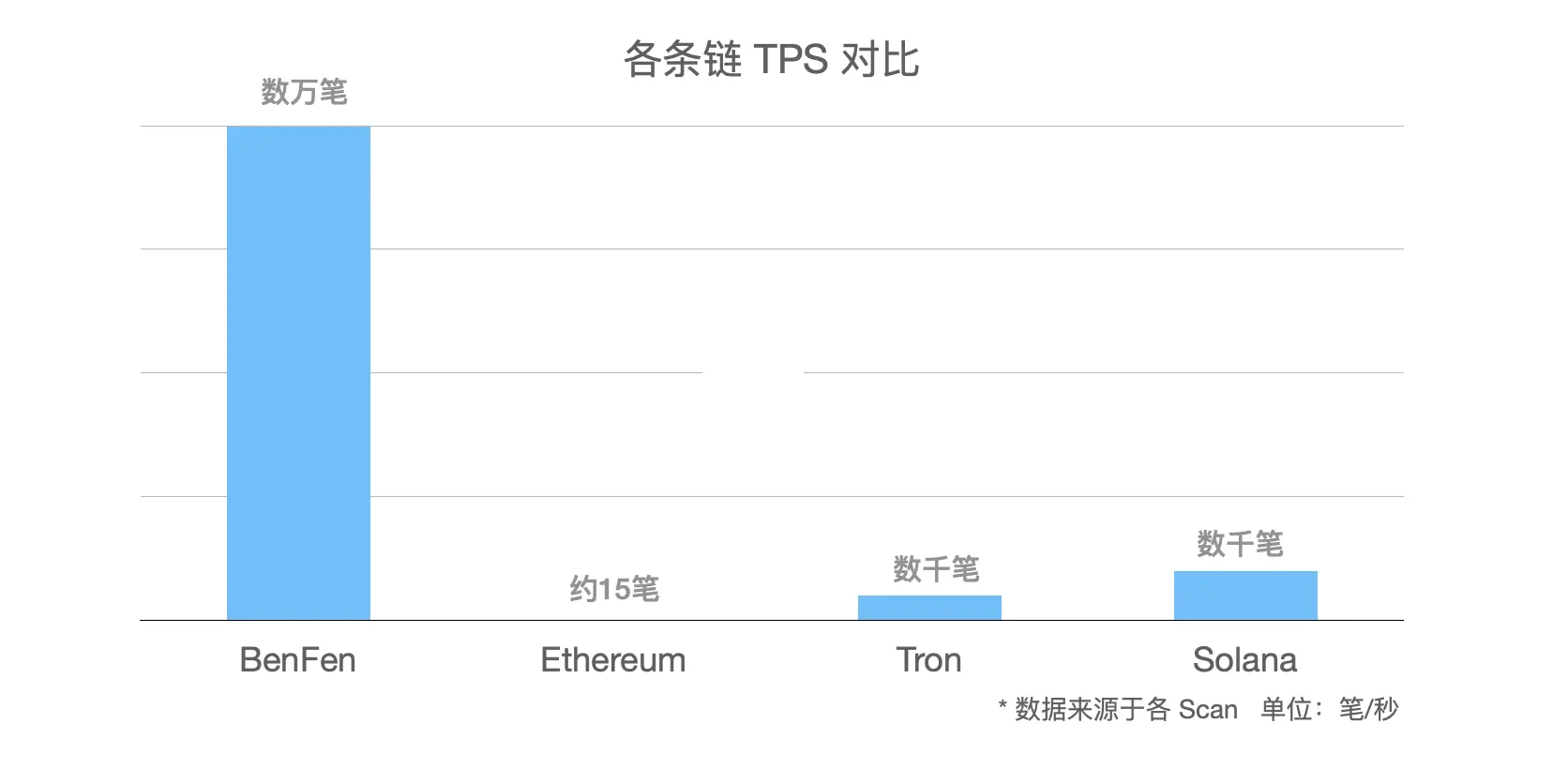
Comparison of TPS across chains
Convenient login: BenFen Chain provides users with a more convenient and secure login experience through zkLogin
BenFen innovatively introduces the design of zkLogin, providing users with a method for address generation and transaction signing based on third-party authorization. Users can quickly log in using Apple accounts and Google accounts without needing a mnemonic, making it more convenient and faster.
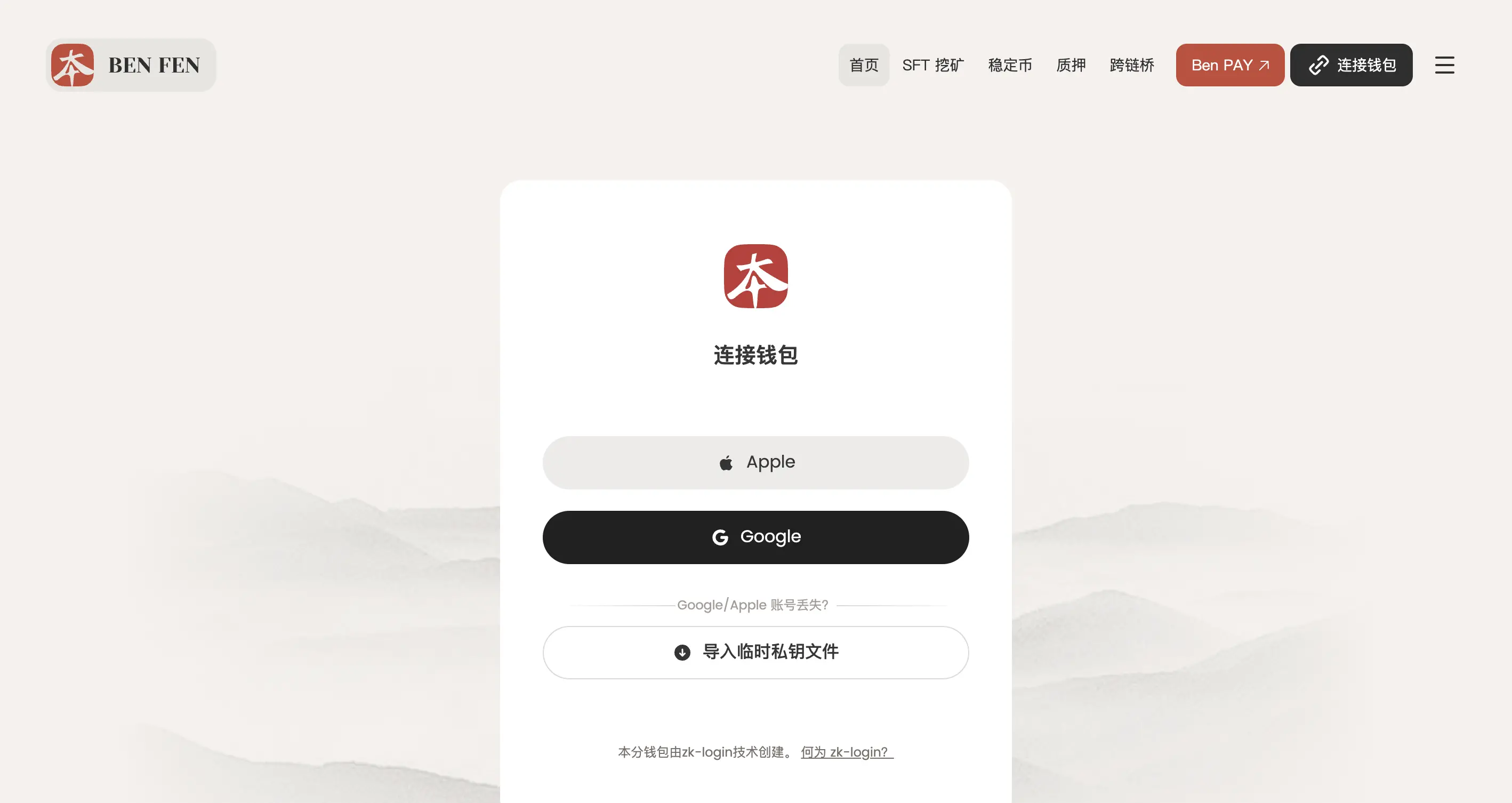
Login interface of BenFen Chain's zkLogin
Low Gas fees: Multiple steps to reduce Gas costs
The BenFen Chain has optimized multiple steps in Gas fees to achieve low costs. For example, each validating node submits their minimum price for processing transactions in each epoch. The BenFen Chain automatically sorts the submitted prices and selects the price at the 2/3 position calculated based on the staking ratio as the reference price.
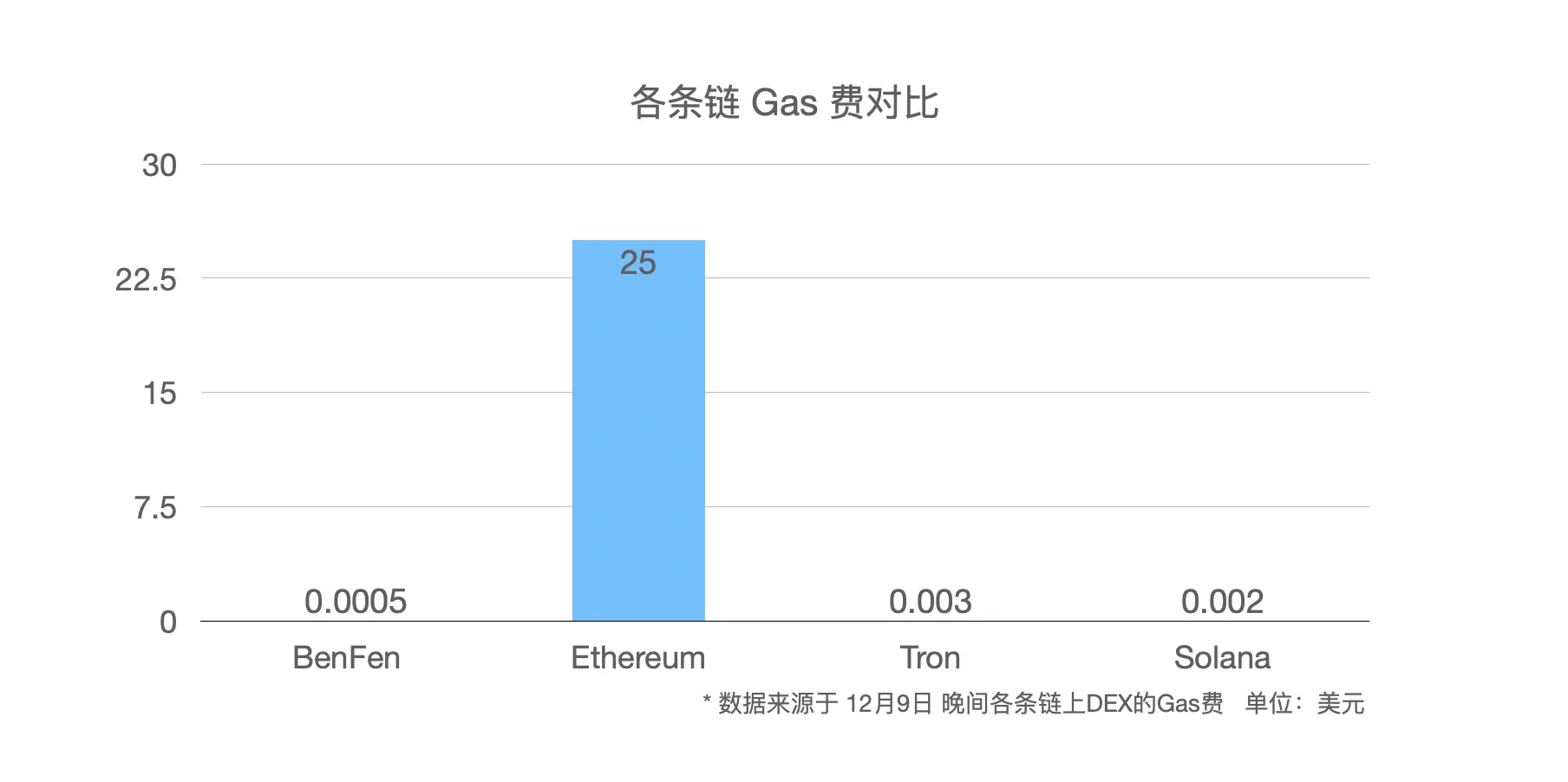
Additionally, when the Gas price submitted by users exceeds the reference price, the difference is considered a tip paid to the network, which can give users higher priority. Different transactions require different amounts of computation time for processing and execution.
Finally, the storage mechanism of the BenFen Chain provides a refund of storage fees when transactions delete previously stored objects.
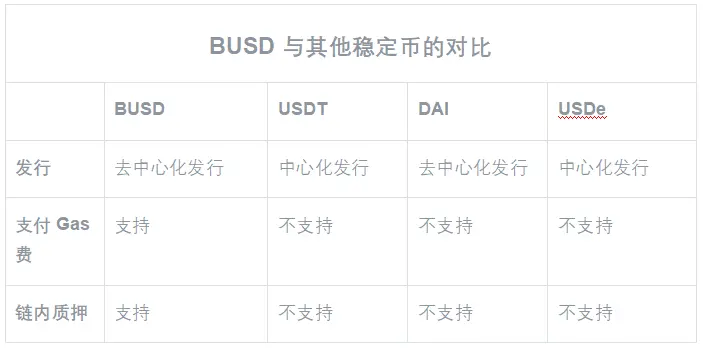
Native stablecoin BUSD supports Gas fee payment and Staking
Unlike the centralized issuance models of USDT and USDe, BUSD is issued in a decentralized manner and supports Gas fee payments and staking within the chain, which is not available with other stablecoins. Additionally, it is the built-in stablecoin of the BenFen Chain, differentiating it from USDT, DAI, and USDe. Besides BUSD, BenFen will also issue other stablecoins pegged to major currencies based on oracles, such as BJPY pegged to the Japanese yen.
Issuance mechanism: 50% of BFC tokens are used for collateral to issue BUSD
At the initialization of the public chain, BenFen will permanently use 50% of BFC as collateral for issued stablecoins, greatly enhancing the system's security and stability, which is not found in other public chains. For example, this is akin to Ethereum permanently placing ETH tokens into a treasury to issue stablecoins. Once users connect their wallets, they can choose to pay BFC to mint stablecoin BUSD, and upon exit, they can burn the stablecoin to redeem BFC. Off-chain users can also exchange their USDT/USDC for BUSD at a fixed ratio of 1:1, and when exiting, they can also exchange back to USDT/USDC at the same fixed ratio.
More stable: Various efficient BUSD price stabilization mechanisms
BenFen has designed multiple price stabilization mechanisms, such as an elastic currency supply mechanism that dynamically adjusts the currency supply based on market demand fluctuations to maintain price stability. The BenFen stablecoin protocol automatically executes through specific algorithms and trigger conditions to dynamically increase or decrease the circulating supply of BUSD. Additionally, there is an exchange rate regression mechanism that relies on the price differences between the assets in the stablecoin treasury and those in the secondary market. When there is a significant price difference, traders can buy assets at a low price and sell them at a high price to realize arbitrage profits. This not only provides traders with profit opportunities but also helps maintain market price stability, ensuring that the stablecoin's value remains close to its pegged value.
More focused: Concentrating on the expansion of stablecoin application scenarios
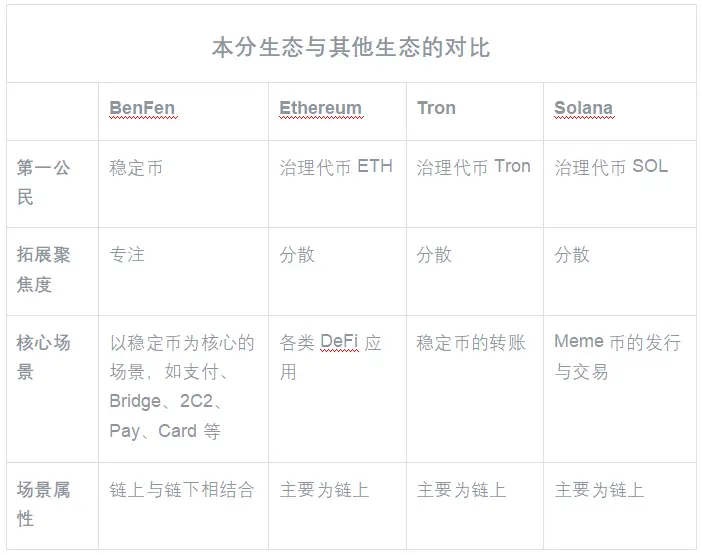
Compared to other chains that focus on multiple ecosystems, BenFen is more dedicated to the ecological scenarios based on stablecoin applications.
- BenFen Bridge is a native asset cross-chain bridge currently planned for launch on the BenFen Chain.
- BenFen Card is a compliant payment solution integrated into our daily consumption.
- BenFen Pay is a comprehensive payment ecosystem that enables direct cryptocurrency payments, seamless exchanges between digital currencies and fiat currencies, and various functions such as on-chain guaranteed payments.
- BenFen KYC is an on-chain identity authentication and verification system that aggregates the certification results of major KYC providers, enabling one-click queries of multi-platform KYC records and peer-to-peer identity information verification channels.
- BenFen C2C is an innovative decentralized escrow trading platform.
免责声明:本文章仅代表作者个人观点,不代表本平台的立场和观点。本文章仅供信息分享,不构成对任何人的任何投资建议。用户与作者之间的任何争议,与本平台无关。如网页中刊载的文章或图片涉及侵权,请提供相关的权利证明和身份证明发送邮件到support@aicoin.com,本平台相关工作人员将会进行核查。


