For those who have studied macroeconomics in traditional finance for 20 years, which coins will they buy in this cycle? Raoul Pal's answer is: 90% of his money is allocated to BTC, ETH, SOL, SUI, and DOGE. In a recent podcast, this "financial veteran" shared his "Crypto Millionaire Guide"—how to allocate assets and find potential coins. The highlights are here (1/)
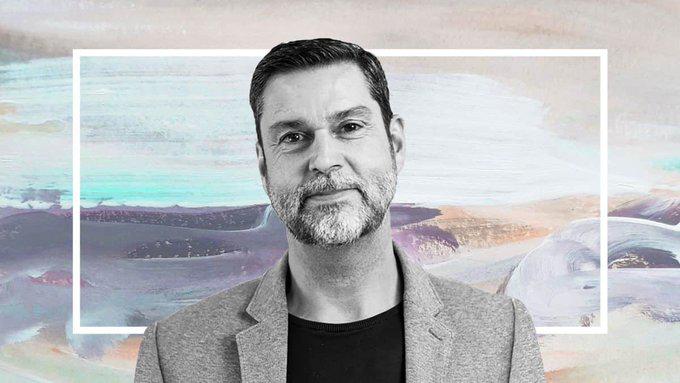
Raoul Pal: Cryptocurrency is in the "banana range." Raoul Pal began his career in 1990.
In 1997, he knocked on the door of Goldman Sachs, where he worked in hedge fund sales.
Five years later, he went to GLG, responsible for managing the fund's investment portfolio until 2005. In the same year, he founded the Global Macro Investor, providing quantifiable and readable research for the global macro investment community, which continues to this day.
In addition, he founded a financial media platform—Real Vision—in 2014, helping its members understand the complex world of finance, business, and the global economy.
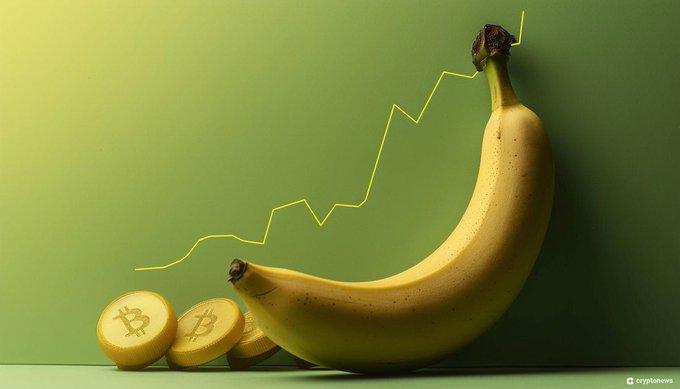
As a staunch bull on BTC, Raoul Pal judged even before the U.S. elections that liquidity was entering the market, and the debt refinancing cycle driven by macroeconomic forces would affect all asset prices, but the performance of cryptocurrencies would be particularly outstanding: the market would enter a "banana range," where cryptocurrencies typically rise vertically.
As an investor, the simplest method is to allocate most of the assets to major cryptocurrencies, maintain a core investment portfolio, then be patient and eliminate external noise. (2/)
BTC VS ETH VS SOL, which will have the highest increase?
Raoul Pal believes that the market capitalization of cryptocurrencies will reach $10 to $15 trillion in this cycle, which could grow 5-7 times compared to the current $2.2 trillion (at the time of the interview).
He also believes that SOL will outperform ETH, and ETH will outperform BTC: BTC will likely increase 3-4 times, SOL may grow 8 times or more, while ETH will be somewhere in the middle. In terms of asset allocation, Pal's rule is roughly 90% invested in mainstream assets and 10% in others.
However, at some stage, one or several "new products" will be selected, and more bets will be placed on these "new products."
For example, he may allocate 25% to Sui and 65% to others.
Regarding Memecoins, he stated that considering Memecoins are still in the early stages, he only allocated a small portion to "bet" on them, not wanting to go too big. (3/)
Why is he optimistic about SOL, Sui, and Doge?
In July 2024, Pal announced on his YouTube channel that 90% of the cryptocurrencies he personally holds are invested in SOL, reasoning that: despite the volatility of SOL's price, it has shown extraordinary resilience.
Solana has a good community, excellent user experience, outstanding technology, the ability to issue low-cost NFTs on-chain, and fast transaction speeds. The explosive growth of Memecoins is also one of the breakthroughs Solana has achieved in on-chain usage, and the ecosystem is accelerating its growth, much like ETH in the last cycle. Therefore, he believes SOL is a low-risk area and a good place to invest significant funds.
Besides Solana, Pal is also optimistic about Sui and Doge.
He chose Sui because: Sui is technically innovative and has shown superior performance in the market compared to other major cryptocurrencies (like Solana and Ethereum).
Price performance is also crucial; Pal only felt confident that Sui might be a "new product" when its price performance exceeded the overall performance of other cryptocurrencies.
He chose Doge because: Doge has a strong cultural identity and international recognition, with widespread community support. Elon Musk's support for Doge is also a significant factor, as he has the ability to drive Doge's development through his social media influence and actions.
Additionally, based on Doge's trading charts and historical performance, it experiences a massive price fluctuation every four years, and this cyclical performance is part of his investment decision.
In his view, Doge is the Solana among Memecoins. (4/)
How to discover potential tokens?
Pal proposed a viewpoint: scarcity is not in the tokens, but in attention. The real game is to capture attention.
Therefore, the key to discovering potential assets lies in identifying projects that can attract market attention and liquidity. This often involves analyzing macroeconomic trends, such as changes in monetary policy and global events, which may affect asset attention. This theory of screening tokens also applies to Memecoins. For Memecoins, the most critical aspect is to understand the cultural significance and community acceptance of Memecoins. One should invest in those Memecoins that resonate with a broad audience and have strong community support.
Pay attention to community conditions, including social media, price dynamics, and market sentiment, looking for assets that can attract investor attention when prices are stable or rising; these assets will have the potential to become the next big hit. (5/)
What is the difference between the popularity of Memecoins in this cycle and NFTs in the last cycle?
Although holding a certain amount of Memecoins, Pal believes that Memecoins are more about trading and investment, usually associated with specific communities or cultural phenomena, with their value partly derived from the sense of identity and participation among community members.
They may rapidly appreciate due to community enthusiasm, but there is also a risk of quickly losing value.
NFTs, on the other hand, represent a whole new asset class; they are not merely imitating existing cryptocurrencies but constitute a new infrastructure for the internet. Their value lies in their uniqueness, scarcity, and cultural significance, serving as proof of ownership for digital art and collectibles, providing new opportunities for wealth accumulation across generations. (6/)
Time is running out for everyone to make money. Pal pointed out that the market cycle is very tight, and there may be 6-8 months left to make money, which means that before the market peaks, investors need to correctly adjust their risk ratios: assuming the market reaches $12 trillion, your major asset should earn the same amount as the market growth. If so, you have done it right. If 1% of your assets rises by 100%, regardless of what it is, and the rest of the portfolio rises by x, if they ultimately all match the market, then you have mastered the risk-adjusted return.
Pal's advice is to find a balanced investment portfolio, that is, a higher-risk asset paired with a lower-risk asset. For example, Pal believes Solana is a relatively safe top-ranking asset, while Sui is a newly selected higher-risk asset. If the market grows rapidly, Sol will grow to be one of the top three tokens, and Sui will enter the top ten.
Similarly, in the Memecoin space, Doge is a safer asset, while other Memecoins carry higher risks.
Observe different cycles and look for tokens that remain vibrant, rather than FOMO. (7/)
"Doom sales, optimism makes money." In summary, Pal emphasizes three points regarding investment in the crypto market:
- Build connections with the community, keeping in mind the importance of value and community in investments, rather than short-term profits.
- Tokens are not a game of scarcity, but of attention.
- Heavily invest in a relatively safe asset and hold it, gaining asset appreciation alongside market cycles; use a small portion of assets to bet on higher-risk tokens, selecting "new products" based on macroeconomic conditions, community situations, technological innovations, ecosystem development, and token development.
Finally, Pal also mentioned: "Doom sales, optimism makes money." In the financial field, historically successful investors (legends) often make money by predicting and capitalizing on market downturns, buying during market declines, and selling before the market recovers, thus realizing profits.
Because most of the time, everything will be fine; humanity will not self-destruct, central banks and governments will take measures to prevent significant market declines, and technological advancements are improving our lives and creating more wealth. Although the market will experience cyclical fluctuations, in the long run, the market tends to grow upward. This understanding tells investors to look for buying opportunities during market downturns rather than panic selling. (8/)
免责声明:本文章仅代表作者个人观点,不代表本平台的立场和观点。本文章仅供信息分享,不构成对任何人的任何投资建议。用户与作者之间的任何争议,与本平台无关。如网页中刊载的文章或图片涉及侵权,请提供相关的权利证明和身份证明发送邮件到support@aicoin.com,本平台相关工作人员将会进行核查。


