Author: Jeff John Roberts, Fortune Magazine
Translation: Luffy, Foresight News
Carnegie Lake, located three miles east of Princeton University in central New Jersey, shimmers with its serene waters and lush trees, providing a habitat for wild animals such as swans and herons. In 2011, many of Nader Al-Naji's early mornings were spent here, training with the rowing team at dawn. Many of his Princeton rowing teammates later achieved remarkable success, becoming Olympic athletes and executives at well-known companies such as J.P. Morgan and Tesla.
Al-Naji is a true genius and has made a name for himself among the American elite. He pitched his vision of changing the world to Silicon Valley elites and was later described by investors as an unconventional founder of a startup company. Al-Naji eventually convinced institutions such as Sequoia Capital, Google, and Bain Capital to invest hundreds of millions of dollars in his startup. However, his bold vision was built on fantasy.
Al-Naji's first entrepreneurial attempt was to establish an incredible cryptocurrency startup, which failed. However, he convinced investors that it was a learning experience. Soon after, he reappeared with an even bolder plan: he launched a social network under the identity of "Diamondhands," which turned other people's social profiles into tradable commodities using cryptocurrency without permission. This project also ultimately failed.
Despite experiencing two failures (which in hindsight were based on far-fetched ideas), many of Al-Naji's supporters still continue to believe in him. However, in July of this year, Al-Naji's luck ran out. The Department of Justice arrested him and, together with the U.S. Securities and Exchange Commission (SEC), charged him with misappropriating investors' funds, living a lavish lifestyle in Beverly Hills, and transferring $1 million in cash to his family. Al-Naji referred to these charges as a "mistake" by the U.S. government.
In a sense, Al-Naji's antics are just another story of a cryptocurrency big shot deceiving supporters. However, it also raises a deeper question: how did Diamondhands deceive the "smartest" investors in Silicon Valley? At the same time, it has put the most prominent venture capital firm, Andreessen Horowitz (a16z), in an awkward position: as both a victim of fraud and a witness in the prosecution.
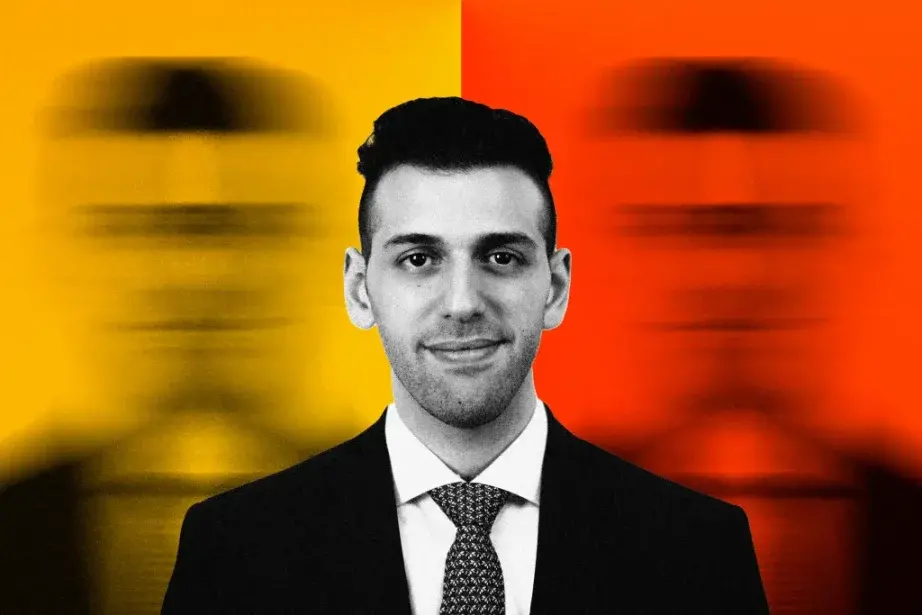
Princeton Era
Nick Bax, CEO of a cryptocurrency forensics company who often testifies as an expert witness, recalls the days of rigorous training at Princeton University, where he spent 25 hours a week training. Among the ambitious young people who were always striving to outdo each other, Al-Naji stood out.
"Everyone knew Al-Naji," Bax said. "He was a fast rower and outgoing. We knew he was ambitious, and even by Princeton standards, he was exceptional."
During his time at Princeton University, Al-Naji had an unusual hobby: cryptocurrency. According to his LinkedIn profile, he graduated a year early with excellent grades and "mined about 23 bitcoins using free campus electricity."
After obtaining a degree in computer science, Al-Naji's career path was similar to many other top graduates from Ivy League schools, as he entered well-known companies in finance and technology, such as hedge fund DE Shaw and Google. However, in mid-2017, Al-Naji left the search giant and started his own business. He became the founder and CEO of a cryptocurrency startup called Basis.
This new startup showcased the main characteristic of Al-Naji's projects: a bold and disruptive vision wrapped in technical jargon that seemed too good to be true upon closer examination.
Basis was a new type of stablecoin supported not by traditional reserve assets, but by a magical algorithmic force. If the price of Basis rose above $1, the system would issue new shares that could be exchanged for stablecoins, thereby lowering the price. If the price fell below $1, Basis would sell bonds at a discount, which could then be redeemed in full.
Many people were skeptical of Basis. One cryptocurrency observer called Basis a scheme to turn lead into gold and pointed out that Basis relied on "first in, first out" principles, making it a typical pyramid scheme. (Three years later in 2021, another algorithmic stablecoin project called Terra with a similar design defrauded investors of over $200 million, triggering a massive collapse in the cryptocurrency industry, and the skeptics of Basis were ultimately vindicated.)
Despite the unstable economic foundation of Basis, Al-Naji quickly raised $133 million from wealthy investors, including Andreessen Horowitz, Google Ventures, Bain Capital Ventures, and a former Federal Reserve governor.
However, nine months after the successful initial fundraising in October 2017, the Basis project failed. After the initial hype and a period of calm, Al-Naji announced the cancellation of the Basis project due to regulatory challenges and promised to return the remaining funds to investors after deducting the incurred expenses.
However, a venture capitalist who invested in the project expressed skepticism about this public explanation, telling Fortune Magazine that Al-Naji chose not to continue with the Basis project because he believed it was not viable.
Regardless of the reasons for Basis's failure, the fact that a savvy group of investors could bet on the project, which seemed to defy the basic principles of economics, is itself astonishing. One explanation is that the essence of venture capital is to take risks on seemingly crazy ideas. Another explanation is that investors valued Al-Naji personally.
Many venture capitalists heavily rely on so-called pattern matching: seeking out entrepreneurs similar to previous successful cases. In the interviews for this article, two venture capitalists from different companies who supported Al-Naji's projects used the same phrase to describe him: "unconventional actor." This description applies not only to his education and work background but also to his confident demeanor.
Another venture capitalist who invested in Al-Naji pointed out that Al-Naji was very similar to another notorious cryptocurrency figure and took advantage of the venture capital world's preference for pattern matching.
"In hindsight, they had very similar personality traits. Al-Naji, like Sam Bankman-Fried, speaks too fast, and you may not always understand what he's saying, but he gives the impression of being an honest person," the venture capitalist said.
A fourth venture capitalist who had invested in two of Al-Naji's startups gave a more sober assessment based on his previous experience with founder failures.
"Half the job in all these stories is figuring out if someone is a lunatic or a narcissist," the venture capitalist said. "I never seriously considered Al-Naji to be a lunatic or a narcissist, but to me, he seems more inclined toward being a narcissist."
Meanwhile, questions have been raised about how Al-Naji spent the funds he did not return. Al-Naji claimed that he had returned over 90% of the funds invested in Basis. In 2021, he explained to TechCrunch, "The $10 million that I didn't return to investors was actually spent on lawyers."
However, several of Al-Naji's investors found it hard to believe that a small startup could spend $10 million on lawyers in just a few months.
Birth of Diamondhands
In 2021, the largest cryptocurrency craze in history was in full swing. Elon Musk pushed Dogecoin to new highs with his appearance on Saturday Night Live, and cryptocurrency enthusiasts were pouring millions of dollars into digital monkeys. In Silicon Valley and New York, venture capital firms had accumulated billions of dollars to invest in cryptocurrency projects.
This was the perfect opportunity for Al-Naji's next move. When he reappeared, he did so under the identity of "Diamondhands," an anonymous figure. He was set to launch a decentralized social network and then disappear into the internet's mist, much like Bitcoin's creator Satoshi Nakamoto did years ago.
Al-Naji had seen his founding of Basis as a breakthrough in the field of economics. His social network plan was even more grandiose. Bitclout was set to disrupt companies like Facebook and Twitter with a new platform that operated "solely by code and tokens."
To launch BitClout, Al-Naji used Silicon Valley's so-called growth hacking techniques, grabbing the personal profiles of 15,000 Twitter users to populate the new network. The website itself looked like a hastily made knockoff version of Twitter.
The name Bitclout brought to mind Klout, a failed social network that ranked people based on their influence, with many criticizing it as the "Yelp for people." Al-Naji took this concept further, encouraging Bitclout users to buy and sell tokens tied to people's identities on the site. Users had to exchange Bitcoin for the new cryptocurrency of the network.
Like Basis, this idea seemed immature. Firstly, no one could explain the technology Al-Naji touted as running "solely by code and tokens." Meanwhile, Al-Naji's decision to prepopulate the network with existing Twitter profiles was rightfully seen as a serious infringement of intellectual property.
There was also a false sense of mystery surrounding "Diamondhands," a name inspired by cryptocurrency slang referring to those who don't sell in a market crash, but this couldn't hide the fact that Al-Naji was the mastermind behind Bitclout.
In March 2021, when Al-Naji launched the Bitclout website, he shared the URL with others and absentmindedly told them not to spread it. When the link spread widely, Al-Naji claimed it was an accident, despite all signs pointing to it being part of a growth hacking plan.
While the previous failure of Basis might have made investors wary of Al-Naji, the cryptocurrency market had descended into madness. Not only did well-known institutions reinvest in Al-Naji, they also agreed to participate in the scam of hiding the identity of Diamondhands.
Months before Bitclout's launch, companies like Andreessen Horowitz and Coinbase Ventures reached agreements with Al-Naji to purchase tokens at a presale price of $6 (later $16). While many Bitclout supporters also invested in Basis, the new project also attracted newcomers like Sequoia, the cryptocurrency venture capital firm that later lost $214 million when investing in Sam Bankman-Fried.
Similar to the early treatment of SBF, Sequoia released a flattering profile of "Diamondhands." The profile explained why BitClout had no executives, board, or any other standard corporate mechanisms for accountability.
"After BitClout launched, early token buyers quickly made a fortune as the price of the site's eponymous token soared to nearly $200. However, the good times didn't last long, as Al-Naji once again announced that he would abandon the project, claiming it had always been a 'beta test' and shouldn't have developed to its current state. Instead, he would invest the proceeds from Bitclout (whose token price had plummeted to zero) into another project dedicated to a decentralized social network. Meanwhile, retail investors who had exchanged Bitcoin for Bitclout tokens on the site found they couldn't exchange the tokens back for Bitcoin.
The U.S. Securities and Exchange Commission (SEC) stated that Al-Naji raised $257 million by selling Bitclout tokens to investors and the public, and contrary to the declaration of being "solely by code and tokens," he could directly use these funds. In court documents, the SEC accused him of using Bitclout proceeds to pay credit card bills and purchase a six-bedroom house in Beverly Hills, as well as giving nearly $3 million in gifts to family members. The whereabouts of the remaining funds are still unclear.
Star Witness
a16z is headquartered on Sand Hill Road, a picturesque thoroughfare winding down from Interstate 280, passing through Stanford University. Over the past decade, a16z has built a business empire worth billions of dollars, leveraging the enormous success of early investments in companies like Facebook and Airbnb, and has recently exerted influence in politics and culture. The company has also actively promoted its own mythology, with some joking that it is a public relations company disguised as a venture capital firm.
Recently, a16z has taken on a new and unexpected role: in the case where the Department of Justice charged Al-Naji with criminal offenses, it was marked as a victim of fraud, referred to as "Investor 1."
a16z's role in this case is surprising, as it only invested $3 million in the Bitclout case. For an institution that often invests $100 million or more in startups, this is a negligible amount, and the company is sensitive to negative publicity.
"In general, funds don't turn on the entrepreneurs they invest in. They just quietly take the loss," a cryptocurrency lawyer familiar with Bitclout told Fortune Magazine. "When a fund loses money, they don't go after the founder; they just take it on the chin."
Interviewed venture capitalists agreed with this view, pointing out that companies are reluctant to be involved in public legal disputes to avoid leaving a negative impression of their support for startup founders. According to the cryptocurrency lawyer, a16z's role as a witness may have been forced.
Renato Mariotti, a former federal prosecutor and current white-collar defense lawyer at Paul Hastings, stated that this arrangement also aligns with the Justice Department's standard strategy in such cases. "Having victims say 'I lost money, they lied' is more convincing," he said.
a16z declined to comment for this article, but after the Bitclout incident, the company seemed to harbor no ill will toward Al-Naji. In fact, a16z seemed to have agreed to Al-Naji's plan to invest the proceeds from Bitclout into a new social network company called Deso Foundation. According to Crunchbase data, Deso Foundation ostensibly supports other cryptocurrency businesses but only made three small investments, with the most recent one in early 2023.
The recipients of DeSo's funding include AODAO, a company championed by Al-Naji that aims to build a decentralized community for people to invest in NFTs. In a 2002 interview, Al-Naji explained to me that DAODAO represents "the next opportunity for people to truly own."
In mid-July of this year, Al-Naji was arrested in Los Angeles and charged with fraud in federal court. Mariotti stated that if Al-Naji is convicted, he could face 3 to 6 years in prison. Court documents show that Al-Naji's lawyers (he has hired attorneys from several top law firms) are negotiating with the Department of Justice, but so far, no settlement has been reached, and no formal defense has been made against the criminal charges.
Currently, Al-Naji does not seem to be worried about his legal troubles. When asked to share his views on the matter, he politely declined.
"I really want to help, but I have to be cautious at the moment. However, I believe this will be a well-considered article, and I will definitely contact you as soon as I can tell the full story," he responded on Telegram.
Meanwhile, he is very active on a new social media platform called Diamond, and his fans are concerned that his arrest may delay the promised launch of a token called Focus. He is trying to alleviate these concerns through a series of videos and text posts, one of which suggests that the U.S. government's charges against him are a mistake and will be clarified.
"But after some thought and discussion, the impact of the incident is not obvious, and may even have a positive effect. On the one hand, if there are negative follow-up reports when we launch Focus, it may damage people's willingness to share the app. On the other hand, it will also make more people aware of it," Al-Naji wrote.
免责声明:本文章仅代表作者个人观点,不代表本平台的立场和观点。本文章仅供信息分享,不构成对任何人的任何投资建议。用户与作者之间的任何争议,与本平台无关。如网页中刊载的文章或图片涉及侵权,请提供相关的权利证明和身份证明发送邮件到support@aicoin.com,本平台相关工作人员将会进行核查。


