Timing is very important.
Host: Imran Khan, Co-founder of Alliance
Guest: Delian Asparouhov, Partner at Founders Fund
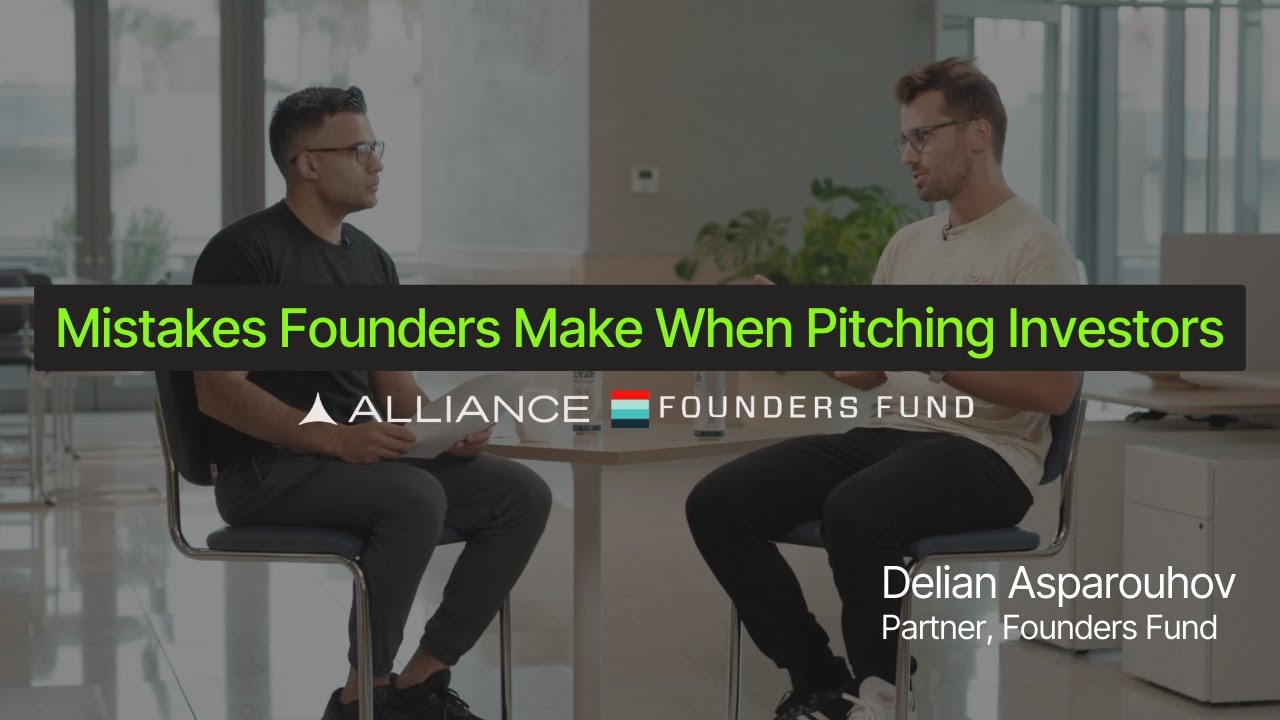
In the field of venture capital, Founders Fund is a legendary player.
In 2002, Peter Thiel, known as the "Godfather of Silicon Valley," sold the co-founded PayPal to eBay for $1.5 billion and in 2005, he established Founders Fund, mainly investing in consumer internet companies. Their successful investments include a number of Silicon Valley star companies such as Facebook, SpaceX, Palantir, LinkedIn, and Spotify. Currently, Founders Fund's assets under management have exceeded $12 billion.
In April 2024, the largest accelerator in the crypto world, Alliance, announced a strategic long-term investment from Founders Fund, with the investment amount undisclosed. As part of the investment, Founders Fund will provide support to Alliance's portfolio companies.
As a "bonus" of this investment, Imran Khan, co-founder of Alliance, had discussions with several partners and marketing executives of Founders Fund, most of whom have direct entrepreneurial experience, to explore how founders can drive sales and growth of startups, build cryptocurrency brands, and find suitable partners… Condensing various entrepreneurial insights.
TechFlow translated this collection of dialogues into Chinese to share with everyone.
Preface
In this interview, Delian Asparouhov and Imran Khan delved into several key issues related to entrepreneurship.
Delian's Background: Delian focuses on seed and Series A investments at Founders Fund, especially in areas that combine hardware and software or are highly regulated. He also shared his unique experience of transitioning from a founder to an investor and back to a founder, and discussed his passion for space manufacturing.
The Right Timing for Entrepreneurship: Delian discussed the importance of starting a business at the right time, especially the impact of technology cost curves and market demand maturity on entrepreneurial success. He emphasized that as a founder, one needs to ensure the uniqueness of the idea and accurately seize the opportunity.
Finding the Right Partners: In terms of partner selection, Delian believes that finding partners with complementary skills who share the same vision and goals is crucial. He adopted a precise screening method, listing the required traits and seeking candidates worldwide to ensure that each team member is the most suitable choice.
Equity Distribution Strategy: Delian emphasized the importance of devising a strategy that satisfies everyone in the present and future. He explained that in Varda's practice, part-time team members receive less equity compared to full-time employees because the latter contribute more to the company.
Key Lessons Learned from Entrepreneurship: Delian summarized three key lessons learned from his entrepreneurial experience: 1) the importance of talent; 2) the importance of extreme focus; 3) the importance of product-market fit.
Continual Learning: Delian believes that continual learning is crucial for entrepreneurs and shared two experiences that had a profound impact on him. The first was a coffee meeting with Sam Altman, and the second was working with Venod Khosla, which further reinforced his understanding of continual learning. By constantly exploring new areas and challenging his comfort zone, he achieved personal growth and success.
Adjusting Entrepreneurial Direction: Delian discussed the importance of making strategic adjustments during the entrepreneurial process. Through Slack's entrepreneurial story and his own company's experience in adjusting its market positioning, he emphasized the importance of flexibly adjusting business strategies to adapt to market and technological changes. His experience highlighted the adaptability and foresight that founders need to find and seize new opportunities in a rapidly changing market environment.
Framework for Evaluating Entrepreneurial Investments: Delian described the two criteria he uses to evaluate entrepreneurial investment opportunities: the relationship between the founder and the company, and finding the "spark" in the founder, emphasizing the importance of finding founders deeply aligned with the entrepreneurial mission.
Unconventional Entrepreneurial Perspectives: Delian discussed the current entrepreneurial and investment environment and the perspectives of venture capitalists. He believes that the companies with the greatest returns in the next decade will be those that are capital-intensive and integrate hardware and software. Delian challenged the common view of software investment, emphasizing the importance of physical products and solving real-world problems.
Guidance for Founders: Delian shared his experience in mentoring other founders at YC and gained two important insights from this experience. Firstly, he realized that this help is not simply an act of charity, and secondly, he found that he greatly enjoyed mentoring and believed that these experiences had a profound impact on his career.
The Power of Compounding in Life: Delian emphasized the role of compounding in personal and professional life, highlighting the significance of long-term perspective and perseverance. Many seemingly overnight success stories are actually the result of continuous efforts over a decade. However, many people fail to fully utilize the compounding effect in various aspects of life because they lack sustained and persistent investment.
The following are the main contents of this interview:
Delian's Background
Imran: Delian, could you give us a brief introduction to your work at Founders Fund and your career background?
Delian:
Of course, I am an early-stage partner at Founders Fund, focusing mainly on seed and Series A investments, especially in areas that combine hardware and software or are highly regulated.
I co-founded Varda Space Industries about three years ago. I transitioned from being a founder to an investor, and then back to being a founder, which is quite rare. To be honest, a twisted fascination with pain led me back to entrepreneurship. In particular, my passion for space manufacturing made me really want to see it happen. I initially hoped to do it as an investment and seriously explored the topic from an investment perspective, meeting many founders working in this field, but I felt that I didn't find the right team. In the end, I decided to start the company myself.
The Right Timing for Entrepreneurship
Imran: How important do you think the right timing is for starting a startup? For ordinary people who want to start a business, how should they evaluate the market timing? What signals should they look for as entry points?
Delian:
Timing is very important. For example, in the history of technological development, there have been many times when the right idea emerged at completely the wrong time, even Varda is a good example. People have tried to start businesses in the space manufacturing field in the 1990s, 2000s, and 2010s, but they all chose the wrong time. As a founder, you need to ensure that your idea is right and also start at the right time. You can predict the future by analyzing factors such as launch costs, battery energy density, and solar energy costs, which almost perfectly follow mathematical curves, to determine when your business model will be viable.
Even in startups in other industries, there will be clear timing. Take Uber for example, everyone has a device that can connect to the internet and has GPS functionality, fundamentally changing the way people think about urban transportation, allowing them to actually summon a car. So, you need a very appropriate timing to start a business like this. The mobile revolution has led to the rise of a series of startups, the launch of AWS means you no longer need to build data centers, blockchain technology makes a series of companies and decentralization possible, and AI and GPT better help existing companies. But I think, as part of the founder's work, you need to find that inspiration, when you can really ride the wind and waves instead of going against the wind, creating a company becomes very easy.
Finding the Right Partners
Imran: In this blog, you mentioned the second point is finding partners, and it's indeed very difficult to find the right partners, especially in the crypto field. How did you find your partners? How did you ensure that everyone meets your requirements?
Delian:
Finding the right partners is crucial. I usually look for people who complement my skills, share the same vision, and are committed to the same goals. Especially when I decided to start a new business, I was not only looking for collaborators, but also needed these people to make a mark in highly technical fields. We carefully select team members to ensure that everyone is the most suitable choice. I would list 30 characteristics that I hope my partners possess, and then screen people from around the world who meet these characteristics. This method is very much like that of a sniper, very precise. Each role has a clear list of required skills, so we can ensure that everyone in the team can make a critical contribution to the company's success.
Equity Distribution Strategy
Imran: How do you deal with difficult situations such as equity distribution?
Delian:
In equity distribution, I think two things need to be done: first, find an agreement that satisfies everyone at the moment; second, an agreement that will satisfy people in the future as well. You need to assess who is the most critical person in the company, how future decisions will be made, whether all partners are completely equal, or whether one person will bear the ultimate decision-making responsibility. Varda's equity distribution strategy is relatively simple because it is not a purely equal distribution of equity. I am a part-time CEO of the company, and compared to my full-time colleagues, they will receive more equity because they will recruit many core team members and in some ways they know more than I do. Only a very small number of companies can adopt an equal distribution of equity, perhaps Airbnb is a good example, where all three co-founders are actively involved in the company's operations, which is very rare.
Key Lessons Learned from Entrepreneurship
Imran: As an entrepreneur, what important lessons have you learned in the past few years?
Delian:
First is the importance of talent. In my first company, perhaps because I was still young, I lacked in recruiting top talent. But now, when faced with a problem, my first reaction is to find the best person in the world to solve the problem and make them an advisor or full-time employee of the company as much as possible. Second is the importance of extreme focus. In my first company, I often focused on urgent but unimportant matters. In the current company, I can identify the most important issues, even if they are not immediately facing the company. For example, in the summer of 2022, I realized that we needed an experienced business development leader to handle contracts with pharmaceutical companies, even though it was not an immediate problem at the time. Lastly, product-market fit is forged, not discovered. We should take more proactive action to understand the market, assess whether the value we provide resonates with customer needs, what the market trends are, and what the primary tasks of the Department of Defense and commercial customers are, to build a value proposition that we know will resonate strongly with them.
Continual Learning
Imran: In your recent article, you mentioned the importance of continual learning, which I think is very important for founders, they need to continually learn and acquire new knowledge and information.
Delian:
In the early stages of my career, there were two things related to how to ensure continual learning that impressed me and ultimately inspired me. In the early stages of my career, I had a coffee with Sam Altman that was very inspiring. At that time, he was preparing to become the president of YC and was also working on a nuclear energy company. He had dabbled in many cutting-edge technology fields, which made me realize that I was falling behind. Although I understand computer science, I need to learn more about different fields to have a broader impact. This feeling prompted me to start learning and trying new fields. Years later, while working at Coast Ventures, I had the opportunity to work with Venod Khosla, who is a top performer in more than 20 different fields, and he made me realize the importance of continual learning. I began actively learning about the aerospace industry, even though it was a field I had not directly worked in before. I started reading all the press releases about aerospace, attending aerospace conferences, and meeting founders in the aerospace industry. Although I initially felt overwhelmed, it ultimately helped me accumulate valuable knowledge, which had a profound impact on my later founding of Varda and aerospace-related investments.
Adjusting Entrepreneurial Direction
Imran: In terms of investment, you have six years of experience, what is the biggest change in entrepreneurial direction that you have seen? Perhaps you can describe some important lessons you think are important for founders?
Delian:
In Silicon Valley history, an obvious example is Stewart Butterfield and Slack, which initially started as a game studio and developed an internal chat tool, eventually turning into Slack. For me, this is the epitome of transformation. What my company does is more like the expansion of regional markets or the release of small product features, while Stewart was determined to make a real big change using the venture capital he raised and the team he built, from gaming to enterprise communication. Varda has also experienced a transformation to some extent. In the early stages of the company, we did have a very strong initial belief that the main market would revolve around the manufacturing of fiber optic cables in low Earth orbit, but in the end, it was not the case. As the company has developed over the past three years, partly because China operated hypersonic missiles for the first time in the summer of 2021. Hypersonic went from an academic exercise to an entity that needed to be operated, allowing us to generate enough revenue and scale to truly address a larger market - pharmaceutical manufacturing in space. So in some ways, Varda's core idea remains unchanged, but the core market segment is clearly to some extent a fairly big change.
Framework for Evaluating Entrepreneurial Investments
Imran: When founders recommend projects to you, do you have a fixed judgment framework?
Delian:
I usually have two criteria, and the others are determined based on the specific situation of each company. First, why is this founder the superhero in this story? Why is this their lifelong career? I will give a rather special analogy, take Elon Musk and Mark Zuckerberg for example, two extraordinary, world-class founders. They are obviously very capable, but if you put Mark Zuckerberg in charge of a rocket company, you will get a group of engineers wandering around, who may never be able to successfully launch a rocket. If you put Elon Musk in charge of a social media company, it would be a complete disaster. The second point is, I look for some degree of sparkle in them. This sparkle may come from some non-professional fields. An example is, I found myself very inclined to invest in former D1-level athletes or professional athletes. If you have the ability to maintain a D1 athlete while managing the study load of a top university, then the likelihood of this disciplined transformation into the entrepreneurial field and achieving extraordinary success is very high. Therefore, it is very important to find people who can show the ability to reach the top 0.1% in a certain field.
Imran: I think Founders Fund's attitude towards physical office and remote work in 2020 was very clear, but at that time this view was not mainstream. What do you think or what do most venture capitalists think is a consensus on how to build a startup?
Delian:
In this high-interest, high-capital cost environment, the venture capital market did shrink relative to 2021, but I still believe that if you look at companies starting in 2024, the ones that are likely to generate the highest returns over the next decade will be those that are capital-intensive, integrating hardware and software companies that solve real-world practical problems, rather than just providing software GPT layers to help employees process documents faster. I believe fundamentally, the job of a venture capitalist is about long-term results, and if you look at the four highest market cap companies on the Nasdaq, three of them, Nvidia, Apple, Tesla, delve deep into the American hardware space, which is the goal you should pursue as an investor. Therefore, I still think people's views on software zero marginal distribution and high gross margins are wrong.
Guidance for Founders
Imran: What was your experience at YC, and how did you guide founders? Why do you think this is important?
Delian:
At the time, I wanted to give back to my mentors for their help, and I felt like I was doing charity work. I did it extremely, I would do about 100 of these interviews in one or two weeks. I would line them up one after another, basically 3 per hour, 20 minutes each, and then I would do interviews for four or five hours in a row.
At the time, I wasn't a particularly capable founder, but I did get into YC. So I felt like I had some value that I could give back to future founders. Looking back now, I drew two main conclusions from it. First, this help is not charity. By helping these founders, many of whom eventually become future investors and colleagues, you give and you get back from these efforts. Second, I should have realized earlier that I really enjoy guiding and working with other founders. A few years later, when I was considering whether to enter the venture capital industry full-time, I reflected on this. I really enjoyed doing all these mock YC interviews, I enjoyed helping my friends solve the problems they were facing. If you choose what you love to do as your career, you are more likely to become the top 0.1%, because it doesn't feel like work.
Compound Effects in Life
Imran: In one of the five lessons you mentioned, one is that everything in life is compound, and I feel that people often forget this. In a world full of distractions and thousands of ideas, the ability to focus on one thing seems to have been lost. What did you learn from it? And why do you think all founders should consider this?
Delian:
I've been in Silicon Valley for almost 12 years. Looking back on this time, I've seen some friends jump from one market hot spot to another, never giving the compound growth curve time to work. They would rise at the beginning of their careers, then become frustrated with their progress, and then move on to the next project. They didn't realize that what seemed like overnight success was actually the result of people letting this curve work over ten years.
I think this also affects many other aspects of life, such as personal financial investments. Investing $25,000 in a company and watching it grow all the way to the IPO stage. The same goes for careers, like what I did in the aerospace field, I attended aerospace conferences in a state of ignorance, I didn't know anyone, and the conferences weren't very productive, but I didn't feel overwhelmed. I was willing to focus on things that not many people really pay attention to, and continue to work hard to keep this curve going up. I think it's the same in personal relationships, many people tend to change friends frequently, or try to find those who can really help them in their careers.
I think I've done pretty well in cultivating very close friends, these friends have been good friends for over ten years since I came to Silicon Valley, regardless of what careers they are in, I continue to maintain these friendships. On a personal level, I've been with my wife for four and a half years. I think in some ways, the depth of this relationship will only increase over time, it brings me joy, stability, and it's very valuable to me to know that I have someone who understands me very well. At the final moment of deciding whether to start Varda, I did have a fear - my investment career was going well, why take such a big risk to do this, especially when it's hard to do well in investments. And my wife's feedback was very firm: this is your lifelong career, you have to do this. So imagine if I didn't maintain this relationship, didn't have those bedside conversations, and instead panicked and gave up on founding Varda, Varda wouldn't exist.
So I think people invest too little in compound curves, compound curves are not spontaneous, you need to continually compound them, year after year, through sustained efforts.
免责声明:本文章仅代表作者个人观点,不代表本平台的立场和观点。本文章仅供信息分享,不构成对任何人的任何投资建议。用户与作者之间的任何争议,与本平台无关。如网页中刊载的文章或图片涉及侵权,请提供相关的权利证明和身份证明发送邮件到support@aicoin.com,本平台相关工作人员将会进行核查。