Source: CNBC
Compiled by: BitpushNews Yanan
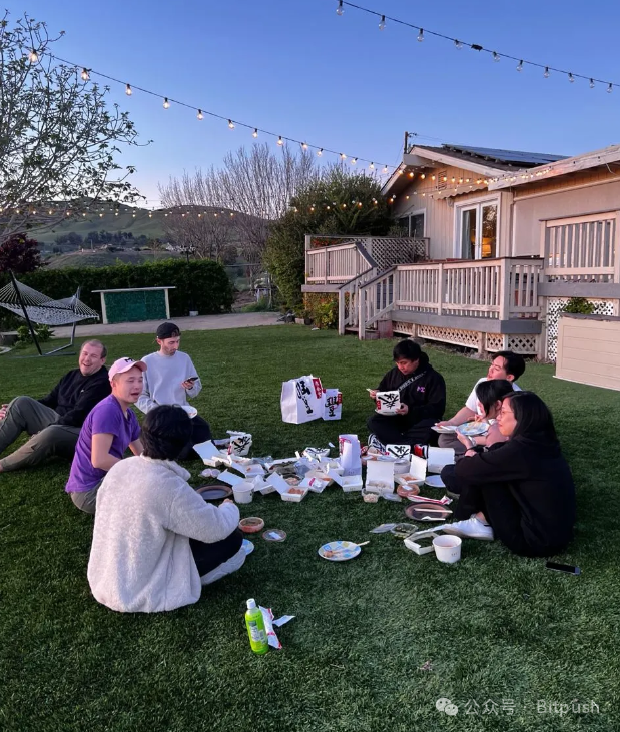
In the foothills of San Jose, California, 17 programmers from the well-known Bitcoin NFT trading platform Magic Eden are gathering for a week-long hackathon to prepare for the upcoming Bitcoin halving. The workplace for these employees is a bit special - they have rented a spacious house with 4 bedrooms and 3875 square feet through Airbnb.
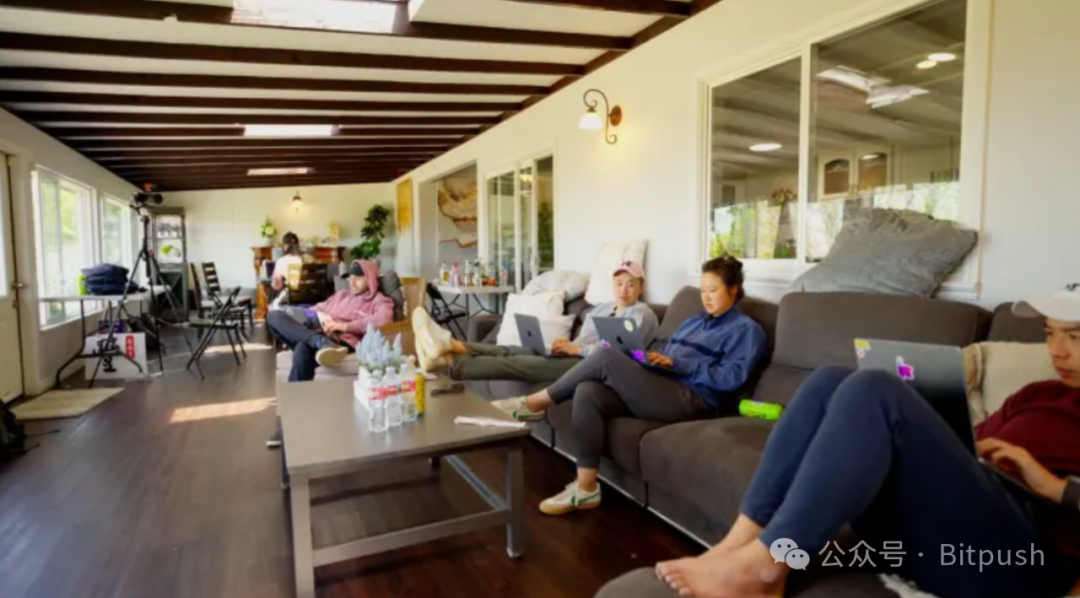
Most discussions about the Bitcoin halving, which occurs every four years, focus on the change in Bitcoin's issuance. However, the Bitcoin halving also coincides with several other significant developments on the blockchain, including cutting-edge programming innovations that will attract more developers and more venture capital into the Bitcoin ecosystem.
Unlike past halvings, thanks to the influx of funds brought by the newly launched Bitcoin spot ETF in the United States, in March of this year, the price of Bitcoin, as the world's largest cryptocurrency, soared to over $73,000, reaching a historic high.
"Bitcoin has never been as vibrant as it is now - what was previously lacking is an active developer ecosystem," said Zedd Yin, co-founder and COO of Magic Eden.
Arcade games and strong liquor
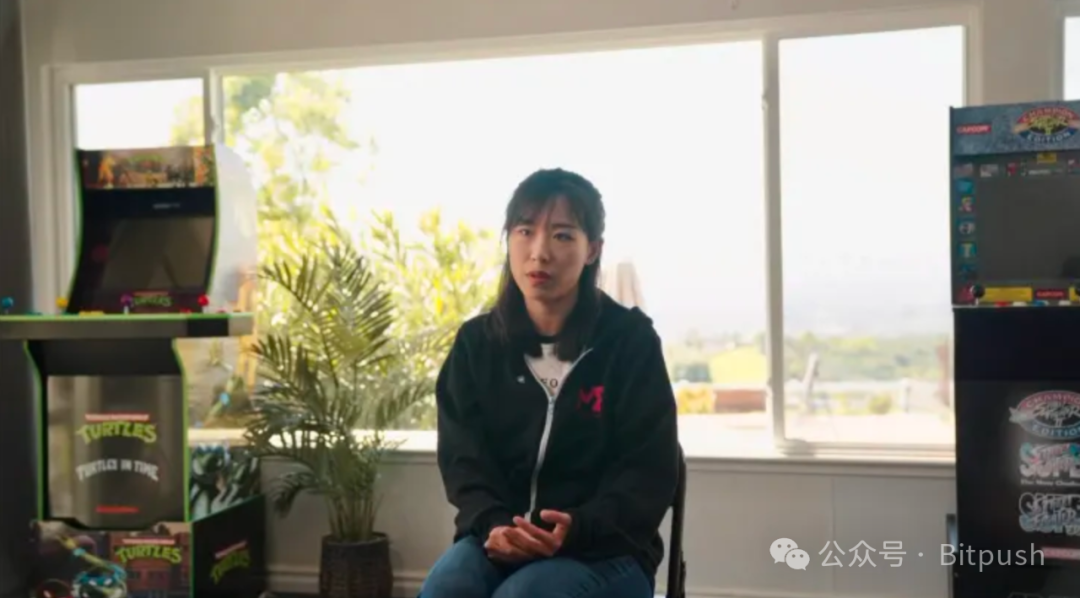
Although the temporary coder's home at Magic Eden is simple, it also provides many thoughtful services to support the work and life of the programming team.
Their daily "work benefits" include classic arcade games such as "Teenage Mutant Ninja Turtles" and "Street Fighter" in the living room, as well as a DIY open bar on foldable plastic tables in the dining room.
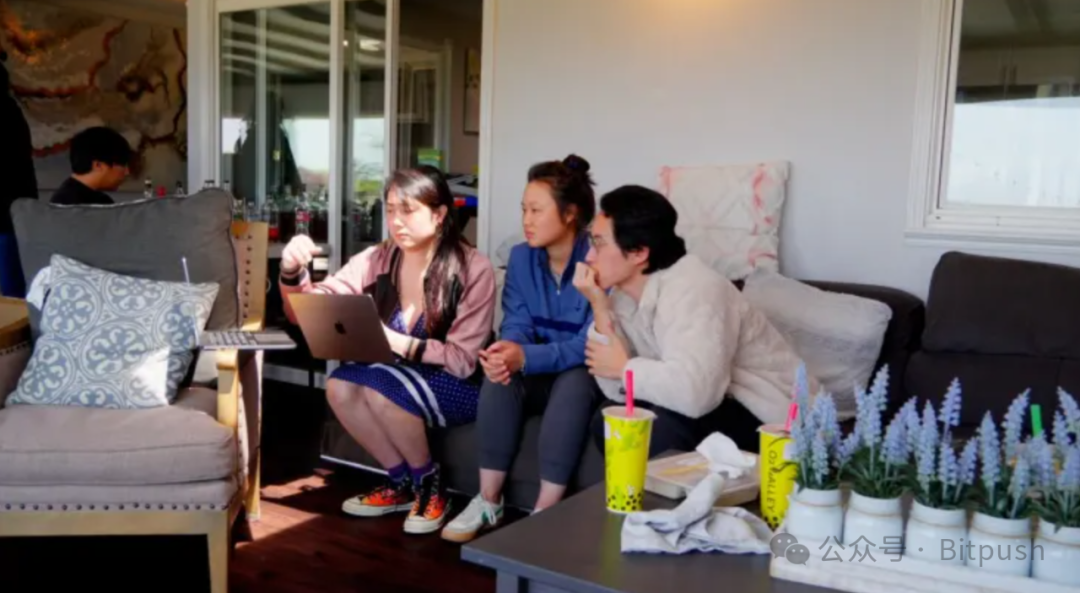
More importantly, these engineers have a significant advantage when participating in the hackathon - they know what they are doing. A few days before the halving, 33-year-old Yin gathered the team at this house in Northern California. The team had a clear goal: to build the best market trading platform for new digital products on the Bitcoin blockchain. On Monday morning, the Magic Eden Rune platform was officially launched, further solidifying its position as a leading trading platform for new Bitcoin products.
For years, competitors such as Ethereum and Solana have been fiercely competing with Bitcoin in terms of blockchain functionality, thanks to their native support for smart contract functionality. Smart contract functionality allows developers to write programmable code snippets, bringing more possibilities to blockchain applications. As a result, developers from around the world have flocked to these blockchain platforms to build various applications.
Last year, a Bitcoin programming guru named Casey Rodarmor completely changed this situation by introducing the Bitcoin version of NFT, now widely known as Ordinals. This innovation was used by developers as the basis for tokens issued on the Bitcoin blockchain (referred to as BRC-20 tokens). The launch of Ordinals initially did not attract much attention, but eventually brought Casey Rodarmor great acclaim.
Late Friday night, just as the Bitcoin halving was taking place, Rodarmor launched his latest masterpiece - Runes. Runes is essentially an upgraded version of the BRC-20 token, with superior performance.
"People have great respect for Casey, believing that he has captured a fleeting spark," said Nic Carter of Castle Island Ventures, "so there are very high expectations for Runes."
From a technical perspective, Runes simply implements the issuance of exchangeable tokens on the Bitcoin base chain, which can be stablecoins, meme coins, or any other type of exchangeable tokens.
For developers, Runes is more efficient than the existing BRC-20 token standard, which is crucial. The BRC-20, as a widely used exchangeable token standard on Bitcoin, has attracted a lot of attention. Having a widely accepted and recognized token standard is considered key to unlocking the scale of Bitcoin decentralized finance (DeFi). DeFi is a decentralized system parallel to the traditional banking system, automatically executed through code, reducing intermediaries such as lawyers and banks.
"Exchangeable tokens are indispensable for important ecosystems such as Ethereum and Solana, so Runes is undoubtedly an important step in the development of Bitcoin," said Yin, who was responsible for all institutional trading products at Coinbase.
Abra, founded by Bill Barhydt, provides a range of services for miners, including automatic clearing, and can obtain macro data for the entire industry. He said that Bitcoin's blockchain architecture (Layer 1) itself cannot achieve comprehensive scalability. The core issue is that Bitcoin's blockchain lacks built-in smart contract functionality, which is essential for building complex financial ecosystems like Ethereum or Solana.
"BRC-20 tokens, Ordinals, advanced versions of Runes, as well as sidechains like Stacks and DeFi on Bitcoin, all show strong potential in user adoption. They will greatly increase demand for Bitcoin block space and adoption, and are expected to further drive Bitcoin price growth in the coming years," Barhydt said.
Barhydt further pointed out, "The level and progress of the new development work around Bitcoin is truly amazing."
Venture capitalists also agree.
"In my entire career, I have never seen such aggressive trading activity in the Bitcoin space," Carter told CNBC in an interview.
Increased attention on Bitcoin L2
Indeed, in the past few months, venture capital firms have shown significantly increased interest in these Bitcoin Layer 2 projects.
According to PitchBook data, in the fourth quarter of 2023, the transaction value in the cryptocurrency industry saw its first increase in nearly two years, reaching $1.9 billion, a 2.5% increase from the previous quarter. Although it is still far from the high point of $31 billion in 2021, funds are gradually flowing back into the field, indicating that the market's interest and confidence in Bitcoin are recovering.
"The second layer space of Bitcoin has undoubtedly sparked capital interest," said Muneeb Ali, co-founder of Stacks. Stacks is an open-source blockchain network that introduces smart contract functionality to Bitcoin.
As an independent blockchain network from Bitcoin, Stacks can work in coordination with Bitcoin. At the time of the Bitcoin halving, Stacks also completed its own upgrade, reducing transaction time to 5 seconds. This significantly improves efficiency compared to the 10 to 30 minutes of block processing time on the Bitcoin base chain.
Ali emphasized that the increased attention from many venture capital firms further confirms the view that the "Bitcoin ecosystem is preparing for growth." He also revealed that in the past six months, the number of projects launched based on Bitcoin has rapidly increased from 6 to over 50, indicating an acceleration in project launches.
A report released by the Austin-based venture capital fund Trammell Venture Partners pointed out that Bitcoin startups experienced explosive growth in seed funding, with transaction volume increasing by 360% year-on-year.
Christopher Calicott, Managing Director and Founding Partner of the fund, mentioned when discussing the research results, "Founders are now more willing to focus on Bitcoin development."
In addition, the report also shows that the total funding for early-stage startups focused on Bitcoin from 2021 to 2023 is close to $1 billion.
For example, Alpen Labs is applying advanced scaling technology such as zero-knowledge proofs to Bitcoin and has become active in the market. Recently, they secured a $10.6 million funding round led by Ribbit Capital. Another notable second-layer solution, "Build on Bitcoin" (BOB), also successfully raised a $10 million seed round.
Ali said, "The emerging innovative technologies in 2023, such as Ordinals and BRC-20 tokens, have provided momentum for the rapid momentum before the Bitcoin halving. They have revitalized Bitcoin's appeal and proved that given the opportunity, users are more inclined to choose NFTs, assets, and applications based on Bitcoin."
Decentralized Finance (DeFi) on Bitcoin
For years, developers have been trying to add additional functionality to Bitcoin's base chain. Barhydt told CNBC that the demand for decentralized finance (DeFi), especially for yield and lending functions, is a key driver of cryptocurrency application development.
Take sidechains like Stacks, for example. They have been working to introduce transaction speeds similar to Solana and competitive transaction costs into the Bitcoin ecosystem to alleviate congestion on the main chain and drive the expansion of the entire Bitcoin economy.
The launch of Runes provides a new growth tool for these existing projects. Through Runes, these projects are expected to be connected to the native lightweight token system on the Bitcoin main chain without the need to create their own independent token environment.
"Runes provides an efficient system that makes it possible to directly create and manage fungible tokens on Bitcoin. Compared to other token standards, Runes can avoid blockchain bloat and enhance scalability," evaluated Hong Fang, President of OKX Exchange. "This is significant for expanding Bitcoin's second-layer solutions and sidechains." Hong Fang has nearly ten years of experience working at Goldman Sachs.
Ali refers to the period after the halving as "Bitcoin's second season."
He said, "The key to the second season is that builders are returning to Bitcoin. Users are finally starting to differentiate between Bitcoin as an asset and as a payment tool."
During the week-long hackathon, Yin and his team made another important discovery: they must rigorously screen Airbnb listings in the future.
The house they rented had a malfunctioning outdoor gas fireplace, causing the entire house to be filled with a suspected gas leak odor. In addition, the house's WiFi was out of service from the first day and completely unusable. To make matters worse, someone in the team was infected with the coronavirus.
免责声明:本文章仅代表作者个人观点,不代表本平台的立场和观点。本文章仅供信息分享,不构成对任何人的任何投资建议。用户与作者之间的任何争议,与本平台无关。如网页中刊载的文章或图片涉及侵权,请提供相关的权利证明和身份证明发送邮件到support@aicoin.com,本平台相关工作人员将会进行核查。


