Virtual currency, due to its anonymity, not only allows emerging technology entrepreneurs to experience the joy of exploring new fields, but also enables criminals to experience unregulated freedom.
Author: Liu Zhengyao, Senior Lawyer at Shanghai Mankun Law Firm
Introduction:
According to a report by CCTV News, the Beijing police and the Beijing branch of the State Administration of Foreign Exchange recently jointly cracked a complex criminal case involving virtual currency, also known as a "serial case."
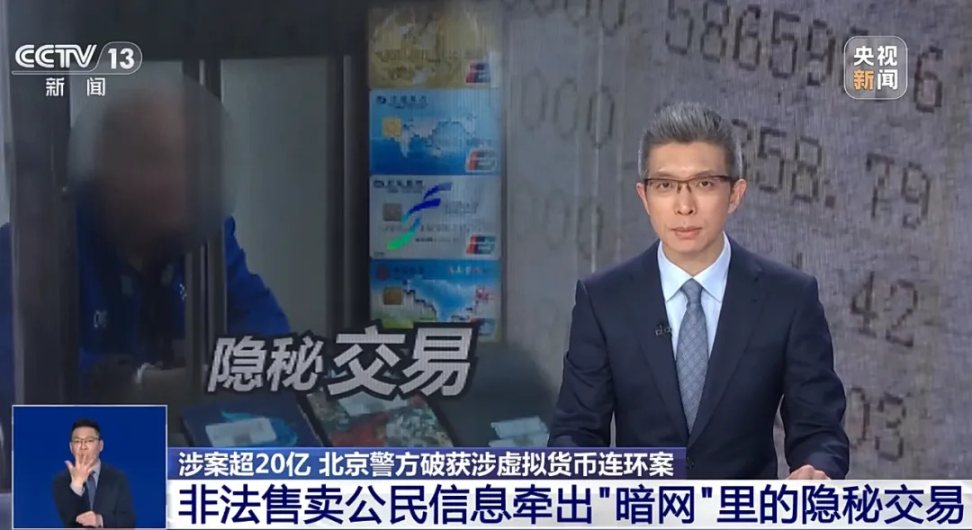
The specific case is as follows: the Beijing police received a tip that someone was openly selling personal information of citizens on a chat app group overseas (most likely Telegram), with hundreds of members in the group and a total transaction volume of over a billion pieces of personal information of Chinese citizens. Unlike traditional crimes, this transaction strictly required the use of virtual currency.
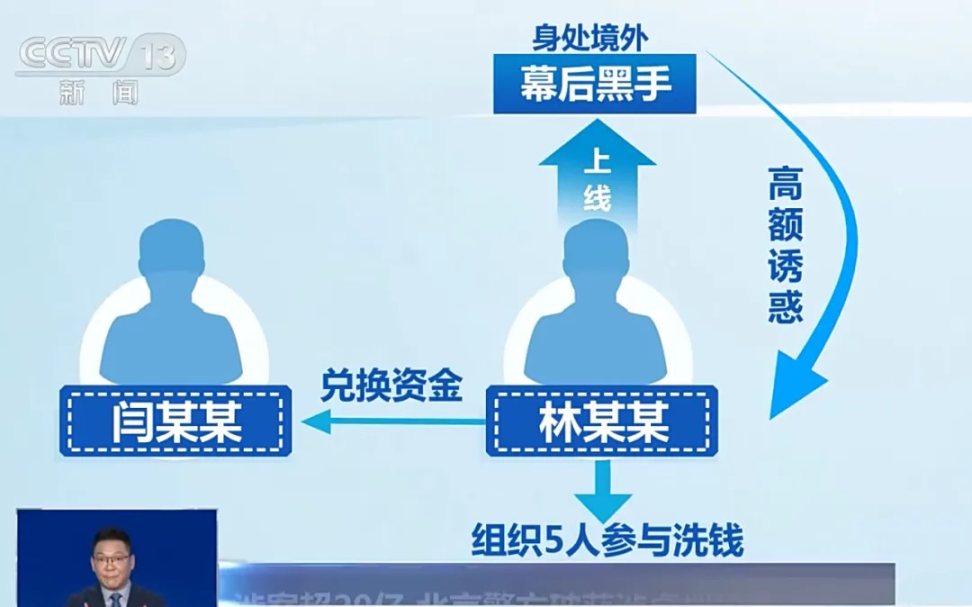
After investigation by the public security organs, Yan and others who illegally sold citizens' personal information, as well as Lin and others who helped Yan launder money, were arrested. The amount involved in the case exceeded 2 billion yuan.
Based on the limited information disclosed in the news, Yan and Lin are suspected of the following criminal patterns: Yan sold Chinese citizens' personal information on the internet, received virtual currency, and then used Lin to launder and cash out the virtual currency. Lin, on the other hand, had his own team and superiors, and through the exchange of virtual currency for fiat currency, the exchange of virtual currency, and possibly other businesses, he made over 2 million yuan in profits in this case.
01 Analysis of the "Serial Case"
The appearance of the State Administration of Foreign Exchange in the announcement is because criminal activities related to virtual currency are likely to involve the exchange and cashing out of virtual currency, which may involve illegal buying and selling of foreign exchange using virtual currency as a medium, requiring the intervention of the State Administration of Foreign Exchange.
In this case, the crime of infringing on citizens' personal information is first analyzed by Lawyer Liu, followed by the illegal business closely related to virtual currency, money laundering, concealing and disguising criminal proceeds, and the crime of concealing criminal proceeds, as well as the crime of assisting in the activities of an information network crime.
(I) Crime of Infringing on Citizens' Personal Information
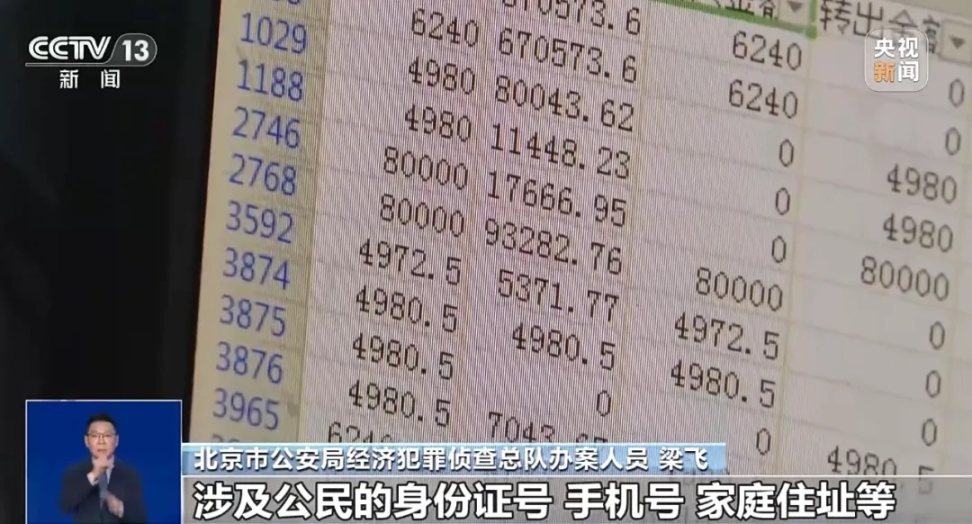
Referred to as the "infringement of personal information crime," it is a relatively common charge in recent years. From the perspective of the seller, selling citizens' information is almost "extremely profitable." Once the electronic data is sold, it can be resold without restriction as long as there are buyers. The most common use of the purchased data is for fraud, making the infringement of personal information a source of telecommunications fraud and a key focus of public security organs.
According to Chinese law, the act of "selling or providing personal information of citizens to others, with serious circumstances" constitutes this crime. Common circumstances constituting the crime include:
- Selling or providing citizens' whereabouts information for use in crimes by others;
- Knowing or should have known that others are using citizens' personal information to commit crimes;
- Illegally obtaining, selling, or providing citizens' accommodation information, communication records, health and physiological information, transaction information, and other information that may affect personal and property safety, totaling over 500 pieces;
- Illegal gains exceeding 5,000 yuan, and so on.
(II) Illegal Business Crime
Because China implements foreign exchange controls and manages individual foreign exchange purchases and sales with an annual quota, the foreign exchange quota that a citizen is entitled to is limited. If it exceeds the fixed quota (currently set at 50,000 US dollars), it requires application to the relevant authorities. For those involved in the black and gray industries, the emergence of virtual currency has almost perfectly solved the problem of foreign exchange control. Converting RMB into virtual currency (USDT, Ethereum, Bitcoin, etc.), and then exchanging virtual currency for foreign exchange (or vice versa) is currently not effectively regulated, thus forming a stable unofficial exchange path.
This is also the main reason why public security organs always have a bias against virtual currency—because it is too easily and frequently used for illegal activities! Even when citizens' legally held virtual currency is stolen, robbed, or deceived, reporting to the public security organs is often refused, and some victims may even be reprimanded by the police: "Trading virtual currency is illegal. We are already being lenient by not taking action. Do you still want to report the case?!"
However, exchanging virtual currency for foreign exchange does indeed violate China's current foreign exchange regulatory provisions. According to relevant regulations, illegal buying and selling of foreign exchange exceeding 5 million yuan or illegal gains exceeding 100,000 yuan constitute the crime of illegal business.
In the case discussed in this article, Yan obtained virtual currency by selling citizens' information, and then cashed it out through Lin. After Lin received the virtual currency, he engaged in the exchange of virtual currency, virtual currency and RMB, and virtual currency and foreign currency (as reported in the news). The RMB-virtual currency-foreign currency path is a very typical illegal buying and selling of foreign exchange activity.
(III) Money Laundering Crimes
Strictly speaking, the crime of money laundering must be for specific upstream crimes (such as drug trafficking, organized crime, terrorist activities, smuggling, corruption, disrupting financial management order, etc.). The upstream crime in this case is the infringement of personal information, which does not fall under the crime of money laundering. However, the crime of concealing and disguising criminal proceeds and criminal proceeds (concealment crime) can be applied to this case. The concealment crime only requires "knowing that it is criminal proceeds and the proceeds generated" and then "concealing, disguising, transferring, purchasing on behalf of, or otherwise concealing or disguising" the proceeds, and even helping in the crime of providing payment settlement for internet crimes (assisting crime) can also be applied to this case.
This also indicates that using virtual currency to assist in criminal activities, once proven, can easily be deemed as concealment and assisting crimes if a complicity relationship cannot be proven.
02 Why is it Easy to Crack Down on Virtual Currency Crimes?
Due to the anonymity of virtual currency, not only do emerging technology entrepreneurs experience the joy of exploring new fields, but criminals also experience unregulated freedom.
However, many people forget that while virtual currency has anonymity, it also has a public nature—public key addresses are visible to everyone, and there are even monitoring tools for wallet addresses that constantly track the movements of anonymous wallets—showing where money is transferred in and out. Furthermore, databases have already collected most addresses marked with real-name information, and most exchanges will fully cooperate with providing account information and freezing virtual currency involved in cases after receiving investigation letters from public security organs.
Therefore, as public security organs increasingly understand the patterns of virtual currency crimes, using virtual currency does not inherently mean safety.

03 Conclusion
In this case, although the account information of Lin's superior on the exchange was registered under a Vietnamese identity, the Beijing police judged that his behavior pattern was very similar to that of a mainland Chinese person (the investigative methods of the public security organs should not be underestimated). In addition, public security organs often have the ability to hire skilled technology companies and blockchain security teams to assist in solving cases, making it difficult for ordinary individuals to compete. Therefore, for those who think they can take advantage of the anonymity of virtual currency without consequences, Lawyer Liu advises giving up on that idea as soon as possible, as operating within the bounds of the law and regulations is the right path.
免责声明:本文章仅代表作者个人观点,不代表本平台的立场和观点。本文章仅供信息分享,不构成对任何人的任何投资建议。用户与作者之间的任何争议,与本平台无关。如网页中刊载的文章或图片涉及侵权,请提供相关的权利证明和身份证明发送邮件到support@aicoin.com,本平台相关工作人员将会进行核查。


