The law of nature is cyclical, and everything returns to its natural state. It seems that the narrative of encryption is also in a cycle.
The performance issues discussed at the birth of Bitcoin have resurfaced today—block space, sidechains, and the Lightning Network. Especially after the Bitcoin script Ordinals triggered a new round of market hotspots, the encryption community has begun to return to its original intention to re-examine early expansion solutions, which is based on the Layer 2 of the Bitcoin blockchain. In this context, TRON DAO promptly noticed the community's focus. After the start of the Year of the Dragon, Justin Sun quickly responded to the community's needs and announced the official release of the Bitcoin Layer 2 solution and roadmap, driven by the atmosphere of the TRON community.
According to the roadmap disclosed by Justin Sun, the TRON Bitcoin L2 strategy consists of three phases, namely roadmap stages α, β, and γ.
Phase α: Realizing the Bridge between the TRON Ecosystem and Bitcoin
First, in the roadmap stage α, the TRON network will access Bitcoin through cross-chain connections and facilitate conversion through exchanges. In the future, assets based on the Bitcoin network will be extended to the TRON network through bridging, and TRON will also strive to integrate various TRON tokens, including USDT, TRX, BTT, JST, SUN, NFT, and WIN, into the Bitcoin network through cross-chain technology. This will enable TRON's tokens to seamlessly interact and interoperate with the Bitcoin network.
At the same time, TRON DAO will also explore Ordinals and the Bitcoin Layer 2 solution, planning to invest in a user-friendly wallet and tools that support BRC-20 tokens, marking TRON DAO's exploration of Ordinals and the Bitcoin Layer 2 solution.
In fact, TRON entered the key point of the Bitcoin L2 in the first phase—"bridging." This innovative approach aims to decentralize and interweave various tokens within the TRON network, including stablecoins, with the Bitcoin network and its built Layer 2, such as Bitcoin Ordinals. Among the numerous combinations, this integration will not only directly connect TRON with Bitcoin but also enable the over $55 billion worth of value in the TRON ecosystem to access the Bitcoin network, injecting more vitality into Bitcoin.
Undoubtedly, TRON will not simply play the role of a "Bitcoin sidechain" because TRON itself has its own security model independent of the Bitcoin blockchain. From this perspective, since bridging is already relatively mature, extending the Bitcoin blockchain itself through this method is not a choice but the best solution for TRON to solve the "trilemma" of decentralization, security, and speed/scalability. In the future, it may even transfer Bitcoin on-chain transactions to off-chain, moving transactions from the Bitcoin blockchain to the TRON blockchain.
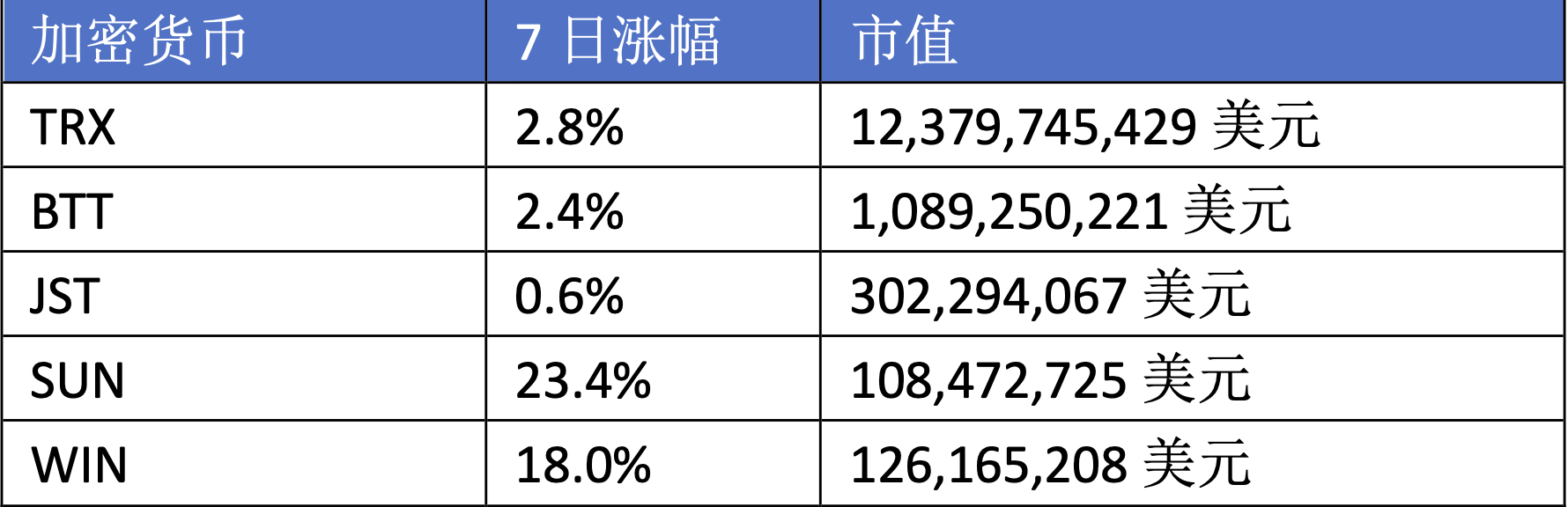
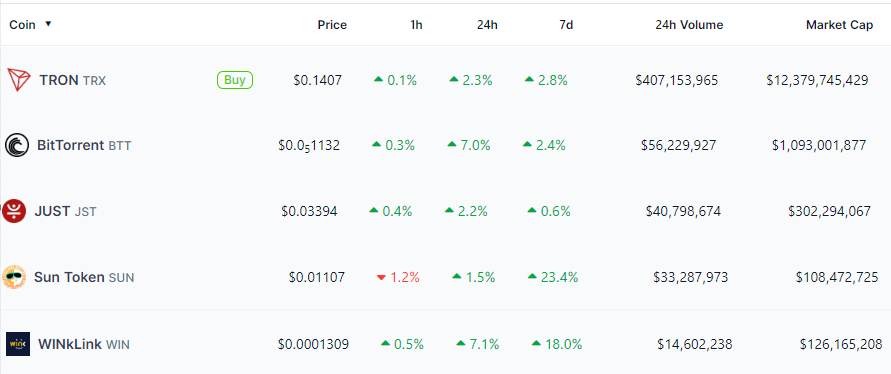
The market's attitude also proves this point. After the announcement, related cryptocurrencies such as TRX, BTT, JST, and SUN all saw increases, reflecting the market's optimistic sentiment towards TRON's integration plan with the Bitcoin Layer 2 network (Note: The data in the table below is from Coingecko, as of February 27, 2024):
Phase β: Achieving "Win-Win" through Ecosystem Collaboration
In roadmap stage β, TRON will cooperate with multiple Bitcoin Layer 2 protocols and gradually announce important partnership relationships. These collaborations will allow TRON users to participate in the re-staking activities of major Bitcoin Layer 2 networks, supporting the development of the Bitcoin Layer 2 ecosystem with TRON's diversified asset portfolio.
Compared to many early Bitcoin Layer 2 projects starting from scratch, TRON has already achieved a breakthrough from 0 to 1. Since its inception in September 2017, TRON has become one of the largest on-chain ecosystems in the world. This means that when cooperating with Bitcoin Layer 2 protocols, TRON comes with resource advantages, not only enabling the effective implementation of related business applications but also meeting and expanding the needs of various application scenarios. More importantly, TRON's internal users and developers can also provide effective support for the Bitcoin ecosystem and even "feed back" their own traffic to the Bitcoin ecosystem.
Moreover, based on the foundation of roadmap stage α, TRON and Bitcoin will complete the "bridging." This will undoubtedly bring more room for imagination to the two major ecosystems. As Justin Sun has said before, one of the constraints on the development of the current encryption industry is the "ecological island" problem. Many projects are often limited to a single blockchain, making it difficult to access other ecological resources and users, and unable to achieve true decentralization.
According to roadmap stage β, TRON users will participate in the re-staking activities of major Bitcoin Layer 2 networks. This will not only increase the value of the two major ecosystems but also achieve the goal of user interoperability. A large number of TRON users will enter the Bitcoin ecosystem, bringing a continuous influx of users to the world's largest blockchain. On the other hand, more high-quality Bitcoin on-chain projects will be transported to the TRON ecosystem, reaching a wider audience and community, ultimately achieving mutual benefit and win-win for the two major ecosystems.
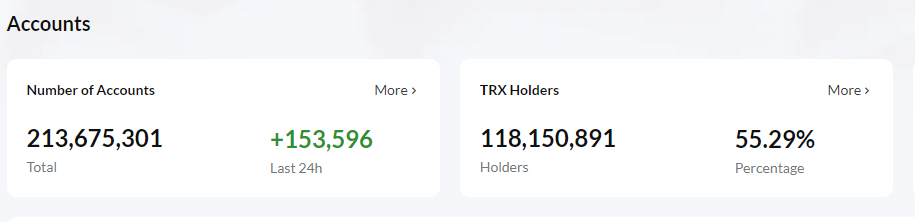
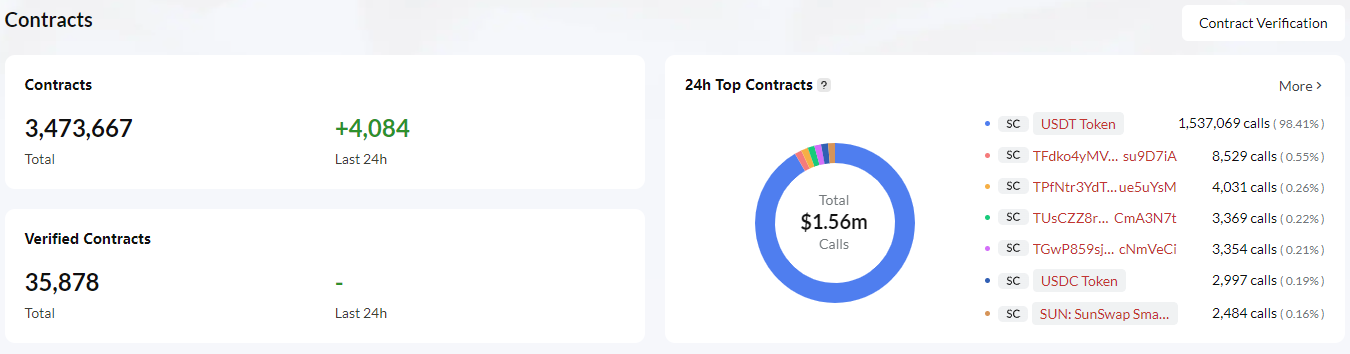
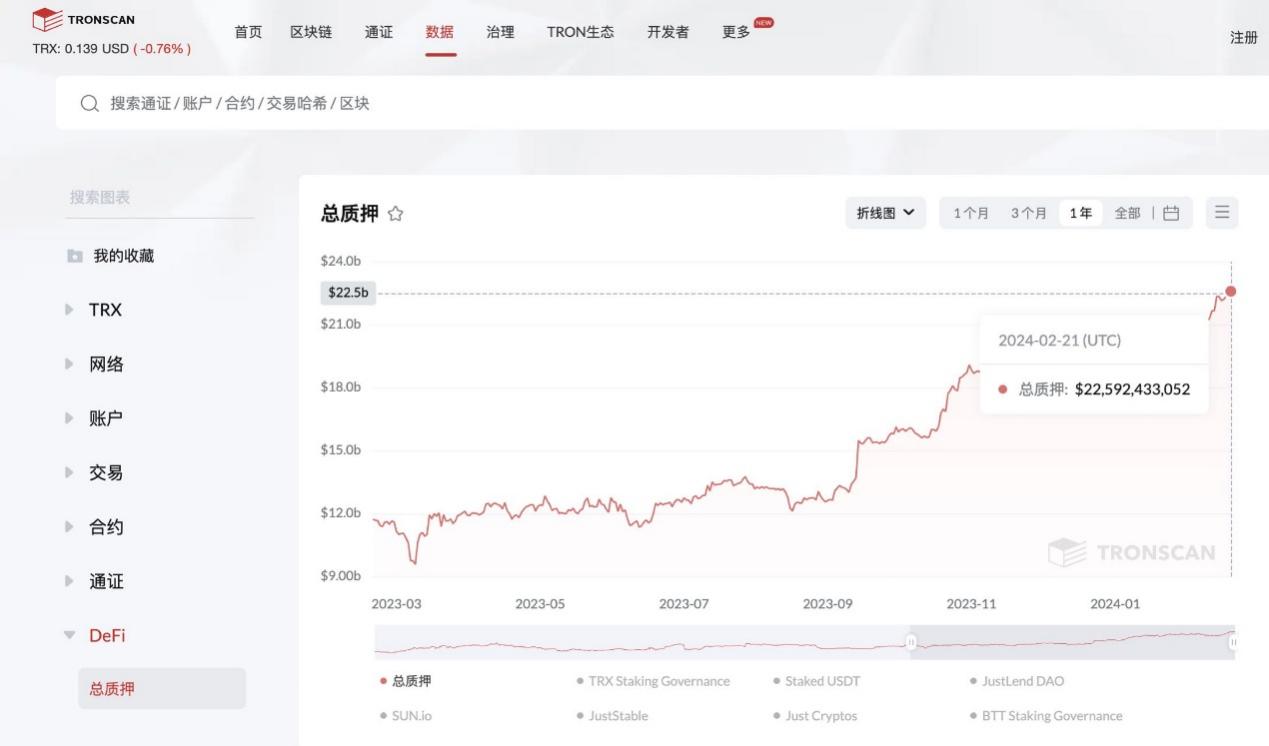
As seen by the community, the TRON ecosystem is developing rapidly and has actively laid out in multiple fields such as gaming, finance, and social media, and has built a prosperous and diverse blockchain ecosystem. According to Tronscan data (as shown below), the number of TRON ecosystem accounts has exceeded 200 million, with hundreds of thousands of developers and thousands of DApp applications, and the number of on-chain contracts created is close to 3.5 million.
As the world's largest stablecoin market protocol, TRON has a stablecoin market value of $55 billion. At the time of writing this article, the total value locked (TVL) of decentralized finance on TRON has also exceeded $22.5 billion, reaching a historic high.
Phase γ: Promoting the "Great Integration" of Bitcoin, TRON, and BTTC
In roadmap stage γ, Justin Sun proposed to integrate the Layer 2 solutions of TRON, BitTorrent Chain (BTTC), and the Bitcoin network. This undoubtedly marks an important milestone. It is reported that the related solution will introduce a protocol compatible with Bitcoin, aiming to maintain the speed and low cost of the POS system while ensuring the security of POW and UTXO when combined with the Bitcoin Layer 2.
In fact, although most existing Layer 2 solutions inherit the security and reliability of the original chain, they have not been tested for robustness like Bitcoin. As a somewhat independent network, the introduction of TRON to the Bitcoin Layer 2 will undoubtedly bring new risks and challenges. Frankly, the key point of roadmap stage γ is to focus on the security of POW and UTXO when combined with the Bitcoin Layer 2, which is an area that other similar solutions have overlooked.
As the world's first heterogeneous chain cross-chain interoperability expansion protocol, BTTC, jointly created by the core team of TRON and BitTorrent, adopts a multi-node verification mechanism, with transparent custody accounts and the powerful guarantee of the TRON mainnet's security for the BTTC network. It is one of the most optimal cross-chain expansion solutions for mainstream public chains. Certainly, with improved security, efficient speed, and low fees, it may inject new energy and financial resources into the TRON network, potentially having a positive impact on the valuation of TRX and BTTC tokens in the future.
Adhering to the Original Intention of Encryption, Consolidating the Foundation of a Decentralized World
Frankly, the TRON Bitcoin L2 "αβγ" three-stage strategy has attracted attention in the industry since its launch, especially as Bitcoin successfully broke through the $57,000 mark just after the Chinese New Year. The "strong alliance" between TRON and Bitcoin seems to be timely, leading the encryption community to wonder: why can Justin Sun always seize the industry's opportunities?
In fact, despite having amassed a huge fortune, Justin Sun has always been at the forefront of the encryption market. As a 90s-born figure, he is a legendary and controversial figure—
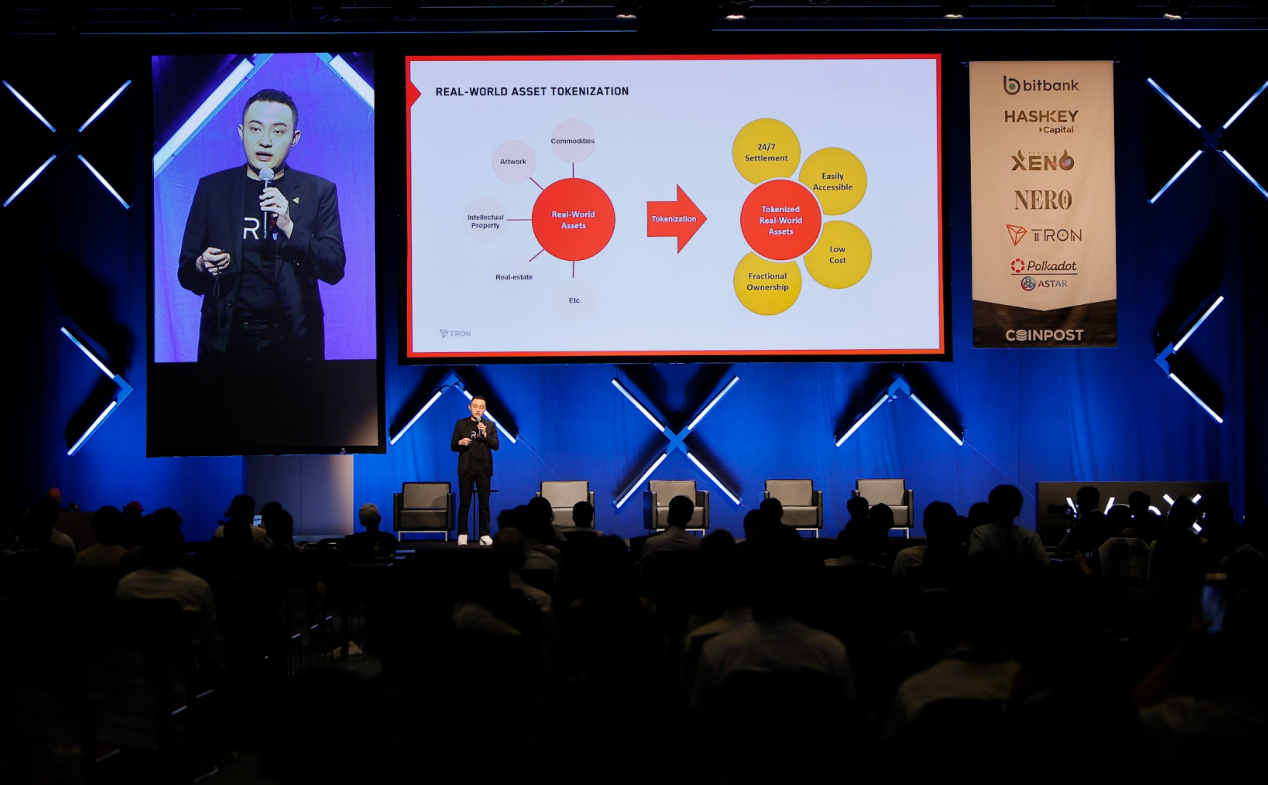
Sun's connection with Bitcoin began in 2012 when he was pursuing a master's degree at the University of Pennsylvania in the United States. At that time, Bitcoin was in its early stages, and its decentralization and anonymity deeply attracted Sun. He keenly perceived the enormous potential of Bitcoin and saw it as the future of financial revolution.
In 2017, Sun founded TRON, aiming to create a decentralized internet infrastructure. Based on blockchain technology, TRON aims to break data silos and achieve the free flow of information.
In the development of TRON, Sun cleverly integrated the concept of Bitcoin. However, compared to Bitcoin's "stagnation," Sun is clearly more innovative. In just one year, the TRON mainnet successfully launched and introduced several innovative technologies, such as the DPoS consensus mechanism and TVM virtual machine, significantly improving the performance and scalability of TRON and providing users with a more secure, transparent, and efficient user experience.
In terms of industry enthusiasm, Sun has many similarities with Ethereum's founder, Vitalik Buterin. Both of them were early adopters of Bitcoin and keenly perceived its enormous potential. They have continued to focus on industry technological development, actively promoting technological innovation, community building, and the establishment of industry technical standards. Sun is not only a believer in the future of cryptocurrencies but also a builder of the infrastructure for the cryptocurrency industry.
For example, TRON has initiated several industry initiatives to promote industry self-discipline and standardized development, including strengthening support for TRON script, accelerating the integration of TRON with BRC20, and launching a $100 million TRON developer fund to incentivize innovation and reduce energy costs to attract more developers and users to use TRON. Regarding cryptocurrency regulation, Sun actively participates in international exchanges to promote the global development of the cryptocurrency industry. He calls on governments and regulatory agencies around the world to adopt a more open attitude towards cryptocurrencies, helping the international community to better understand cryptocurrencies and promoting the understanding and acceptance of cryptocurrencies by governments and regulatory agencies around the world.
Of course, the path of development is not always smooth. However, in the face of external doubts and smears, Sun has always maintained a candid and confident attitude, adhering to his original intention and continuously proving himself through practical actions. He firmly believes in the future of blockchain technology and is committed to making TRON a leading global blockchain platform. As Sun responded to previous negative news:
"After ten years of entrepreneurship, I have become indifferent to the so-called injustice and unfairness. I deeply understand the heavy responsibility I bear. Whether users' assets are 100% safe, whether Huobi guarantees 100% margin, whether the daily transfers of 200 million TRON users are smooth enough, decentralized enough, and secure enough. Money is more like a part of order, an order that requires a lot of time and effort to defend. I also deeply understand the serious consequences of disorder in the financial field, and blockchain will be a better financial order for humanity."
Today, TRON, as a top public chain, plays an important role in industry construction. Its secure, stable, and efficient underlying technology supports the convenience of cryptocurrency development, while also providing support in terms of funding, technology, and operations through ecological funds, incubators, and other means to help the cryptocurrency ecosystem grow. It actively collaborates with other blockchain projects and institutions to jointly promote the development and application of related technologies.
Conclusion
Sun's "αβγ" three-stage strategy provides a clear roadmap for TRON's entry into the Bitcoin L2 field. The successful implementation of this strategy will have a significant impact on the development of the TRON and Bitcoin ecosystems. Clearly, the strong on-chain ecological value will drive the smooth implementation of TRON's Bitcoin L2 roadmap plan and lead the entire industry back to the original intention of blockchain and encryption technology. However, at the same time, TRON needs to overcome technical challenges, enhance product competitiveness, and actively respond to changes in the regulatory environment. Only in this way can its position as a leading public chain be further consolidated.
Successfully seizing the Bitcoin L2 opportunity this time undoubtedly reflects Justin Sun's keen market insight and strong resource integration capabilities based on many years of industry experience. With the start of a new bull market, TRON is bound to gain greater development space, bring more value to the industry, and play a more important role in the global development of blockchain.
免责声明:本文章仅代表作者个人观点,不代表本平台的立场和观点。本文章仅供信息分享,不构成对任何人的任何投资建议。用户与作者之间的任何争议,与本平台无关。如网页中刊载的文章或图片涉及侵权,请提供相关的权利证明和身份证明发送邮件到support@aicoin.com,本平台相关工作人员将会进行核查。


