- Student author: @longyeyouxin
- Supervising teachers: @CryptoScottETH, @ZouBlock
- Initial release date: 2024.2.26

- Ondo Finance is a financial protocol focusing on the RWA track. At this stage, its main business is to tokenize high-quality assets such as US Treasury bonds and money market funds within the compliance framework, in order to facilitate investment and trading for blockchain users.
- The RWA US Treasury track where Ondo Finance is located has grown sixfold in the past year, serving as a major driving force in the RWA industry. Ondo Finance ranks third in TVL on this track, possessing a certain first-mover advantage.
- Ondo Finance's future growth points lie in the expansion of its existing product scale and the introduction of other types of RWA products. Its development goal is to become an important bridge connecting on-chain and off-chain.
- The main risk facing Ondo Finance is intense market competition. The RWA industry is huge and still in its early stages, with many powerful institutions vying to enter and carve out market share.
- The $ONDO token was unlocked for circulation in January 2024 and experienced a significant increase after listing. However, apart from being used for DAO governance, the token currently lacks other practical use cases, and its future usage scenarios are not yet clear.
- Approximately 80% of the $ONDO tokens are still held by the project party, and the allocation mechanism remains unclear, posing a significant centralization risk.

Ondo Finance is a decentralized institutional-grade financial protocol, committed to providing institutional-grade financial products and services using blockchain technology, and creating an open, permissionless, and decentralized investment bank.
Ondo's current core business is to introduce low-risk, stable-yielding, and scalable fund products (such as US Treasury bonds, money market funds, etc.) onto the blockchain, providing an alternative stablecoin option for on-chain investors and allowing holders, rather than issuers, to earn most of the underlying asset's returns.

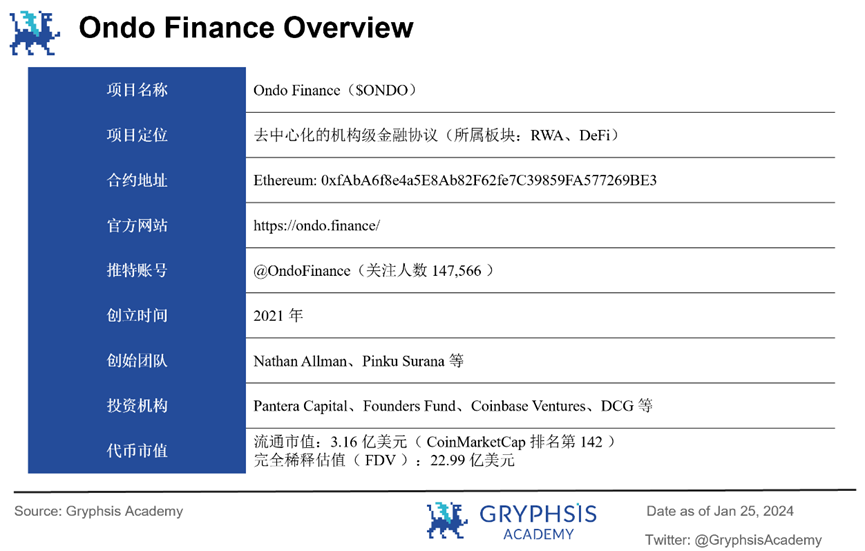

At the beginning of its establishment, Ondo Finance focused on the DeFi track. It was not until the end of 2022 and the beginning of 2023 that it changed its development direction to the RWA track, achieving good results within 2023. The important milestones in the project's development are as follows:
March 2021: Company establishment, focusing on DeFi
Former Goldman Sachs employees Nathan Allman and Pinku Surana co-founded Ondo Finance Inc. At the beginning of its establishment, the company's positioning was to introduce structured assets with good yields into the DeFi field.
In August 2021, Ondo launched its first product, Ondo Vaults—a structured financial protocol running on Ethereum. This product allows investors providing liquidity to decentralized exchanges such as Uniswap to choose between "increased returns" or "downside protection."
August 2021: Seed round financing
Led by Pantera Capital, with participation from Genesis, Digital Currency Group, CMS Holdings, CoinFund, Divergence Ventures, Stani Kulechov, Richard Ma, Christy Choi, etc. The financing amount for this round was $4 million, with a token price of 1 ONDO = 0.0057 USD.
At this stage, Ondo described itself as "a protocol designed to allow DeFi traders to hedge and leverage risk according to their own wishes." Ondo allows users to initiate risk-isolated, fixed-income loans supported by digital assets. Both lenders and borrowers inject funds into Ondo's smart contract-executed "Vaults," which provide two options: "fixed income" to reduce risk and "variable income" to maximize returns.
Second half of 2021: Launch of LaaS service
The Liquidity-as-a-Service (LAAS) can help token issuers increase liquidity on decentralized exchanges. It pairs DAOs with underwriters (stablecoin issuers) to guide high-liquidity AMM trading pairs. The DAO provides governance tokens, the underwriter provides stablecoins, and Ondo assists in establishing liquidity pools. The ultimate goal is to help DAOs establish their own liquidity without relying on liquidity mining or market-making companies.
More than 10 DAOs including NEAR, Synapse, and UMA, as well as underwriters such as Fei, Frax, Terra, and Reflexer, participated in the program. Ondo provided over $210 million in total liquidity (TLP) between the community and LaaS Vaults.
April 2022: Series A financing
Led by Pantera Capital and Founders Fund, with participation from Wintermute, Tiger Global Management, Steel Perlot, GoldenTree Asset Management, Flow Traders, Coinbase Ventures, etc. The financing amount for this round was $20 million, with a token price of 1 ONDO = 0.0285 USD.
At this stage, Ondo described itself as "providing structured investment products built on decentralized exchanges." In addition to the "Vault" investment mentioned during the seed round financing in August 2021, Ondo also provided LaaS to DAOs at this stage.
May 2022: ICO financing
Ondo completed ICO financing on the CoinList platform. It sold 3 million ONDO at a price of $0.03, with a lock-up period of 1 year and linear release within 18 months after unlocking; and sold 17 million ONDO at a price of $0.055, with a lock-up period of 1 year and linear release within 6 months after unlocking. The financing amount for this round was $10.25 million, and for most public investors, 1 ONDO = 0.055 USD.
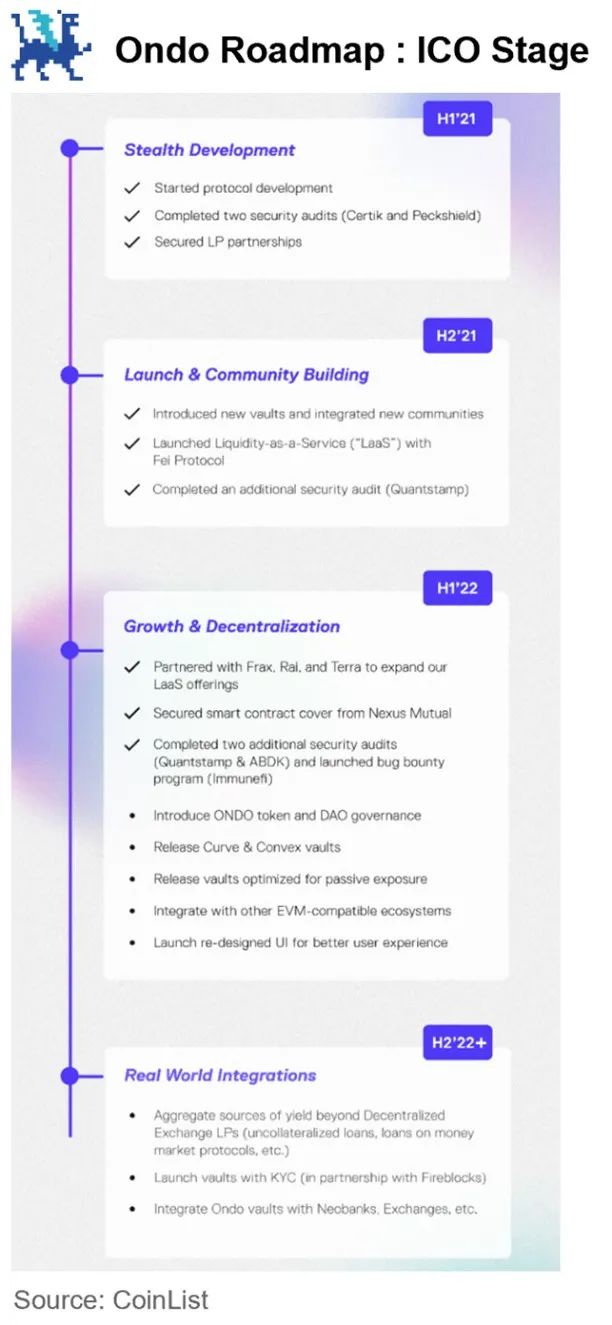
At this stage, Ondo described itself as "providing services and connections for various stakeholders in the emerging DeFi ecosystem—including DAOs, institutions, and individuals." At that time, the Ondo team's project roadmap was as follows:
January-February 2023: Abandoning Vaults and LaaS, Transitioning to the RWA Track
With the compression of DeFi yields in 2022, the Ondo team decided to phase out Vaults and LaaS (collectively referred to as "Ondo V1") and focus on developing the next generation protocol. Ondo V2 was launched, including Ondo Funds and Flux Finance.
Ondo repositioned itself as "building the next generation financial infrastructure to improve market efficiency, transparency, and accessibility," and subsequently launched two tokenized financial products, USDY and OUSG, transitioning to a member of the RWA track.
January 2024: ONDO Token Unlocked for Circulation
Following an on-chain community vote, the ONDO token was unlocked for circulation on January 18, 2024, experiencing a significant increase after unlocking, with the price briefly surpassing 0.3U. Coinbase also announced the inclusion of ONDO in its listing roadmap.

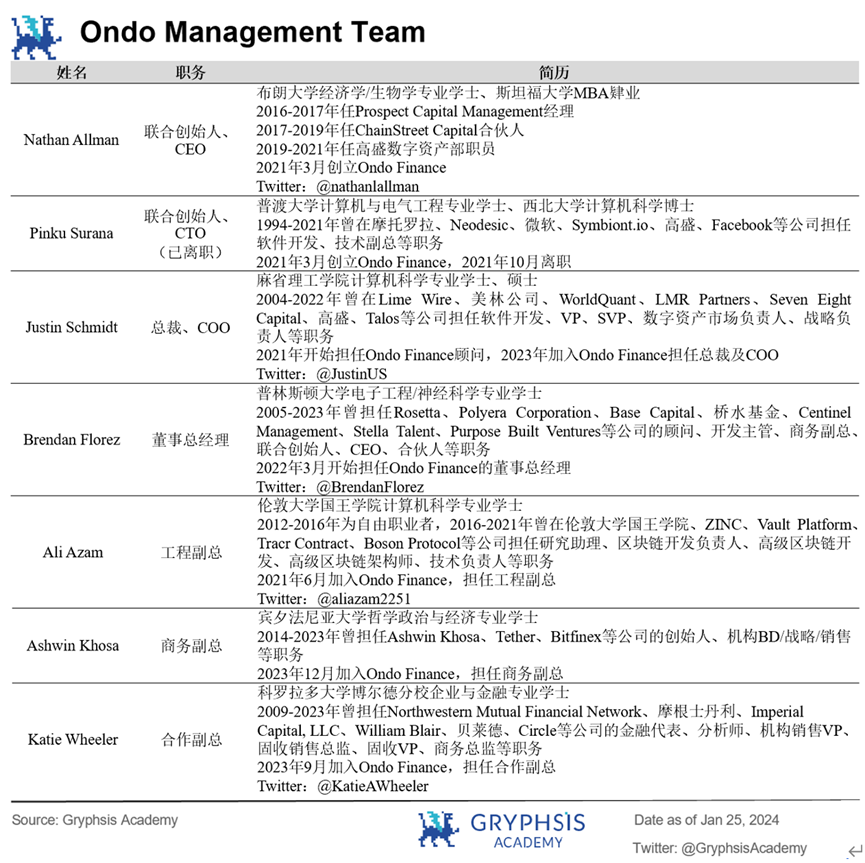

Ondo Finance consists of two main departments: the Asset Management Division, responsible for creating and managing tokenized financial products, and the Second Division, responsible for developing decentralized financial protocols.
Investors can invest in products launched by Ondo by connecting their digital wallets. The tokenized financial products currently offered by Ondo include the interest-bearing stablecoin Ondo US Dollar Yield Token ($USDY) and the tokenized US Treasury fund Short-Term US Government Treasuries ($OUSG), with plans to launch the tokenized money market fund Ondo US Money Markets ($OMMF). Purchasing these products requires KYC verification.

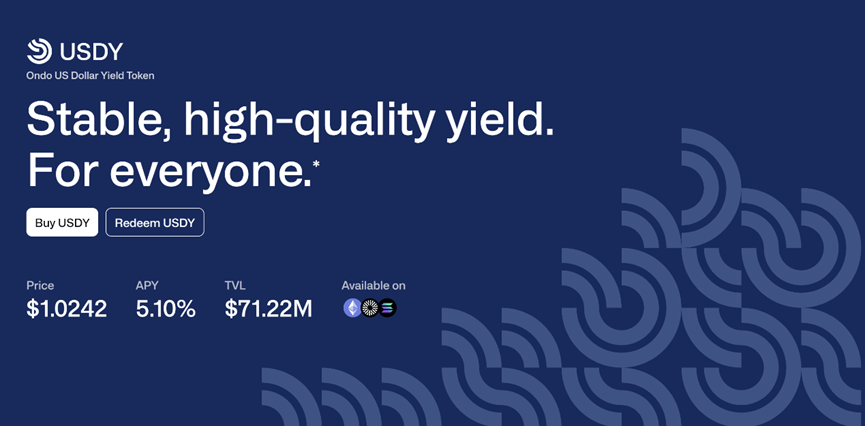
USDY is a tokenized note collateralized by short-term US Treasury bonds and demand deposits, available for purchase by non-US individual and institutional investors. After contributing funds, investors receive a Token Certificate and receive USDY in 40-50 days, after which they can freely transfer it on-chain. Legally, USDY is issued by the bankruptcy-isolation company Ondo USDY LLC, which to some extent can isolate Ondo's operational risks.
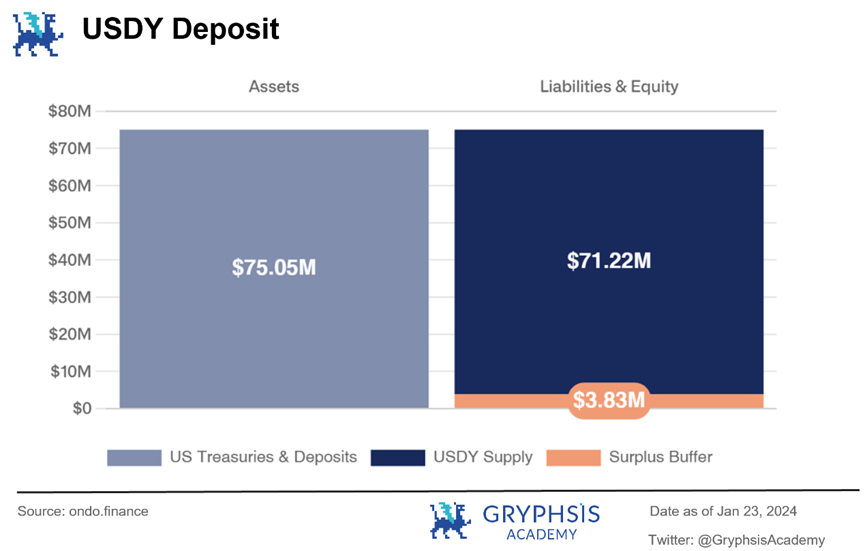
As of January 23, 2024, the total locked value (TVL) of USDY is approximately $71.22 million.
Yield and Fees
The annual percentage yield (APY) provided by USDY is adjusted monthly by Ondo based on actual conditions. As of January 23, 2024, the APY of USDY is 5.10%. The APY of the underlying assets (i.e., the investment portfolio of US Treasury bonds and bank deposits) is approximately 5.27%, with Ondo charging a fee of 0.17%.
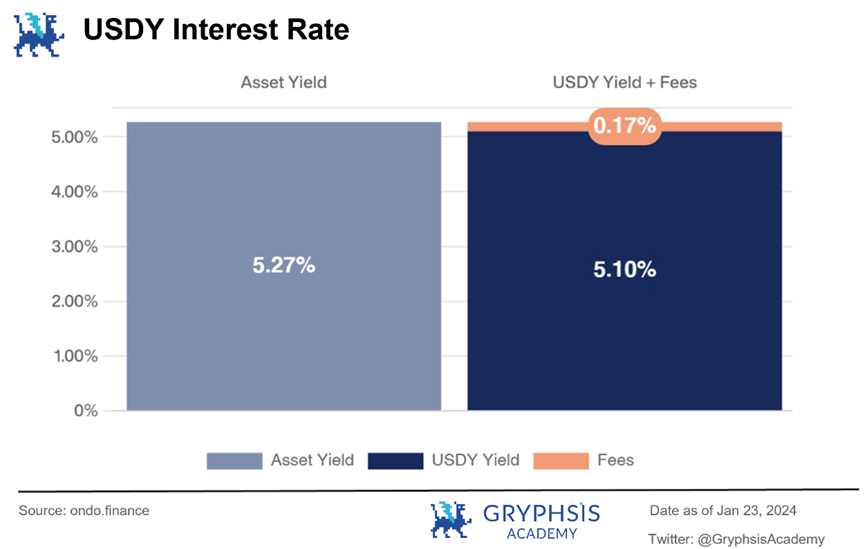
In addition to charging fees based on the aforementioned spread, Ondo also charges a 0.2% fee for redemptions. Furthermore, for investments or redemptions of less than $100,000, if conducted via bank wire transfer, investors are responsible for wire/currency transfer fees (these fees are charged by the service provider, not Ondo). However, for investments or redemptions of $100,000 or more, Ondo will pay these fees on behalf of the investors.
Additionally, Ondo specifically advises investors that the structure of USDY ensures that investors will not trigger US federal income tax obligations.
Token Price
The token price of USDY is calculated based on the token price on the first working day of the month and the token's yield for that month. For example, if the price of USDY on June 1 is $100.00000000 and the APY for June is 4.00000000%, then the price of USDY on June 3 will be:

As of January 25, 2024, the price of USDY is $1.0242.
Collateral Guarantee Mechanism
USDY is issued by the independent legal entity Ondo USDY LLC and managed by an independent board of directors, with separate books and accounts, and assets isolated from Ondo Finance, Inc.
As a senior debt collateralized by demand deposits and short-term US Treasury bonds, Ondo has over-collateralized it, providing a 3% initial loss position to absorb short-term fluctuations in US Treasury bond prices. In other words, for every $100 of USDY issued, there is at least $103 worth of demand deposits and US Treasury bonds as collateral. Additionally, Ankura Trust, as the collateral agent, provides daily transparency reports, including detailed asset holdings.
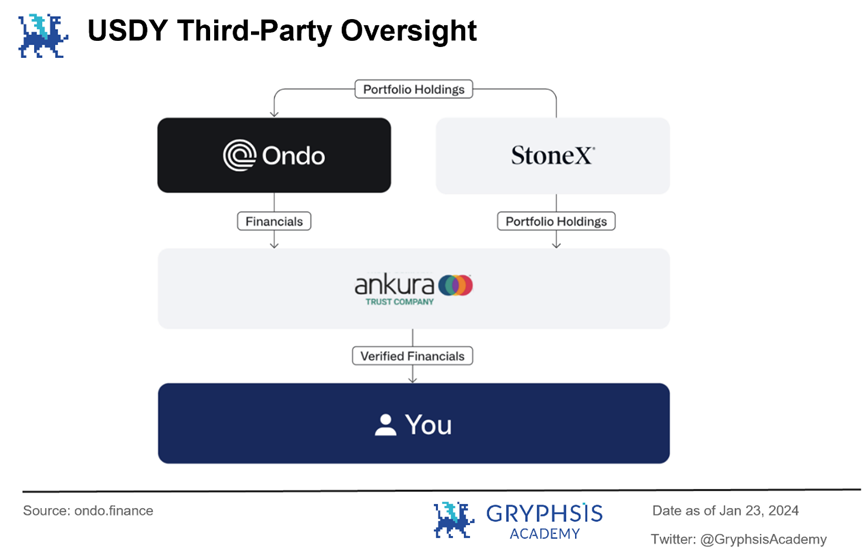
As of January 23, 2024, the total locked value (TVL) of USDY is approximately $71.22 million, the collateral value is approximately $75.05 million, the over-collateralization amount is $3.83 million, and the over-collateralization ratio is 5.38%.
Investment and Custody
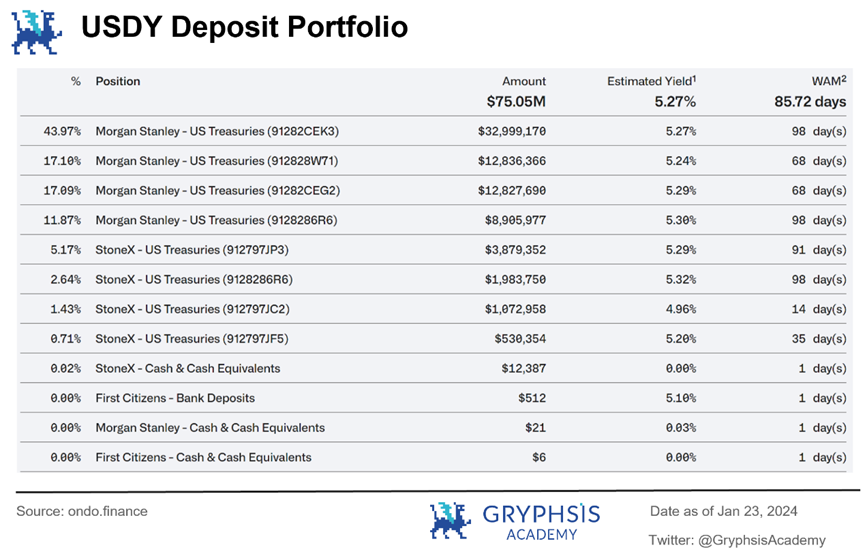
On the investment side, Ondo stated that for the collateral of USDY, its goal is to maintain a 65% allocation of demand deposits and a 35% allocation of short-term government bonds, without investing in any other assets.
In terms of custody, the US Treasury bonds will be held at Morgan Stanley and StoneX, and these US Treasury bonds will not be re-pledged; the demand deposits will be held at Morgan Stanley and First Citizens Bank. Ondo also regularly discloses the composition of its collateral on its official website.
Comparison between USDY and Stablecoins
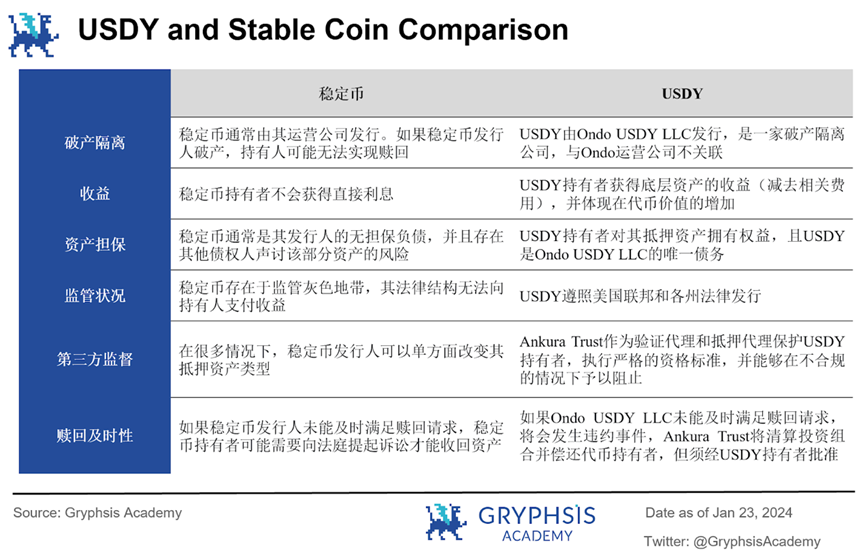
USDY is essentially not a traditional "stablecoin" but a tokenized collateralized note. The specific comparison between USDY and traditional stablecoins is as follows:

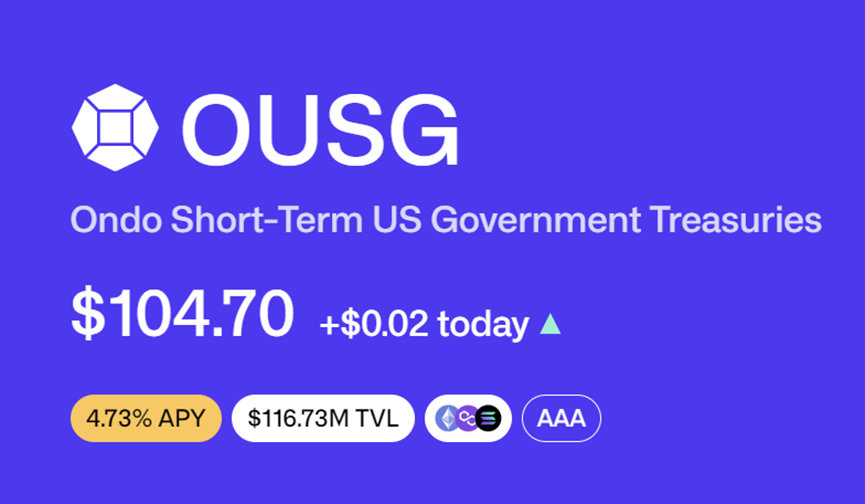
OUSG is a tokenized US Treasury fund designed to provide liquidity exposure to purchasing short-term US Treasury ETFs. Global investors can use USDC or USD to purchase OUSG, with a minimum investment amount of 100,000 USDC. Legally, OUSG is issued by Ondo I LP, a limited partnership registered in Delaware, USA, following standard fund structures.
As of January 23, 2024, the total locked value (TVL) of OUSG is approximately $117 million.
Investment and Custody
The majority of the investment portfolio will be invested in BlackRock's iShares Short-Term Treasury Bond ETF (NASDAQ stock code: SHV), with a small portion held in USDC and USD for liquidity.
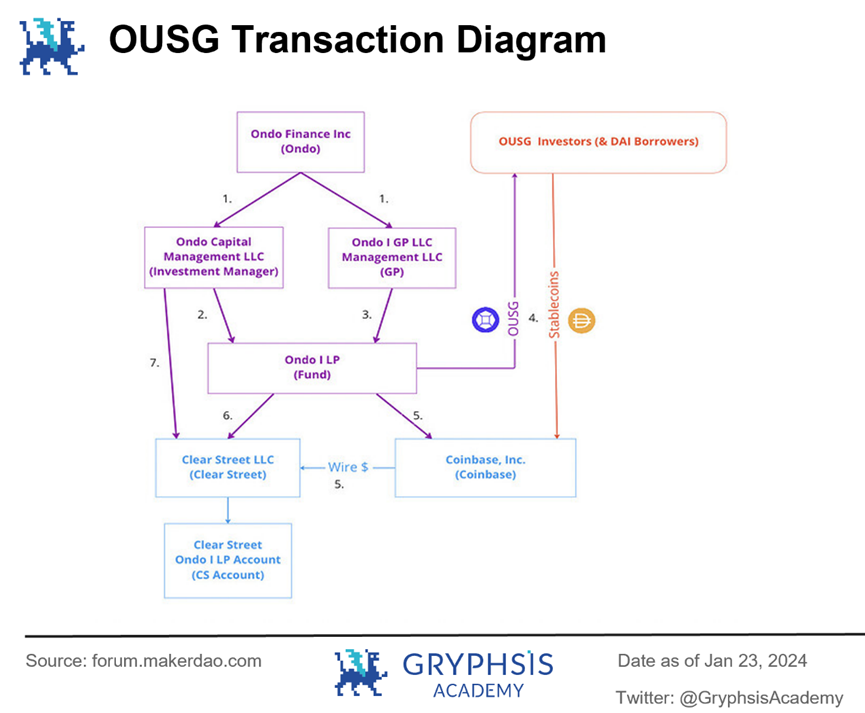
Ondo I GP serves as the general partner (GP) of Ondo I LP; Ondo Capital Management acts as the investment manager to assist the GP in providing management services; Ondo Finance itself provides technical services to tokenize the fund; Clear Street serves as the securities broker and qualified custodian responsible for executing fund trading instructions (i.e., buying and selling ETFs); Coinbase acts as the cryptocurrency custodian and broker holding on-chain assets (USDC).
The relationship of the above entities can be referred to in the following diagram:
Yield and Fees
As of January 23, 2024, OUSG provides an annualized percentage yield (APY) of 4.73%.
For the underlying ETF assets, based on data updated on January 19, 2024: the worst estimated yield to worst (YTW) is 5.03%, 30-day SEC yield is 5.15%, total assets under management are $18.34 billion, and the daily trading volume is $235 million.
In terms of fees: Ondo charges a management fee of 0.15%; service providers such as Nav Consulting charge a service fee of up to 0.15% (this ratio will decrease as TVL increases); ETF management fee is 0.15%.
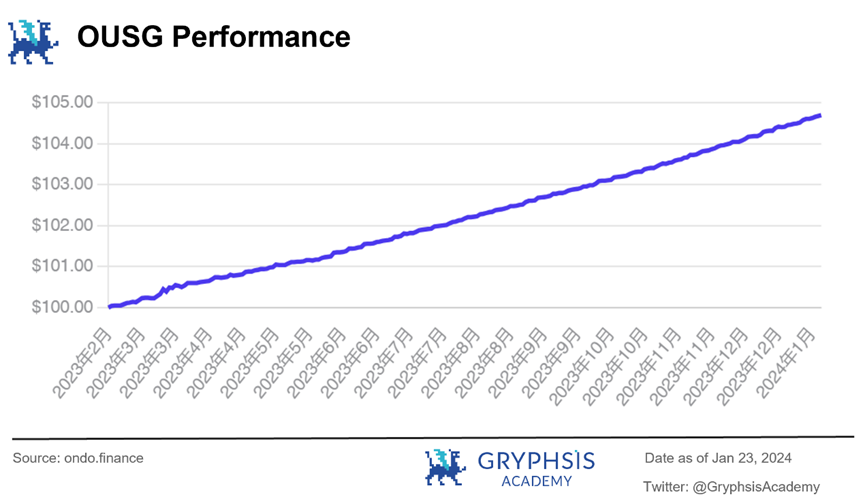
Since its issuance in February 2023, OUSG's price has continued to rise with realized returns, and the current price is 1 OUSG = $104.70.

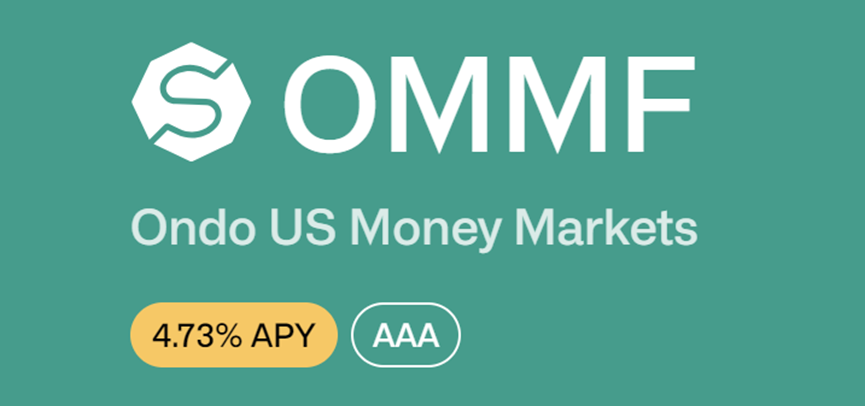
The upcoming OMMF is a tokenized money market fund designed to provide liquidity exposure to purchasing US money market funds. Similar to OUSG, global investors can use USDC or USD to purchase OMMF, with a minimum investment amount of 100,000 USDC.
Investment Portfolio
The majority of the investment portfolio will be invested in money market funds (MMF), with a small portion held in USDC and USD for liquidity.
Yield and Fees
OMMF has not been issued yet, and the annualized percentage yield (APY) displayed on its official website is 4.73%.
Future returns will be airdropped to token holders in the form of new tokens every day, and OMMF tokens will always be purchased and redeemed at a price of $1.
For the underlying MMF asset categories, Ondo has not yet disclosed.
In terms of fees: Ondo charges a management fee of 0.15%; service providers such as Nav Consulting charge a service fee of up to 0.15% (this ratio will decrease as TVL increases); MMF management fee has not been disclosed.

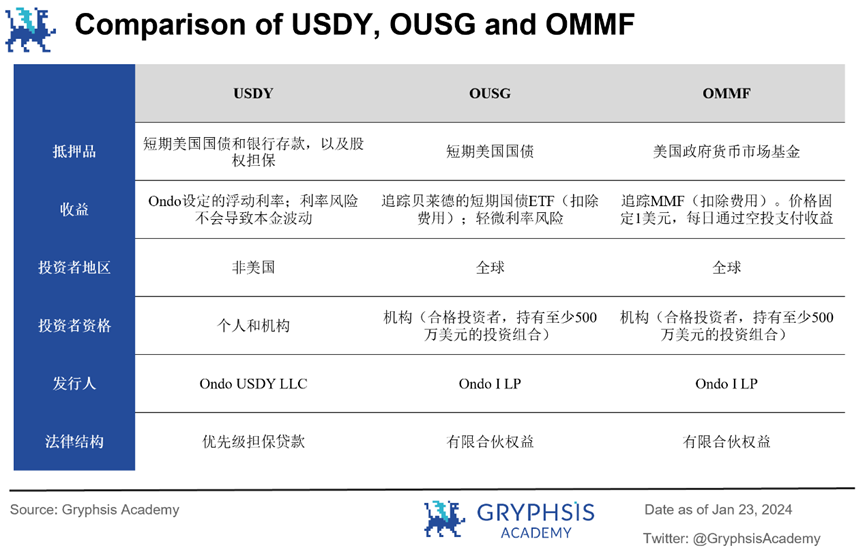
The main differences between USDY, OUSG, and OMMF, the three tokenized financial products, include:
- OUSG and OMMF represent ownership/shares of US Treasury bonds and money market funds, while USDY is an interest-bearing note.
- OUSG and USDY are total return instruments: any interest paid on the underlying assets is reinvested, leading to an increase in the value of these tokens over time. Any interest paid on OMMF is paid to investors in the form of additional OMMF tokens regularly, keeping the value of OMMF always around $1.
- OUSG and OMMF are available for purchase by qualified investors globally, while USDY is only available to investors in eligible regions without the need for investor accreditation.
- OUSG and OMMF can be traded on the secondary market at any time, while USDY has lock-up period restrictions but can be freely traded after the lock-up period.
The specific comparison table is as follows:

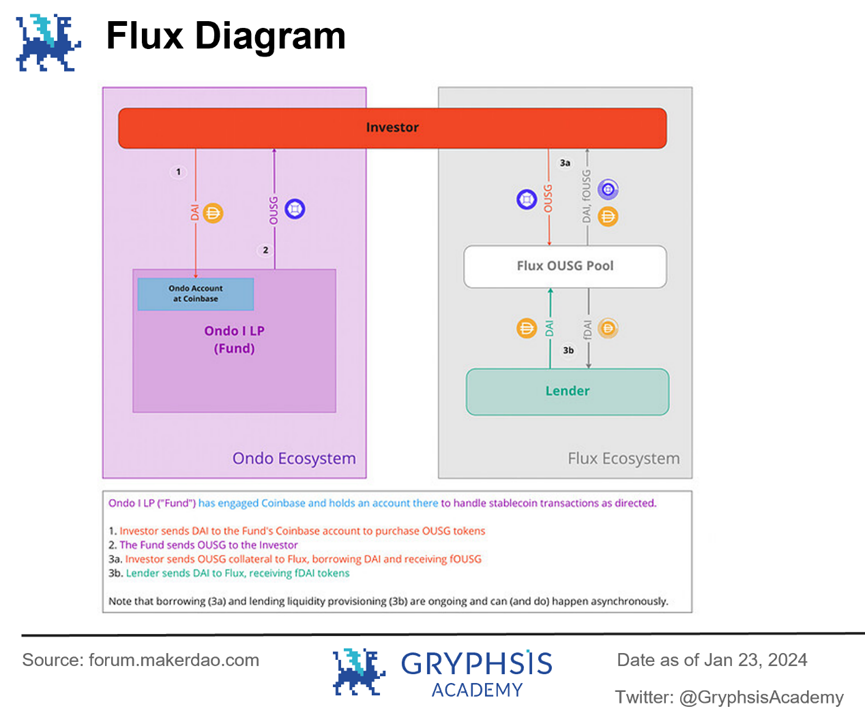
Due to regulatory compliance reasons, some of Ondo's products can only be targeted at KYC licensed customers. Therefore, Ondo has partnered with the backend DeFi protocol Flux Finance to provide stablecoin collateralized lending services for tokens that require licensed investment, such as OUSG, to achieve permissionless participation in the protocol backend.
Flux Finance is a decentralized lending protocol launched by the Ondo team based on CompoundV2, and the protocol is fundamentally similar to Compound. This protocol allows users to borrow and lend stablecoins backed by high-quality collateral such as OUSG. Currently, Ondo has sold the protocol to Ondo Foundation (formerly known as Neptune Foundation).
The interaction between the Ondo and Flux ecosystems can be seen in the following diagram:


Ondo Finance is currently an important participant in the RWA track.
RWA (Real World Assets) refers to the tokenization of real-world assets, allowing token holders to have ownership of corresponding assets in the real world and conduct transactions such as lending, renting, and buying and selling on the chain.
RWA covers a wide range of assets, including sovereign currencies, bonds, stocks, real estate, and commodities (such as gold). US Treasury bonds, as a high-credit and highly liquid quality asset, have been a major driver of the recent significant expansion of the RWA track.
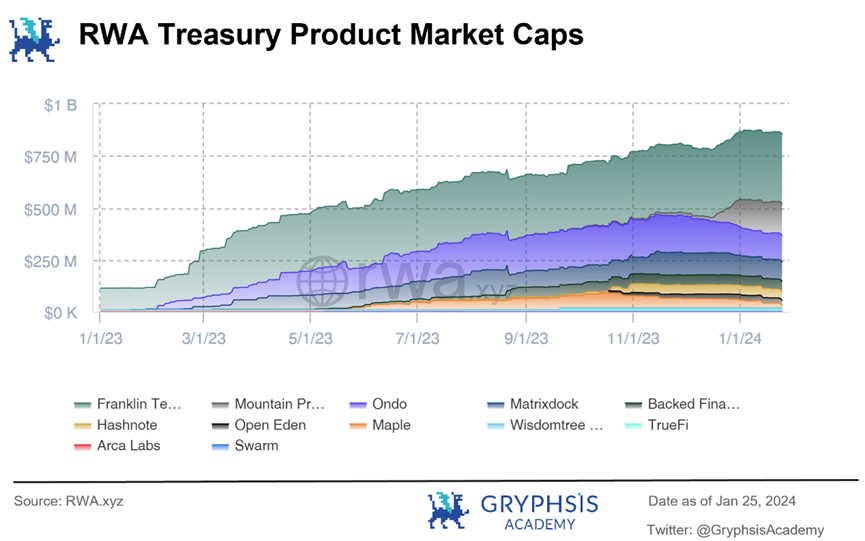
According to RWA.xyz, the total market value of RWA US Treasury bonds was only $114 million on January 1, 2023, and had reached $855 million on January 25, 2024, an increase of more than 6 times in just one year (the above amount does not include MakerDAO using over $20 billion of US Treasury bonds as collateral for $DAI).
Among them, Ondo's market size for RWA US Treasury bonds has reached $128 million, ranking third in the market, behind only Franklin Templeton Benji Investments ($336 million) and Mountain Protocol ($151 million).
US Treasury bonds have high credit and good yields, especially against the backdrop of a weak global economy in 2023 and multiple interest rate hikes by the Federal Reserve, many investors choose to purchase US Treasury bonds to obtain good risk-free returns. However, a major pain point of investing in US Treasury bonds is the high investment threshold.
Even for US citizens, the cumbersome KYC and account opening process is enough to deter most people, and it is even more difficult for non-US citizens. Therefore, how to introduce US Treasury bonds onto the blockchain and reduce the investment threshold in a compliant manner is a key concern for many RWA protocols.
One of Ondo's current successes is that it has preliminarily resolved the compliance issues of putting US Treasury bonds on the blockchain within the existing legal framework in the United States, allowing participants in the RWA US Treasury bond market (including investors, fund managers, custodian banks, brokers, etc.) to agree to the operating rules of USDY and OUSG and have actively participated in it.
It can be said that Ondo has taken the lead in the RWA US Treasury bond market. In the future, Ondo can use this advantage to continue expanding the tokenization path of other asset categories.

Ondo Finance's main competitors in the RWA industry include Franklin Templeton, Mountain Protocol, and others. A brief introduction to each competitor is as follows:
Franklin Templeton
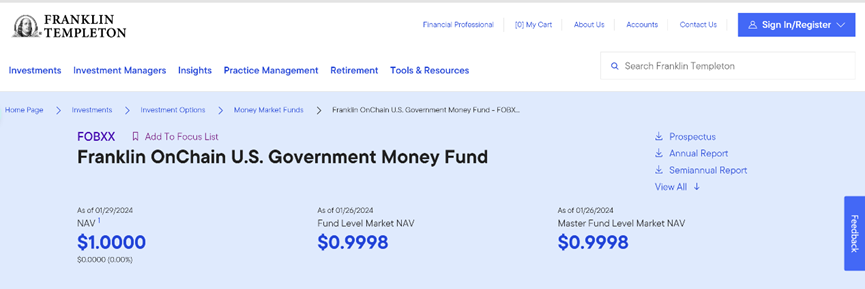
Franklin Templeton is a leading global asset management company with over 70 years of history and manages assets of over a trillion dollars. As a giant in the traditional financial field, Franklin Templeton has been very active in the cryptocurrency industry, and its application for a spot Bitcoin ETF (EZBC) was approved by the US SEC in January of this year.
As early as April 2021, Franklin Templeton launched the government money market fund Franklin OnChain U.S. Government Money Fund (FOBXX) on the Stellar blockchain. FOBXX is the first U.S. registered mutual fund to process transactions and record share ownership on a public blockchain, regulated by the U.S. Investment Company Act of 1940. From its registration, management, and disclosure, the product is one of the most compliant RWA products on the market. FOBXX is currently the largest product in the RWA US Treasury bond track.
According to the FOBXX website, over 99% of its total assets are invested in securities fully backed by the U.S. government, with excellent asset credit. The fund's shares are represented by "BENJI" tokens, with the BENJI price stable at $1, targeting both U.S. institutional and retail investors. FOBXX distributes the returns of U.S. Treasury bonds to BENJI holders through its developed application, the Benji Investments App.
Currently, FOBXX has total assets of over $300 million and an annualized percentage yield (APY) of approximately 5.28%. In terms of institutional strength, product scale, start time, compliance, and other aspects, Franklin Templeton is undoubtedly the leader in the RWA US Treasury bond track.
Mountain Protocol
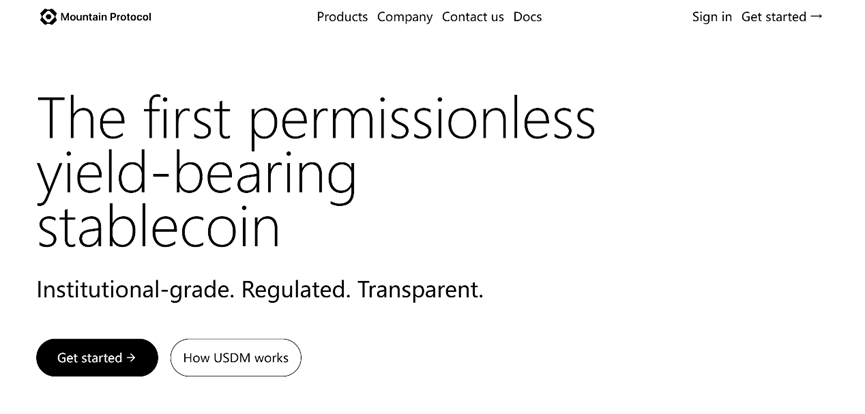
Mountain Protocol is a stablecoin protocol that issues the stablecoin USDM collateralized by U.S. Treasury bonds, allowing users to enjoy the returns of U.S. Treasury bonds while using USDM.
USDM is issued by Mountain Protocol Limited, with short-term US Treasury bonds as collateral. The company has obtained a digital asset business license from the Bermuda Monetary Authority (BMA) to ensure its compliance. Users can mint/redeem USDM stablecoin at $1 and use it in various DeFi ecosystems. Mountain Protocol adjusts the total supply of USDM based on the yield of US Treasury bonds, increasing the balance of USDM held by users.
Using Mountain Protocol requires KYC verification, and due to compliance with relevant laws, the protocol does not provide services to domestic US users. Currently, it only opens the minting and redemption channels to institutional investors, while retail users can only purchase on the secondary market.
The total asset size of USDM is currently approximately $150 million, with an annualized percentage yield (APY) of about 5%. As an interest-bearing stablecoin, the main challenge for Mountain Protocol's USDM is to compete with traditional stablecoins such as USDT and USDC, but as an RWA asset, it also has great potential for development.
Matrixdock
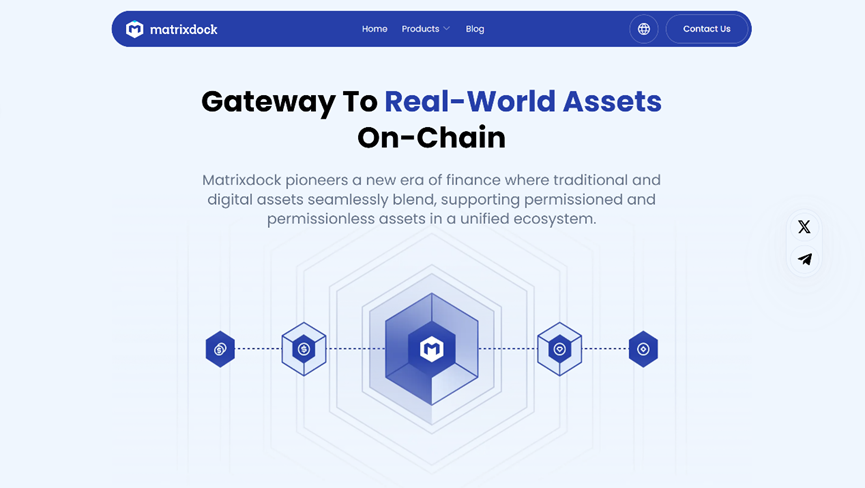
Matrixdock is a digital asset platform under Matrixport, with the goal of providing RWA tokenization solutions. The product currently launched by Matrixdock is STBT, a token collateralized by US Treasury bonds and repurchase agreements backed by US Treasury bonds.
Similar to USDM, STBT's interest is distributed to STBT holders daily based on the yield of the underlying assets, increasing the amount of STBT in their accounts. Unlike USDM, STBT's on-chain transactions do not require permission, but Matrixdock restricts STBT to be transferred and traded only between authorized accounts through a contract whitelist mechanism. In addition, the minting of STBT uses USDC or USDT, which is more in line with the usage habits of on-chain users.
In addition, the issuance of STBT also uses the establishment of a special purpose company to achieve complete bankruptcy protection (unaffected by Matrixport). Matrixdock also uses Chainlink's Proof of Reserve (PoR) to increase the transparency of STBT.
The total asset size of STBT is currently approximately $95 million, with an annualized percentage yield (APY) of 5.10%. The Matrixdock website has also reserved space for displaying other types of RWA assets, but details have not been disclosed. As the 4th ranked RWA US Treasury bond issuer in terms of TVL, if Matrixdock wants to overtake its competitors, it may need to introduce more innovative underlying assets onto the chain to have a chance of winning.

Ondo's roadmap for the next two years includes three main stages:
First stage: Focus on integrating tokenized cash equivalents such as USDY, OUSG, and OMMF. This includes establishing partnerships with different blockchains to add white-label tokens for brand assets on other chains, and creating different token versions for different applications (author's note: this can be understood as developing tokens based on specific standards and customizing them to a certain extent according to the project's requirements, similar to the concept of "white labeling").
Innovative technologies such as Ondo Bridge and Ondo Converter aim to facilitate cross-chain transfer and conversion of tokens, integrating these tools to provide a seamless user experience.
Second stage: Focus on expanding the tokenization of public securities. Ondo is preparing to announce initiatives to redefine the tokenization of public securities, addressing major obstacles that currently limit the widespread use of tokenized securities on public chains, such as liquidity and infrastructure issues (author's note: publicly tradable stocks, corporate bonds, REITS, and even financial derivatives such as options and futures fall under the category of "public securities").
Third stage (specific details not disclosed): Explore the application of blockchain in various traditional financial functions, while using centralized and decentralized mechanisms to maintain Ondo's institutional quality standards.
In these stages, Ondo will closely collaborate with partners, including various blockchains, OTC desks, market makers, exchanges, and DeFi protocols, to ensure the widespread distribution, integration, and liquidity of products.

Ondo's smart contracts have been audited by several well-known industry institutions, including:
- January 2023 Code4rena audit
- April 2023 NetherMind audit
- August 2023 Zokyo audit
- September 2023 Code4rena audit


As of January 25, 2024, the basic information of the $ONDO token is as follows:
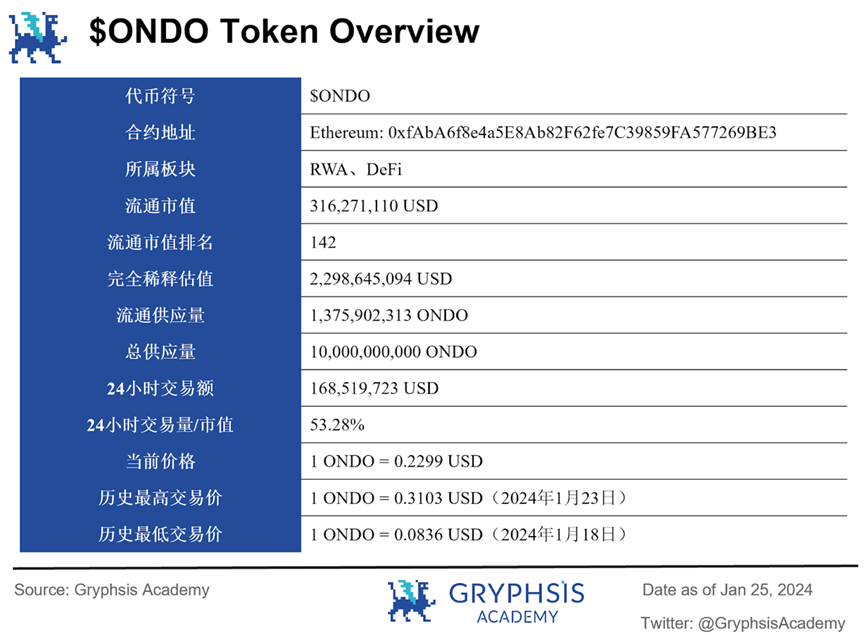

As of now, $ONDO is the governance token of Ondo DAO, with no other practical use cases. There are currently no incentive measures for $ONDO token holders to use Ondo Finance's related products.
According to Ondo Foundation:
Ondo DAO grants specific rights related to Flux Finance to $ONDO holders, which are currently governed by Ondo DAO:
- Launch new fToken markets (i.e., support new assets as collateral and/or lendable within the Flux protocol)
- Suspend fToken markets
- Update interest rate models for each market
- Update oracle addresses
- Withdraw reserves from fToken markets
Ondo DAO has the following additional rights:
- Select new administrators
- Manage the asset treasury
- Control the release of $ONDO to effectively increase the usage of Ondo DAO products
- Call arbitrary functions
As of January 25, 2024, a total of 9 proposals have been initiated on Ondo DAO, with 8 approved and 1 canceled.
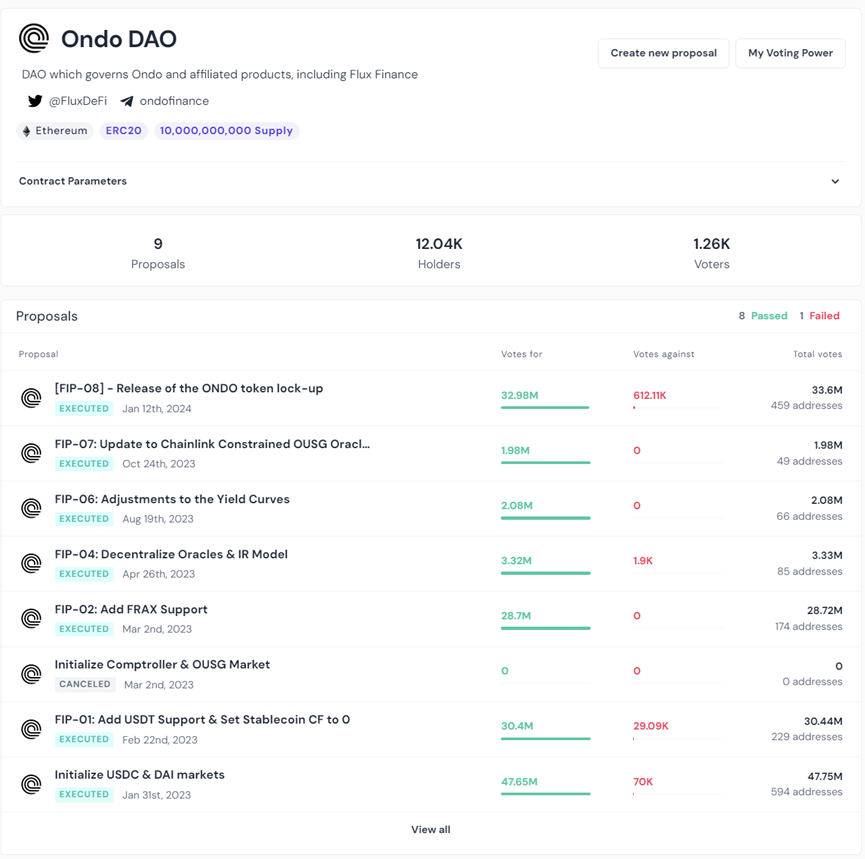
Since it is currently unclear how the $ONDO token is associated with RWA products, the market speculates that Ondo may use $ONDO as an incentive for tokenized financial products such as USDY in the future.
If the $ONDO token can be combined with RWA products and used as an incentive for the on-chain flow of RWA products, it may drive RWA products into the view of mainstream crypto investors.

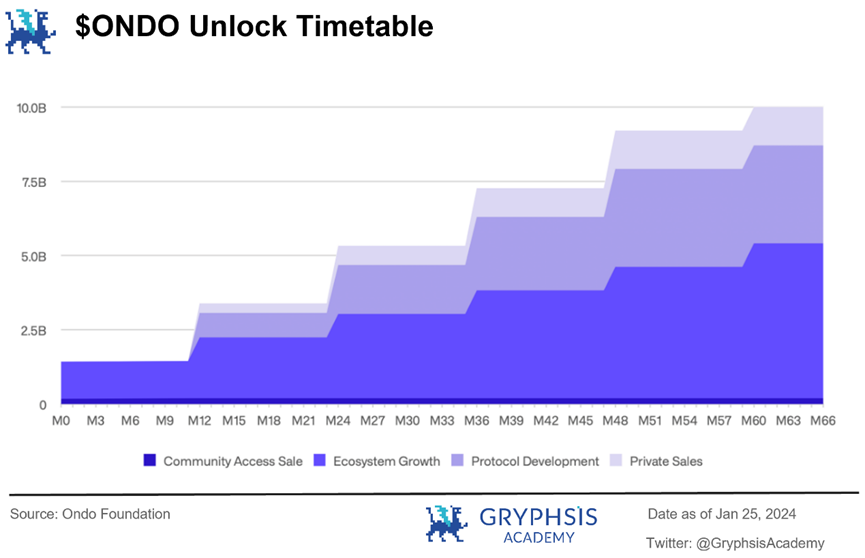
According to a proposal from Ondo Foundation on December 27, 2023, the allocation of $ONDO is as follows:
- Community sales: 198,884,411 (~2.0%)
- Ecosystem growth: 5,210,869,545 (~52.1%)
- Protocol development: 3,300,000 (33.0%)
- Private sales: 1,290,246,044 (~12.9%)
Currently, nearly 80% of $ONDO tokens are still held in the project's wallet and have not been distributed.

According to a proposal from Ondo Foundation, over 85% of $ONDO tokens will be locked, and the locked tokens will be unlocked after 12, 24, 36, 48, and 60 months following the initial token unlock. Both private investors and the project team will be locked for at least 12 months and then unlocked over the next 4 years. Investors who participated in the ICO through CoinList had their tokens fully unlocked on January 18, 2024.
It is worth mentioning that in the past few days, the Ondo project team's address has transferred $ONDO tokens to exchange addresses multiple times (the $ONDO in the project's wallet is now less than 80% of the total circulating supply), possibly for providing liquidity.

Community investors' $ONDO tokens were unlocked on January 18, 2024, and have been traded on the secondary market for only 7 days. The historical trend is as follows:
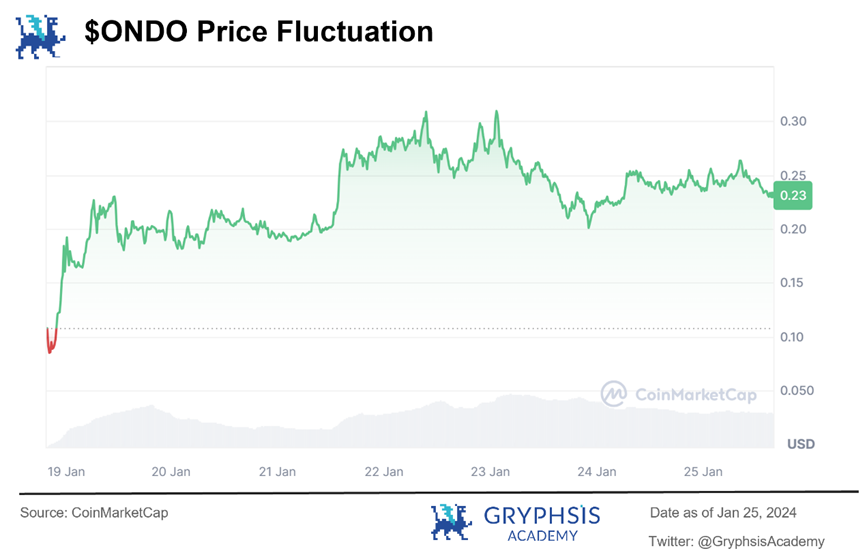
In addition, the primary market trading prices of $ONDO before unlocking are as follows:
Seed round financing in August 2021: 1 ONDO = 0.0057 USD
Series A financing in April 2022: 1 ONDO = 0.0285 USD
ICO financing in May 2022: 1 ONDO = 0.055 USD

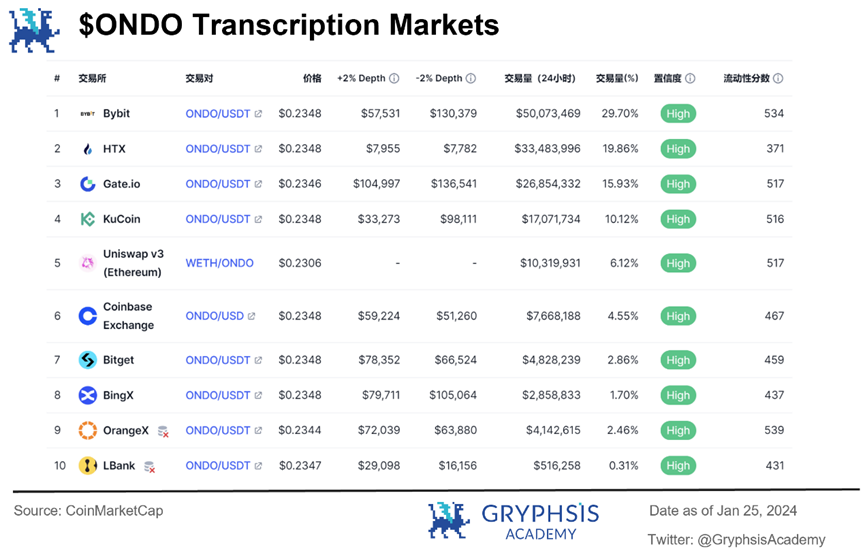
According to CoinMarketCap data, the main trading venues for $ONDO are Bybit, HTX, and Gate.io, with the specific distribution as follows:

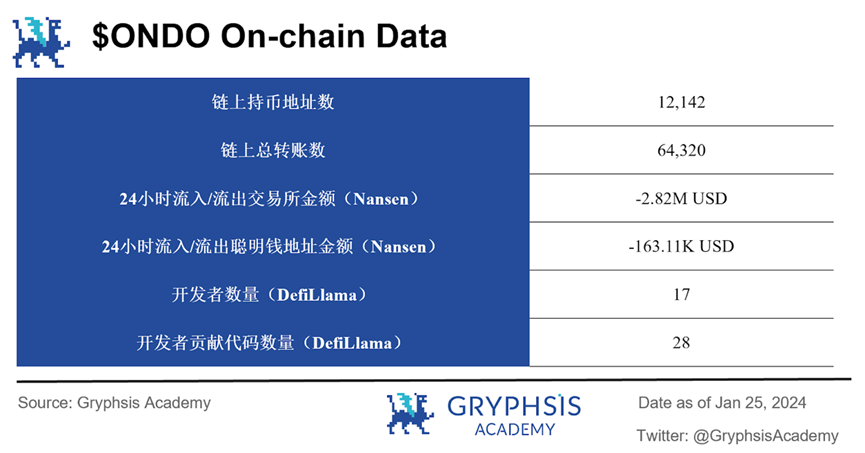

In summary, the main highlights of Ondo Finance are as follows:
- Ondo Finance is a major driving force in the RWA industry, with the TVL in the RWA US Treasury bond track growing sixfold in the past year, indicating a very promising industry outlook.
- Ondo Finance ranks third in TVL in the RWA US Treasury bond track, demonstrating the feasibility of its business model and having a certain first-mover advantage in the track.
- Ondo Finance is planning RWA products for other types of assets. If it can introduce products that are readily accepted by the market, it will further expand its lead and become an important bridge connecting on-chain and off-chain.
- Ondo Finance, through partnerships with industry-leading companies such as Morgan Stanley and Coinbase (Coinbase is also an investor in Ondo), strictly complies with relevant US laws and regulations, making it easier to gain investor trust.
- The founders and core team of Ondo Finance have previously worked at companies such as Goldman Sachs, Morgan Stanley, Tether, Bitfinex, and Circle, which is conducive to further deep cooperation with these companies.
The main risks of Ondo Finance are as follows:
- The RWA track is still in its early stages, and many well-established leading institutions are also entering this field, so Ondo Finance will face very intense market competition in the future.
- Besides being the governance token of Ondo DAO, the $ONDO token currently has no other practical use cases. The connection between Ondo Finance's related products and $ONDO is weak. The future use cases of $ONDO are uncertain.
- Currently, about 80% of $ONDO tokens are still held by the project team, and the distribution mechanism is still unclear, posing a significant centralization risk.
References
[1]https://docs.ondo.finance/
[2] https://blog.ondo.foundation/unlocking-ondo-a-proposal-from-the-ondo-foundation/
[3] https://coinlist.co/ondo
[4] https://www.theblock.co/post/114786/former-goldman-sachs-employees-launch-defi-protocol-ondo-seed-funding
[5] https://www.theblock.co/post/143769/ondo-finance-raises-funding-peter-thiel-founders-fund
[6] https://www.reflexivityresearch.com/paid-reports/ondo-finance-overview
[7] https://cryptorisks.substack.com/p/asset-risk-assessment-ondo-and-flux?utm_source=%2Fsearch%2Fondo&utm_medium=reader2
免责声明:本文章仅代表作者个人观点,不代表本平台的立场和观点。本文章仅供信息分享,不构成对任何人的任何投资建议。用户与作者之间的任何争议,与本平台无关。如网页中刊载的文章或图片涉及侵权,请提供相关的权利证明和身份证明发送邮件到support@aicoin.com,本平台相关工作人员将会进行核查。


