Author: YBB Capital Researcher Zeke
Preface
Recently, with the approval of the BTC spot ETF, the market enthusiasm is gradually reaching its peak. MEME Coins led by the Inscription and Solana communities are once again sweeping in, and various myths of getting rich thousands or even tens of thousands of times are crazily spreading on social media. Retail investors who missed out on the market are constantly entering the market.
So, what are the differences between the recent MEME Coins and the past? How should one choose a MEME Coin with potential in the current market full of various meme coins?
What is a MEME Coin?
The concept of "MEME" was initially proposed by British evolutionary biologist Richard Dawkins in his 1976 book "The Selfish Gene". Dawkins used the term "MEME" to describe the information units that are transmitted in culture through human-to-human communication, similar to genes in biology. If the basic unit of biological evolution and reproduction depends on the inheritance of genes, then the basic unit of inheriting cultural ideas is the MEME. Its form is changeable and can be a sentence, a story, an allusion, or an image, as long as it can carry a certain cultural idea, it can be called a MEME.
Although the term "MEME" was originally proposed as a relatively serious academic concept, after entering the Internet era, various internet spoof cultures required a suitable term for generalization. Therefore, the term "MEME" was reconstructed to a certain extent and became a general term for such internet spoof cultures. In the context of Chinese internet culture, "MEME" can also correspond to "梗".
The so-called MEME Coin is actually as the literal meaning suggests, a type of cryptocurrency based on MEME culture. The earliest MEME Coin is usually considered to be Dogecoin. Dogecoin was created in 2013 by Billy Markus and Jackson Palmer by copying the Litecoin code and adding a Shiba Inu meme, as a mockery of BTC (they believed that BTC was just hot air). However, the subsequent development was more ironic. Dogecoin not only did not become a worthless token, but it also received crazy attention from Reddit (a well-known foreign forum), and a statement from the richest man, Musk, "Dogecoin might be my favorite cryptocurrency, it's cool," made it "To Da Moon". Dogecoin's market value began to skyrocket, and this "air coin" born out of a nonsensical joke became a legendary cryptocurrency with a market value in the top ten in the cryptocurrency market.
The MEME Coins that were popular in 2023
In the year when Dogecoin surged to the moon, various imitated tokens with animal images emerged like mushrooms after the rain, all hoping to become the next Dogecoin. At that time, the community had an interesting nickname for these tokens - "zoo coins". However, only a few outstanding ones survived, such as Shib and Floki, which are relatively popular MEME Coins, while the remaining 99% of the "zoo coins" basically turned into nothing in the subsequent bear market. It seems that finding a MEME Coin that can become the next Dogecoin is as difficult as finding a needle in a haystack. So, how should one choose a MEME Coin that seems to have no fundamental analysis? In a new bull market initiated by the Inscription, how should one change their mindset? Let's take a look back at the MEME Coins that left a deep impression during the bear market in 2023 (selected from some tokens that left a deep impression on me) and see what commonalities and innovations they have.
PEPE
Pepe the Frog (PEPE) is a character created by American cartoonist Matt Furie for his comic "Boy's Club" in 2005. Although this funny MEME image of a frog-headed human body is a perennial tree in Western social networks, there has never been a matching PEPE Coin in the MEME race (in fact, the PEPE token known to everyone now is not the earliest, it's just that other PEPE tokens have not been marketed). On April 4, 2023, a Twitter account named pepecoineth posted a picture of a cap-wearing PEPE meme, but there were no new tweets in the next ten days.
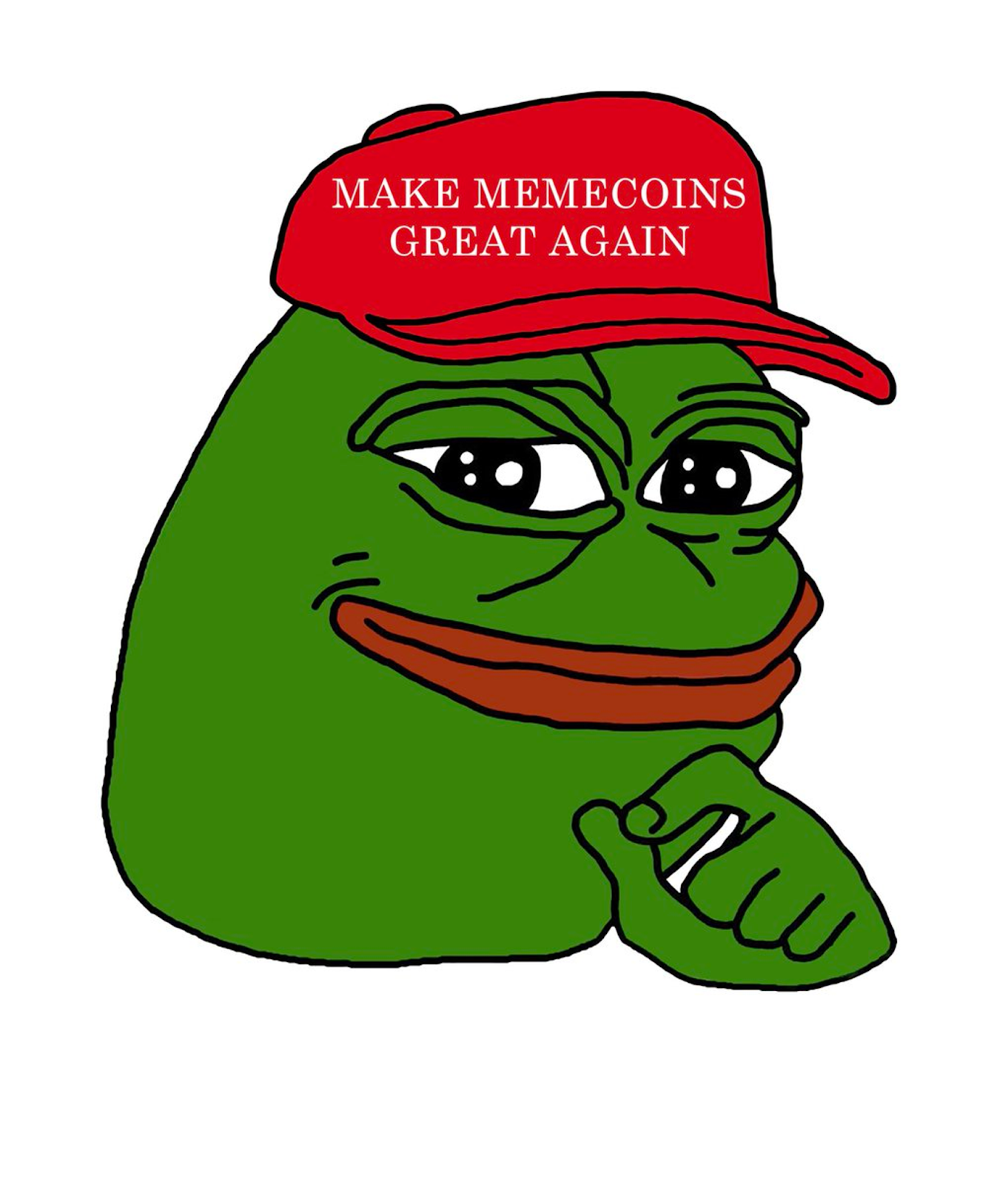
On the next tweet on April 14, the creation of the PEPE Coin, Telegram group, and official website (the domain name pepe.vip was bought as early as March) were directly announced. Two days after the token was released (two days were left for insiders to purchase), some big Vs on Twitter suddenly started to promote PEPE Coin, and in the following two days, the price of the PEPE token and the number of fans began to soar. After attracting the first wave of traffic, the official PEPE Twitter account also began to cooperate with the rise in the token price, frequently posting some mocking memes of other MEME Coins to continue to build momentum. On April 18, Shaurya Malwa, the leader of the Coindesk Asia data team, published a short article titled "'Pepe the Frog' Meme Coins Rocket as Crypto Twitter Moves Over Dogecoin Obsession", which once again gave PEPE a lot of exposure. In just one day after April 19, some first and second-tier exchanges began to release tweets and polls related to the Frog, and many exchanges even directly listed PEPE.
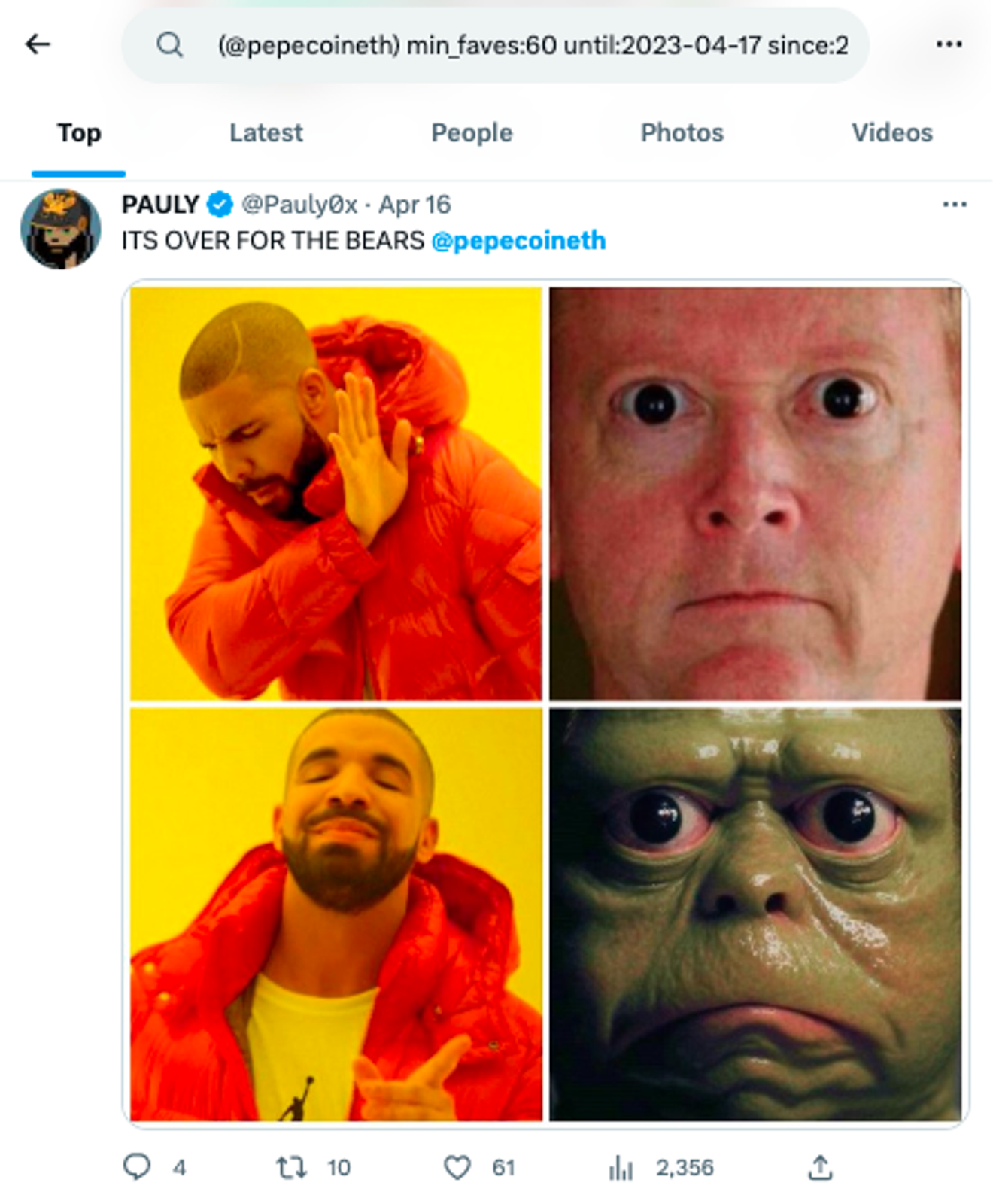
After that, PEPE's journey to the moon became unstoppable. Compared to the two predecessors, the Shiba Inus, who took several years to succeed after precipitation, the "carefully planned" PEPE took only 4 days to become popular and achieved an astonishing increase of up to 375,000 times in just a few months.
Silly Dragon (excerpt from "Reviewing the Ten-Thousandfold Journey of Silly Dragon")
Silly Dragon is a MEME Coin that took off with the revival of Solana and has now become a spiritual symbol within the community. Speaking of the origin of this silly dragon, it is necessary to mention that at the Solana Breakpoint summit on October 30, 2023, Solana co-founder Anatoly appeared in a Western-style green dragon costume, jokingly calling himself a silly dragon, and then gave a profound explanation of this outfit: "I stand here, dressed as a dragon, and it is crucial for us to discuss what we are building and why we are building it. We need to know what our goals are and what we want to achieve."
For Solana, which experienced a difficult rebirth in the bear market, this silly dragon seems to have many special "meanings". Twenty days after the end of the summit, a Twitter account named DrakoSolana posted its first tweet, which was a meme image of a silly dragon avatar. DrakoSolana gained a lot of attention in this wave, but unfortunately, although DrakoSolana was the first silly dragon on Twitter, it was preempted by an account named Silly Dragon, as the token was not launched for a long time.
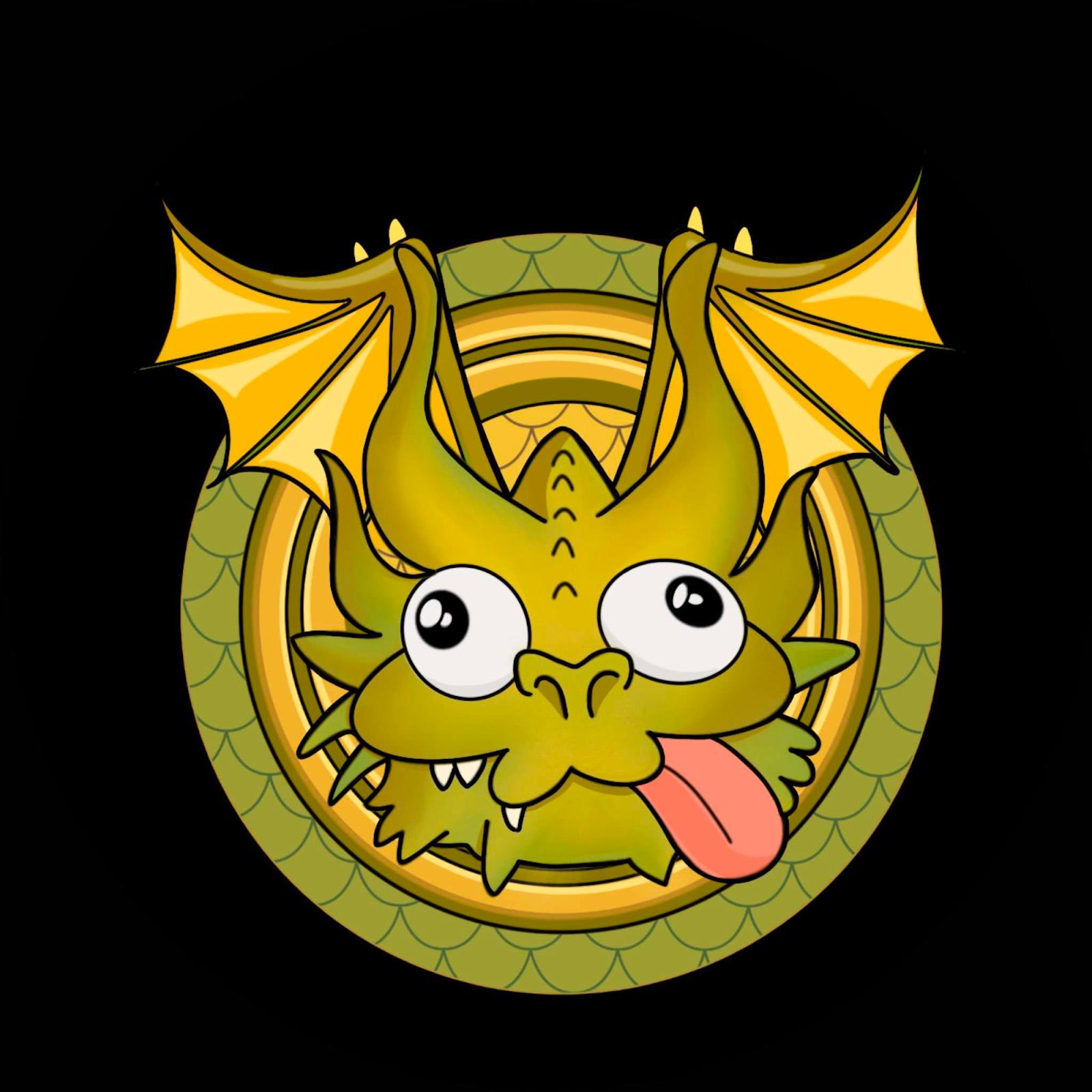
Silly Dragon did not have an advantage in initial attention and Twitter posting time, but they were fortunate to be the first to release their token SILLY. After the token was released, the popularity of Silly Dragon quickly surpassed others, and with the support of huge traffic, Silly Dragon took the opportunity to hold a Silly Dragon art competition.
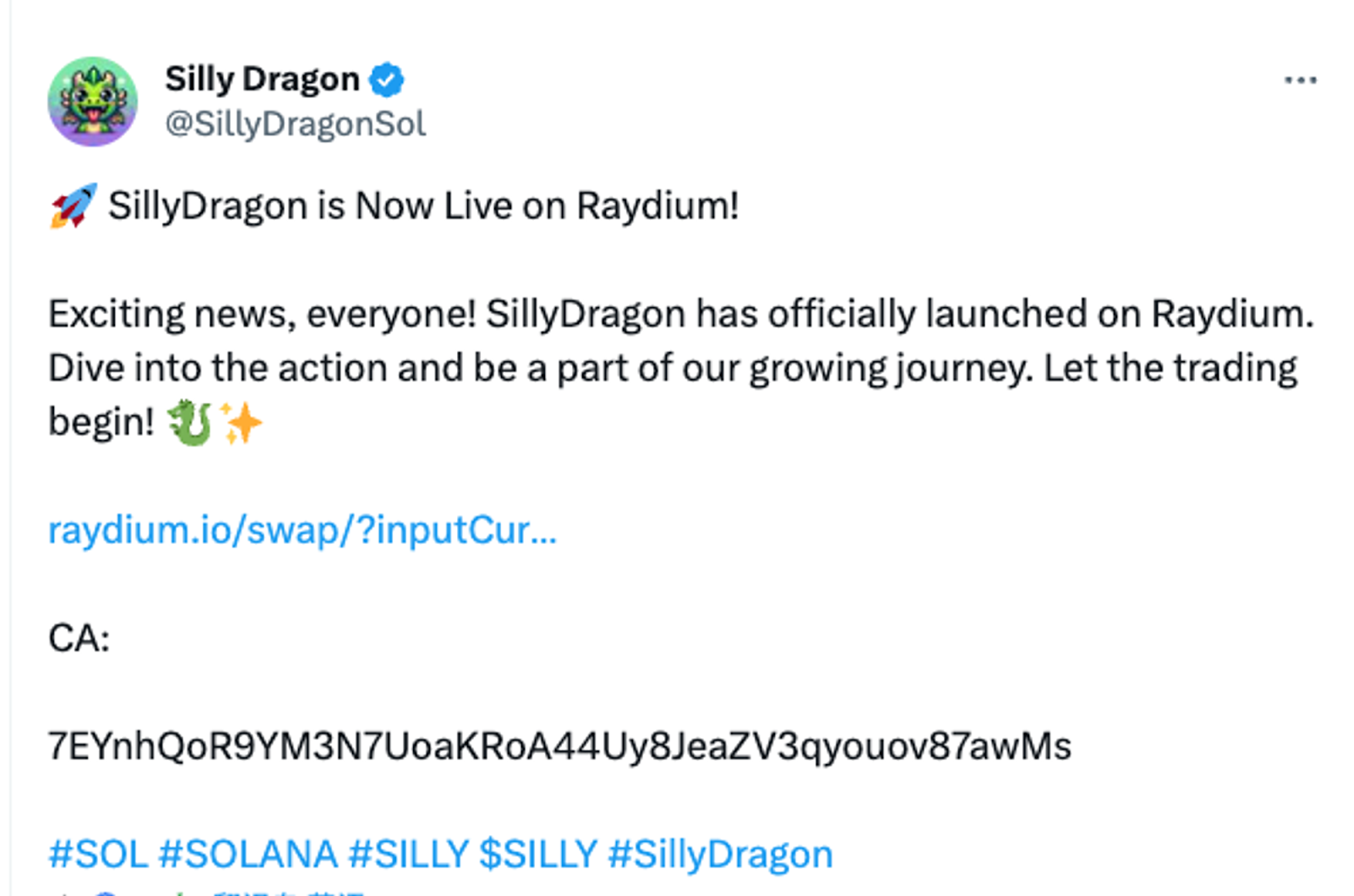
It was during this event that Silly Dragon caught the attention of Anatoly. Although the token price did not soar at that time, on December 16, Anatoly tweeted, "Urgently need MEME emojis of Silly Dragon. Samsung and Apple have a sales volume of 1 billion devices, while Solana phones only have 20,000." This tweet instantly ignited the community's enthusiasm, and the price of SILLY also began to soar, becoming a new thousandfold myth.
Harry Potter Obama Sonic 10 Inu
This may be the longest and most absurdly named token you've ever seen. Harry Potter Obama Sonic 10 Inu (abbreviated as HPOS1I due to its ridiculously long name, but they named their token Bitcoin) stands out for its spoof nature in its name, and of course, its name is not the only absurd thing about it. When the token was deployed on May 10, 2023, it gained popularity on the internet with an extremely spoofy webpage. The project filled the webpage with spoof videos, images, or stories of Harry Potter, former U.S. President Obama, Sonic the Hedgehog (a well-known parkour game character), cryptocurrencies, and the Illuminati. It can be said that it directly fired a cannon at various classic hot topics on Western social networks.
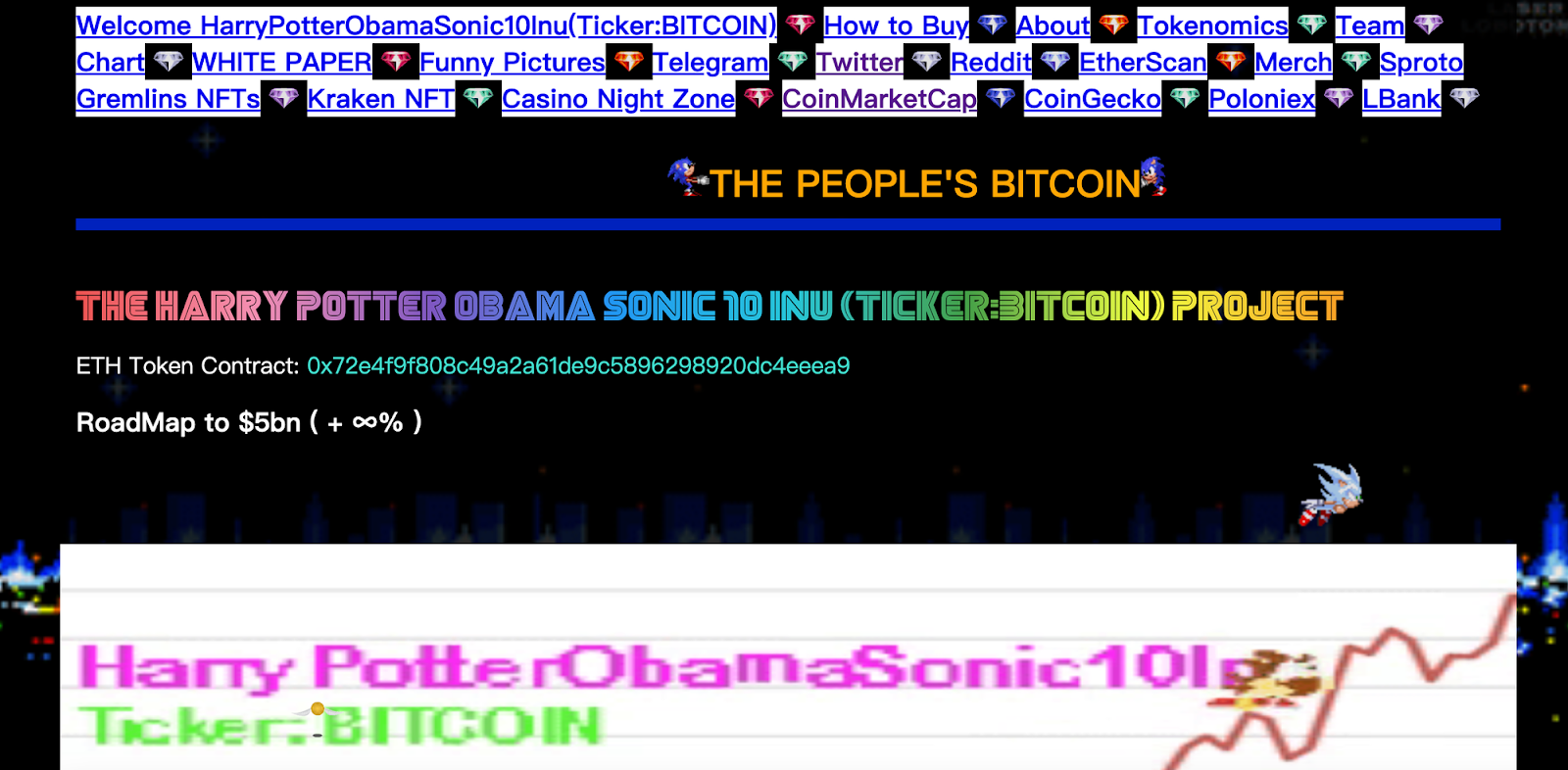
The development of HPOS1I is also very unique. The ownership of the project has been abandoned, with no developers at all, and it is led by the community. This is also one of the unique selling points of the project, a development method purely based on community-driven MEME culture. While various MEME images were spreading like crazy on social networks, the price of HPOS1I also steadily climbed, reaching a peak of $0.1783 in August 2022, achieving a hundredfold miracle in the bear market.
Pogai
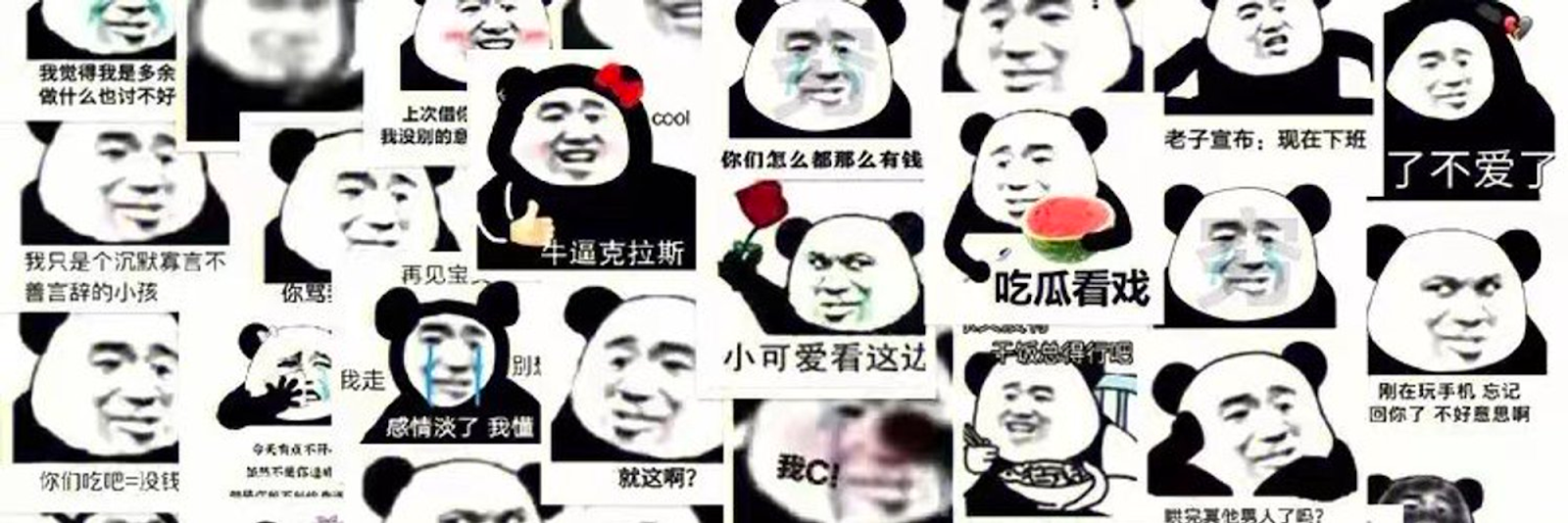
The most ridiculous emoji in history, the coolest panda person, and the most nostalgic youthful years, all come from Pogai's slogan. Its image is the most familiar panda person in the Chinese internet circle. It is a token that has no fees, no copyrights, and no development roadmap, only a purely community-driven project. The community can decide the future direction, and all the tokens are distributed. The founder only left behind one billion Pogai tokens and became a ridiculous panda family with the community.
The project continuously made headlines in the Chinese Twitter community with its cool and humorous promotional methods, combined with the familiar panda head emoji, leaving a deep impression. The token was issued on May 2, 2023, at a price of $0.000008, reaching a peak price of $0.0005. Although it did not have the exaggerated increase of other MEME Coins, the token still left a deep impression.
SATS
In December 2022, Bitcoin developer Casey Rodarmor released an open-source software called ORD, which runs on top of the Bitcoin Core software. ORD allows users to mint Bitcoin inscriptions in two steps: inputting any information on the Bitcoin blockchain, such as a piece of text or an image ("inscription"), and linking the uploaded inscription to a specific Satoshi. Satoshi is the smallest unit of Bitcoin. 1 BTC = 100,000,000 satoshis. The final product is a Satoshi with an inscription, also known as a Bitcoin inscription.
Based on whether the input information is text or an image, Bitcoin inscriptions can be divided into two categories. Text-based inscriptions are mainly used to create tokens, such as the BRC-20 standard. Image-based inscriptions are mainly used to create NFTs, such as various cartoon characters.
SATS is a MEME inscription based on the BRC-20 standard (I personally like to call inscriptions "splitable textual NFTs," but now there is a more accurate term for inscriptions, namely semi-fungible tokens), its full name is Satoshi, the smallest unit of Bitcoin, usually abbreviated as "sats" or "satoshis". 1 BTC is equivalent to 100 million satoshis, with a total supply of 21 trillion, equivalent to 21 million BTC.
The minting process for SATS lasted for nearly half a year. The inscription was deployed on the blockchain in March and completed all minting by September. Different from the spoof culture and rebellious culture of traditional MEME Coins, SATS is very special because it pays tribute to Satoshi or Bitcoin's smallest unit and the founder of Bitcoin, and its total supply corresponds to the total supply of BTC, with deep meanings of paying tribute to BTC and commemorating Satoshi. The fact that such a huge total supply could be minted also reflects the strong consensus of this inscription. The popularity of SATS continued to grow, and on December 12, 2023, the day it was listed on Binance, its market value doubled, soaring to $1.15 billion, even surpassing the first inscription, ORDI, achieving a peak increase of 25,000 times.
Diversification of MEME Coins
From the MEME Coins mentioned above, it is not difficult to see that MEME Coins have shifted from the animal-themed imitations dominated by dog breeds in the past to a more diversified development direction. The current categories can be divided into the following four types:
1. Classic MEME: Tokens representing classic MEME images such as PEPE and Pogai. There are still many classic MEME images that have not been tokenized or have not been successfully tokenized, such as Trollface, Grumpy Cat, Success Kid, and Kermit the Frog.
2. Crypto-Native MEME: MEME tokens originating from crypto-native "gags," represented by BONK and Silly Dragon. There are also some imitating MEME Coins, such as Polygon's "Polygon Dragon."
3. Inscription MEME: Represented by SATS and RATS, these are MEME inscriptions. Due to the special issuance method of inscriptions, these MEME inscriptions may not even have image representations, but are based on text. Most of them have meanings of tribute, commemoration, and satire, such as SATS paying tribute to BTC and Satoshi (which can also be considered a crypto-native culture), and RATS with satirical meanings related to insider trading and exchanges.
4. Original MEME: Represented by original styles such as HPOS1I and Ladys, these MEME Coins have their own original style, different from the simple imitations of past MEME Coins.
Elements of Success for MEME Coins
Determining whether a MEME Coin can be successful is actually a very difficult task. As a product of spoof culture, the source of its value is always a matter of debate. Personally, I believe that the success of MEME Coins comes from cultural identity, promotional ability, and narrative direction. The following will discuss personal insights using representatives of MEME Coins.
The Carrier of MEME is Important
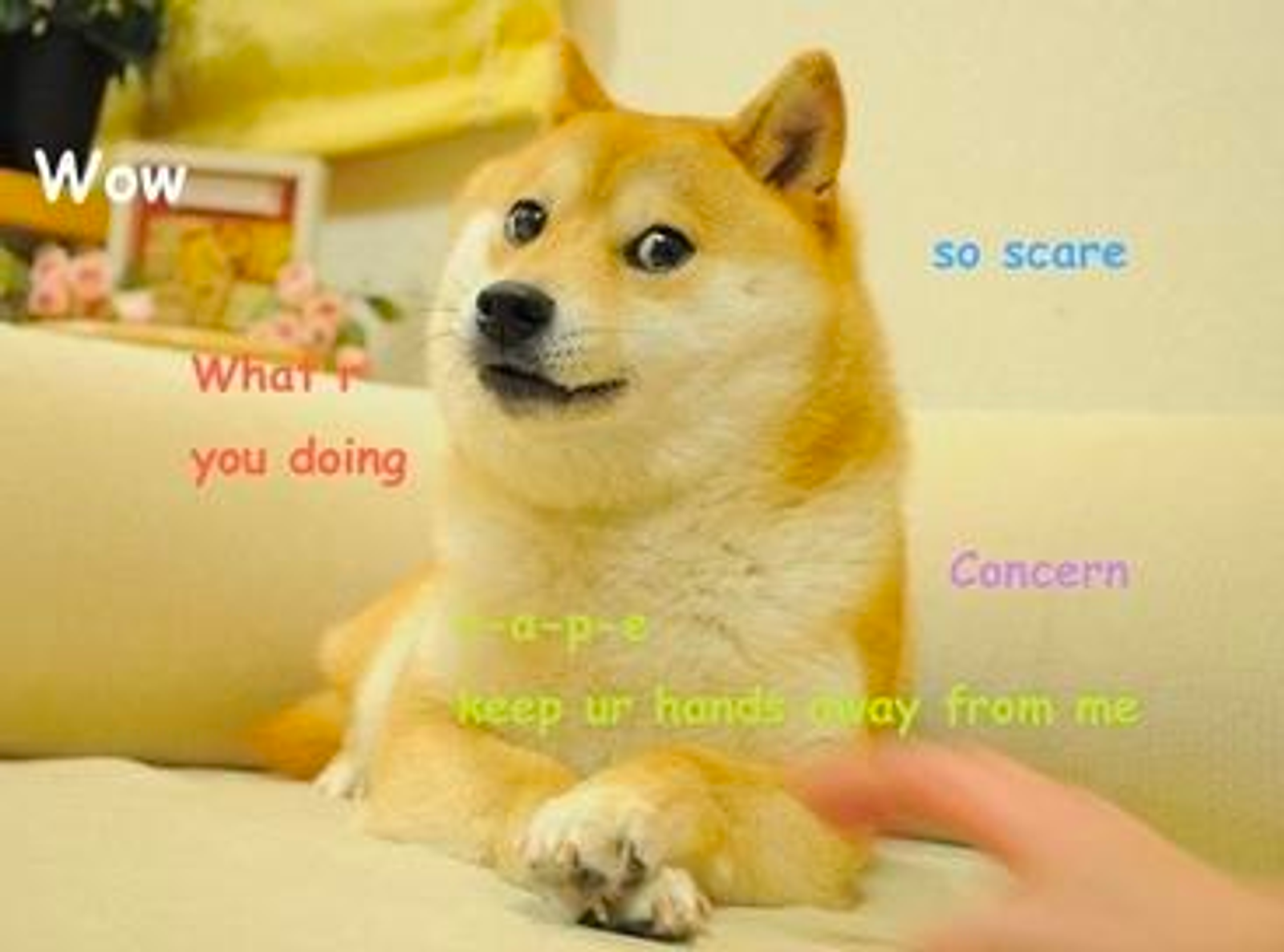
In the crypto market, we often hear about the myths of getting rich through various MEME projects, but in fact, there are only three MEME projects that have made it into the top 100 by market value: Dogecoin, PEPE, and Shib. Here, let's first talk about the first two (although Shib is essentially an imitation of Dogecoin and also uses the classic Shiba Inu image, Shib's success is more due to grassroots culture and external environmental factors, so we won't delve into it here). The biggest commonality between Dogecoin and PEPE is the use of classic MEME images. As Arant once said, only things that are widely discussed and have a broad public base have strong vitality, everything else is temporary and not worth mentioning. This statement is equally applicable to MEME Coins. The breadth of the audience determines the upper limit of a MEME Coin (although it does not determine the lower limit). During the last bull market, there were also many non-Shiba Inu MEME Coins that were briefly popular, such as Pig, Feg, and various animal tokens. Why didn't they survive? The main reason is that the factors driving the public to buy them were the FOMO emotions and herd behavior brought about by various get-rich-quick myths. The MEME elements of these tokens mostly came from some images or stories created by the project team. The real audience for these MEME elements is very small, and token holders are only interested in making a profit. They may not be interested in these unfamiliar MEME elements at all, and once the market conditions are not favorable, these MEME Coins are not far from going to zero.
On the other hand, the success of Dogecoin (the image source of Dogecoin) and PEPE lies in the fact that they are MEME images that have been popular on Western networks for over a decade. These images have deeply penetrated the public consciousness, and the audience is extremely broad. They are also easy to associate with influential celebrities, and their viral infectiousness is naturally very strong.
Why is PEPE Successful?
As mentioned earlier, the PEPE we are familiar with is not the first PEPE Coin. So why didn't the early PEPE (there is an earlier PEPE inscription on BRC20) succeed? The fundamental reason is the lack of promotional ability. Excellent promotional ability not only accelerates the success of a MEME Coin but also determines the lower limit of a MEME Coin.
For example, in our daily lives, the more well-known a brand is, the more it invests in advertising. For any product, its advertising audience can be divided into high-frequency consumers, low-frequency consumers, and non-consumers, and the mechanism of action of advertising on these three types of people is different. The logic behind the effectiveness of advertising lies in four aspects: informing, persuading, reminding, and reinforcing. The promotional logic of MEME Coins should also be the same. It should consolidate community members and speculative buyers and bring in more potential buyers. Therefore, in addition to choosing the right carrier, the way of "spreading the word" is also very important for MEME Coins.
PEPE's success in a very short time is due to its adept use of human nature in its promotional methods. Looking back at the earlier part about PEPE, it is not difficult to see that these influencers had quietly bought PEPE tokens, and the entanglement of interests drove these influencers to vigorously promote it. There were also pre-planned domain names and token plans (there were team members coordinating with exchanges), which caused the price and the number of token holders to skyrocket in a short period. In addition, PEPE's existing infectious emojis, combined with these positive news, were promoted every day, and the two complemented each other, leading to an explosive viral spread. The intensity of a fire depends on the amount of kindling. PEPE's fire definitely ignited a prairie fire. Therefore, PEPE's outstanding success is not simply due to good luck. It is not simple for the project team to coordinate and plan to create an extreme herd effect without fizzling out. (Readers interested in this point can compare the early related tweets of $pepe.BRC-20 and PEPE.)
A MEME That Doesn't Want to Be a MEME—Shib
If we go back a few years, I remember asserting that Shib was bound to fail. Because in the Web3 circle, it is almost a pipe dream for an imitation to challenge the OG. But Shib later gave me a resounding slap in the face. Looking back at Shib's comeback, I still believe it is a miracle brought about by multiple factors. If we analyze Shib without considering some lucky factors (such as the economic largesse and Musk's related tweets), I personally believe that what makes Shib special is its bold attempts in excellent community culture and narrative direction.
All Shiba Inu MEME Coins actually have a fatal problem. Because these token images are simple derivatives of Dogecoin, the degree of homogenization is very serious, and the MEME emojis created by the project team and the community have very weak spread on social networks. As mentioned earlier, their real audience is very small. Shib faces the same problem, and whether it is the recognition in Western internet culture or the celebrity effect, Dogecoin has an absolute advantage. A derivative version of a Shiba Inu cartoon image cannot be a "Dogecoin killer."
So, Shib's narrative direction can only be the ecosystem, a MEME Coin with expectations of a swap, cross-chain bridge, Layer2, and metaverse. Doesn't that instantly elevate its status? Although Shib's development direction has been met with many doubts, I personally believe that this is the correct and only direction that can make it a Dogecoin killer and ensure its continued vitality.
Conclusion
The MEME Coin market is always full of temptations but also comes with high risks. According to CoinMarketCap data, there are 1467 tokens in the MEME race. If only the top 300 projects by market value are considered, there are only 9, and the success rate is less than one percent. With the evolution of MEME Coins and the addition of inscription-based MEME, the complexity of choice has also increased. If you really want to buy some MEME Coins today, you should do your homework on some special crypto culture and Western MEME culture. A promising MEME project should at least have some cultural identity, promotion, narrative, and community.
免责声明:本文章仅代表作者个人观点,不代表本平台的立场和观点。本文章仅供信息分享,不构成对任何人的任何投资建议。用户与作者之间的任何争议,与本平台无关。如网页中刊载的文章或图片涉及侵权,请提供相关的权利证明和身份证明发送邮件到support@aicoin.com,本平台相关工作人员将会进行核查。


