Author: Jiang Haibo, PANews
The price of ATOM has long been criticized by supporters of the Cosmos ecosystem. Based on the Cosmos SDK, a series of high-valued projects have emerged, such as the former Terra, and the current Celestia, dYdX, and others. However, the valuation of Cosmos Hub (ATOM) is not as high as these ecosystem projects.
In order to boost the valuation of ATOM, a proposal to adjust the inflation rate of ATOM was recently put forward on the Cosmos forum. The aim is to reduce the maximum inflation rate from 20% to 10%, which also means that the current staking annualized return will be adjusted from about 19% to about 13.4%. Subjectively, one might think that such a proposal, which is beneficial for boosting the price of ATOM, should pass without controversy. However, in reality, the proposal has sparked unexpected intense controversy and only narrowly passed, significantly revealing the divergence among different interest groups.
After the proposal to adjust the inflation rate of ATOM was approved in Cosmos, Jae Kwon, co-founder of Cosmos and Tendermint, expressed dissatisfaction with the result on Twitter and proposed forking ATOM. He believes that the current governance mechanism may not fully represent the opinions of all token holders.
The discord between Jae Kwon and other team members has been long-standing. He had resigned from his position due to disagreements on governance, project development direction, and later split Ignite (renamed Tendermint) into two independent entities: Ignite and NewTendermint, with Kwon as the CEO of NewTendermint.
Kwon's proposal has sparked widespread discussion within the community, with many questioning the possibility of forking and its impact on the Cosmos ecosystem. Forking ATOM could signify a significant change for the Cosmos network, with important implications for its long-term development and the interests of token holders. This also reflects the governance challenges within the Cosmos community.
Cosmos has been paying excessively high costs in maintaining network security
The high inflation of ATOM has long been criticized. According to Staking Rewards data, before the proposal was passed, the 14.97% inflation rate was among the highest in the native tokens of major PoS public chains. It sets a target staking rate, generally around 67%, and the inflation rate dynamically adjusts within the range of 7% to 20% based on the actual staking rate and the target staking rate. If the actual staking rate is lower than the target staking rate, the inflation rate will increase to encourage user staking. If the staking rate is higher than the target staking rate, the inflation rate will decrease to alleviate inflation pressure. Staking Rewards shows that the staking rate before the proposal was 65.4%, which means that even though the inflation rate is already high, it is still in the process of increasing.
Research by Blockworks Research indicates that Cosmos may be paying excessively high costs in maintaining network security, hence the proposal to transition to a fixed inflation rate. The research found that at a maximum inflation rate of 10%, almost all 180 validators could achieve a balanced or profitable financial position solely based on commission income. Validators can also choose to increase their commission rates to help cover operating expenses.
Based on this research, Zaki Manian, co-founder of the decentralized asset management protocol Sommelier, proposed the proposal to reduce the maximum inflation rate of ATOM to 10%. The voting period for this proposal started on November 12 and ended on November 26.
94.97% of voting accounts supported, but the support rate of voting power is not high
The proposal ultimately passed with a slight advantage on November 26. The voting rate reached 72.6%, with a support rate of 41.1%, an opposition rate of 31.9%, a veto rate of 6.6%, and an abstention rate of 20.4%.
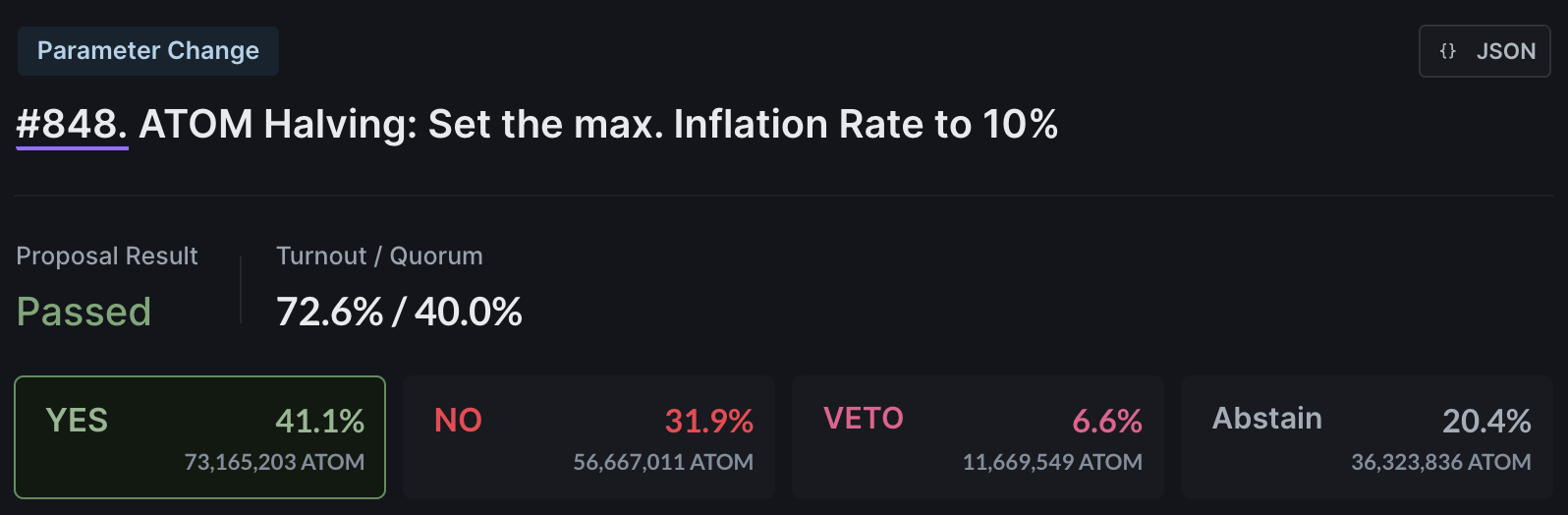
The conditions for the passage of the Cosmos proposal require a voting rate of over 40%, more than 50% of the voting power (excluding abstentions) to vote in favor, and a veto (excluding abstentions) of less than 33.4%. According to the final voting results, the support rate was 41.4%, and the proportion of support, opposition, and veto (excluding abstentions) was only 51.63%, slightly higher than the minimum requirement of 50%.
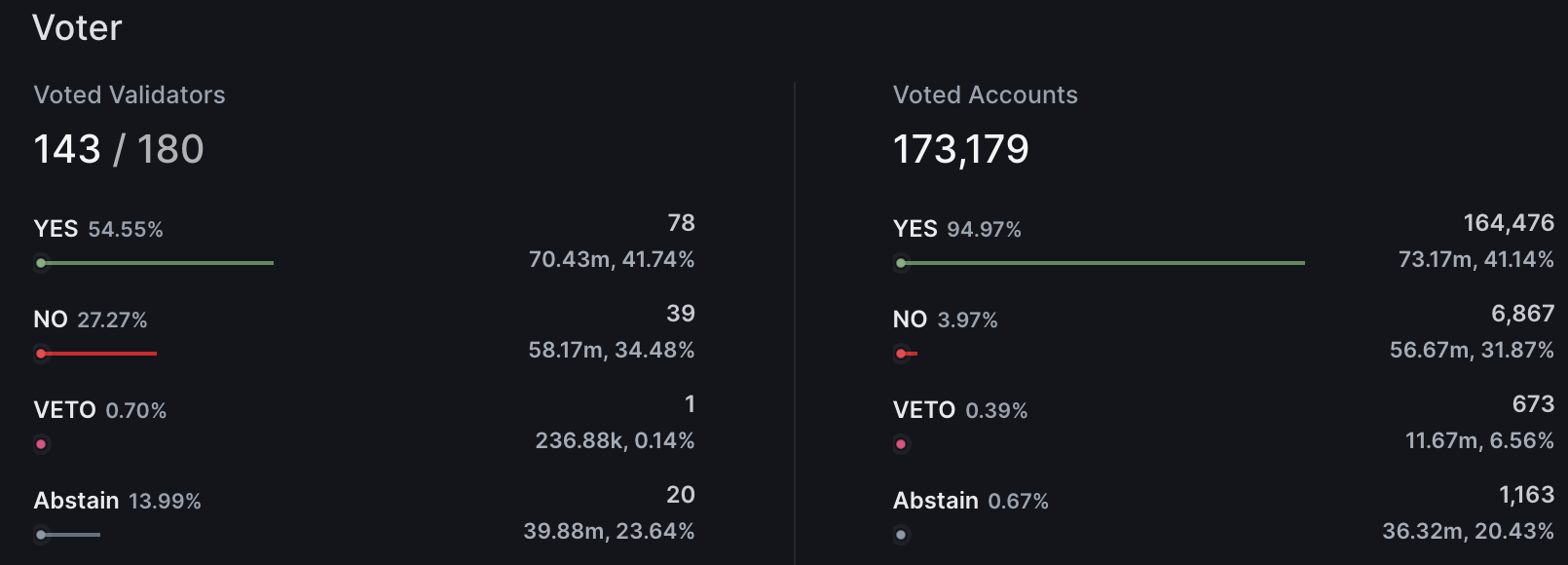
In contrast to the above voting results is the support rate of the number of voters. Although this condition does not affect the voting results for PoS public chains, it can to some extent reflect the proportion of supporters. Out of 173,000 voting accounts, 164,000 chose to support, accounting for 94.97%. Some have pointed out that many accounts with stakes of less than 0.1 ATOM participated in the vote and chose to support, making the support account proportion appear high. These accounts may be from airdrop hunters. However, based on incomplete statistics, the number of supporting accounts in each holding range exceeds the number of opposing votes. For example, out of 143 validators who voted, the support rate was 54.55%, the opposition rate was 27.27%, and the veto rate was 0.7%.
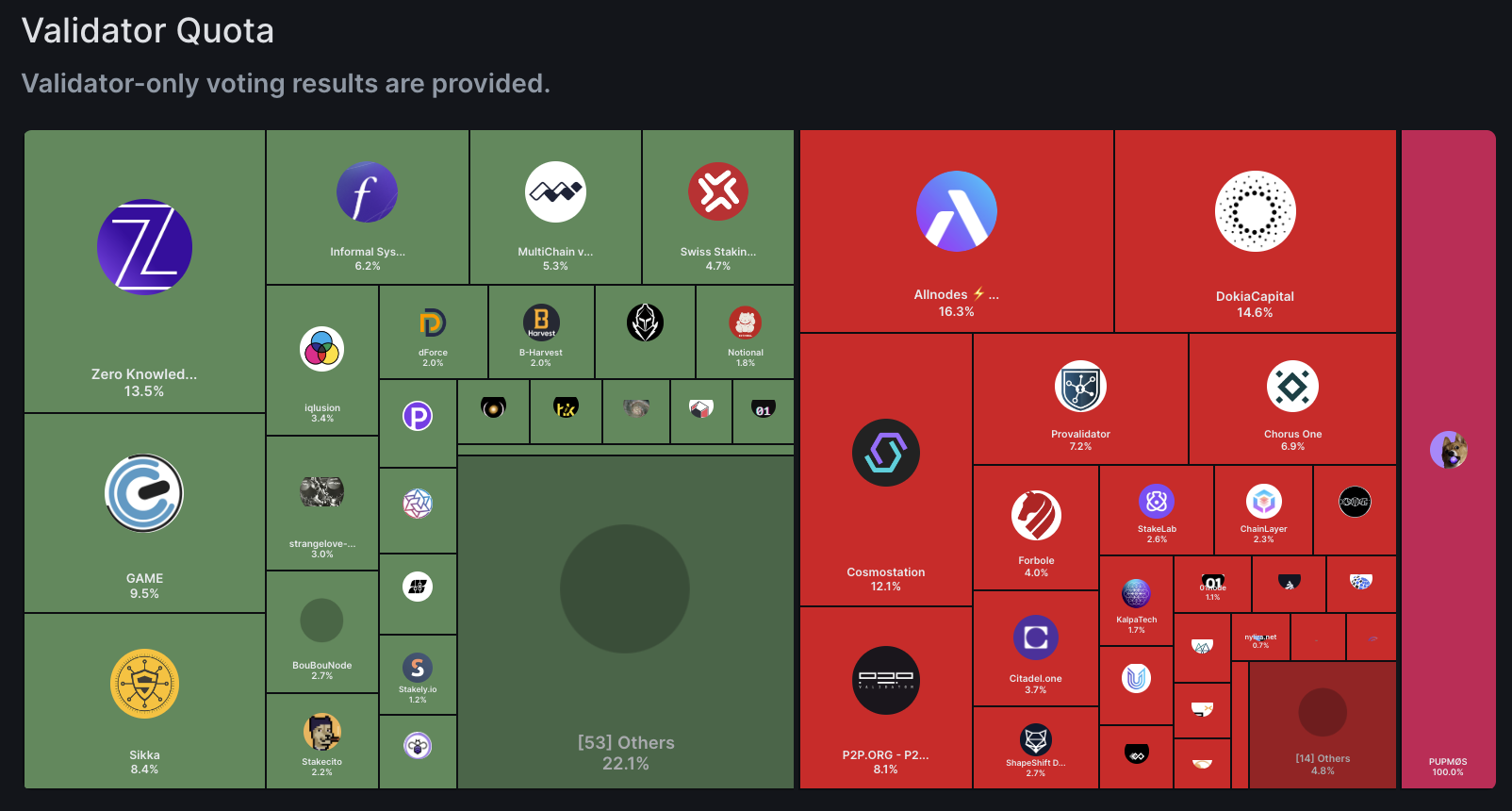
The voting results are more influenced by validators. Out of a total of 73.16 million ATOM support votes, 70.43 million ATOM came from validators. Validators such as ZKV, GAME, and Sikka chose to support, while validators such as Allnodes, DokiaCapital, and Cosmostation chose to oppose. It is important to note that the votes of validators will default to include the ATOM delegated to them by other users. If users disagree with the validator's vote, they can also choose to vote independently to override the validator's voting results.
Views of supporters and opponents
The proposal to lower the ATOM inflation rate has sparked intense and in-depth discussions within the Cosmos community. Supporters believe that this will bring a series of long-term positive effects, while opponents express concerns and opposition to the potential impact of the proposal, reflecting the challenge of balancing different interests in decentralized governance within the Cosmos community.
Some community members who support the proposal are optimistic about the adoption of the lower inflation rate in driving the adoption of the Liquidity Staking Module (LSM), believing that this will increase the liquidity of ATOM, introduce more funds to DeFi applications on Cosmos, and promote the development of the Cosmos DeFi ecosystem. Supporters also point out that lowering the inflation rate to increase the scarcity of ATOM may potentially enhance its market value, which is considered beneficial for long-term investors. Based on the research by Blockworks Research, supporters believe that even with the maximum inflation rate reduced to 10%, validators can still maintain economic viability, providing economic support for the proposal.
However, some community members who oppose the proposal are concerned that lowering the inflation rate may reduce the motivation for users to stake ATOM, thereby affecting the security of the network. Some opponents are particularly concerned about the impact of lowering the inflation rate on small holders, believing that it may further concentrate the holding of ATOM. In addition, some opponents are worried that this change may bring uncertainty to the market, especially in the short term. Regarding the positive impact of lowering the inflation rate on the adoption of LSM and the development of the DeFi ecosystem, some opponents express skepticism, stating that more evidence is needed to support this view.
But from the voting results, it seems that small holders are more inclined to support the proposal to lower the inflation rate, which could immediately form a positive feedback loop for the price of ATOM if passed. Validators and certain large holders, motivated by their own interests, seem to have more reason to oppose in order to maintain higher inflation. According to incomplete statistics, among voting accounts holding less than 5000 ATOM, the number of supporting accounts is several times that of opposing accounts (including veto); for accounts holding more than 5000 ATOM, the number of supporting accounts is about twice that of opposing accounts. However, the lead in the number of supporting votes is not significant in the end.
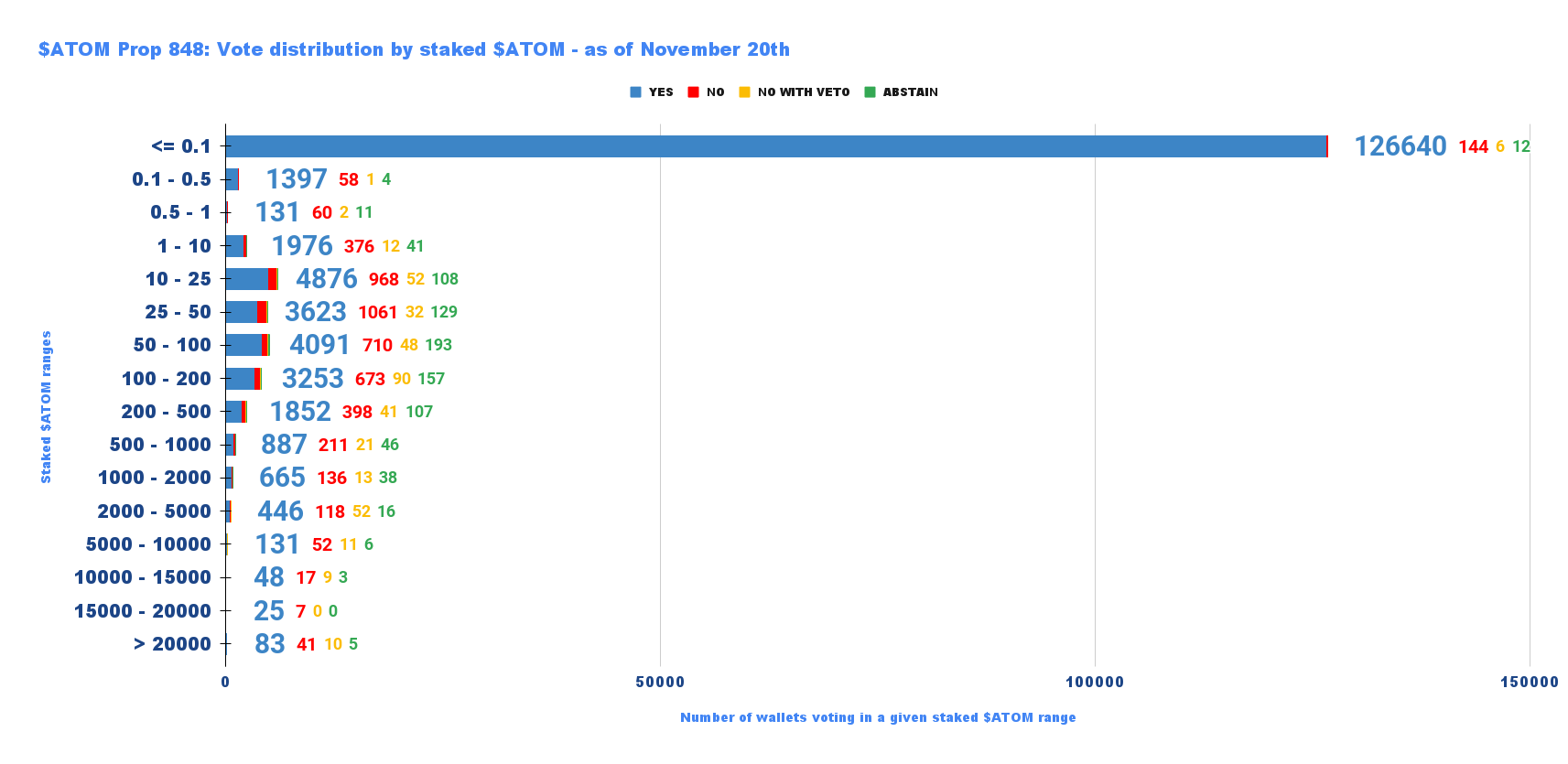
Assuming the market value of ATOM remains unchanged, maintaining a high inflation rate would result in a higher nominal reward rate (the yield provided by the network to stakers) and a higher actual reward rate (nominal reward rate - inflation rate) through staking. This means that the income of large stakers and validators is relatively higher compared to the income of users who only hold ATOM.
Summary
The proposal to lower inflation in Cosmos has sparked heated discussions and ultimately passed with a slight advantage. From the voting results, 94.97% of voting accounts supported the proposal, but based on voting weight, the support was only 41.1%. Although many supporters among the accounts holding small amounts of tokens may be from airdrop hunters, the fact that supporters outnumber opponents in various holding ranges indicates that the proposal has received more support.
The final result of the vote is mainly influenced by validators, with 70.43 million out of a total of 73.16 million ATOM support votes coming from validators. This also gives us an insight that when delegating staking, in addition to considering factors such as yield, validator commission rates, etc., it is also important to consider whether the interests of the validator align with one's own. If they do not align, one can choose to vote independently to override the validator's vote.
免责声明:本文章仅代表作者个人观点,不代表本平台的立场和观点。本文章仅供信息分享,不构成对任何人的任何投资建议。用户与作者之间的任何争议,与本平台无关。如网页中刊载的文章或图片涉及侵权,请提供相关的权利证明和身份证明发送邮件到support@aicoin.com,本平台相关工作人员将会进行核查。


