Reviewing the major events in the currency circle over the past year, last year's FTX bankruptcy brought about a tightening of cryptocurrency regulation, the hot topic in Hong Kong emphasized the importance of compliance with the gold license for fund deposits and withdrawals, the SEC sued centralized exchange giants Binance and Coinbase, and governments around the world are continuously strengthening their focus on and implementing strict regulation of fiat currency fund deposits and withdrawals markets.
The purchase of cryptocurrencies with fiat currency is the first step for most users to enter the Web3 world. Regardless of the category of fund deposit method used, users' funds and accounts should be secure, and the trading methods and platforms need to be legal and compliant. Project parties need to obtain a remittance license locally and verify user identities in order to provide financial services such as fund deposits and withdrawals.
This article will focus on the types of projects for cryptocurrency fund deposits and withdrawals, regional legal regulatory requirements, and the situation of obtaining regulatory licenses for large exchanges.
Types of Fund Deposit and Withdrawal Projects
In general, the channels for buying and selling cryptocurrencies for users are divided into two types: over-the-counter (OTC) trading and on-exchange trading.
The first difference is the difference in location. On-exchange trading generally takes place at a centralized exchange as the venue for trading, similar to traditional stock exchanges. OTC trading, on the other hand, does not take place at a centralized fixed location, but rather at various locations, such as through face-to-face transactions, WeChat, etc.
The second difference is the difference in the objects of fund deposits and withdrawals. For on-exchange trading, the objects of fund deposits and withdrawals are the exchange itself. Users deposit fiat currency to the exchange, known as fund deposit, and withdraw fiat currency from the exchange, known as fund withdrawal. In OTC trading, the objects of fund deposits and withdrawals are other users. User A deposits fiat currency to another user B, as a fund deposit, and user A receives fiat currency from another user C, as a fund withdrawal.
1. Over-the-Counter (OTC) Trading
Over-the-counter (OTC) fiat currency fund deposit and withdrawal projects allow buyers and sellers to trade directly and bypass intermediaries. However, it is also a high-incidence area for fraud, and there are two main modes:
OTC Desks, such as Kraken OTC. In the OTC desk mode, the trading parties are the clients in need of trading services and the OTC desk as the counterparty. This mode of fund deposits and withdrawals has three main advantages:
- No slippage. By providing fixed quotes for large trades to avoid losses from slippage, the OTC desk takes on the risk for clients and earns the possibility of profit from better-than-quoted transactions.
- More liquidity. OTC desks can execute trades at the best prices across multiple liquidity platforms.
- High privacy. By trading directly with the OTC desk, clients can protect their privacy and avoid their trading information appearing in public order books.
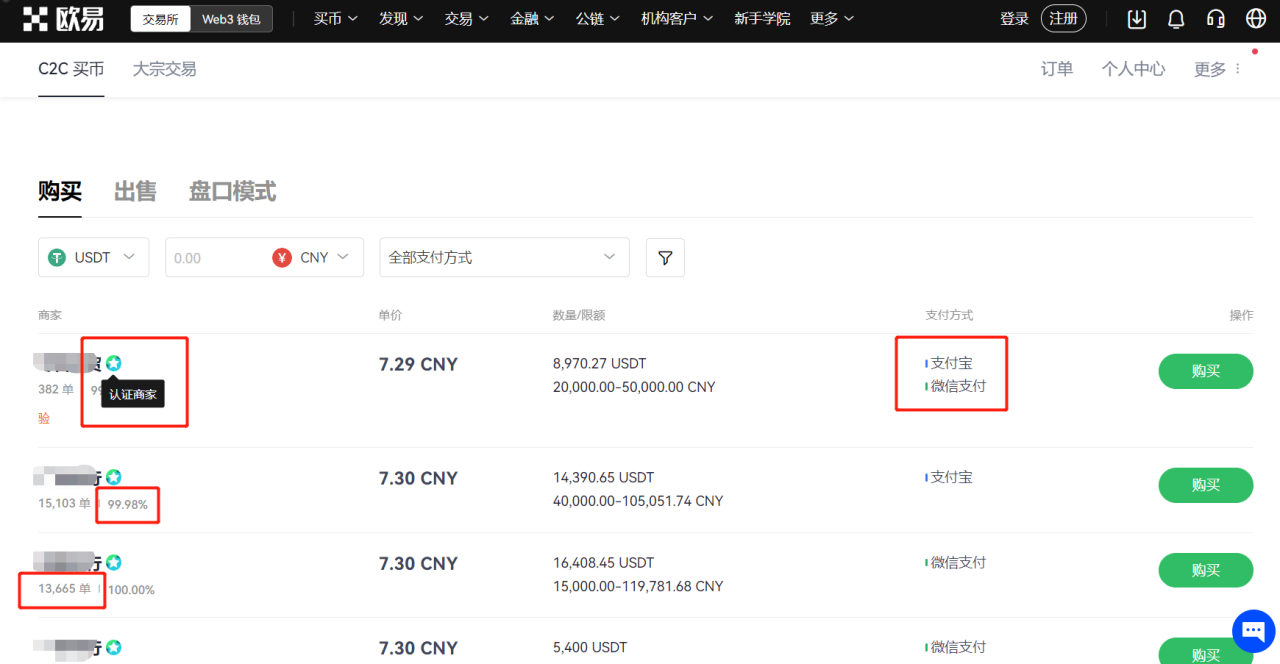
Customer-to-customer (C2C), such as OKX C2C Trading. This refers to direct trading between individuals for fiat currency fund deposits and withdrawals, without intermediaries or third parties. OKX holds the digital currency assets of the buyer/seller until the payment is confirmed by the other party. The platform recommends that users trade with certified merchants, as all certified merchants have undergone careful scrutiny by OKX. The advantages of C2C trading are as follows:
- Supports multiple payment methods. Buyers and sellers can define any payment method, and the transaction can be completed as long as the user confirms the payment.
- Low trust cost. Both trading parties must pass the platform's identity verification, and even stricter merchant certification review. The platform also publicly discloses user transaction information for credit reference, but it cannot avoid the risk of some counterparties delaying or canceling orders.
- High privacy. In many countries (such as India), banks prohibit users from trading in cryptocurrencies to avoid potential policy risks in the future. With C2C trading, users can conceal the purpose of the transfer from the bank, thereby bypassing the bank's restrictions.
However, this type of trading, except for the introduction of third-party platforms, is completely matched by individuals to avoid high intermediary fees. Due to the imperfect trust mechanism and information asymmetry in private transactions, the risk is relatively high.
2. Cryptocurrency ATMs
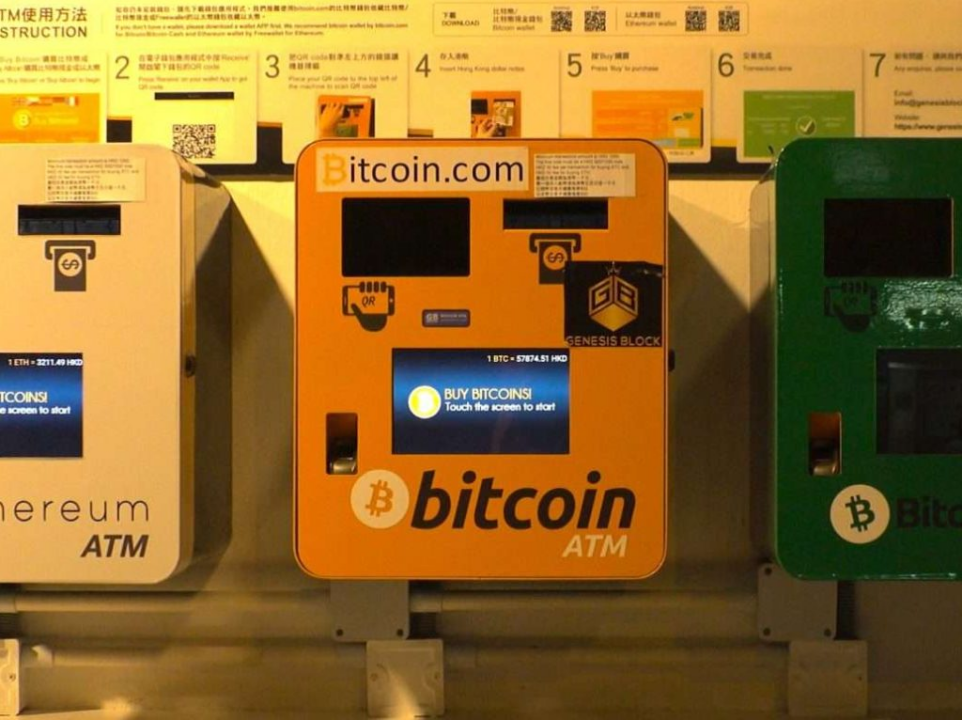
As physical machines, cryptocurrency ATMs have higher operating and maintenance costs, resulting in high exchange fees, some of which can even reach 20%. Cryptocurrency ATM operators purchase liquidity from third-party suppliers and transfer it to users' self-custody wallets, thus requiring a remittance license.
The main advantage of cryptocurrency ATMs is anonymity and privacy, as users can purchase cryptocurrencies with cash, often without KYC processes, although sometimes identification documents are required, without the need for proof of residence or facial recognition.
However, they support few types of cryptocurrencies, mainly BTC and ETH, and most ATMs do not provide fund withdrawal services. Along with the high fees, they are often referred to as the most cumbersome way to purchase cryptocurrencies.
3. Centralized Exchange (CEX)
Centralized exchanges are the most commonly used platforms for fiat currency fund deposits and withdrawals. Exchanges naturally have licensing advantages, lower fees, support a wide variety of cryptocurrencies, and are the largest liquidity providers in the ecosystem. Retail users can freely conduct fund deposits and withdrawals through self-custody wallets on these exchanges, while merchants mostly deploy transactions and transfers through APIs and SDKs. As intermediaries of liquidity, centralized exchanges profit from the spread of buying and selling liquidity and user fees.
When merchants and their clients use wallets hosted by the same exchange, no fees are incurred for transactions, as the funds are only transferred between different accounts within the same hosted wallet. However, if self-custody wallets are used for transfers, corresponding blockchain network fees will be charged.
4. Independent Fund Deposit and Withdrawal Projects
Independent fund deposit and withdrawal projects, such as Moonpay, operate similarly to small exchanges, but mostly only provide fiat currency fund deposit and withdrawal services and also need to register remittance licenses in each operating region. Due to their relatively small scale and limited legal and technical resources, these types of projects are more vertically focused and mostly provide fiat currency fund deposit and withdrawal services.
However, due to differences in liquidity sources and the requirement for clients to provide self-custody wallet addresses, the fees for these projects are generally higher than those of centralized exchanges, as they include intermediary fees and network fees. Although independent fund deposit and withdrawal projects are generally smaller and have higher fees than centralized exchanges, they also have their advantages:
- Simple and user-friendly interface. The minimalistic interface directly displays the fiat currency amount and the corresponding cryptocurrency amount. Users only need to undergo identity verification for large transactions, making it user-friendly for small fund deposits and withdrawals.
- High privacy. Most projects only support self-custody wallets, eliminating the need to transfer cryptocurrency assets from hosted wallets, and users use as little other wallet information as possible.
- Most projects allow affiliate distributors to set up distribution bonuses using SDKs, allowing distributors to control profits freely, unlike the less explicit profit sharing of centralized exchanges.
5. Fund Deposit and Withdrawal Aggregators
Fund deposit and withdrawal aggregators, such as MetaMask's fiat currency fund deposit service, guide users to purchase and earn commissions by providing quotes from multiple independent fund deposit and withdrawal projects and centralized exchanges. This category essentially serves as an information intermediary, facilitating liquidity sharing through the aggregation of multiple exchanges and independent fund deposit and withdrawal projects. Fund deposit and withdrawal aggregators have three main characteristics:
- They only provide quotes as intermediaries, and all transactions are carried out through third-party suppliers.
- They do not require remittance licenses, as users undergo identity verification through third-party suppliers.
- In addition to fiat currency fund deposits and withdrawals, they can also provide DEX aggregators, liquidity staking, and NFT markets. Fund deposit and withdrawal aggregators mainly target retail users and do not provide payment solutions for merchants.
6. Cryptocurrency Debit Cards
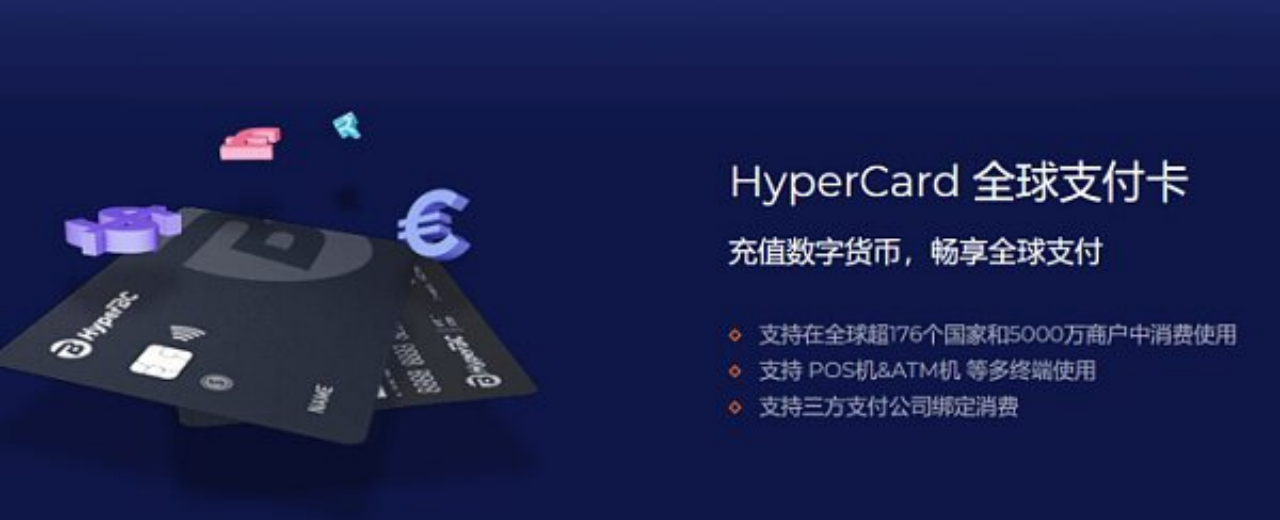
The main advantage of cryptocurrency debit cards is that they allow the use of cryptocurrencies for daily expenses. In traditional consumption scenarios, it is difficult to achieve this unless merchants directly accept cryptocurrencies. Cryptocurrency debit cards are increasingly accepted by users in the cryptocurrency circle, allowing direct cryptocurrency consumption or convenient conversion of cryptocurrencies into fiat currency in the card for global payments and consumption.
- Cryptocurrency debit cards act as secondary accounts delegated by centralized exchanges and are one of the customer services provided by centralized exchanges. The cryptocurrency-related aspects of fund deposits and withdrawals are handled by the centralized exchange (without the need for additional remittance licenses), while the fiat currency payment processing is handled by payment network providers. The fees for cryptocurrency debit cards are often higher than those of centralized exchanges, as users need to pay additional exchange fees to payment network providers. By using cryptocurrency debit cards to pay merchants in fiat currency, cryptocurrency debit cards can only be used as a channel for fiat currency fund withdrawals. It should be noted that using cryptocurrency debit cards for payments may incur capital gains tax, and cryptocurrency must be pre-deposited into the card before use.
- Using cryptocurrency debit cards also has the following advantages:
- Fund security: The funds deposited into the card are operated by the bank, eliminating concerns about fund sources and card freezing. Physical cards support ATM withdrawals. In actual consumption, fiat currency is directly used for consumption, not cryptocurrency assets.
- Cross-border payments: Most cryptocurrency debit cards are Visa or Mastercard, supporting cross-border payments and can be used at millions of online and offline points worldwide.
- Cashback: Most cryptocurrency debit cards support cashback, which is returned to users in the form of cryptocurrency.
Security and Compliance Issues
Having understood the common fund deposit and withdrawal methods, which one do you usually use? Each type of fund deposit and withdrawal method has its advantages, but what we are more concerned about is the legal and security issues of funds and transactions. Due to the differentiated regulations among major countries, there is still room for non-compliant fund deposits and withdrawals in the market, and various means such as money laundering, tax evasion, and fraud are frequently seen. Users are often distressed and anxious due to being cheated or robbed of their property, frozen funds, and direct visits from relevant authorities.
To minimize the risks of fund deposits and withdrawals, in addition to strengthening their own security awareness, learning more about blockchain knowledge, and focusing on the safekeeping of property private keys and passwords, users should try to conduct transactions on large platforms with licenses. Large institutions such as exchanges should also strengthen their own compliance management, cooperate with regulators, obtain the necessary compliance licenses, and provide guarantees for user transactions. Next, let's understand the legal requirements for various financial licenses in different regions.
Legal Requirements in Different Regions
The unique innovation of cryptocurrencies makes their properties difficult to define, and most regions do not yet have comprehensive regulatory frameworks. The current legal licenses related to fund deposits and withdrawals are divided into the following two major categories:
Emphasize payment and currency circulation licenses, such as the remittance license in the United States and VASP in the European Union.
Professional virtual asset service provider licenses, which will be a future trend.
In the United States, applying for a remittance license (MTL) can cover a wide range of subjects, including international remittances, foreign exchange, currency trading/transfers, ICO issuance, prepaid projects, and issuing traveler's checks, which can be considered to cover institutions related to currency services.
To apply for this license, fund deposit and withdrawal projects need to register with the Financial Crimes Enforcement Network (FinCEN) as a money services business, and then apply for a remittance license in the operating state. The application is based on a registration and licensing system, and re-examination is required every two years. Due to the ambiguous nature of cryptocurrencies, fund deposit and withdrawal projects are more or less subject to regulation by the U.S. Securities and Exchange Commission (SEC) or the Commodity Futures Trading Commission (CFTC).
Compared to the United States, the cryptocurrency regulatory systems in the European Union and the United Kingdom are more comprehensive. Fund deposit and withdrawal projects need to register as virtual asset service providers (VASPs). In addition, all exchanges, mining pools, wallet providers, custodians, and decentralized applications require this license. Registering as a virtual asset service provider in one EU country allows businesses to operate throughout the EU. Lithuania in the EU has the most lenient cryptocurrency regulatory policies in the EU, with licenses obtainable in as little as one month, and the licenses have no expiration date. The minimum authorized capital is only 2,500 euros, and there are no requirements for local personnel structure. Many centralized service providers hold this license, such as Binance, BIT, Huobi, and HyperBC.
In Hong Kong, cryptocurrencies are classified as security tokens and non-security tokens, so operating virtual currencies legally in Hong Kong requires applying for dual licenses. According to different regulatory authorizations, the Securities and Futures Commission of Hong Kong regulates security token transactions conducted by virtual asset exchanges (License 1 + License 7) under the Securities and Futures Ordinance, and also regulates non-security token transactions conducted by virtual asset exchanges under the Anti-Money Laundering Ordinance (VASP license). On August 3, HashKey and OSL obtained an upgraded license from the Hong Kong Securities and Futures Commission for License 1 (securities trading) and License 7 (provision of automated trading services), allowing them to engage in retail cryptocurrency business in Hong Kong. They became the first batch of institutions to obtain licenses since the new regulatory requirements for retail digital asset trading in Hong Kong took effect on June 1, 2023.

Situation of Obtaining Compliance Licenses for Fund Deposits and Withdrawals
In countries or regions with clear exchange regulatory policies, an institution obtaining a license means that it is under the supervision of the local government, can legally operate cryptocurrency businesses, and users can use fiat payment methods for fund deposits, with assets and information security being highly protected. At the same time, the number and quality of licenses also reflect the confidence and determination of institutions and exchanges to invest in the future. In terms of the overall strength of institutions and exchanges, it plays an important role in expanding publicity and consolidating user confidence. From the current industry landscape, the following four mainstream exchanges are in the first tier in terms of the quality and quantity of licenses:
Binance
As the world's largest exchange, although its headquarters are not clear, it has been making efforts in security and compliance to fill the gray areas and actively embrace regulation and compliance. In 2022, Binance made significant progress in compliance in the European Union, the Middle East, and North America, obtaining compliance licenses and permits in three G7 countries (the United States, France, Italy) and three regions in the Middle East (Dubai, Abu Dhabi, Bahrain). However, overall, Binance focuses more on relatively remote areas and small countries, establishing local fiat exchanges and building good relationships with local regulatory authorities.
In 2023, it is worth noting that first, Binance obtained a digital asset operator license in Thailand, its first license in Southeast Asia, indicating its legalization layout in Southeast Asia. Second, the SEC's regulatory lawsuit against Binance US has caused a major upheaval in the cryptocurrency market, significantly strengthening cryptocurrency compliance and security regulation in the United States. Third, Binance's global compliance is not as expected, as it has not yet obtained a cryptocurrency operating license in Hong Kong, and its progress is unclear. Its multiple layouts in Europe have also been tightened by regulators after the FTX incident, with problems arising in various regions.
OKX
It is reported that the veteran cryptocurrency exchange OKX has obtained a virtual currency exchange operation license in the United States, a virtual currency exchange operation license from the Philippine government, a cryptocurrency exchange platform business license in Japan, an MVP provisional license from VARA in Dubai, and a temporary virtual asset license in the United Arab Emirates. It also has legal operating licenses in France and the Bahamas.
OKX is headquartered in Seychelles, with its operating entity in Hong Kong. Its team has been preparing to apply for a legal operating license in Hong Kong for a year and has formed a dedicated team of over 20 people to handle compliance procedures in Hong Kong. Lennix, the global chief business officer of OKX, stated that OKX is expected to submit audit results in September, but the specific approval and time to obtain the license will depend on the response from the Hong Kong Securities and Futures Commission. However, this does not affect the smooth operation of OKX's business in Hong Kong until approval is obtained.
Coinbase
The leading U.S.-based exchange Coinbase is the first licensed Bitcoin exchange in the United States. Its team places great emphasis on compliance, maintains close contact with the government, and holds BitLicense in New York State and trust licenses. It also has MTL licenses in various states in the United States, as well as electronic money service licenses from the UK FCA and the Central Bank of Ireland. Due to the need for compliance listing, the company has not issued any platform tokens and has not engaged in higher-risk derivative businesses. It was not until April 14 of this year that Coinbase successfully went public on Nasdaq, marking a milestone in the development of Bitcoin and other digital assets and showing the dividends of focusing on compliance to other exchanges.
However, even as a U.S.-based exchange known for its emphasis on compliance, Coinbase was sued by the SEC following Binance, accusing Coinbase of illegally operating as a national exchange, broker, or clearing agency. Just six months ago, Coinbase was fined $50 million by the New York State Department of Financial Services (NYDFS) for violating New York banking laws and the state's compliance program.
Huobi
As another veteran exchange, Huobi has been continuously strengthening its compliance process since 2018. It holds an MSB license in the United States, a distributed ledger technology (DLT) license in Gibraltar, a digital asset trading license issued by the Thai Ministry of Finance, and its holding BitTrade has a legal license in Japan. It also holds a virtual asset service provider license (VASP) in Lithuania and operates exchanges in Dubai and Australia. Overall, the licenses are mainly concentrated in tax havens, small but refined.
In the face of applying for a license in Hong Kong, Huobi has been preparing for it all along. In May, it also launched a new exchange, Huobi Hong Kong. Sun Yuchen, a member of the Huobi Global Advisory Committee, stated that Huobi submitted an application for VASP in late May, including an 18-month grace period. The regulatory agency can approve or reject the application, but Huobi may be able to obtain a cryptocurrency trading license in Hong Kong as early as the end of this year.
Conclusion
As the cryptocurrency market continues to grow and benefit from the impact of the FTX incident last year, global market regulation has greatly increased, and legal compliance is increasingly being introduced. The behavior of major exchanges in obtaining licenses for legal operations not only allows cryptocurrency economic activities to enter the public view legally but also demonstrates the comprehensive strength of the exchanges and their determination and confidence in the future. However, the most important thing is to provide trading protection for users, becoming a solid cornerstone of confidence in the cryptocurrency market. We also hope to see that with the compliance of the cryptocurrency market, good coins can drive out bad coins, and we can go further and longer together.
免责声明:本文章仅代表作者个人观点,不代表本平台的立场和观点。本文章仅供信息分享,不构成对任何人的任何投资建议。用户与作者之间的任何争议,与本平台无关。如网页中刊载的文章或图片涉及侵权,请提供相关的权利证明和身份证明发送邮件到support@aicoin.com,本平台相关工作人员将会进行核查。


