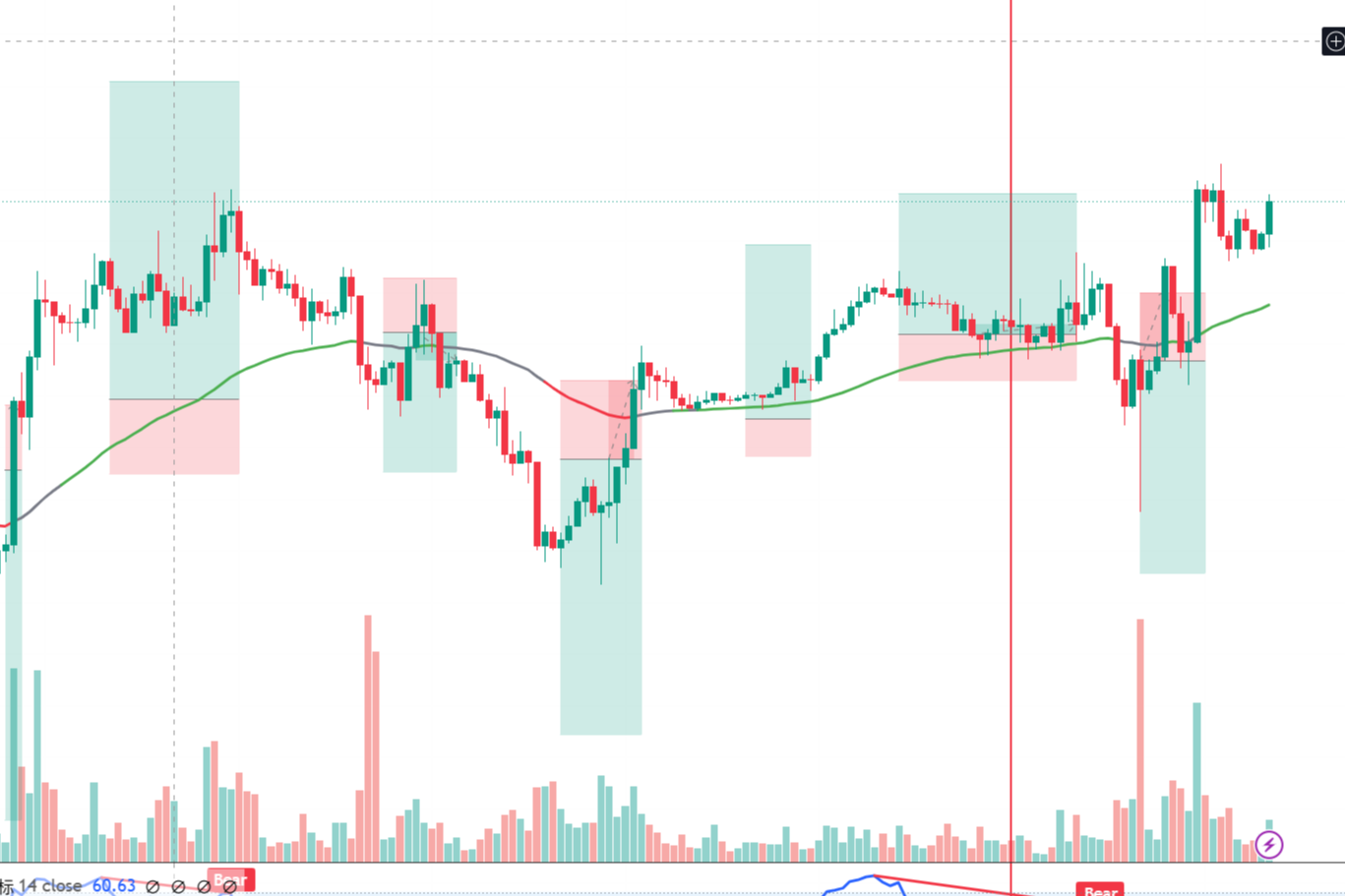
On July 21, 2026, what should have been an ordinary summer trading day became the starting point for the repricing of crypto assets under the overlay of military tension and a technological frenzy: on one side, Trump publicly emphasized that the conflict with Iran "is far from over," threatening to strike the Golan Heights and Iranian nuclear facilities while clearly stating he had no intention of meeting before Iran was "ready," pushing the Middle Eastern risk premium to the forefront; on the other side, NVIDIA released a new generation of AI infrastructure—the Vera CPU and Spectrum-6 Ethernet switch system, with a single switch capacity increased to 102.4 Tbps, double that of the previous generation, adding higher computing power to the global AI narrative. On the same day, bipartisan discussions in Congress continued bargaining over ethical issues related to crypto, with Senator Lummis’ camp signaling that negotiations with the White House were "progressing well, and the text is on the way," repackaging compliance expectations into asset pricing. The three main narratives—war expectations, technological optimism, and regulatory pathways—were released on the same day, yet the market chose to respond with price first: Coinbase rose over 12%, Robinhood rose 8.34%, Bullish rose 7.71%, Circle rose 7.28%, MARA rose 6.56%, MicroStrategy rose 4.65% (according to a single source). The collective rise of crypto concept stocks reflects investors reassessing the risk curve of BTC, ETH, and the entire crypto asset market under the new framework of "war + AI + regulation." Geopolitical conflicts escalate safe-haven and energy anxiety, AI infrastructure strengthens computing power and growth expectations, and advancements in ethical texts push compliance discounts—these three factors are collectively rewriting the macro narrative and valuation structure of crypto assets.
Trump's Tough Talk on Iran and Safe-Haven Sentiment
On July 21, Trump publicly emphasized that matters with Iran are "far from over," specifically naming the Golan Heights and Iranian nuclear facilities, claiming that he would "soon and very violently" launch attacks, while clearly stating he had no intention of meeting before Iran was "ready." This effectively threw a signal of "diplomatic window not yet open, military options prioritized" directly to the market. For traders already accustomed to the Trump administration's "maximum pressure" approach, this statement was interpreted as a continuation of the "maximum pressure" route, and the uncertainty in the Middle Eastern situation escalated from background noise to a key variable that needed to be included in the risk report of the day. On a macro level, this usually means that the demand curve for traditional safe-haven assets like gold and U.S. Treasuries rises, while high-risk assets must pay for the increased geopolitical risk premium, subjecting leverage and duration exposure to scrutiny.
Crypto assets sit in the narrative's gap: some macro funds view BTC as an alternative asset for "geopolitical hedging," allocating part of their positions when the shadow of war deepens, placing it in the same basket as gold and U.S. Treasuries; however, more institutions still classify BTC as a high beta risk asset. Under a combined scenario of "potential military strikes" and "limited diplomatic channels," the risk premium requirement for such assets increases, leading short-term long leverage to contract naturally. In terms of trading structure, the war narrative easily suppresses extreme leveraged behavior in the contract market, reducing highly leveraged long positions, pressuring futures premiums, and increasing demand for put protection in the mid-to-long term options market. Meanwhile, those who insist on viewing BTC as a geopolitical hedge may choose lower leverage and longer holding periods, indicating a process of reevaluating risk tolerance in the crypto market following increased geopolitical risk.
Surge in Crypto Stocks Reflects Risk Appetite
On the same trading day that the war clouds suppressed leverage, U.S. crypto concept stocks presented a starkly different picture: Coinbase rose over 12% that day, Robinhood rose 8.34%, Bullish rose 7.71%, Circle rose 7.28%, MARA rose 6.56%, and MicroStrategy also saw a 4.65% increase (according to a single source). These companies represent exchanges, retail trading platforms, institutional trading, and Bitcoin holdings, and their stock prices often serve as a "thermometer" for traditional funds observing the crypto sector. Just as geopolitical risk premiums were raised, crypto exposure stocks collectively surged, which in itself indicates that the market made a complex trade-off between "escalating conflicts" and "the growth story of crypto and technology is far from over."
This round of market rebound at the stock level began with the transmission of risk sentiment: the broad rise in crypto-related stocks would reinforce the narrative of "industry recovery" and "continuation of tech growth," increasing media and research attention, prompting more funds to reassess their allocation potential for BTC and ETH. Secondly, there is the wealth effect—through stocks like Coinbase and MicroStrategy, both institutions and retail investors can indirectly participate in crypto, and after improvements in unrealized gains, they are more willing to increase their risk exposure on spot and futures positions, leading on-chain funds to warm up to high beta assets. More critically, this round of stock price repricing is not merely a bet on war hedging but adds to the technological optimism brought by NVIDIA's hardware announcements and the implied regulatory predictability suggested by the advance of ethical texts in Congress, thus interpreting the surge in crypto concept stocks as a risk appetite repricing led by technology and compliance expectations, rather than a simple geopolitical hedging impulse.
NVIDIA Boosting AI Infrastructure and On-Chain Funds
On the same trading day, NVIDIA didn’t just release a simple new product announcement but delivered a set of combinations targeting the future power foundation: the Vera CPU and Spectrum-6 Ethernet switch system, with Spectrum-6 having a single switch capacity of 102.4 Tbps, double that of the previous generation. This extreme elevation of bandwidth and parallel processing capability was interpreted by the market as a confirmation signal that "computing power demand will only continue to expand in the coming years." For NVIDIA, which has already become one of the highest market-cap companies globally thanks to its AI GPUs, every iteration of underlying hardware rewrites the discount assumptions for the tech growth sector—if computing power supply is faster, more stable, and cheaper, the curve for AI application penetration and profit potential can be pushed even higher, thus elevating the valuation center of Nasdaq components and high beta tech stocks, recalibrating the overall tolerance for risk assets.
This round of the "computing power boom" narrative quickly found a resonance interface within the crypto world. On-chain, there are already various stories surrounding computing power, data, and token economies: from on-chain computing and decentralized storage to protocols using AI-assisted trading or risk control, funds can make cross-allocations between "holding technological leaders like NVIDIA" and "betting on on-chain computing power and data-assetized tokens." When infrastructure like the Vera CPU and Spectrum-6 is viewed as the anchor for further expansion in the AI industry, some investors will re-evaluate the valuation of tokens related to computing power and data bandwidth, applying higher growth weights to these assets while also imposing stricter performance assessments. As a result, a trend emerges in on-chain funding structures shifting from traditional narratives towards the "AI + crypto" theme, leading market pricing to start distinguishing which assets are truly bound to computing power and the data economy, and which are merely noise riding on technological sentiments.
Congressional Ethical Games and Crypto Regulatory Premiums
As the computing power narrative rewrites growth curves on Wall Street, another thread of repricing comes from the halls of Congress. The U.S. Congress is engaged in a more detailed game around the ethics of crypto assets, with DeFi clauses being publicly viewed as a key negotiating focus. Last week, Senator Lummis’ camp even proactively leaked that negotiations with the White House were "progressing well," indicating that the upcoming ethical text will reflect these productive dialogues. This means that the macro variable of "regulatory uncertainty" is undergoing marginal changes: shifting from "not knowing whether there will be regulation" to "knowing how it will be regulated soon," prompting the market to reassess the long-term embedded regulatory discounts in crypto assets and related stocks. The collective rise in crypto concept stocks like Coinbase and Robinhood on the same trading day is a microcosm of this forward-leaning expectation.
In the current environment of military uncertainty and technological optimism, whether the regulatory path is clear directly determines investors’ risk-reward requirements for different on-chain assets. For BTC, perceived as a "digital commodity," geopolitical conflicts heighten its safe-haven appeal, while the advancement of regulatory ethics influences compliance trading tools and institutional allocations; ETH sits between dual amplifiers, supported on one hand by the growth narrative driven by AI and on-chain applications, and on the other hand, its DeFi protocols, CeFi platforms, and on-chain assets pegged to the dollar are extremely sensitive to how decentralized finance is defined and constrained in the ethical text: if the framework is clear and allows for compliance pathways, the regulatory premium for such assets is expected to compress, making institutional funds more willing to enter; if DeFi clauses lean towards strict restrictions, the risk premium will be raised, with funds concentrating on BTC, certain large-cap ETH, and traditional crypto stocks with more certain compliance expectations. What the market truly needs to focus on is the moment when regulatory premiums are reallocated among different assets after the ethical text is implemented.
BTC/ETH Pricing Under War Clouds and Technological Optimism
The threefold narrative of July 21—Trump openly threatening to strike the Golan Heights and Iranian nuclear facilities, NVIDIA launching the Spectrum-6 and Vera CPU with doubled computing power, and the collective rise of U.S. crypto concept stocks—has already been woven into the current pricing framework for BTC and ETH: on one hand, the uncertainty in the Middle Eastern situation raises the "war premium," prompting funds to assign a shock-buffering risk compensation to assets like BTC that have safe-haven notions; on the other hand, NVIDIA strengthens its AI infrastructure layout, and a simultaneous broad rise in Coinbase, Robinhood, Bullish, Circle, MARA, MicroStrategy, etc., signals "technology growth + industry expectation repair," allowing assets like ETH, which are more closely tied to computing power and application narratives, to carry more cyclical optimism. The third main thread comes from the Congressional battles over crypto ethics: DeFi clauses and the upcoming ethical text are determining how institutions will participate in BTC, ETH, and on-chain dollar assets, embedding compliance discounts into long-term valuation factors. In the short term, funds dynamically shift between three stories: "safe-haven under war clouds," "AI-driven growth," and "compliance under ethical texts": when safe-haven preferences strengthen, BTC and certain on-chain dollar assets are easier to attract positions; when technological optimism prevails, ETH and related application sectors gain more premiums;when the compliance path is clearer, institutional allocation space for trading platform stocks and leading on-chain assets opens up. Moving forward, whether Trump transitions from rhetoric to actual military action against Iran, whether NVIDIA and the entire AI sector can sustain the growth narrative through performance and valuation, and how the final implementation of the Congressional ethical text reshapes the on-chain funding landscape will all jointly determine which mainline narrative becomes dominant, with volatility in the crypto market and the relative pricing of BTC and ETH continuously reshaped in the ebb and flow of these three forces.
Join our community to discuss and become stronger together!
AiCoin exclusive Hyperliquid benefits: https://app.hyperliquid.xyz/join/AICOIN88
AiCoin exclusive Aster benefits: https://www.asterdex.com/zh-CN/referral/9C50e2
On-chain Telegram community: https://t.me/AiCoinWhaleData
On-chain community: https://www.aicoin.com/link/chat?cid=N6OVMor5g
AiCoin on-chain Twitter: https://x.com/aicoinwhaledata
免责声明:本文章仅代表作者个人观点,不代表本平台的立场和观点。本文章仅供信息分享,不构成对任何人的任何投资建议。用户与作者之间的任何争议,与本平台无关。如网页中刊载的文章或图片涉及侵权,请提供相关的权利证明和身份证明发送邮件到support@aicoin.com,本平台相关工作人员将会进行核查。