An internet-based financial system seems inevitable, and this period will be seen as the beginning of chaos.
Author: Connor Dempsey
Translation: Deep Tide TechFlow
Deep Tide Introduction: This article reviews the extreme optimism brought by Trump's victory in early 2025, followed by an epic crash due to the "First Family" issuing tokens, tariff policies, Binance's unexpected outage, and a stock market stampede. The author, with the perspective of an 8-year industry veteran, deeply analyzes how the crypto market has transitioned from an "independent market" to a "double-edged sword" deeply tied to Wall Street. Despite the current chaos, the author believes that under the macro expectations of interest rate cuts, a weak dollar, and the trend of financial infrastructure moving on-chain, we are still at the "chaotic starting point" of this internet financial revolution.
The full text is as follows:
I have been navigating the crypto market for 8 years, and every now and then, I encounter days that feel like these past few days.

February 5 was one of those days. But none of this happened overnight. Here is our mental journey.
Looking Back
As we entered 2025, expectations for cryptocurrencies were incredibly high. The moment Trump confirmed his victory at the end of 2024, Bitcoin (BTC) began to break new highs. We were transitioning from a Biden administration that was actively trying to stifle the U.S. crypto industry to a Trump administration that vowed to make America the "world's crypto capital." Clear regulations were about to be introduced, Bitcoin had a new institutional narrative, and exchange-traded funds (ETFs) were ready to allow large funds to easily gain exposure.
The Jarring Brake
The world's largest economy finally began to embrace the technology that we had spent 16 years building. The mood was very high. Then, the most foolish thing I have seen in my 8 years in the crypto industry happened. The President of the United States—Donald J. Trump—launched his own shitcoin. Then, his wife issued one too.

Public opinion overnight shifted from "cryptocurrency will modernize financial markets" to "the president is engaging in pump and dump." A large group of retail investors rushed into $TRUMP. Most of them got wrecked. Just like that, those who had always hated this industry had another reason to call the whole thing a scam.
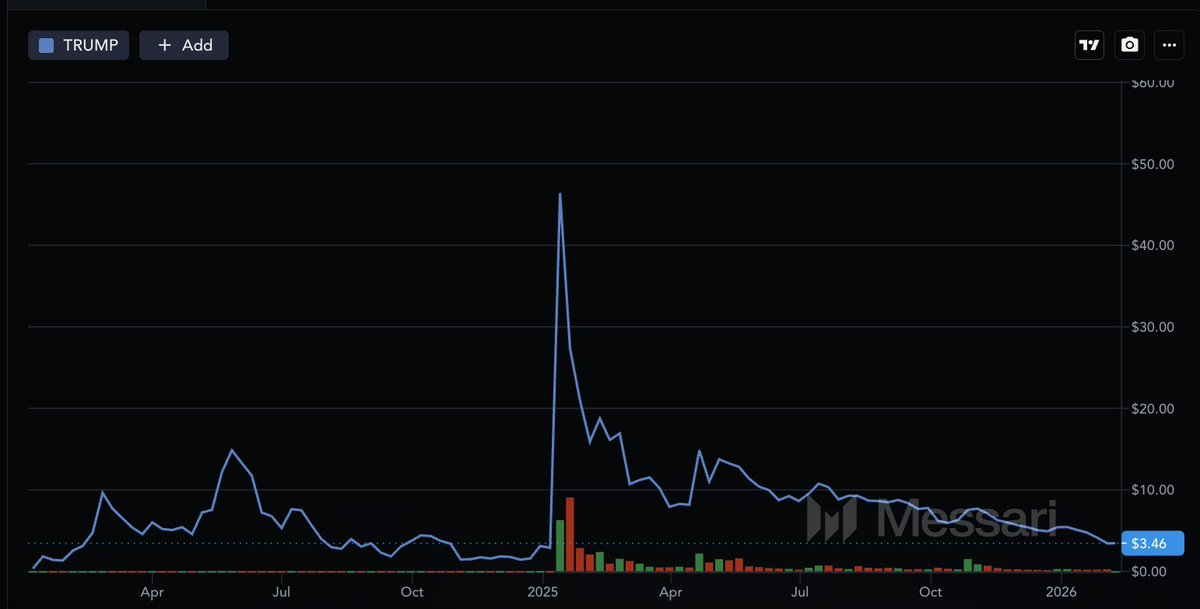
Source: @messaricrypto
Staying Positive
Cryptocurrencies have previously escaped from embarrassing situations, and there were still many reasons to be optimistic. Billions of dollars were flowing into Blackrock's Bitcoin ETF. Companies like Stripe, Visa, and even MoneyGram, which has a century-long history, were fully investing in stablecoins. The Trump administration implemented federal stablecoin regulations, and a market structure bill (Clarity) aimed at establishing clear rules for the entire industry soon followed. The race was still on.
October 10 (10/10)
Most market participants (including myself) expected this year to close at historical highs (ATHs). The Federal Reserve (Fed) was cutting interest rates, Bitcoin was challenging the historical high of $125,000 again, and experts predicted Bitcoin would reach $250,000, Ethereum (ETH) would reach $12,000, while the stock market and gold would also hit new highs.
Then, on October 10, Trump announced a 100% tariff on China, and Morgan Stanley Capital International (MSCI) proposed to exclude companies with high crypto business from pension funds and ETF-tracked indices. The latter threatened to cut off one of the largest sources of buying for Bitcoin.
The market began to sell off, and then the real tragedy for cryptocurrencies began. Crypto investors were over-leveraged (as always), and then the world's largest exchange—Binance—experienced a technical failure, triggering the largest single-day liquidation event in crypto history. There were forced sales of $30-40 billion, and some altcoins plummeted by 70% in a day.
It is widely believed that this event temporarily disrupted the crypto market, and since then, we have decoupled from the rising stock market and commodities.
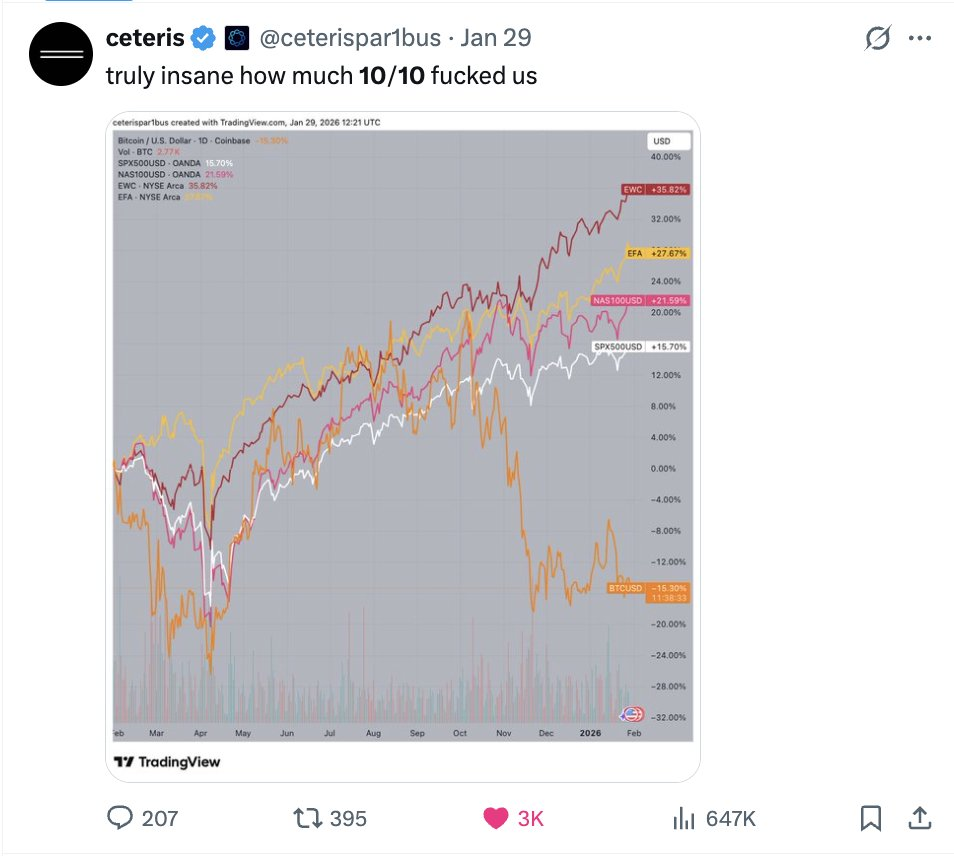
Caption: Thanks to @ceterispar1bus for the excellent chart
A Steady Decline
What followed was real pain. While other assets were soaring, cryptocurrencies were in a downward spiral. The historical new highs predicted by Fundstrat, which were supposed to lead us to "Valhalla," were all there: interest rate cuts, a weakening dollar, and a rising global risk appetite. The S&P 500 index closed at a historical high. Gold and silver began an epic rally. Peter Schiff danced on our graves. And cryptocurrencies just sat there bleeding out.
Re-linking
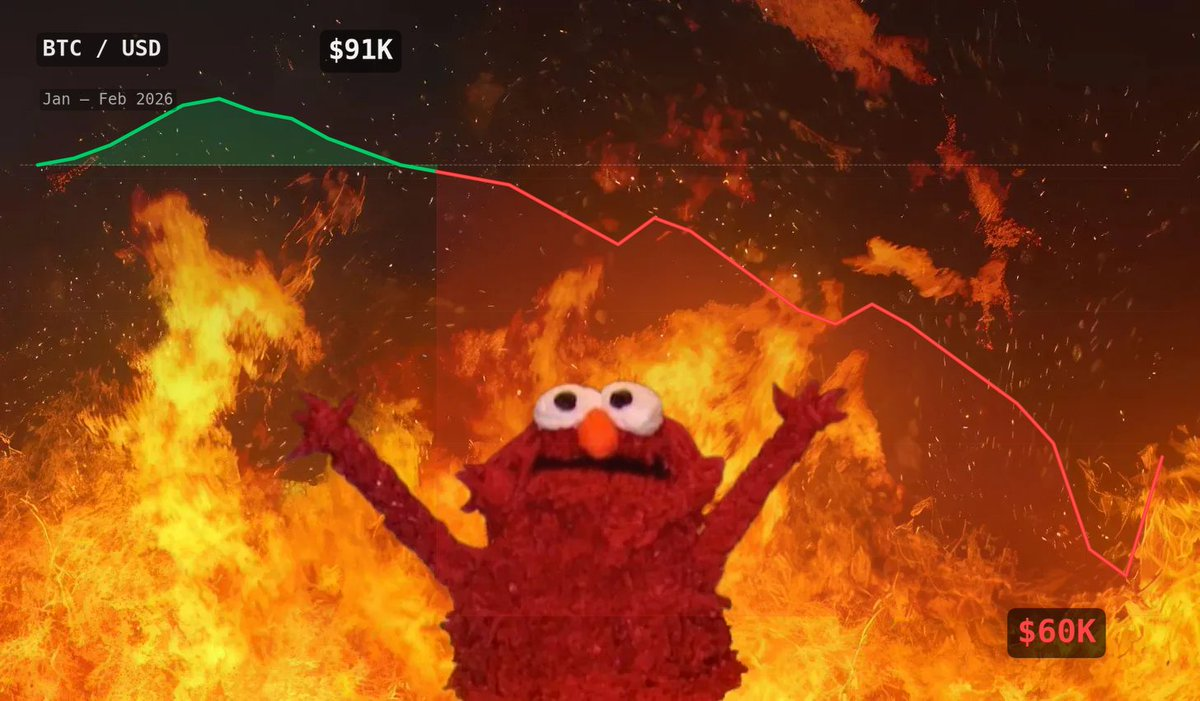
By 2026, other parts of the market began to decline, and cryptocurrencies fell as well. The S&P index started to give back trillions of dollars in gains, and gold and silver experienced the worst sell-off in over 40 years. On February 4, hedge funds were hit hard. Many attributed it to a tech stock sell-off due to fears that artificial intelligence (AI) would render software companies obsolete. In any case, risk managers had to step in and cut positions, including the Bitcoin they now held in large amounts through ETFs, options, etc. The sell-off caused Bitcoin to drop, triggering more mechanical selling, which then affected crypto-native funds. Reports indicated that Trend Research had $2 billion in Ethereum positions on Aave liquidated, exacerbating the situation.
The sell-off in traditional finance (Trad-fi) triggered a sell-off in cryptocurrencies. Not the other way around. The institutional adoption that everyone fought for ultimately became a double-edged sword. This has brought us to this moment.
Crypto is Dead
As expected. Those who have been wrong about cryptocurrencies for over a decade are once again crawling out of their holes, dancing on our graves.
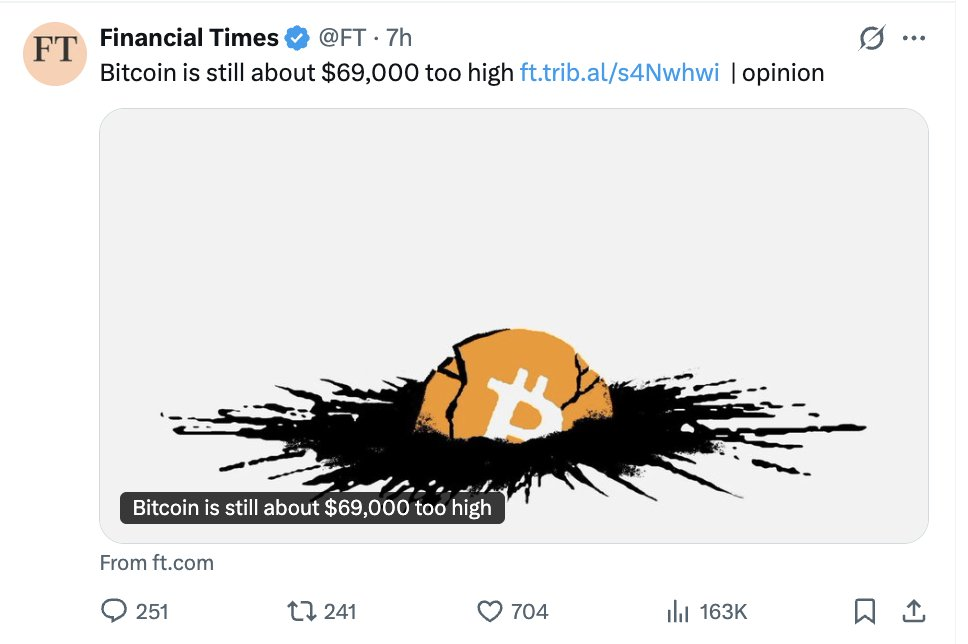
"The theory of digital gold has failed. Cryptocurrencies are not a hedge against currency devaluation. Worse, the miner death spiral is coming, and everything will go to zero. This has been a scam from the beginning." Elizabeth Warren's tweet about how Bitcoin is cancerous is likely to be posted any day now.
Long Live Crypto
Critics are right; Bitcoin and other parts of the market were indeed disappointing in 2025. The reality is that this is still an immature market, only 17 years old. It largely still trades like tech stocks, and last week's performance showed that its intertwining with Wall Street is deeper than ever. The silver lining? The Wall Street that dragged cryptocurrencies down last week can ultimately pull them back up.
And the environment is set. The Trump administration and the incoming Federal Reserve chair have signaled their plans to address the debt crisis through low interest rates and a weak dollar, allowing the economy to run hot. This is the macroeconomic prescription to drive risk assets higher, including cryptocurrencies.
Furthermore, let's not forget the larger narrative. Even our longest-term critics no longer deny that what we have built is real. Stablecoins are upgrading the way global capital flows. The market structure bill will pass, paving the way for all financial businesses to be supported by blockchain. The entire financial system is being upgraded, and we are just finalizing the details.
Are we out of the woods forever? Not yet. Macro risks could still weigh us down. Quantum computing poses a real threat to Bitcoin. Trump's eccentric behavior gives Democrats a reason to strike the industry again when they regain power.
But a hundred years from now, these will all be just noise, and an internet-based financial system will seem inevitable. This period will be seen as the beginning of chaos. There is one real variable: the integration of cryptocurrencies with artificial intelligence is inevitable. We just don't know what it will specifically look like yet. In short, we are still very much in the early stages.
AI-slop Free Guarantee This article guarantees no AI-generated content. That is to say, every word was typed by a human. Even so, I did use Claude Opus 4.6 as an editing and research partner, and the content it fed was written by people much smarter than me.
免责声明:本文章仅代表作者个人观点,不代表本平台的立场和观点。本文章仅供信息分享,不构成对任何人的任何投资建议。用户与作者之间的任何争议,与本平台无关。如网页中刊载的文章或图片涉及侵权,请提供相关的权利证明和身份证明发送邮件到support@aicoin.com,本平台相关工作人员将会进行核查。


