The altcoin market is unprofitable, while the mainstream coin market is twisted like a twist pastry.
Written by: Eric, Foresight News
On the evening of November 26, 2026, Beijing time, CoinDesk cited informed sources reporting that the Hong Kong cryptocurrency market maker Auros, established in 2019, is gradually ceasing operations. Auros has not responded to this matter, and the reasons for the shutdown and the specific closing time remain unknown.
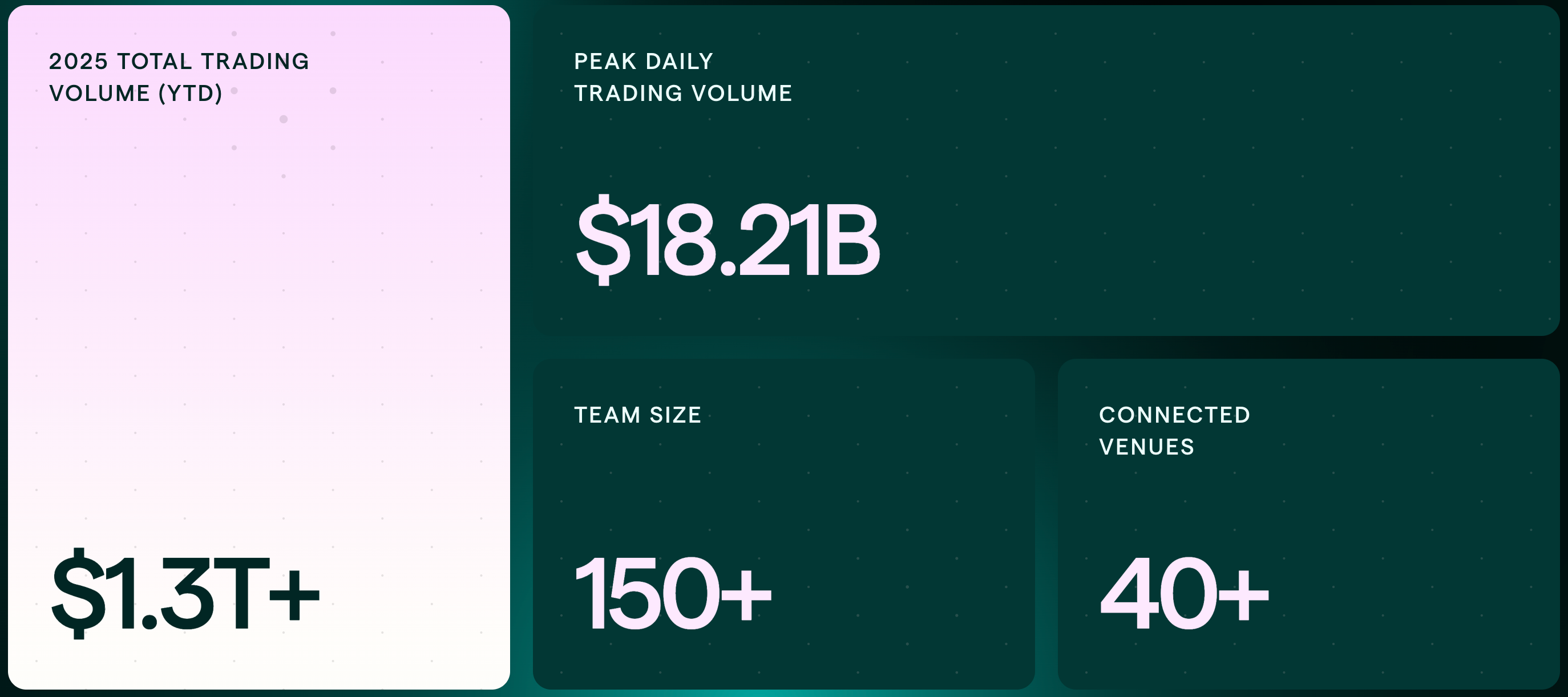
According to CoinDesk's report, Auros co-founder and chief investment officer Ben Roth stated in July 2024 that Auros estimated it handled 4% of the global cryptocurrency total transaction volume. Official website data shows that Auros' total transaction volume in 2025 reached $1.3 trillion, with a daily peak of $18.2 billion.
Auros's X account was still being updated until November 17, and the official website still had posts recruiting technicians and traders. However, some industry insiders on X were not surprised by this matter.
DWF Labs partner Andrei Grachev stated that some cryptocurrency market makers have recently exited the market because the profit margins in the field are currently very small, and there is a lack of other sources of income. Andrei Grachev expects the trend of market makers exiting will continue.
A user named ProMint on X stated that Bit Digital, which invested $2 million in Auros, still recorded the book value of that investment as $2 million in its financial report for the period ending September 30, 2026, indicating that Auros did not have a "blow-up" issue. However, its Auros Ventures, established in 2024, had invested in the oracle Pyth and L1 Berachain. ProMint believes that "misguided decisions" in investments may be one of the reasons for its shutdown.
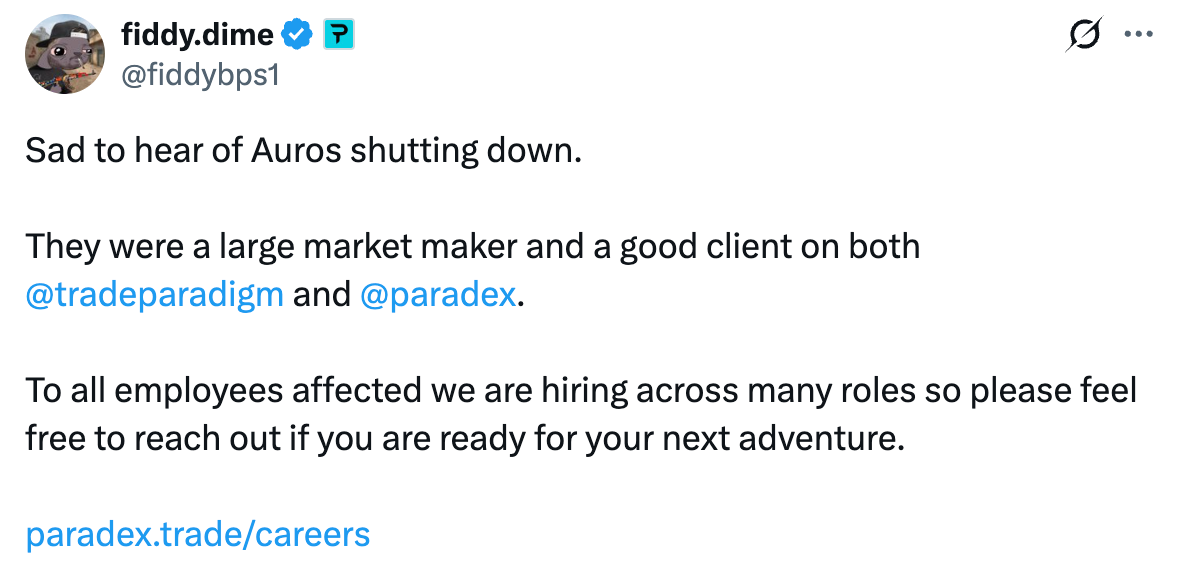
Paradigm, an institutional-level cryptocurrency derivatives liquidity provider (named after the investment firm Paradigm) and Anand Gomes, founder of perp DEX Paradex, tweeted that Auros was an important client of both Paradigm and Paradex, and expressed willingness to accept Auros employees to apply for positions at Paradex.
The market making track has been bearish for four years
The dramatic collapse of FTX at the end of 2022 caused many market makers to lose everything, but Auros was one of the few survivors.
At the time of FTX's collapse, Auros had approximately $20 million that could not be withdrawn and filed for bankruptcy restructuring in early 2023. Subsequently, Auros completed a $17 million financing led by the Australian high-frequency trading firm VivCourt and exited bankruptcy restructuring in March. Bit Digital participated in that round of financing, and Bit Digital co-founder Hughes Ching also joined the board of Auros.
That disaster not only destroyed a portion of market makers but also significantly diminished market confidence in cryptocurrencies, impacting other surviving participants.
After the FTX incident, the United States strengthened its regulation of cryptocurrency trading, resulting in well-known market makers such as Jump Crypto, GSR, and Wintermute greatly reducing their market scale in the U.S. Jump Crypto lost hundreds of millions in the FTX incident and subsequently, like GSR, reduced its scale while also laying off between 5% and 10% of its workforce.
In September 2023, a Bloomberg report indicated that market makers' profits had dropped by about 20% to 30% after the FTX incident. This was mainly to reduce counterparty risks with exchanges; market makers transitioned to holding assets through custodians/intermediaries instead of directly leveraging tokens on exchanges, significantly increasing their costs.
Klein Labs investment partner Joesph stated that today's market maker operations must include required regulatory documents such as audits and transaction details as standard configurations, with compliance costs potentially accounting for half of operational expenditures.
Of course, the bear market has certainly had a significant impact, but the situation has not improved with the market turning bullish. Andrei Grachev noted that since the end of 2024, a large number of institutions have entered the cryptocurrency market making sector, continually driving down deal sizes, ultimately leading to a death spiral.
Citadel announced its market entry in 2025, claiming it would provide market making liquidity on major exchanges such as Coinbase, Binance, and Crypto.com; Jane Street's cryptocurrency trading volume also saw significant growth from 2024 to 2025. The entry of these traditional giants indeed makes it difficult for medium-sized market makers to survive, while large native cryptocurrency market makers and boutique teams targeting some long-tail market altcoins can still find a place to thrive based on accumulation or unique features.
For the market making of new project issued altcoins, it is becoming increasingly challenging for market makers to achieve profits. After 2023, many new projects have a better understanding of market makers compared to 2021, leading to not only a decrease in tokens and funding offered to market makers but also transitioning from vague "maintaining liquidity" requests to specific quantifiable standards, forcing many market makers to abandon high-risk, low-return altcoin projects, and the number of quality projects remaining is even less than the number of competing market makers.
In recent years, scandals involving "active market makers" such as Gotbit have been exposed, plunging the market making track into a quagmire of "too many good projects, no money to make from bad projects."
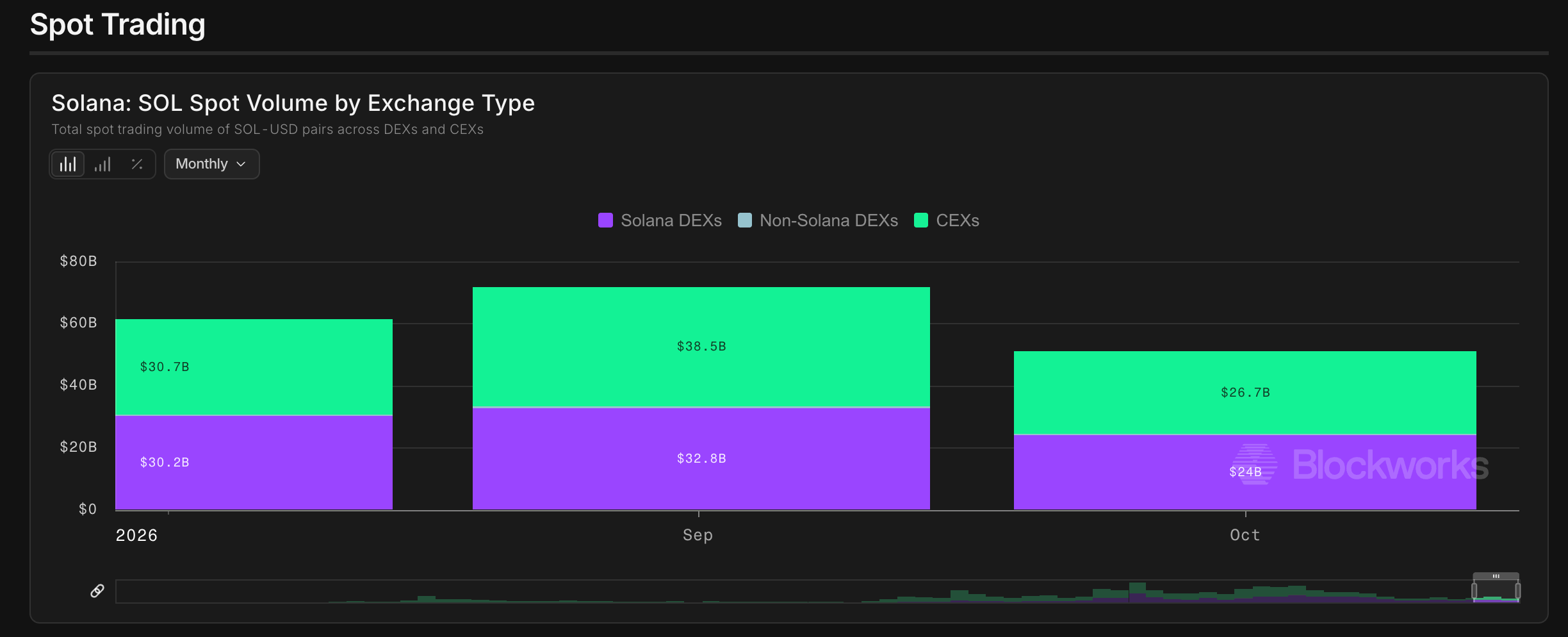
In the mainstream coin field, while BTC and ETH's liquidity on centralized exchanges cannot be challenged in the short term, according to Blockworks data, the trading volume of the "third brother" SOL token is no longer significantly different between CEX and DEX. Furthermore, the rise of propAMM on Solana allows professional market makers to generate transaction volumes of billions or even tens of billions of dollars with millions of dollars in liquidity, raising the level of competition among on-chain market makers to new heights.
The massive drop on October 11, 2025, leading to over $10 billion in liquidations in a single day, also caused many market makers to have their CEX account balances wiped out, resulting in a significant decline in order book liquidity at many exchanges by over 80% for a period of time following the drop. For investors trading cryptocurrencies, the internal competition and survival of the fittest among market makers, similar to the trend of Web3 project closures in recent years, are beneficial to the industry's progress; at the same time, investors hope that this competition will be a healthy form of competition, avoiding monopolies that possess direct control over the market.
免责声明:本文章仅代表作者个人观点,不代表本平台的立场和观点。本文章仅供信息分享,不构成对任何人的任何投资建议。用户与作者之间的任何争议,与本平台无关。如网页中刊载的文章或图片涉及侵权,请提供相关的权利证明和身份证明发送邮件到[email protected],本平台相关工作人员将会进行核查。