Author: Zhou, ChainCatcher
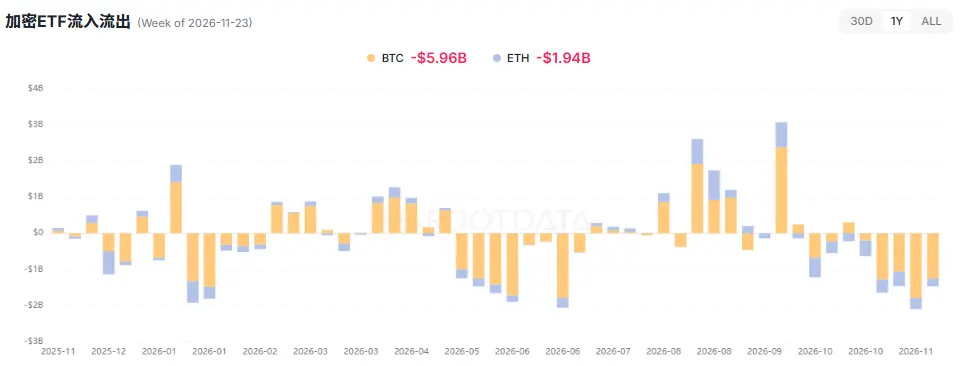
The single-month outflow record for Bitcoin spot ETFs in the United States was refreshed in November. According to RootData, as of November 25, the net outflow this month reached $5.7 billion, surpassing the $4.51 billion from June.
Looking at the longer term, the cumulative net outflow this year has been approximately $5.96 billion. Meanwhile, Bitcoin fell below $60,000 in November again, hitting a new low since September 2024.
The U.S. stock market withstood the impact, while Bitcoin did not
In September of this year, the Federal Reserve raised interest rates for the first time in three years, and the Bitcoin spot ETFs that have been listed for nearly three years faced a rate hike cycle for the first time. Although the interest rate was kept unchanged in the meeting on October 28, maintaining a range of 3.75% to 4%, no signals indicating a shift were released. According to 10x Research, in the subsequent 17 trading days, the Bitcoin ETF saw net outflows for 14 days.
On the first trading day after Binance was hacked for approximately $6.3 billion, the net outflow from Bitcoin spot ETFs was about $640 million, marking the largest single-day outflow since late June. Jeff Ko, chief analyst at ViaBTC, believes that the Bitcoins in the ETF are held in custody by regulated institutions and are not directly related to Binance; this outflow is more driven by emotional shock.
However, some have raised questions regarding the custody security of the ETF itself. Yishi from OneKey pointed out that approximately 760,000 Bitcoins in IBIT are mainly held on Coinbase, whose $320 million insurance coverage does not even cover 1% of IBIT's holdings.
Entering November, bearish factors in the crypto industry continued to accumulate. On November 3, during the midterm elections, the Democratic Party took control of both houses, and Stefan Muehlbauer from CertiK believes the CLARITY Act will be difficult to pass in both this Congress and the next. On November 11, MSCI announced it would remove Strategy from its index, blocking the largest Bitcoin treasury company from index funds.
On the macro level, on November 5, AI stocks plummeted, with the Nasdaq 100 index falling 6.36% in a single day, while Bitcoin dropped about 5.5% on the same day; on November 10, the CPI exceeded expectations, and on November 18, after the Federal Reserve meeting minutes were released, CME FedWatch indicated that the probability of a rate hike in December was close to 95%.
The key point is that while the macro impact also affected the U.S. stock market, the triple bearish sentiments regarding exchange security, regulatory outlook, and treasury buying pressure landed solely on the crypto industry.
The difference in trends is very clear; since October 28, Bitcoin has fallen about 25%, while the Nasdaq 100 index decreased by only about 10%. When the U.S. stock market falls, Bitcoin follows, but when the U.S. stock market rebounds, it does not keep pace. Glassnode also mentioned that the U.S. stock market has returned above its closing price on election day, while Bitcoin fell again after the CPI was announced.
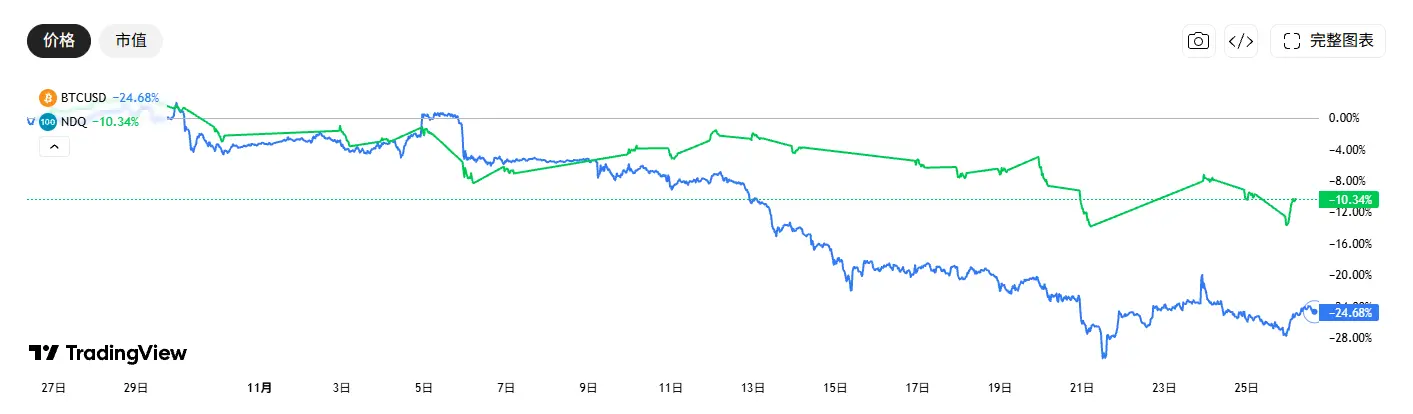
In other words, the rate hike and the pullback of AI stocks are the triggers, but what truly prevents Bitcoin from rebounding is the problems within the crypto industry itself.
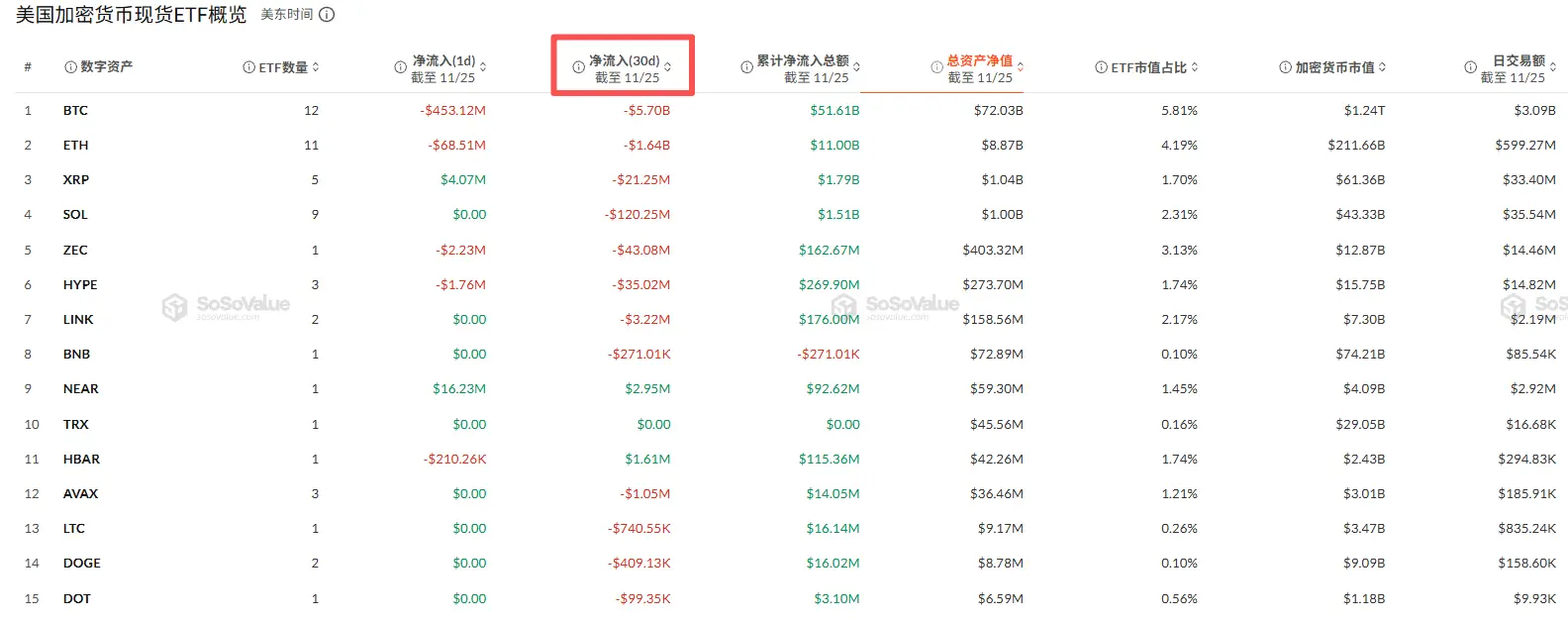
Last November, when BTC and ETH ETFs were bleeding, funds were still flowing into the newly listed SOL and XRP ETFs. This year, even the SOL ETF ended 14 consecutive weeks of inflow in October, turning to outflow. According to SoSoValue, among the 15 types of spot crypto ETFs in the U.S., 12 types have seen net outflows over the past 30 days; Ethereum ETFs saw a net outflow of $1.64 billion during the same period.
Trapped holders, absent buyers
According to the CFTC holdings report, as of November 17, leveraged funds' net short positions on CME Bitcoin futures have shrunk to about 1,211 contracts, equivalent to about 6,000 Bitcoins, a reduction of more than 90% from the peak in December 2024.
This also means that basis trading has largely unwound by early November, yet the ETF still experienced significant outflows, primarily from actual holders who are really reducing their positions. 10x Research believes this pattern is more indicative of risk management by ongoing allocation funds.
From the Q3 13F filings, investment advisors and wealth management platforms have become the largest reported holding group, accounting for about 40.5%. However, the 13F only covers 27.6% of Bitcoin held in funds; it will not be until February next year that the specific sellers can be partly clarified.
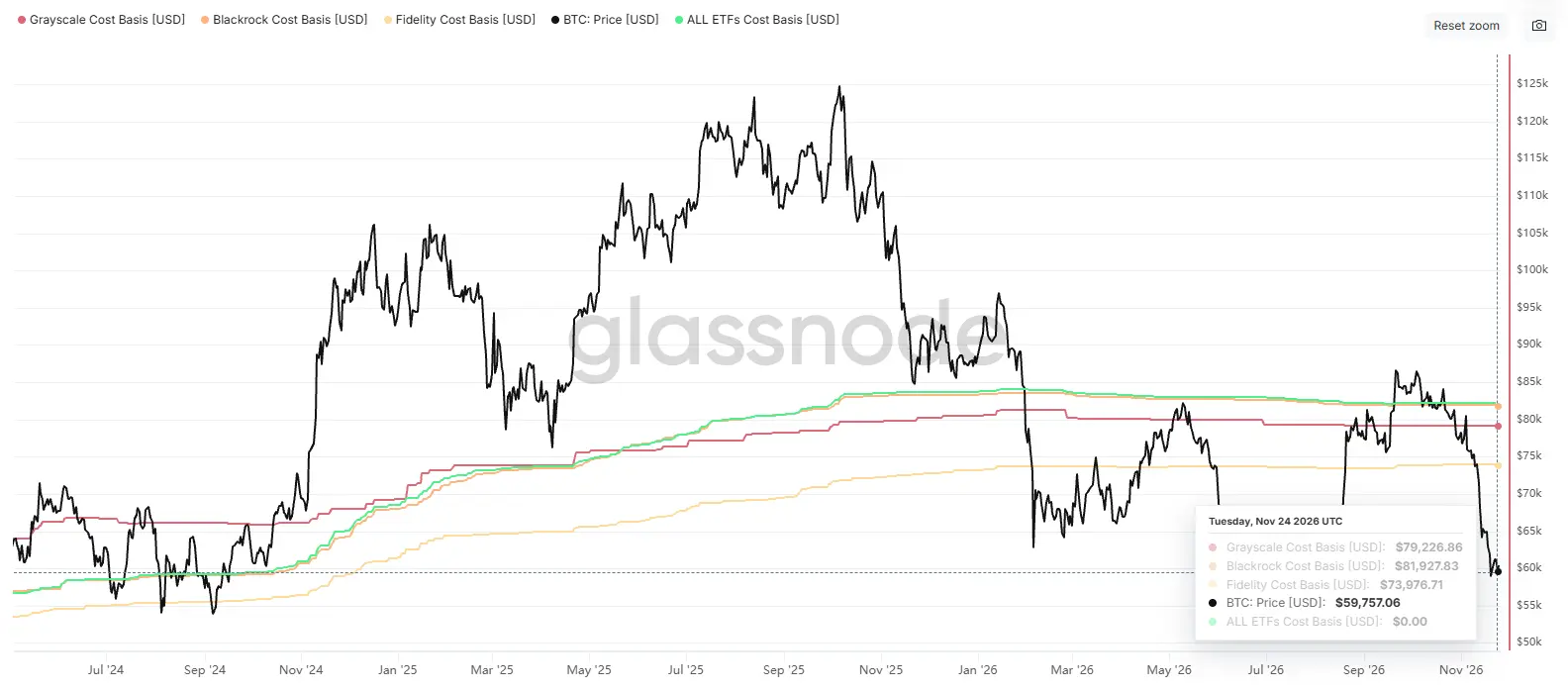
What is certain is that these holders are overall trapped. According to Glassnode data, as of November 24, the average cost for BlackRock's IBIT holders was about $81,928, while Grayscale and Fidelity held about $79,227 and $73,977 respectively, whereas Bitcoin's price that day was approximately $59,757. Calculating with IBIT, the unrealized loss is about 27%. When BTC prices stay below the ETF cost price long-term, it often suppresses capital inflow.
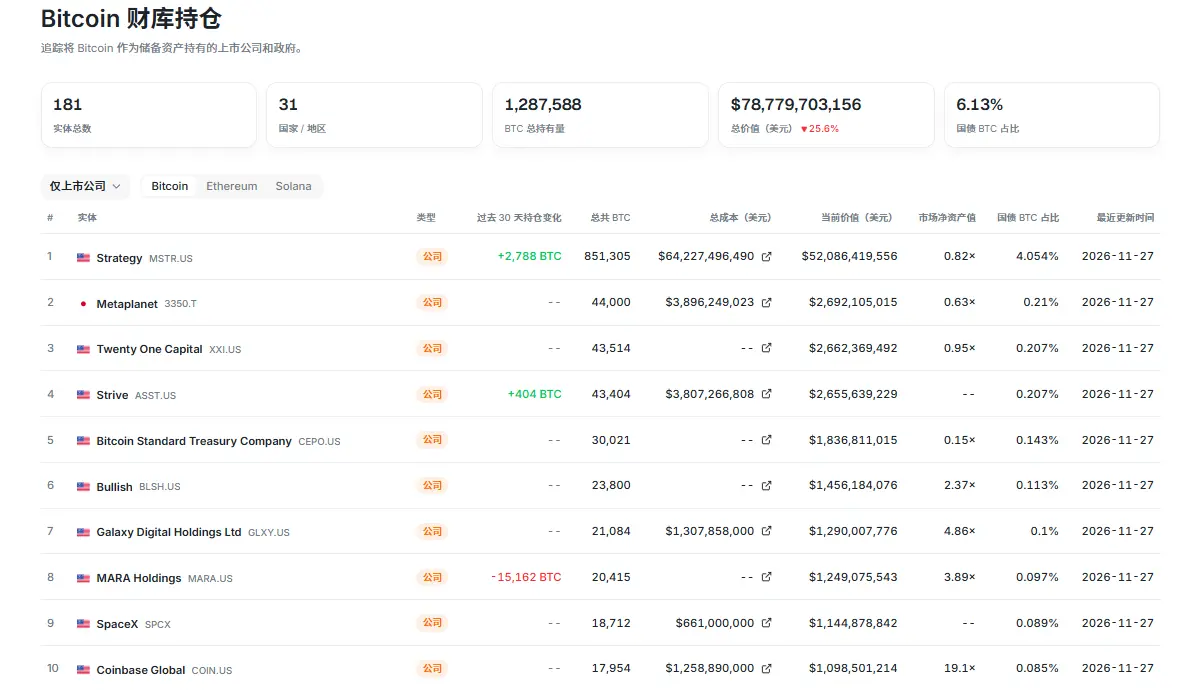
The buyers who could originally take over are also retreating. According to RootData, Strategy holds 851,305 Bitcoins, with an average cost of about $75,000, an unrealized loss of about 20%, and an mNAV of only 0.83 times, having only increased its holdings by 2,788 Bitcoins in the past 30 days. At the end of May this year, it even sold 32 Bitcoins to pay dividends on preferred stocks, marking the first sale since December 2022.
After the market closes on November 30, MSCI will officially remove Strategy, Metaplanet, and Upexi from the index. Previously, JPMorgan estimated that this might lead to about $2.8 billion in passive selling; however, Strategy stated that related funds only hold about 3.1% of its shares, so the impact is limited.
MARA was once one of the most steadfast Bitcoin-holding mining companies but has now become a seller. According to its third-quarter shareholder letter, the company sold 13,597 Bitcoins after the quarter ended, cashing out approximately $1.1 billion, and stated it would continue to sell to raise funds for AI infrastructure and other projects. RootData's data shows that MARA's holdings have decreased by 15,162 Bitcoins in the past 30 days.
In the past 30 days, the total market value of stablecoins shrank by about $16 billion. According to rwa.xyz, the current total market value of stablecoins is $273.09 billion, a 5.58% decrease from 30 days ago.
Benson Sun, founder of Coinkarma, stated that while long-term indicators have reached a decent buying point, the 30-day net flow of stablecoins and ETFs is still outflowing, and purchases will not occur until the ETF net flow turns positive. Everyone is waiting for the ETF to take action, yet the ETF remains inactive.
When will the funds return?
According to statistics from 10x Research, this is the fourth time since early 2025 that Bitcoin ETFs have faced outflows of between $4 billion and $6 billion within 30 days, with the previous three times accompanied by declines of about $20,000. From its rolling 30-day flow chart, the lows of the previous three outflows roughly correspond to stage lows in prices; this time, the reading of about $4.6 billion has fallen within the historical range.
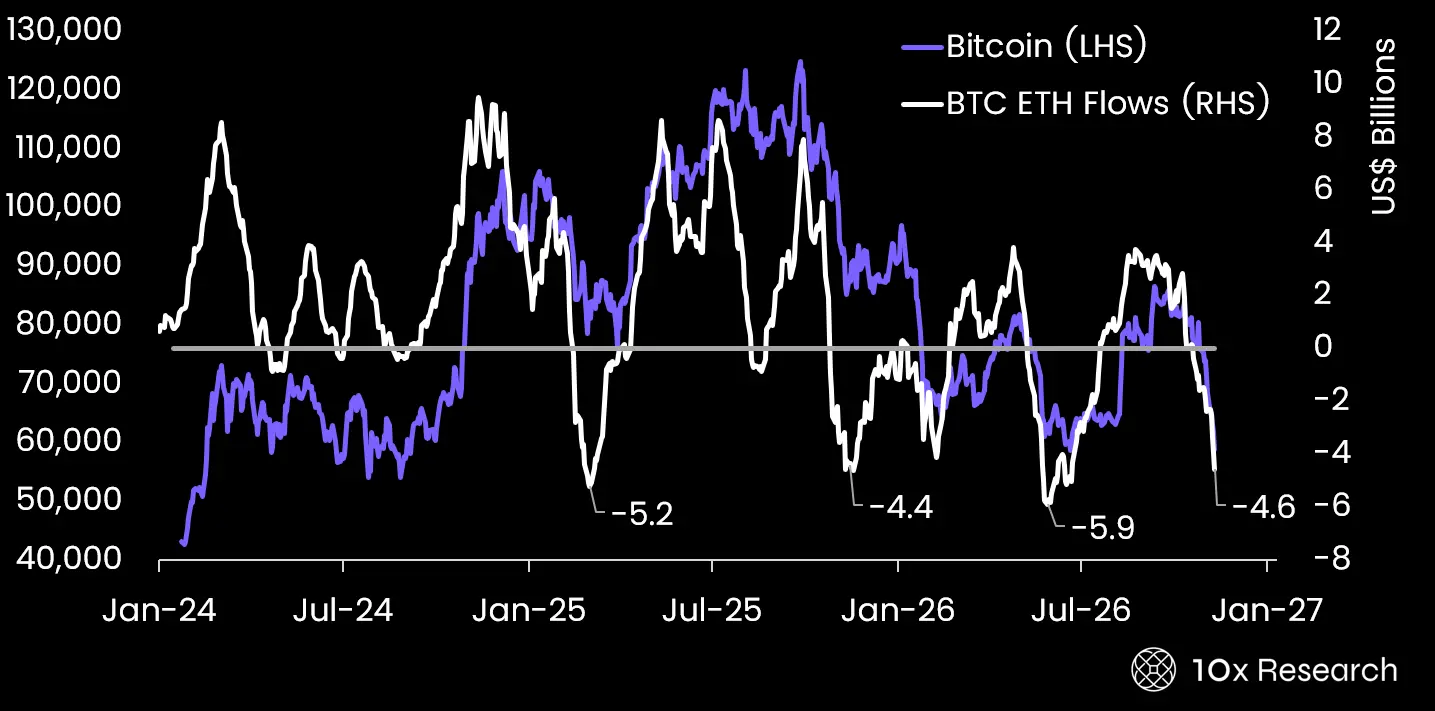
However, there have only been three precedents, making it difficult to determine a bottom based on this.
There is one month left in the year; on November 30, MSCI's removals will take effect; the December meeting is basically guaranteed to add 25 basis points, while the critical factor lies in the Federal Reserve's statements regarding next year's interest rate path.
Finally, the deadline for tax filing on December 31 is worth monitoring. Last Christmas week, Bitcoin ETFs experienced six consecutive days of outflows totaling about $1.1 billion. 10x Research estimates that this year there are about $14 billion in unrealized losses in ETFs, which will need to be decided by year-end whether to sell to realize tax losses.
However, ETF shares are subject to wash sale rules, while directly held Bitcoins are not, meaning some of the sold funds may not leave Bitcoin. If there really is a wave of tax-related selling in December, January might instead see a return of funds.
Overall, this time the interest rates are trending upwards, treasury companies and mining enterprises are preoccupied with their own situations, and policy dividends are also receding. In the short term, it seems very difficult to find enough strength within the cryptocurrency circle to turn ETF net inflows back.
免责声明:本文章仅代表作者个人观点,不代表本平台的立场和观点。本文章仅供信息分享,不构成对任何人的任何投资建议。用户与作者之间的任何争议,与本平台无关。如网页中刊载的文章或图片涉及侵权,请提供相关的权利证明和身份证明发送邮件到[email protected],本平台相关工作人员将会进行核查。