After the Thanksgiving holiday, the market gradually resumed trading, with the US dollar index maintaining its strength and expected to rise for the third consecutive month.
Written by: CBCX Market Watch
On November 27 (Friday), the global market entered the last trading day of November. After the Thanksgiving holiday, the market gradually resumed trading, with the US dollar index maintaining its strength and expected to rise for the third consecutive month. Meanwhile, Japan's inflation data has warmed up, further strengthening market attention on the Bank of Japan's adjustment of monetary policy in December; concerns over supply due to the situation in the Middle East have also led to a recent rebound in international oil prices.
As November is about to close, the movement of the US dollar, the divergence in global monetary policies, and energy supply risks have become important observation directions for the market as it enters December.
1. US Dollar Maintains Strength: Fed Policy Expectations Provide Support
On November 27, the US dollar index remained around 103.8, having increased by about 1.8% this month, with hopes of achieving a third consecutive month of growth.
The recent strength of the dollar is mainly supported by expectations of Fed policy and market risk aversion demands. The market remains cautious about the Fed's policy path in December, with interest rate futures indicating that investors still have strong expectations for maintaining high interest rates.
At the same time, US Treasury yields remain high. Recent market reports show that the yield on the US 2-year Treasury bonds is about 4.67%, while the 10-year yield is about 4.89%.
High US Treasury yields enhance the relative attractiveness of US dollar assets and also exert certain pressure on non-interest-bearing assets like gold. Whether the dollar can continue its upward momentum will still depend on US economic data and Fed policy signals.
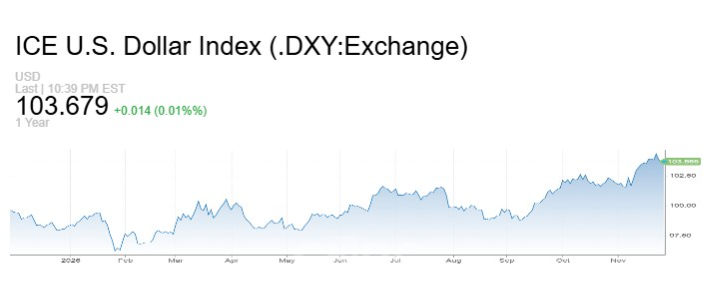
Chart 1: US Dollar Index Trend Chart | Data Source: CNBC
2. Rising Inflation in Japan: December Rate Hike Expectations Back in Focus
Japan's latest data shows that the core CPI in Tokyo for November rose by 2.9% year-on-year, higher than October's 2.6%, reaching a 16-month high and exceeding the Bank of Japan's 2% inflation target for consecutive months.
However, the core inflation indicator excluding fresh food and energy prices rose by 2.5% year-on-year, lower than October's 2.6%, indicating that underlying inflation pressures are not accelerating across the board.
The Tokyo CPI is typically seen as a leading indicator of national inflation trends in Japan. This data rebound has led the market to pay further attention to the possibility of the Bank of Japan adjusting interest rates at its December policy meeting.
For the foreign exchange market, the differences between the Bank of Japan's policy expectations and the Fed's interest rate path will continue to influence the yen's movement. If Japan sends clearer tightening signals, the USD/JPY pair may face new adjustment pressures.
3. Oil Price Rebound: Middle East Supply Risks Re-entering Market Pricing
In the energy market, international oil prices have recently rebounded. Brent crude oil is currently around $96.14 per barrel, having increased by about 3.9% this week, expected to end three consecutive weeks of weekly declines.
One of the important factors driving the rebound in oil prices is the renewed market concerns over crude oil supply due to the situation in the Middle East. The Strait of Hormuz, as a global important energy transport corridor, has its shipping safety under scrutiny, prompting the market to reassess the risks of potential supply disruptions.
However, from a monthly performance perspective, Brent crude oil still shows a cumulative decline of about 18% in November, and the recent rebound is not enough to reverse the overall weakness.
Future attention needs to focus on changes in the Middle East situation and the impact of the OPEC+ meeting on crude oil supply policies. If supply risks continue to increase, oil prices may receive support; conversely, weak global demand may still limit the rebound potential.
4. Month-End Trading Arrangements: Beware of Reduced Liquidity Amplifying Volatility
The US financial market resumed trading on November 27, but US stocks will close early that day. The New York Stock Exchange and Nasdaq are expected to end trading at 1 PM Eastern Time.
At the same time, as the end of November approaches, institutional funds may conduct month-end asset allocation and risk exposure adjustments. The shortened holiday trading hours and the fact that some market participants have not fully returned to normal trading may affect market liquidity.
Overall, the current market shows multiple characteristics of a stronger dollar, rising expectations for Japanese monetary policy, and an oil rebound. For short-term traders, it is essential to focus on the correlation between the dollar and US Treasury yields, signals from the Bank of Japan's policy, and oil supply risks, avoiding blindly chasing trends during relatively low liquidity periods.
免责声明:本文章仅代表作者个人观点,不代表本平台的立场和观点。本文章仅供信息分享,不构成对任何人的任何投资建议。用户与作者之间的任何争议,与本平台无关。如网页中刊载的文章或图片涉及侵权,请提供相关的权利证明和身份证明发送邮件到[email protected],本平台相关工作人员将会进行核查。