Author: Paul Klay (@PaulKlayVC)
Translated by: Deep Tide TechFlow
Deep Tide Introduction: Should developers be held criminally liable when the tools they deliver are used by malicious third parties for illegal activities? The charges faced by Tornado Cash co-founder Roman Storm, which could lead to a maximum of 45 years in prison, are not merely compliance disputes related to a single protocol, but rather a dangerous precedent that concerns the fate of all software engineers.
From the immutability of non-custodial smart contracts, to the numerous flaws in the prosecution's key evidence, to the Supreme Court's precedent on intermediary liability in the digital realm, this article provides a comprehensive overview of the judicial controversies behind the case. If the legal boundaries of liability for open-source code continue to blur, innovation in AI, DeFi, and privacy sectors will stagnate due to a chilling effect.
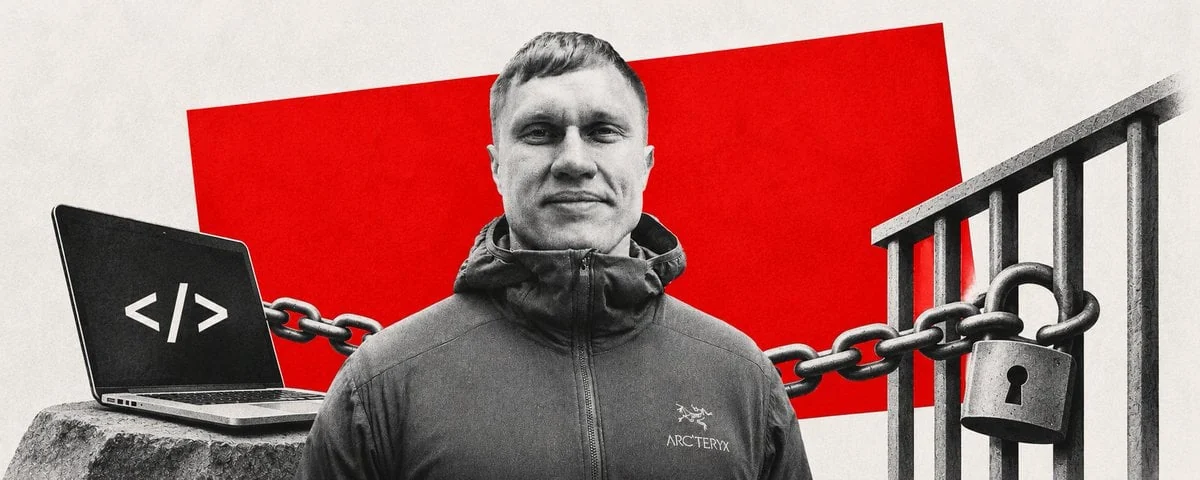
The matter I am about to discuss is deeply relevant to every software developer. This case is likely to set a dangerously negative legal precedent: if someone maliciously exploits code you once wrote to commit a crime, you may personally face extremely serious criminal charges.
Even if you have never made a dime from it; even if that code was initially designed for entirely legitimate purposes; even if you have long lost the ability to modify that code, and the underlying technology is completely free and open-source for anyone in the world to use.
Imagine this scenario: you once developed a tool for an employer that efficiently collects and processes data. Long after you left, a malicious individual uses that tool to steal sensitive information. You are completely unaware of this and did not partake at all, yet you might face up to 45 years in federal prison. This is almost exactly the dire situation Roman Storm currently finds himself in.
In this landmark case, many key details have yet to attract adequate public attention. If we wish to defend the future and survival of the entire software industry, we must confront these facts and engage in serious discussion.
Who is Roman Storm: From Self-Taught Hacker to Core Ethereum Builder
Roman Storm (@rstormsf) was born in Kazakhstan and moved to Chelyabinsk, Russia, with his family at the age of 7. His parents keenly realized his strong interest in computer technology and saved money in the early 1990s to buy him a personal computer. He taught himself programming, becoming engrossed in spending hours dissecting various game codes and reconstructing them himself.
In 2008, at just 19 years old, Roman moved to the United States for study and development, eventually becoming a naturalized American citizen. Today, he is already a father to a young daughter. After moving to the U.S., he gradually broke into the software engineering world with his strong engineering skills, holding important research and development positions at Cisco, several Silicon Valley tech startups, and even Amazon.
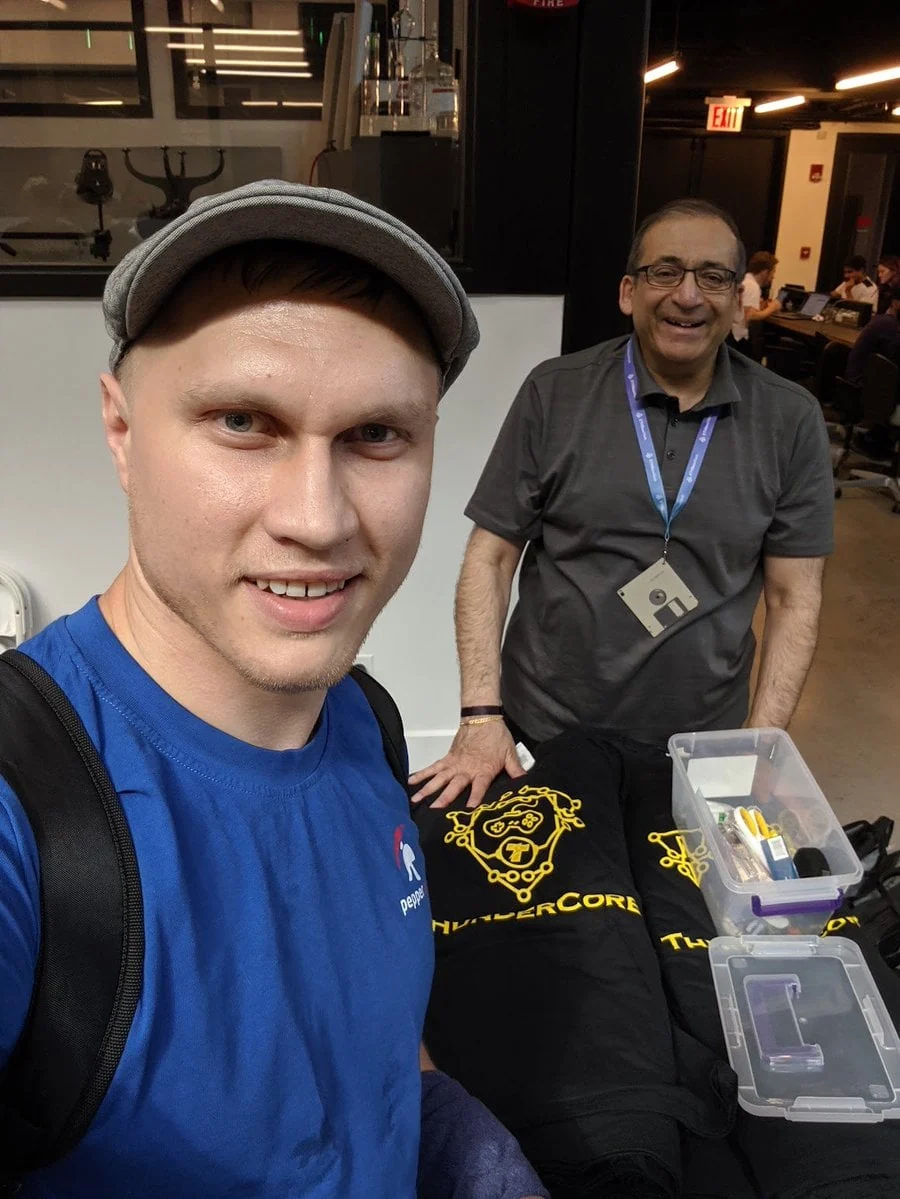
In August 2017, Roman decisively left Amazon to fully engage in blockchain development. He initially wrote smart contracts for several early ICO projects and later that year became the Chief Technology Officer (CTO) of POA Network. Under his technical leadership, this Ethereum sidechain facilitated over $150 million in on-chain transactions for more than 100,000 active users.
In September 2018, he co-founded the well-known security company PepperSec, focusing on blockchain security auditing and protocol development. During this period, he took part in and contributed significantly to the development and security of numerous foundational industry projects, including top protocols such as Aave, 0x, 1inch, dYdX, Compound, and MakerDAO.
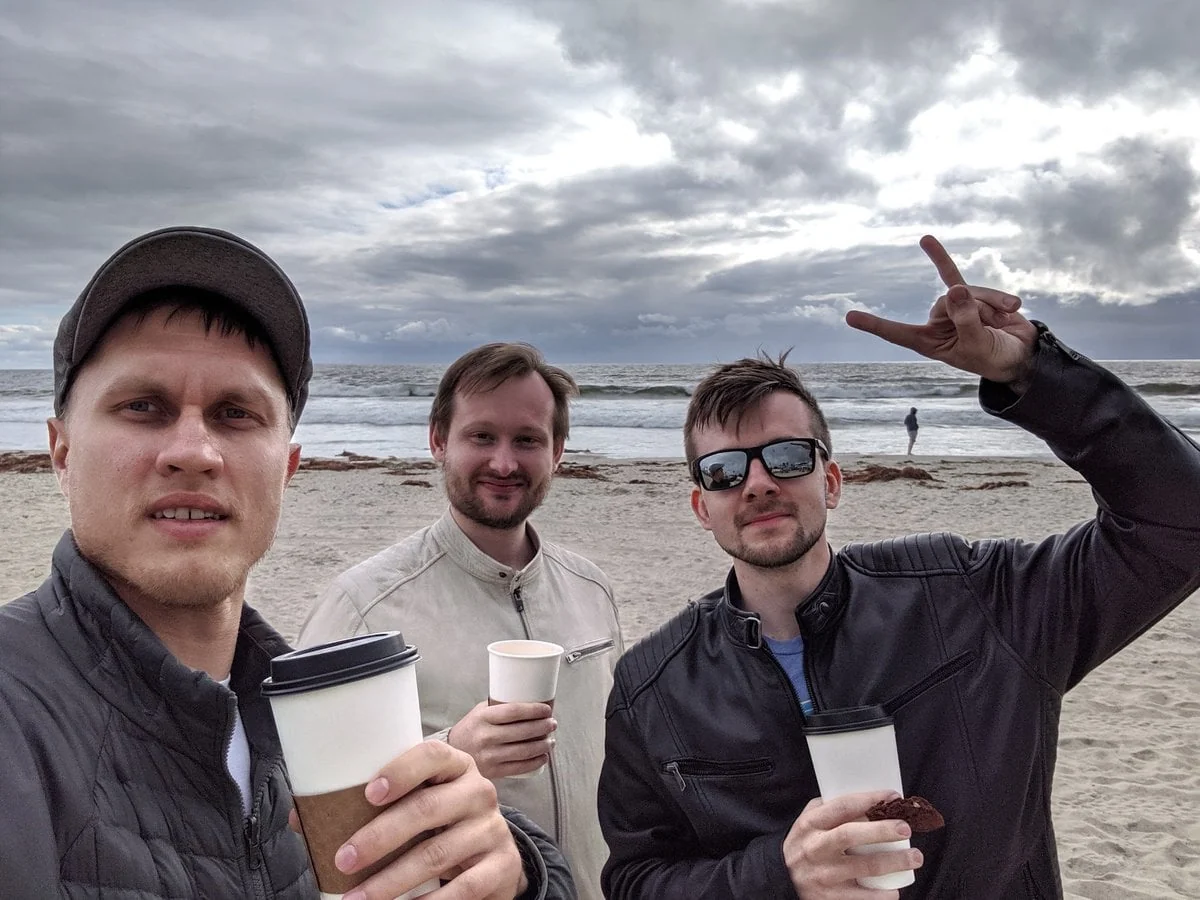
In December 2019, he collaborated with Alexey Pertsev and Roman Semenov to officially launch Tornado Cash, aiming to provide a truly decentralized financial privacy infrastructure for the Ethereum network.
What is Tornado Cash: A Non-Custodial On-Chain Financial Privacy Solution
Tornado Cash is an open-source, fully decentralized cryptographic privacy protocol that allows users to sever and hide the public on-chain direct relationship between the sender and receiver of cryptocurrency transactions.
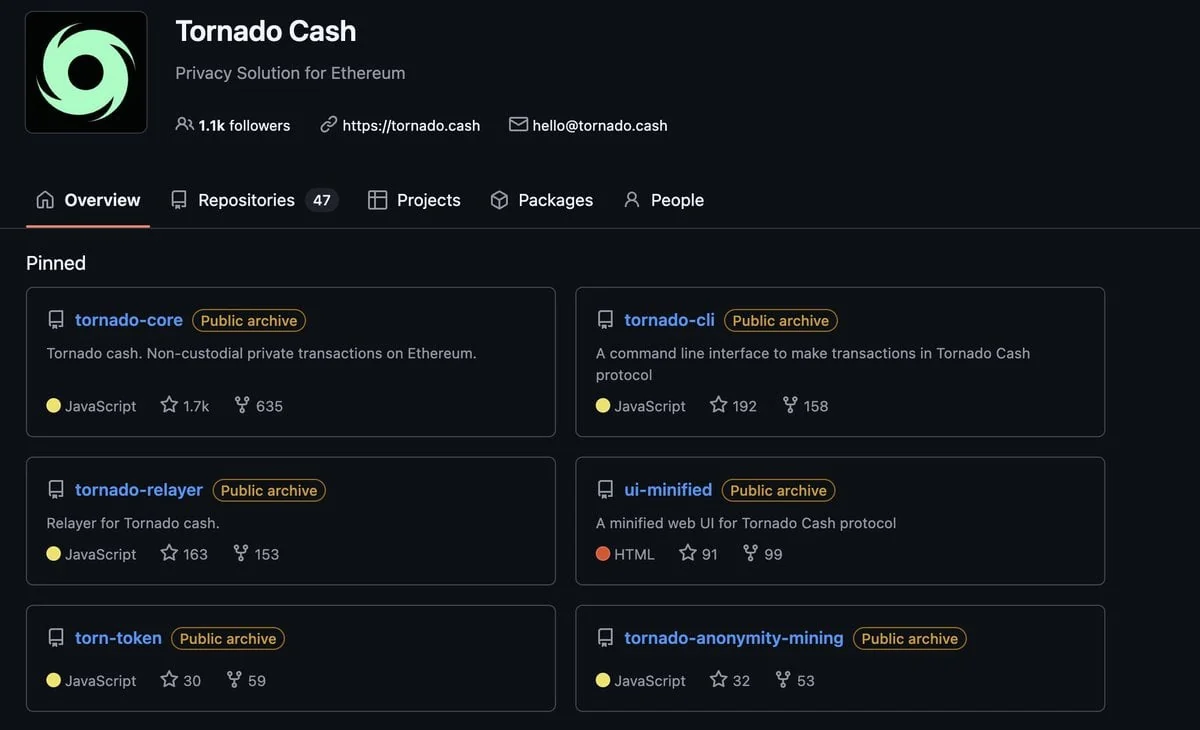
Utilizing advanced Zero-Knowledge Proofs algorithms, after users deposit funds into the smart contract pool, they can later withdraw them to a brand new independent address without revealing which deposit the withdrawal corresponds to. The entire process is autonomously operated by code, with no centralized intermediary involved.
As of August 2022, Tornado Cash had accrued up to $7.6 billion in deposited funds and processed more than 300,000 independent deposit transactions on both the Ethereum mainnet and BNB Chain.
The protocol effectively addresses a pressing need for financial privacy: it enables ordinary users to receive salaries, make benevolent donations, or purchase everyday goods and services on-chain without exposing their entire asset balances and transaction history to strangers.
However, just like any neutral technology, criminals have also used this underlying tool to conceal illegally obtained funds. According to blockchain analysis firm Chainalysis, as of August 2022, nearly 30% of the incoming funds to the protocol were linked to illegal activities or sanctioned addresses. This ultimately became the core reason for the criminal charges initiated by the U.S. Department of Justice.
But crucially: all source code for the protocol has always been fully open and transparent, and users retain control of their private keys throughout the entire process; developers have never handled or managed any individual tokens from users.
The Morning of the Raid: Armed Search and 45-Year Prison Sentence Charges
On the morning of August 23, 2023, the piercing sound of police sirens and violent banging woke Roman from sleep. When he opened his door, several armed federal agents pointed assault rifles directly at his face and sternly ordered him to raise his hands.
The agents immediately put handcuffs on him and brusquely questioned whether anyone else was in the house.
Roman, with a trembling voice, informed them that his young daughter was still sleeping in her bedroom.

As law enforcement officers carried his little girl out of the house, Roman remained tightly restrained. He later recalled painfully that it was the most desperate and shattered moment of his life. He had no idea what awaited him next, and he was terrified that this might be the last time he would ever see his daughter.
The agents ransacked his home, seizing all of his electronic devices, and directly escorted him to federal court in Washington state for trial.
On the same day, the U.S. Department of Justice publicly announced three serious criminal charges against Roman, which could lead to a maximum of 45 years in federal prison if convicted.
Trial and Evidence Flaws: Why Doesn't the Prosecutor's Evidence Hold Up?
In August 2025, a federal jury in Manhattan deliberated for a long time on the three charges against Roman:
- Conspiracy to Commit Money Laundering: The jury could not reach a unanimous verdict (not convicted);
- Conspiracy to Violate Sanctions: The jury could not reach a unanimous verdict (not convicted);
- Conspiracy to Operate an Unlicensed Money-Transmitting Business: Guilty verdict.
The trial revealed numerous shocking flaws. For example, the prosecution presented a chat record trying to prove that the Tornado Cash team actively plotted to assist in laundering $600 million in illicit funds. However, the truth was that that chat message was merely a quote forwarded by a third party. When the U.S. government submitted the chat record as evidence to the court, they unlawfully deleted the "Forwarded" tag from the message and only admitted this significant flaw a few days before the trial.
Throughout the trial, the prosecution failed to provide any concrete evidence proving that Roman had any direct communication or collusion with the criminals using Tornado Cash. Roman never managed any user's funds, never took commissions from transactions, and had no physical ability to stop, review, or alter the immutable smart contracts already deployed on the blockchain. Even today, years after his arrest, those smart contracts continue to operate autonomously on the Ethereum network.
The government prosecutor claimed that the official compliance guidelines from the Financial Crimes Enforcement Network (FinCEN) were irrelevant to this case. However, internal communications within FinCEN clearly pointed out long ago that non-custodial pure software development can almost never be classified as money transmission.
Ironically, the first victim witness presented by the prosecution, even the special agent from the FBI hired by the government, couldn't trace the funds the victim lost back to Tornado Cash on the blockchain.
In March 2026, the U.S. Supreme Court unanimously ruled in the famous Cox v. Sony case: explicitly opposing the notion that internet infrastructure providers should bear vicarious criminal liability for the wrongful acts of their end-users, and the current governmental administrative department had previously supported this fundamental judicial principle. Although internet access and smart contracts involve different legal branches, I firmly believe that developers of open-source non-custodial software should receive the same legal immunity protections.
During a court hearing on a motion for acquittal, the prosecutor even absurdly argued that as long as a programmer later performed code maintenance on the protocol, that act itself could constitute a criminal offense. The presiding judge interrupted and coldly refuted, saying, "You would have been better off if you hadn't said that."
In the court session in April 2026, the prosecution was inevitably forced to admit that merely writing and publishing the Tornado Cash code does not constitute any crime.
Since his sudden arrest in August 2023, Roman has been subjected to the cruel and prolonged torment of judicial uncertainty. The trial has faced repeated delays, and it wasn't until August 2025 that the jury barely reached a conclusion on just one of the charges. The retrial process for the remaining two pending felony charges has now been postponed again by the court until April 26, 2027, while the court is also struggling to consider the defense's motion for acquittal.
Note: The discussions regarding the prosecution's evidence flaws and Roman's level of involvement reflect the defense team's response, should be understood as part of the judicial defense process, and should not be equated directly with the final legally binding judgment of the court.
Policy Shift of Two Administrations: From Prosecutions to Policy Adjustments
The criminal witch hunt against Roman began during the Biden administration. In August 2022, the U.S. Department of the Treasury's Office of Foreign Assets Control (OFAC) unprecedentedly placed the Tornado Cash smart contracts on its sanctions list; one year later, the U.S. Department of Justice formally issued decades-long criminal felony charges against him personally.
In November 2024, the federal appeals court made a historic ruling, clearly stating that the self-sovereign smart contracts on Tornado Cash cannot be manipulated or controlled by anyone and legally cannot be classified as "property" subject to government sanctions. Subsequently, the sanctions against the protocol were officially lifted in March 2025.
In April of this year, the Trump administration publicly announced the complete termination of the previous "regulation by prosecution" heavy-handed policy. In August this year, the U.S. Department of Justice released new internal guidelines, announcing that it would no longer approve new criminal charges against those software developers who do not control user funds and are genuinely decentralized, based on Title 18, Section 1960(b)(1)(C) of the U.S. Code.
However, it is ludicrous that, despite the overall administrative and enforcement policy having undergone a 180-degree change, the historical criminal prosecution and judicial entanglement against Roman Storm personally are still being stubbornly pushed in court.
A Warning for the Entire Software Industry: The Sword of Damocles Hanging Over All Open-Source Developers
The core questioning that the Roman Storm case reflects has far surpassed the single realm of crypto assets: If the authors of software code cannot control any user assets from the beginning, should developers bear criminal responsibility when others maliciously misuse their open software to commit crimes?
Currently, Roman has been preliminarily found guilty on one of the charges by the jury. Although the Department of Justice has softened its stance at the policy level, this is at best merely an enforcement discretion guideline that can be altered by the administrative department at any time, and hasn't risen to a written statute amended by the legislative body. Once political power shifts or administrative will changes in the future, successors could easily overturn all of this and reclaim their club.
If the legal red line surrounding developer responsibility remains in a prolonged state of ambiguity and caprice, the entire open-source software industry will suffer devastating fundamental blows. Engineers engaged in cutting-edge AI, decentralized finance, online privacy protection, and various common foundational open technologies may collectively abandon open-source projects out of fear of bearing decades of imprisonment for the unlawful actions of strangers they have never met.
How We Should Act: Defend Privacy and Open-Source Freedom
Every developer, entrepreneur, venture capitalist, and every individual truly concerned about the future of neutral technologies must now unite and raise their voices.
Share this in-depth analysis, tag key figures with decision-making power and social influence on social media, or directly contribute to his costly legal defense fund at freeromanstorm.com. Please lend a hand in any way you can. If we wish for this industry to continue to grow healthily and reclaim the fearless, exploratory spirit of tech geeks, we must stand united against our common enemy.
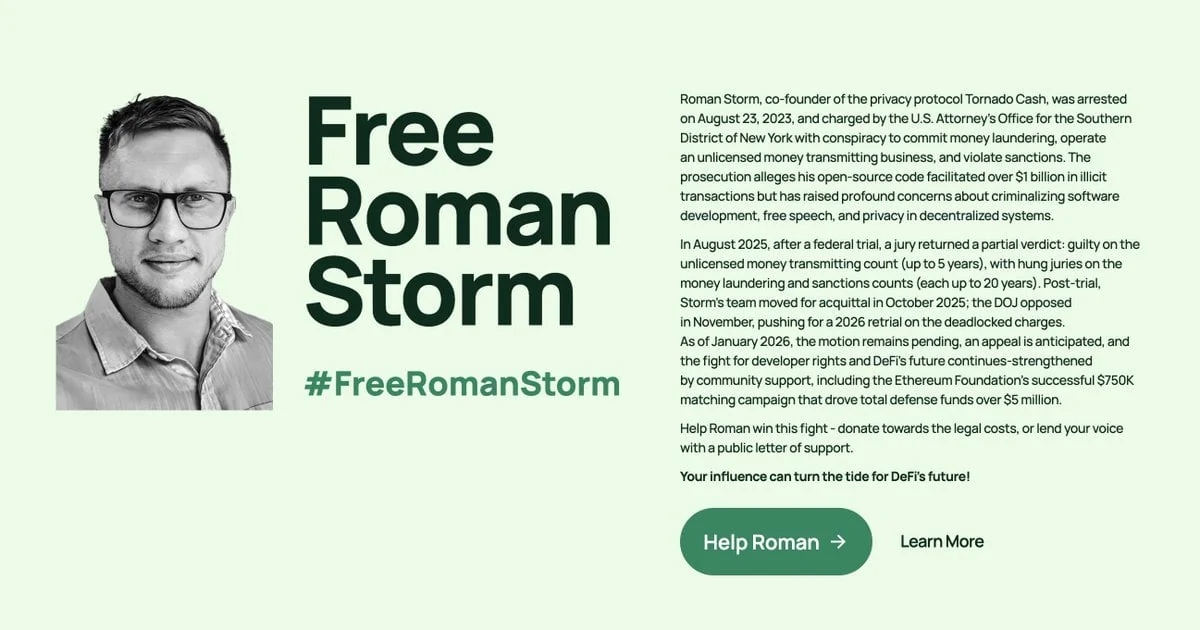
Protecting privacy is not a crime. Please grant Roman Storm true freedom.
免责声明:本文章仅代表作者个人观点,不代表本平台的立场和观点。本文章仅供信息分享,不构成对任何人的任何投资建议。用户与作者之间的任何争议,与本平台无关。如网页中刊载的文章或图片涉及侵权,请提供相关的权利证明和身份证明发送邮件到[email protected],本平台相关工作人员将会进行核查。