Author: yieldmaxi (@0xyieldmaxi)
Compiled by: Deep Tide TechFlow
Deep Tide Introduction: Behind the mysterious halo of quantitative trading, the real barriers to crypto high-frequency market making are often not complex mathematical formulas. Starting from dropping out of college with no financial background, the author has injected the arbitrage instincts of on-chain MEV hunters into centralized exchanges, revealing the industry truth that the core logic of initial market making often consists of fewer than a hundred lines of code.
From actively bearing slight losses in a fiercely competitive market to obtain top VIP fee channels on the entire platform, to cross-exchange arbitrage, CEX-DEX joint harvesting, and the organizational lessons of core personnel striking out on their own, this article is not only a rare practical review of high-frequency market making but also outlines a new lightweight paradigm reshaping quantitative development streams with large models.

Not long ago, I wrote my first article since entering the crypto industry, which at the time was also the only one, detailing how I ventured into the crypto world, developed my first MEV strategy, and experienced various on-chain games. At the end of that article, I explained why we decided to slow down our on-chain business pace and focus most of our energy on centralized exchanges (CEX).
It has been 4 years since that long article was published, and I completely stopped the market-making business over a year ago.
Recently, with the explosion of large language models (LLM), a fresh wave of newcomers has surged into the field of systematic quantitative trading. I have seen many interesting discussions about systematic trading and high-frequency trading (HFT) on the X platform recently, especially regarding applications in the crypto asset market. This prompted me to write this second article, sharing how I gradually built a complete market-making trading system without any trading experience, traditional financial background, or formal academic training.
To provide a bit of personal background: I dropped out of college in early 2020, having had no experience in the traditional financial industry prior to that. When I first entered the field, I was completely ignorant about everything in trading.
Every skill I later mastered came solely from hands-on research, repeated experimentation, writing code, and humbly seeking advice from those with much more experience than me.
First Encounter with Crypto Market Making: A Startup Born out of Regulatory Challenges
At the end of 2022, right after the collapse of FTX, my most lucrative on-chain MEV alpha returns had completely diminished. I was tired of struggling to find new opportunities on-chain, so I decided to take a few months off to travel and relax in Southeast Asia. I had previously dedicated an entire article to recount this experience, so I will not elaborate further here.
However, my leisurely holiday did not last long.
My business partner approached me about a collaboration opportunity: a close friend of ours was preparing to launch a brand-new centralized exchange in our local market (Switzerland) and needed someone to build a market-making infrastructure for it. The essence of this idea was fundamentally to act as some form of internal market maker, akin to Alameda Research, without any part involving misappropriating user funds.
Neither of us had ever built a market-making system before, but we were confident in our ability to make it happen.
Our plan was simple: to spend a few months building the necessary infrastructure, thereby gaining a deep understanding of the underlying operational mechanisms of the centralized exchange while simultaneously exploring other opportunities during the process, ultimately beginning to use our own capital for proprietary trading.
Ironically, that exchange never actually went live.
However, we had spent an entire 3 months developing trading infrastructure: stable direct connection channels with several major exchanges and a profound understanding of the conditions required to participate in this intensely competitive market.
Thus, we established a micro trading company in Switzerland, consisting of just the two of us. Our goal was straightforward: to utilize existing trading infrastructure to conduct market-making trading in the crypto market using our own capital (Prop Capital). At that time, we had never even tested any genuine quantitative strategies in a live environment, purely diving in based on intuition.

First Strategy and MEV Mindset: Never Take Position Risk, Fast In and Out
Compared to some crypto-native high-frequency competitors, our entry into this field was not particularly early. However, to be objective, the timing was very favorable for us. After the collapse of FTX, many former market-making giants left the market, creating a significant liquidity vacuum, and there were still many structural opportunities available.
We started with the most intuitive logic for us: posting both sides of the order book at a fixed spread and, once a transaction occurred, quickly closing our position.
The core logic was very simple: calculate the order size you can place, determine the spread you need to maintain, and then execute mechanically repeatedly.
We understood that this rough model had immense optimization potential, but we had to take the first step.
We approached market-making with the hardcore mentality of MEV seekers. Deep down, we did not like taking overnight or long-term inventory risks. Our philosophy was: fast in, fast out, precisely capturing any minimal risk-free pricing deviations present.
Because we were used to strategies that could almost instantly realize profits and losses, it was natural for us to ponder: how might we transform the originally lengthy market-making process into a model very similar to the instant arbitrage we were familiar with?
If that were the case, rather than passively waiting for another order (Maker) to close our position, why not instantly place a counter order (Taker) the moment a trade occurs to hedge in real-time? However, doing this on the same trading pair at the same exchange would obviously not be profitable.
Cross-Exchange Arbitrage Practice: Fewer than 100 Lines of Core Code, Winning and Losing All on Delay and Fees
At that time, we had integrated the API interface of Bybit, and they had launched many perpetual contract products that completely overlapped with those of Binance.
The arbitrage idea was very clear: passively post orders as a Maker on Binance, and once we received a transaction notification, the system would milliseconds send a Taker order in the opposite direction on Bybit to complete the risk hedge.
We eagerly initiated the live trading, executing our logic normally, but our account was quickly losing money at a staggering rate.
We immediately halted all programs and began reviewing each transaction order with a magnifying glass. In the following days, analyzing order data became one of my favorite activities. I invested an unimaginable amount of time analyzing market microstructures, which became the core foundation for all our future trading iterations and evolutions. Our daily routine involved rigorously examining each failed transaction to identify the underlying issues and then modifying our approach.
Before long, the root cause of our losses surfaced: we were always a step behind. By the time our Taker orders penetrated the network to reach Bybit, the liquidity we attempted to hedge had already been consumed by faster competitors.
This discovery did not discourage us; instead, it made the entire game even more enticing. Because this was an engineering problem we completely understood, and it was precisely the competition we excelled at during on-chain sprints.
We firmly believed we could be faster.
At that time, our code structure was quite refined; when you are lagging behind your competitors by tens of milliseconds in the market, spending time optimizing system internal logic by mere microseconds is completely meaningless. Clearly, we had overlooked some more fundamental physical bottlenecks.
We began proactively reaching out to the business and technical teams within exchanges, trying to understand where this tremendous physical latency disadvantage originated from.
That part of the fog was quickly dispelled.
We applied to both exchanges for more competitive VIP fee discount rates and connected to high-speed dedicated WebSocket nodes that offered lower push delays; at the same time, we partnered with the low-latency telecom service provider Avelacom to set up dedicated direct connections, and then restarted our strategy.
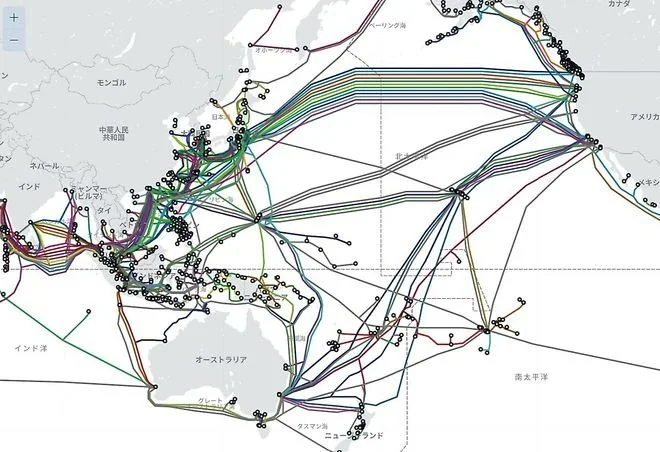
A miracle happened: the strategy ran smoothly. Although there were still some details needing refinement, we had achieved strong competitive advantages in network speed. Coupled with the new advantageous fee rates, the economic model of this cross-exchange arbitrage strategy was outstanding.
To maintain the top-tier rate advantages, we needed to generate astonishing trading volumes across major exchanges. This meant we could not be picky, and we could not only trade those high-profit quality trading pairs.
We had to do everything, including some top mainstream markets where competition was so fierce that we had to bear slight losses.
From a business logic perspective, we were willingly paying tuition losses in certain extreme, hyper-competitive markets, because it was only by generating trading volumes that we could penetrate overall rates and earn many multiples of rich profits in other suboptimal markets.
We relied on this cross-exchange structure to operate stably for quite some time, then seamlessly integrated OKX, continually refining the entire underlying architecture in the following months.
Looking back on that period, the most dramatic aspect was that the entire trading system we meticulously maintained for months had a core code that truly determined trades, consisting of fewer than 100 lines. We had almost never wasted time deducing complex mathematical pricing models or digging for fancy alpha signals. The vast majority of our energy was spent on network protocols, direct connections to exchanges, order execution channels, and insights into the peculiar micro-matching mechanisms of each exchange.
In hindsight, during the first year of engaging in market making, the trading logic itself was actually the simplest and easiest part of the entire system.
Scaling Up: Transitioning to CEX-DEX Blue Ocean, Why We Missed Hyperliquid
At this stage, we already had a solid high-frequency infrastructure for centralized exchanges, a highly competitive VIP fee structure, and a large amount of proprietary funds accumulated in various CEX.
The next move was almost self-evident: to venture into cross-market arbitrage between CEX and decentralized exchanges (DEX).

This was akin to returning to our old stomping grounds from when we started, but this time, we were equipped with a brand new arsenal capable of performing dimensional strikes.
Shortly after the FTX collapse, storing a large amount of proprietary funds unprotected in centralized exchanges was not a psychologically comfortable experience. However, the profitability of this strategy was extremely astounding, allowing us to comfortably accept the counterparty risks posed by the platform.
It was at this turning point that things exploded. The majority of our subsequent profits ultimately came from cross-market arbitrage between CEX and DEX. It felt like there were almost no significant professional opponents in that blue ocean market, allowing us to exponentially amplify our trading scale.
To expand our gains, we recruited two full-time partners, both of whom had previously collaborated with my partner on another project years ago.
Meanwhile, Hyperliquid was quietly emerging, but we were completely not trading on it.
I would love to concoct some profound strategic reasons to explain why we missed Hyperliquid, but the truth was far simpler: we were completely immersed in the existing profitable flywheel and unable to extricate ourselves. We were continually optimizing what we had on hand, but we wholly lost the ability to look up and consider what new battleground we truly needed to carve out.
When you are making substantial profits with your existing strategy, staying sharp to seize the next wave of opportunities is often much more challenging than anticipated.
Building a Trading System is Easy, Building a Trading Company is Hard: Team Divisions and Exhaustion
We traded smoothly with this efficient system until the end of 2024, but the situation began to take a sharp turn for the worse.
Initially, the emerging problems were almost entirely unrelated to the trading strategies themselves.
The two team members we brought in later decided to branch out on their own, taking with them the accumulated technology. I do not wish to elaborate too much on the details of the disagreements, but this was undoubtedly a significant blow.
Due to our early crude company structure and profit distribution mechanisms, their departure caused a significant portion of our profits to evaporate overnight, and repairing that operational gap would take at least several months.
By that time, we had already become top engineers adept at writing sophisticated trading systems for the crypto market.
Unfortunately, we had never learned how to effectively manage a truly mature trading company.
We invested an inordinate amount of time trying to figure out the operations of exchanges, squeezing every microsecond of execution delay, and extracting even a tiny bit of excess profit from liquidity games.
However, we never spent enough thought on how to build a robust, fair, and resilient business organization and governance structure around all of this.
Regardless, we collected ourselves and continued to maintain operations with limited proprietary capital in the downsized market.
At that time, the overall trading volume in the crypto market was still high, but our competitive advantages had substantially eroded. More critically, I felt a mounting exhaustion and weariness from maintaining this cumbersome behemoth day in and day out. There was still meat on the market, but my inner desire to chase after it had been completely drained.
In early summer 2025, I officially decided to withdraw and give myself a complete long vacation. My passion for trading and the crypto industry had nearly vanished, and I began to look towards some entirely new ideas.
Unlike the brief hiatus at the end of 2022, this time, my departure lasted quite a long while.
Return to the Crypto Battlefield: When Large Models Turn High-Frequency Trading Back into a Pure Hobby
Earlier this year, I co-founded a new company that is currently in stealth mode within the prediction market track, which has become my full-time core focus.
After completely leaving the crypto quantitative trading world for over a year, I recently quietly returned to my old profession and started writing strategy trades again.
The biggest catalyst for my return to the battlefield has been the disruptive restructuring that large language models have brought to the entire software development and quantitative research workflow.
As a veteran who has spent years painstakingly building trading infrastructure, witnessing how the previously cumbersome and tedious foundational engineering has been automated at an incredible speed by large models was exhilarating in a way that came from deep within. The time from brainstorming a strategy idea to actually coding and completing real-time backtesting has been compressed by several orders of magnitude.
I have rediscovered the original impulse to fiddle with trading systems, a long-lost thrill I hadn't experienced in many years.
However, this time, my mindset is entirely different. My sole goal is to construct completely new strategies that are vastly different from what I have done in the past and enjoy the pure joy of learning new knowledge in this exploration process.
The biggest change is that this time, I carry no burdens. I don't need to turn this system into a massive financial institution, or hire hordes of employees, or get bogged down in personnel conflicts, or desperately scale up, nor do I need to justify to anyone the rationality of exploring some research directions that may fail.
Because I need to manage the prediction market startup, the spare time I can allocate to this trading project is relatively limited. However, thanks to large models amplifying my personal development efficiency a hundred times over, along with freeing myself from the heavy shackles of running a physical trading company, I find the whole exploration process becomes incredibly easy and pure to enjoy.
On some level, this feeling is reminiscent of the days when I first entered the crypto space: just me, a couple of simple ideas in my mind, and a real curiosity to test whether I can make them work.
After a long career of ups and downs, writing trading systems has finally returned to being a pure hobby, rather than a suffocating job.
I hope to maintain this ideal state, but who can say for sure? After all, I am someone who changes my mind easily.
免责声明:本文章仅代表作者个人观点,不代表本平台的立场和观点。本文章仅供信息分享,不构成对任何人的任何投资建议。用户与作者之间的任何争议,与本平台无关。如网页中刊载的文章或图片涉及侵权,请提供相关的权利证明和身份证明发送邮件到[email protected],本平台相关工作人员将会进行核查。