The co-founder of Tornado Cash, Roman Storm, has been convicted on one charge, facing a maximum of 45 years in prison. The prosecution admits that developing the protocol itself is not a crime, yet the lawsuit continues to progress.
Written by: Paul Klay
Translated by: Saoirse, Foresight News
The following matter I am going to discuss is closely related to every developer. This case may set a dangerous precedent: if others commit crimes using the code you wrote, you could potentially face criminal charges. Even if you never profited from it, even if the original design of the code was entirely different, even if you can no longer modify it and the technology is open for free use by everyone.
Consider a scenario: you are hired to develop a tool that quickly collects data, and later someone uses it to steal information. You are completely unaware of this and were not involved, yet you could face up to 45 years in prison. Roman Storm's current situation is roughly like this.
There are many details of this case that have not received sufficient public attention. If we want to safeguard this industry and its future, we must engage in relevant discussions.
Who is Roman Storm?
Roman Storm was born in Kazakhstan and moved to Chelyabinsk, Russia with his family at the age of seven. His parents noticed his interest in technology and bought him a personal computer in the early 1990s. He taught himself programming and spent a lot of time dismantling games and reconstructing code.
In 2008, at the age of 19, Roman moved to the United States, later becoming a naturalized U.S. citizen, and now has a young daughter. After moving to the U.S., he gradually became a software engineer, working at Cisco, several tech startups, and eventually joined Amazon.
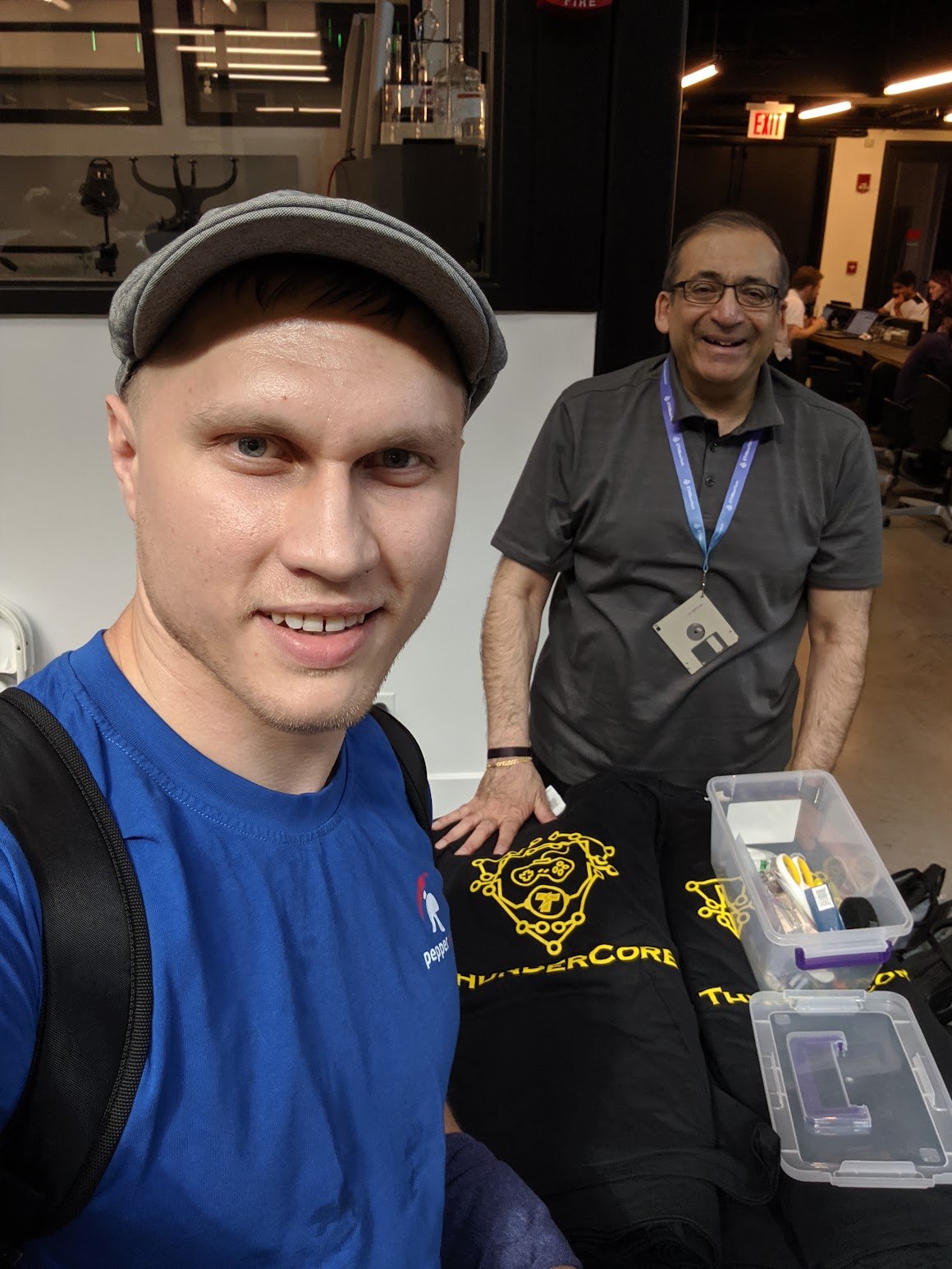
Left side is Roman Storm
In August 2017, Roman left Amazon and devoted himself entirely to blockchain development. He first wrote smart contracts for several ICO projects and later became the CTO of POA Network. Under his leadership, this Ethereum sidechain managed over $150 million in transactions for more than 100,000 users.
In September 2018, he co-founded PepperSec, a company focused on blockchain security and development. Projects he participated in include Aave, 0x, 1inch, dYdX, Compound, and MakerDAO.
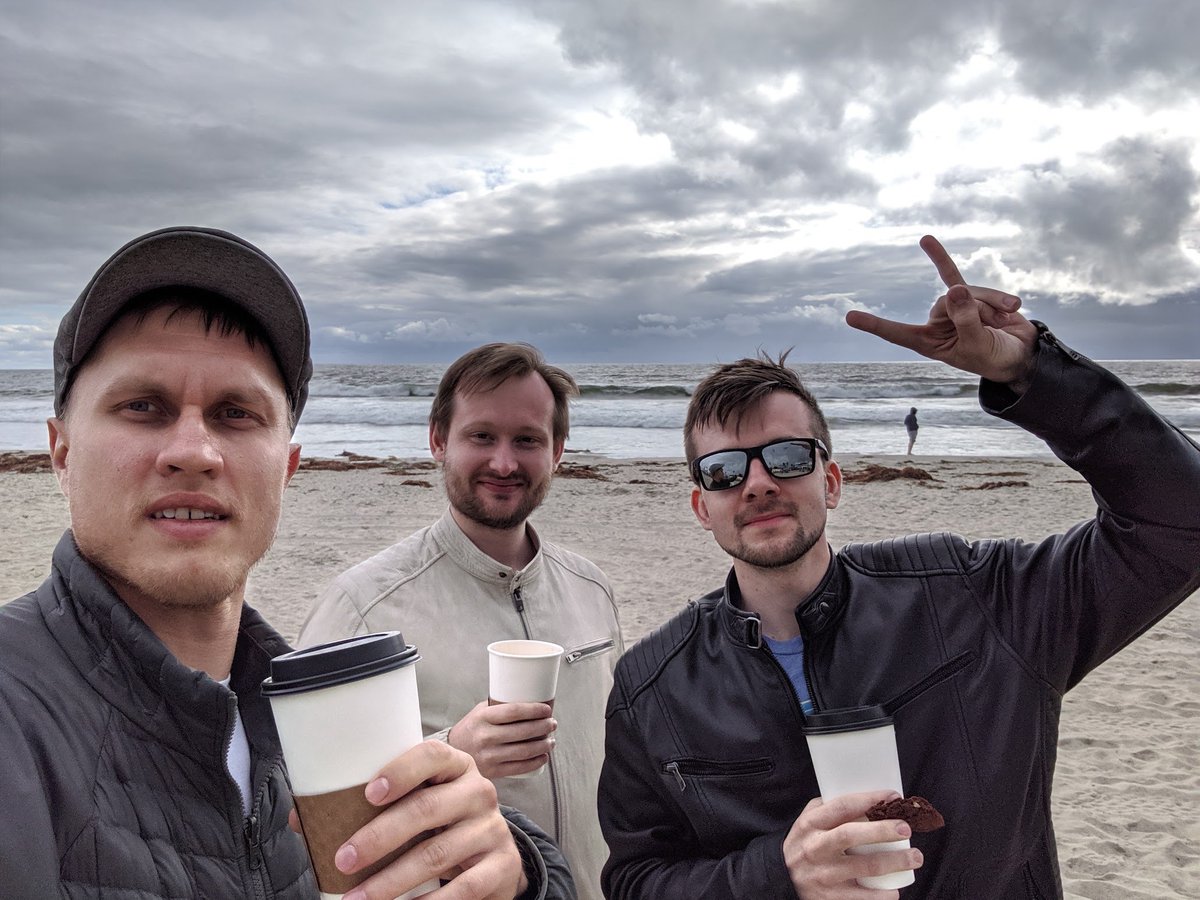
The three co-founders of Tornado Cash: (from left to right) Roman Storm, Roman Semenov, Alexey Pertsev, photographed together by the seaside in the early days of the project.
In December 2019, he, along with Alexey Pertsev and Roman Semenov, launched Tornado Cash—a decentralized protocol built on Ethereum that provides financial privacy services.
What is Tornado Cash?
Tornado Cash is an open-source decentralized protocol that can hide the publicly traceable associations between the sender and receiver in cryptocurrency transactions.
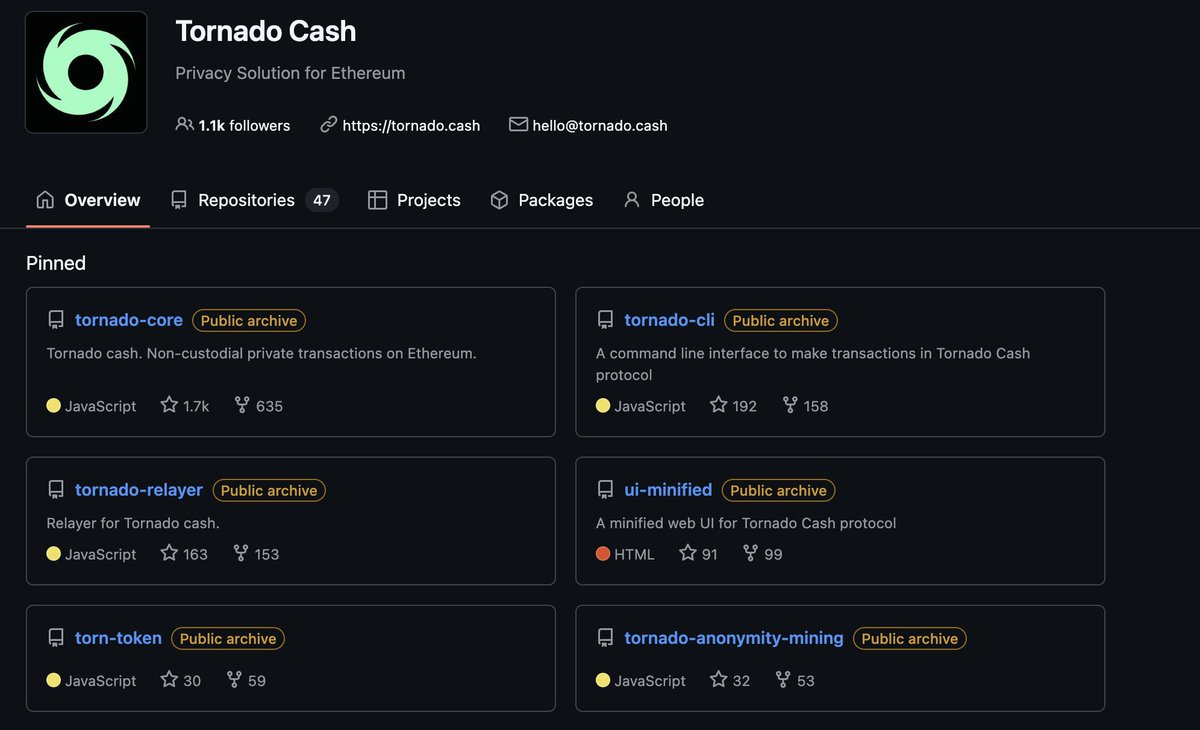
It employs a zero-knowledge proof mechanism: users deposit funds into a smart contract and can later withdraw to another address, with outsiders unable to trace the user identity corresponding to the deposit, all without a centralized intermediary.
As of August 2022, Tornado Cash had received a total of $7.6 billion in funding, completing over 300,000 deposit transactions only on Ethereum and BNB chains.
This protocol responds to a real demand for financial privacy: people can use it to receive salaries, accept donations, and pay service fees without having to publicly disclose their entire financial records.
However, criminals also use this technology to hide illicit funds. Data from Chainalysis showed that, as of August 2022, nearly 30% of the incoming funds originated from illegal or sanctioned addresses, which is also a core basis for this prosecution.
The protocol's code is completely open-source, and all funds are managed by users themselves.
What happened on August 23, 2023?
That morning, loud noises and the sound of police sirens outside woke Roman. Just as he opened the front door, federal agents with rifles pointed at him ordered him to raise his hands.
The agents put handcuffs on him and asked if there were others in the house. Roman told them that his young daughter was still sleeping in the room.

Roman Storm and his daughter
As the agents took the child outside, Roman was still in handcuffs. He later recalled that moment was excruciating; he didn't know what would happen next and feared it might be the last time he saw his daughter.
The agents searched the home, seized electronic devices, and then took him to a federal court in Washington State.
On the same day, the U.S. Department of Justice filed three criminal charges against Roman, with the cumulative charges potentially resulting in 45 years of imprisonment.
Evidence in this case
In August 2025, a federal grand jury in Manhattan deliberated on three charges against Roman:
- Conspiracy to commit money laundering: no verdict reached;
- Conspiracy to violate sanctions: no verdict reached;
- Conspiracy to operate an unlicensed money transfer business: guilty verdict.
The prosecution presented a chat record that seemingly indicated the Tornado Cash team discussing how to launder $600 million in illicit funds. However, this message was actually forwarded by a third party. The prosecution submitted the chat record without disclosing the "forwarded" tag, only admitting to this oversight a few days before the trial.
The prosecution failed to prove any direct communication between Roman and the criminals using Tornado Cash. He never managed user funds, did not take a cut from transactions, and had no authority to shut down or modify immutable smart contracts; even years after his arrest, these contracts continued to operate.
The U.S. side claimed that FinCEN's (U.S. Financial Crimes Enforcement Network) guidance was unrelated to the case but possessed communication documents from FinCEN, which mentioned that non-custodial software would generally not be considered a money transfer business.
The first witness to take the stand in the trial was a victim of fraud, but even FBI agents could not confirm that the stolen funds had passed through Tornado Cash.
In March 2026, the Supreme Court delivered a unanimous ruling in the case of Cox v. Sony: internet service providers are not responsible for users' copyright infringement, and the current administration has endorsed this ruling. Although the areas of law in the two cases differ, I believe that open-source software developers should receive similar protection.
(Note: Cox is a broadband provider, Sony is the rights holder of music copyrights; the ruling indicated that merely providing general internet infrastructure with knowledge of some users' infringement does not necessarily entail liability for users' illegal actions.)
At the hearing on the motion for acquittal, the prosecution claimed that merely maintaining the protocol itself could constitute a crime. The judge responded on the spot: "You'd better not speak; the more you say, the less credible it becomes."
At the hearing in April 2026, the prosecution admitted that developing Tornado Cash was not a crime.
Since Roman's arrest in August 2023, he has been shrouded in legal uncertainty. Trial dates were postponed multiple times, and it wasn't until August 2025 that the jury reached a verdict on one of the three charges. The retrial for the remaining two charges is now scheduled for April 26, 2027, and the court is also reviewing the defense's motion for acquittal.
Note: Descriptions in the text regarding the prosecution's evidence and Roman's related actions come from the defense's statements and are not equivalent to facts confirmed by the court.
Biden Administration
The case against Roman began during the Biden administration. The U.S. imposed sanctions on Tornado Cash in August 2022, and one year later, the Justice Department filed criminal charges against him.
In November 2024, an appeals court ruled that the immutable smart contracts of Tornado Cash are not subject to sanctions. The related sanctions were lifted in March 2025.
In April of that same year, the Trump administration announced an end to the practice of "regulating by prosecution." In August, the Justice Department announced that it would no longer file new charges against developers of truly decentralized software that do not control user funds according to §1960 (b)(1)(C).
Although policies have been adjusted, the criminal prosecution against Roman is still ongoing.
What does this mean for the industry?
The Roman Storm case raises a question that has long exceeded the confines of the cryptocurrency track: even if developers do not control user funds, should they still bear criminal responsibility for crimes committed by software users?
Roman has already been convicted on one charge. Although the Department of Justice has adjusted its prosecution strategy against decentralized software developers, this is merely an internal policy of the department and not a change in legal text; future administrations could overturn this policy at any time.
The blurred boundaries of developer liability could expose the entire open-source industry to risk. Practitioners developing AI, DeFi products, privacy tools, and other open-source technologies may abandon their projects out of fear of being imprisoned for the illegal actions of strangers.
免责声明:本文章仅代表作者个人观点,不代表本平台的立场和观点。本文章仅供信息分享,不构成对任何人的任何投资建议。用户与作者之间的任何争议,与本平台无关。如网页中刊载的文章或图片涉及侵权,请提供相关的权利证明和身份证明发送邮件到[email protected],本平台相关工作人员将会进行核查。