Through personal practice and reflection, exploring how to build a market-making system from scratch with no background.
Written by: yieldmaxi
Translated by: AididiaoJP, Foresight News
How did a trader without a financial background move from MEV to market-making, then transition from the market-making system to the boundaries of the trading company, and finally embark on a new journey amid the wave of LLM (large language models)?
Four years ago, yieldmaxi (@0xyieldmaxi) wrote an article about how he entered crypto, engaged in MEV, and later why he shifted his focus from on-chain to centralized exchanges. Now that four years have passed, he has stopped market-making for over a year. Recently, after seeing a lot of discussions about systematic trading and high-frequency trading, he decided to write a second article to document how he built a market-making system with almost zero experience.
He dropped out of college in early 2020 with no traditional financial experience and almost no knowledge of the trading industry. Everything was researched, hands-on, and discussed with experienced individuals.
Starting After the FTX Collapse
At the end of 2022, shortly after FTX collapsed, his most profitable MEV strategy completely failed. He lost interest in finding new opportunities on-chain and planned to travel in Southeast Asia for a few months. However, not long into his vacation, his partner approached him saying a friend wanted to set up a new centralized exchange in Switzerland and wanted them to act as internal market makers, similar to Alameda, but without touching user funds.
Neither of them had experience with market-making systems, but they felt they could give it a try. They estimated they could set it up in a few months, simultaneously learning how centralized exchanges operate, and then look for opportunities to trade with their own money. The exchange never went live, but they ended up with three months of infrastructure development results, connections to multiple exchanges, and a clearer understanding of the competition.

Thus, the two opened a small trading company in Switzerland, using only their own funds for crypto market-making. The strategies were not validated on real trades and were more based on intuition.
Fixed Spreads and Fast Hedging
They didn’t start particularly early, but the timing was good. After FTX’s downfall, many market makers exited, leaving plenty of opportunities in the market. Their initial approach was straightforward: place fixed-spread orders and quickly close them after execution. They first figured out how large to place orders and how wide the spread should be, then repeated the process.
With a habit from MEV, they entered market-making: they disliked holding positions and wanted to enter and exit freely, just profiting from the inefficiencies in the middle. Their previous strategies could almost instantly realize profits, so they naturally wanted to make market-making similar. Instead of waiting for another order to close, why not immediately hedge by eating the order?
However, doing this on the same exchange and same asset clearly didn’t work.
Practical Arbitrage Across Exchanges
They had already integrated with Bybit, where there were several perpetual contracts similar to those on Binance. The idea was simple: place orders on Binance, and once executed, immediately hedge by eating the opposite order on Bybit.
The logic was set in motion, but they quickly started losing money. They paused to carefully examine each trade, and later this became what they enjoyed doing most—spending a lot of time watching market structure, identifying problems, and making adjustments. The most obvious problem was that they were always a step behind: by the time they ate the order on Bybit, the targeted liquidity had already been taken by someone else.
This made things more interesting, as this was a form of competition they were familiar with. The infrastructure was already good enough; there was no need to nitpick by a few microseconds in the system—the real losses were in milliseconds. They requested the exchange for lower fees and faster WebSocket streams, and even trialed Avelacom before redoing their trades. Note: The WebSocket stream is a real-time market data push channel provided by the exchanges; Avelacom is a professional low-latency network service provider.
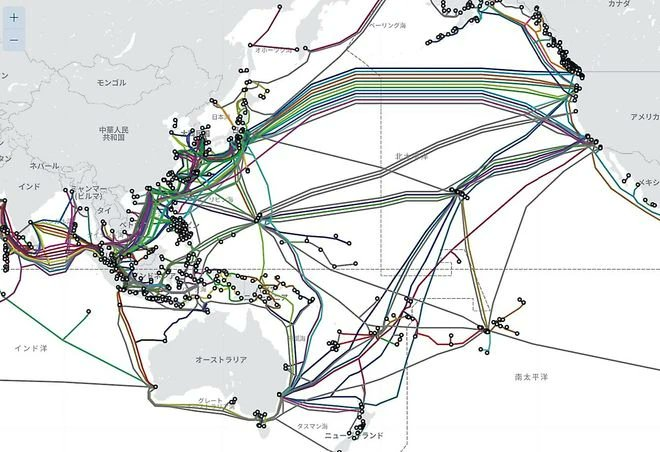
The results were significant. They became more competitive in speed, and the new fee structure significantly improved the economic viability of the strategies. However, to maintain better fee tiers, they could not just trade the most profitable assets but had to engage in various trades, including actively losing in highly competitive markets. Essentially, they were intentionally losing in some markets to earn more elsewhere.
After trading this way for some time, they integrated with OKX and continued optimizing the system over the next few months. Interestingly, the trading logic itself was likely less than 100 lines of code; most of their time was spent on networking, connecting with exchanges, executing trades, and understanding the peculiarities of each venue. Looking back, the trading logic was probably the simplest part of the entire system in the first year.
Scaling Up, Missing Hyperliquid
By this point, they had a solid foundation in centralized exchange infrastructure, competitive rates, and a considerable amount of self-capital. The next step was a natural progression: CEX-DEX arbitrage.

It felt like returning to a familiar market, but with brand new tools at their disposal. After FTX’s collapse, placing large amounts of capital on centralized exchanges felt uncomfortable, but with sufficient returns, they were willing to take the risk. What became truly interesting was that most of the gains later came from the CEX-DEX side. Some markets had almost no competition, and their scale quickly grew.
They hired two more people, both of whom were partners and had collaborated on previous projects. Meanwhile, Hyperliquid had emerged, yet they did not trade. There was no deep reason for this; they were simply too engrossed in their existing work, optimizing their current system rather than rethinking what they should be doing. When you're already making money, it's easy to miss new opportunities.
Building a System is Easy, Building a Company is Hard
This strategy continued until the end of 2024. The initial problems had little to do with trading: the two newly hired individuals decided to leave and start their own venture. The specific reasons aren't elaborated upon, but the result was not ideal. Due to the company's structure, they suddenly lost a significant portion of their profits, and rebuilding would take at least a few months.
By this time, they had become quite adept at building trading systems for the crypto market but were not as skilled at building a trading company. A considerable amount of time was spent understanding how exchanges operated, how to improve execution, how to compete on latency, and how to squeeze a bit more profit from existing markets; much less time was allocated to actually organizing the business.
They scaled down, continuing to trade fewer markets and less capital. Crypto trading volumes were high, but many advantages were diminishing, and he grew increasingly tired of tweaking the system. Opportunities still existed, but interest was declining.
In early summer 2025, he decided to take a complete break. His interest in trading and crypto had nearly vanished, and he began exploring new directions. Different from the previous time at the end of 2022, this break lasted longer.
Restarting
Earlier this year, he co-founded a new company, primarily working invisibly in the prediction market field. After more than a year away from crypto trading, he resumed trading.
A large part of the reason was that LLM had completely changed the workflow for development and research. After years of working on infrastructure, seeing many tasks that could be significantly accelerated was indeed exciting. The time from an idea to practical testing had drastically shortened. He found himself wanting to build trading systems again, a feeling he hadn't experienced in a long time.
This time, he changed his approach. The only goal was to create something different from before while learning new things along the way. The biggest difference was that he didn't need to turn it into anything. There was no need to build a company around it, hire people, manage them, or scale up, nor did he need to find excuses for researching potentially unsuccessful endeavors.
His available time was limited, but with the efficiency gains from LLM, plus the absence of the pressure of running a trading company, the entire process became very enjoyable. To some extent, it resembled the feelings he had when first entering crypto: just himself, a few ideas, and the curiosity of whether he could make it work.
For a long time, building a trading system felt like a passion again, rather than a job.
免责声明:本文章仅代表作者个人观点,不代表本平台的立场和观点。本文章仅供信息分享,不构成对任何人的任何投资建议。用户与作者之间的任何争议,与本平台无关。如网页中刊载的文章或图片涉及侵权,请提供相关的权利证明和身份证明发送邮件到[email protected],本平台相关工作人员将会进行核查。