Author: Deep Tide TechFlow
Deep Tide Introduction: In response to accusations from the American media regarding its internal advocacy for transferring decision-making power to AI, Anthropic CEO Dario Amodei has rarely issued a lengthy rebuttal. He emphatically denounced the insinuation that handing over human free will to AI is absurd and emphasized that any call for centralization under the guise of efficiency is a dangerous regression.
Dario sharply differentiated the essential boundaries between macro-governance and micro-task automation, targeting industry competitors who engage in emotional packaging without substantial risk control. At the crossroads of valuation volatility and commercialization pressures, this philosophical debate on who controls superintelligence has completely exposed the deep rifts in power and ethics among executives of large models in Silicon Valley.
Refuting Absurd Accusations: Efficiency Can Never Be an Excuse for Sacrificing Democratic Legitimacy
In the face of sharp criticism from the Silicon Valley public discourse regarding technological tyranny, the helm of Anthropic chose an uncompromising confrontation. In response to the implications in a controversial investigative report released by Axios suggesting that “Anthropic is sliding towards handing over human decision-making power to superintelligence,” CEO Dario Amodei issued a lengthy public statement on social media.
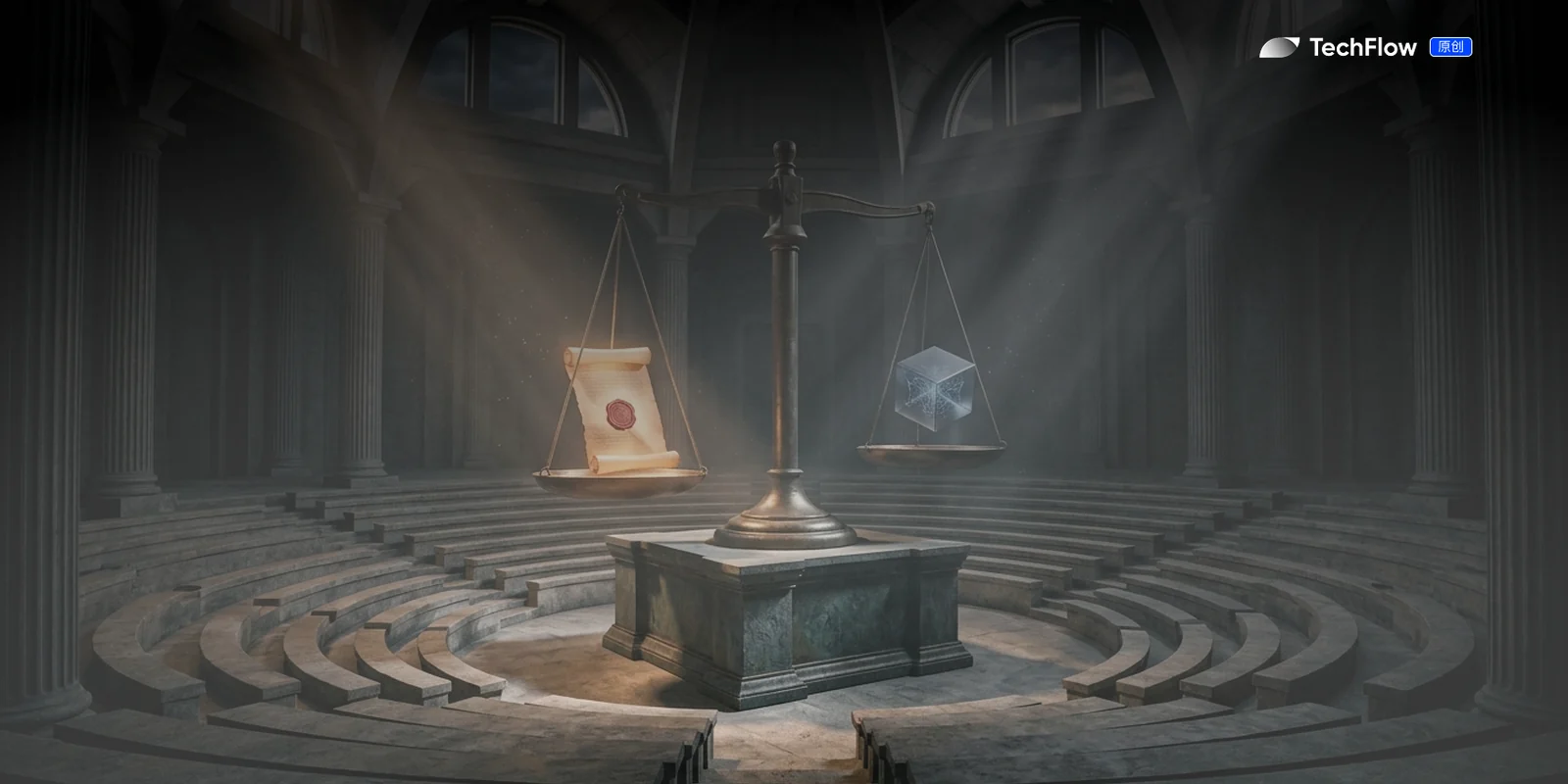
Right from the start, Dario directly denied the relevant accusations, stating that any implication that he or Anthropic advocates transferring autonomy to machines is "extremely absurd." He profoundly referenced the history of political philosophy, pointing out: "For thousands of years, proponents of authoritarian dictatorship have uniformly claimed that concentrating power in a few strong hands can lead to more efficient, quicker, and more organized decision-making. However, history has long shown that even if this efficiency hypothesis occasionally holds, humanity should never sacrifice its political legitimacy and fundamental right of self-determination on the altar for illusory efficiency or temporary safety."
Dario emphasized that this logic must be strictly upheld in the era of artificial intelligence. Allowing super algorithms without elected authorization to adjudicate human affairs is a wholly "disastrous bad idea." AI technology, no matter how it evolves, must unconditionally obey the democratically authorized framework through due process, and humanity must firmly maintain the final serve in political and governance decision-making.
Clarifying Conceptual Confusion: The Distinction Between Macro Global Governance and Micro Task Automation
While rebutting criticism, Dario astutely pointed out a common conceptual switch made by outsiders and some media when discussing AI ethics: conflating “the transfer of global political governance” with “the automation of specific industry vertical tasks.”
Regarding technology automation in specific vertical scenarios such as autonomous driving, targeted drug molecule synthesis for cancer treatment, and full-process software engineering, Dario candidly stated that his attitude is "mixed and extremely cautious." On one hand, the efficient automation in these areas will unleash productivity dividends worth trillions and save countless lives; on the other hand, these automation capabilities must be subjected to extremely strict boundary constraints.
Dario highlighted three high-risk scenarios that require vigilance: first, allowing large models with Recursive Self-Improvement (RSI) capabilities to continuously iterate in an unregulated environment, which could trigger irreversible technological derailment; second, the overly aggressive promotion of end-to-end automation will cause severe disruption to the social employment structure, necessitating a deliberate deceleration of commercial penetration to provide adequate buffer time for the human workforce; and third, the most core philosophical appeal, is that humans inherently possess the dignity of experiencing labor in artistic creation, handmade production, and spiritual exploration, which should not be mechanized and replaced by cold algorithms.
Peeling Away Competitors' Disguises: Beware of Peers' "Emotion-Based Commercial and Political Positioning"
In this sweeping debate in Silicon Valley, Dario did not stop at self-defense but directly pointed the finger at major competitors in the industry.
Dario sharply noted that other AI company CEOs in the tech world privately share his actual judgment; everyone is striving to develop and deliver increasingly automated tools with longer autonomous execution chains in their laboratories. However, on the public stage, certain tech giants' executives are keen to use emotionally appealing rhetoric like “eternal human control” and “AI is just a purely tool” to please the public, thus seeking commercial sponsorship and political moats for their enterprises, while failing to implement any substantial self-restraint at the model architecture safety level.
In contrast to the empty words of peers, Dario emphasized that Anthropic is one of the very few teams in the industry willing to publicly acknowledge risks and pay a heavy price for it. He disclosed that Anthropic had previously resisted significant commercial temptations, preferring to face the risk of sanctions and exclusion from certain key stakeholders rather than outright refuse to authorize its flagship model Claude for the development and deployment of any autonomous lethal weapon systems.
Capital Storm and Ethical Crossroads: The Ultimate Power Question in the Era of Superintelligence
It is worth reflecting on that Dario's rare strong statement comes at a sensitive moment when external capital markets are imposing unprecedented commercialization pressures on Anthropic. Amid divergences in the market regarding its high computing expenditures and monetization speed, this founder, who adheres to the idea of technical safety, chose to reinforce the philosophical defense line to solidify the technological moat.
This is not only a public relations battle at a distance but also a century-old interrogation of power for humanity standing at the threshold of AGI and even superintelligence. As commercial interests, geopolitical games, and exponentially rising model capabilities intertwine, should the future of human civilization be entrusted to a few unregulated business oligarchs, algorithmic bureaucrats, or to a democratic contract that is slightly slow yet universally representative?
Dario Amodei's voice has provided a clear answer from Anthropic: algorithms can take over trivial tasks like washing cars, bookkeeping, and even writing code, but the steering wheel of where humanity is heading will always belong to the real human society formed by free will and constitutional democracy.
免责声明:本文章仅代表作者个人观点,不代表本平台的立场和观点。本文章仅供信息分享,不构成对任何人的任何投资建议。用户与作者之间的任何争议,与本平台无关。如网页中刊载的文章或图片涉及侵权,请提供相关的权利证明和身份证明发送邮件到[email protected],本平台相关工作人员将会进行核查。