Sort & Compile: Deep Tide TechFlow
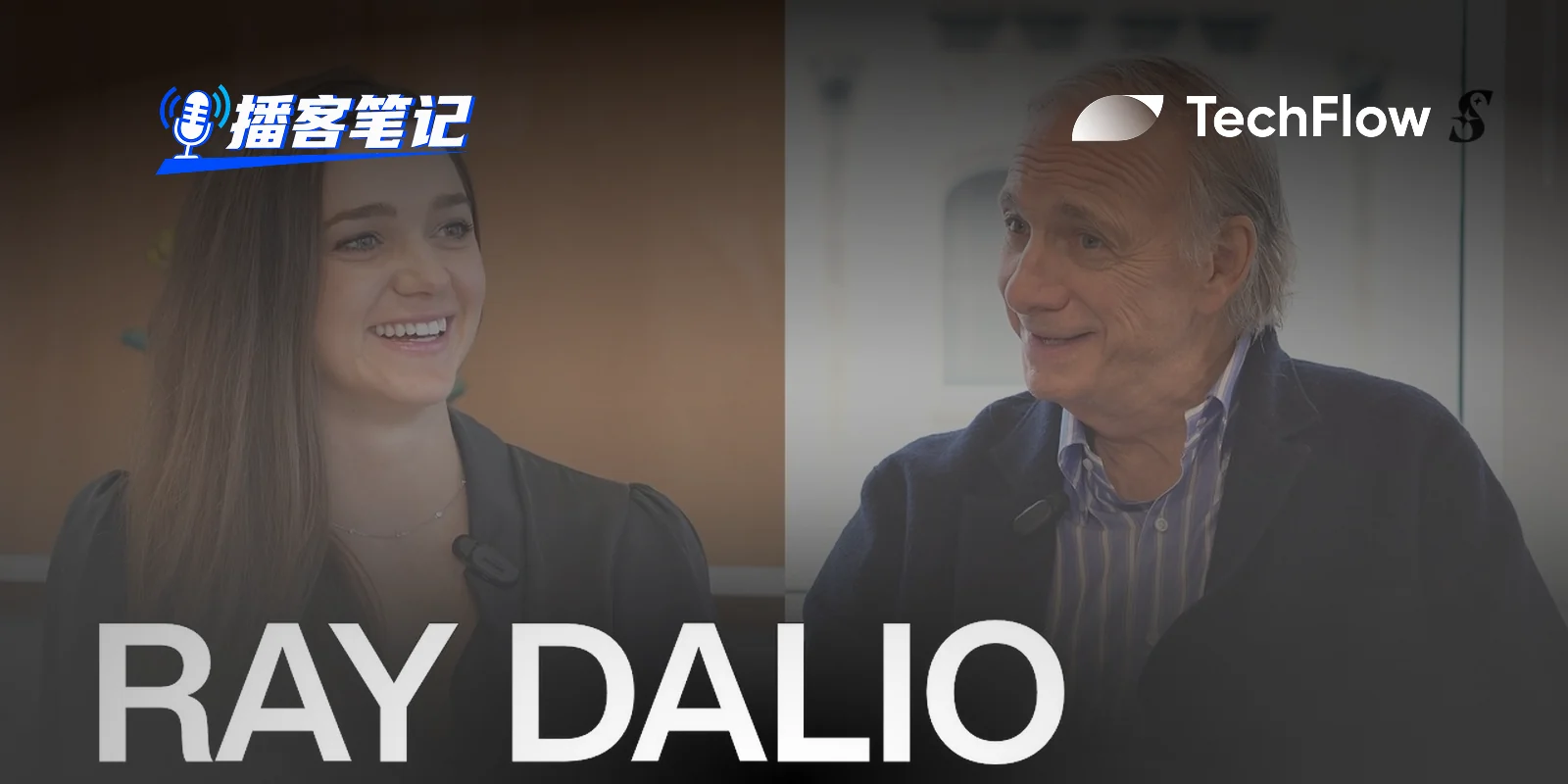
Deep Tide Guide: As the capital market celebrates the trillion-dollar level AI valuations and wealth creation myths, Ray Dalio, the founder of the world's largest hedge fund Bridgewater, gave a calm and cyclic macro warning in an interview with Sourcery: it is crucial to rigorously distinguish between "wealth" and "money." Wealth is merely a numeral on paper assets, and asset bubbles often thoroughly burst when wealth holders are forced to liquidate assets for cash. From the power, automotive, and radio of the 1920s to the internet in 2000, every significant technological birth in history triggers a frenzy of capital concentration, but few ultimately translate directly into great investment returns.
In this in-depth 51-minute interview, Ray Dalio unreservedly elaborated on the five macro forces driving historical evolution, America's deepening wealth divide and public education crisis, and detailed the AI decision-making system he is creating to algorithmically encode his lifetime investment principles and causal logic. He dissected how Bridgewater’s "Dot Collector" mechanism achieves extreme realism and transparency, pointed out that the traditional way humans weigh decisions in their minds is obsolete, and explained why outstanding leaders must possess the mental humility to "know what they don't know." Facing a historical cycle filled with unknowns, he not only restructured macro investment logic but also shared ultimate reflections on the three major chapters of life, peer confrontations, and the meaning of life.
Guest: Ray Dalio (Founder of Bridgewater Associates, Author of “Principles”)
Host: Molly O'Shea (Host of Sourcery Podcast)
Podcast Source: Sourcery with Molly O'Shea (https://www.youtube.com/watch?v=X5FuYnLtB6k)
Original Title: I Finally Interview Ray Dalio
Broadcast Date: Beijing Time: 2026-11-23 22:00
Summary of Key Points
Essential distinction between wealth and money; paper valuations are not liquid cash: Wealth cannot be directly consumed; it must be sold and converted to fiat money in order to be spent. Creating paper wealth valued at $1 billion from a $50 million investment is easy, but bubbles often burst when wealth holders encounter liquidity pressure, debt repayment stress, or rigid taxation and are forced to liquidate assets. There is simply not enough money and credit in the market to support everyone cashing out at once.
Great technology is not equivalent to great investment; beware of the ruthless repetition of historical cycles: In the 1920s, the electrification of the grid, the popularity of cars, and airplanes were far more disruptive than today's AI; however, the euphoria led to blind credit expansion that inflated valuations, and when the market faced deleveraging, assets ultimately fell into weak hands. Markets that overly concentrate on a single new technology are extremely fragile, ultimately, 90% of companies will go bankrupt in intense competition.
The five macro forces driving historical evolution are at the end of a long cycle: The intertwined forces of currency and credit debt cycles, internal political order and wealth disparity, external great power geopolitical rivalry, natural disasters, and technological innovations. The current global order is at the end of a long cycle since 1945, characterized by high debt and social polarization testing the resilience of the system, repeatedly embodying classic patterns humans have experienced countless times.
The wealth divide is not only about wealth disparity but also about unequal access to opportunities and education: For example, in Connecticut, which ranks high in per capita income, as many as 22% of high school students are on the verge of dropping out or are untraceable. If the lower strata lose the fair educational opportunities and upward mobility pathways, the foundation of social trust will collapse, and populism's opposition will become inevitable.
The old mode of human brain decision-making is outdated; build a system for extraordinary human intelligence and AI symbiosis: At 77, Ray Dalio is encoding his lifetime investment principles and causal logic into algorithms. The world has become too complex, and the traditional model of weighing decisions in one's mind can no longer cope with the ever-changing environment; the future belongs to decision-makers capable of algorithmically structuring causal logic to achieve symbiotic evolution between human and machine intelligence.
Mental humility and confronting ignorance; arrogance and mistakes are humanity's greatest tragedies: True excellence does not lie in providing standard answers in traditional exam-oriented education but in "knowing what one does not know." Bridgewater achieves extreme realism and transparency through its "Dot Collector" system; only by embracing thoughtful disagreement can one penetrate biases and reach objective truths.
Brilliant Insights
"We must distinguish between wealth and money. You cannot directly consume wealth; you must sell it to exchange for money to spend. The burst of asset bubbles usually occurs when those who possess wealth urgently need to sell it for cash."
"One fatal mistake people often make is mistaking great new technology for great investment. In the 1920s, with the electrification of the grid and the emergence of cars and airplanes, the technological breakthroughs were more shocking than today's AI; yet, ultimately, the assets inflated by blind credit still faced destructive clearing."
"In today’s world, the traditional way of weighing pros and cons merely in one’s head to make decisions is entirely outdated. The future belongs to decision-makers who can encode causal logic into code and enable a symbiotic evolution of extraordinary human intelligence and artificial intelligence."
"Elite schools reward students who rote memorize answers, which is the worst selection mechanism. Humanity's gravest tragedy is holding onto arrogant biases while being unaware of one's wrongness."
"More important than finding mentors is finding peers who can engage in thoughtful disagreement with you. They have different perspectives and can engage in genuine discussions without hypocrisy, until we approach the true reality."
"If someone spends their whole life focused solely on making money, without thinking about genuine connections between people, meaningful work, and meaningful relationships, that is truly incomprehensible."
"Spirituality is not religion, but the empathy of perspective-taking. Recognizing that you are merely a tiny part of the whole, and seeing the world through others' eyes, is how one attains true long-lasting health and peace."
"What you truly need is nothing more than a bed, an apartment, and three meals a day. Other than that, you have absolute freedom. Go try boldly; what actual risk do you bear?"
Complete Dialogue Transcript
Origins and Macro Framework: 500-Year Long Cycle and the Five Forces Driving the World
Molly O'Shea: Ray Dalio, welcome to the Sourcery podcast! You have always been one of the top 100 dream guests I most wanted to interview. Our show focuses on venture capital, cutting-edge technology, and macro investing. Before we started, we actually talked about our wonderful fate: not only are we both from Westport, Connecticut, but we also share the same birthday, August 8. Today, we're recording in the Pro Se office, specifically placing a shark model behind us to pay tribute to your long-standing dedication to ocean exploration. As a top-tier global macro investor, you have consistently explained the underlying mechanisms of how the world operates. To lay the foundation for our entire conversation, could you first systematically outline for us the five core forces driving the evolution of human history?
Ray Dalio: I am very pleased to chat with you and all the listeners. Indeed, Bridgewater was born in Westport, and meeting on the same birthday, in the same land, is a wonderful thing.
As a global macro investor, my duty is to identify all the variables that could affect the market and economy and to bet real money on them. Reflecting on my experiences, in 1971, I worked as a clerk on the floor of the New York Stock Exchange. One Sunday night, President Nixon suddenly delivered a speech on television, announcing that the United States would stop redeeming dollars for gold. At that time, gold was the real legal money, and this was essentially a debt default, even though he didn't use the term "default." When I walked into the New York Stock Exchange on Monday morning, I thought this would be a catastrophic disaster, and the stock market would inevitably crash. However, the opposite happened; the stock market rose instead, ushering in a tremendous rally. This left me perplexed, and I couldn't grasp the underlying mechanisms behind it.
This motivated me to systematically study history. I discovered that in March 1933, President Roosevelt did the exact same thing. This gave me a complete understanding of the mechanical transmission mechanism of currency devaluation and liquidity injection. I thoroughly reviewed the Great Depression and the historical period from 1930 to 1945; this research helped me accurately predict the 2008 global financial tsunami decades later. Subsequently, I conducted a cross-cycle study of the past 500 years of human history, discovering that similar events have repeatedly occurred, primarily driven by five core forces.
These five forces are underpinned by strict physical mechanical logic: First is the operation mechanism of currency, credit, and debt markets; second is internal political order—how we interact with each other, particularly the wealth gap and value divides, as well as how the existing system addresses or fails to address these divergences; third is the international geopolitical order—historically, we relied on so-called multilateral mechanisms to resolve disputes, such as the United Nations, the World Trade Organization, and even the International Court, but that was a naive assumption. With the rise and fall of great powers, those multilateral constraints have vanished, and we have entered a classic power confrontation pattern; fourth is the natural forces—droughts, floods, plagues, and other natural disasters that take lives and reshape the world landscape far beyond human imagination, which should not be ignored; fifth is scientific and technological advancements—humanity's ability to enhance overall factor productivity and change living conditions through learning and innovation, but the key lies in whether this technology is used for war and destruction or to improve human welfare.
These five forces intertwine and usually create a long cycle that spans a person's lifetime. 1945 marks the starting point of the current round of the new world order. As new emerging powers rise to challenge existing ones and global debt continues to snowball, turbulence follows. History always cycles between disorder and prosperity, reconstructing order, then returning to severe division, major conflicts, and falling again into chaos. The interaction of these five forces forms the foundational framework for all discussions we have today.
Political Turning Points in America and Deep Breaks: Moderates Rising, Historical Fate of Extremism, and the Debt Impasse
Molly O'Shea: Speaking of the most timely topic, the U.S. election has just concluded, which ties into the second major force you mentioned. Can you break this down from the ground-level mechanisms? What exactly will happen as the new political regime takes over? What are the most unexpected potential outcomes of this game?
Ray Dalio: I think we must first recognize a core reality: we simply changed the people dealing with these problems, but the problems themselves haven’t changed one bit. These issues still objectively exist. We are still facing a heavy debt crisis, a massive wealth gap and value divide between the left and right, and severe challenges like climate change and geopolitical confrontation. We have merely altered the specific decision-makers at the table dealing with these challenges.
History has repeatedly proven that for a democratic system to function smoothly, there is typically only one successful path. On the political spectrum, there are left and right factions, and they represent a continuous spectrum: extreme left, moderate left, moderate right, and extreme right. Within this spectrum, there is not only a confrontation between the left and right, but also intense internal struggles between moderates and extremists within the winning party once one side wins the elections. We will soon see how they handle contemporary crises, such as the debt ceiling issue which is about to come to the forefront. Around December 11, the relevant debates will fully break out, and the ethical battles of the new and the old will be extremely intense. For example, Elizabeth Warren may likely take over the Senate Banking Committee, and the conflicting ideologies will escalate the contradictions.
If I had to point to the most surprising yet hopeful outcome, it would be that we truly see the rise of a moderate force transcending party boundaries that can cooperate closely. When I observe the candidates in the swing states who took the lead in this recent election, the situation is very intriguing: although they are nominally labeled as Democrats, they do not resemble radically leftist candidates with socialist leanings; their governing styles are nearly indistinguishable from moderate Republicans and lean more towards a rational and pragmatic middle path. In essence, there are four parties in America today. The only effective way to resolve these conflicts is for the moderate Democrats and moderate Republicans to work together across party boundaries to restrain the rising extremism because the vast majority of ordinary people actually reside in the moderate realm.
The biggest political deadlock behind this is that, in the face of unsustainable trillion-dollar debt, no one in either party is willing to bear the political cost of raising taxes, nor is anyone willing to voluntarily cut public spending.
Molly O'Shea: Do extremists typically end up reverting to the mean? Is extremism merely a political tactic to win elections, or will it continue to solidify?
Ray Dalio: Generally, when divisions exceed reconcilable limits—in other words, when factional interests take precedence over reverence and adherence to political systems—the entire system falls into extreme danger. The result is often some form of civil conflict or intense confrontation until one side completely overpowers the other, imposing its will on society. In a game comprising four major political factions, once one side obtains a superficial victory, internally, there will inevitably erupt a deadly struggle for dominance between moderates and extremists in the winning camp. This is precisely the historical stage we are in now.
Invisible Ulcers Beneath Prosperity: Connecticut's 22% of High School Students Lost to Opportunity Inequality Crisis
Molly O'Shea: I'd like to delve into the first major force. In our recent interviews, the societal class divides and wealth gaps have become glaringly obvious. For instance, a wealth tax proposal in California previously sparked a massive debate, and socialist thinking has evidently risen across the U.S. I’ve previously interviewed David Friedberg; you’ve also discussed the K-shaped economic divergence and its trajectory with him. What is the core root of the wealth gap? How will the enormous debt ultimately resolve?
Ray Dalio: The core root lies in the widespread shortage of productivity across society. When you look at history, for a country to maintain enduring prosperity, it must accomplish three or four fundamental tasks: first, ensure that all citizens receive a high-quality basic education so that the vast majority possess the skills to create productivity and maintain civility in interpersonal interactions; second, whether people can effectively collaborate within the framework of laws and rules to create productivity, because the standard of living of citizens is entirely determined by productivity; third, whether they can stay away from the ravages of war, whether it’s internal civil conflicts or external military conflicts. Throughout human history, if these three tasks are done well, a prosperous and strong society can be achieved.
However, over the past few decades, this foundational education has largely failed. Take a shocking example: in the U.S., almost 60% of adults have reading comprehension skills below the sixth-grade level. I have an extremely intuitive understanding of this, as I have long lived in Connecticut, and my wife has been dedicated to helping marginalized groups. In Connecticut, which consistently ranks first or second in per capita income, an astonishing 22% of public high school students are either completely dropping out or facing academic failure due to absenteeism rates exceeding 25%! This indicates that a considerable portion of our society is unable to acquire the skills to create productivity or develop the civil qualities necessary to adhere to rules.
Right-wing capitalists often emphasize: everyone should work hard and create value based on their abilities; self-interest is the greatest motivation. But history shows that when taken to extremes, this single logic inevitably leads to uncontrolled wealth disparity. The Industrial Revolution birthed the Gilded Age, giving rise to robber barons, and subsequently generated financial bubbles and the Panic of 1907, ultimately spiraling towards World War I. Meanwhile, the left would argue: we can't even secure basic educational funding; the budget disparities between different school districts are astronomical, while crime and drug problems relentlessly worsen in lower-income communities. The lower echelon deeply feels that the current system does not serve them well. When they see the wealthy flaunting $1200 designer handbags while they struggle to afford basic tuition and lunch for their children, hatred and conflict between social classes become an inevitable outcome.
The Physical Nature of Wealth and Money: Why Do Asset Bubbles Always Burst When Liquidation is Needed?
Molly O'Shea: Building on this topic, the wealth creation myths of technology giants are undoubtedly widening the wealth gap further. For instance, SpaceX's valuation is soaring towards $2 trillion, and there are also rumors of Anthropics having valuation expectations between $1 to $2 trillion. What's more striking is that Anthropics has registered as a Public Benefit Corporation for this purpose. Do you think this is a defensive remedy? Are they trying to guard against external moral judgments, attempting to prove to the public, "we're actually benefiting humanity"? What is the essence of this approach?
Ray Dalio: We must strictly distinguish between wealth and money on a physical level. You cannot directly consume wealth; you need to sell wealth in the market and convert it into legal money for actual consumption.
In the capital market, generating paper wealth is relatively easy. For instance, you raise a company’s overall valuation to $1 billion through a $50 million marginal financing effort, instantly creating $1 billion of paper wealth out of thin air, and thereby becoming a paper billionaire. However, this so-called wealth has no practical use until you actually sell the equity on the public market for cash.
The reason asset bubbles burst has a physical mechanical mechanism: those who appear to possess enormous wealth on paper may, at some point, due to repayment pressures, liquidity crises, or forced tax burdens, be compelled to liquidate their assets for cash. This situation arises when they originally borrowed massive amounts of credit leverage to create these assets. Returning to the public benefit corporation you mentioned, they indeed have large amounts of wealth on paper, but can these valuations be smoothly converted into real cash? Because spending requires real money. Doing charity and giving back to society is certainly a noble venture, but paper valuations do not automatically transform into liquid cash. We ultimately have to confront the core question: where exactly does the real cash come from that will absorb the liquidation?
Why Great Technology is Not Great Investment: From the 1920s Automotive Electrification Frenzy to Today's AI Bubble
Molly O'Shea: Many people believe we are currently in some form of an AI asset bubble. How do bubbles fundamentally form? At what stage of this cycle do we currently stand?
Ray Dalio: There is a massive misunderstanding among many people about asset bubbles, thinking that any time asset prices exceed a reasonable range of future cash flow discounting, it constitutes a bubble. This is not the essence of a bubble because no one can accurately predict future cash flows for the next decades. Historically, even those industries that eventually generate huge cash flows have also experienced brutal bubble bursts. For example, the industrial bubble of the 1920s and the subsequent Great Depression; even the technologies that ultimately transformed the world decades later did not escape the fate of bursting bubbles.
The core mechanism of bubbles lies in people often mistakenly equating a “great new technology” with a “great investment.” Reflecting back to the 1920s: it was the first time in human history that electricity was connected to every household, each home started to have electric lights and refrigerators; films, commercial broadcasting, assembly-line cars, and civilian airplanes surged forth like mushrooms after rain. The shock and disruption of that technological revolution on ordinary people's lives were even more intuitive and grand than what we see today with AI. At that time, everyone in society firmly believed in these new technologies, and people were frantically leveraging loans to buy related stocks and assets, creating astonishing paper wealth from the fervent demand.
But you still need cash to repay loans. Once interest rates rise, repayment costs soar, or the government begins to levy capital gains taxes, everyone simultaneously needs cash. Where does the cash come from? Your only choice is to sell stocks. At this juncture, asset ownership has moved to the most vulnerable speculative hands. As we see today, all hopes for the capital markets and macro economy are overly bet on this single narrative of AI. This over-concentration has made assets extremely fragile and highly volatile. Once a slight disturbance occurs, the virtuous cycle can quickly reverse into panic selling, triggering deleveraging crushes, and the market rapidly slides from one extreme of blind confidence to another extreme of desperate withdrawal.
The Era of Human Brain Decision-Making is Over: Algorithmizing Principles to Create Human-Machine Symbiotic Decision-Making Systems
Molly O'Shea: How are you personally deeply involved in AI? You previously mentioned that "the era of humans relying on their brains to make decisions is over"; does that imply a fundamental shift in human decision-making paradigms? Will over-reliance on AI undermine human critical thinking?
Ray Dalio: I am incredibly excited about the development of AI. Back in 1975, when I founded Bridgewater, my core work method was deeply reflecting on my investment decision criteria, systematically writing these thoughts down and transforming them into computer code. Since the concept of artificial intelligence was first introduced at the Dartmouth Conference in 1956, although the forms of technology have evolved variously, its core essence remains unchanged: to code human deep thinking logic so that computers can execute it at speeds and objectivity surpassing human physical limits.
I am now 77 years old and have completely stepped back from frontline management at Bridgewater. My current passion is to systematically algorithmize the decision standards and principles I've accumulated over my lifetime, creating a decision machine that will empower the masses. I believe the traditional way of decision-making, where one merely weighs pros and cons in their own mind, is entirely outdated in today's world. The world is too complex; in the face of the unknown and volatility, individual cognitive capacities are extremely limited.
Humans and machines must form deep collaboration. You must distill the decision principles you follow in investing or living and then test those principles rigorously against a hundred years of historical data to see if they remain robust in extreme environments like inflation, deflation, prosperity, or crisis. This level of cross-dimensional verification simply cannot be accomplished by the human brain alone. We are in a new era where top-tier professional intelligence merges deeply with top-tier artificial intelligence.
As for whether it will weaken critical thinking, that entirely depends on who uses it. I anticipate that a significant portion of people will completely stop proactive thinking; they will habitually say "just tell me the answer," abandoning the exploration of underlying causal mechanisms and the operational logic behind machines; but simultaneously, there will be another group of excellent individuals who will, through AI, significantly elevate their cognitive dimensions to explore how the super machine of the real world operates. AI acts as an amplifier, making the truth-seekers immensely powerful while rendering passive receivers increasingly mediocre.
Molly O'Shea: You are evidently a history scholar with an extreme curiosity. Do you believe that when facing a complex world, the most important questions to ask are "why?"
Ray Dalio: Always ask "why"! It is critical to explore underlying causal relationships. Because the functioning of everything in this world is like a precisely operating machine; every outcome has pre-existing causes driving it, and causes always precede results. Only those who deeply understand the laws of causality will possess true advantages in future changes.
Bridgewater's Dot Collector and Extreme Transparency: How to Achieve Idea Meritocracy Through Objective Data?
Molly O'Shea: You established the renowned Dot Collector system at Bridgewater. How does this mechanism help the team transcend individual subjective biases and see the real world? What was the toughest evaluation you faced at Bridgewater?
Ray Dalio: My core belief is to achieve meaningful work and meaningful relationships through extreme truth-seeking and extreme transparency. In a traditional meeting, often only one person can speak; what others are thinking in their minds is completely unknown; traditional superior evaluations are also extremely subjective, where a simple phrase like "I think you did poorly" leads to dissatisfaction and internal strife.
So, I designed the Dot Collector. When everyone meets, each person can use a tablet to rate the logical clarity, analytical depth, open-mindedness, or leadership of the speaker in real-time. This data is systematically collected, gradually outlining each person's long-term strengths and weaknesses, forming an objective personal "baseball card." Through this approach, we convert interpersonal assessments into objective, data-driven assessments, establishing a genuine idea meritocracy.
I have also experienced extreme criticism. I recall once after a client meeting, a team member said directly to me, "Ray, you performed poorly today. You kept rambling without seriously listening to the client’s core questions." Facing one’s weaknesses and being criticized face-to-face is challenging for anyone, but whether one can overcome instinctual emotions and treat criticism as a gift for refining cognition is a watershed moment for one’s continuous evolution. Bridgewater has very high selection standards; we pursue excellent talent and pure culture. But to be frank, many people ultimately did not endure the lengthy trials.
Honest Confrontations and Interview Anecdotes: The Blind Spot of Ivy League Test-Takers and "Knowing What You Don't Know"
Molly O'Shea: In fact, I am one of those who didn’t persist! That was one of my first interviews after graduating from college. At the time, I worked at a growth equity investment firm, eager to enter a top hedge fund, so I attended Bridgewater's interview. During the interview, I overly intellectualized the whole communication, desperately trying to guess what standard answers the interviewer wanted to hear, trying to prove how smart I was. As a result, by the end of the interview, I was completely exhausted because I hadn’t presented my true self at all.
Ray Dalio: In reality, there is no right or wrong, only objective facts. Hearing about your past experience, I genuinely regret our selection system at that time; it truly was a missed opportunity for Bridgewater. You certainly didn't need to be so nervous; you just needed to maintain inner calm and authentically tell us how you think. However, we ended up sitting together today, and I genuinely congratulate you on your outstanding achievements in podcasting and venture capital!
Molly O'Shea: Thank you, Ray. So what are the core traits you look for when selecting outstanding leaders and core team members?
Ray Dalio: Everyone has their nature, which dictates each person's strengths and weaknesses. Some excel at strategic big-picture thinking, while others are better at fine details. The essence of life is to continuously try and collide, finding the best fit between one's nature and objective reality.
In selecting talent, I prioritize character and ability, and among them, the most crucial is the humility to confront ignorance and know what you don't know (The power of knowing what you don't know). In the traditional exam-oriented education system, elite schools often reward those who memorize and can provide standard answers. But this is the worst selection mechanism; it creates a false sense of arrogance, leading one to mistakenly believe that answering questions correctly equates to being all-knowing. Humanity's gravest tragedy lies in holding onto arrogant biases while being completely unaware of one's wrongness. I seek companions who combine extreme curiosity, open-mindedness, and self-reflective capacity; they are constantly questioning themselves: Am I right or wrong? Only by casting off vanity and embracing external challenges can we genuinely transcend the limitations of individual minds and move forward together in an idea meritocracy.
The Three Major Chapters of Life and the Power of Companions: Finding Fellow Travelers Who Dare to Disagree Thoughtfully
Molly O'Shea: In past interviews at Bridgewater, there was a classic open-ended question: "Do you think social media is ultimately good or bad?" What was your original intent in designing such open-ended questions? Additionally, you often mention that life has different chapters; could you dive deeper into the evolution logic of this life cycle? How should contemporary young people break free from confusion and helplessness?
Ray Dalio: The core of designing these questions is still to assess character and ability. The key is to evaluate whether the candidates can work efficiently with others in an idea meritocratic environment without arrogance, and whether they can achieve meaningful work and relationships through extreme truth-seeking and extreme transparency for a common mission.
As for life cycles, every person's life can roughly be divided into three major chapters: the first third being primarily a learning phase dependent on others. You receive education in school, act according to established directives, and you haven’t truly lived your life autonomously yet.
When you graduate from school and step into society, you officially enter the second phase of life. In this phase, others begin to rely on you. You become an independent decision-maker, free to choose where to settle and what kind of work to do. In this phase, you must confront real challenges, such as work-life balance, which constitutes the core learning and evolution process. This phase usually starts from ages 23 to 25 and lasts up to around 40 years old. At this juncture, you gain a deep understanding of how the machine of the world operates, and your leadership and influence on the outside world increasingly strengthen. The most important task during this phase is to ensure a smooth transition to empower and help the younger generation flourish, thus transcending personal limitations and passing on lifelong learning.
Subsequently, you enter the third and final stage of life. In this ultimate phase, you have accumulated vast wisdom and knowledge while remaining healthy; you can freely pursue the things you love most deeply. But as time passes, health will inevitably decline, and you will ultimately have to face the end of life with acceptance. The ability to effectively address the core issues corresponding to each stage determines the quality of life one truly possesses.
Many young people experience a sense of helplessness in the first or second stage that largely exists in their minds. You must courageously step out and try to validate real possibilities. The worst life state is being trapped in a job one despises, unable to move, complaining while compromising. If you think closely, what does one physically need? You only need a bed to sleep in, an apartment to protect from the elements, and three meals a day. These are the entire baseline to maintain survival. Beyond that, you have absolute freedom to pursue true passions and companions. Go boldly chase those opportunities; even if you take a step back, how much actual risk are you truly taking?
Molly O'Shea: Many believe that you will become the composite of the five people you spend the most time with. Throughout your long investment and management career, who has influenced you the most profoundly?
Ray Dalio: This entirely depends on your choices and actions. Today, young people can fly anywhere in the world and meet remarkable individuals from various backgrounds. The only barrier is the walls you construct in your own mind.
Across my life, two main types of people have had deep influence on me: the first type is mentors, who could be guiding teachers or elders; but more precious to me than the unidirectional guidance of mentors are those who can engage in thoughtful disagreement with me. They possess completely different perspectives, are intellectually on par, and dare to engage in unvarnished logical confrontations until we jointly approach the truth of objective reality.
In my early life, my parents and teachers undoubtedly shaped my foundational character. Later in my career, many wise individuals who occupy central positions of power or possess profound life philosophies have inspired me, such as Deepak Chopra or Bill Gates. When exploring the meaning of life or facing complex choices, the collision of ideas with these exceptional minds consistently nourishes one's kindness.
Cognitive Biases in Global Relations, Ultimate Empathy, and the Truth of Life
Molly O'Shea: You have built extremely profound mutual trust relationships across the globe. Reflecting on your decades of deep engagement with China and the wider Asia region, what do you think are the biggest misunderstandings and cognitive biases that the West has towards other countries? Do you find it astonishing that a legendary figure managing the largest hedge fund in the world deeply discusses empathy?
Ray Dalio: The biggest misconception is that people habitually judge the world entirely from their own perspective and are unwilling to consider other's viewpoints. Narrow arrogance and bias constitute the most profound cognitive barriers. If you can thoroughly let go of inherent biases and dogmas and approach with pure curiosity to penetrate others' histories and circumstances to understand their thoughts, you will discover a drastically different world. Conversely, if you engage in moral judgment with a sense of superiority, communication will forever be akin to playing the lute to a cow. Ultimately, it all comes back to curiosity and ultimate empathy.
Spirituality is not a narrow religious doctrine but refers to the empathetic ability to transcend civilizations. The underlying wisdom of all great civilizations is interconnected: you must realize that you are merely a tiny part of a vast whole. When you understand the workings of the whole and establish harmonious and sincere connections with those around you, you attain true physical and mental health. Taking perspective and seeing the world through others' eyes is a great practice with limitless power.
I find no incredulity in discussing empathy. Instead, I think what is astonishing is why so many people never contemplate how to engage sincerely with others? Why do they never ponder how to pursue meaningful work and relationships? There exists a common prejudice that financial investors should only ruthlessly seek profits. In my view, if someone's single obsession throughout their life is merely to focus on "making money" without caring for their partners, and if they never consider how the money they earn can be converted into societal significance, then that state of existence is what I deem truly incomprehensible and exceedingly strange.
Molly O'Shea: As we reach the end of this interview, what are you most looking forward to in the next 12 months? Additionally, I have a personal curiosity: how should I celebrate my birthday next year?
Ray Dalio: There are a few important things: firstly, I still love the process of gaming. For me, the evolution of the global macro economy and financial markets is like an immensely fascinating giant game. Regardless of the environment's conditions, my使命 and joy lie in immersing myself in it; secondly, I am incredibly eager to pass on the knowledge and tools I have accumulated, empowering more young individuals who wish to engage in this game; thirdly, of course, is my family. I am fortunate to have an excellent wife and 9.5 grandchildren. That 0.5 is because there's a little grandson on the way, who is about to be born. Being with family and cultivating deep friendships with those I cherish are always what I value most in life.
As for how to celebrate my birthday, I know you are intentionally leading me, as I previously celebrated my birthday dancing in a nightclub on the Spanish island of Ibiza, and videos of me having an incredible time went viral. So my advice is simple: be with the ones you love most, those who bring you joy, and enjoy life's pleasures and the joy of friendship, wherever you may be in the world.
Molly O'Shea: Amazing! Ray Dalio, thank you so much today; this conversation is profoundly memorable!
Ray Dalio: Thank you very much for your invitation.
免责声明:本文章仅代表作者个人观点,不代表本平台的立场和观点。本文章仅供信息分享,不构成对任何人的任何投资建议。用户与作者之间的任何争议,与本平台无关。如网页中刊载的文章或图片涉及侵权,请提供相关的权利证明和身份证明发送邮件到[email protected],本平台相关工作人员将会进行核查。