Short-selling institutions raid AMD, over one trillion IPO drains liquidity, negative gamma positions reach five-year highs... The AI feast turns into a stress test for U.S. stocks.
Written by: Long Yue, Wall Street View
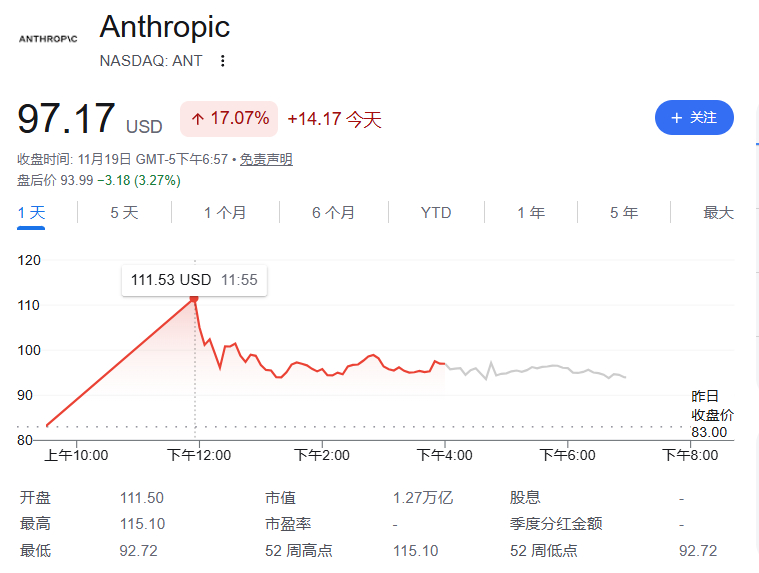
On November 19, Anthropic was priced at $83 for its IPO, soaring to $111.50 at the opening, and the entire market was in a frenzy. However, Anthropic's opening price was the peak; the stock price quickly fell back, closing at $97, with a growth narrowing to 17%.
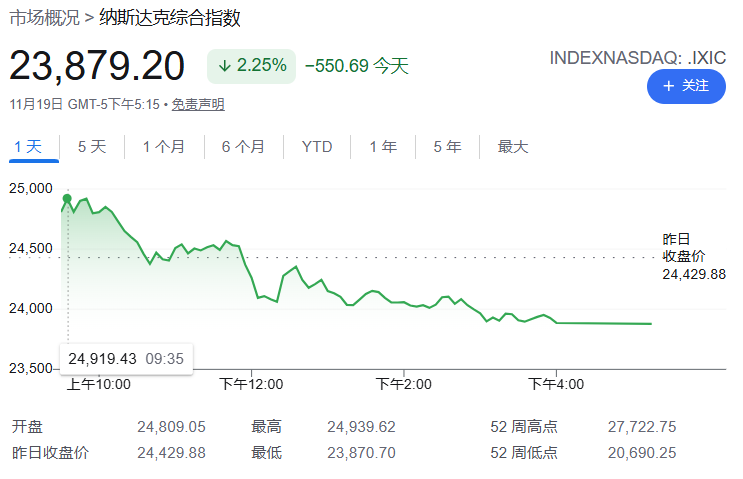
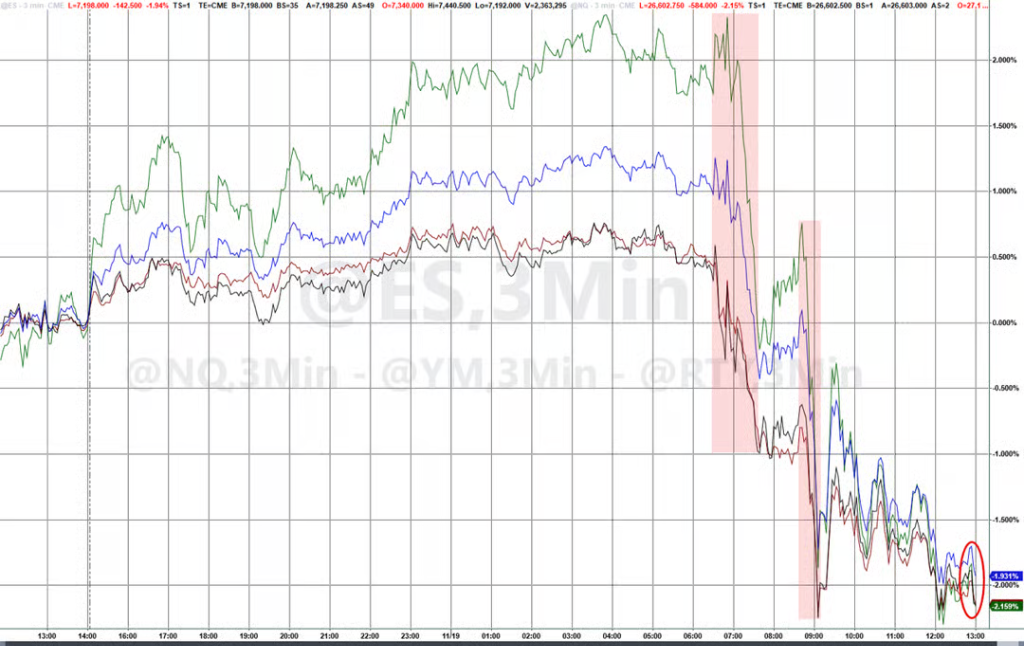
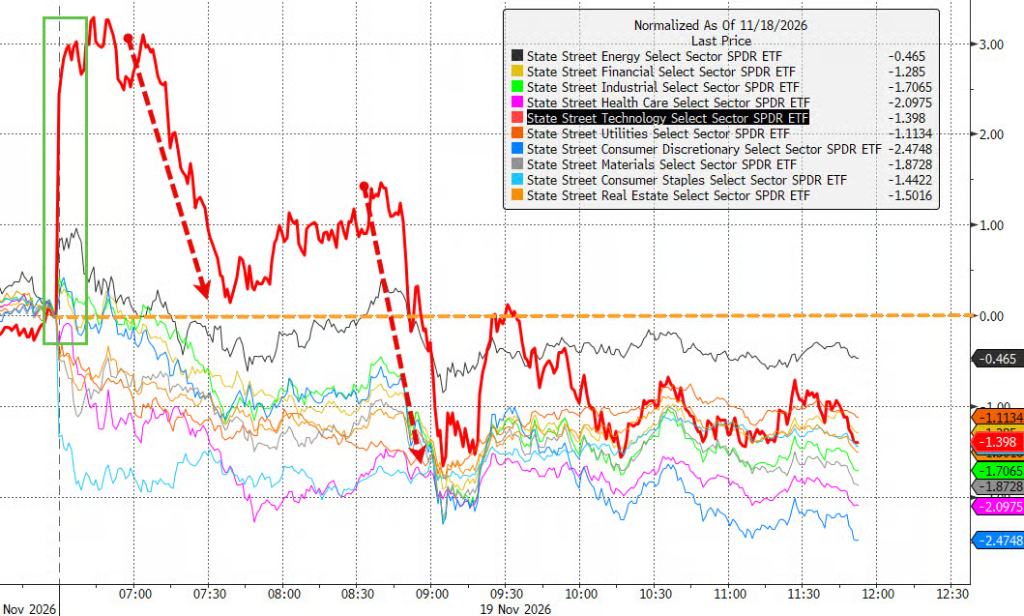
Meanwhile, the U.S. stock market exhibited a similar pattern of rising and falling—NASDAQ surged over 2% from the opening, only to drop 2.25% by the close, with a daily fluctuation of more than 4 percentage points. The S&P 500 saw its market value evaporate by approximately $1.3 trillion, closely matching the fundraising scale of Anthropic's IPO.
During U.S. trading, short-selling institution Hunterbrook released a report shorting AMD, pressuring the AI sector overall; the over one hundred billion dollar IPO financing drained market liquidity, coupled with market makers in an extreme negative gamma state and monthly options expiration pressure, becoming the core driver of market volatility. The storyline on Anthropic's first trading day was supposed to be a reinforcement of AI faith, but unexpectedly turned into a stress test.
Opening: Everything Looks Beautiful
On Thursday, November 19, before the U.S. stock market opened, optimism filled the air after a long time.
Anthropic listed at an issue price of $83, exceeding the upper limit of the previous roadshow range, translating to a valuation of approximately $1.1 trillion, setting a record for the highest fundraising scale in IPO history, boosting overnight U.S. stock futures across the board.
At 9:30 AM Eastern Time, the NASDAQ Composite Index immediately surged over 2%, with the S&P 500 rising in sync, and market sentiment was once high. At that time, the market widely interpreted this largest technology IPO ever as a powerful signal that AI trading remained healthy.
Jake Behan, Director of Capital Markets at Direxion, stated: "The market had been discussing whether AI trading had peaked, so seeing Nvidia exceed expectations and seeing traders willing to chase after Anthropic at a price above the issue price is a significant signal." "This does not end all valuation controversies, but it strongly indicates that the market is not ready to give up on this trade."
However, the good times did not last long.
Opening at the Peak
Shortly after the market opened, news reported by Bloomberg and other media quickly spread across Wall Street trading desks: "The Anthropic IPO reportedly allocated almost none of the shares to most institutional buyers."
This news made the market instantly alert. ZeroHedge analysis pointed out two interpretations behind this:
Either the underwriters are extremely confident in the demand, deliberately compressing institutional allocations to ensure a price explosion after the listing; or institutions are simply unwilling to take over at the $83 price and ultimately had to pass the shares to retail investors who are less sensitive to price.
The market seemed to lean towards the latter.
From Morning to Noon: AMD Plummets, Chip Sector Affected
As the market was teetering, another "bomb" exploded.
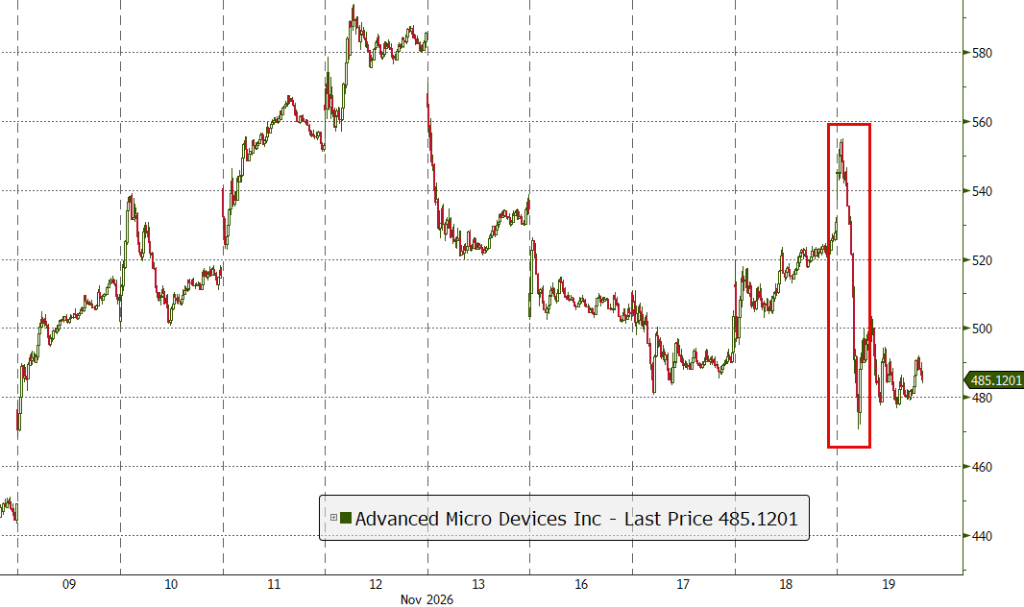
The short-selling institution Hunterbrook released a report revealing it had shorted AMD and accused the company of continuously providing chip firmware updates to companies blacklisted by the U.S., while having connections to some companies that previously sparked regulatory controversies with Nvidia.
AMD promptly responded: "These claims distort AMD's business practices and partnerships."
However, the statement did not stop the decline. AMD's daily drop exceeded 9%, dragging the entire chip and AI sectors down.
At Noon, Anthropic Faces Sell-Off
At noon Eastern Time, Anthropic officially opened at an opening price of $111.50, up more than 34% from the $83 issue price.
However, at the moment of opening, the stock price was immediately faced with selling pressure—the "profit-taking" logic was triggered. Meanwhile, the overall market also nearly reached its intraday low at that same moment.
According to The New York Times, this trend mirrored what happened when SpaceX went public in June, where there was also a sharp decline after an opening surge, and investors were mentally prepared for it.
Anthropic ultimately closed at $97 per share, with a growth narrowing to 17%.
Afternoon: Decline Accelerates, Full Retreat
In the afternoon, the decline further spread.
The NASDAQ dropped from an opening rise of over 2% to a closing drop of 2.25%, with a daily fluctuation exceeding 4 percentage points. The S&P 500 fell by 2%, with all 11 sectors showing red, evaporating about $1.3 trillion in market value—roughly equivalent to the valuation scale of approximately $1.3 trillion at the time of Anthropic's listing.
This sell-off is not just a problem for tech stocks. All constituents of the S&P 500 consumer discretionary sector fell in the afternoon, led by Williams-Sonoma—whose third-quarter results revealed sales fell short of analyst expectations. Strong consumer spending has been a vital pillar of U.S. economic resilience this year, making investors particularly sensitive to signals of a spending slowdown.
On that day, the VIX panic index for U.S. stocks rose to nearly 28, with VVIX (volatility of volatility) breaching 125, and the S&P 500 one-month implied correlation rising in sync—analysts noted that these indicators all point to a widespread de-risking environment rather than isolated sell-offs at the individual stock level.
This also marked the sixth consecutive trading day of decline for the S&P 500, setting a record for the longest consecutive drop since April 2024.
Hidden Drivers Include Negative Gamma and Liquidity Drain
This sharp decline has multiple hidden clues.
First, the technical structure is extremely fragile.
Nomura Securities strategist Charlie McElligott had previously warned that under the "quadruple risk" of Nvidia's earnings report, Anthropic's listing, and options expiration, market makers' "negative gamma" exposure had reached its highest level since 2019.
When market makers are in a negative gamma state, they are forced to hedge in that direction—selling when the market declines, further magnifying the drop. A large influx of 0DTE (zero days to expiration) options in the afternoon further crushed longer-term support.
Second, the IPO itself "drained" market liquidity.
This IPO raised a total of $81.3 billion (including $26.7 billion from vendor placement, totaling over $100 billion). Trading desk sources stated that market participants sold off gold, copper, cryptocurrencies, and AI proxies like Nvidia to raise funds for subscription. This claim aligns with market performance: gold fell below $3,800, copper prices dropped by about 5%, and cryptocurrencies retraced across the board.
Third, the impact on the consumer sector was more pronounced.
All non-essential consumer stocks in the S&P 500 declined in the afternoon. Strong consumer spending has always been a core pillar of U.S. economic resilience this year, and this signal has heightened investor concerns about slowing consumption.
Fourth, year-end profit-taking pressure.
Meanwhile, institutional investors have their calculations. The New York Times noted that despite recent market volatility, investors have enjoyed substantial returns this year. Around Thanksgiving, traders tend to lock in profits, as market liquidity tends to tighten toward the year-end, making it more challenging to transact at favorable prices.
Optimists Have Not Given Up
Goldman Sachs analyst Rich Privorotsky issued a warning that morning, stating, "Today feels significant." He pointed out that institutions' net positioning in tech stocks is around 18%, well below the index's 29% weighting, at a low allocation near the highest level in five years—this implies that as long as the market does not decline significantly, it could trigger a short-squeeze rally.
Direxion also stated that the market remains generally optimistic about the Anthropic IPO, with Nvidia's exceeding expectations and Anthropic's smooth listing jointly providing confidence that "AI trading is not yet over."
As for what comes next, the market is focusing on November 20's monthly options expiration date—where the concentrated expiration of negative gamma positions will provide the next crucial observation window.
免责声明:本文章仅代表作者个人观点,不代表本平台的立场和观点。本文章仅供信息分享,不构成对任何人的任何投资建议。用户与作者之间的任何争议,与本平台无关。如网页中刊载的文章或图片涉及侵权,请提供相关的权利证明和身份证明发送邮件到[email protected],本平台相关工作人员将会进行核查。