The core of "The Altruists" is the love story between SBF and Caroline Ellison.
Written by: Ben Weiss, Bloomberg
Translated by: Luffy, Foresight News
One of the most striking interludes in the entire FTX story is a romance. Sam Bankman-Fried (SBF), the crypto magnate, stole $8 billion from customer deposits, and he had a romantic relationship with his deputy in the company's early days, with a large amount of private messages being used as trial evidence. This relationship is not at the core of the case; there are other key witnesses testifying besides Caroline Ellison.
However, in the Netflix series "The Altruists," this emotional entanglement is placed at the center stage. The eight-episode series compresses a complex financial crime story into a love story, presenting a glossy retelling. This reinterpretation seems aimed at shifting the blame away from SBF, who was sentenced to 25 years in prison.
The series premieres on November 19 and is the latest in a string of Hollywood works "targeting the tech industry." In October, there was Aaron Sorkin's "The Social Reckoning," about a Facebook whistleblower; a four-hour documentary criticizing Elon Musk; and "You Can See Everything" by Nathan Fielder and Lance Oppenheim, which tells the story of Theranos founder Elizabeth Holmes, who was sentenced to 11 years for defrauding investors.
In these works, the trailer for "The Altruists," released by Netflix last month, packaged one of the largest frauds in financial history as a "Bonnie and Clyde"-style story. "The collapse of FTX ruined so many lives, including our own, and Netflix chooses to make it a love story," former FTX Chief Operating Officer Constance Waing wrote on X.
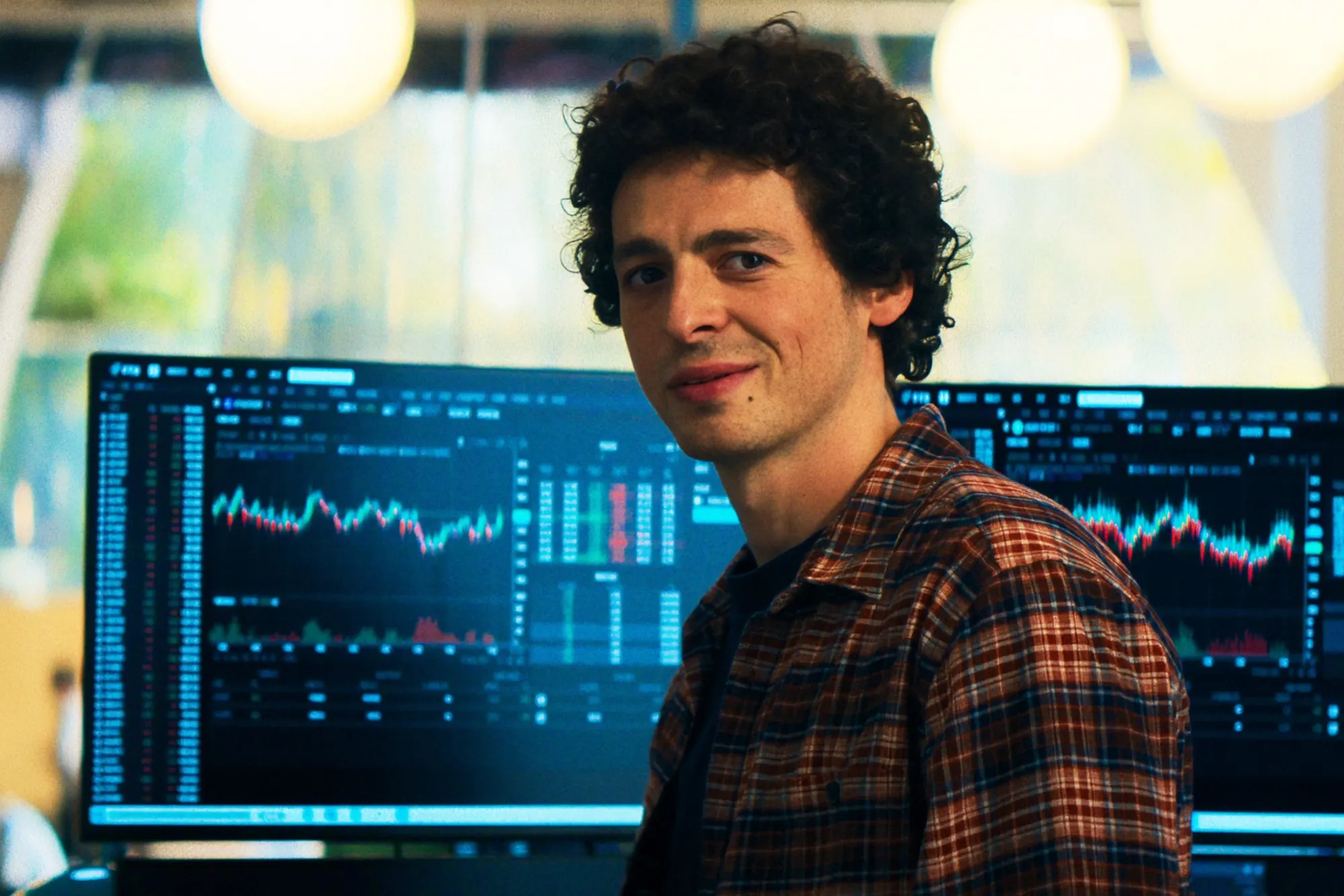
The series seems to aim at shifting blame from SBF
I am also skeptical about this. I have reported on cryptocurrency for several years, and during SBF's trial, I woke up early to grab a seat in court and write reports. After reviewing the evidence and listening to several hours of testimony, I felt that the implosion of FTX resembled more of a cautionary tale about "money coming too fast and too much" than a tragic romance.
"The Altruists" was created by Graham Moore, who won an Oscar for Best Adapted Screenplay in 2015 for "The Imitation Game" (the biopic about mathematician Alan Turing). Moore collaborated with screenwriters Kevin T. Dugan and Jen Wieczner — the latter two had written a series of thoroughly researched reports for The New Yorker after the collapse of FTX. Moore told me he also conducted a lot of research, closely studying trial records, text messages, and other documents. "In particular, I developed my own sources within and around FTX," he said, but declined to specify who they were.
The title of the series comes from SBF's own set of life principles: effective altruism, a charity belief that encourages followers to think quantitatively about "how to maximize their impact on the world." Many effective altruists work high-paying jobs and donate their income to charitable organizations.
The SBF in the series does just that, portrayed by Anthony Boyle. After graduating from MIT, this mathematical genius joined the well-known trading company Jane Street. There, he met his love interest, Ellison (played by Julia Garner), and they "fell in love at first sight over a math problem." SBF hosts a training session: she has to gamble on "whether she can solve a series of brain teasers," and the two nervously laugh at each other. Ellison pushes all her chips forward. "Going all-in every time is the mathematically optimal strategy," she says, a statement that foreshadows the story that follows.

The relationship between Ellison and SBF is the core of "The Altruists"
Ellison and SBF began a tumultuous relationship, and the series follows SBF's career trajectory. He left Jane Street to found the crypto hedge fund Alameda Research and brought Ellison on board, ultimately making her the co-CEO of the trading company. He then established FTX, creating a rapidly growing crypto exchange capable of competing with the largest companies in the market. In 2022, a round of customer withdrawals exposed an $8 billion hole in the balance sheet, and his empire suddenly collapsed. Under the threat of prosecution, Ellison flipped and cooperated with the U.S. government.
"The Altruists" tries to simplify the jargon-filled crypto world; in some respects, it succeeds. The core crime of the company is theft: the customers' money was not where it was supposed to be, and FTX did not have enough funds to allow customers to withdraw. It's that simple.
But some scenes reveal blind spots for the actors and writers. An FTX employee who went to jail for campaign finance fraud mispronounced the code for Ethereum (it should be a long vowel "e"). In another instance, Ellison claims the "mathematically optimal solution" in the prisoner’s dilemma is to not confess; in fact, in a one-off prisoner’s dilemma, the mathematically optimal solution is to confess, as the expected prison sentence is always lower than remaining silent.
Moore exercised creative liberty with the material. In a key scene, Ellison tells FTX employees that Alameda Research has been withdrawing customer funds from the exchange. But according to court records, she said this to Alameda's staff, not to the crypto exchange's staff. Other discrepancies include shaping FTX CTO Gary Wang as a foul-mouthed, bold programmer; court records show Wang as a quiet coder.
The show also portrays Binance co-founder and early FTX investor Changpeng Zhao as the prime antagonist (played by Terry Chen). In the series, Zhao pressures SBF to direct non-public information about upcoming trades to Alameda, and then sells his shares. This setup implies that SBF could engage in insider trading, an act deemed illegal in most jurisdictions. There is no evidence that Zhao ever pressured SBF to do this, but in reality, this Binance co-founder did sell his shares back to SBF.
The most forceful deviation from the public narrative in the series is the portrayal of Ellison as almost an equal partner with SBF, together withdrawing customer funds from FTX. "It's as if they were igniting each other in some kind of manic psychological high," former Alameda Research co-CEO Trabucco (played by Alex Lawther) says on his yacht — which he named "Soak My Deck." (Unfortunately, this detail is true: Trabucco later surrendered the yacht during FTX's bankruptcy proceedings.)
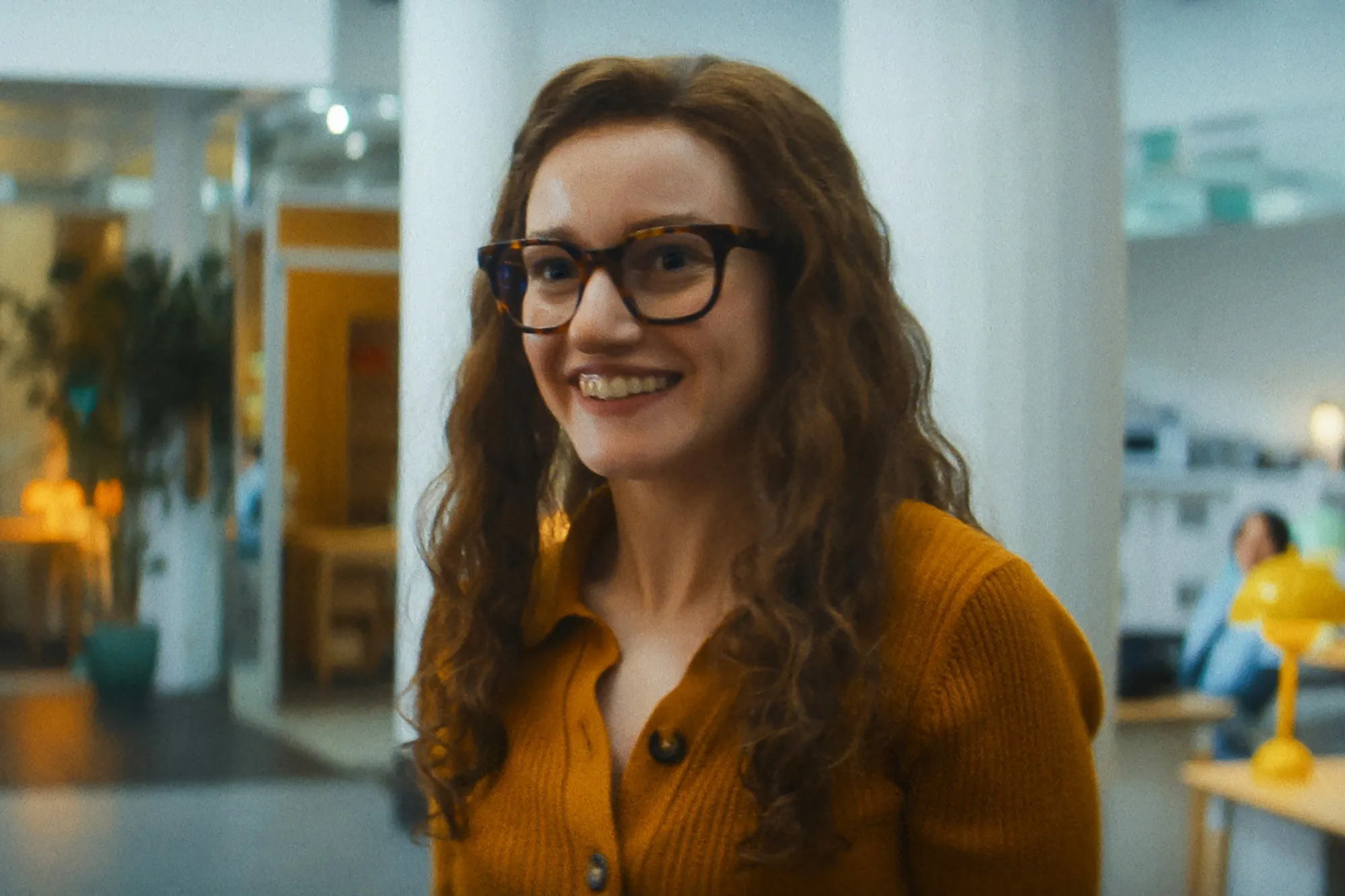
The series portrays Ellison as almost an equal partner with SBF
In a scene close to the end, a spreadsheet lists FTX's major shareholders, and Ellison is among them, plotting a coup against SBF. However, according to court records, in terms of shareholding, SBF, Gary Wang, and the head of the exchange's engineering far exceeded her. Former FTX executive Waing, in an interview with me, said that the conventional "final decision-maker" was SBF, not Ellison. The founder and CEO of the PR firm M Group said something similar — this firm closely collaborated with FTX and SBF for nearly two years, until the exchange collapsed: "He was everything."
Zhao has not seen the series, but his expectations are low. "It won’t be an accurate representation of what really happened," he told me, "I think Sam is a very smart person, just too radical and too eager for success."
However, it seems that the writers sympathize with SBF's narrative on "why FTX collapsed." According to the prosecution, this CEO conspired with Ellison and a small group of colleagues to misappropriate customer funds for various investments, political donations, sponsorships, and real estate, leading to the $8 billion shortfall at FTX. SBF's lawyers argue that the money was actually there, just locked in "illiquid" assets that could be sold eventually. Among the most significant of these was his investment in the AI company Anthropic. In the final episode of "The Altruists," SBF desperately and futilely attempts to sell this stake. Just before the series rolls credits, a subtitle informs viewers of how much his Anthropic investment is worth today — $100 billion. (Based on an analysis of FTX's bankruptcy filings and Anthropic's IPO price, the actual value is around $37 billion at most.)
The presiding judge ultimately rejected this argument. "It's like saying I broke into the Federal Reserve and stole a million, spent it all on lottery tickets, and happened to win the jackpot, so it’s fine," he said in court.
"The Altruists" is a fictional work. Moore said he set a rule for himself: any moment already recorded in documented literature would not be included in the series. He hopes the show offers a sense of intimacy, allowing viewers to glimpse SBF and Ellison's inner world in an unprecedented way. "What are those whispered conversations when Sam and Caroline rest their heads on pillows at night, lying there half in shadow, speaking softly to each other?" Moore imagined.
A few days before I started watching a pre-screening of the series, I went to the cinema to see "You Can See Everything." The film featured actress Amanda Seyfried, who previously portrayed Holmes in a Hulu series about Theranos. In the film, Holmes complains that Seyfried's performance is not authentic, and Seyfried is upset, saying, "This isn’t a lie, this is a fucking TV show."
No dramatized adaptation can achieve photographic fidelity, but "The Altruists" offers an alternative interpretation of a case. Although questions remain about the true motivations of the fraudsters and appeals to the Supreme Court are ongoing, this case has largely been settled. I'm not sure if "The Altruists" counts as a lie, but it is undeniably a TV show.
免责声明:本文章仅代表作者个人观点,不代表本平台的立场和观点。本文章仅供信息分享,不构成对任何人的任何投资建议。用户与作者之间的任何争议,与本平台无关。如网页中刊载的文章或图片涉及侵权,请提供相关的权利证明和身份证明发送邮件到[email protected],本平台相关工作人员将会进行核查。


