Which rule will change the landscape the most in the next three years?
Written by: BigTime
Core Insights
- A contract betting on a candidate's victory is priced at $0.62, which news often represents as a "62% win rate." Behind this number, there are several details: who can participate in the trading, how many contracts can be bought at the price of $0.62, and based on what final results the platform will settle.
- The U.S. elections have led more people to pay attention to the prediction market trends. Elections have cycles, while sports events occur one after another, giving traders reasons to return frequently. The more commissions generated from sports, the greater the impact on platform valuation from states that allow these businesses to operate.
- Kalshi first obtained a license in the United States, while Polymarket attracted global users through on-chain trading. Now, both rely on market makers to continuously quote prices and on clearinghouses to complete settlements. Brokers and media play their respective roles: the former allows users to place orders in existing accounts, and the latter helps more people see the market prices.
During the 2024 U.S. presidential election, Polymarket's presidential election market traded approximately $3.6 billion, while Kalshi accounted for around $1.3 billion. By 2026, sports events were the biggest drivers of trading growth. According to Pew, the combined trading volume for both platforms in May was around $26 billion, increasing to approximately $53 billion by July. Pew calculated the volume based on each contract's face value of $1, assuming the same funds were traded repeatedly, each counted in the trading volume. To understand how much commission the platform earned, we must look at how much each transaction actually charged.
1. Why does an election have a price?
In the 16th century, Romans would bet on who would be elected pope. By the 19th century, Americans were also looking at presidential election odds to determine which candidate was favored. In 1988, the University of Iowa launched an electronic prediction market, allowing participants to trade election contracts with small funds. With trading records, researchers could compare market predictions with polls. In some elections, market predictions were closer to the final results.
Later, sports fans could find those with opposing views on Betfair, betting on win/loss outcomes of the same game. For those wanting to trade election results, there were Intrade and PredictIt, while HedgeStreet attempted to create event contracts in a licensed exchange. Companies also employed this method, asking employees to predict when projects would be completed. In communities like Manifold and Metaculus, forecasters accumulate reputation through points or past records. There has long been debate about what events are suitable for betting. In 2003, the U.S. Defense Advanced Research Projects Agency (DARPA) canceled its policy analysis market due to controversy over sensitive events.
Today's election markets can be explained with a single contract. Suppose the contract stipulates that a candidate will be elected; each contract pays $1 if successful, and $0 if not. Buying at $0.62 and holding until settlement, if correct, the profit is $0.38 per contract, excluding fees. If incorrect, the entire $0.62 investment is lost. Journalists can follow the quotes to see how the election situation changes with the news. Traders buying the same contract may aim to offset losses from the election results or simply believe in the candidate's chances.
News often describes $0.62 as a "62% chance of winning." To interpret this number, one must look at the market at that moment. How much traders are willing to pay to hedge risks and how large orders from big players are will influence the quotes. Particularly when sell orders are scarce, even a small buy order can push prices up, leading to an overestimation of the chances for less popular candidates.
To see if the market's "60% chance" assessment is accurate, find a set of contracts all priced around $0.60 and check if about 60% actually cash out at the end. Comparisons also need to return to the time of pricing, checking how many orders were pending and whether key news had been published. For contracts with settled disputes, verify based on what rules the platform will ultimately pay out.
2. From seeing quotes to actually receiving money
For the same election, contracts can ask whether a particular candidate will be elected, allow traders to select a winner among several candidates, or determine what range the vote percentage will fall into. The more detailed the results are divided, the less funding each market can usually distribute. Sports contracts can also bundle several games together, whereby the probability of several outcomes occurring at once must be estimated, along with how much they are correlated with each other. If traders use leverage, even if they guess correctly in the end, they may be liquidated earlier due to insufficient margin.
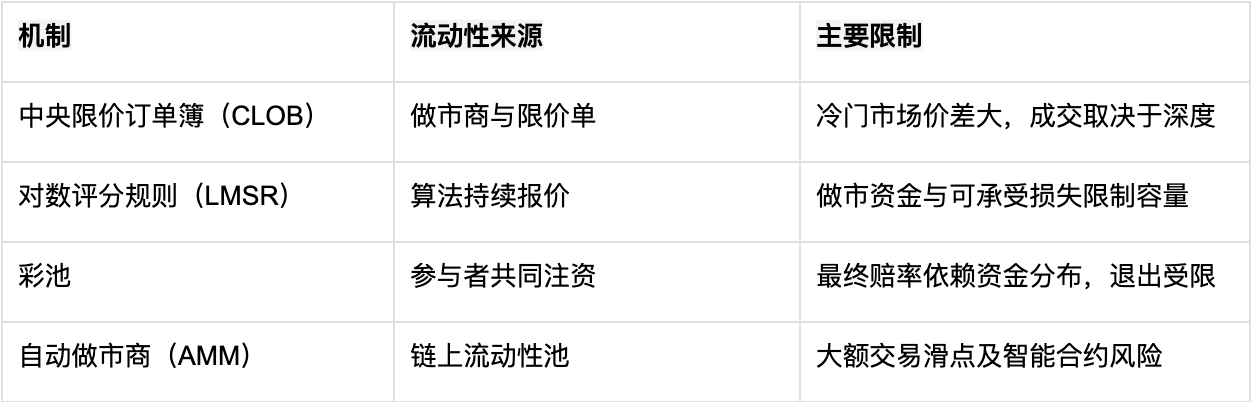
Table 1 | Major Price Formation Mechanisms Source: BigTime "In-depth Study of Prediction Markets," platform rules, and related academic research
For institutions planning to buy thousands of contracts, the first step is to check how many are listed at the lowest asking price. Once this tier is bought, they must look at what the next tier asks. By combining prices and quantities across all tiers, the average purchase price for the entire order can be calculated. Another method is to use algorithmic pricing. When applying the Log Market Scoring Rule (LMSR), even if there are currently no sell orders available, the algorithm can still provide a buying price. In the standard model, if there are n possible outcomes and the liquidity parameter is b, the market maker's maximum loss is b × ln(n). Increasing b will lessen the impact of a large single order on the price, but the market maker must also prepare more funds to bear the risk.
When placing an order, the transaction fee must also be considered. According to the general fee rate used by Kalshi, if buying 100 contracts at $0.50 each, totalling $100, the buyer actually pays $50 and an additional fee of $1.75. Polymarket also charges fees on certain categories and gives back a portion to the order placers. Traditional bookmakers keep their profit margins within the odds, while exchanges can charge transaction fees and clearing fees, and also have data and interest income. In comparing the two businesses, the amounts bet, the face value of the contracts, and the actual fees charged by the platform can each have their own metrics.
After the transaction, there still needs to be a settlement process. How much those holding contracts until expiration can cash out depends on how the platform determines the results. Kalshi specifies in advance which data will be used and what time it will refer to. Polymarket's international platform matches off-chain and settles on-chain, confirming results through UMA oracles. The person submitting the results must post a bond, while others may raise objections within a specified period.
For example, a contract asking whether "this policy will come into effect before the deadline" could have the government announce the policy before the deadline but set the implementation date after it. Even if the buyer accurately predicts that news, based on the four words "officially in effect" in the contract, the party buying "yes" still receives no payout.
3. $40 billion and $21 billion valuations, what were acquired
In 2020, the U.S. Commodity Futures Trading Commission (CFTC) approved Kalshi as a designated contract market. The platform launched the following year, using U.S. dollar accounts and requiring user identity verification to facilitate broker access. Kalshi initially focused on political, economic, and weather contracts, later adding sports events, and gradually expanding to perpetual contracts, stock indices, metals, and computing power prices. According to Kalshi, as of September 2026, it had partnered with around 500 institutions. Excluding market makers, institutional clients contributed about a quarter of the trading volume.
Polymarket also started in 2020, with users collateralizing with stablecoins and conducting trading on-chain. In 2022, Polymarket reached a settlement with the CFTC for offering unregistered event contracts, paying a $1.4 million fine. Only in 2025 did it begin licensed trading and clearing operations in the U.S. through an acquisition of $112 million, leveraging QCEX. The U.S. platform and the international platform each utilize a separate order book. There are also regulations on who can open accounts and what contracts they can trade after account creation.
In June 2025, Kalshi's financing valuation was $2 billion. By October 2026, the valuation had reached $40 billion, an increase to 20 times its original amount in about 16 months. The Intercontinental Exchange (ICE) announced an investment of up to $2 billion in Polymarket, acquiring the rights to distribute its market data to institutional clients. Taking a single election as an example, when traders buy and sell contracts, the platform can collect transaction fees. The real-time price of the same contract can also be shown on institutional clients' terminals via ICE.
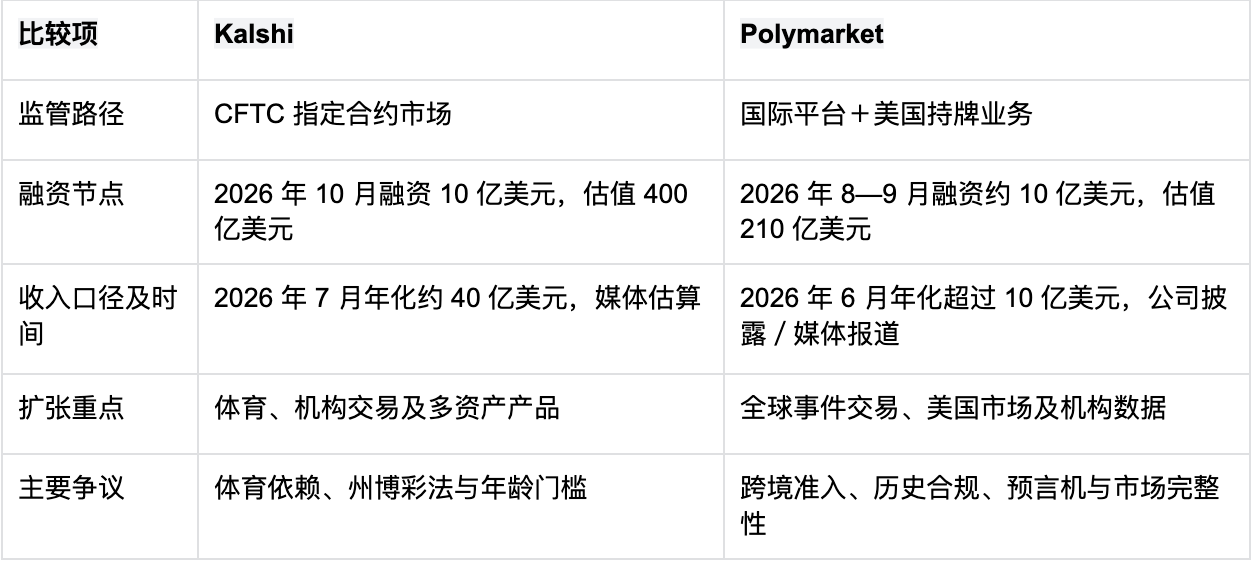
Table 2 | Comparison of Major Platforms Source: BigTime Research, financing and revenue according to Reuters, Bloomberg, CNBC. Annualized revenue reflects operational rates at specific points, not full year audited revenue; timings for different categories vary
Rough estimates from the figures indicate that Kalshi's financing valuation is about 10 times its annualized revenue, while Polymarket's is under 21 times. The revenue data for both came from different months, and annualization assumes the revenue level at that time could sustain for an entire year. Sports events have off-seasons, and fee rates may also adjust, resulting in different multiples if computed for different months. How much the platform ultimately retains will also depend on rebate and distribution costs.
Media estimates suggest Kalshi's fee income in 2025 was about $263.5 million, with 89% derived from sports contracts. If regulations tighten and restrict the platform's provision of sports contracts, it would directly impact Kalshi's largest source of fee income.
4. Who should issue sports contracts?
In 2023, Kalshi sought to allow users to trade a contract on "which party will control Congress," but the CFTC rejected this request. Kalshi subsequently sued and won in federal district court. In 2025, the CFTC withdrew its appeal. When the platform began creating sports contracts, another question arose among states: if a state requires a license for operating sports betting, can Kalshi, with a federal derivative brand license, allow local users to trade sports results?
The states where the platform can operate this business have been influenced by court rulings. The Third Circuit Court of Appeals supported Kalshi in related cases, while the Ninth and Sixth Circuits supported state injunctions. As of November 12, 2026, the U.S. Supreme Court has registered case number 26-299, with no decision yet on whether to accept it. Utah has filed criminal charges, and New York has also initiated lawsuits. The CFTC has made claims to regulate such contracts federally by proposing new rules and suing state governments.
Age restrictions best illustrate why various states intervene. Users over 18 can trade sports contracts on federally regulated platforms, but most states require individuals to be 21 to participate in sports betting. Issues related to who collects taxes, what advertising rules platforms must follow, and who bears the costs of gambling addiction interventions all impact the operating costs of the platform in those locales. Cross-border operations must also consider local laws. Brazil and France have already taken restrictive measures; even if platforms secure licenses through U.S. subsidiaries, they must still comply with local requirements to enter these two markets.
Traders are also concerned about whether someone on the other side of the market knows the results in advance. The CFTC and the U.S. Department of Justice accused a serviceman of using non-public information about the capture of Maduro to trade, profiting over $400,000. In another incident, Kalshi paused trading privileges for three candidates who had traded contracts related to their own districts. Trading volumes themselves are also under scrutiny: some researchers estimate that part of Polymarket's historical volume may have resulted from wash trading. Regarding the platform's profit announcements and political connections, related doubts have emerged from media reports.
Galaxy analyzed the on-chain records of approximately 2.9 million accounts and found that 69.2% of retail accounts in the sample reported losses. A person can control multiple addresses, and the screening criteria used in the research may also affect which accounts are included. Therefore, this ratio describes how many accounts in the sample lost money. To estimate the probability of a new user losing money upon entering, this statistic alone is insufficient.
5. Beyond exchanges, who can share the income?
DraftKings acquired the licensed exchange Railbird to enter the federally regulated event contract market in the U.S. FanDuel partnered with CME, bringing its own sports brand and users, with CME providing trading and clearing services. The two later adjusted their division of labor, with sports contracts handed to Nadex for execution, while non-sports contracts remained under CME. The same system can match multiple types of contracts, but for exchanges, the regulatory and reputational risks associated with handling sports trading differ from those of other categories.
Robinhood users can directly trade event contracts within their existing securities accounts, earning Robinhood a commission each time a contract is executed. In the first quarter of 2026, this business generated $147 million in revenue for Robinhood. Coinbase and Gemini target existing cryptocurrency users. Media can reach audiences, while sports leagues control event data and licensing. Exchanges must leverage these channels to attract users, often needing to share profits with partners and pay licensing fees for using event data.
Betfair and Smarkets already have well-established sports markets, while platforms like Novig, ProphetX, and Underdog are also competing for sports traders. From October 12 to November 10, 2026, Kalshi accounted for about 76% of the nominal trading volume in the major venues tracked by DeFi Rate, while Polymarket US accounted for about 11%. Rebates can attract market makers to place orders. When subsidies are removed, analyzing how many orders remain at different price points can make it easier to determine where traders want to stay long-term.
Market makers see price differences between identical contracts on two platforms and must first examine the terms side by side. Even for the same game, if the data sources, deadlines, or post-cancellation handling differ on either side, one could pay out while the other does not. Even if the terms are identical, it is still necessary to deduct transaction fees, costs for reallocating funds across platforms, and the expense of capital in use during the waiting period for settlement.
6. In the next three years, which rule will change the landscape the most?
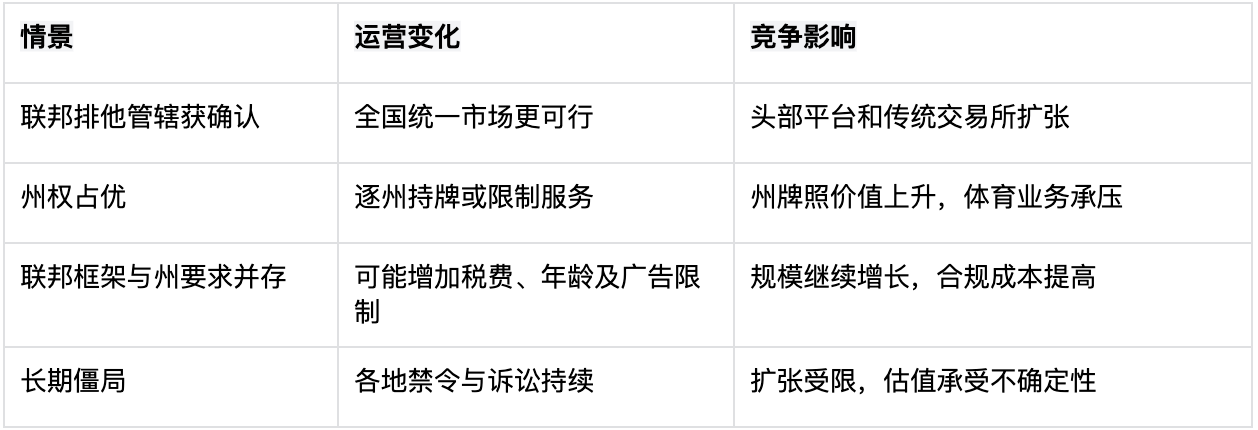
Table 3 | Four Scenarios for 2027-2030 Source: BigTime Research Analysis; Conditional scenarios, with no assigned probability of occurrence
BigTime is more inclined towards a federal and state division of regulatory responsibilities: the federal government oversees event contract trading, while states retain some authority over taxation and consumer protection for sports contracts. Whether this arrangement can materialize will depend on whether the U.S. Supreme Court accepts related cases. Even if accepted, the rulings may only pertain to sports contracts. Another variable is which rules the CFTC ultimately adopts.
If platforms can consolidate buy and sell orders from each state onto a single order book, there will likely be more contracts that can be executed at the same price level, making large orders easier to complete. If traditional exchanges enter this market, competition on fees between platforms will intensify.
In the next 12 to 24 months, institutions can monitor three key issues.
- Which states still restrict sports contracts? In states that allow trading, what are the requirements for age verification and advertising? Besides state regulations, it is also important to note the licensing conditions set by sports leagues for platforms regarding event data.
- How much does the platform actually charge per transaction, how many users will return for trading, and how much revenue does sports contracts contribute? If a platform submits listing documents, compare the disclosed metrics to see which figures can be aligned.
- After market maker subsidies decrease, how large of buy and sell orders can still be placed around expected prices? This relates to whether institutions can exit positions according to their budget. How long until capital can be reused depends on when disputed contracts will settle and if funds can be promptly recalled during drastic market fluctuations.
免责声明:本文章仅代表作者个人观点,不代表本平台的立场和观点。本文章仅供信息分享,不构成对任何人的任何投资建议。用户与作者之间的任何争议,与本平台无关。如网页中刊载的文章或图片涉及侵权,请提供相关的权利证明和身份证明发送邮件到[email protected],本平台相关工作人员将会进行核查。


