Author: David Yaffe-Bellany, The New York Times
Translator: Deep Tide TechFlow
Deep Tide Guide: In the history of technology and business, there are few wealth turns as dramatic and ironic as this. At the end of 2021, at the peak of his career, SBF invested $500 million in the early-stage AI startup Anthropic, acquiring a 13.5% stake. Now, as Anthropic prepares for an IPO valued at $1.4 trillion, the value of that stake has ballooned to $35 billion, comparable to the entire FTX business empire at its zenith.
However, fate has not provided the imprisoned SBF with any means of vindication. In 2024, the bankruptcy trustee-led liquidation team transferred all equity to institutions such as Jane Street for a mere $1.34 billion. Although this disposal allowed victims to receive full compensation on paper, the hundreds of billions of dollars in lost excessive premiums became an immense resentment and bitterness for SBF behind bars.
But regardless of how astonishing the investment return might be, the foresight in business cannot erase the legal original sin of misappropriating client funds. As the presiding judge pointed out, taking ill-gotten money to gamble in a casino for profit can never be an excuse to absolve oneself from guilt. The New York Times, through exclusive prison calls and various game replays, has restored this century's financial tragicomedy intertwined with greed, foresight, and the ironclad laws of justice.
The $35 Billion Regret Behind Bars
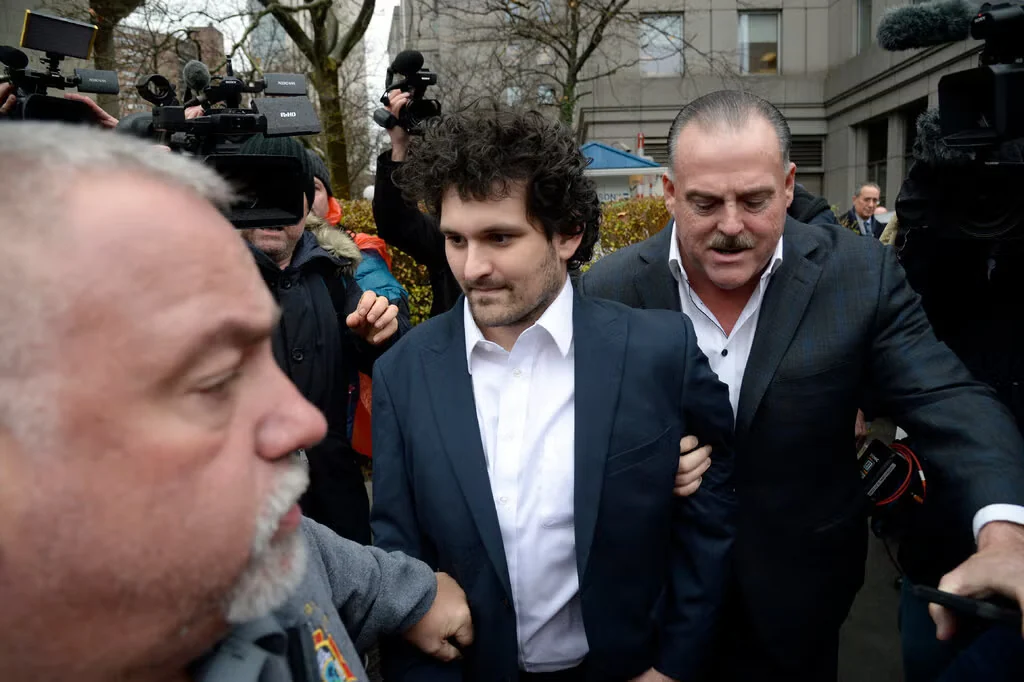
Sam Bankman-Fried (SBF), who was convicted of cryptocurrency fraud, is currently incarcerated in a 30-person cell at the federal prison in Lompoc, California.
The barbed wire and high walls here seem like they are a million miles away from his past life as a billionaire tech tycoon, living in a penthouse in the Bahamas and wielding immense influence.
In a recent overseas call, the 34-year-old SBF expressed that he tries to restrain himself most of the time from thinking about the "futures that could have been."
However, one thing is nearly impossible for him to let go of.
At the end of 2021, during the peak of FTX cryptocurrency exchange, SBF spent $500 million to buy a 13.5% stake in the little-known AI startup, Anthropic.
This week, Anthropic is preparing for its IPO, with an expected valuation of an astounding $1.4 trillion, and it is anticipated to become one of the largest tech company listings in Wall Street history.
Given this astronomical valuation, even after several years of reasonable dilution through multiple rounds of financing, the value of SBF's stake would now be as high as $35 billion, nearly equivalent to the entire company valuation of FTX at its historical peak.
But this life-changing stake no longer belongs to him.
The Intersection of Effective Altruism: The Initial $500 Million Bet
Before the crash of FTX, SBF's personal net worth was estimated to be as high as $24 billion, and he had unparalleled influence in the business and political spheres.
The platform he founded is one of the largest cryptocurrency exchanges in the world, serving the spot trading and asset custody needs of millions of global customers.
At that time, SBF was a core champion and financier of the "Effective Altruism" movement, a philosophical movement aimed at addressing potential threats to human existence that may arise in the coming decades or even centuries.
Like many effective altruists, long before AI sparked nationwide excitement in the U.S. political and financial sectors, SBF had maintained a high alertness to the potential dangers of unchecked AI.
This awareness led to a profound connection between him and Anthropic's CEO, Dario Amodei, as both had previously been active in the same effective altruism social circle.
At the end of 2020, Amodei left competitor OpenAI due to differences over how to make AI technology safer, and then established Anthropic.
SBF recalled that shortly after, during his time at FTX's Hong Kong headquarters, he got in touch with Amodei. “There was only one degree of separation between us, and we had many mutual friends.” SBF described Amodei as "extremely intelligent, focused, and well-informed."
In April 2022, Anthropic officially announced it had received strategic investment from SBF and two of his FTX executives. At the time, this $500 million transaction did not attract widespread attention in tech media.
“What we cared about was that AI could develop responsibly, benefiting society rather than destroying humanity.” SBF stated in a prison call, “At that time, it seemed that Anthropic was more committed to fulfilling this promise than any other major tech giant.”
The Watershed Moment: The Empire's Collapse and the Explosion of ChatGPT
However, the irony of the business world often exceeds anyone's imagination.
Just a few months after completing that investment, during the fall of 2022, FTX was hit by a liquidity crisis, with a funding black hole of up to $8 billion in customer accounts made public, leading to the empire's swift collapse.
Only three weeks later, OpenAI globally launched the ChatGPT chatbot, igniting a capital frenzy for generative AI that swept the world overnight.
In the year that followed, SBF was quickly arrested, tried, and convicted on seven counts of fraud and conspiracy, while on the other side, Anthropic made waves with its star model Claude, raising billions in financing from tech giants like Amazon.
As Anthropic rose to become Silicon Valley's hottest super unicorn, the fate of that stake left behind by SBF became the focal point of contention in the Delaware bankruptcy court.
Undervalued at $1.4 Billion: The Liquidation Team's Difficult Choice
After FTX declared bankruptcy, SBF transferred control of the company to the renowned liquidation expert John J. Ray III, who had overseen the restructuring of Enron.
Ray III collaborated with the law firm Sullivan & Cromwell, aiming to raise all available funds to repay debts owed to affected FTX customers.
What the liquidation team faced was an extremely chaotic puzzle of assets: numerous crypto tokens with nearly zero liquidity, luxurious properties in the Bahamas, and equity investments in external startups.
The liquidation team began urgently seeking buyers globally. In any bankruptcy liquidation process, it is a statutory working principle to liquidate as quickly as possible to maximize current creditor recovery rates.
However, some key creditors strongly demanded that the liquidation team hold onto Anthropic's equity for a longer period, waiting for a greater value explosion.
“I was extremely hopeful that they would retain this equity.” Sunil Kavuri, a creditor representative at SBF's sentencing hearing, said, “I foresaw it becoming the most valuable trump card in the bankruptcy asset pool.”
Even more embarrassingly, the liquidator, Ray III, clearly underestimated the astonishing potential of this equity at the time. In an interview with renowned biographer Michael Lewis, he disparagingly referred to the AI unicorn as “that thing called Anthropic.”
“It’s just something a bunch of people with some thoughts came up with,” Ray III asserted at the time, “it’s nothing.”
Ultimately, according to documents released by the Delaware court, the FTX bankruptcy asset liquidation team sold all shares in Anthropic to dozens of institutional investors for about $30 per share in 2024, recouping $1.34 billion.
The fortunate buyers included investment entities under the UAE sovereign wealth fund Mubadala, the non-profit Ford Foundation, and top quantitative trading market maker Jane Street, which had previously employed SBF.
Victims Fully Compensated, but Resentment Remains
The bankruptcy administrator has broad statutory discretion over the timing and method of asset disposal. Emory University School of Law professor Lindsey Simon noted that under the severe circumstances at the time, the liquidation team's choices were completely legally and procedurally sound.
“At that point in time, there was no specific news about Anthropic's IPO.” Professor Simon analyzed, “Today we all know it skyrocketed into a trillion-dollar giant, but what if it had gone bankrupt and collapsed at that time?”
In May 2024, the liquidation team announced an unprecedented compensation plan in the history of cryptocurrency bankruptcies: FTX creditors are expected to receive up to $1.18 in compensation for every $1 lost, achieving what appears to be full reimbursement on paper.
However, this seemingly satisfactory compensation plan has not entirely quelled the strong dissatisfaction of victims.
The reason lies in the compensation amounts provided by the liquidation team, which were strictly anchored to the bottom cryptocurrency prices at the moment of FTX’s collapse at the end of 2022.
If a customer held one Bitcoin in their FTX account on the bankruptcy day, the compensation they received was simply equivalent to the then value of less than $17,000, completely missing the historic bull market that followed, where Bitcoin surpassed tens of thousands of dollars.
“That was our real money; we never authorized him to take our money to gamble and bet arbitrarily.” Creditor Kavuri expressed angrily, “It’s really disgusting.”
“Gambler with Stolen Money”: Irreversibility under the Ironclad Law
Now, SBF, in federal prison, can only connect with the outside world through extremely limited channels. He can make calls from a public phone for a maximum of 15 minutes per day, after which the line automatically disconnects.
In several discussions this fall, he repeatedly pointed fingers at Ray III and the bankruptcy law firm.
“I believe it’s hard to come up with a worse asset management approach than theirs,” SBF sarcastically stated, “at least I can’t think of a second one.”
However, the iron wall of law and justice has never been shaken by the astonishing evolution of investment returns.
In the final appeal submitted to the U.S. Supreme Court in September this year, SBF still insisted that the presiding judge had deprived him of his right to defend himself and failed to allow him to prove that FTX itself had the potential and capability to repaid client assets in full.
However, Judge Lewis A. Kaplan of the U.S. District Court for the Southern District of New York had already provided a conclusion in his sentencing ruling. The judge made a thought-provoking classical analogy:
What SBF did is essentially no different from a “thief who ran to a Las Vegas casino with stolen money and happened to win big by betting.”
The gamble’s success in business can never offset the fraudulent essence of illegally misappropriating billions of dollars of client deposits. Ultimately, the judge sentenced SBF to 25 years in prison.
When asked if he ever envisioned another parallel world where FTX did not collapse and where Anthropic's billions in stock made him the richest person in the world again?
“A bit,” SBF began to reply, “I try not to spend too much time thinking about these things…”
Before he could finish, the 15-minute call countdown in Lompoc prison ended, leaving only the cold and urgent beeping on the line.
免责声明:本文章仅代表作者个人观点,不代表本平台的立场和观点。本文章仅供信息分享,不构成对任何人的任何投资建议。用户与作者之间的任何争议,与本平台无关。如网页中刊载的文章或图片涉及侵权,请提供相关的权利证明和身份证明发送邮件到[email protected],本平台相关工作人员将会进行核查。


