

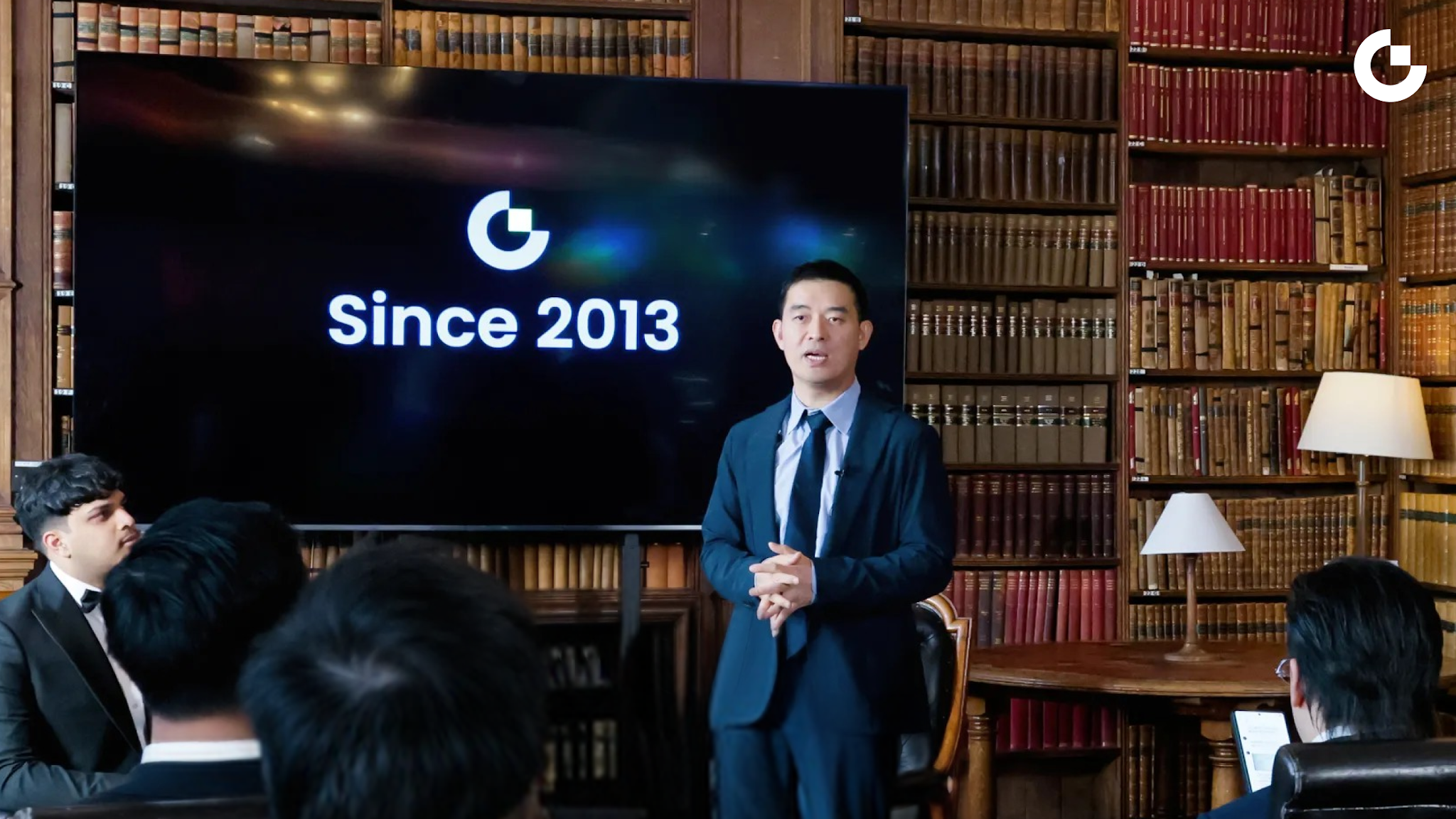
On November 12, 2026, Dr. Han, founder and CEO of Gate, was invited to the Oxford Union to deliver a keynote speech titled "Start Alone," engaging with the audience. From founding Gate alone in 2013 to leading the company to growth as a digital asset platform with a global business layout, Dr. Han shared his reflections on innovation, competition, team management, and entrepreneurial opportunities in the AI era, integrating 13 years of entrepreneurial practice.
During the speech and the subsequent Q&A session, he also conducted an in-depth discussion on topics such as the industry value of cryptocurrency trading platforms, stablecoins and central bank digital currencies, AI-driven cybersecurity challenges, real-world assets (RWA) on-chain, and the future of centralized and decentralized finance, further presenting his multi-dimensional observations on the development trends of the digital asset industry.
Starting Alone: From One Person's Entrepreneurial Journey to Building a Global Team
The establishment of Gate originated from Dr. Han's personal experience of losing money while trading on online forums in his early years. Realizing the inadequacies in trust and security in the digital asset trading environment at that time, he decided to personally create a more trustworthy digital asset trading platform.
In 2013, Gate launched without external venture capital support, initially driven by Dr. Han alone. Over the next 13 years, Gate underwent multiple rounds of industry cycles, market fluctuations, and business challenges, gradually growing through continuous innovation and adjustments, establishing a business and team covering the global market.
This process echoed the idea he articulated in his speech: entrepreneurship can start with one person, but for a business to achieve long-term development, it needs to continuously expand its capability boundaries.
Innovative Thinking in the AI Era: Accelerate Learning, But Also Insist on Deep Thinking
In his speech, Dr. Han regarded innovation capability and execution efficiency as two important aspects for businesses to maintain competitiveness. He mentioned that in an increasingly competitive market environment, businesses need to continuously propose new ideas while also accelerating the speed of product development, launch, and iteration. To achieve this, it is essential first to enhance learning efficiency.
In the past, entrepreneurs typically needed to use search engines to find information, read different articles and research reports, and gradually understand new technologies and industry concepts. For the rapidly changing cryptocurrency industry, where a plethora of new things continually emerges, relying solely on traditional information retrieval and reading methods often fails to meet the needs for rapid learning. AI offers new avenues for this. By directly asking AI questions, entrepreneurs can more conveniently understand unfamiliar concepts, organize complex knowledge, and obtain relevant information, thereby shortening the time required for learning.
However, Dr. Han particularly emphasized that while AI can accelerate information acquisition and knowledge learning, it cannot replace deep thinking. Innovation cannot simply follow competitors, nor can it completely copy others' ideas. Information can be accessed through the internet and AI, but truly valuable innovations still need to be based on independent thinking, identifying directions distinct from existing market solutions.
Thus, entrepreneurs must also allocate time for independent thinking to explore what can be done next, what improvements exist for current products, and how to form solutions different from competitors while rapidly absorbing new knowledge. Once a clear direction is found, businesses also need to possess the capability to implement quickly. Dr. Han summarized this process as a combination of continuous effort, deep thinking, and efficient execution, emphasizing that companies need to drive their business in a faster, steadier, and smarter way.
From Personal Entrepreneurship to Team Collaboration: Establishing Efficient Remote Organizations
As businesses scale, innovative ideas ultimately need to rely on organizations and teams for implementation. Dr. Han illustrated how Gate maintains operational efficiency in a globalized and remote collaborative environment using its team management as an example.
Currently, Gate's team members collaborate remotely online. For a global team of this scale, ensuring efficient collaboration among employees spread across different locations is a key issue that needs to be addressed in business management. Especially for product development, the team not only needs to have the capability to rapidly develop and launch products but also must ensure product quality and continuously optimize.
Dr. Han stated that businesses need to further enhance organizational efficiency, allowing research and development, product, and other business members to effectively cooperate to complete product delivery with greater speed and higher quality. Only by establishing an efficient organizational collaboration mechanism can innovative ideas truly translate into market competitiveness. Entrepreneurship can start from one person, but for a business to achieve long-term development, it needs to gather more strength. After taking the first step, one also needs to find like-minded partners, forming a team with aligned goals that can drive the company's sustained growth together.

After Traditional Finance Enters the Cryptocurrency Market, Professional Trading Platforms Still Hold Unique Value
During the on-site Q&A session, the host mentioned that financial institutions like PayPal, Revolut, and traditional banks have begun to offer cryptocurrency purchase services and inquired about the long-term value of professional cryptocurrency trading platforms as traditional financial institutions gradually enter the market.
In response, Dr. Han pointed out that traditional financial platforms provide users with more convenient access to cryptocurrency assets, but professional cryptocurrency trading platforms still have significant advantages in terms of trading costs. For instance, he mentioned that some traditional financial platforms' cryptocurrency trading fees could reach 2%, while Gate's trading fees are about 0.2%.
For professional traders with a high transaction frequency, differences in fees directly affect overall trading costs, thus maintaining the significant appeal of professional cryptocurrency trading platforms. For long-term holders and users with less frequent trading, traditional financial platforms could also be a viable option.
This perspective reflects that the cryptocurrency market is forming a more diverse service landscape. After further integration between traditional financial institutions and the cryptocurrency industry, different types of platforms can provide differentiated services according to user needs, with trading costs, product depth, and professional trading capabilities remaining important competitive advantages for native cryptocurrency platforms.
Stablecoins and Digital Pounds: The Competition of Digital Currencies Will Move Toward the Global Market
When discussing the digital pound that the Bank of England is exploring and its relationship with stablecoins, Dr. Han focused on the global nature of stablecoins. He mentioned that the market size of US dollar stablecoins has already exceeded 300 billion dollars, accounting for about 1% to 2% of the US M2 money supply. The use cases for stablecoins have also gradually expanded from digital asset trading to daily payments, reflecting their potential as digital payment tools.
In his view, the competition that the digital pound will face in the future is not just within the UK's local currency system but also includes US dollar stablecoins that are already widely circulating in the global internet environment. Unlike traditional fiat currencies, which mainly rely on local financial systems, stablecoins can achieve cross-regional circulation through the internet, and their application is not limited to a single country or region.
Therefore, the development of the digital pound needs to consider how to establish competitiveness in the global digital currency market, especially given the strong market acceptance of US dollar stablecoins. This also reflects that competition between digital currencies is extending from pure technological innovation to multiple aspects such as payment scenarios, global circulation capabilities, and market adoption levels.
AI-Driven Cyber Attacks Escalate, Digital Asset Security Requires Ongoing Resistance and Proactive Defense
The rapid development of AI technology has also made cybersecurity an important topic of discussion. Drawing from his experience of encountering a hacker attack years ago, Dr. Han observed that the complexity of current cyber attacks has significantly increased. Attackers are leveraging AI to quickly identify platform vulnerabilities and coordinate attacks through multiple AI agents, making the attack process more efficient and intensive, thus increasing the difficulty of platform defense.
In light of this change, digital asset platforms need to establish a more comprehensive security protection system. Security management cannot only focus on the trading system itself but needs to cover the internal office environment, VPN networks, and other infrastructure. Every link could become a potential security risk point, requiring professional teams for monitoring, inspection, and maintenance.
At the same time, AI can also become an important tool for defense. Dr. Han introduced that Gate has established a red team and blue team collaborative security testing mechanism and used AI to simulate hacker attacks, conducting proactive security tests on the platform to identify potential risks and enhance defense capabilities. This indicates that AI does not inherently give either attackers or defenders an absolute advantage. The key lies in whether businesses can timely grasp technological changes and apply them to security testing, risk identification, and system protection in practice.
RWA and All-Weather Trading: Blockchain is Expanding the Circulation of Traditional Assets
In discussing real-world assets (RWA) and all-weather markets, Dr. Han expressed a positive outlook on the long-term prospects of asset tokenization. Traditional stock markets are usually limited by trading hours, making it impossible for investors to trade in the usual ways during weekends or off-trading hours. However, as stocks, gold, and other real-world assets gradually achieve on-chain trading through blockchain infrastructure, investors are beginning to have more trading time and avenues for asset circulation.
Dr. Han believes that this shift can provide more choices for investors with immediate liquidity needs. For example, when investors need to sell some assets during the weekend to meet other funding demands, the all-weather trading mechanism offers additional liquidity opportunities. Naturally, the current liquidity of on-chain assets during non-traditional trading hours is still not comparable to daytime markets, and related infrastructure has room for further improvement. However, as more real-world assets enter the on-chain market and the number of participants continues to grow, the liquidity and trading models of on-chain transactions are also expected to mature further.
From this perspective, the value of RWA lies not only in adding new trading channels for traditional assets but also in leveraging blockchain technology to improve asset circulation efficiency, providing investors with a more flexible way to participate in the market.
From Cryptocurrency Trading Platform to Money App, Meeting Broader User Needs
When the host inquired how Gate would position itself if cryptocurrency technology gradually integrates into daily life to the point that users no longer clearly perceive its underlying technology, Dr. Han shared Gate's long-term vision. He pointed out that users may not trade every day, but they need to use funds daily for needs such as payments, asset management, and wealth growth. Therefore, Gate hopes to gradually evolve from a platform focusing on digital asset trading to a Money App that can cover more funding usage scenarios.
This direction not only focuses on trading itself but also incorporates payments, earnings, and daily fund management into long-term planning, enabling users to handle more fund-related needs on the same platform. This vision is closely related to Gate's judgment on the future of the industry.
Dr. Han analyzed that previous activities in the cryptocurrency market were more concentrated on asset speculation and trading, where users sought profits through buying low and selling high. However, as the industry matures, the value of blockchain is extending from merely trading activities to the level of financial infrastructure. More and more traditional financial institutions are exploring bringing stocks, gold, and commodities into the on-chain market, primarily because blockchain can provide faster speeds and lower costs in asset transfer and trading processes.
For ordinary users, they do not necessarily need to understand cryptocurrencies or the underlying technology of blockchain, yet they can achieve more efficient trading and management experiences for traditional assets through on-chain infrastructure. In Dr. Han's view, this is indeed an important direction for the future of the cryptocurrency industry: gradually making blockchain technology a vital infrastructure for the financial system and creating long-term value through practical applications.
Decentralization and Security Assurance: Seeking Balance Between User Choice and Risk Protection
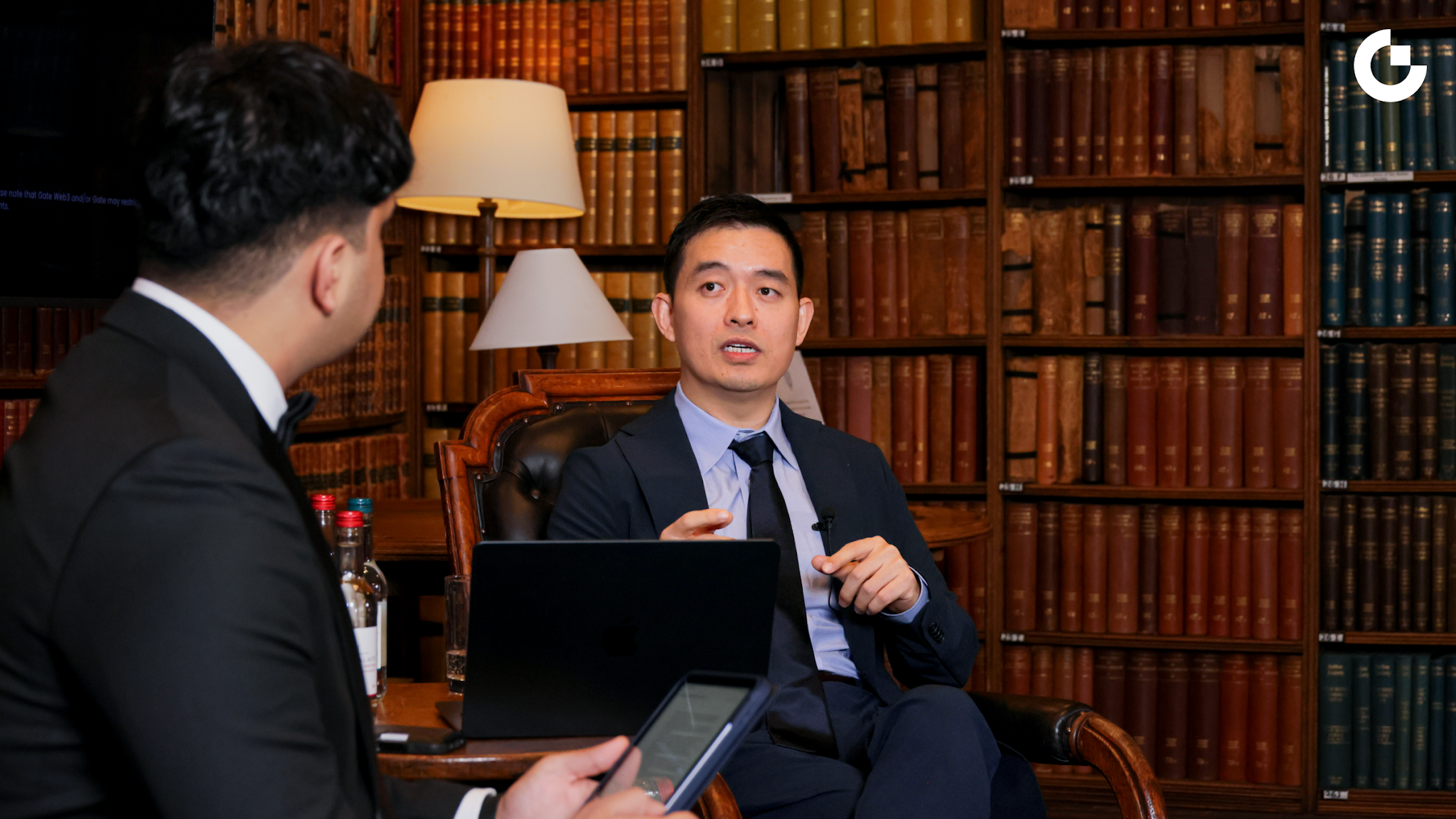
During the on-site Q&A, a representative from the Oxford Blockchain Association raised questions about blockchain decentralization, government regulation, and platform responsibility, leading to a core issue the digital asset industry has long faced: how to establish a balance between openness and security.
Dr. Han believes that decentralization is one of the most representative features of blockchain. By reducing dependence on a single centralized institution, blockchain can lower some trust costs, allowing participants to establish collaborative relationships through technological mechanisms. Bitcoin has continuously operated for over 15 years, reflecting the importance of this model's long-standing operation and market trust.
However, decentralization can also be exploited by malicious actors. With ongoing security incidents such as cryptocurrency theft, how to protect user assets while retaining the open characteristics of blockchain has become a pressing issue for the industry. Dr. Han cited the example of stablecoin issuers implementing fund freezing measures in specific security incidents, indicating that appropriate risk control makes practical sense in cases involving illegal activities and user asset safety. Especially when stolen funds might be utilized for other illegal activities, taking measures to protect broader public interests is understandable.
Regarding the boundary between regulation and personal choice, Dr. Han noted that the significant value of blockchain lies in providing diverse choices for users, allowing them to select digital assets and services with different operational mechanisms and management methods based on their needs. Compared to coercive controls lacking alternative options, an open blockchain ecosystem grants users more autonomy in decision-making. He believes that ensuring user safety and respecting personal choice are both crucial aspects that need to be balanced in the industry's development.
First-Mover Advantage and Industry Competition: Long-Term Beliefs Also Require Continuous Review
When discussing industry competition and business operations, Dr. Han offered insights into first-mover advantages and market dynamics. He noted that in the early stages of industry development, if a company can establish scale advantages first, it has the opportunity to gain more market attention, user resources, and funding support, further expanding its advantages. The cumulative effect brought by first-mover advantages allows leading companies to have a stronger resource foundation in subsequent competitions.
Using large internet companies and cryptocurrency trading platforms as examples, he illustrated how, after market maturation, it becomes more challenging for newcomers to compete with established businesses. Even if they invest more efforts or have excellent talent, they may not easily change the existing market dynamics. For entrepreneurs, whether they can identify key phases of industry development promptly and seize opportunities to establish competitive advantages can significantly impact a company's long-term growth.
Reflecting on his own experiences, Dr. Han confessed that he began his entrepreneurial journey right after graduating from university, lacking experience in large companies, which led him to make many mistakes in business operations and decision-making. He has also borne substantial financial losses due to early decisions and spent years gradually making up for them. These experiences have given him a deeper understanding of judgment, risk, and long-term operations within the entrepreneurial process.
He believes it is essential to maintain long-term beliefs, yet companies also need to periodically review their decisions, promptly identify issues, and adjust their direction according to market changes and realities. Entrepreneurs should possess the resolve to persist with long-term goals while summarizing methods from past experiences to avoid repeating mistakes, allowing corporate strategies to improve continuously based on external environments.
The Future of CEX and DEX: Different Models are Expected to Complement Each Other
Regarding industry regulatory issues, Dr. Han stated that centralized exchanges (CEX) and decentralized exchanges (DEX) exhibit evident differences in their operational models and regulatory approaches. Centralized exchanges are operated by businesses, with a clear business body, making it easier to incorporate them into regulatory frameworks through licenses, compliance systems, and operational requirements.
In his speech, Dr. Han mentioned that Gate has obtained relevant licenses or permissions in multiple jurisdictions, covering 47 states in the United States, as well as markets in Europe, Dubai, and Japan. In contrast, DEX typically operate on chain-based smart contracts, with some protocols able to function without direct operation by traditional corporate entities, thus presenting greater challenges for regulators in identifying responsible entities and implementing oversight.
Regarding the future of both models, Dr. Han does not believe that one will completely replace the other. He envisions that CEX and DEX are likely to gradually form a complementary relationship: centralized platforms possess advantages in user access, trading speed, and service processes, while decentralized platforms provide users with more autonomy and open participation. As the regulatory framework gradually improves and blockchain technology continues to develop, how these two models can leverage their respective advantages and collaborate will become an important direction for the evolution of the cryptocurrency market infrastructure.
Looking to the Future: Continuing Innovation Amid Change
From the early stages of personal exploration in entrepreneurship to establishing a globalized team and then expanding into broader financial service scenarios, Dr. Han's speech at the Oxford Union reviewed Gate's 13-year development journey and showcased his reflections on industry topics such as AI, digital asset infrastructure, market competition, and global regulation.
For a business to achieve long-term development, it requires long-term investment, continuous learning, independent thinking, and efficient execution. AI is changing the ways knowledge is acquired and security is protected, while blockchain is expected to promote the extension of traditional assets and financial services online. In the face of continuous technological and market changes, businesses need to seize emerging opportunities while also translating technological potential into long-term developmental momentum through team collaboration, risk management, and strategic adjustments.
From "Start Alone" to team collaboration, from the initial entrepreneurial exploration to the global market layout, the 13 years Gate has traversed reflects the importance of long-term innovation and adaptability to change. Looking ahead to the next stage, Gate will continue to focus on technological evolution and market demands, exploring more possibilities for digital assets and financial services in the context of globalization.
About Gate
Gate was founded in 2013 by Dr. Han and is one of the world's leading cryptocurrency and comprehensive financial service platforms with business covering asset management, trading, payments, and other financial and living scenarios. The platform has over 63 million users, supports 5,400+ types of cryptocurrencies and 12,800+ types of stock assets and ETFs, and also offers metals, indices, foreign exchange, commodities, and other TradFi assets to meet users' full-process needs from asset holding and trading to daily use. As an industry benchmark, Gate was the first to achieve 100% reserve proof and continues to build diversified products and ecosystems such as Gate Money, Gate Wallet, Gate Ventures, and Gate for AI Agent.
For more information, please visit: Website | X | Telegram | LinkedIn | Instagram | YouTube
Disclaimer:
This content does not constitute any invitation, solicitation, or recommendation. You should always seek independent professional advice before making any investment decisions. Please note that Gate may restrict or prohibit all or part of its services from certain restricted regions. Read the User Agreement for more information.
免责声明:本文章仅代表作者个人观点,不代表本平台的立场和观点。本文章仅供信息分享,不构成对任何人的任何投资建议。用户与作者之间的任何争议,与本平台无关。如网页中刊载的文章或图片涉及侵权,请提供相关的权利证明和身份证明发送邮件到[email protected],本平台相关工作人员将会进行核查。


