

Author: Zen, PANews
Years ago, in a production park at Foxconn, a team of robotics researchers from Germany stayed for a while. They queued with workers for meals and spent a considerable amount of time observing the actual operations of the workers in the workshop. This was not an ordinary company visit. To make the robots in the lab truly adapt to the production line, the team needed to observe the workers' operational habits for long periods, record the mistakes made by the robots, and then return to the site for repeated testing.
This experience was mentioned later by Chen Zhaopeng, the founder and CEO of Agile Robots, in an exclusive interview. He believes that the most important work in robot development often occurs on the customer's site; only by truly understanding how workers accomplish tasks can one know how far robots are from practical application.
This pragmatic approach has also earned Chen Zhaopeng the continued bets of global capital. On November 12, 2026, Agile Robots announced the completion of a $500 million Series F funding round, with a post-investment valuation of $8.5 billion. This round was led by Japan's SoftBank Group, with participation from Nvidia, Hitachi Group, and T.Capital, bringing the company’s total financing to approximately $2 billion.
From Harbin Institute of Technology to German Aerospace Center
Chen Zhaopeng's interest in robotics began during his university years. In 2005, he earned a bachelor's degree in mechanical engineering and automation from Harbin Institute of Technology, and in 2007 obtained a master's degree in electromechanical engineering. The Robotics Research Institute at Harbin Institute of Technology is one of the earliest institutions in China to engage in robotics research, with a technological focus that includes mechanical structure, motion control, sensors, and space robotics.
While in school, Chen Zhaopeng began participating in the development of robotic arms and dexterous hands. In 2008, as one of the authors, he published a paper introducing the second generation of multi-sensor dexterous hands developed in collaboration between Harbin Institute of Technology and the German Aerospace Center (DLR).
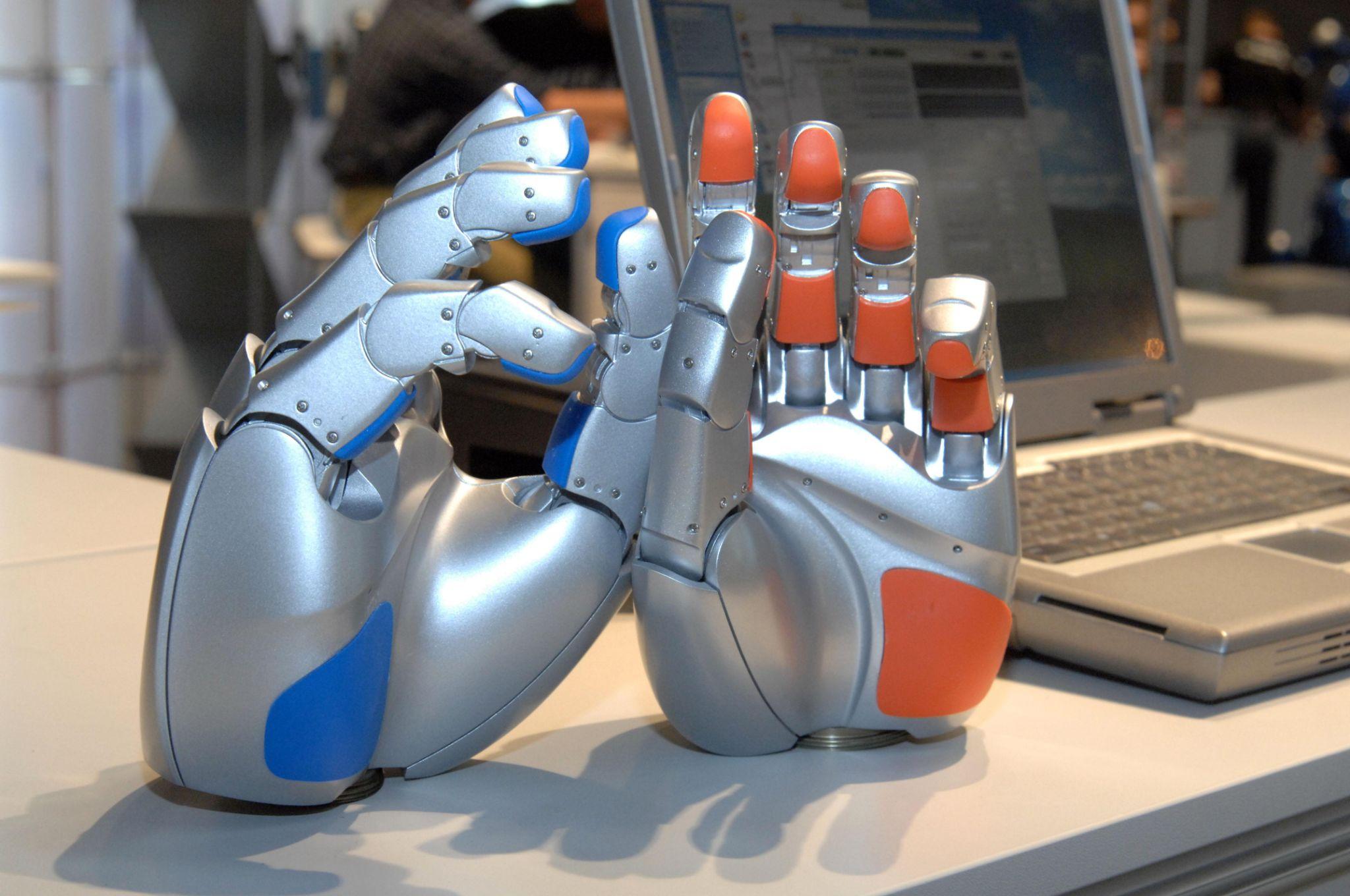
This mechanical hand features five modular fingers, each with three degrees of freedom, four joints, and integrated position, torque, and temperature sensors. The entire system weighs about 1.5 kilograms, with the maximum output force at the fingertips reaching 10 Newtons. Compared to traditional industrial robotic hands, it can sense variations in force during the contact process, achieving more precise grasping and manipulation.
This research was supported by the long-term collaboration between Harbin Institute of Technology and DLR in robotics technology. Chen Zhaopeng later went to Germany to continue his doctoral studies, completing his PhD in electromechanical engineering in 2012, and subsequently working at the DLR Institute of Robotics and Mechatronics.
DLR is Germany's national aerospace research institution, and its robotics research serves not only space exploration but also remote operations, intelligent perception, human-robot collaboration, and autonomous control in complex environments. Chen Zhaopeng served as the deputy director of DLR's MODEX (Modular Dexterous Robotics) laboratory, participating in various robotics R&D projects. Among them, force control technology was an important direction in his early research.
Engaging in space robotics research for an extended period also led Chen Zhaopeng to contemplate another question: When can these technologies truly transform people's production and lives?
Space robotics has a high technological threshold and limited application scenarios. In contrast, industries such as automotive manufacturing, consumer electronics, healthcare, and logistics have a broader demand for automation and more substantial commercial space.
Around 2018, Chen Zhaopeng believed that robotics technology and actual market demand had begun to mature gradually, so he decided to co-found a company with his colleagues from DLR.
Leader of a German Robotics Unicorn Company
In fact, Agile Robots is not Chen Zhaopeng's first entrepreneurial endeavor. In 2013, he co-founded Wessling Robotics. This company is a technology spinoff of DLR, primarily responsible for commercializing the DLR/HIT Hand II dexterous hand developed in the laboratory, selling products to research institutions and industrial clients.
According to DLR, the dexterous hands developed by Wessling Robotics have been used for scientific research by various European research institutions and have also been applied in industrial collaboration projects, including those with KUKA.
This entrepreneurial experience allowed Chen Zhaopeng to fully experience the transition from scientific research outcomes to commercial products for the first time.
In 2018, Chen Zhaopeng, along with Peter Meusel and eight other researchers from DLR, co-founded Agile Robots, expanding the business from dexterous hands to a wider range of robotic systems.
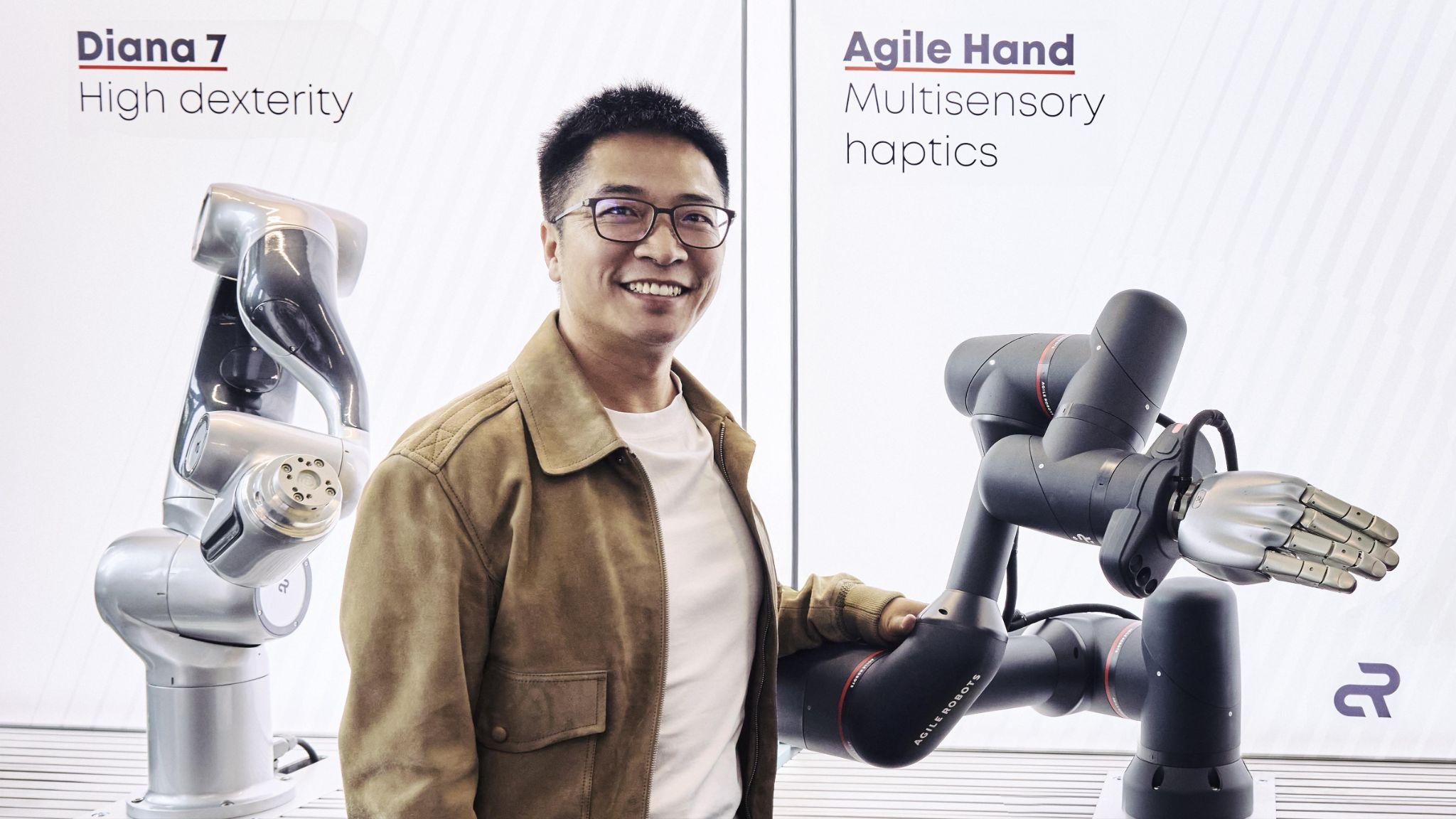
The first significant product after the company's establishment was the launch of the Diana 7, a seven-axis lightweight industrial robot in 2019. It is capable of performing complex, precise tasks, with early applications including the assembly of electronic components for smartphones, tablets, and personal computers. Compared to traditional industrial robotic arms, the Diana 7 places greater emphasis on force control and fine operations, also opening up the market for the company in the consumer electronics manufacturing sector.
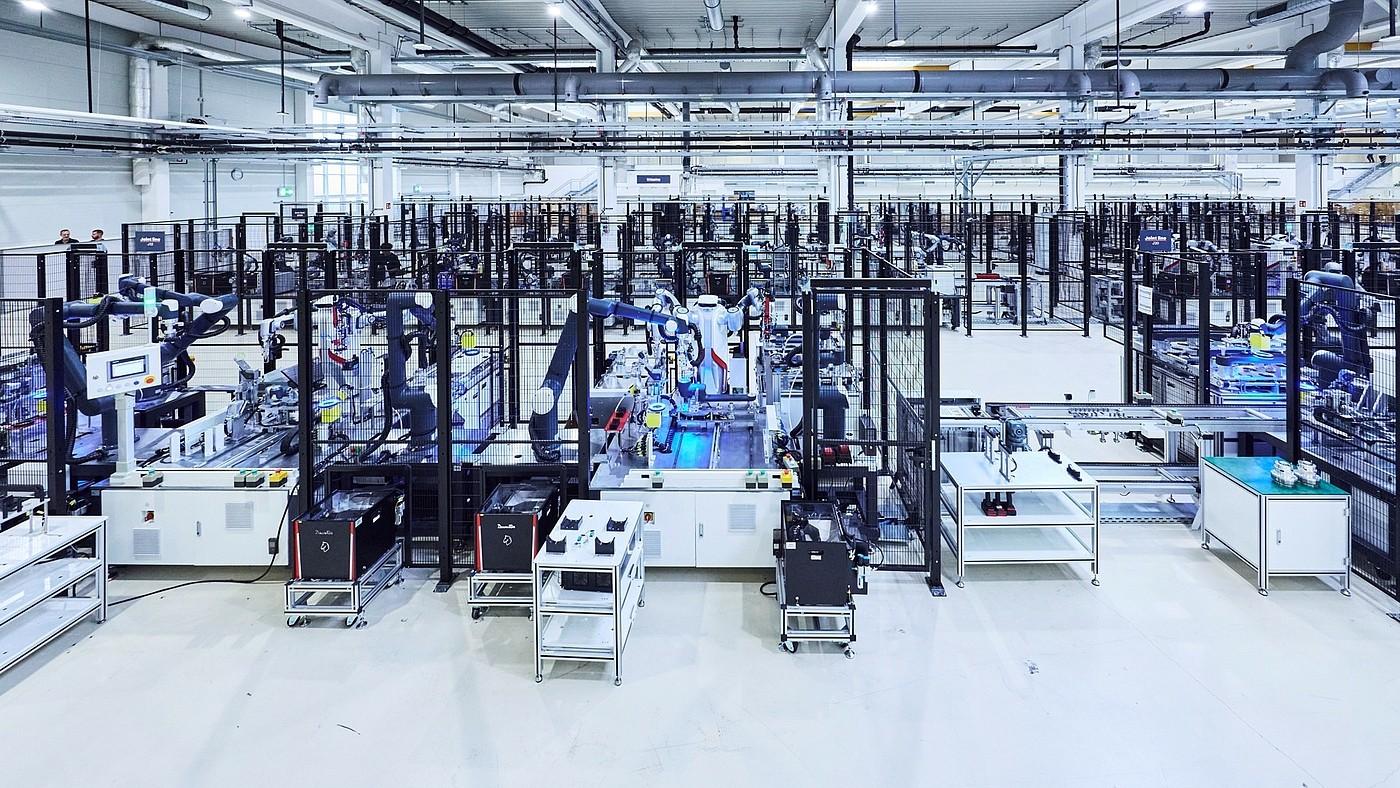
At the same time, Agile Robots began establishing its own production system. In 2019, the company opened its first production facility in China to meet the demands of customers in the automotive, consumer electronics, and healthcare industries. In 2022, the company established its first German production base in Kaufbeuren, Bavaria, covering an area of approximately 2,700 square meters.
This layout has gradually formed the company’s development characteristics: R&D and technology management as a significant base in Germany, while production and customer applications rely on China and other markets.
The significance of Chinese manufacturing for Agile Robots is not only to provide cost advantages but also to offer a real environment for continuous technology verification and product iteration.
In September 2021, Agile Robots completed a $220 million Series C funding round, led by SoftBank Vision Fund II, with participation from Sequoia China, Hillhouse Capital, Foxconn, Xiaomi, and other institutions. After completing the financing, the company’s valuation exceeded $1 billion, making it one of the earliest deep tech enterprises in the German robotics field to achieve unicorn valuation.
The influx of international capital not only helped the company expand its R&D and production scale but also improved its credibility with global suppliers and industrial clients. Chen Zhaopeng once stated that, in the early days, the company was small, and when it made bulk order requests to suppliers, they often found it hard to believe in its delivery capabilities. However, when suppliers saw the investors behind the company, their attitude toward cooperation changed.
German Technology, Chinese Manufacturing, and Global Capital
If early entrepreneurship was focused on how to commercialize robotics technology, then the subsequent expansion of Agile Robots reflects Chen Zhaopeng's different understanding of the robotics industry supply chain: a robotics company cannot only master a particular robotic arm or dexterous hand; it must have comprehensive capabilities from the robotics itself, sensing systems, to software platforms and factory integration.
This is also the reason for Agile Robots' frequent industrial mergers and acquisitions in recent years.
In 2023, Agile Robots took over the business and about 100 employees of the German robotics company Franka Emika, which was in bankruptcy proceedings. Franka Emika is known for its high-precision, force-sensitive collaborative robotic arms and holds a certain influence in both research and industrial fields. This transaction helped Agile Robots supplement its robotic arm products and developer ecosystem.
That same year, the company also expanded its stake in BÄR Automation and Idealworks, a spinoff of the BMW Group. Idealworks mainly provides autonomous mobile robots, logistics automation platforms, and simulation software. In September 2025, Agile Robots completed the acquisition of the remaining shares of Idealworks, increasing its ownership to 100%. However, BMW will continue to serve as its long-term partner. According to data disclosed by Idealworks, over 850 iw.hub mobile robots are already deployed at BMW's global production bases.
In 2025, Agile Robots also acquired a majority stake in the German AI company Audeering, which focuses on voice, sound scene, and emotion recognition technology, aiming to help robots better understand human expressions and needs.
In 2026, the company further completed the acquisition of certain assets of Thyssenkrupp's automation engineering business in Europe and North America, integrating the related business into Krause Automation. This transaction brought in over 75 years of industrial engineering and production line implementation experience, allowing Agile Robots to extend its services from robotic equipment suppliers to comprehensive production line planning and integration services.
The logic behind these transactions is quite clear: Franka supplements precision robotic arms, Idealworks adds mobile robots and logistics systems, Audeering enhances human-machine interaction technology, and Krause Automation brings capabilities in large-scale factory engineering and project implementation. Agile Robots aims to unite the technologies and customer resources that are originally scattered across different enterprises, forming a product system covering robotic hardware, AI software, and industrial automation integration.
This strategy also corresponds with the company’s multinational layout.
Germany serves as the headquarters and important R&D base for Agile Robots, undertaking the roles of group headquarters, R&D, and production functions, while Kaufbeuren has production facilities, and the acquired Franka Robotics and BÄR Automation continue to retain their respective R&D and manufacturing operations.
In China, the company has a regional headquarters, R&D, and production organization in Beijing, as well as offices and manufacturing facilities in Shanghai, Shenzhen, and other locations. India is also gradually becoming a new base for production and market expansion; in 2024, the company established its first production plant in Chennai, and in 2026, acquired a majority stake in the Indian factory and in-plant logistics automation company XNG Automation.
Agile Robots’ different investors also bring diverse industrial resources to the table. SoftBank can provide international capital and investment networks, Foxconn has large manufacturing resources, and Nvidia and Hitachi are expected to connect the AI computing ecosystem and the industrial automation market, respectively.
This multinational operating model has also made Agile Robots a relatively unique case in the German robotics industry. It starts from German research institutions as a technological foundation, relies on China's manufacturing scenes and production networks, and then expands its business boundaries through global capital and industrial mergers and acquisitions.
From Industrial Robots to Physical AI: What Does Chen Zhaopeng Want to Establish?
In recent years, Agile Robots has gradually evolved from a startup focused on dexterous hands and force-controlled robotic arms into a comprehensive enterprise with robotic arms, collaborative robots, mobile robots, dexterous hands, humanoid robots, and software platforms.
However, Chen Zhaopeng believes that the richness of hardware products alone is not sufficient to form a long-term competitive advantage. If robots lack environmental understanding and autonomous learning abilities, they can only execute tasks according to preset programs, making it difficult to adapt to more complex real-world scenarios.
He hopes to change this situation through Physical AI. In his view, true Physical AI requires a combination of robotic bodies, sensing systems, and intelligent models: robots not only need to have bodies that can interact with the physical world but also need to understand the surrounding environment through vision, touch, and force perception. By leveraging foundational models capable of cross-task learning and skill transfer, they should autonomously perform operations in different scenarios. Data from real industrial applications provides a crucial basis for the continuous improvement of this system.
Nvidia is an important partner for Agile Robots in advancing this strategy. The two have been collaborating since 2025 on robotic simulation, remote operation, and AI model training, with Agile Robots becoming an early adopter of Nvidia's Cosmos platform and integrating Franka's robotic arms into the Isaac simulation ecosystem.
At NVIDIA GTC Berlin in October 2026, both parties further showcased the results of their collaboration, jointly launching the Agile ONE SN humanoid robot development platform powered by Nvidia's Isaac GR00T software and Jetson Thor computing platform, aiding developers in completing robot training, simulation, and deployment in real environments. Chen Zhaopeng also participated in the robotics industry discussions at the conference, where Nvidia CEO Jensen Huang personally visited the Agile Robots booth. Meanwhile, Agile Robots also jointly demonstrated with Audi, Dassault Systèmes, and Nvidia the application solutions of mobile humanoid robots in automotive factory logistics, attempting to let robots undertake parts handling and material delivery tasks. These collaborations indicate that the company's relationship has expanded from investment to technology platforms and industrial applications.
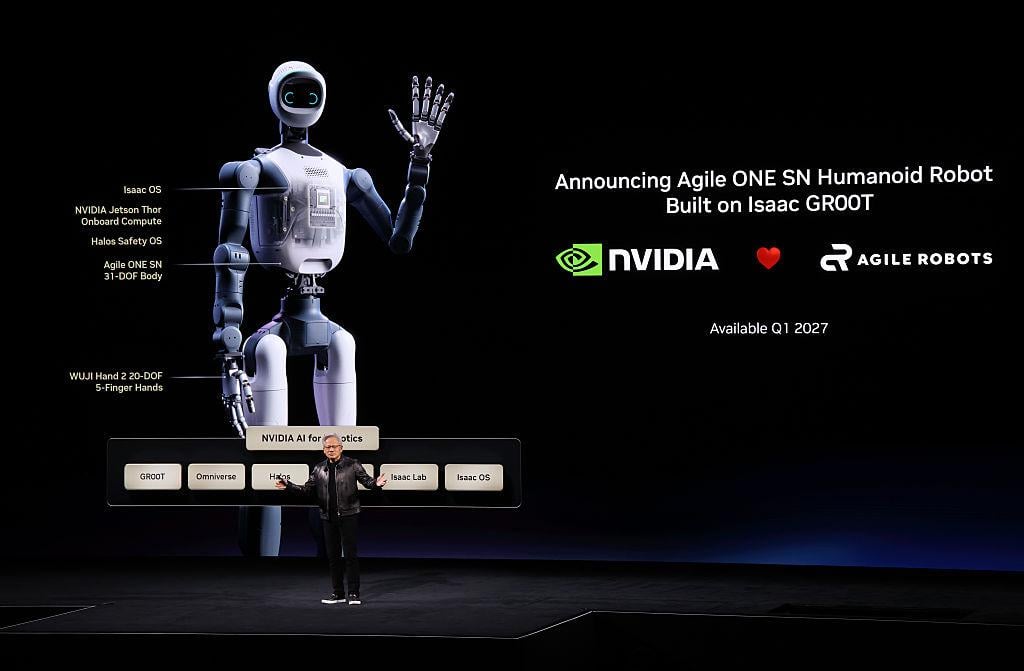
In November 2025, Agile Robots launched the industrial humanoid robot Agile ONE, further advancing this technological direction into specific products. This robot is designed for factory environments, capable of moving between different workstations and executing operational tasks, equipped with cameras, LiDAR, voice recognition systems, as well as dexterous hands with force and touch capabilities.
However, Chen Zhaopeng believes that future industrial automation does not necessarily need to rely entirely on humanoid robots. In September 2026, a Forbes journalist visited Agile Robots' factory in Munich and discovered that the company is trying to leverage its robotic products in the production of robots. In the report, Rory Sexton, an executive responsible for operations at Agile Robots, made a very representative point: the real product of the future factory is not a single robot but the entire factory.
In other words, customers need complete automation systems that solve actual production problems, rather than simply increasing the number of humanoid robots. Robotic arms, mobile robots, and humanoid robots should carry out their respective roles according to different tasks.
This also reflects Chen Zhaopeng's other understanding of Physical AI—the robotics industry needs to form a mutually reinforcing cycle between technology and business. On the technical level, robots should continuously iterate through models, hardware, sensors, and data from real scenes; on the business level, robots must truly enter factories, improve production efficiency, and create measurable economic value to maintain ongoing customer demand and investment in R&D. If these two cycles fail to form a closed loop, then no amount of capital investment can support long-term development.
Currently, Agile Robots has deployed over 20,000 robotic solutions to factories and warehouses worldwide, but existing deployments still mainly consist of robotic arms, grippers, mobile robots, and automation units. The new factory in Fürstenfeldbruck near Munich plans to have an annual production capacity of up to 10,000 humanoid robots, with Agile ONE expected to start mass production in 2027. From the existing business structure, industrial automation remains the commercial foundation of the company, while humanoid robots carry its expectations for the next stage of the market.
From robotics research at Harbin Institute of Technology, to dexterous hand development at the German Aerospace Center, and to the production lines at Foxconn and the robot manufacturing factory in Munich, Chen Zhaopeng has always been attempting to make robots truly understand and adapt to the physical world. For this scientist who has transitioned from aerospace robotic research to industrial entrepreneurship, Physical AI may well be the question he wants to address in the next stage.
免责声明:本文章仅代表作者个人观点,不代表本平台的立场和观点。本文章仅供信息分享,不构成对任何人的任何投资建议。用户与作者之间的任何争议,与本平台无关。如网页中刊载的文章或图片涉及侵权,请提供相关的权利证明和身份证明发送邮件到[email protected],本平台相关工作人员将会进行核查。


