Author: Artemis
Translation: Deep Tide TechFlow
Deep Tide Introduction: This week, the financial reports of major technology and payment giants were intensively released, and stablecoin payments and decentralized settlements are transitioning from concept to a stage of tangible commercialization that reshapes trillion-dollar cross-border settlements through micro-fees.
At the same time, Wall Street financial report analysis reveals the disruptive diversion of the prediction market from traditional sports betting, with nearly 90% of prediction market deposit users having never participated in traditional gambling, creating a new incremental audience.
Artemis analyzed the Circle payment network's business model, the extreme supply-demand bottleneck of AI computing power, and the underlying logic of public chain asset rotation, combining financial report conference calls and high-frequency on-chain data.

Discovering High-Potential Business Lines: Circle Payment Network
This week, we comprehensively analyzed the earnings call using artificial intelligence tools and selected the business lines that the management believes will have a profound impact on the company’s future. We rated them dimensionally based on the priority of potential opportunities, focusing this week on the most representative case: the Circle payment network.
The Circle payment network is a dedicated settlement framework built by Circle to promote the proliferation of stablecoin payments. Over the past few years, the global scale of stablecoin payments has experienced a leap, skyrocketing from almost zero in 2021 to an astonishing amount of $400 billion to $600 billion per year now.
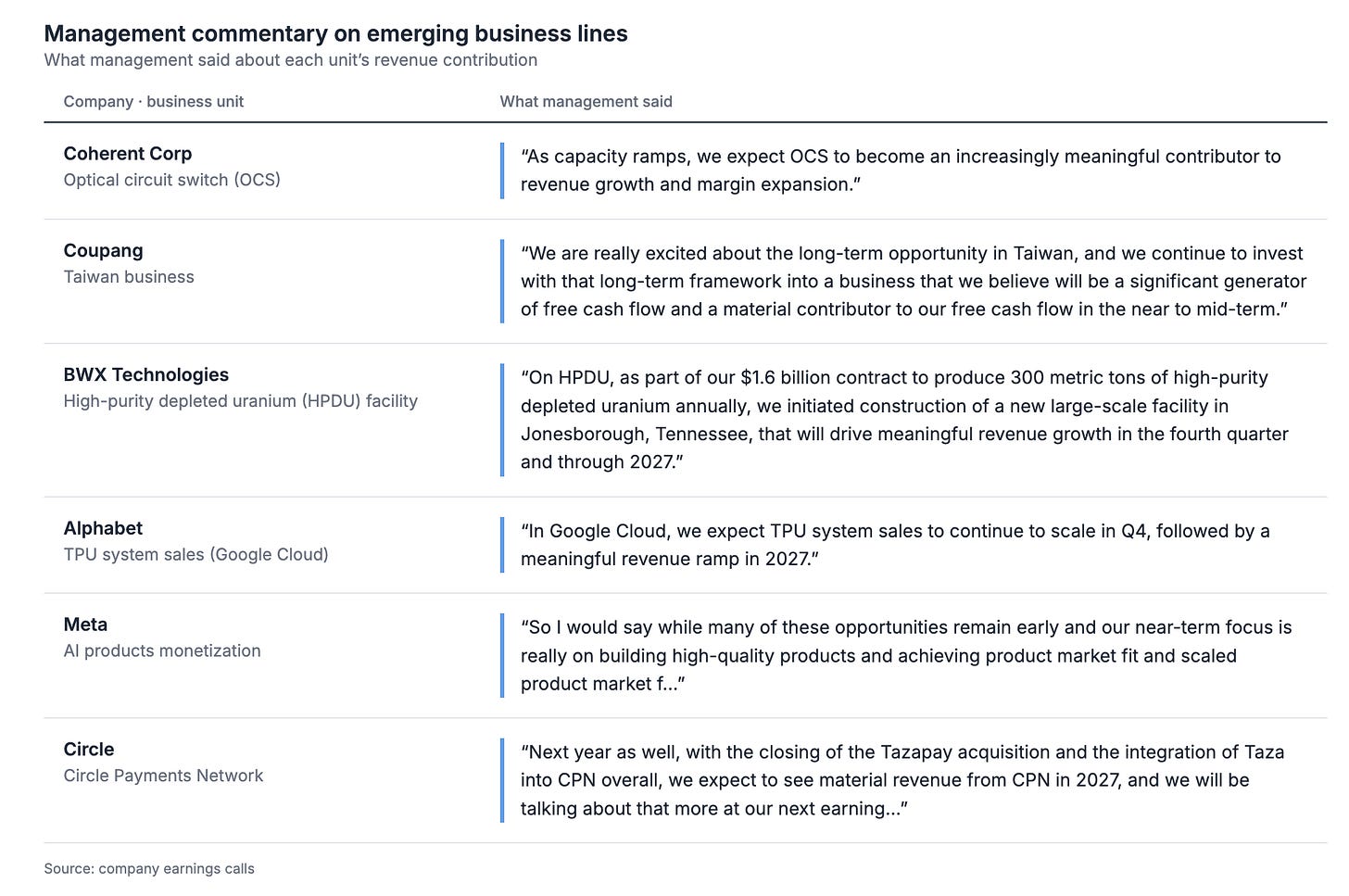
In a recent earnings call, Circle's CEO Jeremy Allaire clearly articulated the strategic positioning of the Circle payment network. He pointed out that on-chain infrastructure, digital dollars, and the underlying protocols of stablecoins will significantly lower the marginal costs of value storage and asset transfer.
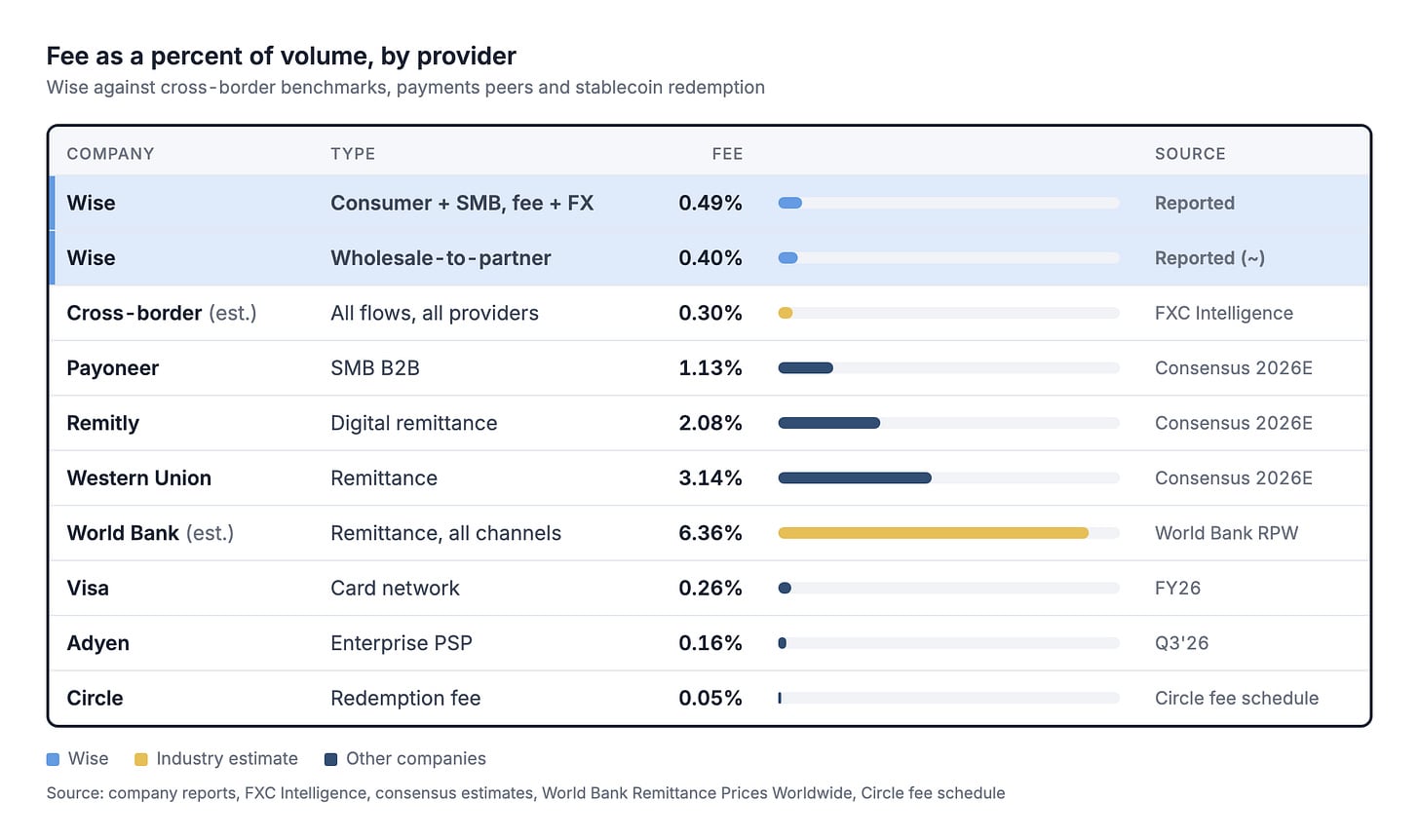
Allaire emphasized that one cannot simply reference the old profit framework of charging 10 to 30 basis points like traditional payment networks. Once on-chain settlement generates network effects at scale, the turnover rate of funds would increase exponentially, lowering the unit settlement cost to extremely low levels, thereby genuinely benefiting merchants and households worldwide.
The income of traditional payment institutions highly depends on specific transaction types. For example, personal peer-to-peer transfers on Venmo are basically free, while traditional cross-border remittance channels like Western Union can charge rates as high as 3%.
We estimate that to fully realize its commercial promise, Circle Payment Network would need to reduce its transaction fees to below 10 basis points.
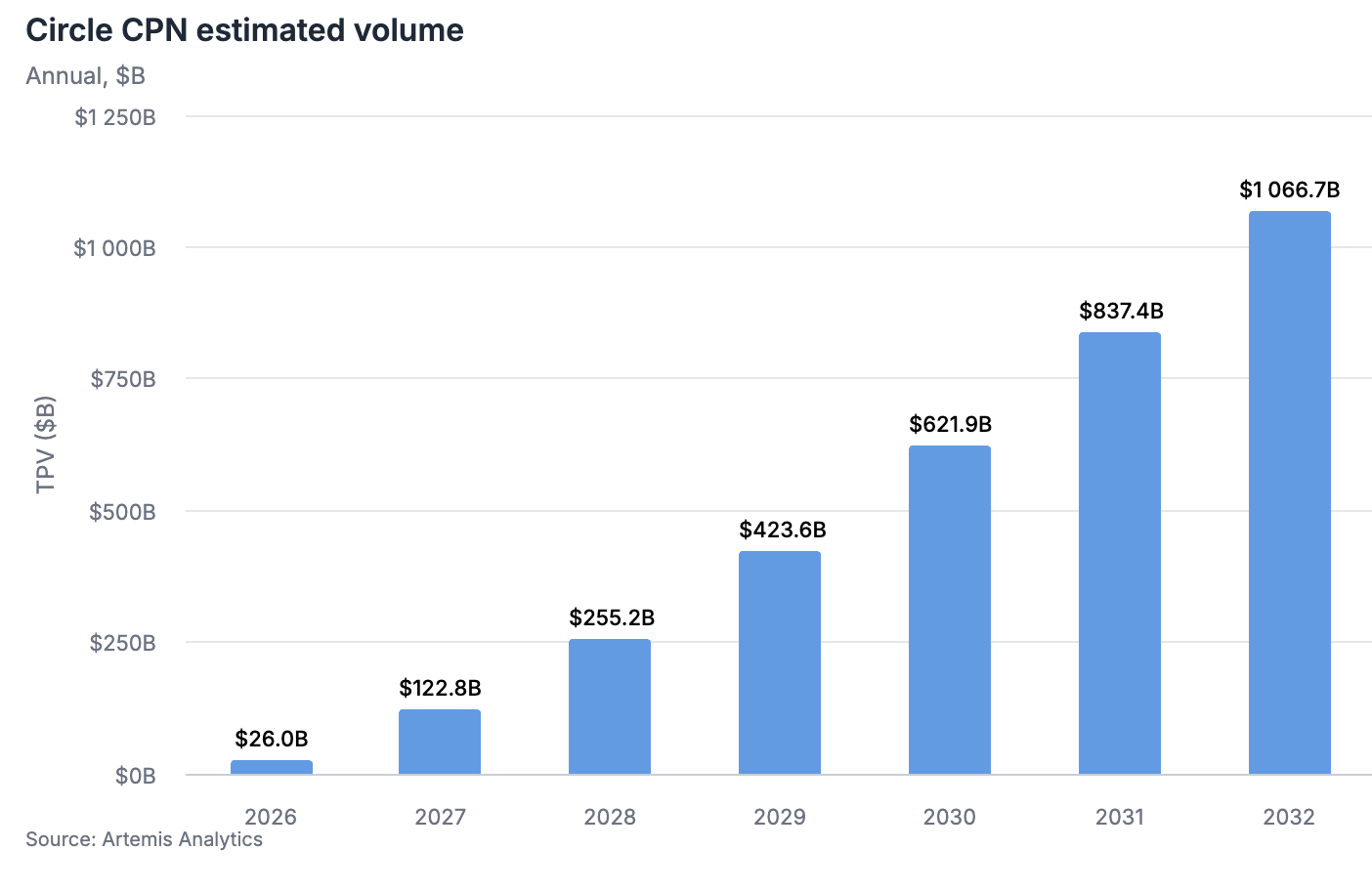
Based on the current early growth trajectory and the historical expansion rate of mainstream payment networks, we expect that by 2032, the stablecoin processed by Circle Payment Network will reach approximately $1 trillion, accounting for about 1.5% of global non-commodity cross-border capital flow during the same period.
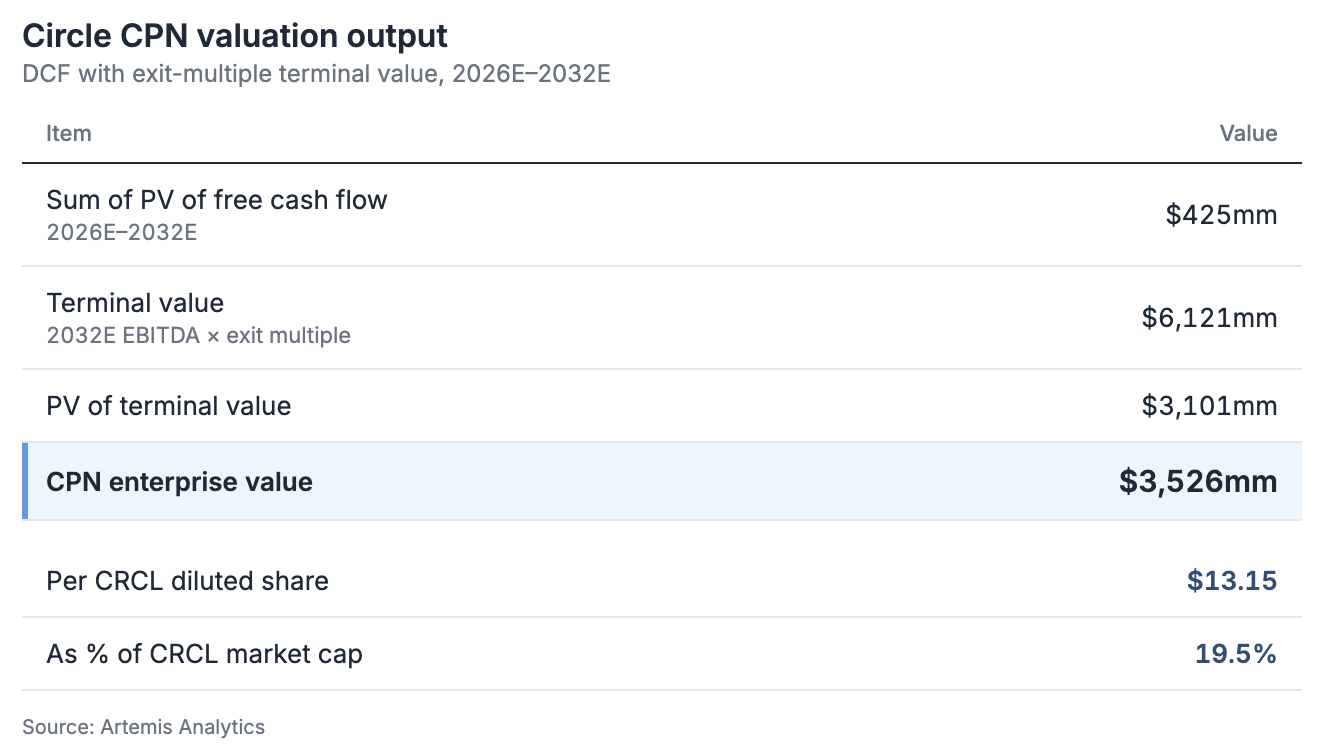
If calculated based on an average fee rate of 7 basis points per transaction, the payment network could contribute approximately $755 million in pure annual revenue by 2032. Based on a 45% earnings before tax, interest, depreciation, and amortization profit margin, its corporate valuation could reach $3.5 billion, accounting for about 20% of Circle's overall market value.
However, competition in the stablecoin payment sector is intensifying comprehensively. Traditional payment giants are gathering forces through mergers and self-development, such as Mastercard acquiring the crypto payment gateway BVNK, and Visa is also rumored to consider integrating the digital asset custody agency Fireblocks.
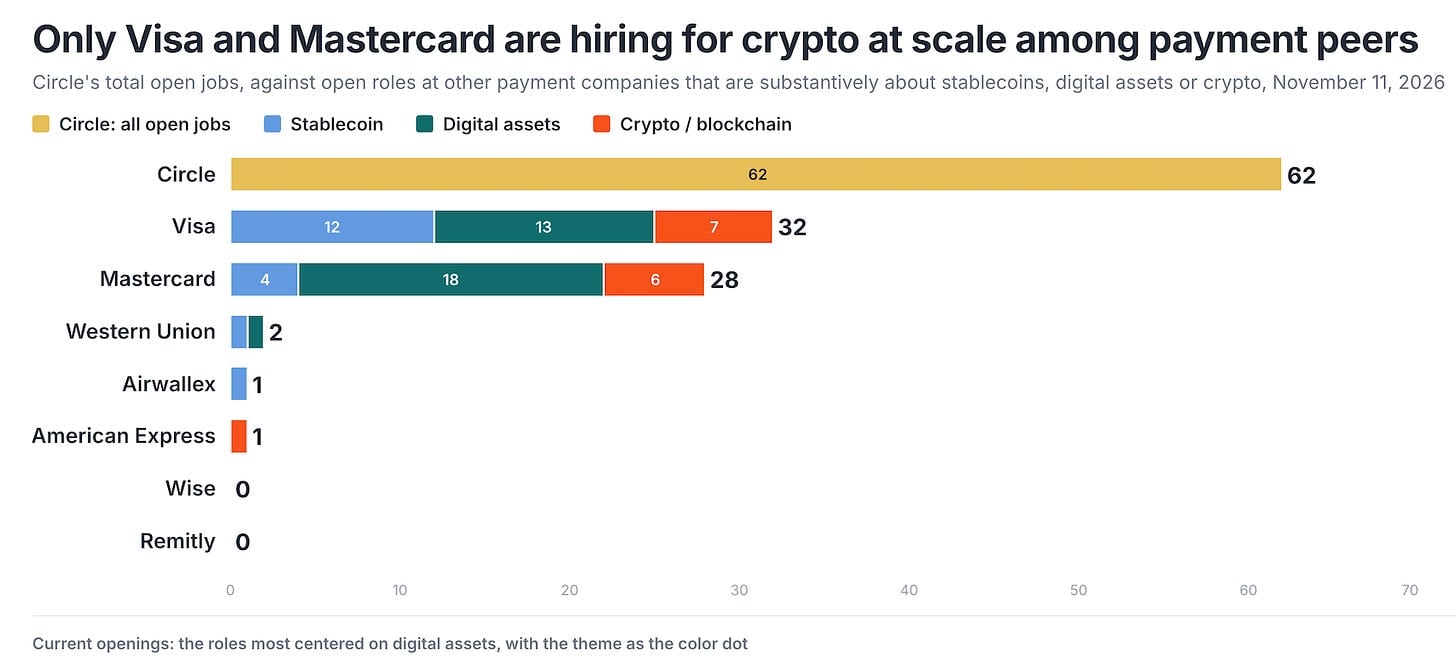
Currently, Visa and Mastercard have as many as 30 job openings in the fields of digital assets and stablecoins, nearly half of Circle's total recruitment scale. Whether Circle can quickly build network barriers before traditional giants complete product integration will be a key test.
Sharp Question Ranking from Financial Reports: AI Analyzes Management Confrontations
After reviewing UBS analyst Robin Farley's sharp questions about whether DraftKings should continue to participate in the prediction market business, we had an idea: could we use artificial intelligence to select the most pointed dialogues from a massive amount of financial reports?
We conducted an in-depth search of 1,343 earnings calls and 17,721 analyst questions, sorting them comprehensively based on controversy level and informational value.
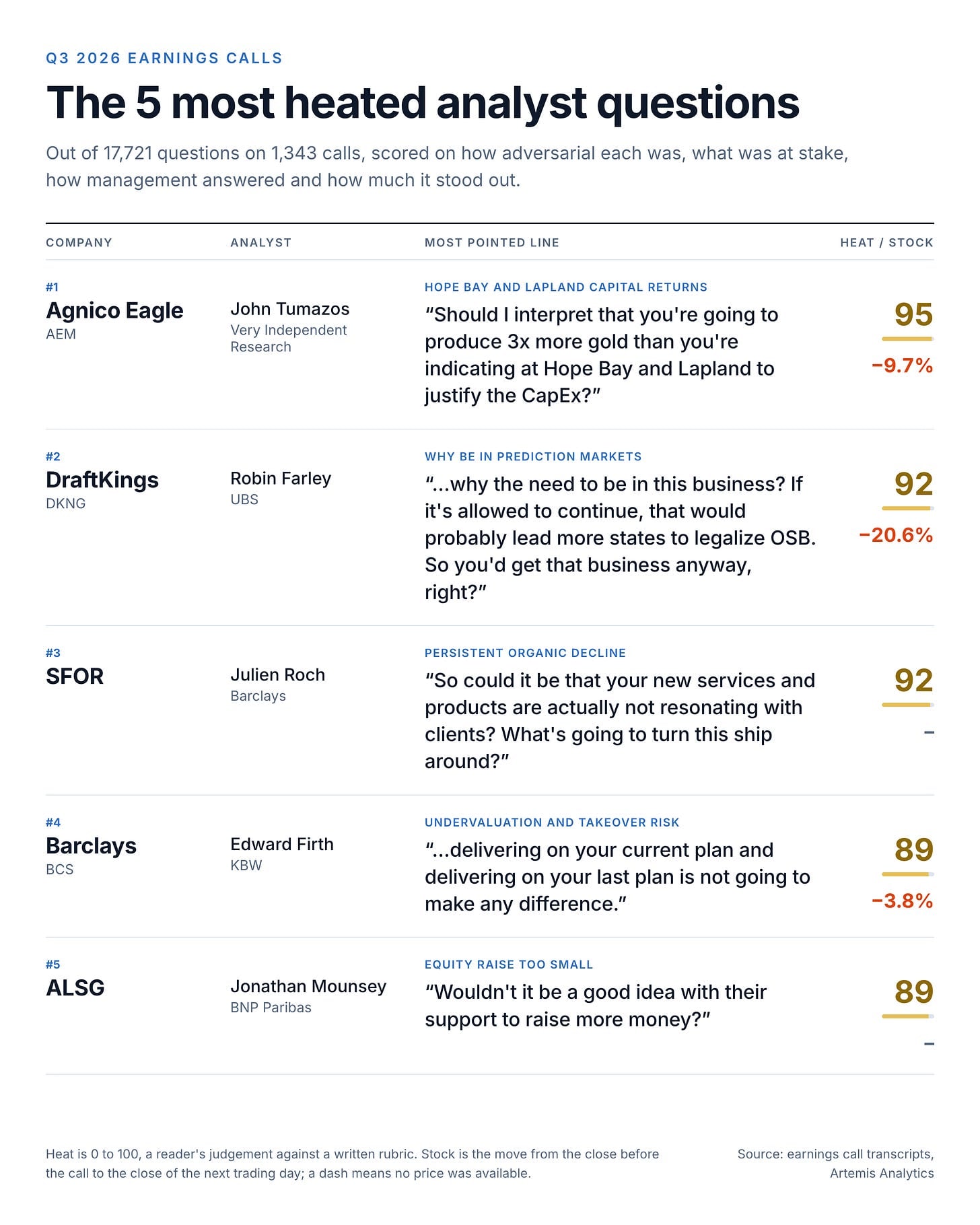
At the top of the list is a hardcore query from an independent research institution analyst regarding the return on capital expenditure of mining giants. An impressive moment occurred during Barclays Bank's earnings call when an analyst asked why no buyers initiated an acquisition under severe discount, and management avoided answering directly by citing a signal disconnection.

Market Share Loss in Traditional Gambling: Structural Substitution by Prediction Markets
The CEO of DraftKings claimed in the earnings report that the prediction market has not significantly impacted its core sports betting business. However, combined with the explosive data from Kalshi and Polymarket as well as the deep correction in traditional gambling stocks, this claim seems hard to sustain.
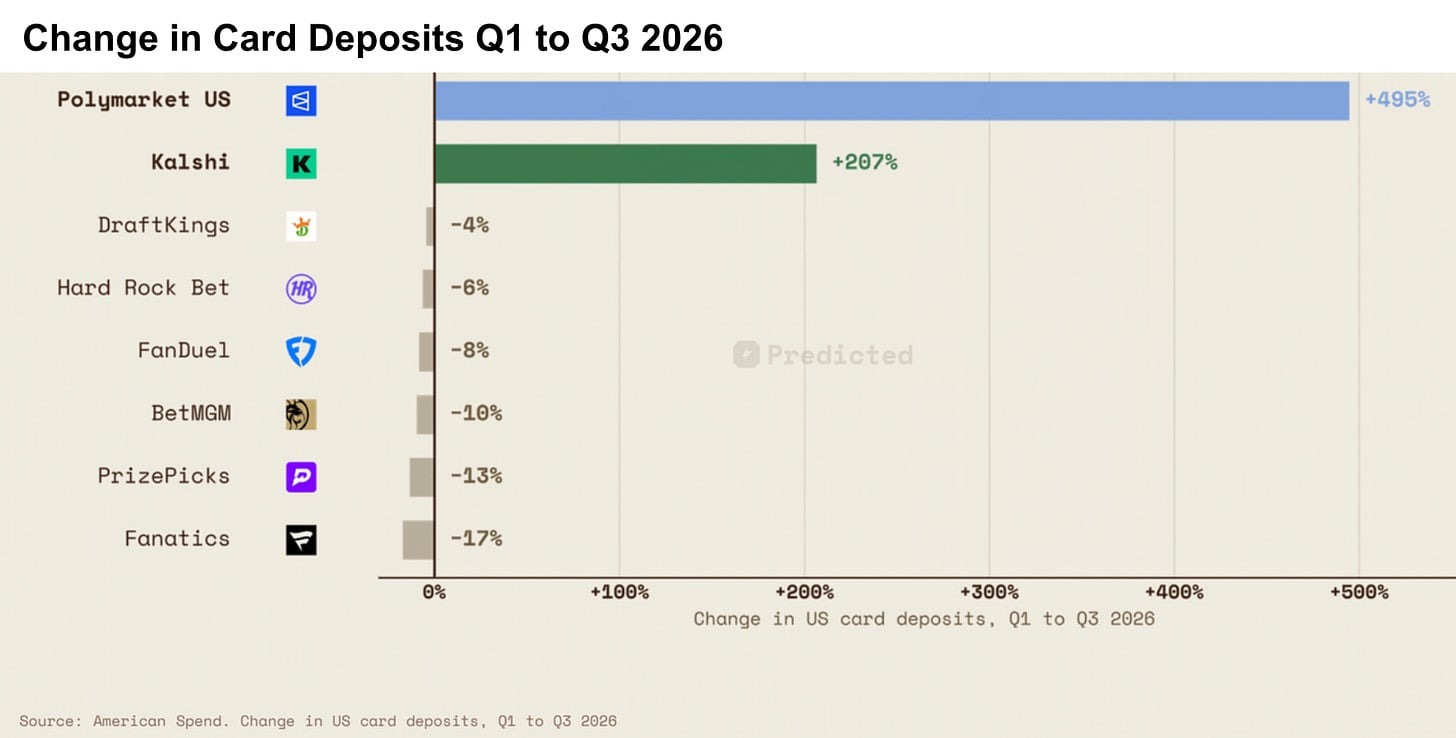
Third-party consumer data shows that from the first quarter to the the third quarter of 2026, the deposit amount of users on Polymarket and Kalshi has shown a strong triple-digit growth, while traditional sports betting platforms generally experienced declines during the same period.
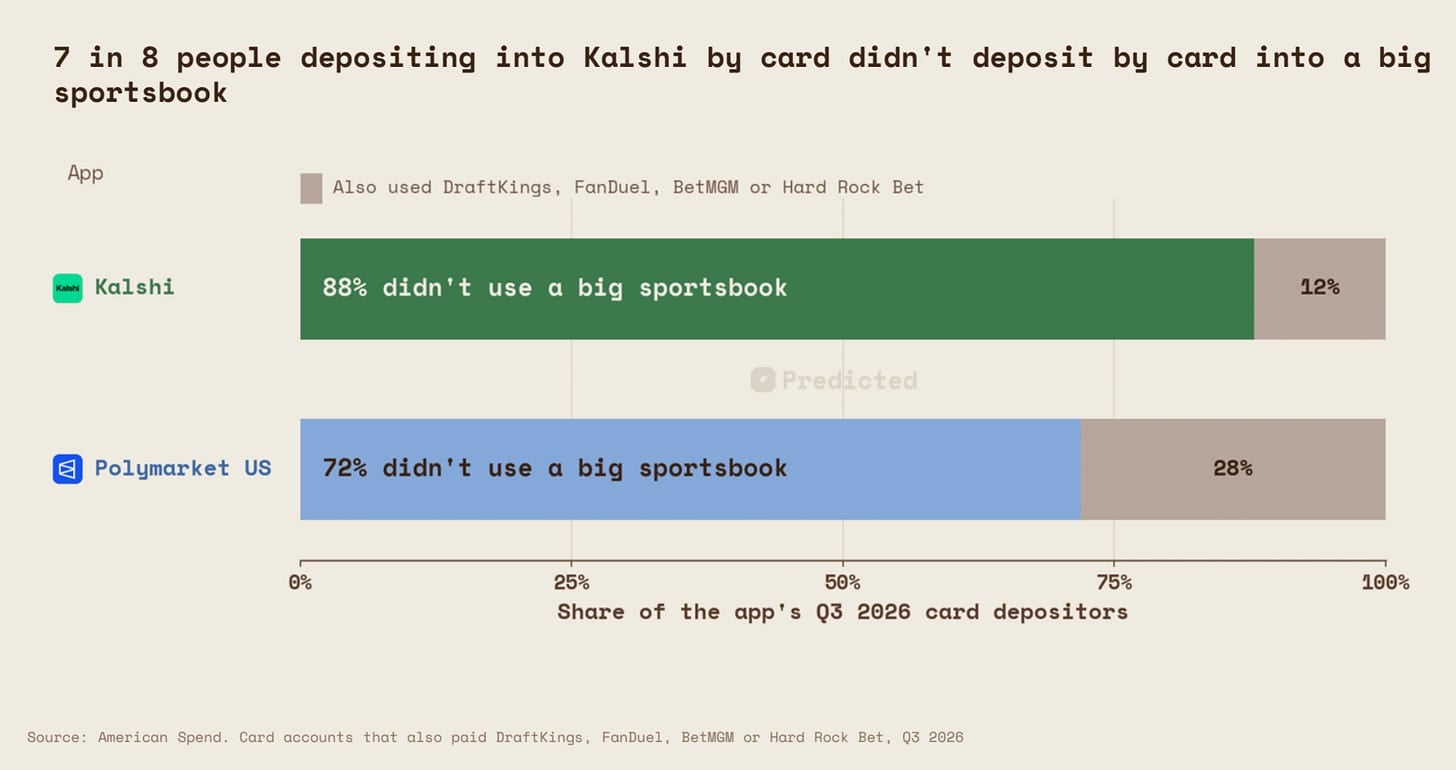
More crucial data concerns the isolation of user profiles: nearly 90% of users depositing into Kalshi have never used bank cards to deposit on traditional mainstream betting platforms, with this figure for Polymarket as high as 72%. This indicates that the prediction market is opening up new native customer groups.
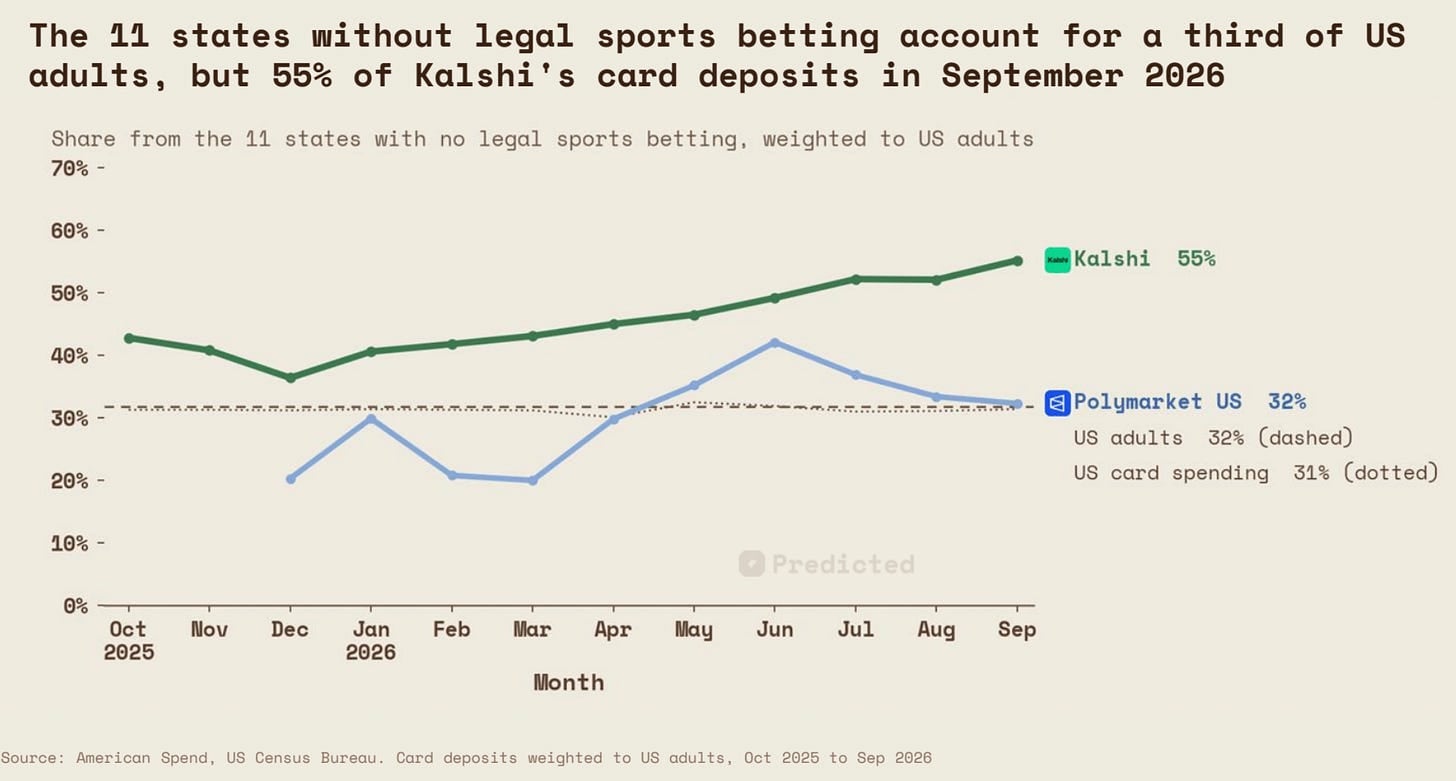
Due to the compliance exploration of prediction markets across the United States, states that have not legalized sports betting contribute up to 55% of Kalshi’s trading volume, despite these states only accounting for one-third of the adult population in the United States. The prediction market accurately fills the blue ocean market that traditional gambling failed to cover.
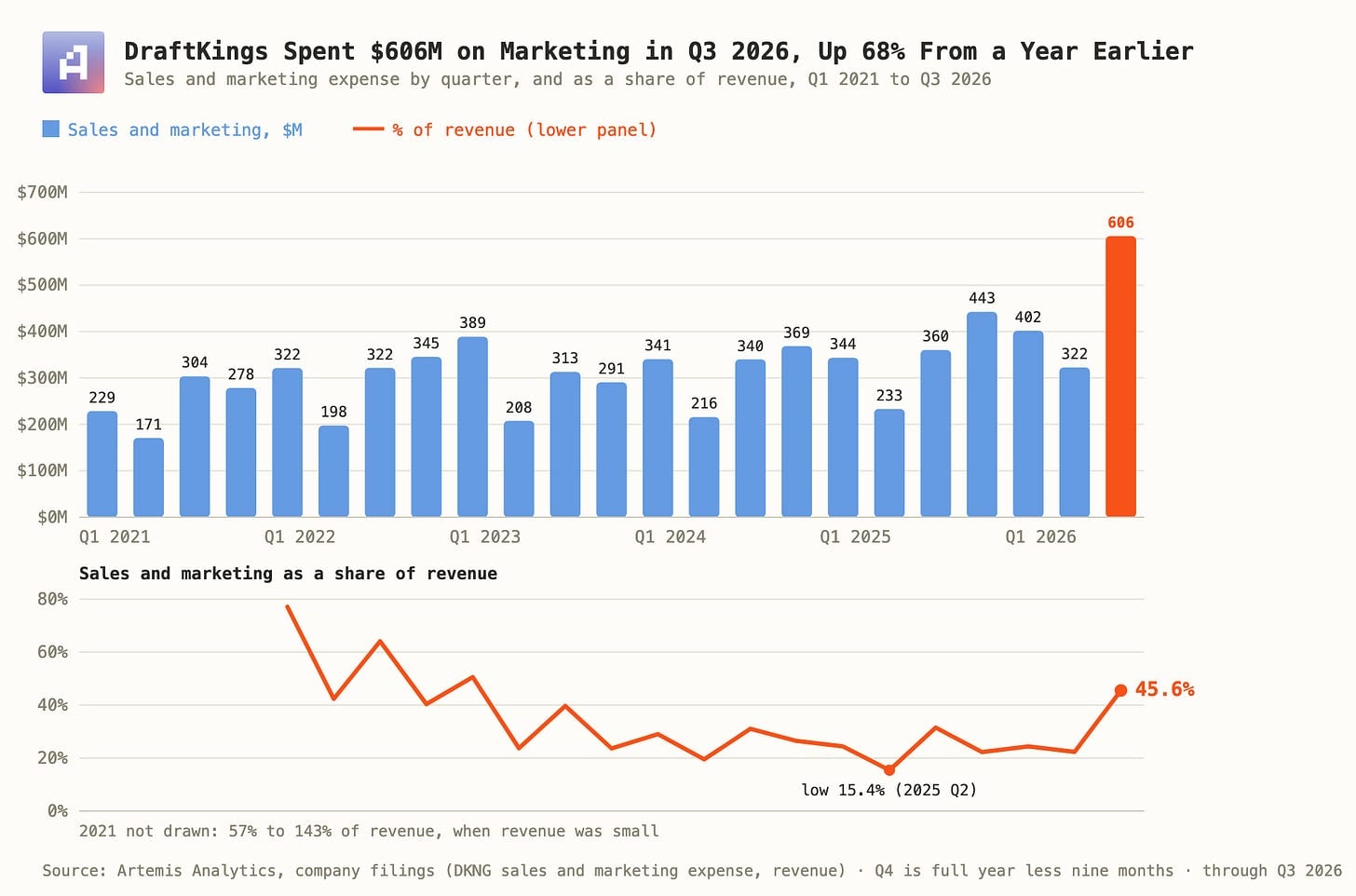
Faced with the pressure of continuously losing customers, traditional sports betting companies are being forced to significantly increase their marketing and R&D budgets in an effort to regain lost ground. DraftKings has already lowered its full-year profit guidance and plans to invest heavily in marketing and predictive derivatives for defensive counterattacks.
AI Computing Power Demand Far Exceeds Supply Constraints
The earnings call further confirmed the extremely serious supply-demand imbalance in global artificial intelligence infrastructure. Cloud computing giant CoreWeave and TSMC's management openly stated in recent meetings that computing power is in a state of almost infinite demand.
CoreWeave's CEO clearly stated in the earnings report that the confirmed compliant computing power demand by the end of 2027 is over 10 times its available capacity, and the reserve for demand in 2028 has already been oversubscribed several times before it formally opened for booking.
TSMC also confirmed at the industry forum that the demand for advanced process chips is extremely strong, with customers eager to obtain any available computing power resources, and there have been no signs of cooling in the supply chain; actual demand far exceeds the current manufacturing limits.
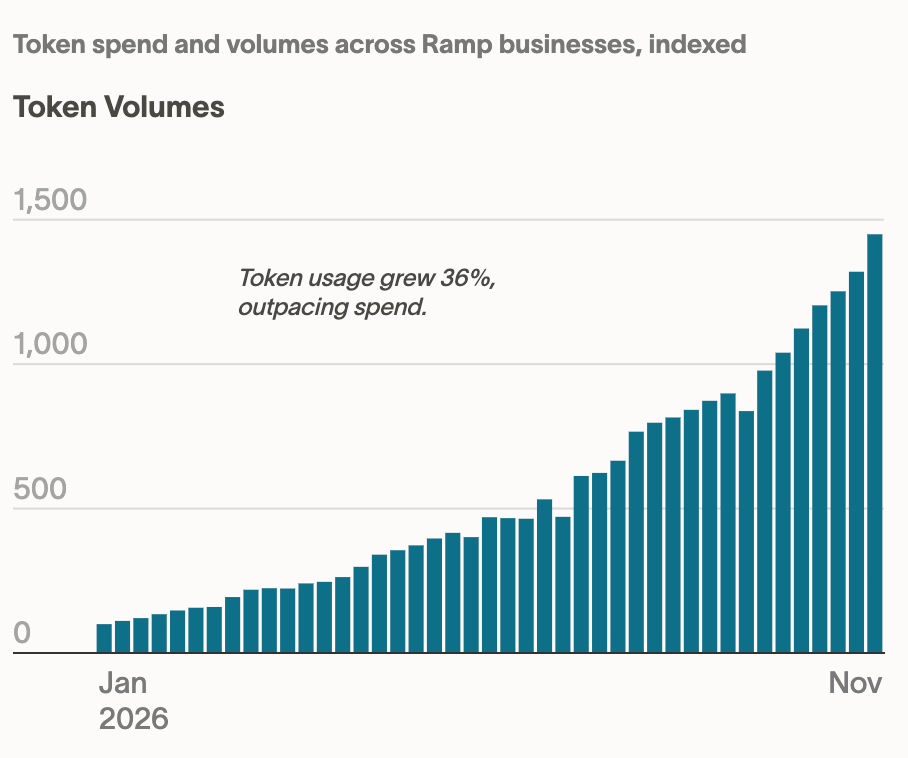
The latest data from enterprise consumption service provider Ramp also shows a monthly explosive growth curve in the consumption of tokens by major enterprises, with real computing power consumption maintaining a steep upward slope.
免责声明:本文章仅代表作者个人观点,不代表本平台的立场和观点。本文章仅供信息分享,不构成对任何人的任何投资建议。用户与作者之间的任何争议,与本平台无关。如网页中刊载的文章或图片涉及侵权,请提供相关的权利证明和身份证明发送邮件到[email protected],本平台相关工作人员将会进行核查。


