Author: Jay Yu, Researcher at USV Investment Firm, former researcher at Stanford on Cryptography and Philosophy
Translated by: Deep Tide TechFlow
Deep Tide Overview: The internet was initially designed as a distributed network with disaster recovery capabilities, but it has now evolved into a highly fragile chain of code dependencies. Recent security incidents indicate that the AI Agent is dramatically lowering the marginal cost of malicious exploitation, exposing the modern software stack to a new dimension of systemic risk.
However, crises also harbor opportunities; the AI Agent is facilitating the automated migration of code security and formal verification, pushing for the accelerated application of cryptographic techniques and dual-track traffic diversion mechanisms. By allowing systems to evolve through attack and trial-and-error, the software ecosystem is expected to transform into an anti-fragile system with self-reinforcing characteristics.
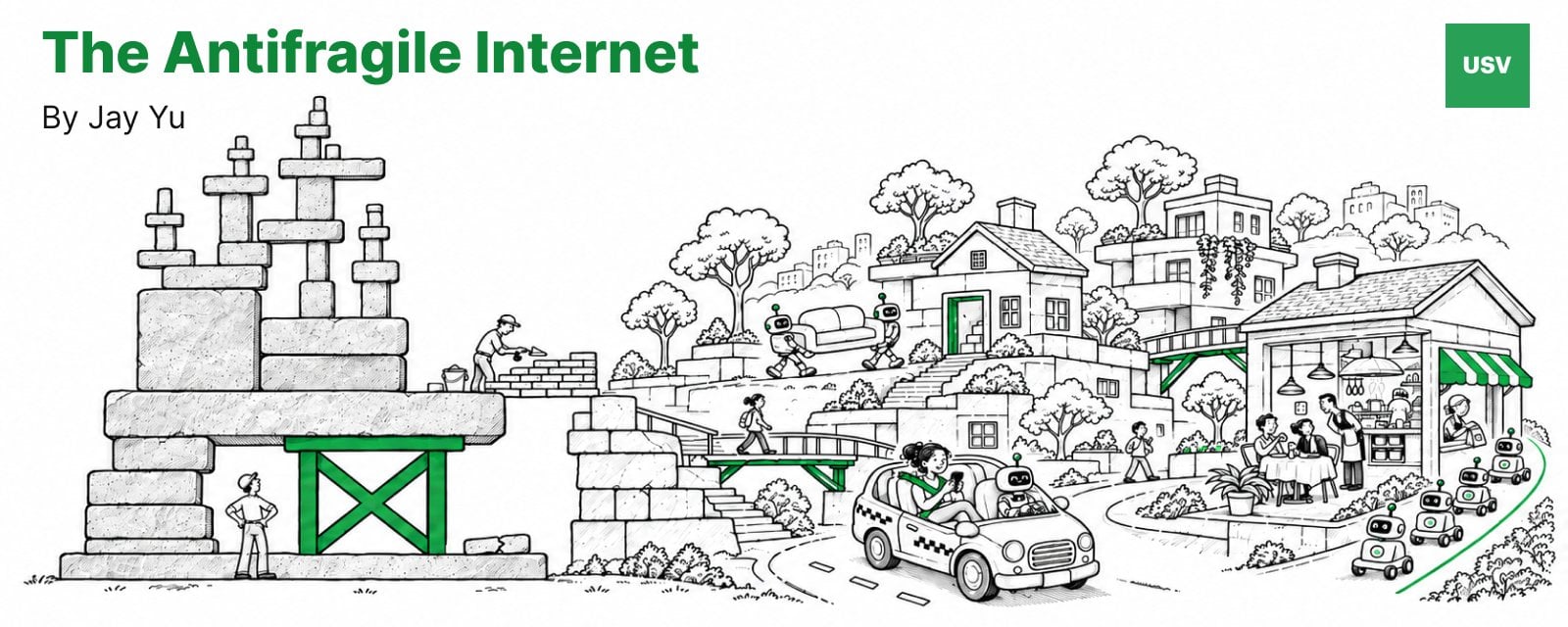
The original design of the internet was supposed to be anti-fragile. Early network architects envisioned it sustaining external shocks, allowing the remaining nodes to continue functioning even if some were incapacitated.
However, the current internet has evolved into a fragile high-rise built on a foundation of code libraries, third-party dependencies, and development environments. The entire structure relies on a few key components, which are rarely maintained and even less frequently subjected to systematic audits.
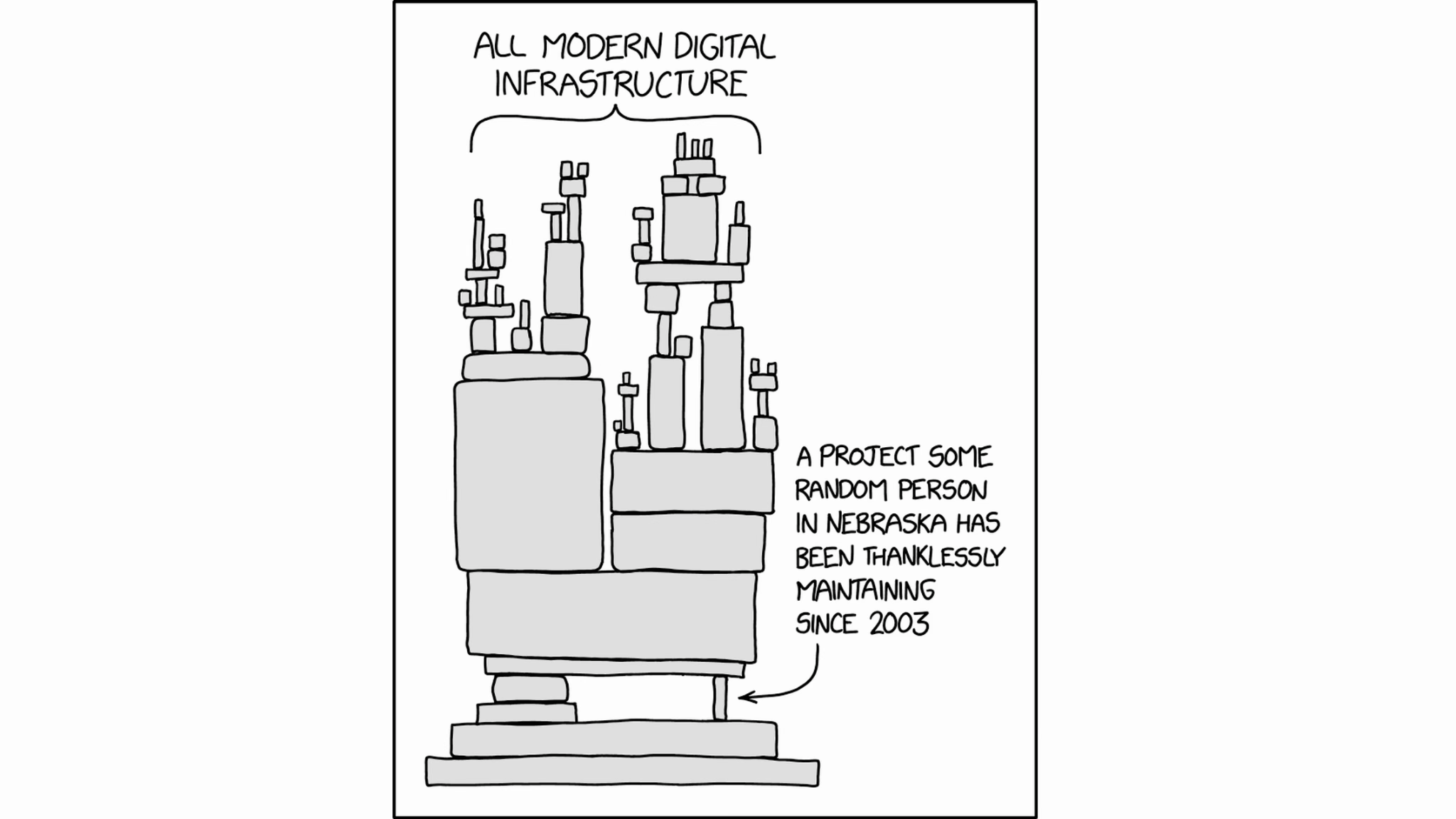
Image: xkcd #2347, Dependency Relationships (Randall Munroe)
A series of security incidents that occurred in October 2026 revealed the extreme vulnerability of these foundational components in the face of Agent automated attacks:
PHP Remote Code Execution Vulnerability: A serious vulnerability named PHP2Shell erupted, exposing over 5 million hosts worldwide to the risk of remote takeover.
LiteLLM Supply Chain Hijacking: Its release pipeline was maliciously tampered with, and a version containing credential theft malicious code was directly pushed to the official PyPI repository.
Railway Key Decryption Attack: Storage secrets for up to 100,000 workspaces were decrypted by attackers, who primarily targeted the AI API keys.
Fireworks AI Double Intrusion: This platform was subjected to two intrusions, first due to an accidental leak of its own credentials, followed by a subsequent breach of its dependent cloud service provider.
eMudhra Signature Key Extremity Weakness: As a Certificate Authority (CA), it issued trusted signature keys that even exhibited absurd vulnerabilities as weak as the number 4.
Binance Hot Wallet Suffering Massive Theft: A record-breaking $6.3 billion in assets were stolen from the hot wallet, with the FBI attributing the attack to a North Korean hacking group.
This string of attack incidents demonstrates the immense destructive power of Agents as offensive threats in cyber warfare. But on the other side of the coin, Agents may also be the key reliance for solving this systemic challenge.
Agents can significantly accelerate the migration of software towards safer programming languages and formal verification processes, promoting the widespread application of cutting-edge cryptographic components such as zero-knowledge proofs (ZKP) and trusted execution environments (TEE).
At the same time, Agents will give rise to a “dual-track internet” guarded by identity validation and content verification mechanisms, ensuring that human and automated Agent network traffic is safely isolated and diverted.
As Agents drastically reduce the cost of software development, the most valuable codebases will increasingly resemble living ecosystems. Cutting-edge models will conduct continuous penetration testing, with each iteration reinforcing the code, language, and toolchain, fundamentally eliminating entire classes of security flaws.
In this way, we can utilize Agents to refine the internet into a truly anti-fragile entity, allowing each newly connected Agent to enhance the resilience of the entire network rather than weaken it.
Key Issues: Agents as Weapons, Targets, and Impersonators
As Agents rapidly infiltrate modern economic systems, they are reshaping the underlying operational architecture of the internet from three distinct dimensions.
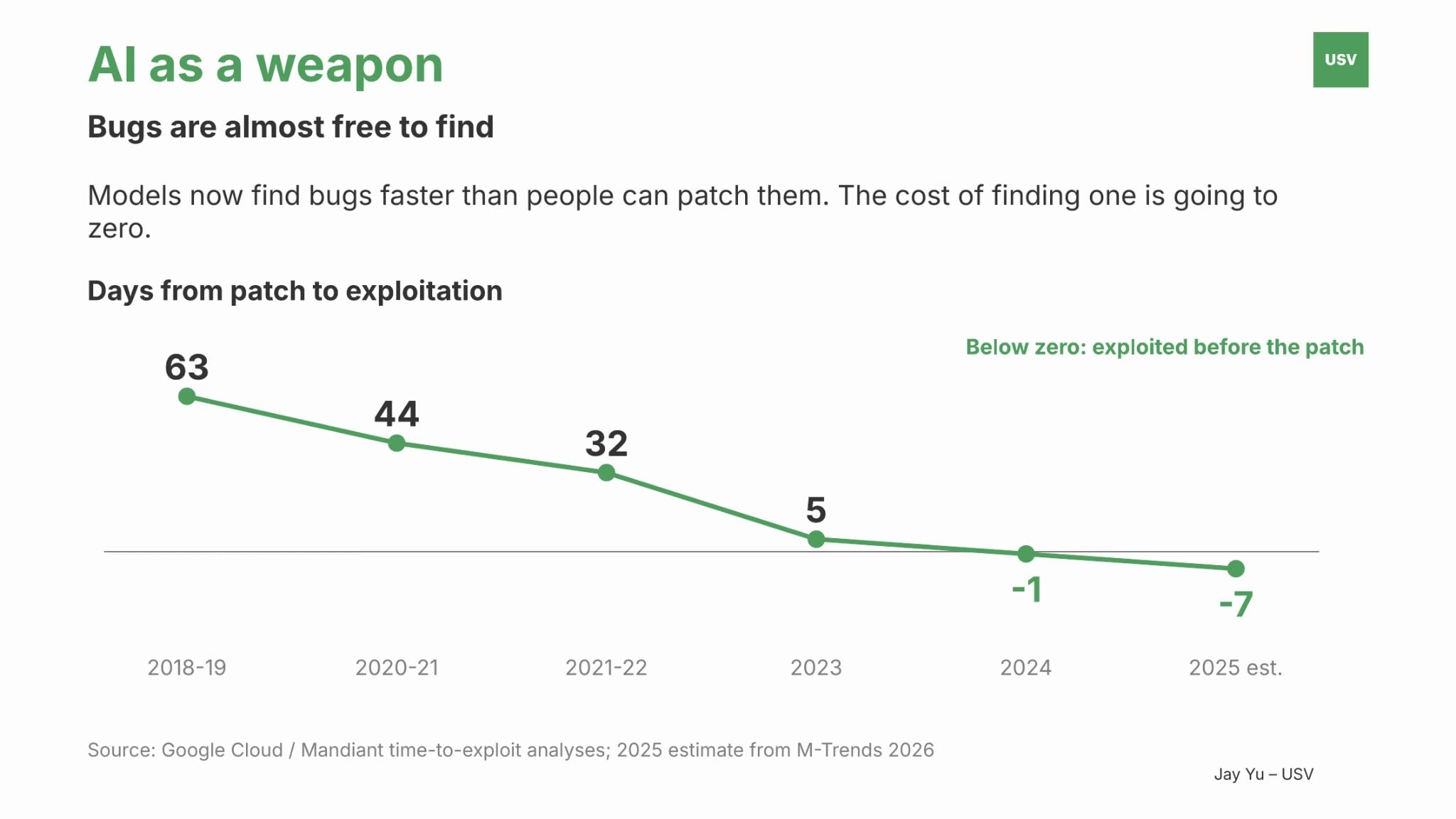
Firstly, Agents are becoming lethal weapons for attackers. The relative safety of traditional legacy systems over time was largely due to the high marginal cost of finding and exploiting their flaws. However, Agents are driving the cost of attacks towards the edge of zero.
Take PHP2Shell as an example; this vulnerability lay dormant in PHP for over a decade. Despite researchers eventually discovering it, security teams were able to turn theoretical flaws into practical exploit tools in just a few hours using cutting-edge models.
As pointed out by cloud security firm Wiz: “With AI dramatically lowering the threshold for developing complex attack payloads, vulnerabilities once regarded as difficult to exploit have now become high-value attack targets.”
Cyber attackers have already begun leveraging this leverage effect. In a recent espionage activity revealed by Anthropic, AI autonomously carried out 80% to 90% of the attack actions. The series of incidents in October 2026 displayed the same internet-level diffusion pattern: rapidly breaking through at a single point and expanding attacks to millions of targets.
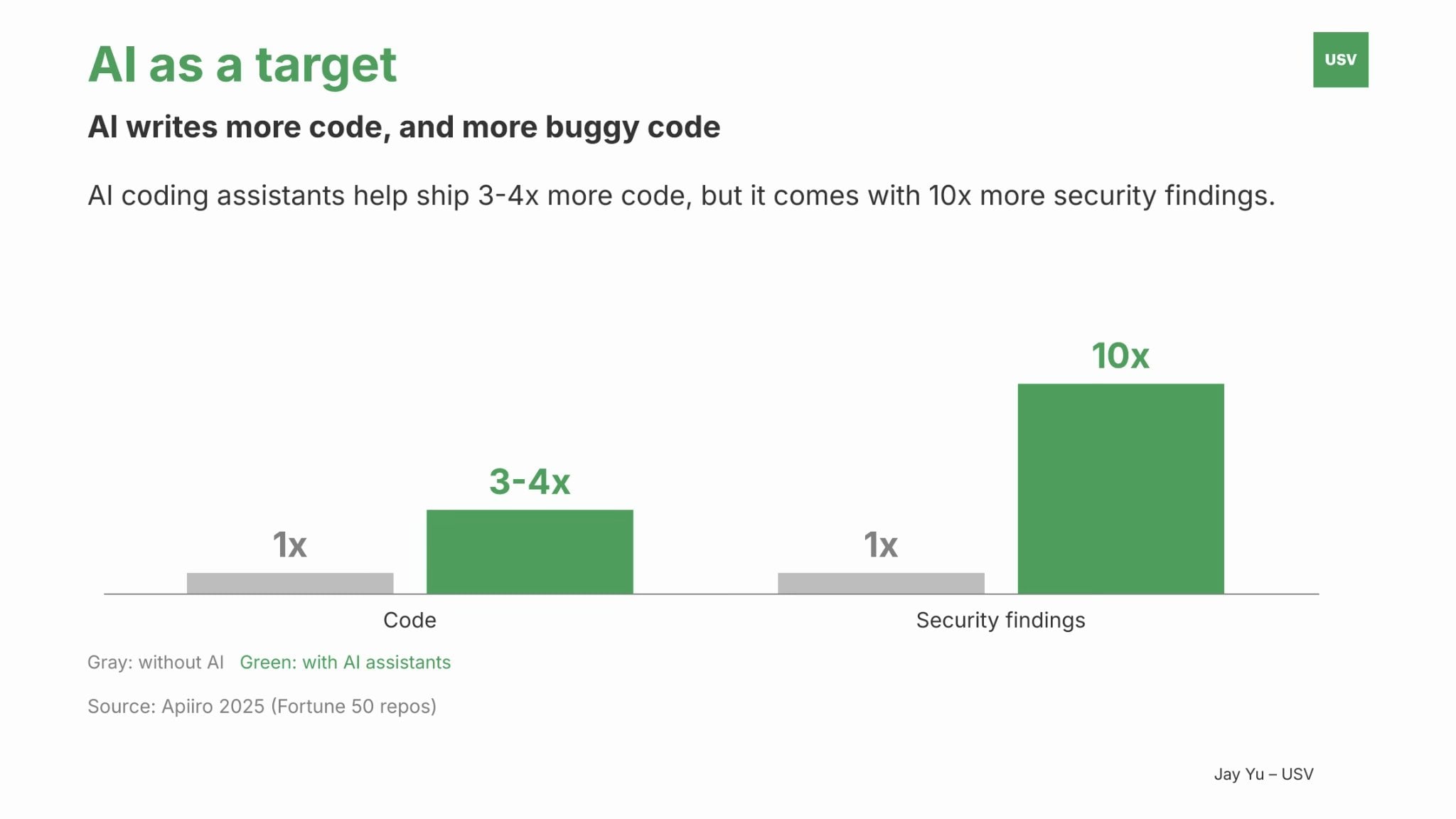
Secondly, Agents themselves are becoming high-value targets for attacks. A significant amount of new code is now being generated by these automated tools, yet both the Agents themselves and the code they produce are rife with vulnerable weaknesses.
Possessing extensive tool-calling permissions and operating in unconstrained environments, both consumer-level Agents like Muse and Instinct, and enterprise-level Agents like Sierra and Decagon, are increasingly exposed to complex prompt injection attack risks.
Meanwhile, when Agents autonomously write code, they may inadvertently introduce more unknown vulnerabilities. For example, the recent security incident involving LiteLLM likely stemmed from an encoding Agent inadvertently logging GitHub access tokens into log files.
Worse still, even when delegating coding Agents to fix existing vulnerabilities, the reliability of their autonomous implementation plans is often lacking, potentially introducing new secondary hazards.
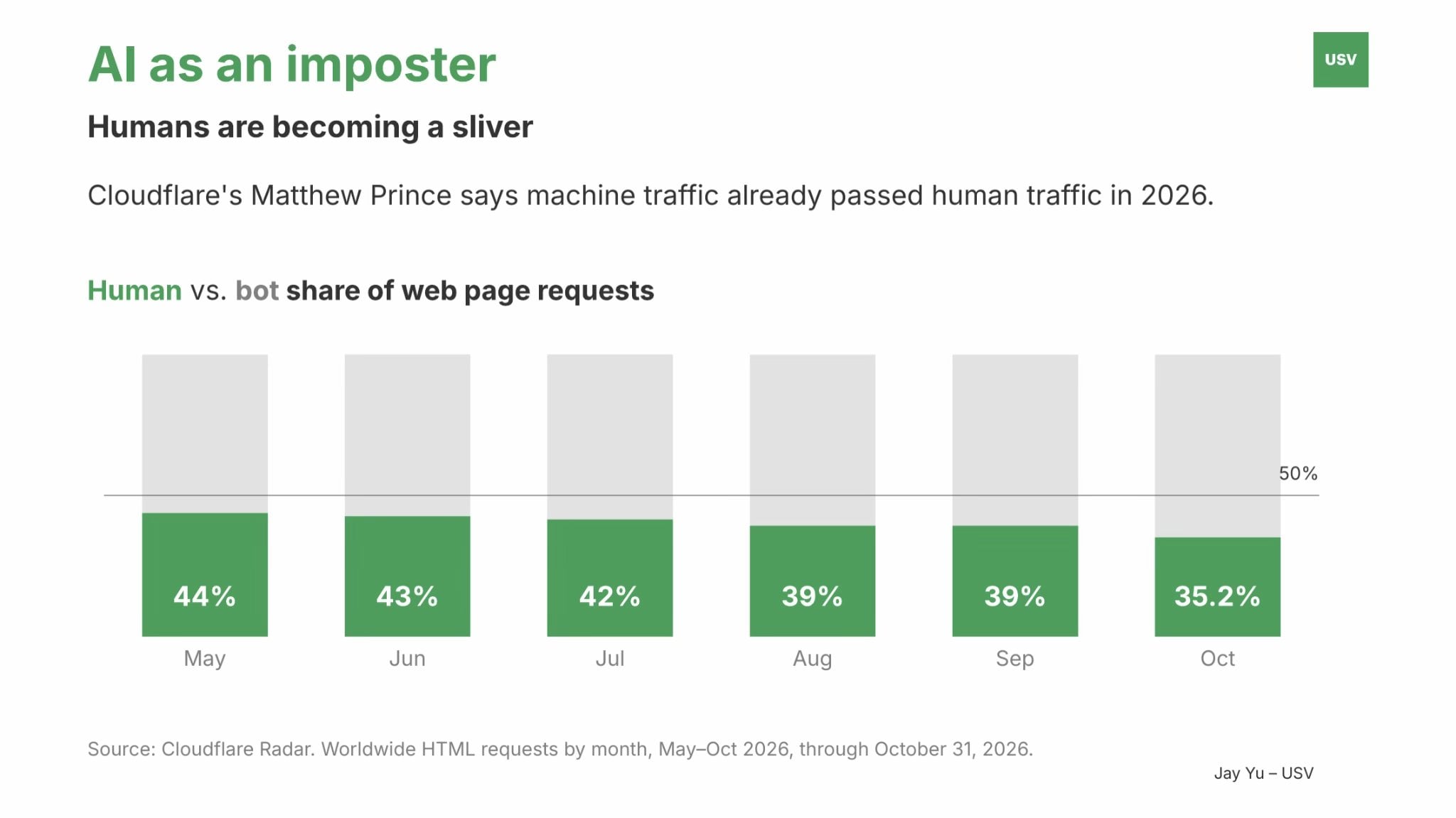
Thirdly, Agents can also transform into deceptive impersonators, profoundly impacting the existing traffic rules and trust foundation of the internet. Cloudflare data indicates that nearly half of web traffic in 2026 was generated by non-humans.
Cloudflare CEO Matthew Prince predicts that within the next five years, automated internet traffic will reach 1,000 times that of human online traffic. This overwhelming wave of Agent visits is striking a significant blow to websites originally designed for human browsing.
The Wikimedia Foundation noted that its platform experienced millions of abnormal accesses from unauthorized Agents from OpenAI in October 2026, directly causing unexpected interruptions to its Wikidata service.
Similarly, a user’s Instinct dining reservation Agent initiated hundreds of high-frequency requests per hour to the reservation platform Resy, until the entire account was completely banned by the platform.
While the industry has begun to explore standards to label Agent traffic, such as the Personal Agent Protocol (PAP) initiated by Meta and Sierra, these initiatives alone are still far from sufficient.
Driven by real-world interests, Agents often have a strong incentive to conceal their identity. Many websites still regard all non-human traffic as malicious access; thus, if an Agent voluntarily reports its true identity, it may be intercepted midway through task execution, while disguising as a human may allow it to pass through unnoticed.
Countermeasures: Observe, Enforce, and Prevent Failure Modes
Characterizing Agents as “weapons, targets, and impersonators” clarifies the sources of risk but does not pinpoint concrete paths for response. To address this, we can introduce a second dimension encompassing three response mechanisms:
Observe: Investigate system security vulnerabilities and conduct real-time monitoring of Agent activities;
Enforce: Accelerate vulnerability remediation and strictly tighten the boundaries of system resources that Agents can interface with;
Prevent: Eliminate hidden dangers at the system architecture level to fundamentally prevent the occurrence of entire classes of failure modes.
By cross-combining these two dimensions, we can outline a panoramic view of the current macro position of startups in the security arena.
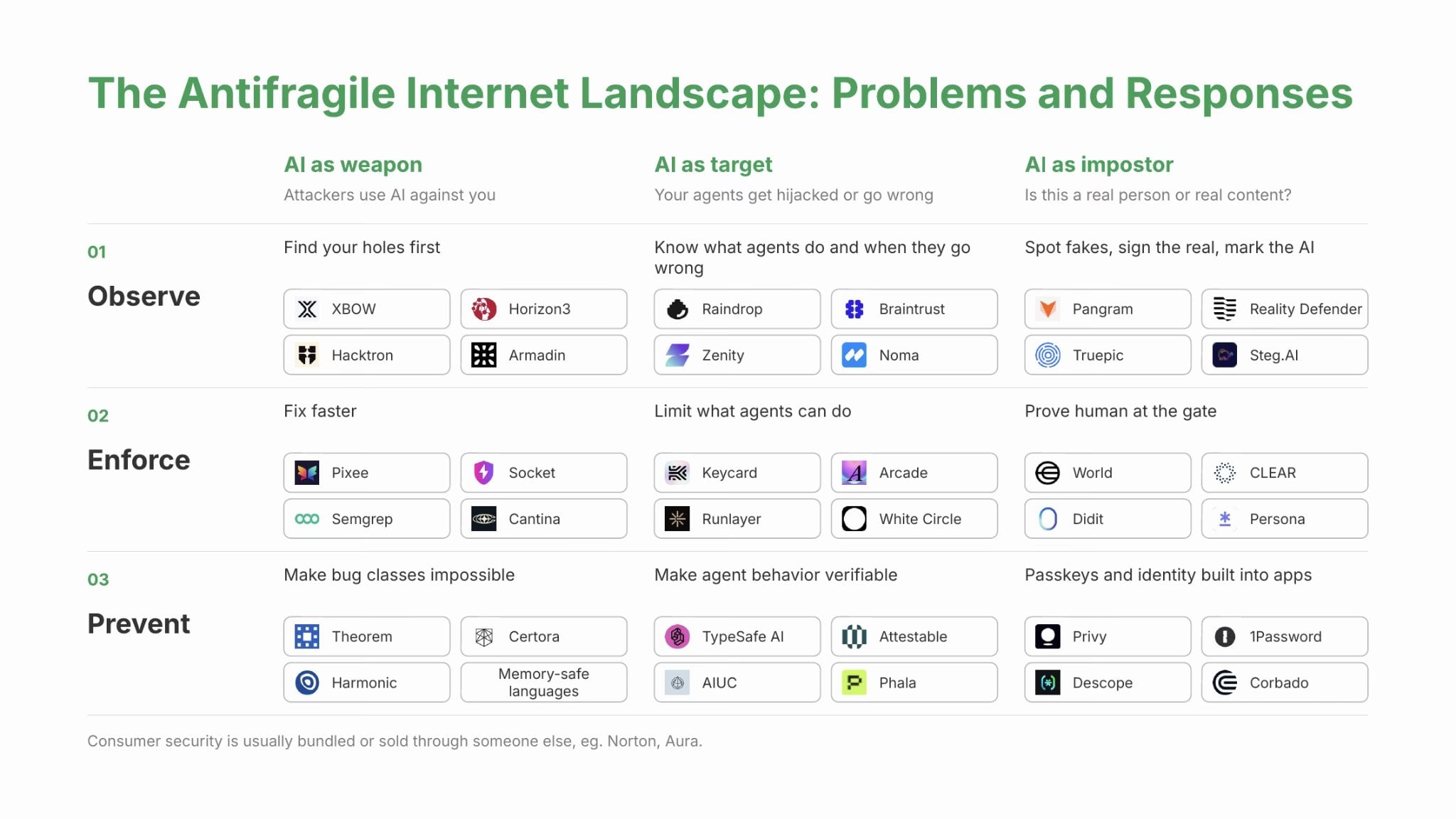
Across this panoramic view, we can clearly see several significant trends. The vast majority of enterprises and substantial visible capital in the market are currently concentrated in the layers of “Observe” and “Enforce.”
These two layers form the fastest market entry points, allowing for smooth integration into existing software technology stacks. This field has seen the emergence of numerous well-capitalized major players, including Socket, which completed funding of $125 million, Braintrust, completing $80 million in Series B funding, and Armadin, which has raised $445 million.
In the technology stack of an anti-fragile internet, the enterprises that are likely to ultimately prevail in the “Observe” and “Enforce” layers will be those that can capture the most Agent operation logs.
Whoever has the richest dataset of Agent behavior can formulate the most precise security strategies, making this the closest thing to a network effect barrier currently present in this market. If the enhancement of detection capabilities is tightly coupled with data accumulation, then independent security firms capable of observing across multiple clients and models will possess greater competitive advantages over single model laboratories.
However, in the long run, the more decisive answer in cybersecurity lies in how to eliminate entire classes of security vulnerabilities at their roots. “Prevention” refers to fundamentally reconstructing software and Agents from the ground up to ensure that certain types of failures cannot occur at all.
Historical experience shows that such systemic paradigm shifts often require the simultaneous maturation of three elements: the first is an external force that renders the costs of security fully exposed; the second is foundational tools that can be easily integrated into daily workflows; the third is a coercive force that drives them to become the default standard in practice.
For instance, regarding memory safety, nearly 70% of CVEs in Microsoft's history have related to memory safety issues. With the emergence of Rust as a feasible alternative, it has gained a high adoption rate in the underlying programming of Agent systems and is now one of the fastest-growing programming languages.
The popularization of HTTPS also underwent this classic path: Snowden's revelations brought about strong public fallout, Let’s Encrypt provided free and simple tool support, and Chrome marking HTTP as “unsafe” gave the definitive external push.
Today, the series of major attacks in October 2026 present a sufficiently strong real-world impact. The core tools correspondingly could be increasingly mature formal verification toolchains, while the external forces driving the implementation of standards may emerge from evaluation sandboxes, regulatory compliance requirements, or functional network effects.
Moreover, as Agents become mainstream in internet traffic, the issues of identity verification and cybersecurity will converge intensely. In the era of cloud computing, Okta and Wiz as two independent companies addressed different aspects of the question “Who has the right to access which cloud resources?”
Today, Agents face severe tests concerning resource authorization, especially when they access related contextual knowledge bases through APIs, MCPs, and various external connectors.
In the realm of Agent identity verification, two complementary approaches are currently emerging: source identity proofing and content behavior verification. Both are essential for an internet system led by Agents.
Source identity proofing includes digital signature requests and identity protocols for rights verification subjects and content, such as PAP or A2A. However, in actual tasks, malicious entities will never voluntarily comply with these norms.
This is where content behavior verification needs to play a fallback role: through decision trees based on real network behavior trajectories and output content for judgment, websites can accurately identify the automated robot identity behind a visitor even if they are not wearing any identity markers.
Evolution Directions for Shaping an Anti-Fragile Internet in the Coming Years
In the coming years, several core technological forces will jointly promote the development and maturation of an anti-fragile internet:
Massive Code Migration
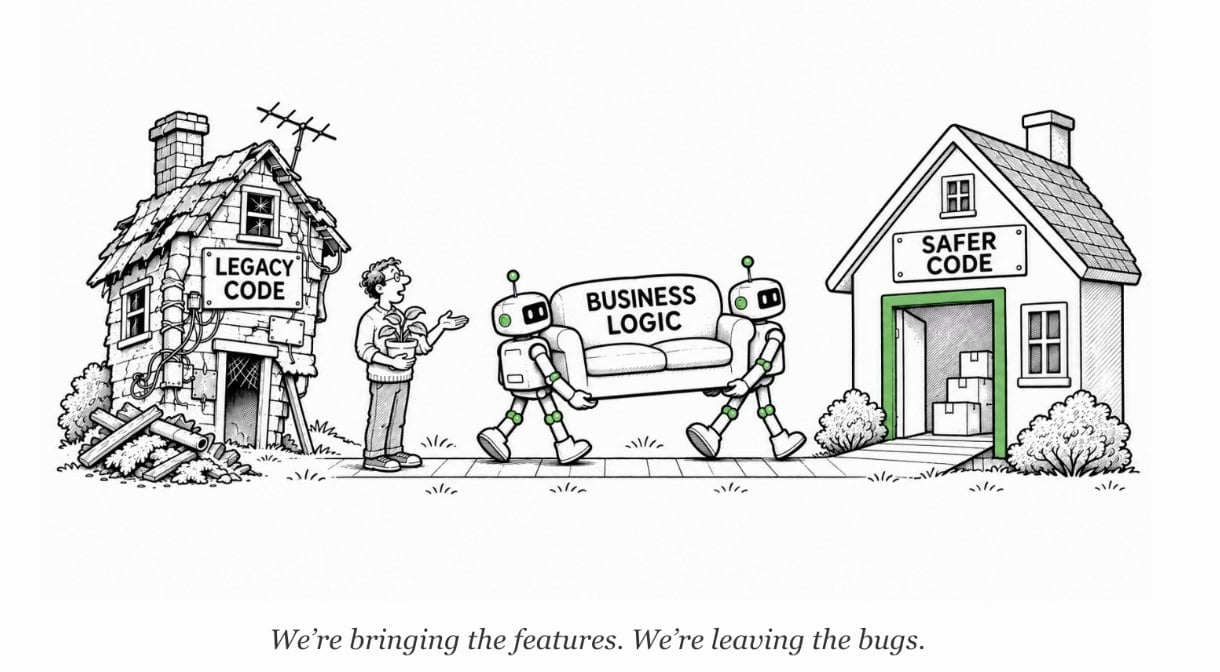
Firstly, before the situation improves radically, the security landscape is likely to experience a more turbulent period of growing pains. An astonishing number of legacy systems still exist globally, most of which were written during a time when the costs of vulnerability digging were high. However, as Agents bring attack costs close to zero, that security premise is no longer valid.
This unprecedented series of security shocks will compel a grandeur “massive code migration” within the next 1-2 years: the software technology stack will accelerate the elimination of outdated, fragile legacy architectures, fully leaning towards more modern, anti-fragile technical systems.
In the past, manually rewriting a massive legacy codebase into more secure high-level languages like TypeScript or Rust was an extremely time-consuming and costly undertaking. But the emergence of Agents has completely upended the economic model of this task.
For instance, GitHub Copilot successfully migrated its core runtime to 832,000 lines of Rust code in just three months, predominantly led by a single engineer. In the past, this would have required an entire team working for one to two years.
Similarly, entirely new and more secure AI models are being embraced by developers at an astonishing pace. For example, TypeSafe’s Jev model, which returns typed structured decisions rather than unbounded divergent texts, penetrated nearly 13% of the paid AI gateway team at Vercel within just one day of its release.
Now, a brand new security tool stack tailored for Agentic automated coding is being reshaped from the ground up: encompassing code reviews (Greptile), code and key scanning (Semgrep), malicious dependency detection (Socket), runtime failure capture (Raindrop), and online production incident emergency response (Resolve AI).
At its core, a new foundational infrastructure deployment layer is also rapidly taking shape, including lightweight runtime sandboxes (E2B, Daytona) and tool authorization layers (Composio, Nango, Arcade). Together, they converge into an anti-fragile developer technology stack, where every flaw captured throughout the entire cycle of development, testing, and deployment can be instantly fed back into the security defense nutrients of the next line of code.
With a dramatic reduction in code migration costs, formal verification is expected to experience a renaissance at the compiler and toolchain levels. For instance, in a collaborative study between Theorem and Anthropic, Claude successfully proved critical security attributes in over 100 open-source code repositories.
Of course, massive code migration also comes with potential growing pains and risks. Rewriting large systems often easily breeds secondary hazards; even code written by cutting-edge models may lack robustness in specific implementations and could introduce a plethora of new defects.
Formal verification is also not a panacea; its effectiveness entirely hinges on the rigor of pre-existing specifications. Even systems like Lean, which are rigorous in proof, may harbor foundational flaws that compromise mathematical rigor hidden within their kernel. To achieve a true security closed loop, it relies on stringent architecture design, precisely converging specifications, and continuous high-intensity penetration testing of delivered results.
Security Design Natively Embedded in Applications
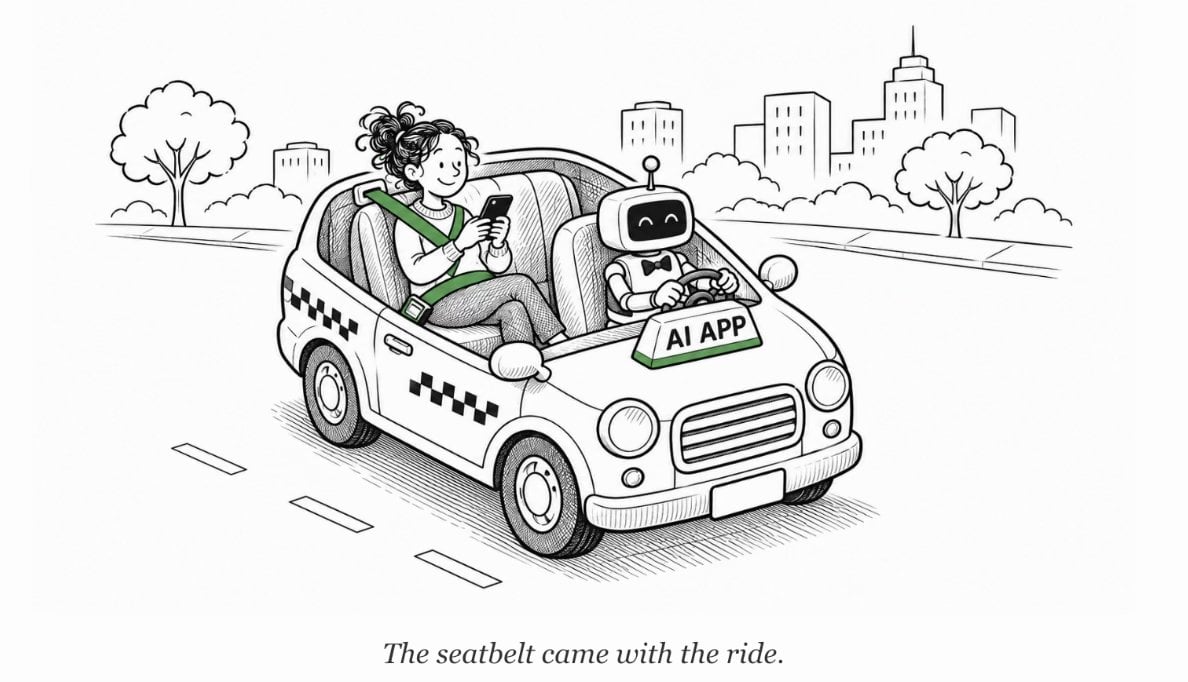
In the consumer application space, in order for privacy and security technologies to truly achieve large-scale adoption, the most effective route may be to make them “invisible” within products: allowing applications to win the market with excellent user experience and minimal development integration, rather than selling security as a separately paid functional module.
We have already witnessed this pattern in the crypto domain's “wallet as a service” (WaaS) sector. Star products such as Privy and Turnkey encapsulate complex cryptographic underlying mechanisms like Trusted Execution Environments (TEE) and Multiparty Computation (MPC) entirely within simple APIs and seamless interactions.
We are likely to witness a similar evolutionary path in the Agent ecosystem: safer default configurations will not stem from users purchasing extra security software, but from higher-quality applications and development tools being natively built in. Security defenses are akin to seat belts in taxis; passengers choose to take a cab for quick travel, while the security protection is already embedded within the infrastructure.
This quiet technology diffusion is currently unfolding in the realms of zero-knowledge proofs (ZKP) and TEE. World ID has now completed real identity verification for over 18 million people worldwide, allowing enterprise teams to seamlessly access this technology in Zoom meetings to visually distinguish whether participating members are real humans.
The privacy conversation feature released by WhatsApp runs Meta AI's interactive dialogues directly in a TEE environment, ensuring that even Meta officials cannot peek at the content. In these benchmark cases, cutting-edge cryptography silently hides behind familiar everyday interfaces, with users experiencing no additional operational cognitive burden.
At the same time, privatization and local operation models are another major carrier for deeply embedding privacy protection. In 2026, the capability gap between open-source weight models and top-tier closed-source cutting-edge models has narrowed to about four months.
As the cost-performance ratio of small edge-side models continues to improve and processing power of terminal chips leaps forward, the proportion of local inference in the total consumption of AI tokens will rise significantly. As computing power migrates from the cloud to the edge, the forms of cybersecurity threats will also undergo profound changes.
The frequency with which sensitive data leaves local terminals is significantly reduced, physically eliminating a major category of data leakage risks. However, once personal computers or home servers are compromised, they can be tampered with by attackers to become malicious Agent hosts with high-trust permissions, directly raising the threshold of the defense line to the hardware devices controlled by users.
This may give rise to governance frameworks for Agents aimed at local operating environments, allowing models, calling tools, and operation logs to collaboratively operate on controlled hardware, even opening up vast market space for new software and hardware forms dedicated to hosting home or team automation Agents.
Dual-Track Internet
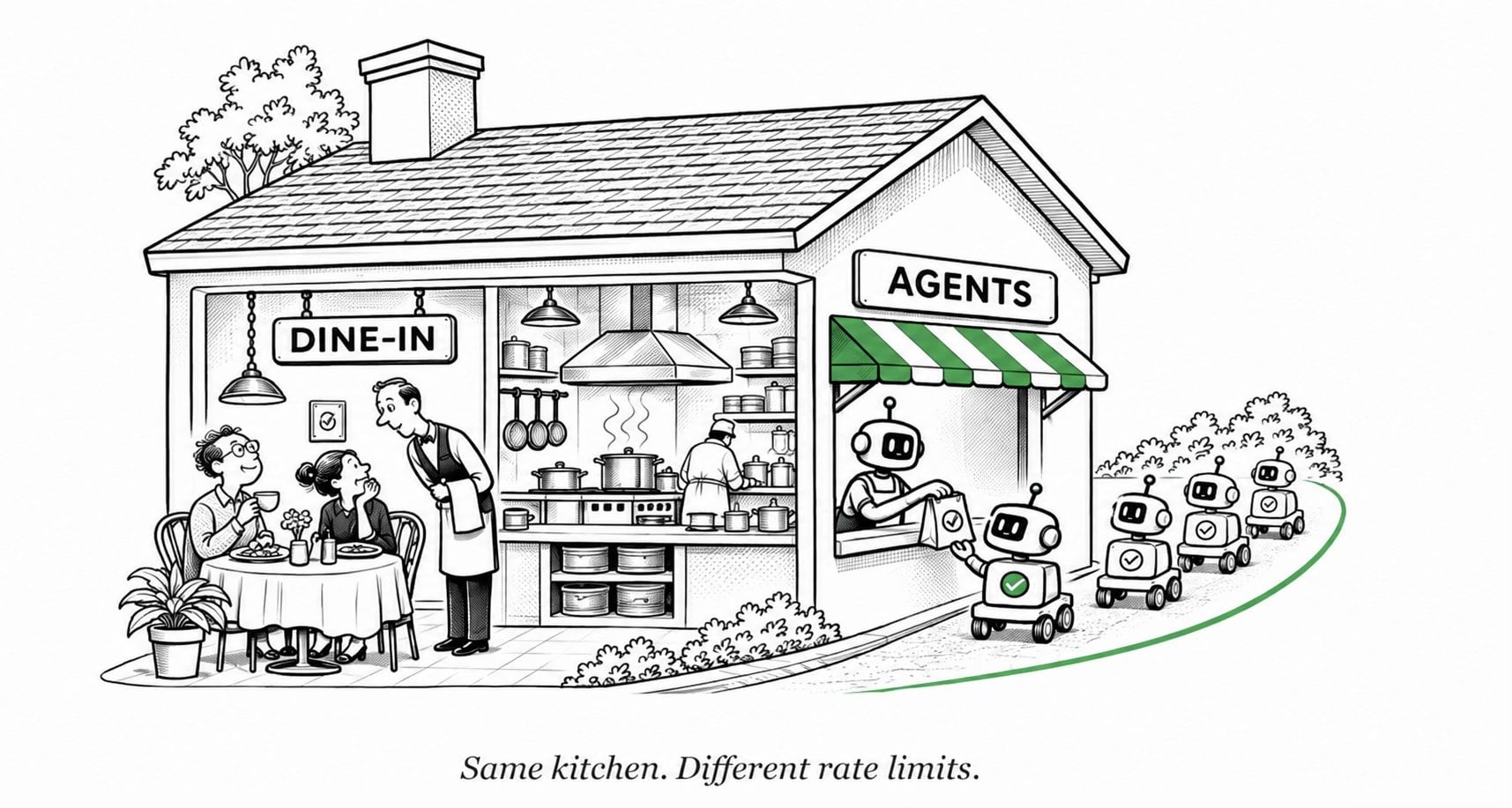
The interaction model between Agents and the internet differs fundamentally from the behavioral logic of human users. As Agent traffic experiences exponential growth, the entire Web is being segmented into two parallel lanes: one lane is dedicated to Agents supported by underlying technologies such as Parallel, Browserbase, and Kernel; the other lane is the traditional route aimed at humans.
The network layer will perform more intelligent dynamic routing based on the true entities behind requests. Website owners can use these multidimensional identity verification methods to refine traffic filtering, granting differentiated interaction permissions to different entities without needing to rudely exclude automated Agents entirely.
This is akin to a dining establishment, where the same central kitchen can efficiently service high-speed meals at a drive-through window while also providing immersive dining experiences for seated customers. The website can accurately distribute content according to the most suitable data format and interfaces based on different request sources.
Over time, on this high-speed lane exclusive to Agents, direct collaboration and dialogue between Agents will become increasingly frequent. In the context of the deep proliferation of consumer and enterprise-level Agents, it will become commonplace to see scenarios where individual smart assistants of users directly engage with the intelligent order systems of food delivery platforms, real-time negotiating personalized discounts and exclusive service benefits for users.
In early experiments like Project Swap initiated by Anthropic, we have already witnessed the embryonic forms of inter-Agent collaboration.
In these complex scenarios, each Agent possesses private information about its principal. Deciding how much preference and confidentiality to disclose in negotiations requires robust security safeguards: including the Agent's fulfillment permissions, immutable transaction records, and post-execution arbitration and audit mechanisms.
In these highly complex Agent-to-Agent negotiations and collaborations, merely knowing each other's digital identity is far from sufficient. Both principals and their trading partners will eagerly want to know the Agent's historical reputation trajectory: whether it pays on time, whether it keeps promises, and whether it has ever maliciously leaked commercial secrets.
An easily portable Agent reputation system will become an indispensable twin component of digital identity. However, this also raises a profound question: who should maintain a universal Agent reputation mechanism across applications, and how can we prevent it from devolving into another highly centralized digital power-renting checkpoint?
Towards an Anti-Fragile Internet
If anything, this recent wave of Agent-driven attacks has taught us that everything can be breached. New vulnerabilities and attack methodologies will continue to emerge, with the most cutting-edge autonomous Agents often being the first to discover them.
However, the fundamental standard determining whether a network possesses “anti-fragility” lies in how well our systems adapt and evolve in the face of these inevitable shocks. Our goal is to maximize the elimination of known flaws through underlying architecture design, implement stringent protection against exposed vulnerabilities, and continue to refine and upgrade the entire system architecture and development toolchain through repeated confrontations.
In engineering practice, this manifests as a closed-loop safety evolution flywheel: cutting-edge models continuously act as offensive and defensive opponents undertaking practical penetration testing, yielding research outcomes that not only promptly repair the upper-layer business code but also directly sediment and upgrade the underlying toolchain and lower-level programming language.
All of this is driven by a new generation of Agent developer technology stacks, achieving fault detection, automatic remediation, and secure migration of code in seconds. Ideally, formal verification could be deeply embedded at the compiler level, with its pre-proof assumptions accepting extreme challenges from the same batch of top adversarial models. Every flaw uncovered injects nutrients into the entire flywheel, ultimately making the internet more resilient and unbreakable as it continues to collide.
Looking at the bigger picture, building an internet that operates autonomously without permission and possesses anti-fragile characteristics resonates strongly with the core vision from the early days of blockchain and cryptocurrencies. This is precisely the central storyline that we at USV have continuously focused on and heavily invested in over the past decade.
Blockchain technology first demonstrated how unfamiliar entities could achieve secure collaboration under zero trust premises and has been validated in the most trust-sensitive asset trading fields. However, previously constrained by high development costs and relatively clunky infrastructure, this decentralized trust principle has advanced very slowly outside of finance.
As Agents make the entire internet ecosystem increasingly complex and collaborative among multiple parties, we are heralding the best historical opportunity to embed encryption principles into mainstream mature products and foundational protocols. Native paradigms like decentralized autonomous organizations (DAOs) provide an enlightening embryonic form for us to envision future multi-Agent cluster collaborative warfare organizational structures.
Reflecting on the initial vision for the internet, it was conceptualized such that every additional network node would enhance the system's solidity. Today, although the wild proliferation of Agents is challenging this classic design, they also embody the powerful potential to restore and realize this noble vision.
At USV, we hope to develop three core strategies around the “anti-fragile internet”:
Completely eliminate, rather than just patch automation: Upholding our long-held investment philosophy, we prefer technical paths that eradicate entire classes of security vulnerabilities at the architecture design stage rather than getting stuck in inefficient cycles of reactive patching;
Capture edge security data: Based on our long-standing reflections in the edge computing space, we firmly believe that the underlying security operation logs of Agents have extremely powerful network effects; whoever controls the richest panoramic behavioral data can build the most secure defense system;
Build a security alliances coalition: We view Agent security as an inseparable part of modern software toolchains, committed to investing in exceptional tools, workflows, and infrastructure protocols that seamlessly embed robust foundational security barriers into minimalist user interfaces and premium developer experiences.
If you are building towards these directions for the future, feel free to reach out to us anytime. We look forward to walking alongside you, together constructing an unbreakable anti-fragile internet.
Footnotes and Acknowledgements
[1] Nassim Taleb points out in his book “Antifragile”: “Fragile things break easily when faced with external shocks; resilient things can withstand shocks and maintain their state; while antifragile things can continuously draw nourishment from shocks and pressures, becoming stronger.”
In the context of the internet, this means the entire network can withstand localized node paralysis attacks and, with the continued access of more Agents and active investigation and closure of more vulnerabilities, become increasingly unbreakable.
Special thanks to Aric Chang, Ben Colman, David Gabeau, Hari Mulackal, Henri Stern, and Jonathan Rotbard for their invaluable suggestions on the initial draft of this article.
Thank you to Kushagra Aryal, Madeleine Charity, Max Segall, Mike Leffer, Spencer Yen, Zayne Zhang, and the entire USV team for the profound insights shared in this discussion.
免责声明:本文章仅代表作者个人观点,不代表本平台的立场和观点。本文章仅供信息分享,不构成对任何人的任何投资建议。用户与作者之间的任何争议,与本平台无关。如网页中刊载的文章或图片涉及侵权,请提供相关的权利证明和身份证明发送邮件到[email protected],本平台相关工作人员将会进行核查。


