Author: Heart of Computing Power
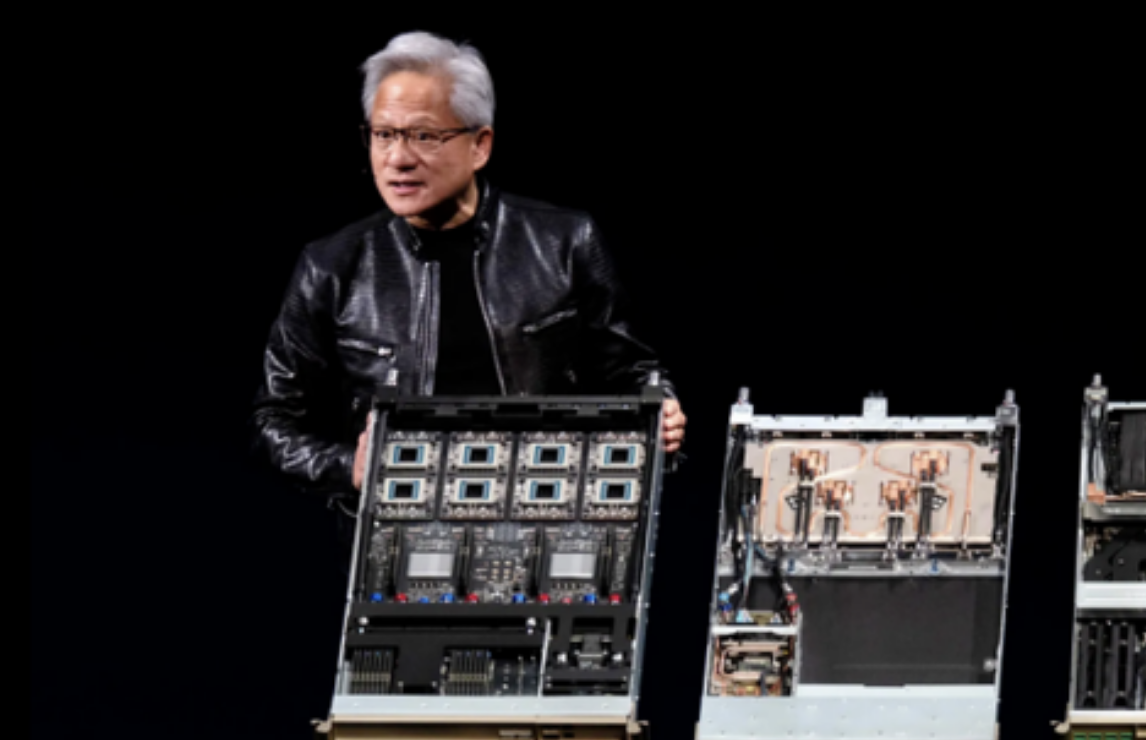
On the evening of January 12, a major news broke in the tech community. Jensen Huang, the soul of Nvidia, suddenly announced his resignation, stepping down from all positions including President, CEO, and Director, with the company’s former CFO, Kress, temporarily taking over.
As soon as the news was released, Nvidia's stock price dropped over 10% in pre-market trading, and on November 12, the U.S. stock market opened with a decline of about 14%, closing with a narrower drop of 4.3%.
Everyone was discussing how Nvidia's stock price would move, but those in the data center circle were watching the construction sites far away in Southeast Asia and South America.
Because with Huang's departure, those owners spending hundreds of billions of dollars to build data centers are facing an unprecedented crisis, and news has already emerged from European and American data centers that they are preparing to raise prices by 15% next January.
1. Big Companies Left a Way Out
Why would the resignation of a CEO in the United States cause sleepless nights for data center owners in Southeast Asia and South America?
Because, according to contracts, the tenants in these data centers are all ones with extremely low withdrawal costs.
In the past two years, due to restrictions on purchasing high-end Nvidia chips domestically, Chinese internet giants have been circumventing to rent data centers in Southeast Asia and South America.
It is even said within the industry that over 90% of the tenants in local data centers are Chinese giants.
When big companies sign contracts, they typically commit to long-term leases of 5 to 7 years, locking in dozens to hundreds of data centers at once.
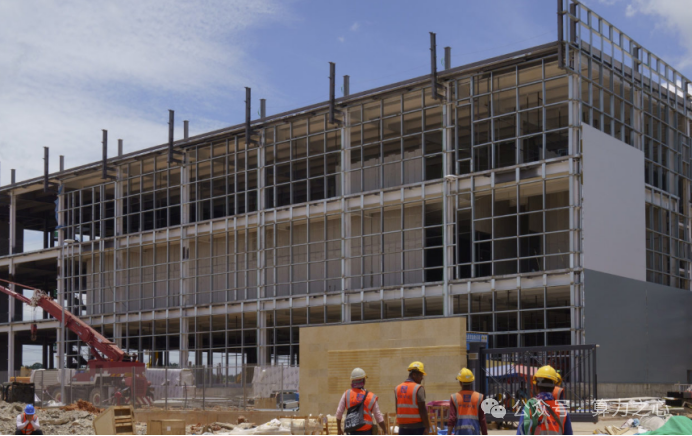
Local owners, seeing big orders from the global top 20 giants, believed it was a sure profit, and many borrowed hundreds of billions of dollars from banks to buy land and build data centers.
However, when you open the contracts, you will find the details:
These big companies have calculated risk control to the extreme, not only compressing the advance payments to a minimum but also setting the total penalty for withdrawal at only a few hundred million dollars.
In the industry’s view, the reason big companies sign contracts everywhere is to cope with changes in international situations; a few hundred million dollars is just a drop in the bucket for a trillion-dollar behemoth, and the design of low penalties has long given them an exit strategy.
This results in an extremely unequal risk distribution.
Big companies take a few hundred million dollars as bargaining chips and can withdraw at any time if things go wrong.
But local owners are betting their entire fortune, with hundreds of billions of dollars in bank loans weighing heavily on them.
2. The Channel for Buying Chips is Suspended
Whether the big companies will really abandon contracts depends entirely on one thing: whether these data centers in Southeast Asia can still smoothly obtain Nvidia chips.
And the resignation of Jensen Huang on November 12 suddenly put this channel for obtaining chips at risk.
To clarify, Huang's resignation seems to have nothing to do with the company's business; it is mainly due to a personal scandal he faced, coupled with an independent investigation he is undergoing, while Congress has also been putting pressure on him.
Because three committees in Congress have issued letters requiring him to attend a closed briefing on November 18.
On November 12, he agreed to testify before Congress before Thanksgiving, with specific dates still under negotiation.
The company chose to announce the leadership change early on November 12, allowing Kress, who has managed finances at the company since 2013, to step in temporarily. From the outside, this seems to be to separate Huang's personal turmoil from the publicly listed company.
The company's product plans have not changed, and the financial report on November 17 will also be released as usual.
Many analysis agencies believe that Huang's resignation seems more like a temporary retreat to avoid the spotlight and that there is a possibility he may return once the matter is resolved.
But the problem is that the customers purchasing the cards from downstream may not wait.
Huang is too deeply tied to Nvidia; many major clients are willing to quickly pay for orders based largely on their trust in him.
Now that he suddenly has an issue, even if it’s only temporary, many pre-planned purchasing plans are likely to be delayed or reassessed for the sake of caution.
Moreover, AMD and Google are desperately pushing their own chips, waiting to take Nvidia's customers.
For the data centers in Southeast Asia that rely on Chinese clients, the problems are even greater.
It is well known that the reason these places could obtain Nvidia chips is largely due to the networks built within the Taiwanese supply chain and Huang's own personal connections.
Throughout the years of ongoing friction between the U.S. and China over chips, Huang has been the one mediating and negotiating between the two sides; he is also the top figure within Nvidia who insists on doing business in the Chinese market.
Now that Huang has stepped down, the interim management team’s immediate concern is to handle the congressional investigation and stabilize the stock price.
Given the current political climate in the U.S., it will be difficult for the new management team to negotiate space for Chinese-related business like Huang did, risking political backlash.
Without Huang’s personal connections backing them, the channels for data centers in Southeast Asia and South America to acquire chips will likely become even more difficult.
3. Renting Cards is Becoming More Difficult
What makes data center owners even more worried is that not only is it harder to obtain new cards, but they are also facing tightening restrictions on renting existing cards to Chinese clients, due to U.S. laws.
Previously, the U.S. government regulated chip exports through executive orders, with varying intensities. Huang could still lobby politicians, saying, “not selling will force China to produce its own.”
However, now, Nvidia's revenue from Chinese data center clients has nearly dropped to zero—so much so that the company no longer includes this revenue in its financial guidance, and the revenue from the China region has shrunk from over 20% in earlier years to about 9% in the 2026 fiscal year, completely losing leverage in negotiating with Congress.
Both parties in Congress have previously bundled three bills targeting Chinese chips into the Senate’s National Defense Authorization Act amendment:
Regaining export review authority for Congress, strictly checking third-party countries' handoffs, and collaborating with Japan and the Netherlands to impose restrictions.
More critically, the trigger for Huang's investigation was indeed "Nvidia chips flowing to China through third parties."
This directly puts the two routes for domestic giants to rent cards overseas and buy second-hand cards in public view.

Currently, the U.S. House of Representatives has passed the Remote Access Security Act by a large majority, which specifically blocks “chips being used in foreign data centers with operations conducted remotely from China.”
If the Senate approves it, domestic giants renting data centers in Southeast Asia will directly hit the red line.
Nvidia has also tightened its rules, requiring partner data centers to sign new contracts that must allocate more than half of their computing power to non-Chinese companies.
Some may wonder, can’t the big companies just switch to domestic chips entirely?
To be honest, domestic chips like Huawei's Ascend are indeed making rapid progress, and currently, most daily application (inference) tasks in China's AI sector have switched to domestically produced chips.
However, during the crucial phase of developing the most performance-hungry large models (training), domestic chips still cannot keep up.
Big companies aiming to train the top models still rely on Nvidia in the short term.
4. Some Go Bankrupt, Some Raise Prices
Now that obtaining cards is becoming tougher and legal regulations are tightening, the shockwaves are racing down the supply chain, and people in different positions are finding themselves in drastically different situations.
The hardest hit are the owners of data centers in Southeast Asia and South America.
If there are subsequent chip supply shortages and remote leasing restrictions, the Chinese giants that have signed long contracts will likely pay hundreds of millions in penalties for breaking leases.
Once the big companies withdraw, the hundreds of billions of dollars in bank loans held by the data center owners will face default risks.
Not only will the construction of data centers potentially come to a halt, but orders for supporting servers and cooling equipment will also have to be postponed.
Those who expanded aggressively in Malaysia and Indonesia over the past two years are now under increased financial pressure.
However, domestic manufacturers serving as contractors and suppliers for Nvidia are not facing significant harm.
Many people assume that with Huang leaving, the domestic supply chain will also suffer.
But in reality, the assembly of Nvidia's latest generation servers is almost entirely in the hands of manufacturers from both sides of the Taiwan Strait, and 70% of the global capacity for liquid cooling equipment used in data centers is in mainland China, making it almost impossible to find alternative capacity in the short term.
Additionally, since many mainland manufacturers primarily produce peripheral components, the major profits in recent years have actually come from new orders for self-developed chips from companies like Google and Amazon, which haven’t put all their eggs in Nvidia’s basket and thus are less impacted.
In this upheaval, the ones profiting directly are the data centers in Europe and the U.S.
With projects in Southeast Asia and South America blocked, companies around the world urgently needing computing power can only redirect their orders to Europe and the U.S., which carry no compliance risks.
Seeing demand surge, some owners of data centers in Europe and the U.S. have already declared plans to raise rents by 15% next January.
Moreover, domestic giants, as a backup, will also procure a batch of domestic chips, bringing a wave of orders to domestic computing power manufacturers.
Ultimately, regulation rules have always been in place, and Huang was not the only one making decisions.
But over the past few years, the reason domestic giants were able to rent data centers overseas and find intermediaries to cope with restrictions was largely because Huang acted as a mediator.
Now that this person has suddenly left the scene, those owners who borrowed hundreds of billions of dollars to build data centers are finding their accounting becoming increasingly difficult.
免责声明:本文章仅代表作者个人观点,不代表本平台的立场和观点。本文章仅供信息分享,不构成对任何人的任何投资建议。用户与作者之间的任何争议,与本平台无关。如网页中刊载的文章或图片涉及侵权,请提供相关的权利证明和身份证明发送邮件到[email protected],本平台相关工作人员将会进行核查。


