The expectations for interest rate hikes are rising, NVIDIA has a change in leadership, can Bitcoin hold up after falling below $68,000?
Written by: ChandlerZ, Foresight News
Bitcoin fell from above $80,000 to $68,000 in less than ten days.
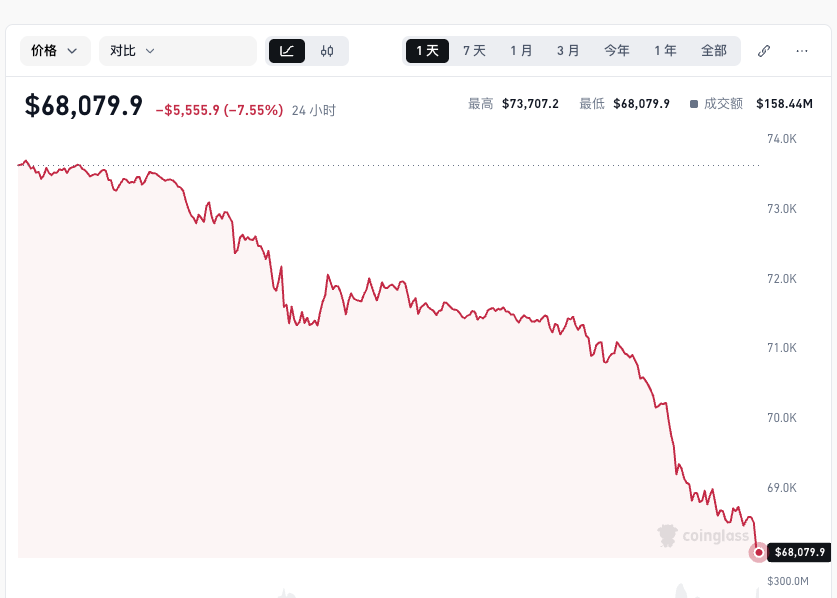
On November 13, Bitcoin broke below $68,000. CoinGlass data shows that Bitcoin is currently priced at approximately $68,079, down about 7.55% in the past 24 hours, hitting a low of $67,568. On September 21, Bitcoin reached $87,392, indicating a pullback of over 20% based on the aforementioned prices.
The night before, NVIDIA founder Jensen Huang resigned as CEO, and after the news was announced, NVIDIA's stock price fell by about 14% during intraday trading. Although the decline narrowed by the close of the US stock market, Bitcoin continued to decrease on the morning of the 13th, with the $70,000 mark within reach.
In the context of the US spot Bitcoin ETF, Farside Investors has announced the fund flows for some funds as of November 12. Among them, Bitwise's BITB had a net outflow of $26.4 million, and ARK and 21Shares' ARKB had a net outflow of $18.5 million; the data for BlackRock's IBIT and other funds has yet to be released, making it impossible to calculate the complete net flow for that day.
With NVIDIA's leadership change driving down the US stock market, will Bitcoin follow suit?
On the evening of November 12, NVIDIA announced that Jensen Huang resigned from his positions as President, CEO, and Director, with Chief Financial Officer Colette Kress stepping in as interim CEO.
Following the announcement, NVIDIA's stock price ultimately closed down about 4.3%. According to the Associated Press, as of November 12 market close, NVIDIA's stock price has fallen 30.5% from the historic high set on October 6. The US stock market also saw declines after opening, although the losses narrowed later. The S&P 500 Index, NASDAQ Composite Index, and Dow Jones Industrial Average all ended the day down approximately 0.4%; the VIX Index, which measures expected volatility in US stocks, rose about 6.9%, closing at 18.70.
In addition to company-level news, interest rates are also affecting tech stocks. On November 12, the yield on the US 10-year Treasury bond rose to 5.12%, higher than the previous day's market close of 4.98%. Higher borrowing costs increase the financing pressures on companies investing in data centers and will affect investors' valuations of forward earnings. After US inflation data for October exceeded expectations, market bets on the Federal Reserve raising interest rates in December increased.
Recently, Bitcoin's movements have shown some correlation with US tech stocks. Bitcoin service provider Swan, based on Coin Metrics and Federal Reserve data, calculated that as of November 11, the return correlation coefficient for Bitcoin and the NASDAQ 100 Index over the past 90 trading days was 0.48, indicating a generally positive correlation.
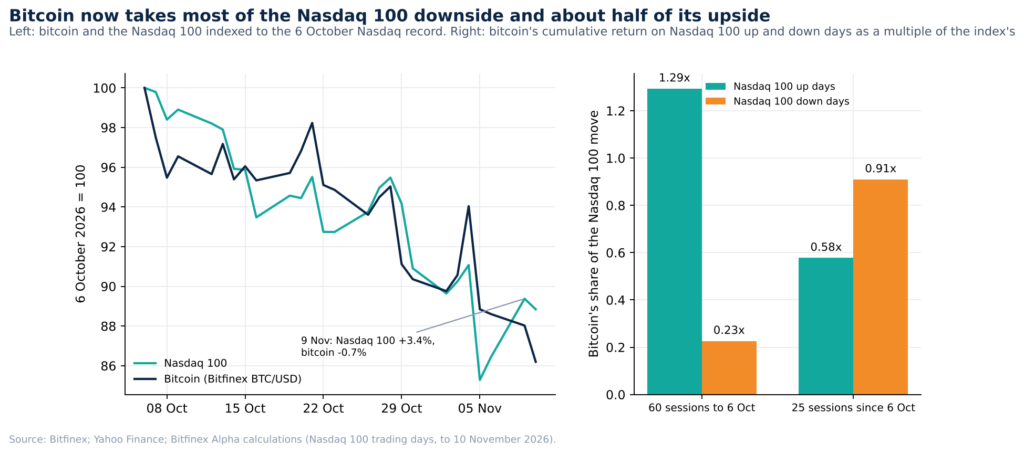
The crypto trading platform Bitfinex also compared the 25 trading days following the NASDAQ 100 Index's peak on October 6 in its report on November 11. According to their statistics, on days when the NASDAQ fell, Bitcoin's drop was equivalent to 91% of the NASDAQ's decline; on days when the NASDAQ rose, Bitcoin's gains matched 58% of the NASDAQ's increase.
On November 9, while the NASDAQ 100 Index increased by 3.4%, Bitcoin dropped by 0.7% compared to the previous US trading day's close. Bitfinex believes that the weakening of ETF and corporate treasury purchases contributed to Bitcoin lacking incremental buy support when the US stock market rises; when risk assets weaken, the liquidation of leveraged long positions can exacerbate the downtrend in the crypto market.
Near the $68,000 mark, how are positions distributed?
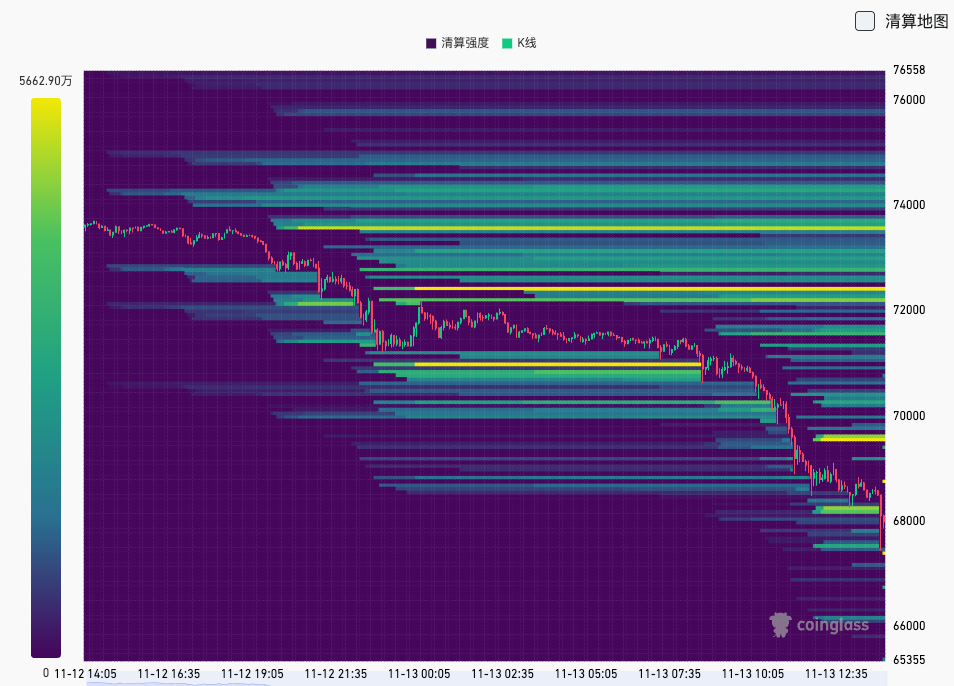
In the contract market, CoinGlass data shows that as of around 14:00 on the 13th, the total liquidation across the network in the past 24 hours was about $1.623 billion, with long liquidations around $1.459 billion and short liquidations about $164 million, more than $901 million in long positions have been liquidated in the Bitcoin contract market.
However, despite the liquidation of long positions, the value of outstanding Bitcoin futures contracts still amounts to about $50 billion. CoinGlass data indicates that as of around 10:00 on November 13, the dollar value of outstanding Bitcoin futures contracts was approximately $50.44 billion, down 1.28% in the past 24 hours; based on the number of Bitcoins, the open interest increased by 2.66% during the same period.
From the liquidation heat map, it can be seen that there are few liquidation positions remaining below.
The US PPI is about to be released, where is the market looking?
In the short term, Bitcoin traders will also face a batch of options expiration. According to Deribit data compiled by PerpFinder, as of the morning of November 13, the nominal value of Bitcoin options with an expiration date on that day is approximately $2.36 billion, with a put/call ratio of about 0.48. This batch of options will expire at 16:00.
On that evening, the US will release the Producer Price Index (PPI) for October. The CME FedWatch data shows that as of the morning of November 13, the market expects an 85.5% probability that the Federal Reserve will raise rates by 25 basis points in December, and a 14.5% chance of a 50 basis point increase, the latter probability was zero a week ago.
If production prices continue to rise, the market may further adjust rate expectations; if the data cools down, it could alleviate some tightening concerns. In addition to the buy and sell situation around $70,000, investors will also pay attention to the complete fund flow of US spot Bitcoin ETFs, as well as NVIDIA's quarterly earnings report set to be released in the early hours of November 18.
CryptoQuant analyst Darkfost analyzed that the dollar value of Binance's Bitcoin contract open interest has dropped from $10.6 billion to $8.8 billion in less than a month, a decrease of about 17%. Traders actively closing positions or being liquidated both contribute to the reduction of open contracts.
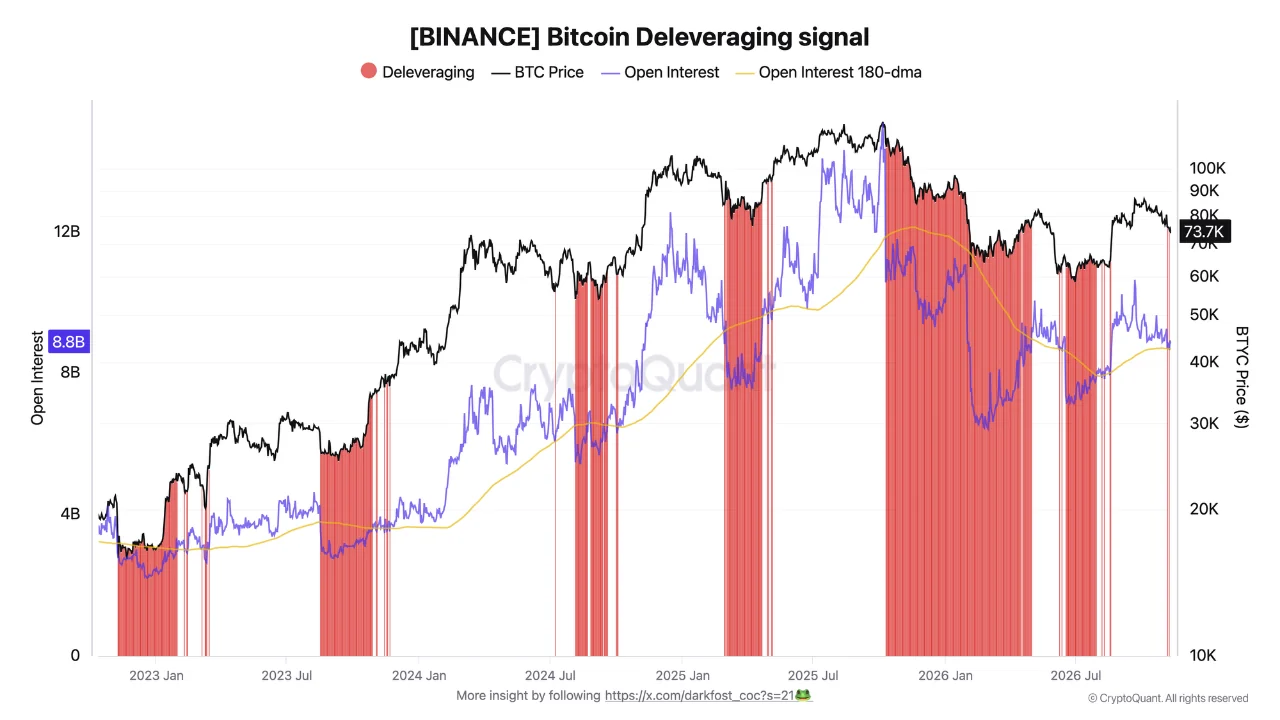
Meanwhile, Binance's Bitcoin contracts experienced liquidations of over $1.4 billion, about $1.1 billion, and about $1.3 billion in August, September, and October, respectively. Darkfost noted that as of his analysis publication in November, the liquidation amount for Binance Bitcoin contracts has exceeded $520 million.
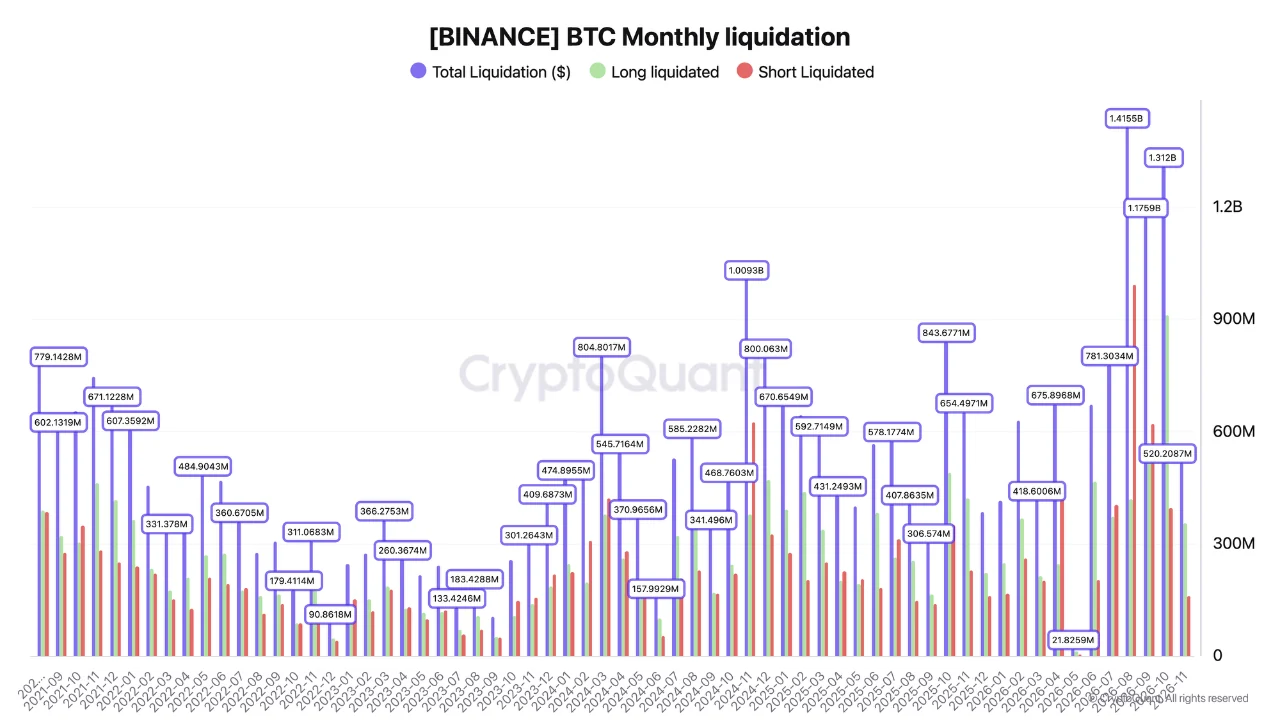
Darkfost believes that the reduction of leveraged positions helps to lower the risk of cascading liquidations, allowing spot buys to play a larger role in price action. Similar deleveraging signs were seen in June this year when Bitcoin's price fell below $60,000, and then rebounded above $87,000. However, he also noted that in a bear market, the deleveraging process may last for months.
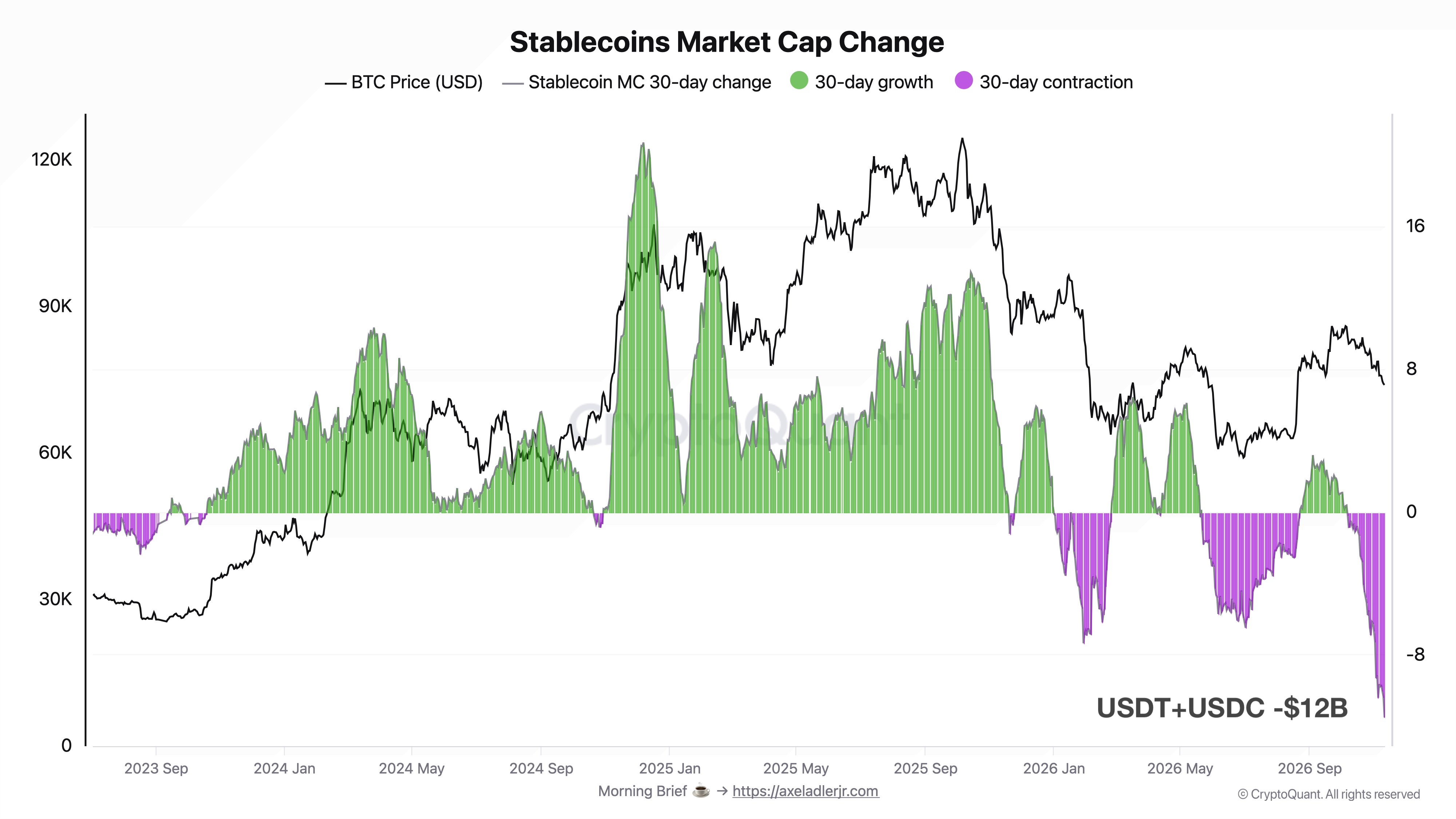
The funding situation in the spot market adds another layer of pressure to the rebound. CryptoQuant charts show that the combined market value of USDT and USDC has decreased by nearly $12 billion over the past 30 days. The liquidity pool in US dollars is shrinking, weakening the prospects for recovery.
免责声明:本文章仅代表作者个人观点,不代表本平台的立场和观点。本文章仅供信息分享,不构成对任何人的任何投资建议。用户与作者之间的任何争议,与本平台无关。如网页中刊载的文章或图片涉及侵权,请提供相关的权利证明和身份证明发送邮件到[email protected],本平台相关工作人员将会进行核查。


