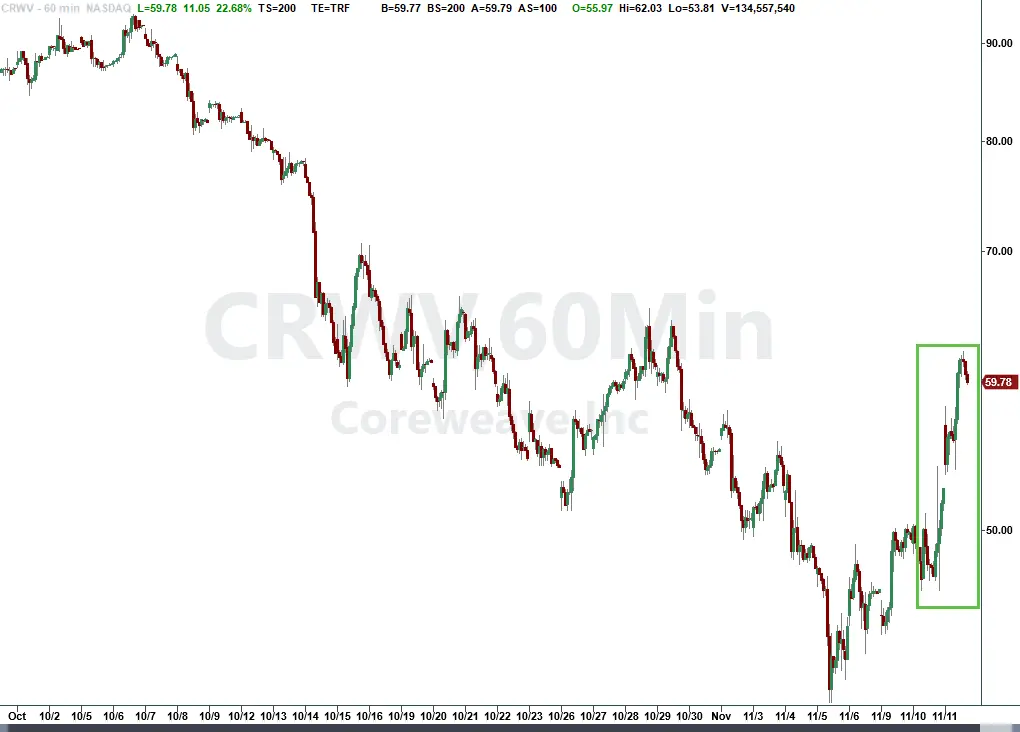
CoreWeave released its third-quarter financial report on Tuesday, with revenues and losses both exceeding expectations, and its full-year guidance also surpassing the upper limit of market expectations. This news boosted the "NeoCloud" sector, which had previously been under pressure due to concerns about AI investment returns.
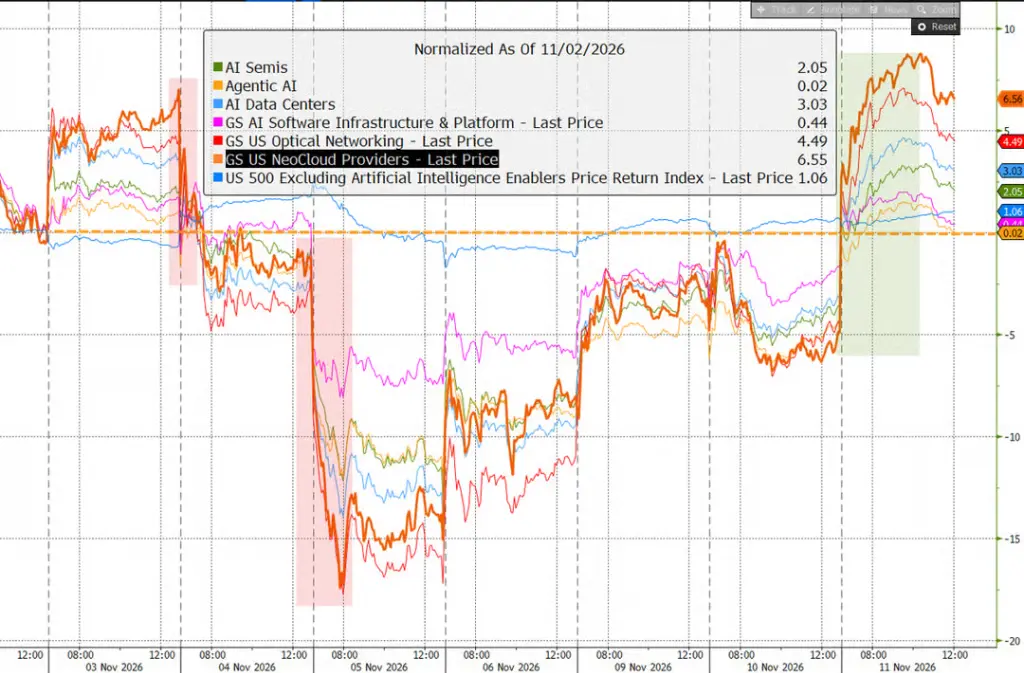
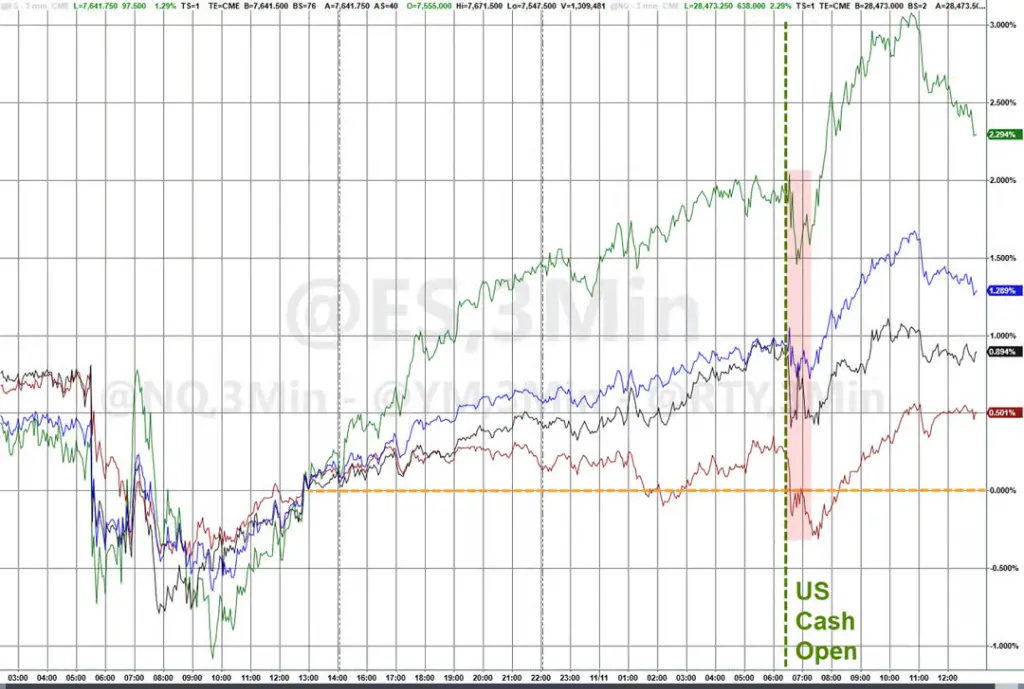
Encouraged by CoreWeave's stock price surge of approximately 25% in one day, the NeoCloud sector experienced an intraday gain of over 12%, and the Nasdaq also recovered losses from the midterm elections. The market's optimistic sentiment was further strengthened by two news items: Anthropic is reportedly discussing an IPO valuation of over $1.5 trillion, dispelling earlier concerns that the company's valuation would be significantly reduced; additionally, OpenAI reported strong quarterly revenue, reaching $10 billion for the first time.
For Anthropic, which is set to enter the capital market next week, this financial report comes at a pivotal moment—CoreWeave is an important computing power supplier for Anthropic, and the fates of the two companies are somewhat intertwined. Meanwhile, Nvidia's report next week will be another litmus test, as investors will look for more reasons to determine whether the AI infrastructure boom can continue.
However, the basis for this rebound remains shaky: on one hand, funds are shifting from hyper-scale cloud providers to "shovel sellers" and computing power lessors; on the other hand, CoreWeave's future financing gap, debt costs, and the expansion of computing power supply remain core variables that will determine how far this AI infrastructure deal can go.
CoreWeave Drives a Collective Rebound in the NeoCloud Sector
CoreWeave reported third-quarter revenues of $3.66 billion, exceeding analyst expectations; the loss per share was $1.27, which was narrower than the level previously worried by the market. More attention was drawn to the full-year guidance: the company expects full-year revenues in 2026 to be between $13 billion and $13.3 billion, which is about 3.4% higher than the upper limit of market consensus expectations.
CoreWeave CEO Michael Intrator revealed an important detail during the conference call with analysts: over half of the new customers this year are from outside the AI sector. This data somewhat addresses market concerns about the excessive concentration of demand for AI computing power and the cliff effect that could occur once the AI investment boom fades. Intrator's remarks suggest that the demand for high-performance computing power is permeating a wider range of industries, rather than just relying on purchases from AI labs.
Prior to this, CoreWeave's stock had accumulated a decline of 39% this year, making it one of the worst-performing stocks in the AI computing power sector. Deutsche Bank analyst Brad Zelnick stated after the financial report's release that he appreciated the "reassuring details" the company provided, which broadly reflects the overall market sentiment.
After the financial report was released, CoreWeave's stock surged approximately 25% in one day, making it the core driver of the NeoCloud sector's rebound.
Market data shows that NeoCloud concept stocks rose more than 12% overall that day, while Goldman Sachs' broad AI stock basket increased by about 5%, significantly outperforming non-AI stocks. The computing power supply chain, previously dragged down by concerns over AI capital expenditure returns, welcomed a rapid valuation recovery.
The Nasdaq also recovered losses incurred after the midterm elections.
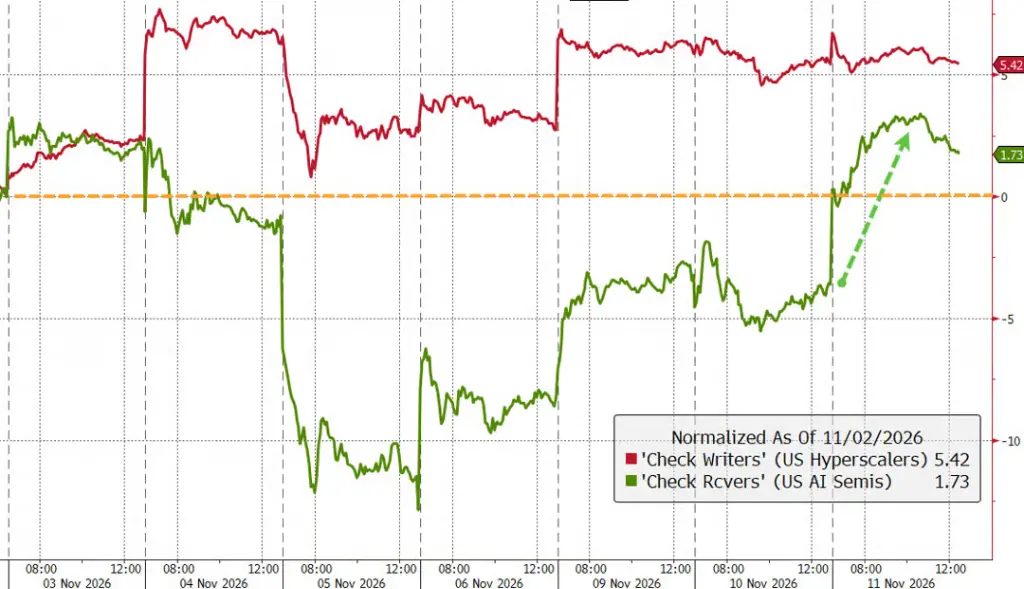
However, looking at the market trading structure, the choice of funds reflects that investors have not completely eliminated their doubts. AI capital expenditure "receivers," such as computing power lessors and semiconductor firms, performed stronger; in contrast, hyper-scale cloud providers that incur huge data center investments, such as Microsoft, Google, and Amazon, lagged behind. In other words, the market is currently more willing to bet on the direct beneficiaries of the AI construction cycle rather than continuing to pay for the capital expenditures of the "payers."
CoreWeave and Anthropic: Fates Linked
The financial report from CoreWeave has direct significance for Anthropic.
Anthropic is a customer of CoreWeave, using computing power from CoreWeave and several other NeoCloud service providers to support its Claude series products, and it also has contracts with large cloud providers like Google. The terms of the agreements between the two companies have never been publicly disclosed, but Intrator described the collaboration with Anthropic this April as "multi-billion dollar level contracts."
According to Bloomberg, Anthropic plans to complete its public listing next week. As the first cutting-edge AI lab in the U.S. seeking to go public, Anthropic has no traditional business such as search engines, social media, or cloud services as a "moat," and its valuation will wholly depend on the market's judgment of AI prospects. CoreWeave's strong performance theoretically helps Anthropic achieve a higher valuation recognition in its roadshow.
Recent market news has further raised the profile of this IPO: reports indicate that Anthropic's underwriters are assessing the possibility of an IPO valuation of $1.5 trillion or higher. If this valuation expectation maintains, Anthropic will not only serve as a sample to test the commercialization ability of cutting-edge large model companies, but it will also directly measure what kind of premium the market is willing to pay for the long-term growth story of AI. Previously, there were reports suggesting that Anthropic's valuation might be heavily discounted or fall below $1.5 trillion.
Meanwhile, OpenAI's quarterly revenue reaching $10 billion for the first time also provides new support for demand at the AI application layer. For investors, this signals that the market is trying to find a closed loop that can validate between "model revenue growth—computing power procurement expansion—chip and data center investment returns"; however, whether this closed loop is sufficient to support high valuations still requires further confirmation through more company financial reports and order data.
For Anthropic, the positive signals released by CoreWeave's financial report indicate that its upstream computing power suppliers can still secure strong orders, raise revenue guidance, and maintain financing capability. However, this also highlights the shared risks of both parties—the sustainability of the demand for external computing power by large model companies and whether computing power suppliers can maintain stable delivery under a high capital expenditure and high debt model will jointly influence the valuation foundation of this entire supply chain. It is noteworthy that Anthropic also relies on several other new cloud service providers with uncertain prospects for computing power supply, including Nscale, which is reportedly considering delaying its own IPO plans.
The Next Test for AI: Nvidia's Financial Report
Next week, Nvidia will release its financial report. If investors can temporarily set aside concerns about CEO Jensen Huang and other related issues, Nvidia's performance may provide the market with more optimistic reasons.
The importance of Nvidia's financial report extends beyond simply verifying whether GPU demand is robust. The market is also eager to confirm three things: whether the purchasing intensity of cloud providers and NeoCloud service providers can be sustained, whether the supply and delivery of new products such as Blackwell can match demand, and whether the rapid growth of customer capital expenditures can translate into more sustainable revenues and profits.
During this round of rebound, the semiconductor sector has performed strongly, with the Philadelphia Semiconductor Index recording its largest single-day gain in months and recovering most of the losses from the previous week's correction; Nvidia's stock price has also rebounded. However, traders have observed that some active funds and retail investors still exhibited selling behavior before Nvidia's financial report. This indicates that market expectations for the chip leader remain very high, and if the report cannot provide sufficiently strong guidance, the volatility in AI trading may once again amplify.
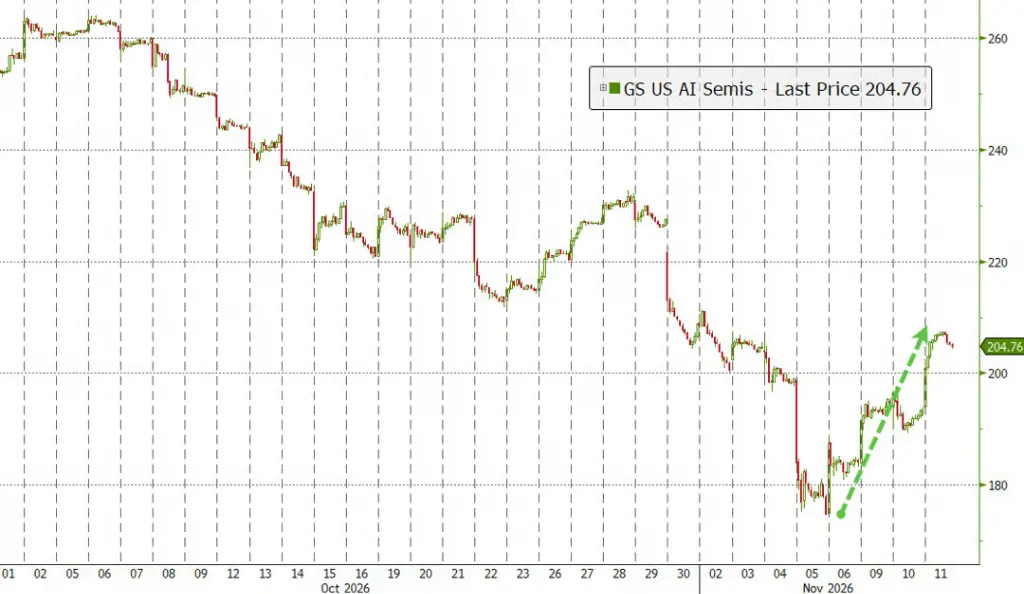
Bloomberg columnist Dave Lee warned back in March 2025, when CoreWeave went public, that the company would become "the first true bellwether stock of the AI revolution," and the facts have indeed proven this—CoreWeave's stock price has become the main "pressure vent" for market fluctuations.
Underlying Rebound: Financing Gaps and Supply Expansion Remain Hard Constraints
However, the basis for this rebound remains unstable. CoreWeave's future financing gaps, debt costs, and the expansion of computing power supply are still core variables that will determine how far this AI infrastructure deal can go.
CoreWeave's performance alleviated short-term worries about whether "AI construction would grind to a halt due to financing obstacles," but it hasn't completely answered long-term questions.
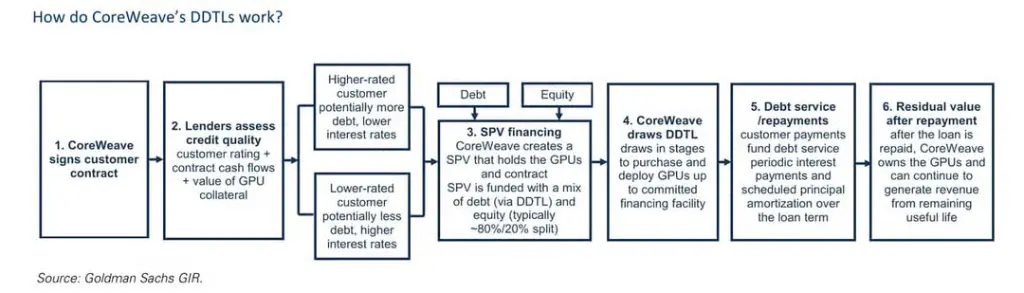
The bullish logic is that CoreWeave can establish a financing entity around customer contracts, with a high proportion of secured debt covering construction costs; after repaying debt during the contract period, the company retains GPU assets and can re-rent the equipment for which financing has been repaid. If computing power remains scarce in the long term, this model is expected to allow existing equipment to continuously generate cash flow.
Short-sellers, however, focus on three risks. First is pricing: there is still a gap between the revenue levels per megawatt mentioned by management and the actual monetization levels reflected in the financial statements. Second is financing: market sentiment suggests the company may face a funding gap of about $33 billion next year, still needing to rely on new debt or customer prepayments to fill this gap. Finally is supply: by 2028, the market is expected to see around 55 gigawatts of new computing capacity released, and if supply outpaces demand growth, rental prices and residual values of older generation GPUs may come under pressure.
Therefore, what CoreWeave has proven this season is that while computing power remains tight, the company can secure orders and obtain financing; but it has not demonstrated that the tight supply will persist long enough to cover significant debts and support the residual values of old GPUs. Next, the market will closely monitor the final pricing of its investment-grade secured loans, the scale of customer prepayments, and whether the expected turning point in the company's capital expenditures and free cash flow can materialize.
The Macroeconomic Environment Still Tight, Regulatory Uncertainty Remains a Hidden Risk
After the midterm elections in the U.S., the Democratic Party controls Congress, and Texas Governor-elect Gina Hinojosa previously proposed a moratorium on data center construction during her campaign. Intrator reached out to Hinojosa last week, hoping to seek consensus on the "responsible completion" of approved projects and "lasting standards" for future projects.
During the earnings conference call, Intrator tried to stabilize investor sentiment. He stated, "We do not expect to be affected by any significant regulatory changes in the near term. We believe these changes are about how to build, not whether to build."
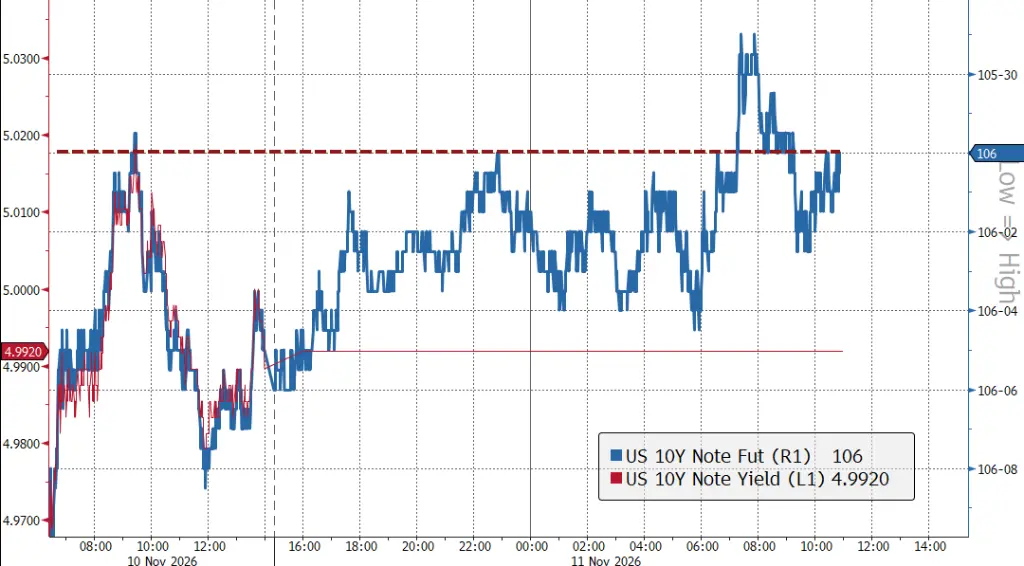
Apart from regulation, interest rates may pose another constraint on the valuation of AI infrastructure. During this round of stock market rebound, market pricing for future interest rate hikes has increased, with 10-year U.S. Treasury futures' implied yields nearing 5% again. For new cloud companies that rely on debt financing to build data centers, rising financing costs will directly impact project returns and equity valuations.
More importantly, the volatility in the stocks, credit, interest rates, and oil markets has not fully receded. Previously established hedging positions, although partially closed during this rebound, saw the VIX briefly fall to around 17, but cross-asset volatility remains relatively high. This indicates that whether the "breathing space" provided by CoreWeave can evolve into a trend recovery still depends on whether forthcoming earnings reports, the financing market, and the macro interest rate environment can all provide positive answers simultaneously.
In general, CoreWeave's financial report has temporarily restored the market's confidence in AI computing power demand and financing capability, creating a more favorable emotional window for Anthropic's IPO and Nvidia's financial report. However, transitioning from "short-term short covering" to "long-term fundamental reassessment" still requires answers to four difficult questions regarding financing, supply, GPU residual values, and interest rates. Next week’s Anthropic and Nvidia will be two key tests to determine whether this round of AI rebound can continue.
免责声明:本文章仅代表作者个人观点,不代表本平台的立场和观点。本文章仅供信息分享,不构成对任何人的任何投资建议。用户与作者之间的任何争议,与本平台无关。如网页中刊载的文章或图片涉及侵权,请提供相关的权利证明和身份证明发送邮件到[email protected],本平台相关工作人员将会进行核查。


