Author: Glassnode
Compiled by: Gu Yu, ChainCatcher
Bitcoin has dropped below the short-term holder cost basis and is lagging behind stocks, while stablecoins, ETFs, and U.S. buyers indicate that funds are leaving. Leverage has been cleared, and two large wallet groups have begun accumulating, which keeps the trend change in August valid above the June low.
Executive Summary
Bitcoin has dropped below the short-term holder cost basis of $75.6K and is lagging behind stocks, while the funds that could drive it higher continue to leave.
The supply of stablecoins is contracting at the fastest rate since June 2022, ETFs are net sellers, and Bitcoin is trading at a discount on Coinbase.
On the other hand, this drop has cleared most of the long leverage near the price, with buy orders outnumbering sell orders in the order book, and two large wallet groups have started accumulating.
The September high is the first higher high since the historical peak in 2025, and as long as the price remains above $58.5K, the June low, this trend change remains valid.
Are you ready to lead the market and sharpen your foresight? Try Glassnode. Sign up or contact sales.
Market Compass
Recent Buyers at a Loss
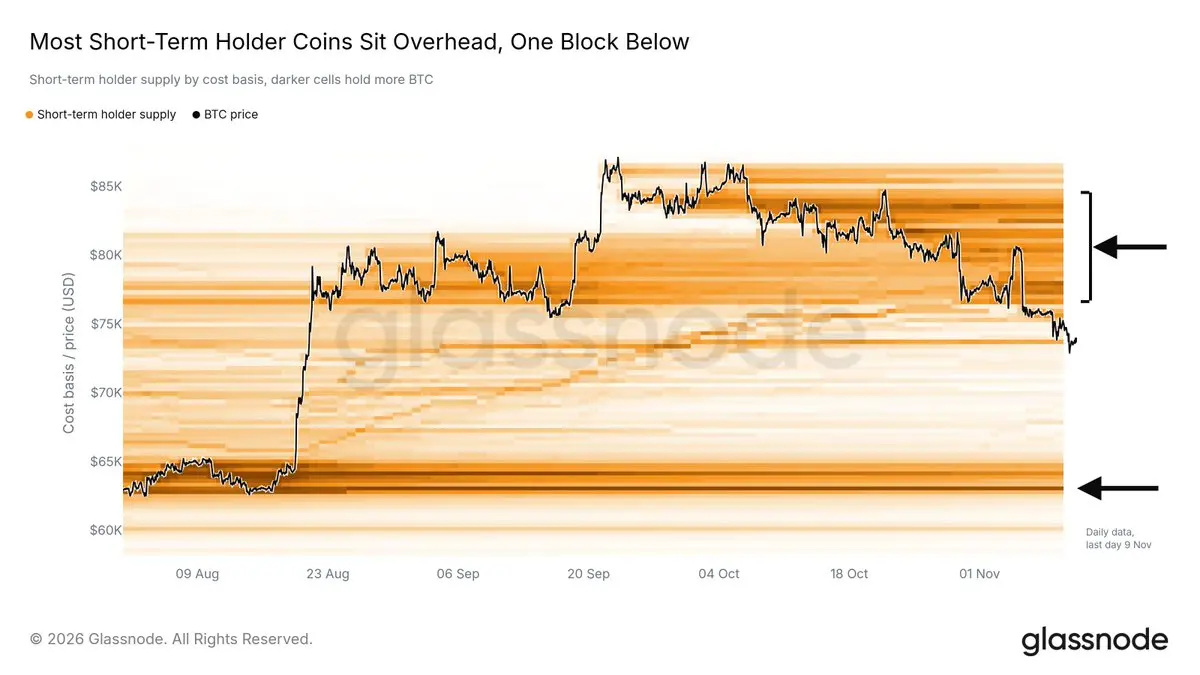
Last week, we identified the $73K to $76K range as levels to monitor. Since then, Bitcoin has slipped into this range, trading near $74K, below the short-term holder cost basis of $75.6K, which is the average price paid by investors who bought in the past 155 days. At the September high, almost all short-term holder tokens were in profit. Today, about 35% are in profit, and those selling are doing so at a slight loss on average.
Cost Basis Distribution shows where these tokens were purchased. Currently, about two-thirds are above the price, distributed across three ranges bought between August and October, up to $83.6K. Many of these holders may look to exit at breakeven during a bounce. Below the price, the only dense block is in the $62K to $66K range, which was bought near the August low.
Note that the larger structure since August still holds. The September high is the first higher high since the historical peak in 2025, and the price remains well above the June low of $58.5K. Reclaiming the True Market Mean of $77.5K will bring about half of the short-term holder tokens back into profit.
Left Behind by Stocks
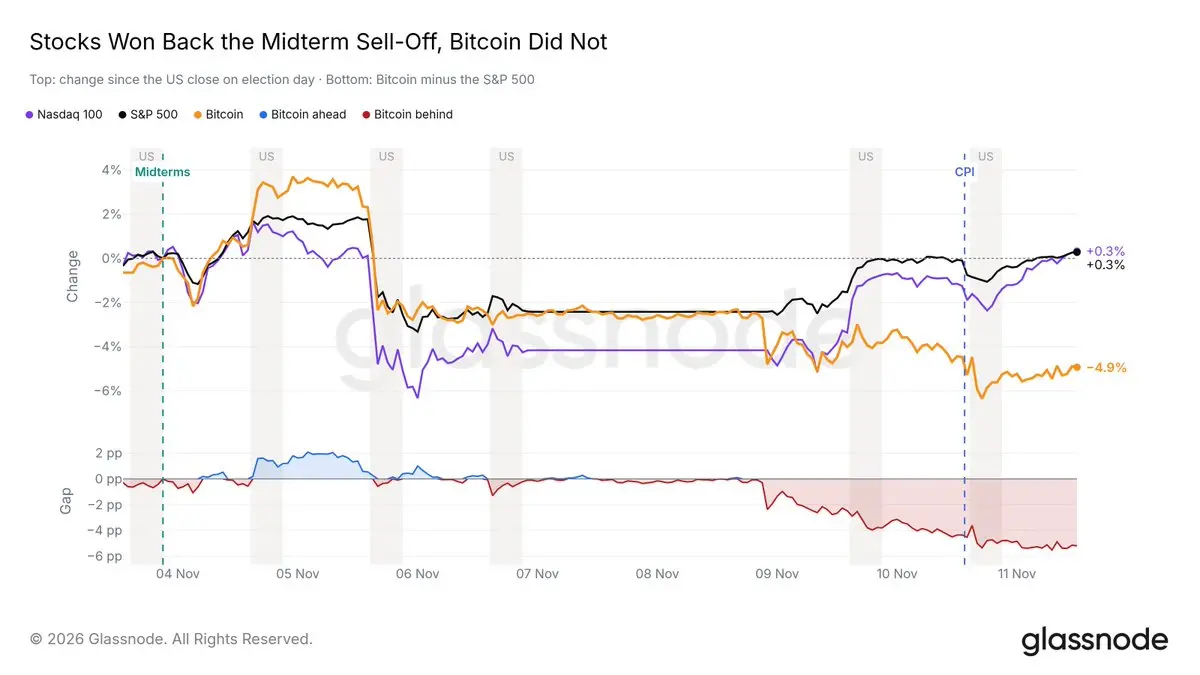
Last week, we pointed out that most of Bitcoin's mid-term decline occurred before the voting. The subsequent sell-off that began on November 5 impacted both stocks and Bitcoin. Since November 9, their paths have diverged: the S&P 500 index and Nasdaq 100 index have recovered to above their election day close, while Bitcoin dropped again after the CPI report on November 10, currently down about 5%.
Reclaiming its election day close of $77.8K will bring Bitcoin back in sync with stocks.
Bonds Pricing in More Rate Hikes
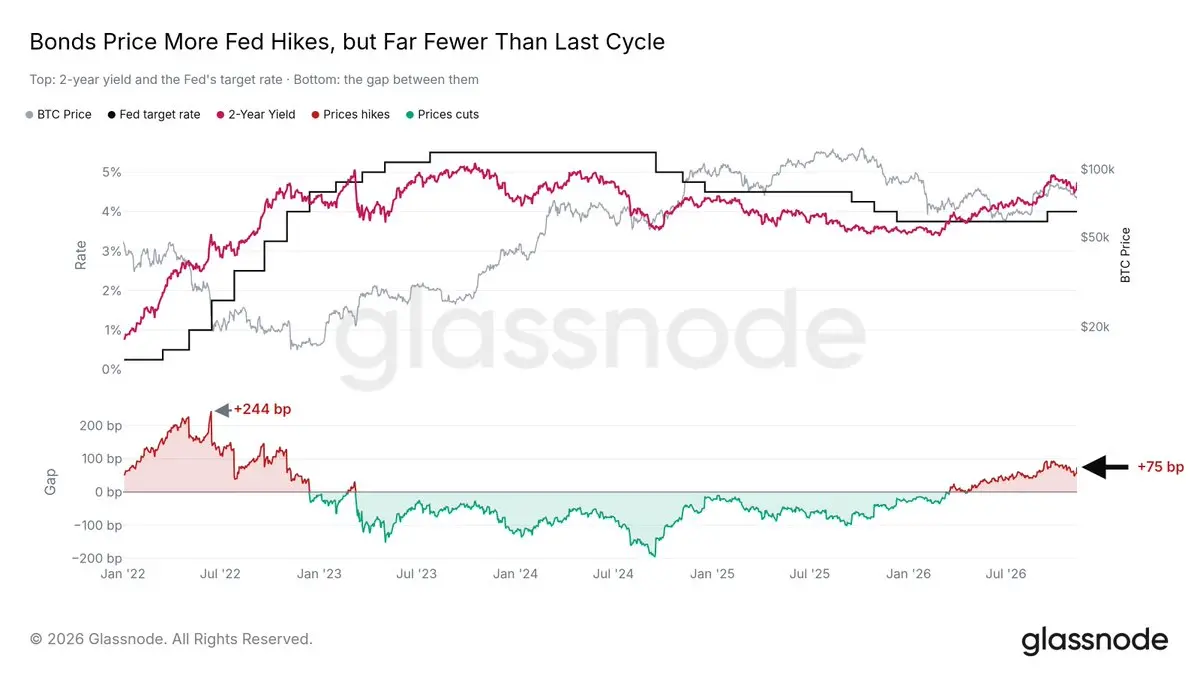
The interest rates have intensified the pressure. Two-year Treasury yields reflect traders' expectations for the average level of Federal Reserve policy rates over the next two years. Currently at 4.75%, this is 75 basis points higher than the Fed's current rate of 4%, hence the bond market is pricing in further rate hikes.
Note that this is far from the shocks of 2022. In June 2022, the highest gap was 244 basis points, while today the gap is about one-third of that. This gap has also narrowed since late October. Higher rates still pose headwinds for risk assets, but the bond market does not anticipate a repeat of the 2022 scenario.
Stablecoin Withdrawals
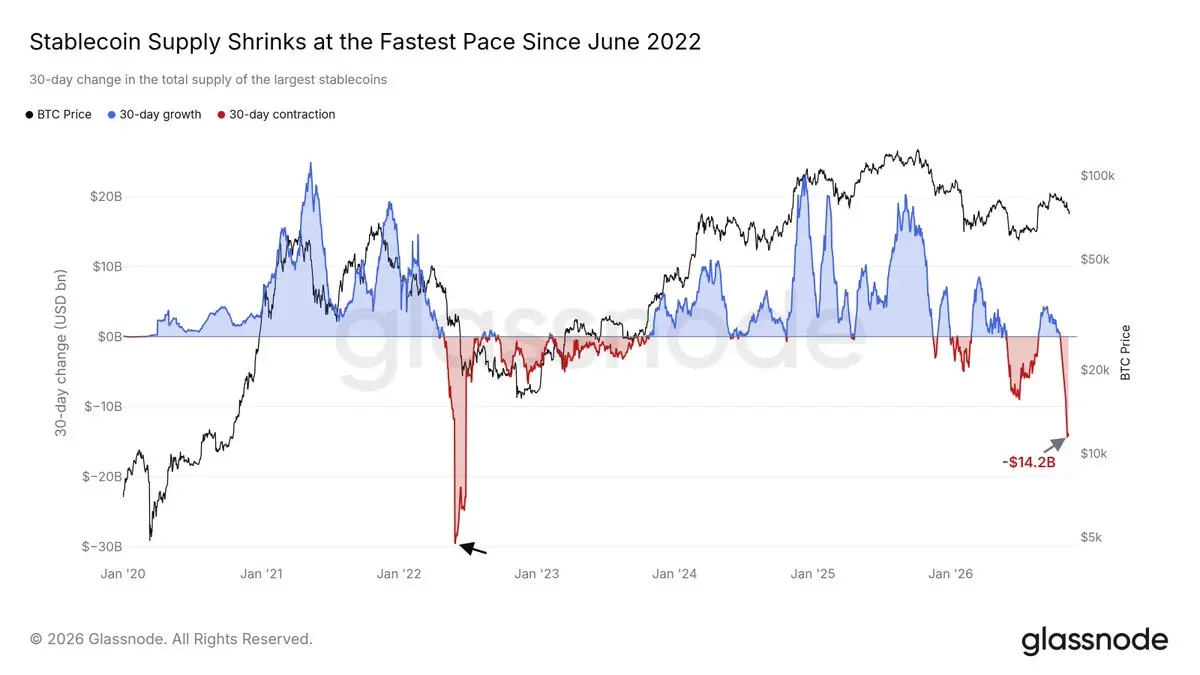
Stablecoins are the cash of the crypto market: traders hold dollars on exchanges and on-chain before buying. In the past 30 days, the total supply of stablecoins has decreased by $14.2 billion, marking the fastest contraction since June 2022.
The shrinking supply means that holders are redeeming stablecoins for dollars and taking this cash out of the market, leaving less fuel for a rebound. The same pressure is reflected in Tether, which is trading slightly below $1. If the 30-day change turns back to growth, it will be the first signal that new funds are flowing in.
Decline in U.S. Demand
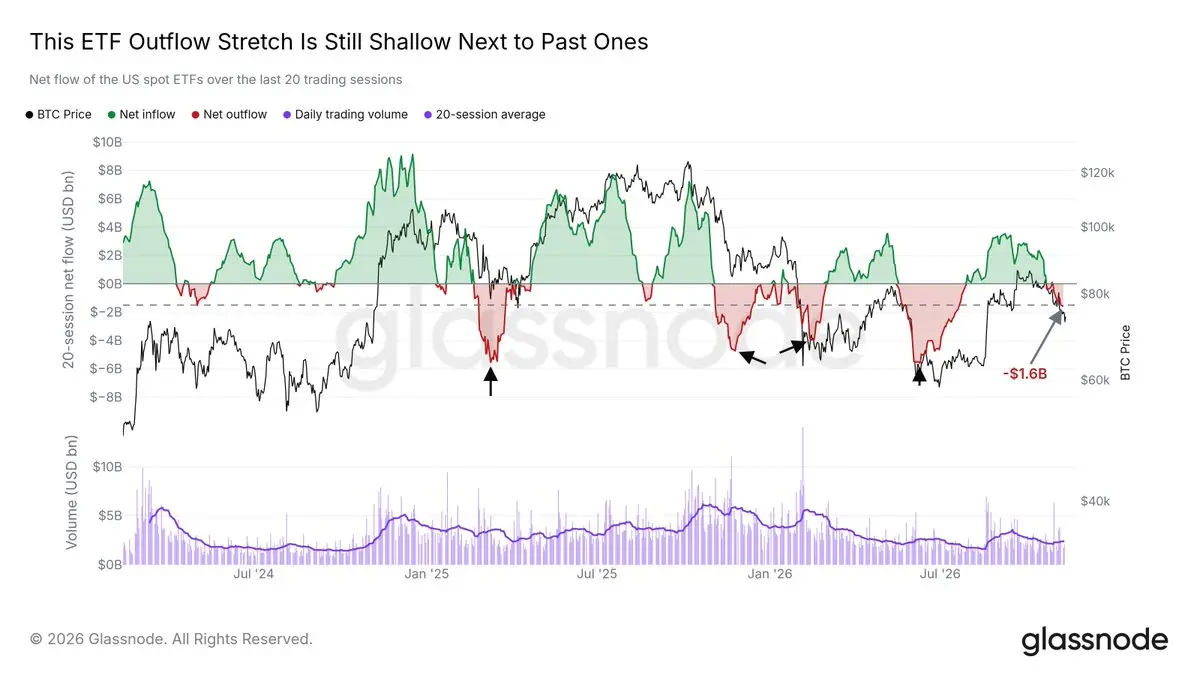
U.S. spot ETFs have turned to redemptions. In the last 20 trading periods, these funds have experienced a net outflow of $1.6 billion, and on November 9, this total crossed the $1.5 billion threshold we use to define a withdrawal period.
By the standards of past withdrawal periods, this one is still relatively shallow: most of the previous ones were much deeper. Each time, inflows only return after Bitcoin has created a low, so the return of inflows will confirm the low in hindsight.
No Premium on Coinbase
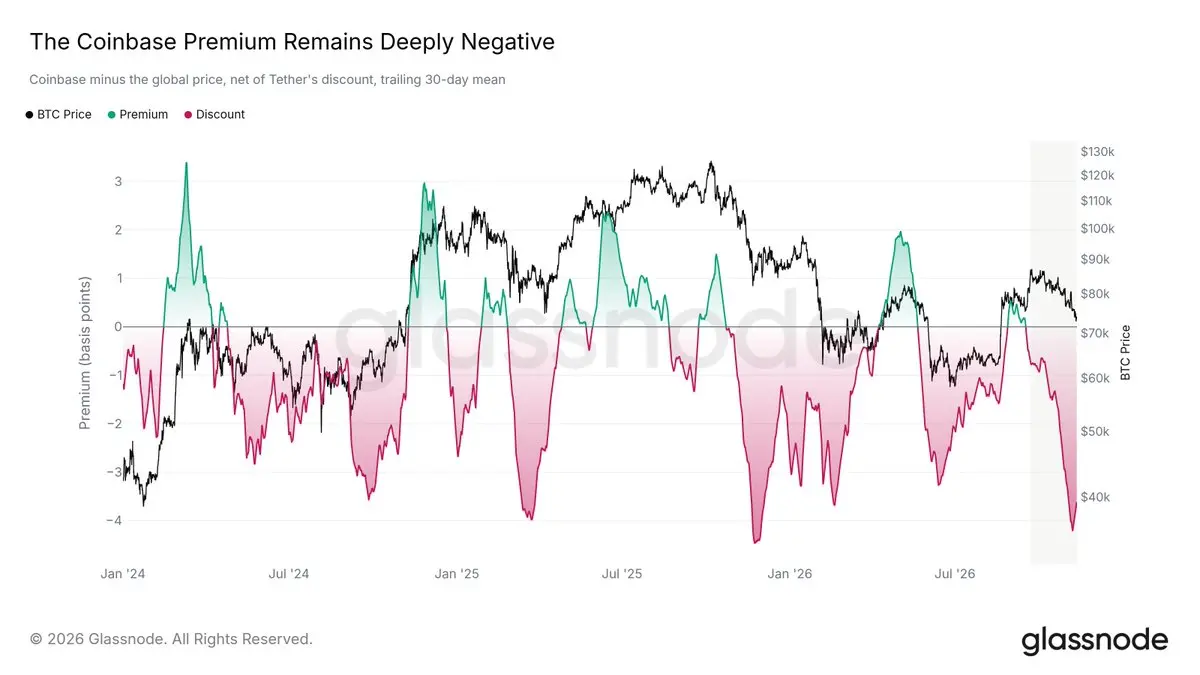
Coinbase Premium compares the price of Bitcoin on Coinbase (the primary trading venue for U.S. investors) to global prices. We have excluded part of the discount caused by Tether trading below $1, otherwise the discount would appear deeper than it actually is. Based on the 30-day average, the premium has been negative during the entire decline since the September high, currently at the deepest discount since February.
In past rebounds, the premium turned positive as U.S. buyers were willing to pay a markup for Bitcoin. They are not doing so now. If the premium turns positive and holds for several weeks, it will indicate that demand from the U.S. is returning.
Thin Below Price, Heavy Above
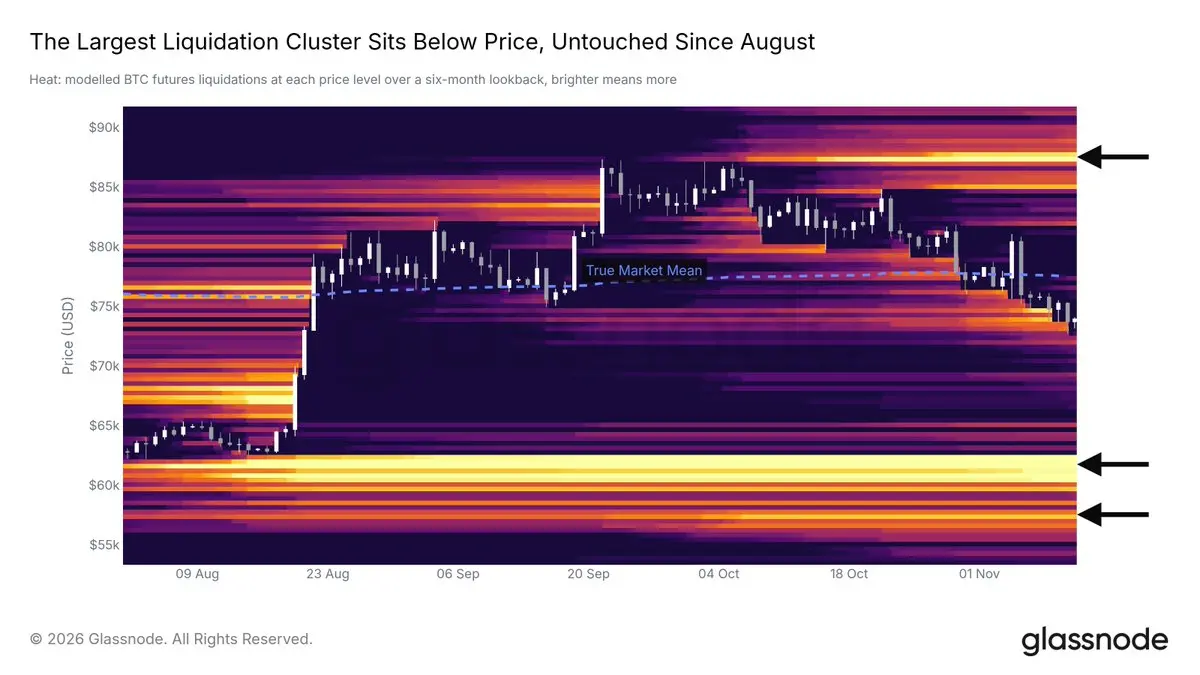
Liquidation Heatmap simulates the prices at which leveraged futures positions will be forcibly liquidated. On the positive side, the slow decline since the September high has passed through most of the long liquidation levels accumulated on the way down, as indicated by the darker areas following the candlestick charts. This has eliminated most of the fuel for forced selling near the price.
The largest cluster on the six-month chart is far below the price, in the $59.5K to $62.6K range, which has remained untouched since the August low. In between it and the price, the chart appears thinner. Meanwhile, open contracts have risen back to the levels seen at the September high, even though the price has fallen about 15%, indicating that traders have increased short positions during the decline. If the price turns upward, these shorts will have to cover; the largest cluster above the price is located around $87.5K.
Buy Orders Below, Thin Above
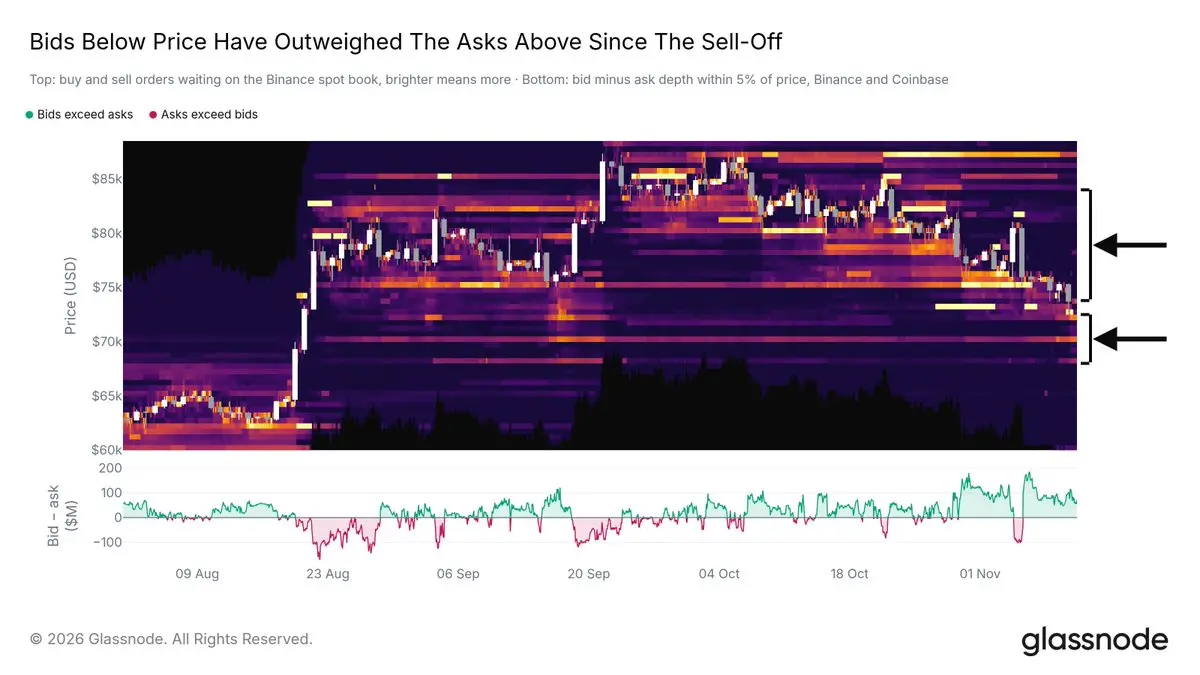
The spot order book shows a similar trend. Since the sell-off on November 5, buy orders within 5% of the price on Binance and Coinbase have exceeded sell orders each hour. The lower bracket on the chart marks the largest buy orders, located between $68K and $72.5K.
The upper bracket marks the opposite situation: apart from sell orders just above the price, the order book is thin all the way up to about $84K, as indicated by that dark area on the heatmap. The price increase itself encounters very little resistance from the order book, but still needs to clear short-term holders waiting to exit at breakeven. Note that the orders can be withdrawn at any time, with some buy orders being canceled during the sell-off and later re-listed.
Large Wallets Entering
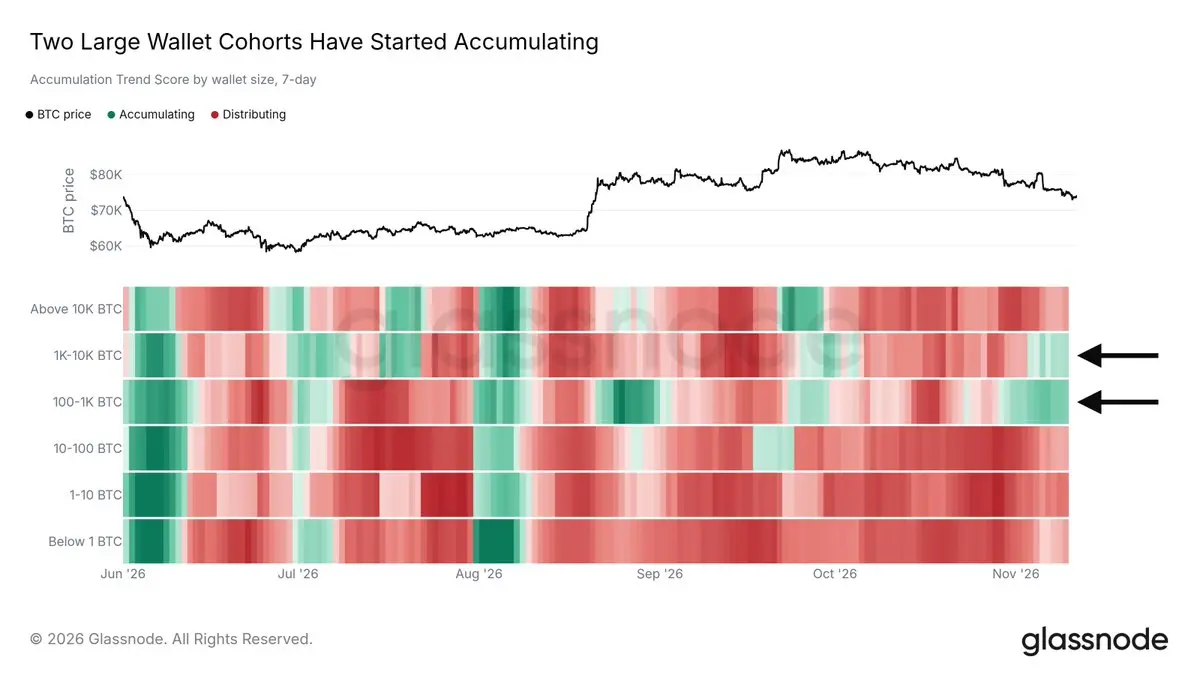
Accumulation Trend Score tracks whether each wallet group is increasing (score close to 1) or decreasing (close to 0) balances, weighted by wallet size. Over the past week, two groups scored above 0.5: wallets holding 100 to 1K BTC and wallets holding 1K to 10K BTC. Both were predominantly in distribution for much of October. Note that these two groups also turned to buying in late September, but did not sustain it.
Every other group is still reducing holdings, from the largest wallets holding over 10K BTC to wallets holding less than 1 BTC. This indicates early buying at a discount from a narrow group. If smaller groups join in, it will suggest that buyers are returning across the entire market.
Conclusion
Bitcoin is experiencing a pullback with almost no new funds supporting it: recent buyers are at a loss, it lags behind stocks, and stablecoins, ETFs, and U.S. buyers indicate that funds are leaving. There are few recent optimistic reasons. In contrast, leverage near the price has been cleared, and two large wallet groups are accumulating.
For investors interpreting August as the starting point of a higher timeframe reversal, this is the region where mean reversion will begin. Reclaiming the short-term holder cost basis of $75.6K will support this view. A sustained fall below $73K, the lower bound of last week's range, will indicate a longer period of consolidation; while a close below the June low of $58.5K will reverse the trend change from August.
Data as of November 11, 2026, prices and derivatives at 11:00 UTC, order book at 09:00 UTC; ETF fund flows, stablecoin supply, cost basis, and accumulation scores as of November 9.
免责声明:本文章仅代表作者个人观点,不代表本平台的立场和观点。本文章仅供信息分享,不构成对任何人的任何投资建议。用户与作者之间的任何争议,与本平台无关。如网页中刊载的文章或图片涉及侵权,请提供相关的权利证明和身份证明发送邮件到[email protected],本平台相关工作人员将会进行核查。


