Author: Dhruv Gupta
Translator: Shenchao TechFlow
Shenchao Guide: In the fintech circle, which heavily relies on the halo of prestigious schools and insider recommendations, “outsiders” often can't even meet the interview threshold. Dhruv Gupta, a University of Pennsylvania student who got quantitative internships at Morgan Stanley and Jane Street Capital, completely shifted direction after experiencing the inefficiencies of large firms, carving out a completely different breakthrough path in just 8 months.
From creating TikTok videos to attract Kalshi invites, writing four-hour codes to break into Polymarket, to independently pitching to join the a16z media program and jumping on board MTS on its third day of broadcasting, he ultimately collaborated with Erik Torenberg to build Cosign around the vision of talent discovery, unpacking the operational path for outsiders to engage top teams.
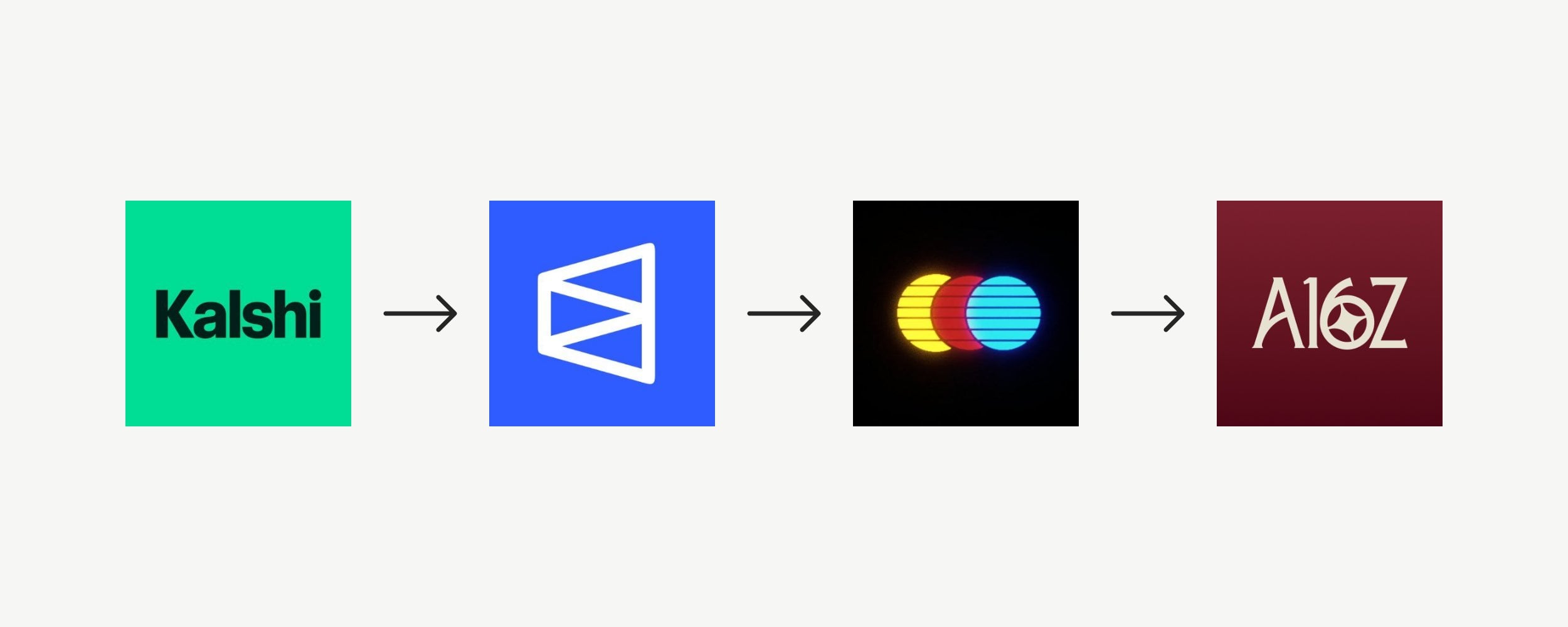
This is how I bid farewell to Morgan Stanley and Jane Street Capital in 8 months and effectively “squeeze” myself into working at Kalshi, Polymarket, MTS (@mtslive), and a16z.
Leaving Morgan Stanley: Tired of the "Workplace Performance" in Big Companies
When I first entered the University of Pennsylvania as a freshman, I didn’t even know that there were job options other than FAANG tech giants.
Walking on the campus's main road, Locust Walk, I accidentally made eye contact with someone by the GRC club booth, which was the first time I heard about the consulting industry; as for investment banks and hedge funds, I was completely clueless at that time.
Even before securing a summer internship for my freshman year, I unexpectedly landed a sophomore summer quantitative internship at Morgan Stanley.
At that time, I was frantically applying for summer positions in 2024 on the campus recruitment platform Handshake, and I casually clicked on a position for summer 2025, which surprisingly led me through three interview rounds and received a job offer.
However, it was this job that made me realize how much I intensely disliked the bureaucratic system of big companies. In the last few weeks of the internship, I wanted to apply for an API key for a large language model to conduct experiments, and the response I received was: “If you apply two months before your internship starts, maybe it will be approved when you officially start your full-time position later.”
The work pace was slow, expectations were extremely low, and it felt like everyone had mastered the “workplace performance” but no longer cared about the work itself.
Breaking into Kalshi with Short Videos, Four-Hour Code Surprising Polymarket
In my last year of high school, I started making TikTok videos to attract a girl’s attention (who knew why I thought this would work at the time). A few of my early videos unexpectedly gained some traction (Video 1, Video 2, Video 3), and then I developed a habit of regularly posting videos, mainly using summer updates.
Over time, I became regarded as a “niche influencer” focusing on engineering and quantitative content by others.
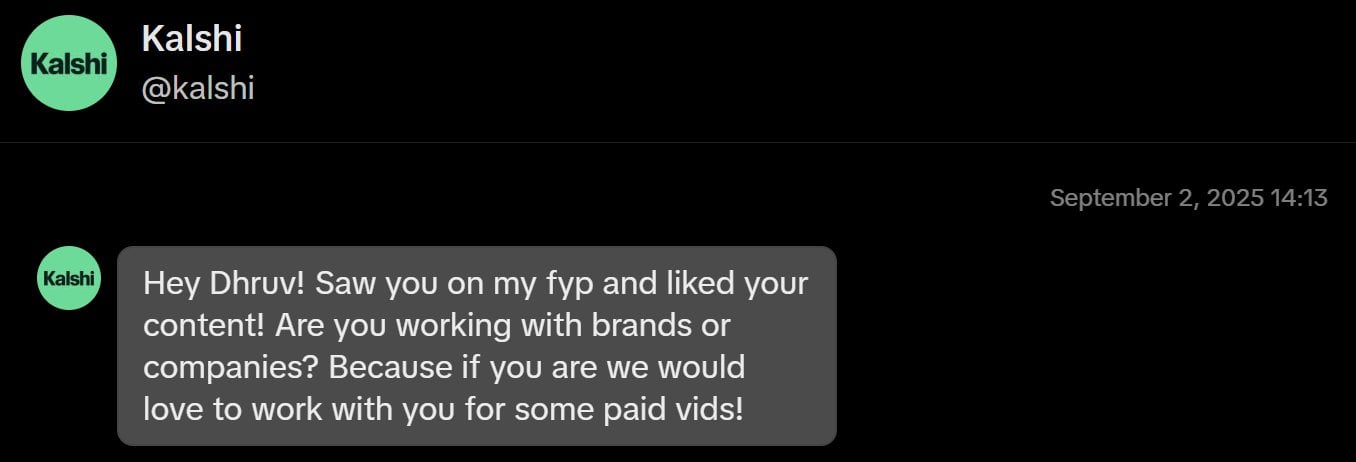
From an economic utility perspective, I have always been very interested in prediction markets, so when I received the above DM from @salmanso_, I felt like I was chosen by destiny.
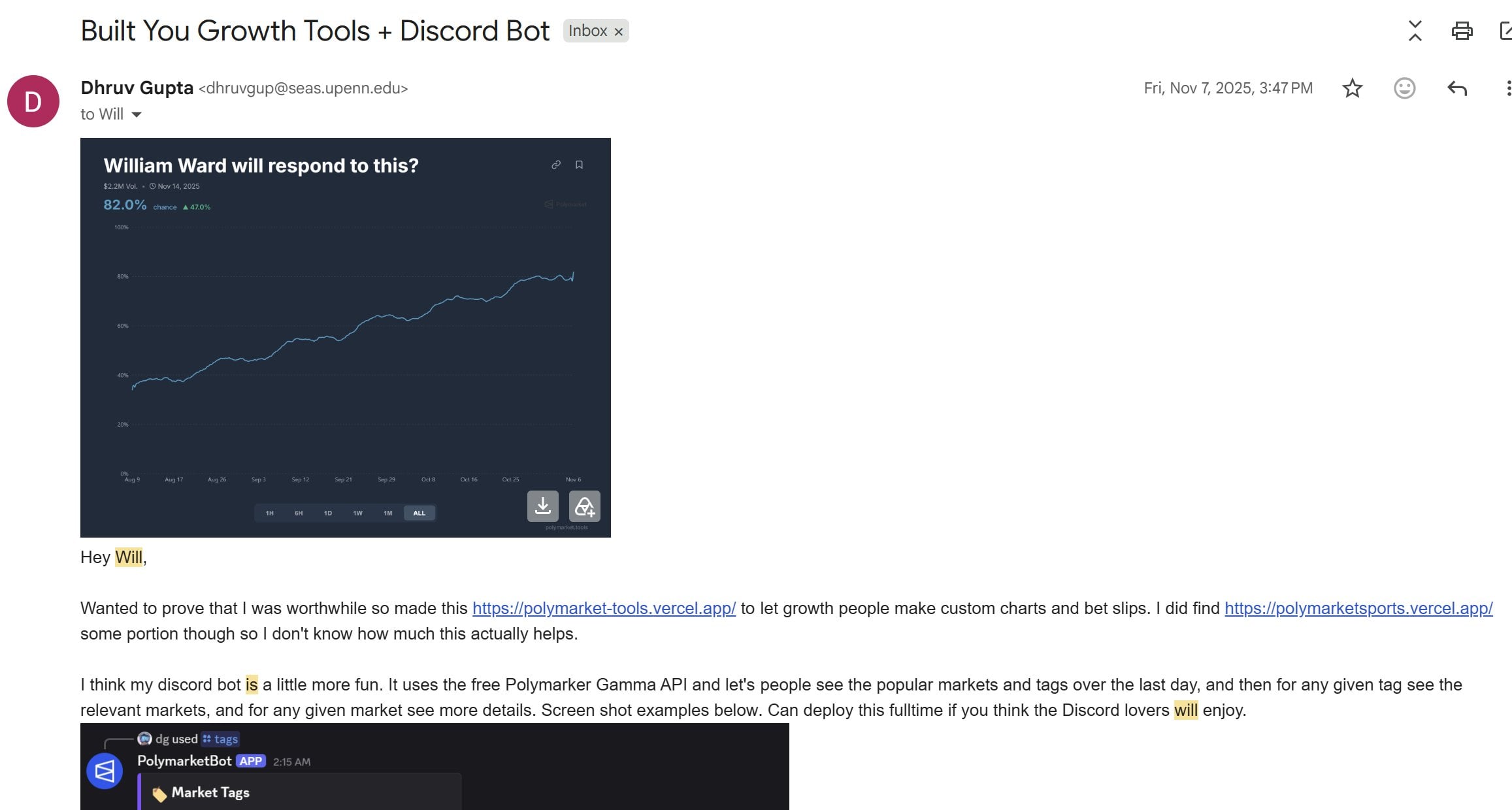
After posting a few uninspired videos, I quickly realized that what I truly wanted to do was bottom-level product development. To cut a long story short, Kalshi didn't have a suitable product position for me at that time, so I sent a rather bold email to the only Penn alum working at Polymarket.

Although I initially received a reply from @wasabiboatresearch, the other party quickly fell silent. So, I spent 4 hours furiously coding and created two rather rudimentary projects.
It was these two works that successfully piqued Will's interest, and he entrusted me to develop a software he had always wanted for news.polymarket.com.
This naturally extended into my assistance in building polymarket.com/polygraph peripheral tools and developing thespread.news, during which time I also wrote a few articles (Article 1, Article 2, Article 3).
While working at Polymarket, I also almost founded two companies in this field by accident.
One was in collaboration with the talented co-founders of Augur and Gnosis, @no__________end, and the other was with a statistics professor from Wharton School, who is a top expert in the global domain of Markov chains and is passionate about teaching probability theory through prediction markets.
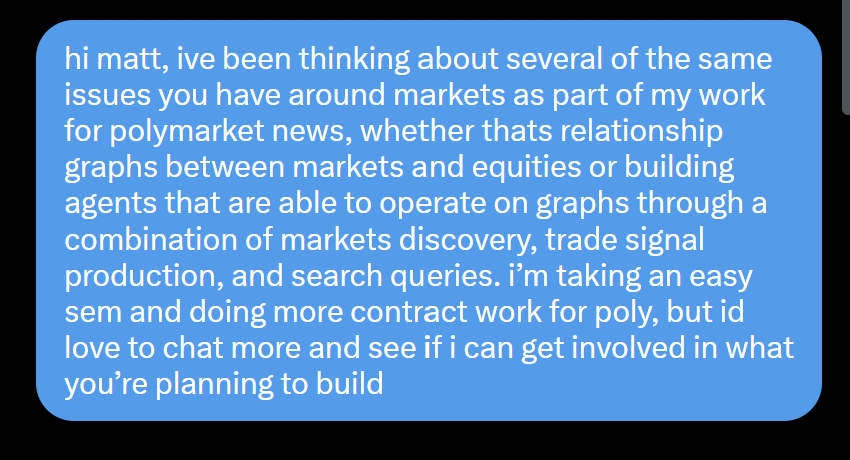
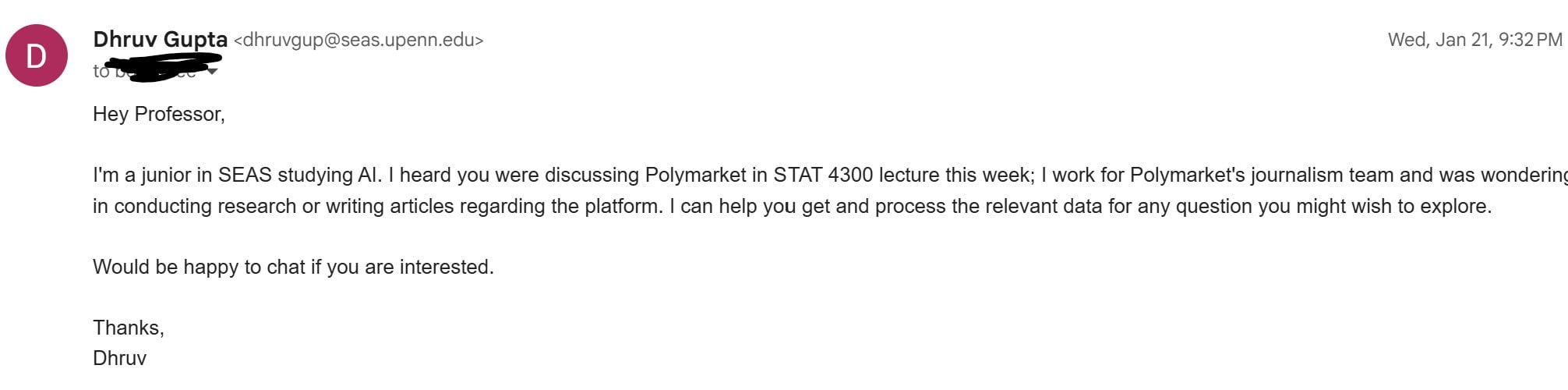
Although both entrepreneurial attempts ultimately did not materialize, I thoroughly understood the logic of financing, the art of recognizing people, and several cutting-edge niche technologies from them (if you want to get an early glimpse of my small projects in this area, you can click here to view details).}
Joining the a16z Media Program, Rapidly Flying to San Francisco to Build MTS
Just when the second entrepreneurial project was about to finalize seed round financing and needed my full-time commitment, I suddenly realized that I actually wanted to work in the media field that I truly loved.
Fortunately, a16z was just starting its second round of recruiting for “New Media Fellows,” led by then-partner @liangsays (Brent Liang).
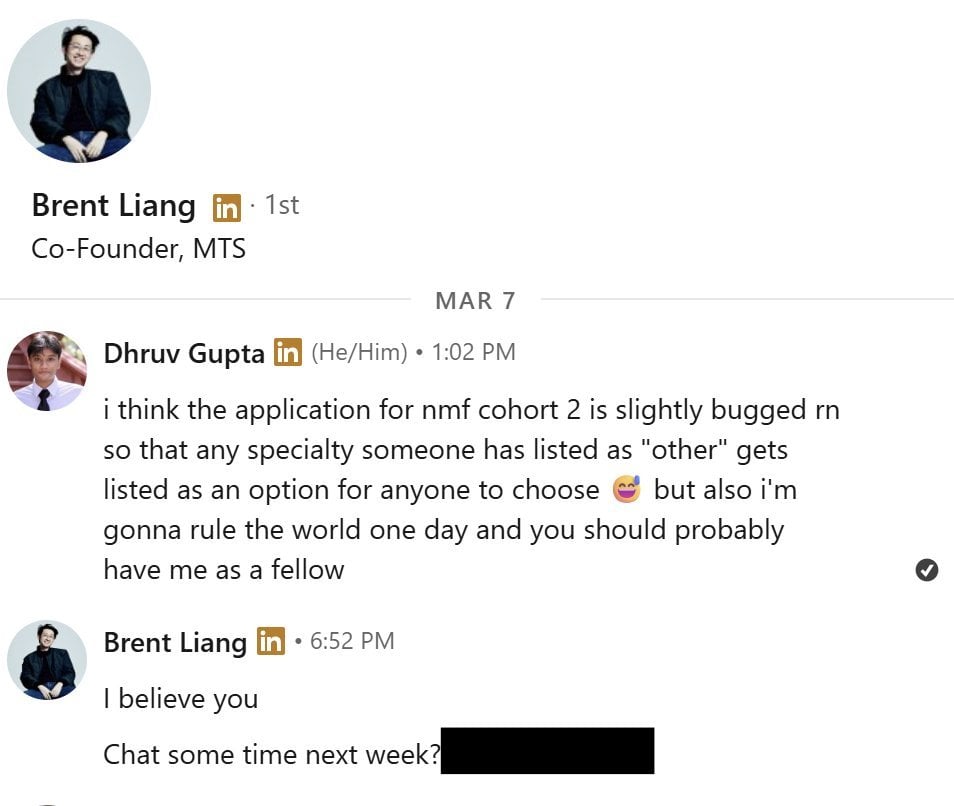
We met and stayed in contact. Later, when Brent left Andreessen Horowitz to start the new media platform MTS, he wanted someone to build a product system similar to what I had done at Polymarket.
At that time, my contract at Polymarket was about to expire, and I really liked the news industry and the American TV series “The Newsroom,” feeling it would be so attractive to practically experience it like the tech-savvy reporter played by Dev Patel in the show.
On the morning of the third day of MTS's live broadcast, Brent first brought up having me join.
By the end of that day, I had agreed with all my professors to take my final exams online, packed all my luggage, said my farewells to my graduating upperclassmen, and promptly boarded a flight to San Francisco, booking a one-month Airbnb rental in the Tenderloin area.

Initially, I was only responsible for building the mts.now/situations page, but I soon realized that MTS had the opportunity to fill a crucial gap in public discourse. After achieving a viral response from the trial coverage of the Musk vs. Altman case, I was even more motivated to continue developing products.
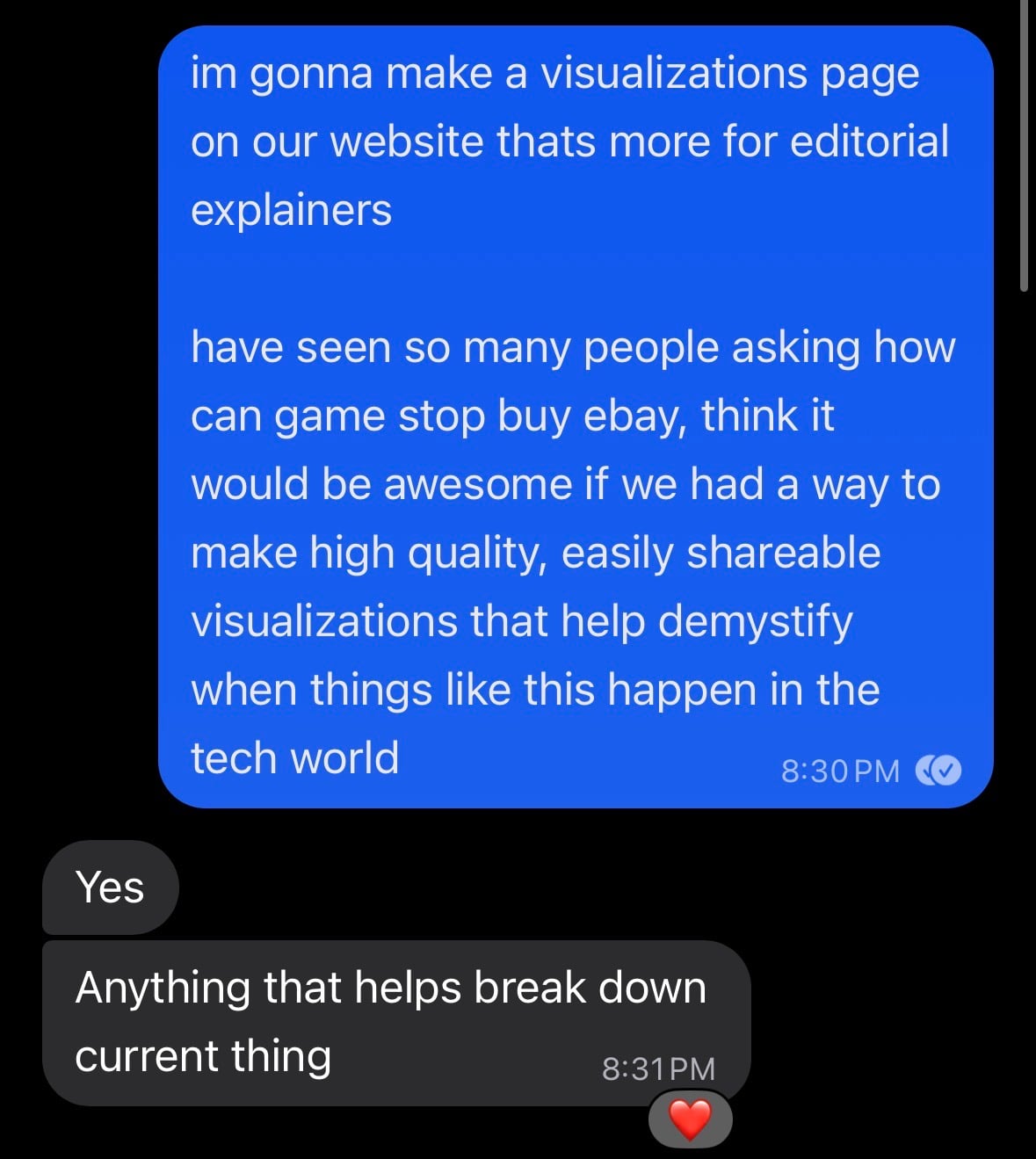
In today’s era of Opus 5.5 and Astra being commonplace, producing a high-quality hot topic graphic daily seems easy, but it was a completely different story in April 2026.
During that time, I led everyone in breaking down topics such as the data center construction boom, UFO issues, and startup recruiting, and I enjoyed it thoroughly.
In those initial days, the outside world was incredibly critical of us. Spending 12 hours a day, 7 days a week with Brent and @netcapgirl in the war room was one of the most worthwhile experiences of my life.
To this day, I still regret leaving them to complete my summer internship at Jane Street Capital.
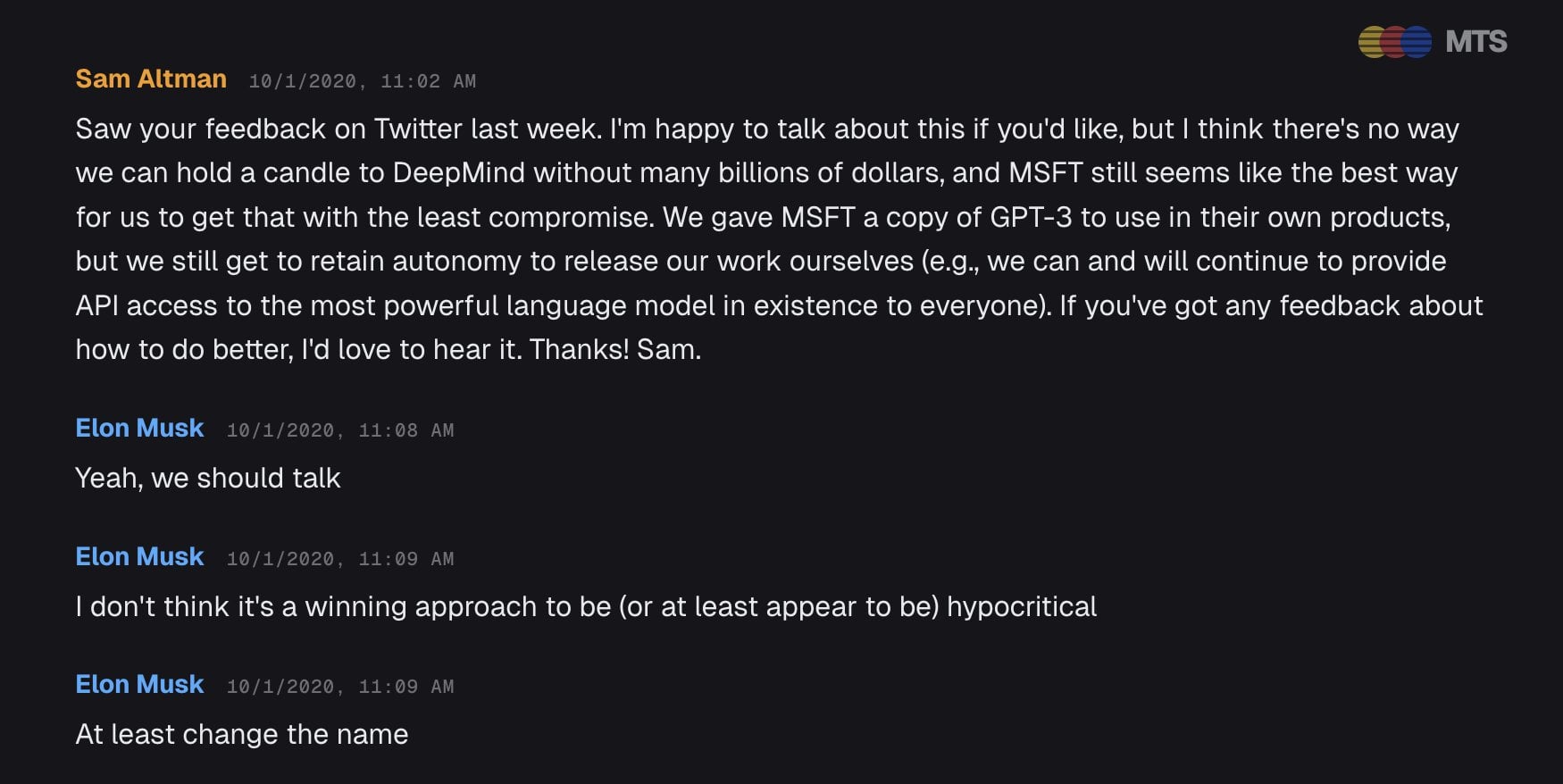
Here is a representative tweet released by MTS at the time: “We created a tool to check all the evidentiary materials submitted in the Musk vs. Altman case trial, including Greg's diary, text messages between Elon and Sam, the OpenAI Limited Partnership Agreement, etc., all available at evidence.mts.now.”
Amid the noise, only we knew who our team was, what we were doing, and why we were doing it.
It turned out that working hard and striving to improve 10% each day ultimately brought this team rich returns, and I am incredibly optimistic about every step they will take in the future.
From Building a Talent List to Cosign, Turning “Audacity” into a Product
After the summer of this year, I only had 6 courses left to graduate, and the reasonable choice was either to complete all of them in one semester and graduate in December or to take fewer courses in the fall while studying and working.
During my time at MTS, I had already started communicating with Erik Torenberg (@eriktorenberg), and by summer, he painted a product vision for me, which eventually materialized into the current @cosign.
Looking globally, there may not be another product that aligns more closely with my inner values than Cosign. Recently, a friend reminded me that, over the past year, I had been secretly maintaining a “quality talent list” and continuously sending it to entrepreneurs and venture capital firms, hoping to help my juniors secure internship opportunities at startups.
I hope that Cosign can be a platform that lets my friends and mentors bring those true doers, enthusiasts, fighters, and even perfectionists to the forefront.
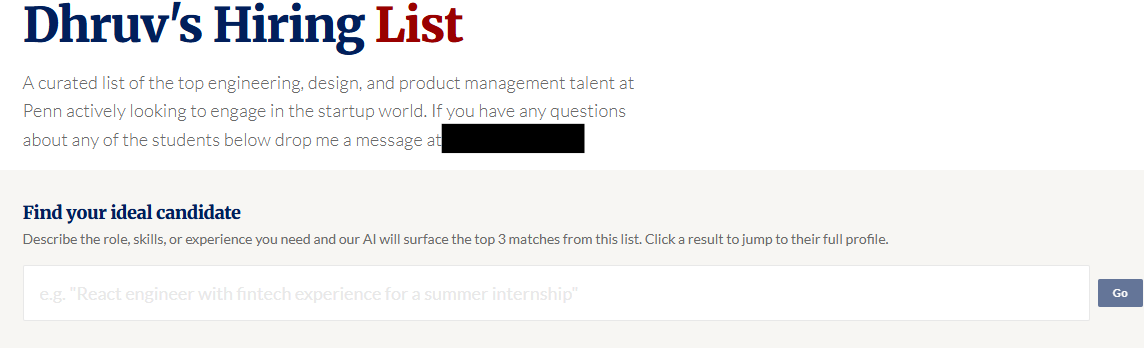
The journey to this point has indeed been a wonderful experience. Next, I look forward to continuing to make Cosign improve by 10% every day. It’s time to get to work!
免责声明:本文章仅代表作者个人观点,不代表本平台的立场和观点。本文章仅供信息分享,不构成对任何人的任何投资建议。用户与作者之间的任何争议,与本平台无关。如网页中刊载的文章或图片涉及侵权,请提供相关的权利证明和身份证明发送邮件到[email protected],本平台相关工作人员将会进行核查。


