Author: Nancy, PANews
“Not Your Keys, Not Your Coins.”
For everyone entering the world of cryptocurrency, this is one of the earliest pieces of advice heard and one of the most important tenets in the crypto space. However, this once-celebrated slogan is now facing challenges.
Recently, Robbie Mitchnick, the digital asset head at BlackRock, revealed that large Bitcoin holders are converting self-custodied BTC into IBIT shares at an unprecedented pace through physical redemptions. In his view, the rising threats to security in the real world are making more and more holders realize that managing private keys themselves may not be the safest choice. However, this view has also sparked controversy within the Bitcoin community.
The crypto world is losing its sense of security
Imagine a scenario where you have not clicked on any phishing links, your wallet has never connected to a suspicious website, and your private keys and recovery phrases have never been leaked. However, one day a stranger suddenly knocks on your door, possibly disguised as a delivery person, food delivery worker, or even a police officer. By the time you realize something is wrong, they may have already taken control of your personal safety, forcing you to hand over your recovery phrase or instantly opening your wallet to transfer assets away.
This is what has become an increasingly frequent occurrence in the crypto world known as "social engineering attacks." There are no complex codes involved, nor is there a need to crack any encryption algorithms; a simple “wrench” is sufficient to bypass layers of technical protection. After all, when personal safety is threatened, even the most secure safety mechanisms may prove ineffective. In recent years, such attacks have even escalated into kidnappings, serious injuries, and deadly violence.
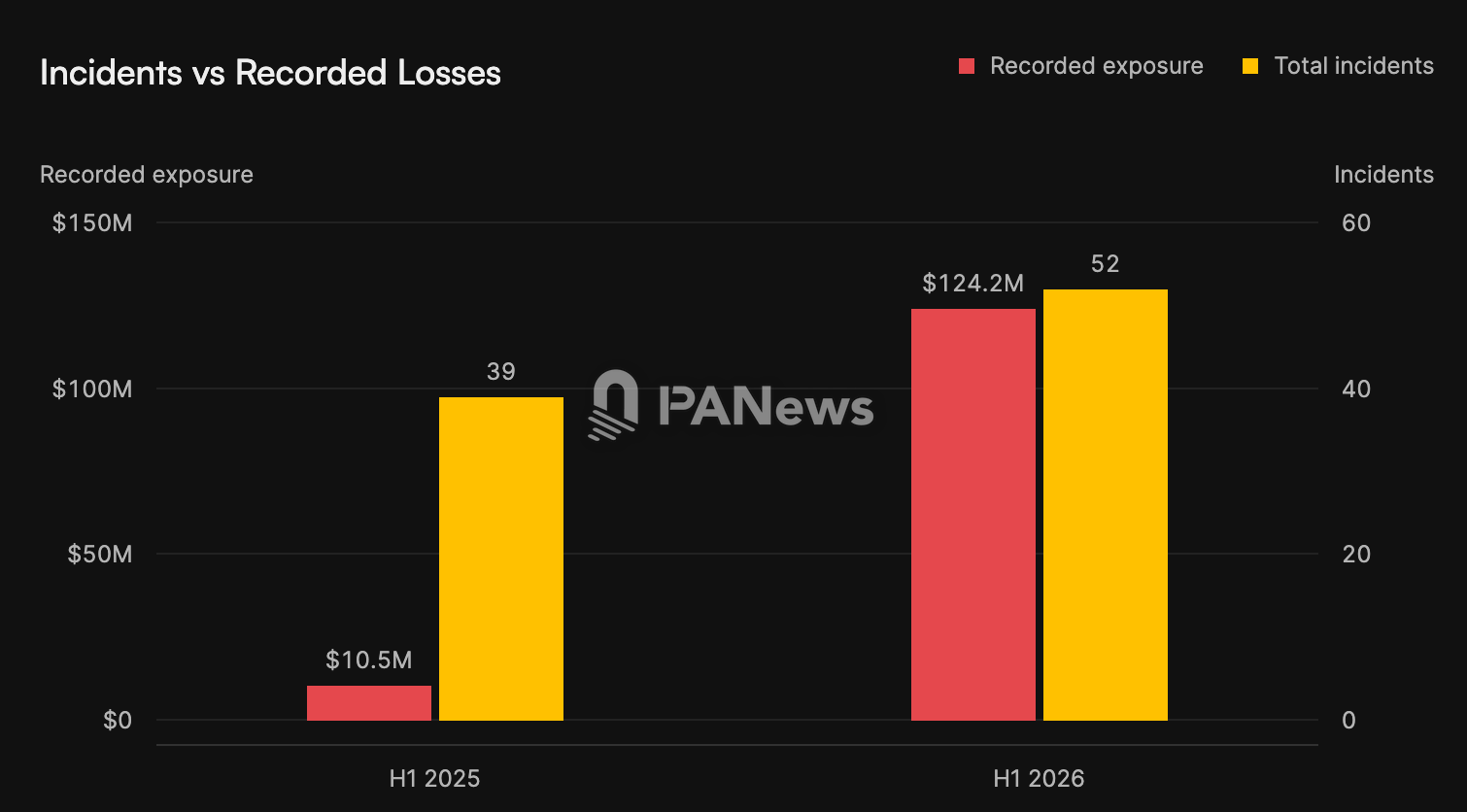
A report by blockchain security company CertiK indicates that in the first half of 2026, there were 52 recorded violent attacks against cryptocurrency holders globally, a 33.3% increase year-over-year. The total financial exposure related to these incidents is approximately $124.1 million, far exceeding the $10.5 million recorded a year ago. France has become a particularly hard-hit area, accounting for 33 incidents, nearly two-thirds of the global total.
Attackers are no longer just randomly targeting individuals. They have started integrating on-chain transaction records, leaked customer databases, and social media information to filter out high-net-worth holders, discerning their asset scale, lifestyle, and family information before planning their attacks. Previously, holders only needed to keep their private keys secure; now they must also find ways to hide their wealth and identity.
In addition to real-world personal threats, risks associated with self-custody are also heightening anxiety among holders.
In recent months, hardware wallets have repeatedly been exposed to supply chain security issues, and what was once seen as a safe haven for assets—cold wallets—no longer guarantee absolute security.
In the past, cold wallets were almost the standard choice for long-term holders. With private keys stored offline, and devices not connected to the internet, even if a computer is infected with a virus, assets seemed to remain safe. However, offline storage does not equate to being foolproof.
In August, the Bitcoin-specific hardware wallet Coldcard suffered from vulnerabilities in key generation, leading to the theft of over $100 million; in October, the well-known hardware wallet manufacturer Ledger was involved in a supply chain attack, with devices sold by its Southeast Asian distributor CryptoBilis found to have unauthorized hardware implants, with estimated asset losses reaching up to $93 million. Recently, Trezor also confirmed that devices sold through CryptoBilis appeared to have suffered similar tampering.
For the vast majority of average users, these types of attacks are highly covert and difficult to detect. By merely examining the device's appearance, one can hardly ascertain whether a hardware wallet has been implanted with malicious components. This unidentified potential risk is further undermining user trust in hardware wallets.
Decentralized exchanges (CEXs) are not an absolute safe harbor either. In the past, many average users tended to store their assets on leading exchanges because these platforms have professional security teams, comprehensive risk control systems, and ample reserve assets, seemingly providing more reliable security compared to managing private keys themselves.
However, in recent years, the impact of security incidents has spread from small and medium-sized platforms to leading exchanges, with a series of high-value asset thefts sounding alarm bells for the market. In recent months, Bitget and Binance have both encountered significant security events, involving assets worth billions of dollars. Even though leading platforms have ample reserve assets and compensation capabilities, it is still impossible to ensure that their defenses won’t be breached. Especially as AI technology continues to evolve, the methods of hacker attacks are becoming increasingly complex, with the efficiency and stealth of attacks potentially further increasing. Compensation may cover financial losses, but once user confidence is damaged, it is not easy to rebuild.
From a wrench at your door to hardware wallets that have been compromised, to attacked leading exchanges, the security defenses of crypto assets are facing unprecedented tests.
Security needs push whales towards ETFs, while self-custody advocates are unconvinced
Some Bitcoin whales are handing over their BTC to Wall Street. For them, ETFs offer not only a new investment tool but also a sense of security.
Last month, notable analyst PlanB openly admitted that he would transfer the Bitcoin he holds into an ETF by 2025, a decision that drew considerable criticism at the time, but given the controversies surrounding Coldcard’s random number generation security and Ledger’s unauthorized hardware implants, he does not regret the decision to choose an ETF and stated that he is no longer a Bitcoin extremist. He explained that he chose ETFs because they allow him to manage Bitcoin assets in the same way as stocks and bonds without having to handle hardware wallets and private key custody issues, which makes him feel more at ease.
Recently, Mitchnick from BlackRock Digital Assets also mentioned in an interview that, “The current demand for ETFs has reached levels we have never seen before, and it does not change with Bitcoin price fluctuations; this asset substitution demand has basically been continuously growing.” When discussing the various reasons clients have cited, he candidly noted that the main reason is security and peace of mind. For holders, delegating custody to an institutional-grade cold storage model is more appealing. Holding ETF shares managed by a large fund is usually considered less risky than placing assets on crypto trading platforms or always online hot wallets.
Mitchnick revealed that since regulators approved physical redemptions of crypto assets last year, BlackRock has recorded approximately $3.6 billion in physical conversions from directly held Bitcoin to IBIT shares. Since BlackRock does not handle all transactions themselves, and the fund may not be aware of every conversion, the actual scale might be even higher.
It is noteworthy that this ETF product is also being opened up to more large investors. Currently, the minimum threshold for IBIT physical conversions has dropped from about $30 million to approximately $1 to $2 million, and Mitchnick hopes to further lower the threshold to a single ETF share; however, the cost structure may be difficult to bring to zero in the short term.
Many industry insiders have expressed similar views. Bitwise’s Chief Investment Officer Matt Hougan recently stated that the attack on Binance does not imply that there is a security flaw in the Bitcoin network itself; rather, it is its hot wallet system that is truly under attack. For investors who prioritize asset security, possible custody options include entrusting assets to professional custodian services, using personal cold wallets, or holding Bitcoin through ETFs equipped with multiple security protection mechanisms. The crypto asset custody system has now evolved to its historical best, offering not only more diverse options but also enhanced security.
Hougan emphasized that ETFs can provide additional security guarantees for long-term investors because their underlying assets are stored by compliant custodians in cold wallets that are physically isolated from the internet. For example, with Bitwise, asset transfers from cold wallets must go through multi-party authorization, so even if a single employee or device is compromised, it cannot trigger a transfer. Furthermore, assets can only be transferred to a limited number of pre-approved market maker addresses that are qualified for ETF redemptions, making it difficult to directly transfer to a hacker's address even if the cold wallet is breached.
However, the safety mechanisms of ETFs also have certain limitations. He added that the underlying Bitcoin is only transferred once daily; although ETF shares can be traded around the clock, investors cannot instantly withdraw and transfer the corresponding Bitcoin, making it more suitable for long-term investors rather than those needing immediate transfers. The “layered storage” model is expected to become mainstream in the future.
Du Jun, a partner at ABCDE Capital, recently revealed that some family offices that had been advised to allocate BTC and ETH have, after experiencing CEX thefts and cold wallet supply chain security incidents, begun swapping BTC for IBIT, with some even selling their coins for traditional assets like physical gold.
However, the approach of ETF issuers promoting institutional custody out of security concerns has also stirred dissatisfaction among self-custody advocates. In their view, the original intention of Bitcoin's creation is precisely to free individuals from reliance on traditional financial institutions and ensure true control over their assets. Asset sovereignty and self-control are core values of cryptocurrency, and shifting assets to traditional financial institutions equates to embracing the old financial system in a new way, potentially reintroducing risks such as asset scrutiny and freezing, contrary to the ideals promoted by Bitcoin.
Nevertheless, some opinions suggest that whales turning to institutional custody does not mean they no longer trust Bitcoin, but rather that the real security risks are altering their choices. Particularly for investors with publicly known identities and large holdings, institutional-grade custody has become a realistic risk mitigation strategy. Moreover, self-custody and institutional custody are not mutually exclusive; the former is suitable for investors who value asset sovereignty and self-control, while the latter can meet the needs for security and management convenience of large holders.
Additionally, the centralized custody risks associated with ETFs have raised market concerns. Coinbase is a primary custodian for several mainstream Bitcoin ETFs, and its disclosed data indicates that it currently holds about 90% of the Bitcoin ETF custody market. This means that despite investors holding ETF shares through different funds, a significant portion of the underlying Bitcoin is actually held by the same institution.
OneKey founder Yishi has previously analyzed that the highly concentrated custody risk of BTC cannot be ignored, noting that he suspects IBIT may be on a potential target list in North Korea. Recent major crypto security incidents have been linked to North Korean hacker organizations. Attacks often do not directly steal private keys, but instead infiltrate the signer’s devices disguised as legitimate tools, hijacking the transaction approval interface. Such risks are also present in cold storage or multi-sign processes. He noted that although Anchorage Digital has been designated as an additional custodian, the latest quarterly documents show there is currently no plan for Bitcoin transfers. This situation of Bitcoin being highly concentrated with a single custodian carries significant risks. If a major theft occurs and the fund cannot recover the Bitcoin or obtain sufficient compensation, the remaining losses will ultimately be borne by IBIT shareholders. Yishi recommends diversifying assets to independent custody setups, keeping private keys offline, independently verifying transaction details on trusted devices’ screens, and continually reviewing security architectures.
According to Coinbase's latest disclosures, all assets in its custody vault are using cold storage and are isolated on-chain; security mechanisms include private key sharding, signing without needing to reassemble complete private keys, restricting the speed of fund transfers from cold wallets to hot wallets, and monitoring for unusual activities as well as emergency stop mechanisms that can take signing keys offline. Meanwhile, customer assets are held on a 1:1 basis and will not be loaned out or diverted without customer instruction.
Setting aside the debate between ETFs and self-custody, the question may not be which method is the optimal solution for crypto asset custody but rather how to weigh the risks and rewards of different custodial methods based on one's asset scale and actual needs, establishing a more suitable asset management strategy.
免责声明:本文章仅代表作者个人观点,不代表本平台的立场和观点。本文章仅供信息分享,不构成对任何人的任何投资建议。用户与作者之间的任何争议,与本平台无关。如网页中刊载的文章或图片涉及侵权,请提供相关的权利证明和身份证明发送邮件到[email protected],本平台相关工作人员将会进行核查。


