Bitcoin mining companies have turned into AI stocks, and the combination of AI sell-off and Texas halting approvals has led to a sharp decline, but the approved electricity has become even scarcer.
Written by: Murtuza Merchant, Forbes
Translated by: AididiaoJP, Foresight News
Mining companies are now primarily trading as AI stocks. When AI stocks drop, they fall harder than major AI companies; Texas halting new data center approvals has further impacted pending projects. However, analysts remind us that sites with approved electricity and signed leases are actually more valuable. The key is to separate pricing for "available megawatts" from "megawatts in the queue."
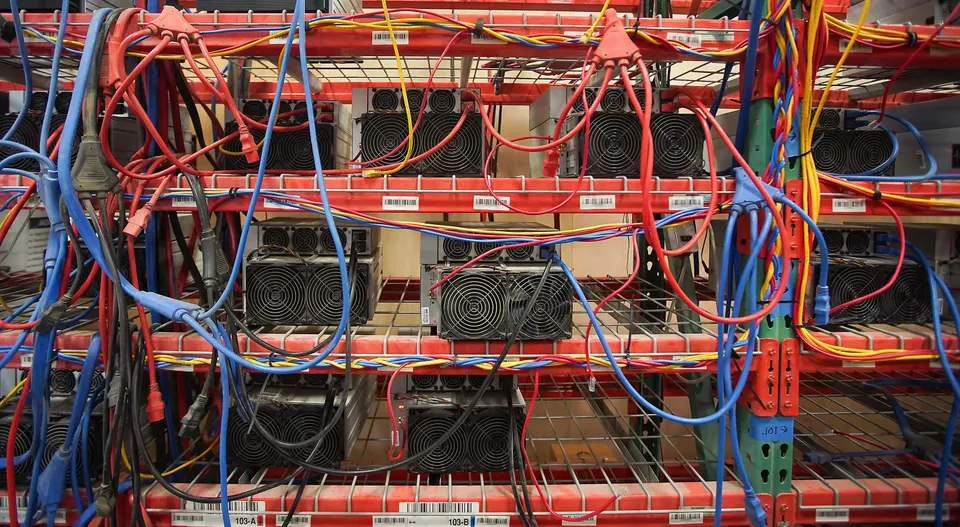
Bitcoin mining companies have transformed into "AI landlords" in recent years. In early November, as AI stocks underwent a widespread correction and Texas planned to halt new data center approvals, mining company stocks plummeted. Analysts and a Texas grid researcher believe that access to approved electricity is becoming scarcer and more valuable, and investors should distinguish between companies that have electricity and leases and those still waiting for permits.
Why did mining companies drop so much?
The trigger was a widespread sell-off of AI stocks.
On November 5, Nasdaq posted its worst single-day performance since April 2025, with chip stocks and AI stocks collectively declining, as the stock prices of IREN, Cipher Digital, and TeraWulf dropped by double digits.
The drop in mining companies was sharper than that of major AI companies, and this is not a coincidence. Bitwise research analyst Ishmael Asad stated that mining companies are smaller, have lower revenues, and smaller contracts, entering the AI space later. "These mining companies are primarily trading as AI stocks today," with the market treating them as the more speculative end of AI trading.
Texas dealt another blow. Gina Hinojosa, a Democrat who won the gubernatorial election on November 3, promised to continue halting new data center approvals until legislators pass laws to protect residents' electric and water rates.
In fact, Texas's approvals have already been frozen. Governor Greg Abbott initiated a halt back in August, awaiting audits on proposed projects from grid operators and state environmental agencies.
Hinojosa will take office on January 19, and the next regular session of the state legislature will continue until May 31. Bernstein subsequently cut the target prices of seven mining companies by about one-third to one-half.
Joshua Rhodes, a research scientist studying the Texas grid at the University of Texas at Austin, expects that projects currently under construction will continue to progress, but new permits may not be granted until at least after the May session concludes.
He said that even this timeline could be pushed back, as Democrats secured the Texas House while Republicans retained the Senate.
Asad indicated that this poses the greatest concern for companies with pending projects in Texas, whether it be waiting for approvals or lines that have not yet been fully developed. CleanSpark, MARA, IREN, and Cipher all have approved sites or expansion projects in Texas, but delays will push back lease start times and financing, "and the expected capacity may ultimately be cut."
Why has approved electricity become a prize?
The calculations behind the transformation are straightforward.
Nick Hansen, CEO of bitcoin mining service company Luxor Technology, calculated the numbers: at a hashing price of about $33 per terahash per day, one megawatt of operational mining machines generates about $700,000 in revenue per year, leaving $300,000 to $350,000 after electricity costs.
For the same megawatt, signing an AI lease can bring in about $1.2 million to $1.9 million per year, locked in for 10 to 20 years. "This price difference is the reason for the transformation; news from Texas doesn't change that."
Hansen believes that the halt in approvals should make existing grid access scarcer and more valuable, but Bernstein slashed the multiples on every company, leading to a market-wide sell-off. "This reaction has overshot."
He added that those megawatts that are only on the ERCOT (Texas grid operator) queue should be heavily discounted until legislators write new rules.
This view is echoed by some outside the industry. Rhodes, who does not hold these stocks, also agrees that existing access has become more valuable. "Yes, the industry still wants electricity, and it seems to be getting scarcer recently."
Milton "Todd" Ault III, founder of Ault Blockchain, said more directly: "Approved and powered sites are more valuable because no one else can build next to them."
Is it useful to retain some mining?
Hansen stated it is not useful for stock prices but useful for sites. A megawatt that is already powered but waiting for tenants, permits, or chip deliveries can start making money from mining the next day; during tight grid conditions, these machines can be shut down in seconds.
He is more concerned about companies that prematurely sold mining machines. "What I worry about are the mining companies that sold off ASICs before securing signed leases and financing, because they now only have an empty building and a spot in the permit queue."
When Texas reopens approvals, flexibility may be worth something.
Rhodes noted that ERCOT's new process for connecting large electricity users, "Batch Zero," has two options that reward loads that can reduce electricity use during grid stress. However, it treats AI data centers and mining companies equally because "the grid doesn't care whether their products are tokens or coins."
Dumpff believes a mixed model is the long-term answer: the same site dedicating about 80% to computing power and 20% to mining, since the lifespan of mining machines is considerably longer than that of AI chips.
What if AI spending slows down?
Building AI data centers relies on heavy borrowing, which is the real risk if demand cools off in 2027. Asad stated: "Those who borrowed the most, have no tenants, and have not finished building sites will suffer the most; they may ultimately be unable to repay their debts."
There are some buffers, however. Asad mentioned that CleanSpark and Cipher have raised billions through convertible bonds, which do not mature until 2032. "But in the worst-case scenario, we may see these companies forced to cancel projects, sell off assets, or finance under very poor terms."
Ault said lease terms will determine who survives. "Companies with long-term leases and strong tenants will be fine because they still collect rent as spending slows down. Companies that build sites based on speculation will feel the pressure more acutely."
How should investors value mining companies now?
First, classify the megawatts.
Hansen categorizes them into four groups and prices them accordingly: those that are powered and have signed leases, those that are powered and mining, those that have been approved but not built, and those still in the pipeline. He noted that this year's surge erroneously priced megawatts in the pipeline as if they were already operational, and Texas is the place correcting this first.
Asad ranks operating sites ahead of headline trades. He pointed out that mining companies whose valuations are based on billions in contracts and unbuilt sites are currently at much greater risk.
Geographic distribution is another criterion. Asad noted that Riot Platforms has about 85% of its capacity in Texas, but both sites are already operational; IREN's announced capacity is about half planned in Texas, which poses a greater risk. He believes that CleanSpark, which has data centers in five states, and Bitdeer, operating in Texas, Bhutan, Ethiopia, and Norway, are less sensitive to changes in state rules.
Dumpff added another point: whether sites can switch back to mining when AI demand dwindles. "Flexible companies win both ways."
免责声明:本文章仅代表作者个人观点,不代表本平台的立场和观点。本文章仅供信息分享,不构成对任何人的任何投资建议。用户与作者之间的任何争议,与本平台无关。如网页中刊载的文章或图片涉及侵权,请提供相关的权利证明和身份证明发送邮件到[email protected],本平台相关工作人员将会进行核查。


