Editor: Deep Tide TechFlow
Deep Tide Overview:
On Sunday, November 8, Nvidia's board announced an independent investigation into Jensen Huang, causing Nasdaq futures to fluctuate wildly within minutes. Bitcoin followed, dropping to around $73,500, the lowest since August 21. The midterm elections a week ago caused Bitcoin and the Nasdaq to drop 5.5% on the same day, with spot ETFs experiencing an outflow of $1.28 billion last week. The CPI released on Tuesday is the last inflation data ahead of the December interest rate meeting, with the 21-week moving average near the $73,000 level below.
On November 8, Sunday, Nvidia's board issued a statement that, following reports that Jensen Huang had become a target of foreign intelligence operations, a committee made up of independent directors would hire external lawyers to conduct an independent investigation. On the same day, Huang admitted in an email to employees that he had engaged in an extramarital affair and expressed his full cooperation with the investigation.
The female party in the report is named Alice Huang, a former executive at MegaSpeed, a customer of Nvidia’s chips. The New York Times reported last month that U.S. intelligence agencies believe she may have been passing information to Beijing. The board stated there was no reason to believe U.S. national security or company secrets had been compromised, and the Chinese foreign ministry denied the espionage allegations on Monday.
After the news broke, Nasdaq 100 futures first fell and then rose. According to The Kobeissi Letter, about $250 billion in market value evaporated in seven minutes, then rebounded by about $300 billion. Before the U.S. stock market opened on Monday, Nasdaq futures turned negative again, with Nvidia dropping nearly 5% in pre-market trading.
Bitcoin fell almost in sync. Before the weekly close on Sunday, BTC dropped to around $73,500, the lowest point since August 21, and briefly stood back at $75,000. According to CoinGlass data, in the 24 hours up to 9 AM UTC on Monday, approximately $1.12 billion in leveraged positions across the network were liquidated. On Monday, BTC was reported at $74,120, down 2.32% in 24 hours.
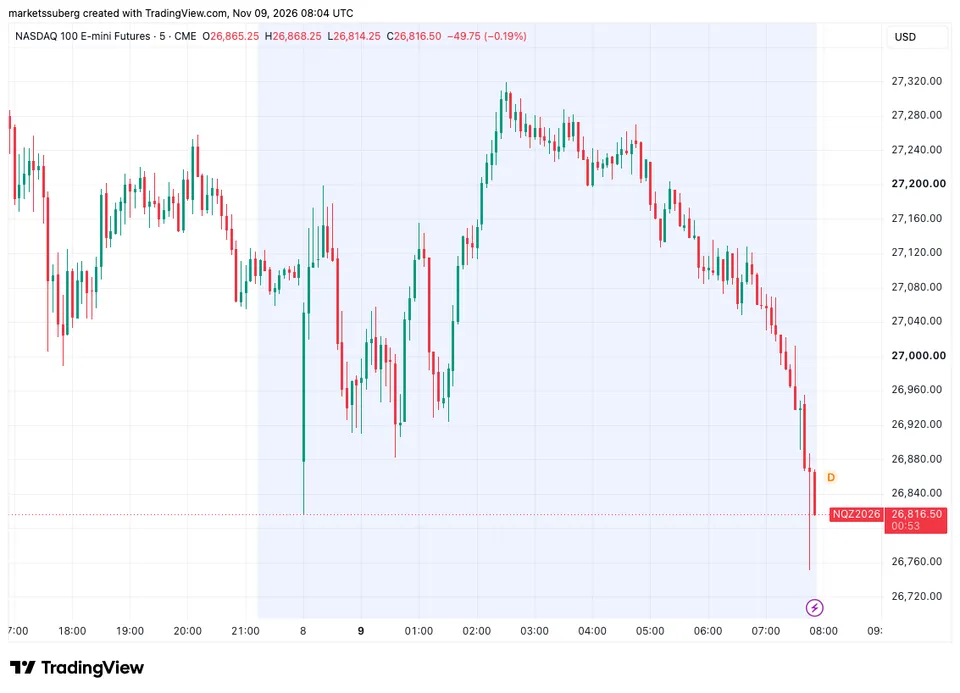
The first full trading day after the election, Bitcoin and Nasdaq both fell 5.5%
The private matters of a chip company CEO can impact Bitcoin because both have been tied together over the past week. On November 3, the U.S. midterm elections saw the Democratic party succeed in both the House and Senate. Many winners promised to restrict AI data centers, citing electricity and water costs. The largest data center market in the U.S. is in Texas, where the new governor advocated pausing new construction during his campaign.
On November 4, while the market was still rebounding, Bitcoin recovered to $81,000. However, the next day the wind shifted, with the Nasdaq Composite Index dropping 5.5%, and the Philadelphia Semiconductor Index falling over 12%, with Nvidia down 9.26%. AMD had just reported better-than-expected earnings, yet its stock still fell 17%. Bitcoin plummeted from around $80,300 to close at $76,000, also down about 5.5%.
Also sold off were companies rooted in mining. IREN and Applied Digital, which started from Bitcoin mining, are now building data centers for AI clients and renting computing power, both dropping over 14% that day. In their reports, AI and cryptocurrency are already considered the same business.
Panic spread to Seoul the next day. On November 6, the Korean KOSPI opened down 8.55%, triggering a 20-minute trading halt. Samsung Electronics and SK Hynix provide high-bandwidth memory to Nvidia, together accounting for about half of the market value of this index.
ETF saw an outflow of $1.28 billion in a week, with BlackRock accounting for 95%
As the stock market declined, institutional money withdrew as well. According to SoSoValue data, from November 2 to 6, there was a net outflow of $1.28 billion from the U.S. spot Bitcoin ETFs, marking the largest single-week outflow since late June. BlackRock’s IBIT saw an outflow of about $1.21 billion, accounting for approximately 95%. Among the five trading days, only November 4 saw a net inflow, which coincided with the day of the stock market rebound.
This week flipped the ETF's performance for the year. A week ago, the spot Bitcoin ETF had about $450 million in net inflow for the year; now it has turned to a net outflow of $800 to $900 million, marking the first time it has turned negative since returning to positive in late September.
The situation within the crypto space is also turbulent. On October 29, Binance's hot wallet was hacked, resulting in approximately $6.3 billion stolen in about 20 minutes, marking the largest recorded crypto theft, about four times that of the Bybit hack. Both TRM Labs and Chainalysis attributed it to the North Korean hacker group TraderTraitor. Binance stated it would fully compensate the losses, with about $3 billion already frozen on-chain.
In addition to the frozen assets, there is a substantial amount still out there. According to estimates from Elliptic, the attackers still hold about $3.3 billion in non-frozen assets, including 18,270 BTC. If these coins are sold off, it would create a readily available sell pressure.
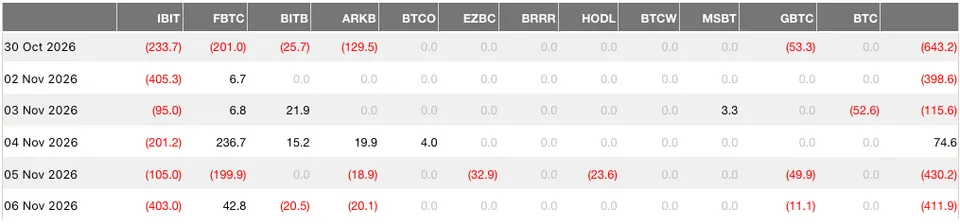
September CPI rose to 3.7%, market bets on December rate hike
The most important number this week comes on Tuesday. The U.S. October CPI is scheduled to be released at 8:30 AM ET on Tuesday, with the PPI to follow on Friday.
The Federal Reserve is currently discussing whether to raise rates. In September, it raised rates for the first time in three years and kept them steady in October, maintaining an interest rate range of 3.75% to 4.00%. The September CPI increased by 3.7% year-over-year, 0.3 percentage points higher than August, with over half of that monthly increase coming from gasoline prices. October's non-farm payrolls added 165,000 jobs, with expectations being only 65,000. According to CME FedWatch, the probability of a 25 basis point rate hike in the December meeting stands at 78.8%.
Economists generally expect the October CPI to increase by around 0.3% month-over-month. Based on scenario analyses from various institutions, if the number exceeds expectations, the likelihood of a December rate hike could shoot up to over 85%. Conversely, if core CPI rises by only 0.2% or lower, the probability could drop below 70%. On the same day the U.S. stock market closes, AI cloud service provider CoreWeave will release its third-quarter report. Bitcoin on Tuesday will have to navigate both inflation and AI hurdles.
Oil prices are another factor. On Monday, WTI crude was around $90 per barrel. Trump stated to CNN that the possibility of the U.S. striking Iran again is very low. “Of course, it can happen.” When asked if oil prices could fall to $75, economist Robin Brooks replied that he believes that a decline in oil prices would simultaneously boost Bitcoin, stocks, and precious metals.
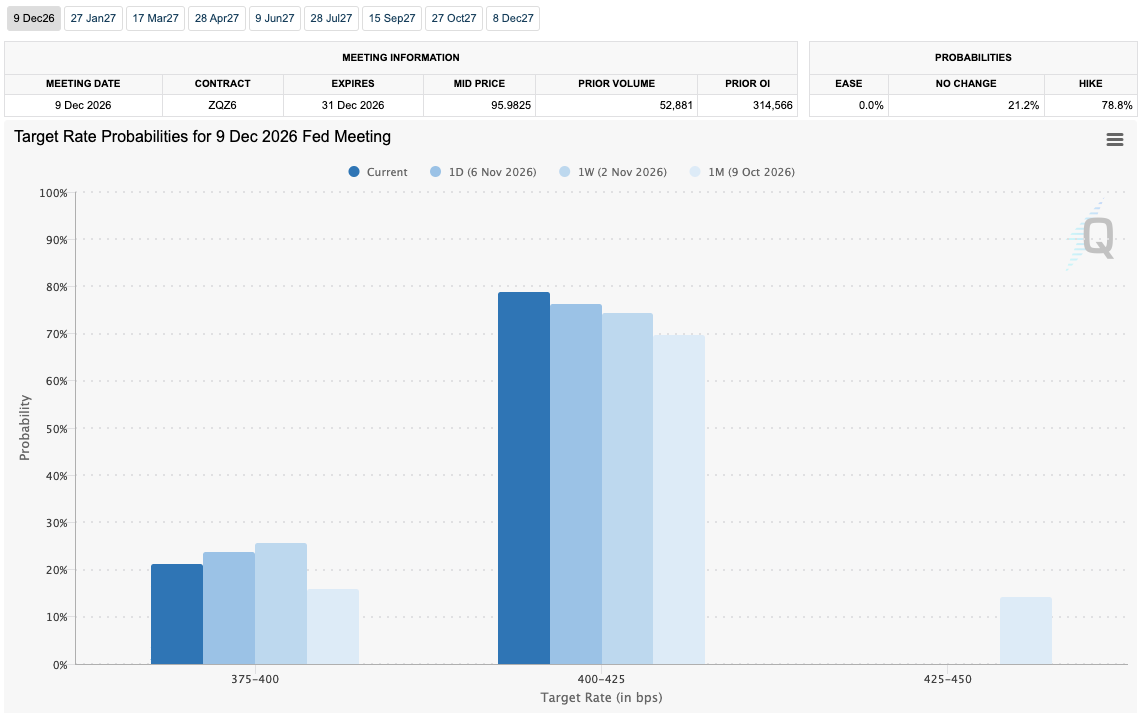
21-week moving average at $73,078, IBIT sees outflow for six consecutive days
On the technical side, Bitcoin has fallen below the 50-week moving average of $75,492 and is approaching the 21-week moving average of $73,078. CryptoQuant estimates that the cost of short-term holders is $75,691, indicating overall losses for funds that entered in recent months. Coins that were transferred one to three months ago had costs around $79,300, and a rebound to that level would encounter selling pressure for those looking to break even.
Looking at these lines together, the pressure on Bitcoin mostly comes from outside the crypto space.
The governance issues at Nvidia, the Democratic party's stance on data centers, and the Fed's rate hike expectations are all factors that cannot be resolved on-chain. The Binance hack is the only internal factor, and the market took more than a week to digest it. During this period, Bitcoin's movements were not much different from those of an AI stock; it fell in tandem with the Nasdaq, and ETF funds followed the stock market in and out.
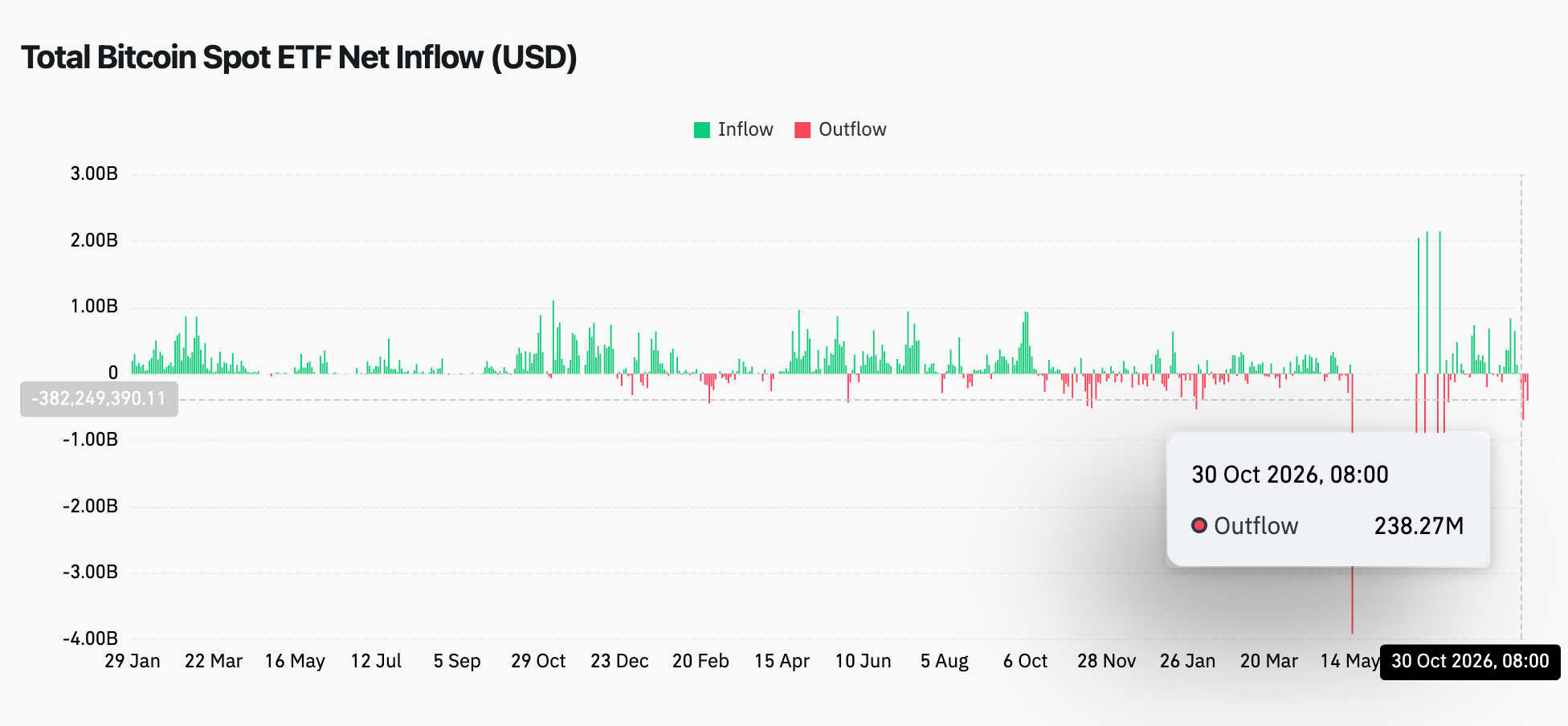
If Tuesday's CPI adds further fuel to the rate hike, $73,000 may be the first major test. The attitude of institutions has already been reflected in the fund flows; since October 30, IBIT has seen net outflows for six consecutive trading days, totaling approximately $1.44 billion.
免责声明:本文章仅代表作者个人观点,不代表本平台的立场和观点。本文章仅供信息分享,不构成对任何人的任何投资建议。用户与作者之间的任何争议,与本平台无关。如网页中刊载的文章或图片涉及侵权,请提供相关的权利证明和身份证明发送邮件到[email protected],本平台相关工作人员将会进行核查。


