Focus on asset records, service terms, and communication processes, ensuring that aspects related to domestic and foreign laws correspond to specific references that can be consulted.
Author: Corundum
Opening the trading platform, the balance is still there, but the withdrawal button has turned gray. Some start refreshing the announcement, some are busy asking customer service, while others post account screenshots in the group to see if everyone is encountering the same issue. When it actually happens to you, it is often difficult to be anxious while organizing the materials.
Recently, the suspension of withdrawals and phased recovery following the Binance security incident has made this issue even more specific. How the platform will arrange things next is one aspect; the materials in users' hands that can prove account, assets, and operations are another. First, clarify your own situation, which will save a lot of time later, whether it’s for checking accounts, communication, or getting a lawyer's assessment.
This article will start with what an ordinary user can actually do. The focus is on asset records, service terms, and communication processes, aligning with specific legal references wherever applicable.
1. First, keep a complete account snapshot
The first piece of material can start with your platform account that you usually use. Include the account number, registered email, identity information display, products used, and the asset page at that time, ideally in the same record. When processing work orders later, the staff will first need to confirm which account and which service has a problem.
It is best to expand the asset page to specific cryptocurrencies and products. Spot balance, investment shares, margin, loans, and sub-accounts may be spread across different pages. Just taking a screenshot of the total assets converted into USD may lead to discrepancies if prices change, necessitating a recheck of which assets were present at that time.
Next, save deposit and withdrawal records as well as transaction history. If you can export bills or details, keep the original files generated by the platform, and also note the export time, time zone, filter range, and page entry. Some platforms only allow queries for a certain time period; when exporting in segments, you can label the start and end dates in the file names for easier tracking later.
Screenshots are suitable for retaining the appearance of the page at the time, exported files are good for item-by-item checks, and screen recordings can demonstrate the continuous operations from logging in to the account page. Using these materials together can help others understand where the records come from, which account they belong to, and what you saw at that time.
You can save two sets of records: one set of original materials kept intact and one set of copies for organization and submission. Try to keep original emails with attachments, platform download files, and screen recordings complete. If personal information needs to be obscured or explanations added, handle it on the copies while keeping the correspondence between originals and copies clear.
2. Connect the process of funds entering and exiting
To prove account balance, it usually also requires knowing how assets entered the account. You can start with the most recent deposit, linking bank statements, payment vouchers, platform deposit records, and on-chain transactions. Each entry should correspond to at least the date, amount, currency, payee and payer, and the platform or service used at that time.
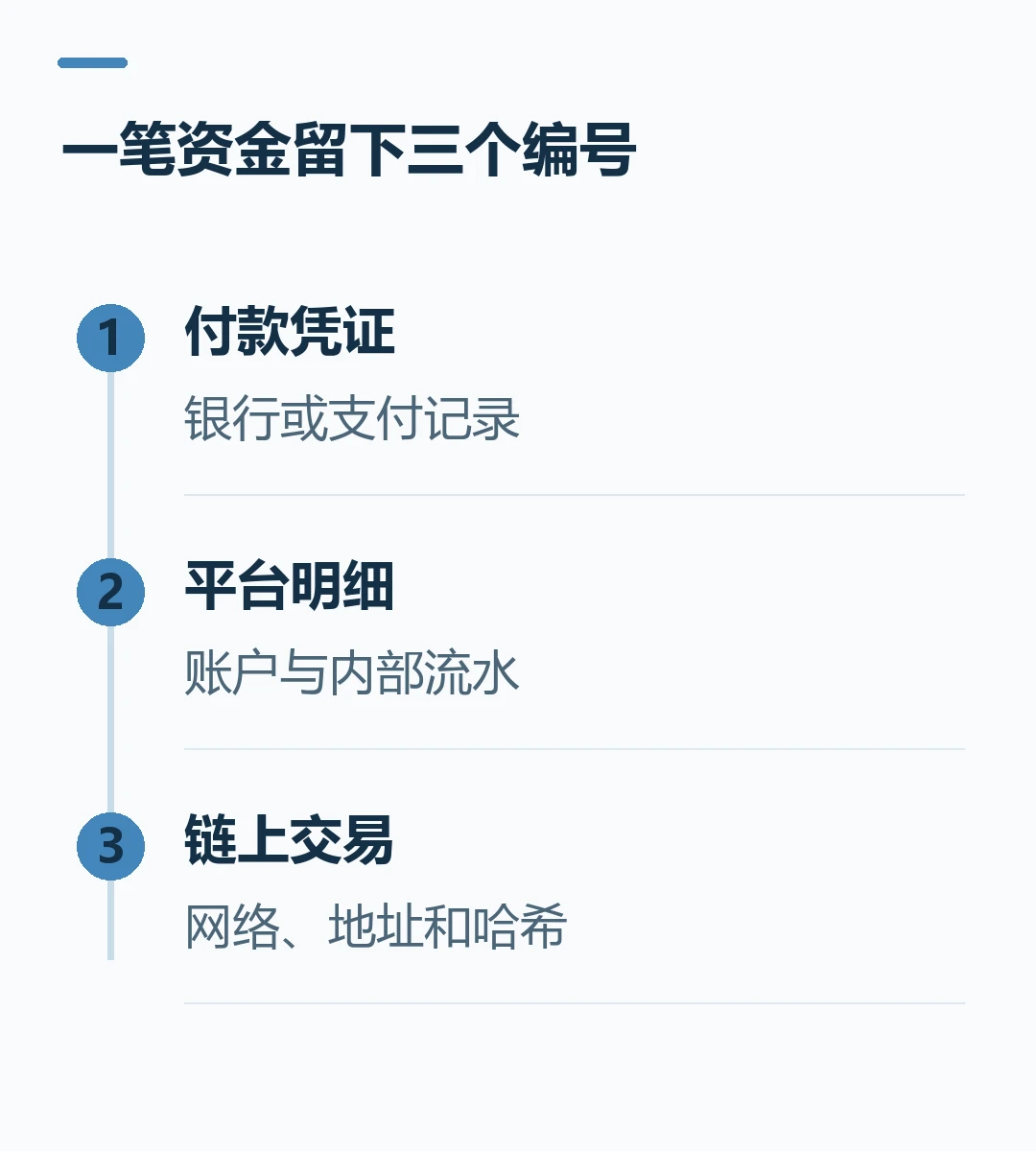
Three layers of records corresponding can help reconstruct the flow of funds.
For on-chain transfers, especially note down the network and transaction hash. The transaction hash serves as the query number for that on-chain transaction and can be used to view the address, amount, time, and result via a block explorer. The same currency may be issued on multiple networks; including the network in the submitted materials makes it easier for the platform to locate.
Internal transfers on the platform sometimes only have internal transaction IDs, and there might not be an on-chain corresponding transaction. In this case, keep records of internal transfer details, both account information, and relevant communication records together. First, organize according to what the platform actually provided; later, if additional data layers are needed, apply to the corresponding entities.
A withdrawal application also deserves a separate timeline. Record when it was submitted, what the target address was, how much was applied for, what the page displayed for review status, what processing updates were given by customer service later, all on a timeline. An ongoing updated timeline is easier to reference than dozens of pictures scattered in messaging software.
For example, if you submit a withdrawal on the evening of October 29, and then the platform issues a suspension notice, list the networks you used, the exact application time, and the platform announcements clearly. This way, you can discuss the service status at that time and whether a new application needs to be submitted subsequently.
If there are incomplete orders, loans, or other products, you can also separate them from the available balance. The total amount displayed on the platform may contain assets subject to different rules, requiring separate checks when calculating requests later. By writing these discrepancies in advance, you can reduce back-and-forth confirmation during communication.
3. How to take screenshots to make verification easier
In Chinese civil litigation, electronic data is already a form of statutory evidence. Article 14 of the Supreme People's Court's “Several Provisions on Evidence in Civil Proceedings” lists types such as account information, transaction records, communication information, and electronic files, while Article 15 specifies requirements for the treatment of original electronic data and qualified copies, and output media.
Specifically for platform records, verifiers will care about which system the data comes from, how it was preserved and extracted, whether the content is complete, and whether related operations are reliable. Article 93 of the regulations lists factors to consider comprehensively when judging the authenticity of electronic data. Retaining continuous operations, original download files, and emails serves to help clarify these issues.
Therefore, when recording a screen, start from a page that can identify the platform and account, show the process of accessing the assets or order page, and then open the relevant details. The time, currency, amount, and status on the page should be clear. If sensitive areas like passwords or verification codes are involved, arrange a recording method under safe conditions and cover it up when submitting.
For significant amounts, where the page may change rapidly or there is already a clear dispute, you can have a lawyer assess notarization, electronic evidence preservation, or court investigation measures based on the circumstances. Different measures solve different problems; some prove the collection process, while others help retrieve backend data that you cannot access. Choose measures based on the needs of the dispute.
A self-compiled summary table is also very useful, but it should trace back to original materials. For instance, which document corresponds to line 12 of the table, which page, which transaction number, can be written directly next to it. When the other party raises objections, you can quickly revisit the original record for verification, significantly increasing the efficiency of material use.
Assuming an asset in your account was transferred to a financial product after purchase, you can first save the purchase transaction record, then save the record of transferring into the product, as well as the share and redemption conditions displayed on the current product page. This way, even if only a summary amount is displayed later, you can still trace the changes of the assets along the original documents. If you need to calculate profits or losses separately, handle them item by item based on the respective contracts and actual records.
For backend materials that you cannot access temporarily, list them in a supplementary list, such as the processing time of a specific review, changes in account authority, or complete work order logs. First, clarify how these pieces of information relate to the dispute, then assess whether to acquire them through the platform, regulatory communication, or legal processes. Understanding what you already have and what is still missing will make things clearer for both parties.
Additionally, the relationship between on-chain addresses and individuals needs to be explained separately. Browsers can prove that a transaction occurred at a particular address, while account records, payment vouchers, and communications from the parties help explain who this transaction relates to. Corresponding these layers together makes it easier to form a complete account of the facts.
4. Who to communicate with, first check the applicable terms of the account
Many users tend to think of a platform brand as a single company. In reality, the entities providing trading, clearing, custody, or other services may be located in different regions. Registration region, account migration, and products used may also alter the contractual relationship. When contacting customer service, you can directly ask: which entity provides this service, and which agreement applies.
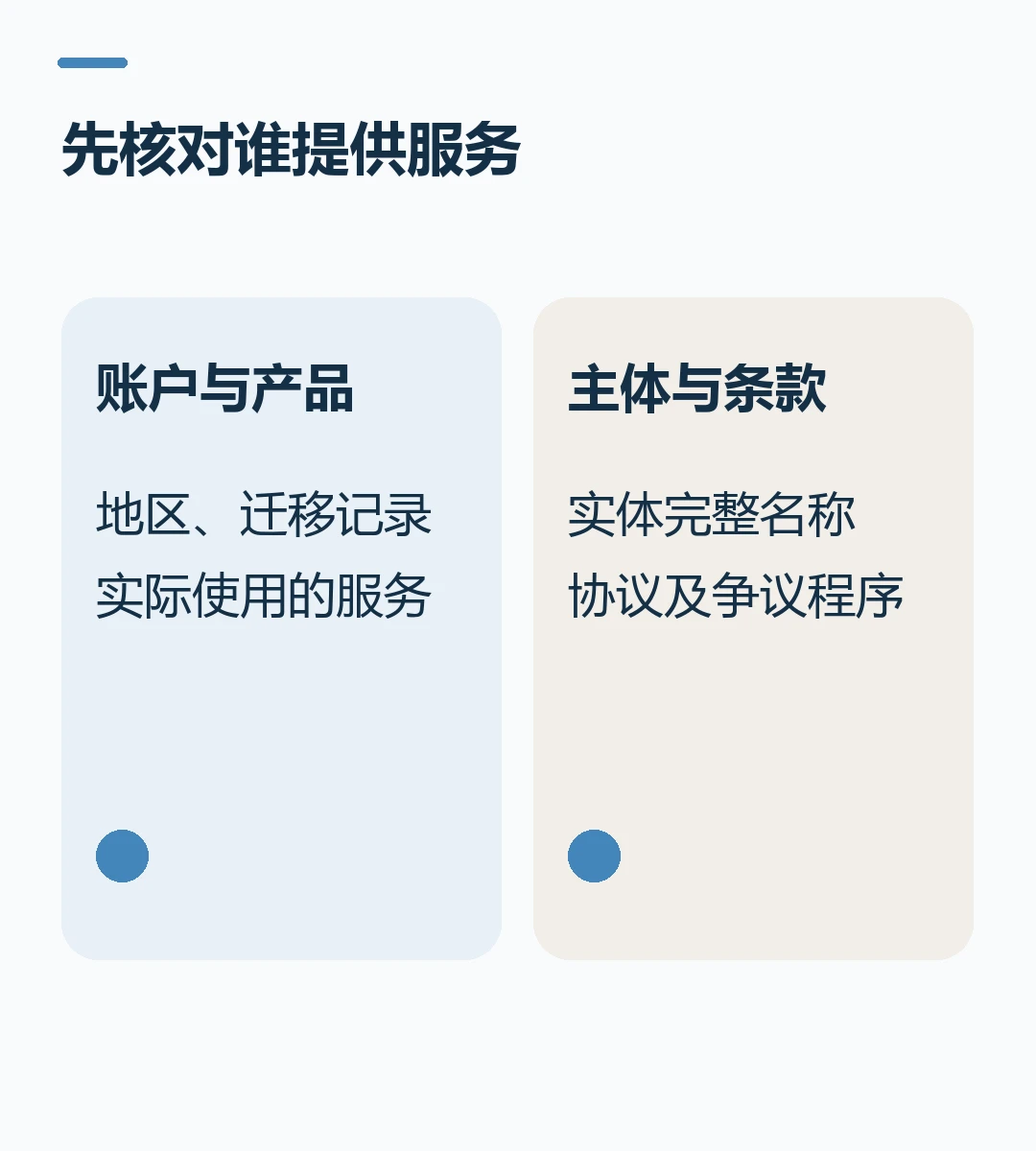
Brand, account, and service entities need to correspond in the materials.
It is advisable to save both the web version and downloadable file of the terms, noting the download date, effective date, and any migration notifications received by the account. The document you saw when you registered may need to be checked separately from the one applicable when the incident occurred. When lawyers assess liability and dispute resolution arrangements, they typically first inquire about these materials.
Taking the Zodiac global terms from Binance dated May 7, 2026, as an example, the document differentiates between different service entities, and establishes the process for complaints, claims notifications, and arbitration procedures. This version can help in understanding the structure of the terms; however, to determine whether specific accounts are bound by it, it also needs to be combined with the registration region, received records, and relevant product agreements.
Users can also, according to Article 45 of the Personal Information Protection Law and other applicable rules, evaluate requests to view, copy, and obtain personal information related to themselves from the relevant processors. When requesting, specify the account, time frame, and record types needed, such as login records, transaction details, or related work orders. Obtaining asset and business records may also require supplementary requests through contracts or dispute processes.
If the platform requires you to sign documents confirming, settling, or waiving requests, you can first save the documents, verify what issues they resolve, how payment amounts are calculated, and whether other disputes are handled simultaneously. When substantial amounts are involved, having a lawyer look over them can reduce subsequent troubles in re-explaining the scope of commitments.
5. Write a work order to clarify everything at once
A useful work order starts with the account number, the service used, the problems encountered, and the issues you wish to resolve. The body should explain the sequence of operations by time, and attachments should list evidence files. When customer service handles such issues, they need to quickly find verifiable numbers from the materials, and clarity usually reduces repeated inquiries.
For example, you can state when and at what time you submitted a request for withdrawal of a certain cryptocurrency on a particular network, what the number is, what status is currently displayed on the page, and request confirmation of the application’s validity, what materials need to be supplemented, and subsequent processing arrangements. When calculating amounts, separate the currency quantity from the fiat valuation, and clearly note the valuation date.
Each communication should retain work order numbers, submission times, responders or system identifiers, and complete responses. When the platform requests supplementary materials, keep a record of submitted content and receipts. After several rounds of communication, simply update the initial timeline, and the entire matter will become clearer.
Binance's public complaint instructions also explain formal complaint channels and upgrade paths under specific regulated services. Whether or not a complaint can be raised with a regulatory body needs verification of the service provider, regulatory scope, and procedural conditions. Regulatory bodies can handle corresponding supervisory matters, and when involving compensation or asset ownership requests, further assessment of appropriate dispute resolution paths is required.
During communication, account security should also be protected. Submit materials through verified official channels, and be cautious about unfamiliar private messages claiming to assist with chasing claims, compensation, or account unfreezing. Any requests for mnemonic phrases, private keys, or remote account control should be promptly referred to your security or legal advisor for verification.
6. When to enter formal legal procedures
Formal procedures typically begin with requests and contract terms. Whether you wish to restore operations, obtain records, return specific assets, or seek compensation for losses, the required factual and legal basis will differ. Once you clarify your demands, a lawyer can assess jurisdiction, applicable law, procedural conditions, and costs.
Taking the above-mentioned Binance terms version as an example, Article 36.1 states to submit a claim notification if the complaint remains unresolved 80 calendar days after receipt, requiring the notification to specify the basis of the dispute, specific requests, original work orders, and account information. Articles 36.2 to 36.4 continue to provide for good faith negotiations and subsequent procedures, including arrangements for negotiations within 90 days after the claims notification.
Article 37 sets out arbitration matters at the International Chamber of Commerce and Abu Dhabi Global Market as the arbitration venue, with further provisions regarding arbitrators, language, and provisional measures. When preparing to initiate procedures, complete terms and the actual applicability must be verified. Factors such as dispute amounts, attorney fees, translation, and foreign enforcement should also be included in cost assessments.
If there are situations where assets are being transferred, key records may be lost, or deadlines are approaching, having a lawyer assess preservation and other emergency measures as early as possible can be beneficial. The complaint negotiation process in the contract needs to connect smoothly with emergency relief in court or arbitration procedures, requiring specific handling in combination with local rules and case facts.
When it comes to criminal clues such as theft or fraud, you can also compile payment details, addresses, chats, and identity clues to report to law enforcement agencies with jurisdiction. Criminal investigations and civil requests may advance separately; when submitting materials, clearly list which agencies have been informed and what reference numbers have been obtained to assist in future coordination.
7. Domestic users should consider policy issues together
For users in mainland China, legal analysis also needs to consider the current virtual currency regulatory policy. The notification Yinjian [2026] No. 42 issued in February 2026 regulates virtual currency-related businesses and risk disposal, abolishing the previous notification Yinjian [2021] No. 237. When consulting or preparing litigation materials, use the currently effective version of the rules.
The support for specific requests will depend on what transactions actually occurred, what relationships the requests are based on, and how the reviewing authority applies the relevant law. Keeping an account statement can help clarify the facts; however, contract validity, loss distribution, and the recognition and enforcement of foreign processes within mainland China are issues that require separate study.
In practice, you can first separate investment transactions, custody returns, suspected infringements, and suspected crimes for lawyer analysis. They may occur in the same account, but the legal relationships and proof focuses differ. Particularly when it involves acting for others, fundraising, or continuous exchange activities, the legal nature of the actions taken also needs to be assessed.
When preparing to engage a lawyer, it is advisable to create a material package that includes the account and agreements, asset details, event timelines, communication records, and your own demands. Additionally, provide your location, source of funds, involved parties, and actions already taken. With this material in hand, lawyers can usually assess quickly what needs to be investigated next, whom to contact, and which path is suitable.
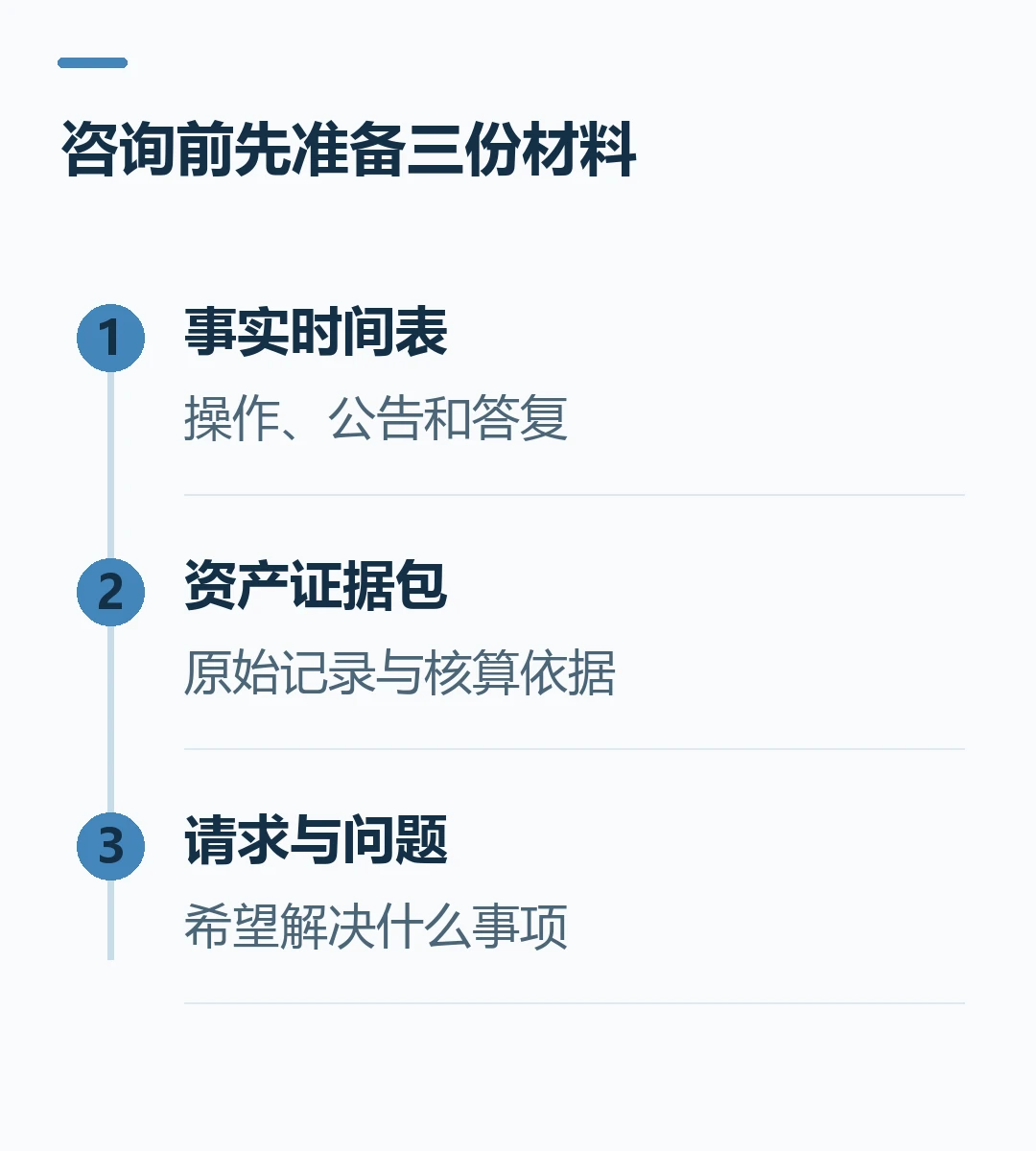
Organize what you already have and list the records that need to be supplemented.
8. Keep the materials in a directly usable format for the future
Folders can be categorized by account data, financial flows, platform announcements, communication records, and legal documents, with each file named using the date of use plus a brief subject. Update the latest progress in a timeline, continuously supplement original materials. Even if the platform resumes services later, this set of records can still be used for account reconciliation, tax preparation, and internal reviews.
When managing assets as a team or family, clarify who is responsible for downloading records, who communicates with the platform, and who keeps the originals. When providing materials to a lawyer or other professionals, use verified secure channels and appropriately cover unrelated identity information. When seeking public assistance, only display content sufficient to explain the issue.
When encountering a withdrawal suspension, many things do need to wait for the platform to handle. However, regarding the account, assets, and operational processes, we can start organizing them now. When later needing to supplement materials, verify amounts, or explain the sequence of events, you can simply open the folder and find the basis for processing with more confidence.
免责声明:本文章仅代表作者个人观点,不代表本平台的立场和观点。本文章仅供信息分享,不构成对任何人的任何投资建议。用户与作者之间的任何争议,与本平台无关。如网页中刊载的文章或图片涉及侵权,请提供相关的权利证明和身份证明发送邮件到[email protected],本平台相关工作人员将会进行核查。