Author: Alea Research
Translator: Deep Tide TechFlow
Deep Tide Editorial: Polygon is undergoing a crucial transition from a single expansion solution to a payment settlement foundation in its token economics. By acquiring Coinme to obtain a remittance license across all 48 states in the U.S., combined with a high-frequency stablecoin payment network on-chain, Polygon's base fee revenue has exceeded the current token inflation minting amount for several months. This article is based on detailed on-chain microdata, deeply calculating its fee capture model and staker distribution mechanism, revealing the significant valuation gap compared to its relatively leading public chains.
Key Points Summary
In 2025, the base network fees paid by users on the Polygon chain amounted to only 5% of the newly minted POL tokens for that year. From January to September 2026, this proportion surged to 86%. In five independent months throughout the year, the destroyed base fees completely exceeded the new minting amount for those months.
Polygon Labs has now established a complete payment loop from fiat USD deposits and withdrawals to final on-chain settlement. Its acquisition of Coinme directly brought a remittance license covering all 48 states in the U.S. to the ecosystem.
As of September 2026, the Polygon chain firmly holds the title of the busiest stablecoin settlement network across the entire network, processing an average of 17.6 million stablecoin transfers daily, accounting for one-third of the total number of stablecoin payments across nine major public chains.
In the past 18 months, the median transfer fee per transaction on Polygon has increased fivefold, yet the number of on-chain transfer transactions has exploded by 7.5 times, demonstrating strong payment demand and fee tolerance.
Currently, the trading multiple of POL is less than half that of TRX. As of September 30, POL's market-to-earnings ratio corresponding to the on-chain fees of the past 12 months was 41.2 times, while the TRX valuation during the same period soared to 87.5 times.
The reserve pool designated for destruction of base fees is now almost on par with the newly minted POL, allowing stakers to directly receive half of the verifier's fund pool through the PIP-85 proposal.
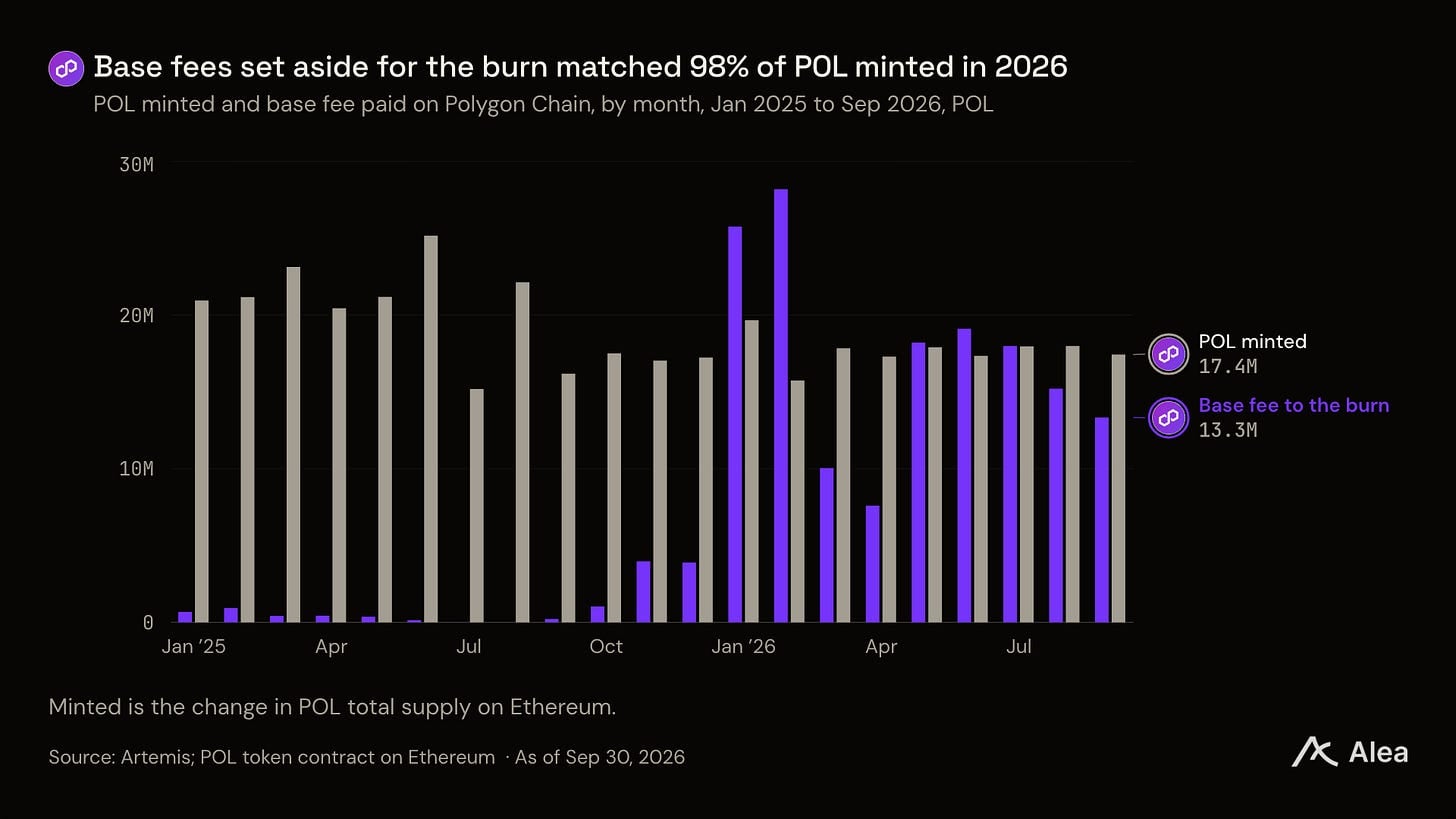
Image: Core Overview of Stablecoin Transfers and Fuel Fee Capture on the Polygon Chain
Securing the Underlying Infrastructure for Fiat Deposits and Withdrawals Across the U.S.
Polygon Labs officially completed its acquisition of the crypto payment service provider Coinme on October 14. This major deal directly injected assets covering remittance licenses across all 48 states in the U.S. into the team.
Surrounding this closing moment, the development team launched five major iterations within just 30 days: institution-level subscription service based on Polygon ID, gas-free experience relay network, and dedicated matching channels for large transactions.
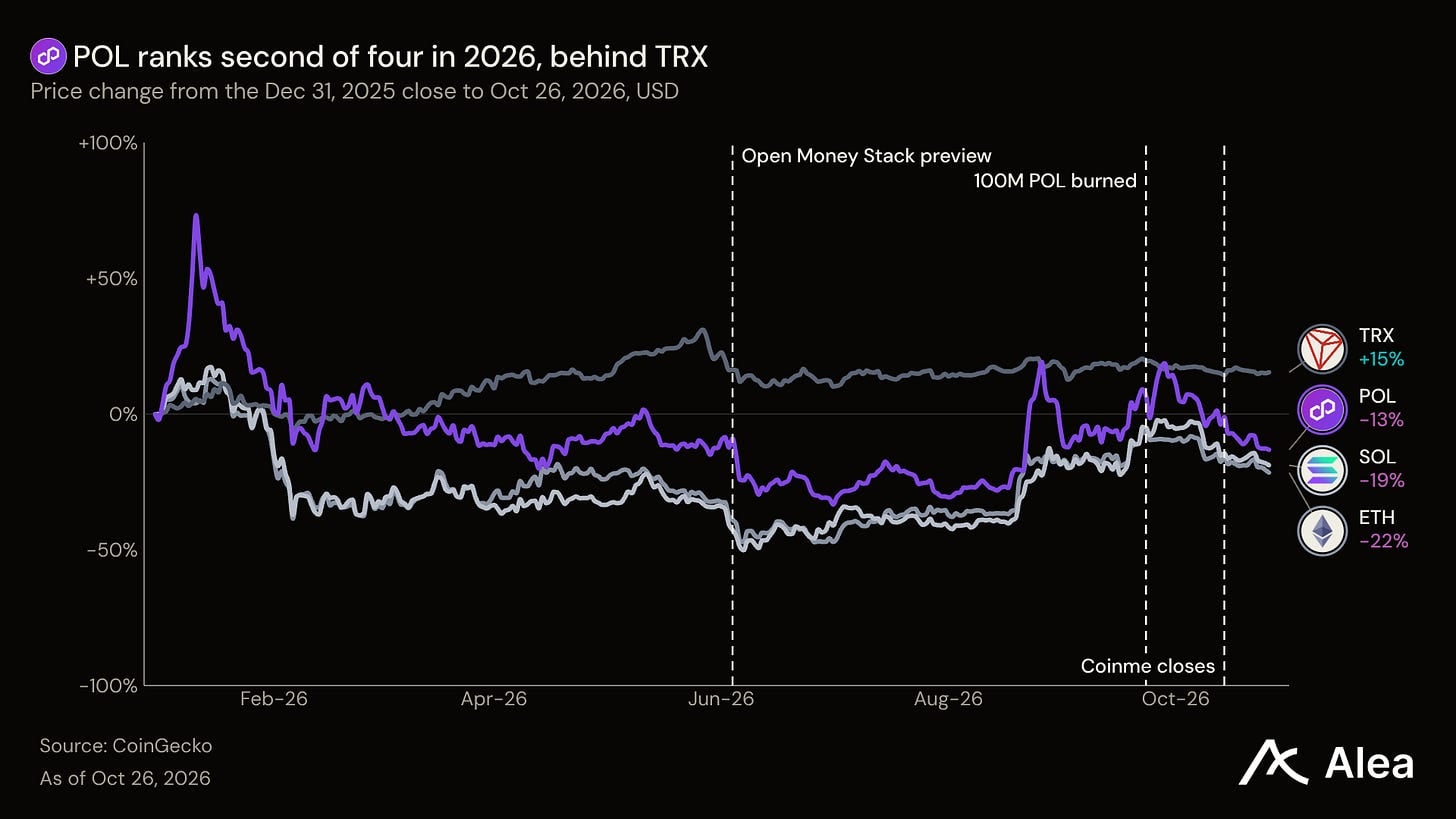
Image: Yearly Price Trends and Retracement Comparisons of Major Public Chain Assets
The entire tech stack adopts a completely open design architecture. When TRON announced its integration on October 8, Polygon clearly stated that its goal is to smoothly accommodate the circulating $94 billion USDT assets on the TRON network.
The Most Active Retail Stablecoin Payment Hub
From January to September this year, no public chain matched the average daily stablecoin transaction frequency of the Polygon chain, with average stablecoin transfer numbers consistently ranking among the top across the network.
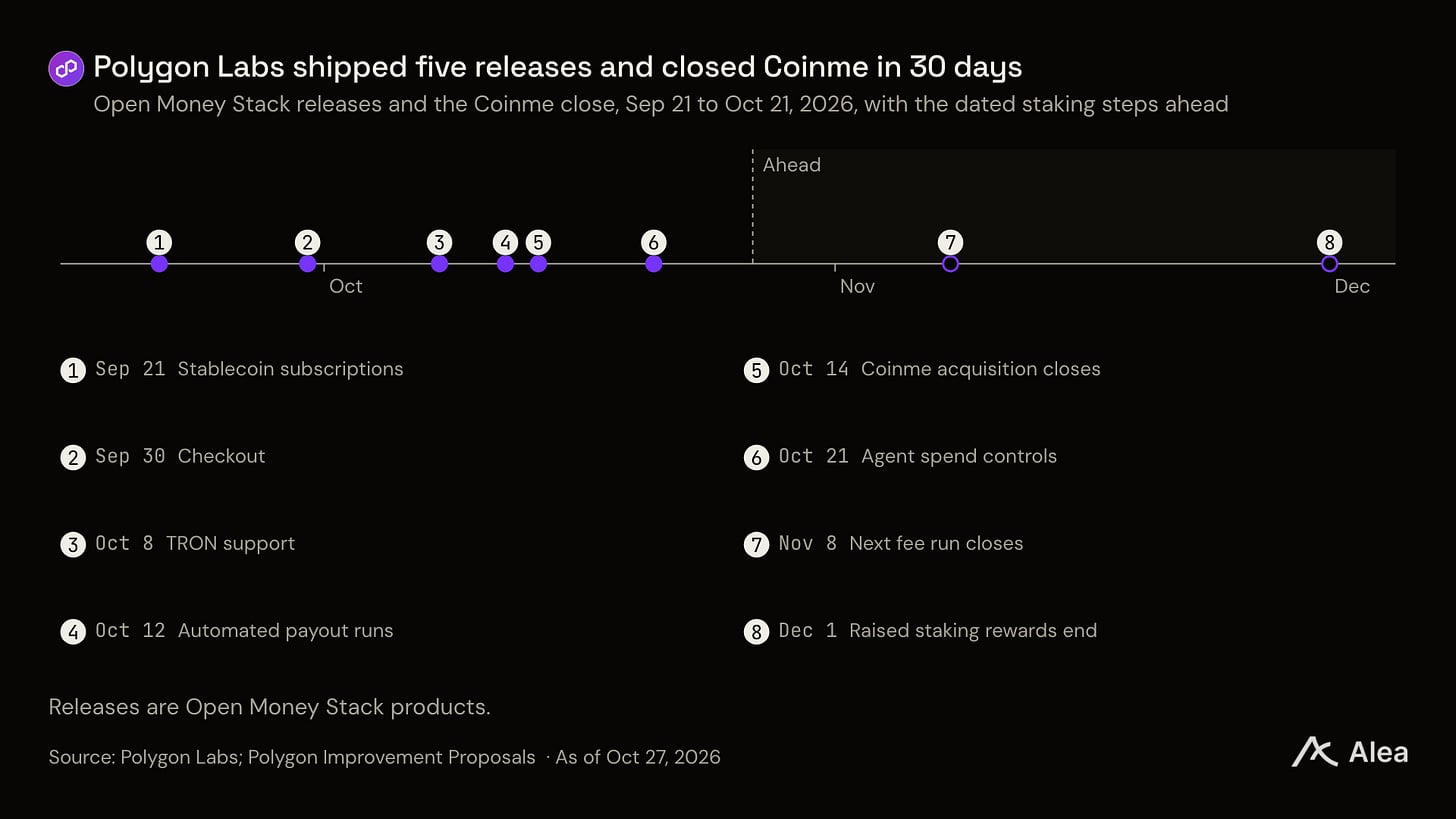
Image: Polygon Staking Rewards and PIP-85 Implementation Roadmap
The vast majority of these transfers comprise typical small everyday payments. In the third quarter, the average single transfer amount on the Polygon chain was $175, whereas the average transfer amount on the Solana chain during the same period was as high as $1254, and the Ethereum mainnet exceeded $3850.
Even though single fees have moderately risen with network activity from earlier low levels, the median stablecoin transaction cost on Polygon in the third quarter remains at only 1.6 cents, allowing global cross-border merchants and remittance applications to maintain extremely high settlement profit margins.
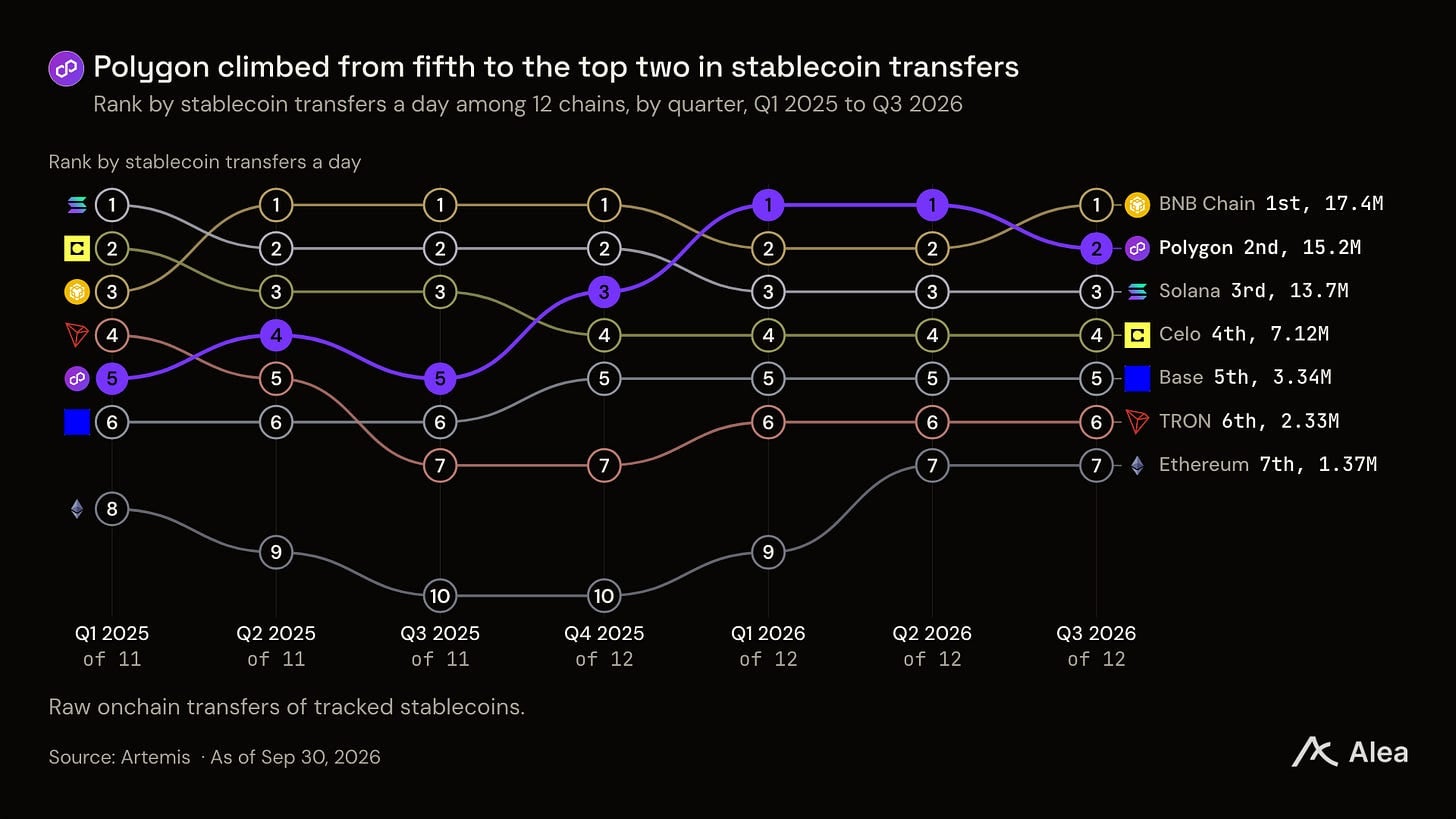
Image: Daily Average Stablecoin Transfer Number Trends of Major Public Chains
Stablecoins Contribute 72% of Network Gas Fuel Consumption
On the Polygon chain, every interaction must pay the base fuel fee in the form of POL. In the first nine months of 2026, the gas fees driven solely by stablecoin transfers accounted for as much as 72% of the total revenue across the chain.
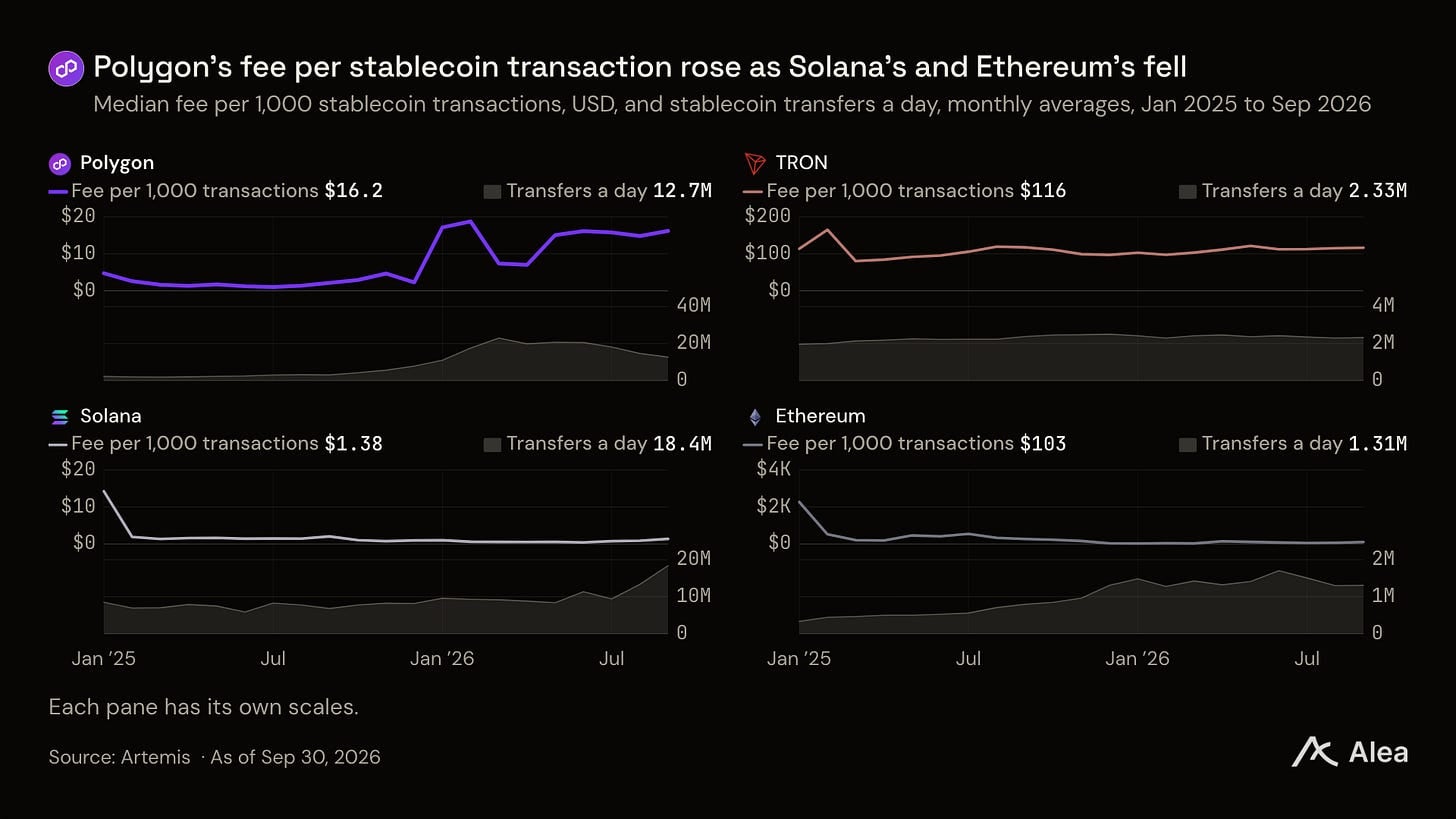
Image: Comparison of Transaction Fees Consumed per Thousand Stablecoin Transactions Across Public Chains
In terms of revenue efficiency per dollar asset turnover, the chain fees captured by Polygon for every dollar of stablecoin transfer have substantially surpassed those captured by Solana, Ethereum, and Base, only second to the TRON network.
Base Fee Destruction Mechanism Approaches Inflationary New Minting
According to Polygon's current design architecture, the base fees generated by each interaction are directly allocated to the destruction collection reserve pool, while the priority fees are completely directed to the block verification nodes and stakers.
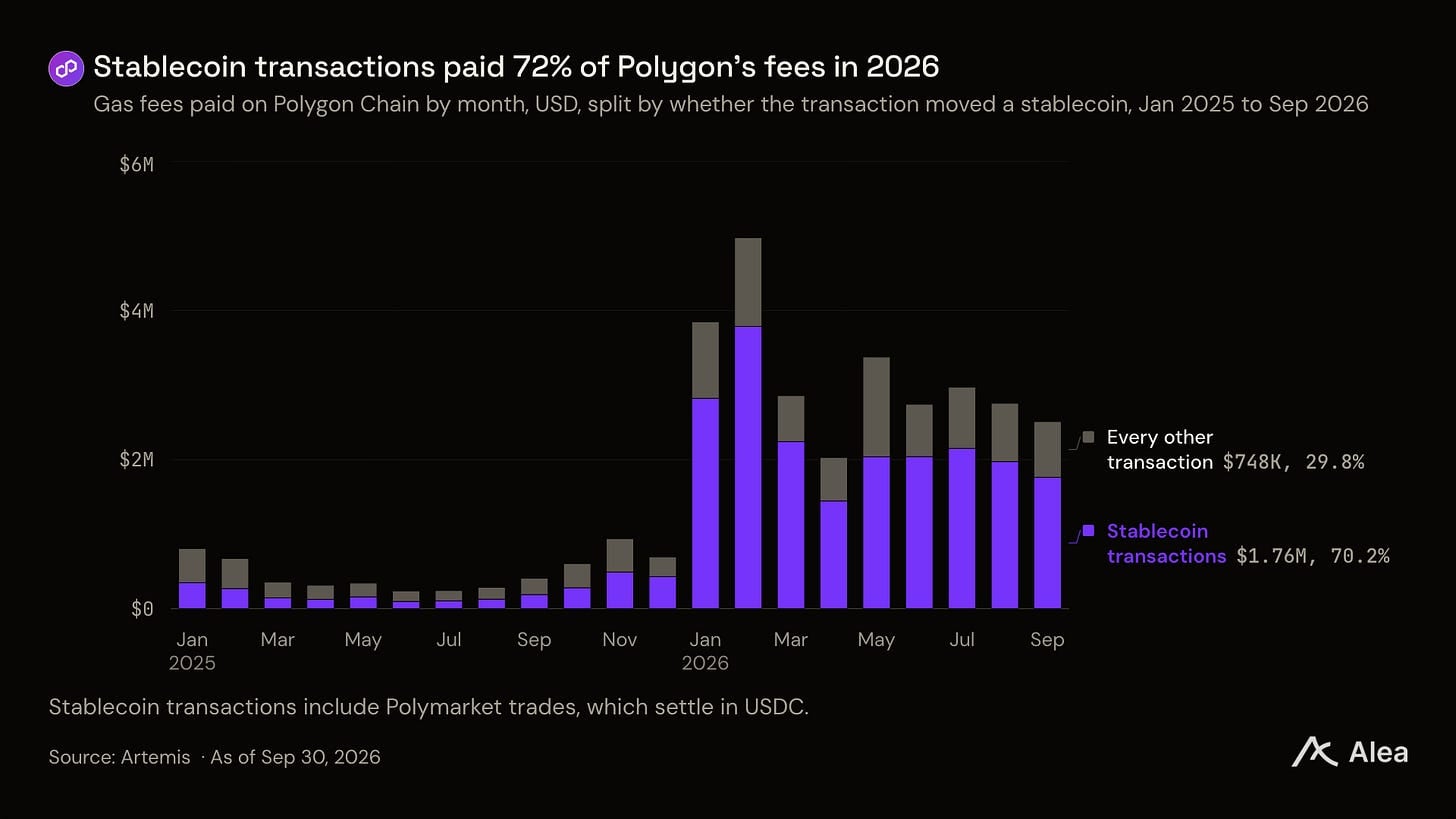
Image: Fee Contribution Proportions of Stablecoin and Non-Stablecoin Transactions on the Polygon Chain
With the official implementation of the PIP-85 proposal, ordinary stakers can directly receive half of the priority fee distribution from the verifier's fund pool after deducting commissions, effectively locking in significant amounts of on-chain native liquidity.
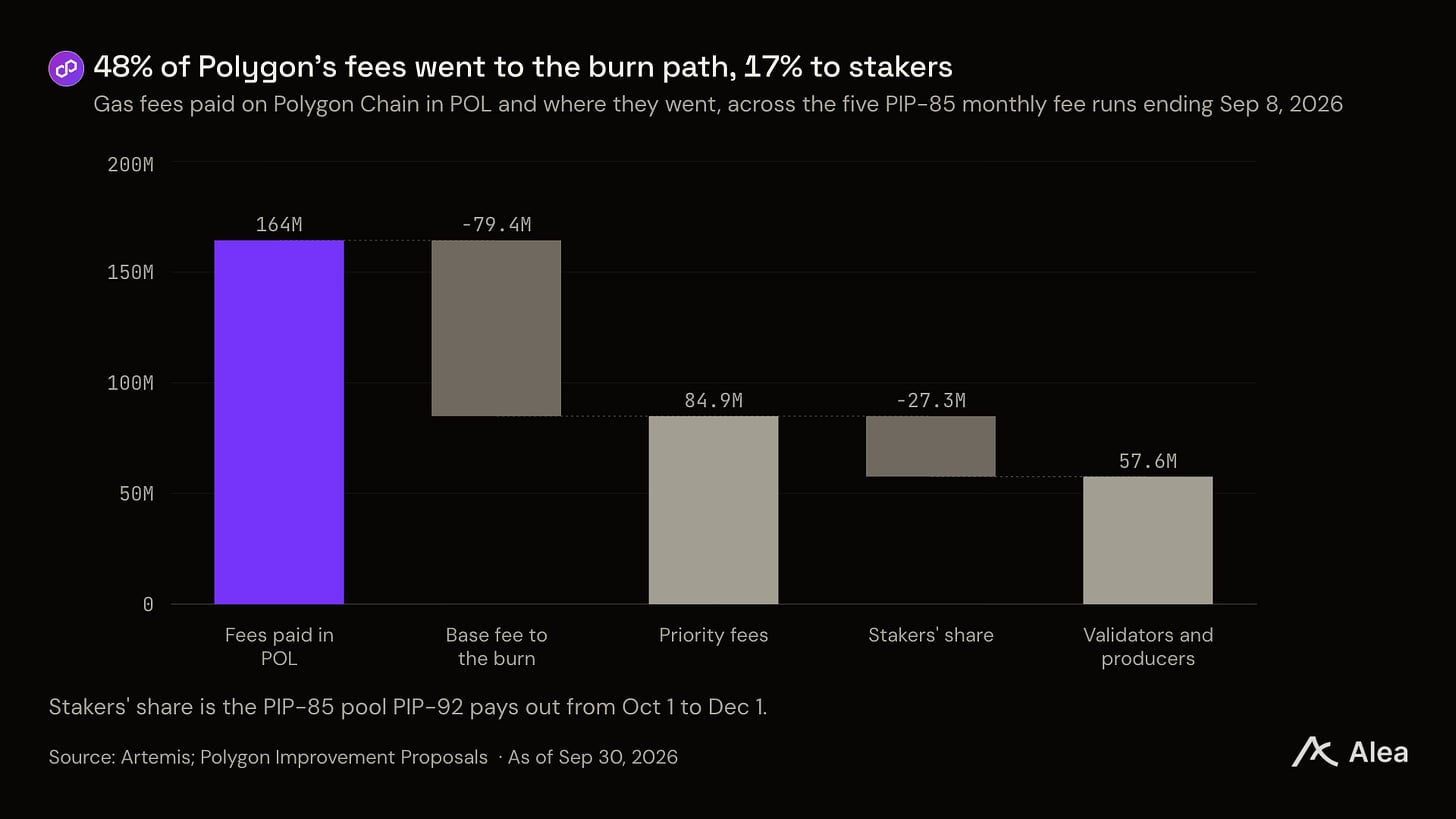
Image: Historical Execution and Reserve Trends of Five Phases of Destruction on Polygon
Relative Valuation Multiples Seriously Lag Behind TRON
On January 1, POL's dynamic price-to-earnings ratio reached as high as 179.6 times, while TRX was at 45.8 times. However, as the actual settlement revenue and destruction volume on the Polygon chain surged, by the end of October, POL’s price-to-earnings ratio corresponding to real on-chain fees over the past 12 months had dropped to around 30 times, with a market value of approximately $949 million, corresponding to an annualized fee scale of $31.6 million.
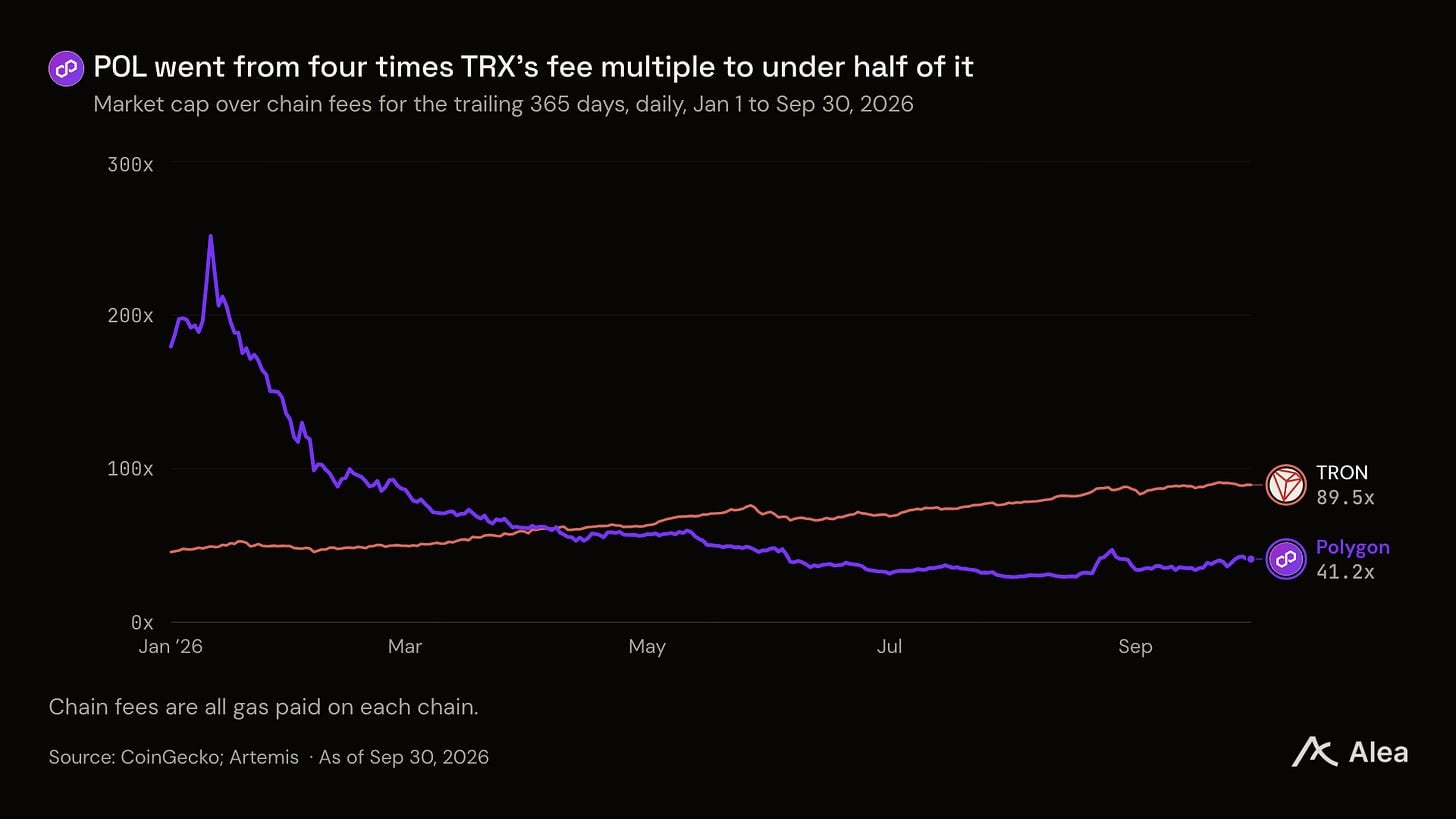
Image: Trends in Fee Multiples of POL and TRX Over the Past Year
Comparing the valuation center of over 40 times in the TRON network, market funds for Polygon's payment fundamentals are obviously still in a severely lagging interval. When payment companies and institutions fully adopt fixed rate fees, the real token net deflation window will be fully revealed.
免责声明:本文章仅代表作者个人观点,不代表本平台的立场和观点。本文章仅供信息分享,不构成对任何人的任何投资建议。用户与作者之间的任何争议,与本平台无关。如网页中刊载的文章或图片涉及侵权,请提供相关的权利证明和身份证明发送邮件到[email protected],本平台相关工作人员将会进行核查。


