The expectations of miners, businessmen, the finance sector, and the central bank in Russia regarding cryptocurrencies have always been different.
Written by: Liu Honglin
In February 2018, a nuclear research center in Russia had a rather comical incident: several employees were suspected of using the unit's computing equipment to mine cryptocurrencies for themselves.
The incident occurred in Sarov. This closed city has deep ties to the Soviet Union's nuclear weapons development, and the institution involved is not a typical internet company but an experimental physics institute under the Russian Federal Nuclear Center. A spokesperson for the institute confirmed to a Russian business consulting newspaper that someone attempted to use computing resources without authorization for private purposes, including mining, and related personnel have been detained and criminally charged.
If one only looks at this news, it’s easy to take it as just another anecdote about the "combat nation." But looking back in time reveals a more interesting change: by 2024, Russia established a specialized legal framework for mining; by 2026, even cryptocurrency exchange and custody institutions began to enter the central bank's registry.
What happened between the nuclear research center employees secretly using computing devices to the state providing identity, taxation, and transaction channels for this industry?
Many people's answers are quite simple: they were sanctioned, so Russia began to embrace cryptocurrencies.
This explanation captures an important reason but overlooks the most noteworthy part of this history.
The expectations of Russian miners, businessmen, the finance sector, and the central bank towards cryptocurrencies have always been different. The war intensified their debates: foreign trade needed new payment methods, yet the central bank was unwilling to relinquish control over capital flow just to allow a payment to be processed.
Why Russia Initially Wanted to Ban Cryptocurrencies
As early as January 2014, the Russian central bank publicly warned about Bitcoin. That announcement emphasized that virtual currencies lack guarantees, their prices are speculative, exchange services may be involved in money laundering and terrorist financing, and it mentioned the prohibition of "currency substitutes" under Russian law.
For a central bank, these concerns are understandable.
If residents exchange rubles for Bitcoin, funds could leave domestic banks and financial markets; if merchants start accepting cryptocurrencies directly, the status of the ruble as a payment tool would also be affected. The price volatility of virtual currencies is extreme; if the value drops, the losses incurred by ordinary citizens could become social issues for the government to address.
But for those operating cryptocurrency mines, as long as the mined coins can be sold and the income covers costs, they have a reason to keep mining. The central bank's warnings did not address how this business should be operated, and the equipment already invested would not disappear because of it. The Sarov incident a few years later highlighted how far this profit-driven impulse could go.
The Russian leadership also has an interest in blockchain technology.
During the 2017 St. Petersburg International Economic Forum, Putin met with Ethereum co-founder Vitalik Buterin. According to the Kremlin's introduction of the meeting at the time, discussions involved the application of blockchain technology in Russia and establishing connections with local partners. This supportive attitude towards technological applications can coexist with the central bank's vigilance towards private cryptocurrencies.
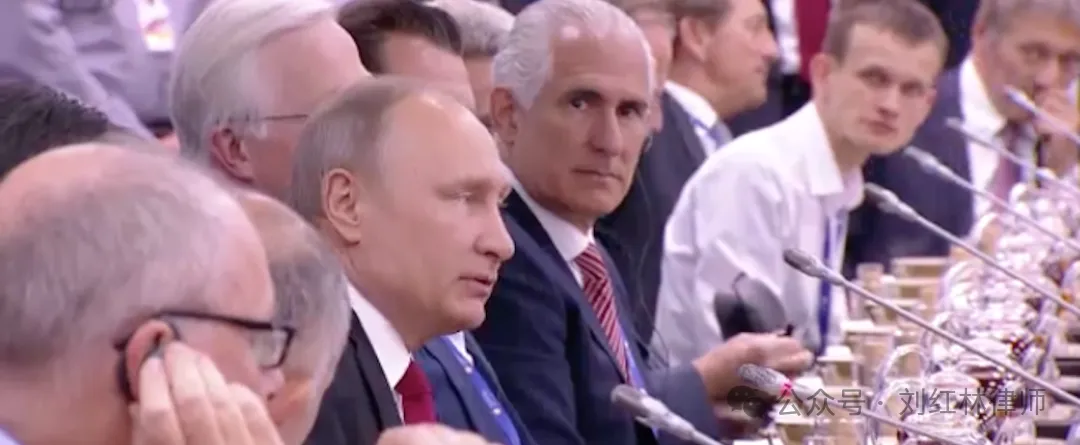
2017 St. Petersburg Forum
In 2020, Russia passed laws related to digital financial assets, primarily set to take effect in 2021. The law established rules for the issuance and circulation of digital financial assets, which could represent monetary claims, securities-related rights, etc. Bitcoin did not belong to this category, and at that time, Russia still restricted the use of cryptocurrencies for payments for goods and services within its borders.
By January 20, 2022, the central bank proposed in its consultation report "Cryptocurrency: Trends, Risks, and Measures" a ban on the issuance, trading, and exchange of cryptocurrencies by organizations in Russia, advocating for a ban on mining.
What the Russian central bank was concerned about was not just a group of retail investors speculating on cryptocurrencies. Mining consumes electricity, transactions would take funds out of the traditional financial system, and private currencies could affect monetary policy. Following this line of logic, keeping the industry outside the financial system seems the simplest solution.
The Russian finance department did not accept this reasoning.
At that time, Ivan Chebeskov, head of the financial policy department of the Ministry of Finance, publicly advocated for regulation rather than prohibition. The existence of cryptocurrency trading was an indisputable fact, and entirely forcing the business offshore or underground would make it even harder for the state to monitor.
Six days later, Putin discussed this debate in a meeting with government members, calling for a consensus between the government and the central bank. He also noted that Russia has certain competitive advantages in mining, including power conditions and well-trained talent.
At that time, the finance department hoped to keep existing businesses within the country, while the central bank insisted on preventing the outflow of funds and the risks of private currencies. While both sides were still arguing, the financial sanctions brought on by the war changed the premise of the cryptocurrency discussion.
Sanctions Changed Russia's Choices
On February 24, 2022, Russia launched a full-scale military operation against Ukraine.
In March of the same year, the Society for Worldwide Interbank Financial Telecommunication (SWIFT) disconnected the first batch of seven designated Russian entities and associated subsidiaries, as required by the EU. The disconnected banks lost access to this global interbank messaging network, and the existing cross-border bank settlement arrangements for businesses were consequently affected.
Russia subsequently began to use more currencies like the Chinese yuan for settlements. The Russian central bank disclosed in its financial stability assessment for the second and third quarters of 2023 that the percentage of yuan in Russia's export settlements rose from 13% in January that year to 35% in September. Within less than a year, the yuan had become an important currency for export payments in Russia.
 Excerpt from the Russian central bank’s "Financial Stability Assessment": From January to September 2023, the percentage of yuan in Russia's export settlements rose from 13% to 35%.
However, the foreign banks handling payments began to tighten their operations. In December 2023, the United States expanded the authority to impose sanctions on foreign financial institutions involved in transactions related to Russia's military-industrial complex. Banks were required to review clients, counterparties, and the purposes of goods, with some institutions choosing to reduce or even stop their settlement services related to Russia altogether.
In April 2024, Reuters reported after interviewing five insiders that some Chinese banks were avoiding business with Russia out of fear of secondary sanctions, with companies turning to the Shanghai branch of the Russian Foreign Trade Bank for settlements, resulting in long queues for account openings. Some respondents indicated that Chinese suppliers needed to wait two to three months to open accounts, and some companies had not managed to open accounts even after six months. Even if both sides agreed to use yuan, finding a bank capable of handling the business could still take months.
In July 2024, the State Duma passed a bill allowing import and export companies to settle foreign trade payments using cryptocurrencies. The relevant law was signed in August, with operations initially organized by the central bank in a pilot program with restrictions on participating companies and testing duration.
By December 2024, Finance Minister Anton Siluanov stated in a television interview that Russian enterprises had already begun using digital currencies such as Bitcoin for international payments, including Bitcoin mined within Russia.
How Big Is Russia's Crypto Industry?
The local Bitcoin mentioned by the finance minister is backed by years of mining operations in Russia.
In March 2021, Reuters reported that BitRiver operated a 100-megawatt data center in Siberia, hosting equipment for miners from the United States, Europe, and Japan. Clients valued the local cheap hydropower, while BitRiver provided power and machine rooms, charging hosting fees in dollars or rubles.
How cheap is the local electricity, exactly? According to the price list released by the Irkutsk power supply company for the second half of 2024, the general residential electricity rate for urban residents is 1.58 rubles per kilowatt-hour, while the corresponding rate for rural residents is 1.106 rubles. Converted at the early July 2024 exchange rate, this is approximately 0.13 yuan and 0.09 yuan per kilowatt-hour.
For comparison, the resident electricity price in Shanghai in the same year for the first tier of one meter is 0.617 yuan per kilowatt-hour, which is about 4.6 times and 6.6 times those aforementioned rates.
The low costs attracted a significant scale of electricity consumption for the mines. In July 2024, Putin cited estimates from the Ministry of Energy in an economic work conference, stating that mining in Russia consumes about 16 billion kilowatt-hours of electricity annually, close to 1.5% of the country's power consumption.
In 2024, Russia established formal operating rules for the mining industry. In November, the Federal Tax Service launched mining registration services, requiring companies and individual entrepreneurs to register before starting operations. Starting in 2025, miners must electronically report their output and wallet address identifiers to the tax authorities by the 20th of the following month after receiving digital currencies, and those participating in mining pools must report related addresses as well. Where the mining site is, who operates it, and where the mined coins go will now have verifiable records. Related income will also fall under tax management.
As the number of mines continues to increase, local power supply also started to tighten. In April 2025, certain areas in southern Irkutsk region implemented a mining ban that will last until 2031.
Beyond registration, law enforcement agencies are also investigating illegal electricity usage in mines. In October 2025, the Russian Ministry of Internal Affairs reported that a mine suspected of illegally using electricity was found in Leningrad Oblast, with initial estimates of losses exceeding 1 billion rubles, and six suspects were detained, with the case involving allegations of abuse of power.
The mined coins also need to find buyers, and investment demand from residents has always existed. Russia already had a large-scale cryptocurrency trading market, but domestic financial institutions had long been lacking institutional arrangements to take on this type of business.
According to estimates from blockchain analysis company Chainalysis regarding the geographical distribution of on-chain funds, from July 2024 to June 2025, the scale of crypto assets received by entities belonging to Russia was approximately 376.3 billion dollars, higher than the 273.2 billion dollars for the same period in the United Kingdom.
Offshore platforms hold customer accounts, transaction records, and fee revenues. For Russia to regulate this business domestically, it needs to allow domestic financial institutions to meet residents' trading needs.
In March 2025, the central bank proposed to allow a limited number of high-threshold assets and income investors to buy and sell cryptocurrencies in a three-year pilot program. By December of the same year, its new proposal had included ordinary non-qualified investors, although the types and amounts of cryptocurrencies available for purchase were still restricted.
The central bank pointed out in a report covering the fourth quarter of 2025 to the first quarter of 2026 that the frequency of Russian users accessing centralized crypto platforms had decreased by 32% compared to the previous two quarters. Meanwhile, as of early April 2026, the investment formed by residents through financial instruments linked to crypto assets within Russia was approximately 3.8 billion rubles.
By September 2026, the "Digital Currency and Digital Rights Law" came into effect, providing residents with institutional channels to buy and sell cryptocurrencies through domestic regulated entities. Ordinary non-qualified investors need to undergo testing, and the range and amount for purchases remain restricted; brokers, exchange, and custody institutions began to undertake corresponding businesses in accordance with the new law.
On October 6, the central bank announced that the first five digital custody institutions and four crypto exchange institutions had entered the registry. Exchange institutions can conduct over-the-counter transactions with their own funds, while custody institutions are responsible for recording and transferring relevant assets. These institutions must adjust their operations to comply with the new law by September 2027.
Under the new law, import and export companies gained greater leeway for cross-border cryptocurrency payments, while the prohibition on payments for domestic goods and services remained in place. The central bank allowed crypto assets to enter regulated trading markets while continuing to uphold the status of the ruble in domestic payments.
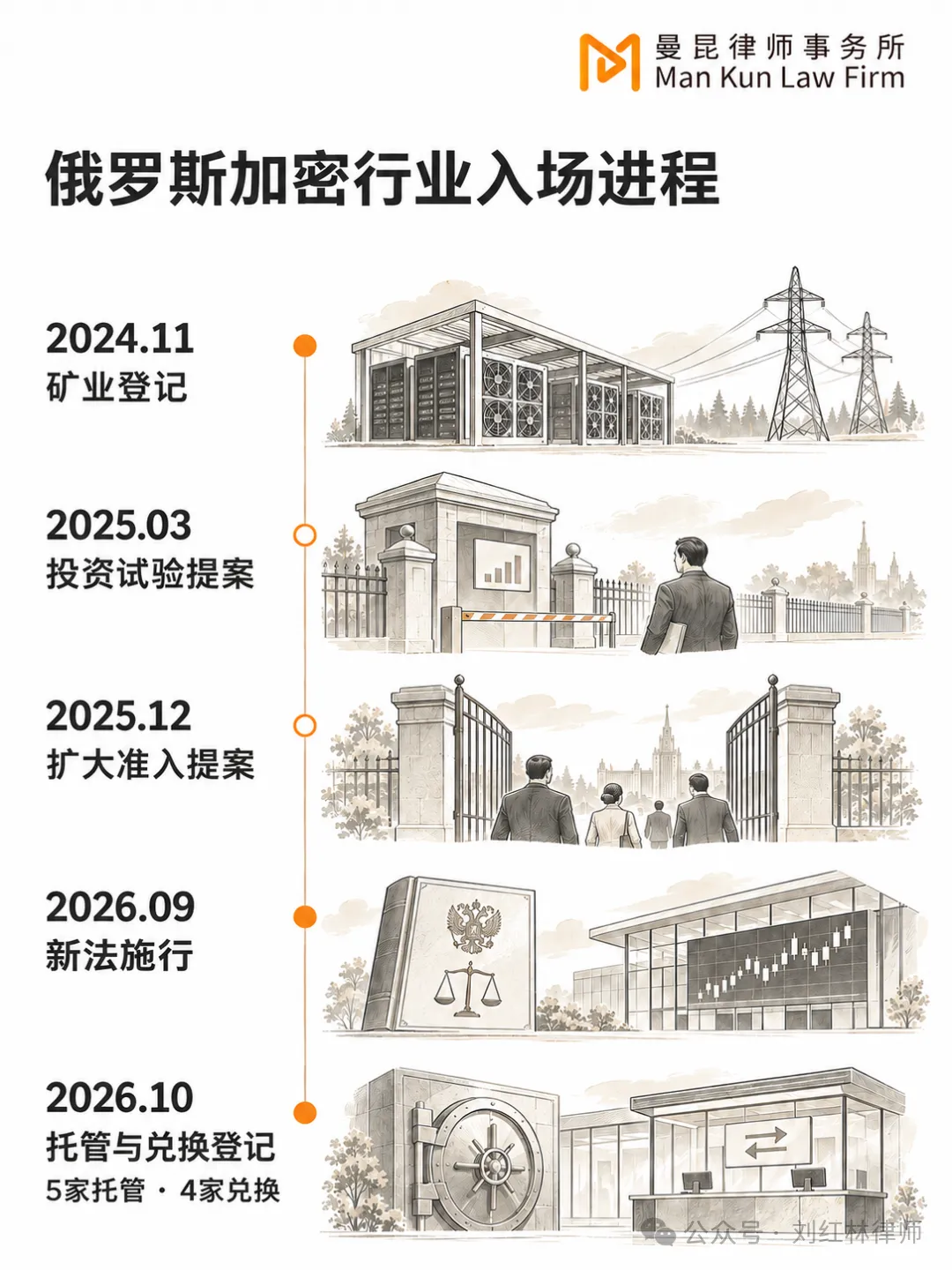
Evolution of Industry Access
After the Crackdown on Russian Exchanges
When Russia began to formally recognize trading institutions, several earlier platforms had already drawn this market into the sights of international enforcement.
One of them, Garantex, was an important cryptocurrency exchange platform in Russia.
This trading platform was initially registered in Estonia, but its main operations were in Moscow and St. Petersburg. In 2022, it lost its digital asset service license in Estonia and was placed on the U.S. Treasury Department's sanctions list, yet it continued to operate afterwards.
In March 2025, Garantex faced joint enforcement actions. The U.S. seized related domain names, while law enforcement agencies in Germany and Finland confiscated servers, and the U.S. Department of Justice announced charges against two of its managers. The prosecution claimed the platform processed at least 96 billion dollars of crypto transactions since 2019 and accused the operators of participating in money laundering and sanction violations.
Subsequently, Tether, the issuer of the USDT stablecoin, announced it would assist the U.S. Secret Service in freezing 23 million dollars in funds related to Garantex transactions.
The frozen funds were in the USDT stablecoin. Tether, as the issuer, can restrict transfers from related addresses through its token control mechanisms. Once funds leave the bank and enter the blockchain, holders may still be unable to use them due to the issuer's freezing measures.
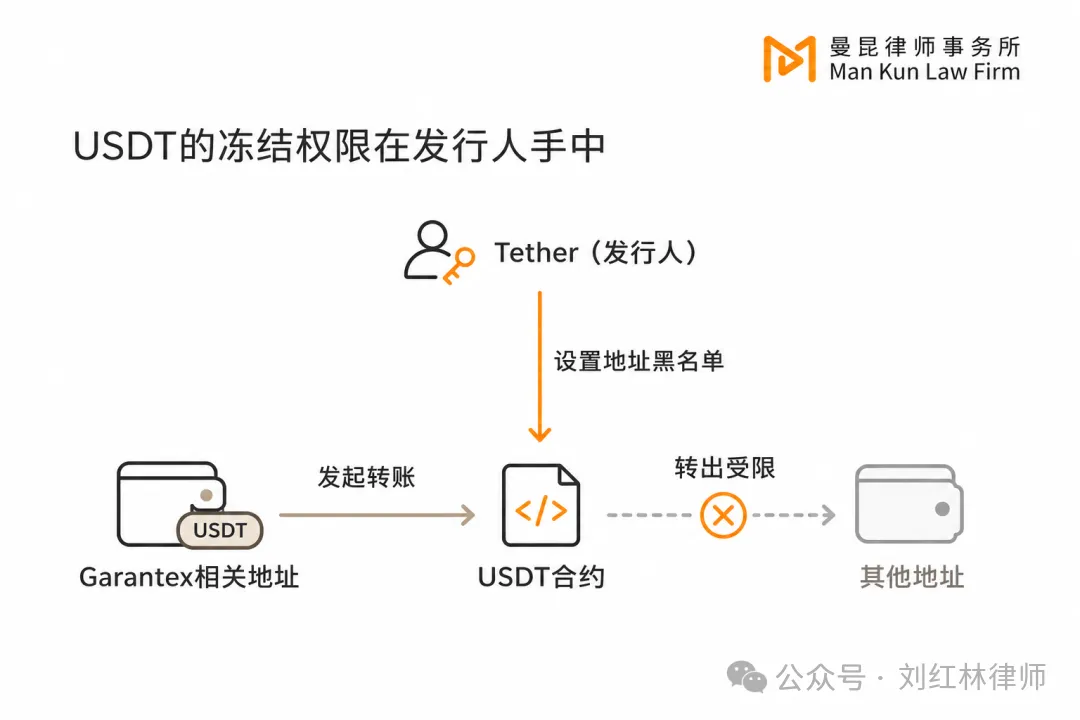
USDT Freezing Mechanism Illustration
According to the U.S. Treasury's sanctions findings in August 2025, certain personnel related to Garantex redirected clients and funds to the following platform Grinex and utilized a ruble-backed A7A5 token to arrange client funds transfer. A7A5 was issued by Old Vector in Kyrgyzstan, with the ownership relations of the cross-border settlement company A7 involving the Russian bank Promsvyazbank and businessman Ilan Shaul.
Russian enterprises using USD stablecoins can easily find trading partners willing to accept them, but they are also subject to the issuer's freezing measures. After switching to ruble-backed tokens, they still need to persuade foreign sellers to accept them and provide sufficient channels for exchanges.
In October 2025, the EU's 19th round of sanctions against Russia directly involved A7A5 and its related institutions, prohibiting transactions related to this stablecoin within the EU. By October 2026, the U.S. also listed the A7 network as a transnational criminal organization under sanctions; the Financial Crimes Enforcement Network also proposed new transaction restrictions, which were still in the proposal stage at that time.
After the crackdown on Garantex, funds directed to subsequent platforms and ruble tokens, and the sanctions list was also expanded to include these new platforms and tokens. The methods of settlement sought by Russian enterprises continue to evolve, with foreign trading partners, issuers, and exchange institutions still capable of influencing whether payments can ultimately be utilized.
What Can China Learn from Russia?
Salt from other mountains can be used to cure jade.
The changes in Russia's regulatory policies regarding cryptocurrencies also present practical questions for other countries that also care about capital flow and financial security: What difficulties can cryptocurrencies help resolve for a country, and what new dependencies may they bring?
Especially for China, which is deeply involved in the international market, what lessons can be learned from Russia's shifts and choices regarding cryptocurrency mining, resident investment, and corporate settlements?
Mainland China's regulatory stance on cryptocurrencies is clear and has continued to tighten. The notice issued in February 2026 on "Further Preventing and Addressing Risks Related to Virtual Currencies" continues to prohibit domestic fiat currency from being exchanged for virtual currencies, among related businesses, and continues to crack down on mining. Offshore institutions and individuals are prohibited from illegally providing related services to domestic entities.
This notice also extends management requirements to offshore issuances: domestic entities and their controlled offshore entities may not issue virtual currencies abroad without the consent of relevant authorities according to law. For yuan-pegged stablecoins, the scope of covered entities is broader; any unit or individual from inside and outside the country must obtain legal consent from relevant authorities while issuing abroad.
In this policy context, what is most noteworthy about Russia's opening to resident investment is how funds will enter and exit. According to the Russian central bank's explanation of the new law for 2026, ordinary investors can purchase no more than 300,000 rubles of highly liquid cryptocurrencies annually through each intermediary after passing a test. Residents trading abroad must do so via offshore bank accounts, transferring coins purchased in Russia to offshore accounts must go through regulated intermediaries, and the status of crypto assets held offshore must also be declared to tax authorities.
Russia seeks to transfer transactions that would originally flow to offshore platforms to domestic institutions that can be inspected and held accountable, while retaining declarations and intermediary requirements for cross-border funds. For China, which also places great importance on capital flow management, the effectiveness of Russia's new system is worth continual observation: for instance, whether actual transactions become more transparent under regulation, and whether regulation can grasp asset transfers instead of simply increasing the number of registered operators.
The cryptocurrency mining industry faces similar issues. Miners producing Bitcoin with domestic electricity who transfer it to offshore wallets may capitalize on it there. Russia's requirement to report output and wallet addresses aims to first grasp the source of assets and then verify it against transaction and tax records; while these records can provide a basis for further investigation, they cannot guarantee that miners will report honestly and cannot alone prevent capital outflows. Leaving cryptocurrency mining in Russia means that tax and anti-money laundering departments will also take on the ongoing verification work.
When China chose to phase out mining in 2021, it faced an even larger existing industry.
The mining pool sample estimates released by Cambridge University back then showed that China accounted for 75.5% of the global Bitcoin hash rate in September 2019, which fell to 46% in April 2021, still nearly half just before the crackdown. Research also observed that miners migrated between Xinjiang and Sichuan with the seasons, chasing the price differences during dry and wet seasons. The phase-out of cryptocurrency mining in mainland China in 2021 impacted the global layout of mining operations.
When explaining the reasons for the crackdown in September 2021, the National Development and Reform Commission highlighted not only energy consumption and carbon emissions but also pointed out the limited economic and industrial benefits of mining, as well as involvement in money laundering, tax evasion, and cross-border capital transfer. In a way, China’s prohibition of cryptocurrency mining involved a comprehensive trade-off between industrial and financial management.
Russia's approach of combining mine registration with regional mining bans offers a reference for policy design for China: if future experiments in mining surplus electricity are to be researched, it could first be limited to areas where the grid has confirmed there are consumption difficulties, with operational hours adjusted according to power supply conditions, stopping operations when supply is tight. It would further link mine electricity consumption with output, wallet, and tax records to calculate the net benefits brought to the locality. Such experiments must be premised on national policy adjustments and clear authorizations; current mining bans would not automatically exempt areas with electricity being wasted.
Regarding cross-border trade payments, small and frequent payments to overseas customers mean that costs and payment arrival speed can influence whether business can continue. Russia's experience adds an unavoidable consideration: once external restrictions widen, how much of the banking and clearing arrangements currently usable will still be in place? Establishing more compliant payment channels in advance has both regular operational value and is crucial for a company's ability to continue fulfilling commitments under external shocks.
The stablecoins being tested in Hong Kong offer a concrete path to increase payment options. On April 10, 2026, the Hong Kong Monetary Authority issued the first batch of stablecoin issuer licenses to Anchor and HSBC. The Monetary Authority disclosed that both initial plans were to issue Hong Kong dollar stablecoins and identified cross-border payments as a business direction, hoping to leverage both banks and their cooperative networks to lower costs for customers in receiving and making payments.
After enterprises receive stablecoins, they often need to convert them to fiat currency to pay local operating expenses. If the conversion is interrupted, the tokens received on paper may not be usable for purchasing or payroll. Hong Kong's reserve and redemption requirements for licensed issuers aim to clarify who bears the responsibilities for continued redemption. Chinese enterprises with overseas operations can explore such payment methods within the range permitted by local rules, but when it involves domestic business and fund repatriation, they must still comply with mainland regulations.
Russia's emergency pivot has demonstrated that searching for trading partners and organizing payments after banking channels are restricted incurs high friction costs. With China's vast overseas operations and trade demands, retaining regulated experimental space during normal times helps to minimize future costs of forced last-minute arrangements.
However, how much autonomy stablecoins can offer depends on who they rely on. USD stablecoins are bound by the issuer and their reserves and redemption arrangements, while Hong Kong dollar stablecoins are also within the framework of the linked exchange rate system and banking system. The circulation of on-chain cryptocurrencies is relatively free, yet still faces issues arising from the centralized issuance mechanisms of stablecoins, such as freezing, currency exchanges, or obstacles during redemption. The strategic value of the Hong Kong experiment may lie in accumulating more payment options and operational experiences that can withstand extensive sanctions impacts.
Conclusion
Looking back at the history of cryptocurrencies in Russia, one can see how a country continuously adjusts its response strategies amid industry changes and international competition. The central bank's initial concern about capital outflow led to a push for a ban on cryptocurrencies; however, the urgency of foreign trade settlements due to war and sanctions prompted the government to establish institutional pathways for mining and cryptocurrency payments. The strong-centralized government still harbors concerns about decentralized crypto assets, yet these concerns have not vanished and cannot vanish; rather, they have been reshaped by external pressure and domestic needs, prompting decisions on which uses can be loosened and which must still be limited—this responsive approach can be passive or proactive.
免责声明:本文章仅代表作者个人观点,不代表本平台的立场和观点。本文章仅供信息分享,不构成对任何人的任何投资建议。用户与作者之间的任何争议,与本平台无关。如网页中刊载的文章或图片涉及侵权,请提供相关的权利证明和身份证明发送邮件到[email protected],本平台相关工作人员将会进行核查。


