Author: Deep Tide TechFlow
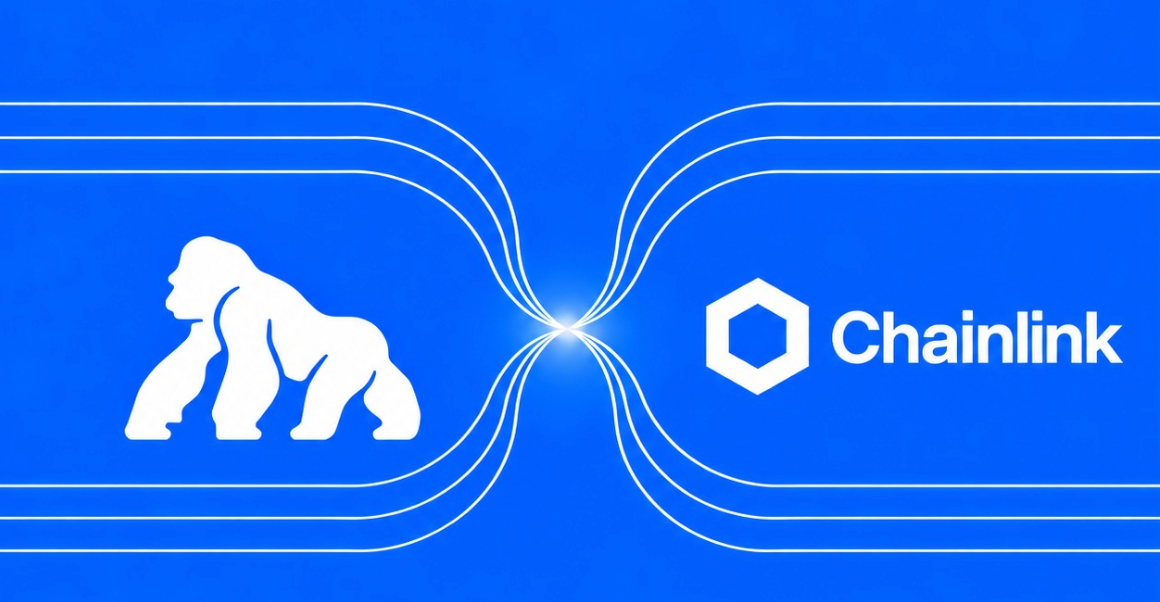
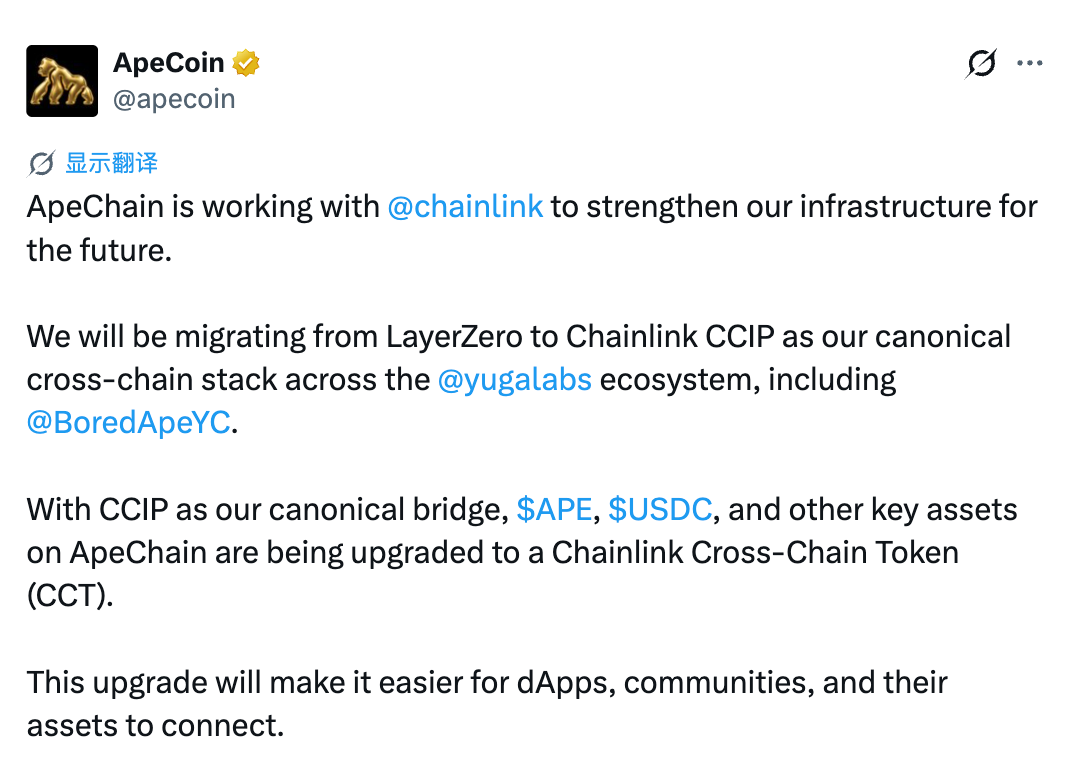
Deep Tide Introduction: On November 5, 2026, Beijing time, ApeCoin officially announced its decision to migrate its underlying architecture, officially transferring its cross-chain technology stack from LayerZero to the Chainlink Cross-Chain Interoperability Protocol (CCIP), establishing it as the only official standardized cross-chain communication solution for the Yuga Labs ecosystem (covering the Bored Ape Yacht Club and Otherside metaverse).
This key choice reflects a profound reconstruction of the system-level defense weight on cross-chain communication infrastructure within a multi-billion dollar application chain ecosystem.
Underlying security considerations for abandoning LayerZero in favor of CCIP
ApeChain, as a dedicated application chain (AppChain) built on the Arbitrum Orbit stack, initially chose LayerZero as its underlying communication pipeline at the launch of its mainnet. As the interaction frequency of Otherside virtual assets and high-value NFT assets from Bored Ape (BAYC) increased, the early architecture that purely pursued lightweight access and deployment speed revealed insufficient trust assumptions. According to the ApeCoin official announcement, this technological choice directly shifts the underlying consensus to be driven by a decentralized oracle network-based CCIP architecture.
The core defense system of Chainlink CCIP is supported by an independent Risk Management Network (RMN). Unlike general validators, the RMN operates in parallel as a secondary monitoring network, which can directly trigger a pause without the need for intervention from the main protocol upon detecting unusual on-chain fund flows or cross-chain message anomalies. In extreme cross-chain arbitrage attacks, the isolation design of multi-signature and oracle consensus serves as a critical defense line against systemic losses in high-value consumer ecosystems.
CCT standard addresses pain points of APE and USDC wrapped assets
Traditional third-party cross-chain bridges commonly rely on a "Lock-and-Mint" mechanism, leading users to only obtain wrapped tokens on the target chain. This model not only fractures multi-chain liquidity depth but also exposes liquidity pools to de-pegging risks in the long term. ApeChain's native gas and governance token APE, as well as the basic liquidity asset USDC, are fully upgraded to the Chainlink Cross-Chain Token (CCT) standard in this architecture migration.
The CCT protocol allows native assets to realize programmable native circulation across multiple supported blockchains, completely removing the intermediate layer wrapping of synthetic tokens. The APE token can maintain its native properties and unified liquidity while traversing between the Ethereum mainnet and ApeChain, meaning dApp developers no longer need to independently deploy market-making pools and smart contract adaptation layers for synthetic tokens split off from different cross-chain bridges.
Exclusive application chain all-chain standard shifts from speed competition to security defense
In the explosive cycle of Ethereum Layer 2 and various Layer 3 application chains, infrastructure choices have long been dominated by development integration speed. This underlying communication protocol replacement for ApeChain reflects how consumer-level public chains with heavy asset accumulation are reconstructing their technology stack defense weights. In scenarios involving billions of dollars in NFT intellectual property and metaverse asset interactions, the anti-censorship capability and fault isolation attributes of cross-chain channels have become paramount demands.
For Chainlink, securing the exclusive standardized cross-chain solution for the Yuga Labs ecosystem signifies that CCIP has gained a foothold in the competition for standard among full-chain communication protocols alongside LayerZero, Axelar, and others. The market penetration logic of cross-chain protocols is shifting from laying out long-tail public chains to deep bundling of core asset minting rights on high-net-worth exclusive chains within the Ethereum ecosystem.
The ApeChain engineering team is currently advancing the testnet deployment of smart contracts, with the mainnet native APE asset contract upgrade to the CCT standard to be officially executed after the completion of technical audits.
免责声明:本文章仅代表作者个人观点,不代表本平台的立场和观点。本文章仅供信息分享,不构成对任何人的任何投资建议。用户与作者之间的任何争议,与本平台无关。如网页中刊载的文章或图片涉及侵权,请提供相关的权利证明和身份证明发送邮件到[email protected],本平台相关工作人员将会进行核查。