Author: Deep Tide TechFlow
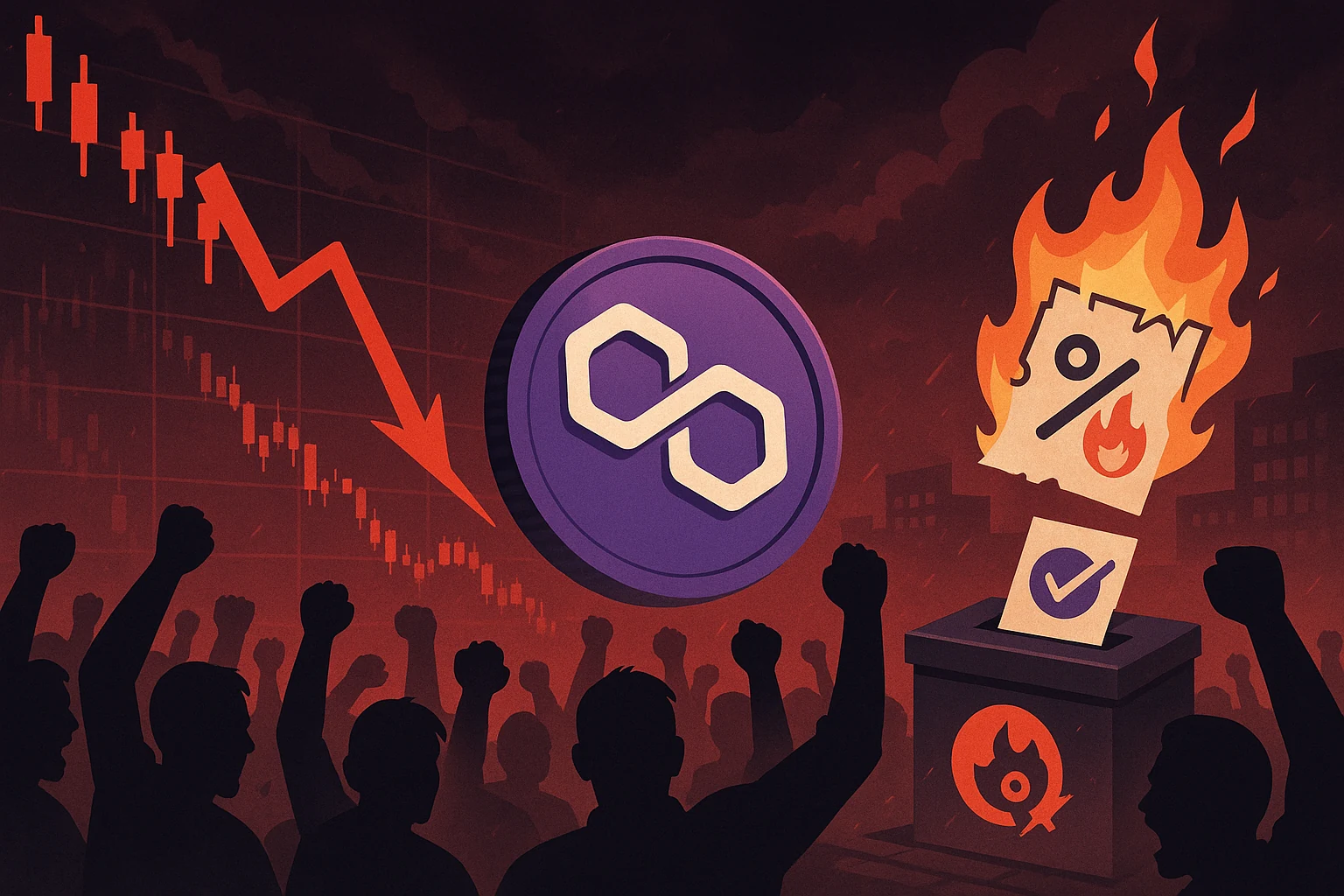
Deep Tide Guide: On November 5, 2026, Beijing time, the Polygon community forum officially disclosed a protocol improvement proposal (PIP), aiming to carry out a coordinated hard fork across the network that would wipe out approximately 70.49 million native POL tokens within the 5 controlled attacker addresses involved in the safety incidents with Polymarket and Binance. The entire amount will be transferred to the official designated recovery address for the victims. This significant governance move marks a choice by the public chain ecosystem to intervene in the underlying state machine through social consensus in the face of the failure of traditional blacklist mechanisms.
The Blacklist is Stuck in Passive Defense Dilemma
The security incidents occurred between October 29 and 30, during which hackers transferred the stolen large amounts of POL assets to addresses on the Polygon PoS chain. Upon receiving emergency notifications from the victimized institutions, network validator nodes quickly deployed temporary filtering rules in the consensus client Bor, placing the involved addresses on a local transaction blacklist, which temporarily cut off the funding diversion path to external money laundering channels.
This single-point defensive strategy exposed significant pain points in on-chain governance. The client-side blacklist can only unidirectionally intercept the transfer broadcasts initiated by the attacking addresses, and it cannot forcibly deprive hackers of their on-chain signing rights over private keys, nor can it return the frozen assets to the victimized platform. On-chain monitoring records show that attackers frequently attempted to construct special interaction payloads to break through the interception during the restricted period, and static blocking always faced the risk of consensus node configuration failure.
Precise Reconstruction of State Layer and Asymmetrical Transfer
To end the endless passive game, the victims jointly submitted an official governance improvement proposal to the network. The core of the proposal is to bypass the conventional private key signing logic and directly execute a forced rewrite of the node state machine at the designated block height. This logic only applies to the 5 specific involved addresses and does not involve any normal transactions or smart contract execution logs of third parties.
In terms of technical path, the code will forcibly zero out the balances of 4 related Polymarket attacking addresses (totaling approximately 23.86 million POL) and 1 related Binance attacking address (approximately 46.63 million POL) within the target block. In the same block, the system will equivalently credit the cold wallet provided by the victim institution. The entire execution process is tightly anchored to the state of the native tokens, ensuring the total supply of POL across the network remains absolutely constant, avoiding the accounting distortions caused by inflation or deflation.
Revisiting the Governance Boundaries of Code as Law
The remedy of directly modifying ledger states inevitably triggered a traditional examination of the "immutability" of blockchain within the industry. In 2016, Ethereum implemented a hard fork rollback due to The DAO incident, which at one point led to a fracture in community ideology and gave rise to Ethereum Classic. This Polygon proposal deliberately narrows the intervention radius in its mechanism design, choosing not to erase historical transactions in the block already produced, but rather to correct directional asset attribution based on the current latest state slice.
The proposal initiators clearly state in the text that this technical intervention belongs to an exceptional remedy under extremely low probability safety disasters and cannot be cited as a conventional precedent for handling general on-chain disputes or commercial defaults. This balance between network determinism and recovery of enormous losses once again brings the core proposition of public chain governance to the forefront: when consensus participants face systemic criminal harm, social consensus holds the ultimate adjudicatory power that overrides machine code logic.
Client Schedule and Amoy Testnet Verification
According to the established advancement schedule, the teams of Polymarket and Binance fully responded to the proposal details at the Polygon official governance meeting on November 5, 2026, at 14:30 UTC. If the proposal receives approval from the core developer committee and consensus from all validators, the engineering team expects it to take about two weeks to complete patch development for the Bor and Heimdall clients and will first carry out sandbox verification on the Amoy testnet, followed by the timely announcement of the specific block height for the mainnet hard fork upgrade.
免责声明:本文章仅代表作者个人观点,不代表本平台的立场和观点。本文章仅供信息分享,不构成对任何人的任何投资建议。用户与作者之间的任何争议,与本平台无关。如网页中刊载的文章或图片涉及侵权,请提供相关的权利证明和身份证明发送邮件到[email protected],本平台相关工作人员将会进行核查。