Author: Bu Shuqing, Wall Street News
As the Democratic Party achieved a significant victory in the U.S. midterm elections and the Republican Party suffered heavy losses, signs of a de-escalation in the Trump administration's military stance toward Iran emerged.
According to a report by Xinhua on Wednesday, Trump acknowledged in a phone interview with the Wall Street Journal that the Iranian conflict did affect the Republican Party's performance in the midterm elections to some extent, which also dragged down his approval ratings, but he did not regret it, saying, “(If given another chance) I would still do it this way.”
Earlier, during a media interview discussing the U.S.-Iran war situation, Trump stated: “It seems we are getting everything we want.” He later added, “I am ready, we are ready. If necessary, we can take action at any time, but there may not be a need for that.”
Trump's remarks do not mean that the U.S. has abandoned military options. He still stated that the U.S. is prepared to respond to escalating situations, but currently there may not be a reason for further military action.
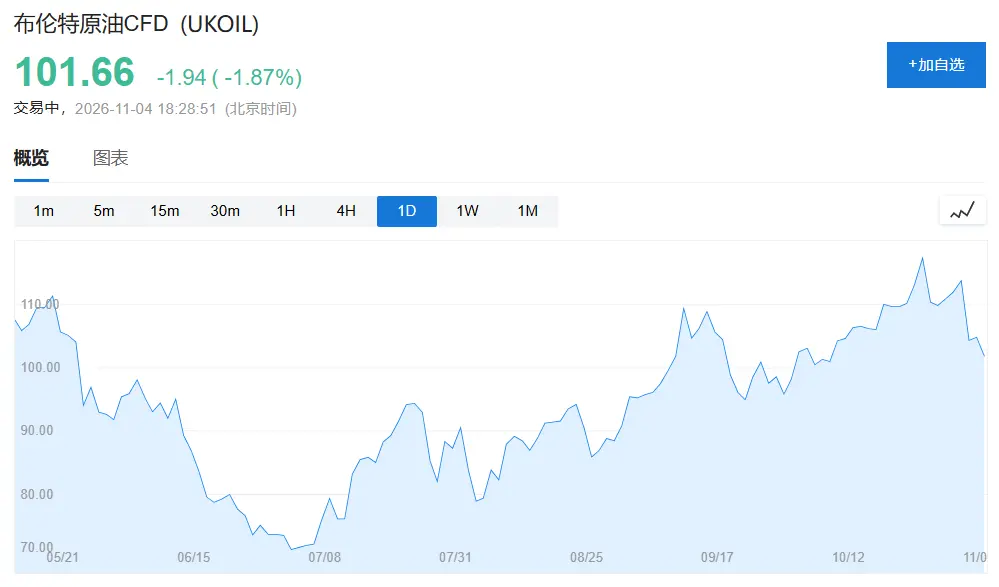
With recent statements from Trump and his officials showing a slightly more moderate stance on the Iran issue, international oil prices have significantly retreated from last week's highs.
Iran warns the U.S.: If large-scale strikes restart, it will face a “nightmare”
The results of the U.S. midterm elections were viewed by Iran as a signal from American voters opposing war.
Iranian Parliament Speaker and senior negotiator with the U.S., Mohammad Baqer Qalibaf, stated that the U.S. midterm elections indicate that the American public has cast votes “against war.” He also warned that if the U.S. chooses to launch large-scale attacks on Iran again, it will face a “nightmare.”
Despite the U.S. recently sending some signals of de-escalation, tensions between the U.S. and Iran have not fundamentally changed. Tehran has indicated it is ready to respond to new military strikes and will retaliate strongly.
Gulf Arab states remain vigilant regarding the situation and urge Trump to give diplomatic negotiations more time. The UAE, Qatar, and Saudi Arabia are all U.S. regional allies, and during the most intense phases of the war, these countries were subjected to thousands of attacks by Iranian drones and missiles.
Divergences remain in U.S.-Iran negotiations, the situation in the Strait of Hormuz affects oil markets
On a diplomatic front, recent progress in U.S.-Iran negotiations has been limited. Qatar and Pakistan continue to mediate, but there are still divergences on several key issues between the two sides.
Among them, Iran wants the U.S. to lift its maritime blockade on its ports, while Washington demands concessions from Tehran regarding its nuclear activities.
A previous article by Wall Street News mentioned that Qatar's mediation is ongoing, but the divergences between the U.S. and Iran have not been bridged, and Qatari mediators expect to receive feedback from the U.S. and Iran on a new proposal within the next 36 hours.
This means that, although negotiations have not achieved substantial breakthroughs, diplomatic channels remain operational.
Iranian President Ebrahim Raisi stated this week that Supreme Leader Ali Khamenei has granted the government greater authority to advance peace negotiations. This may involve some topics that Tehran had previously considered “non-negotiable,” leaving some room for diplomatic resolution.
The nine-month-long war is becoming the political and economic pressure facing Trump
The U.S.-Iran war began in late February of this year when the U.S. and Israel launched attacks on Iranian targets, killing several senior officials, including former Supreme Leader Ali Khamenei.
In the early days of the war, U.S. officials had expected the conflict to last a maximum of four to six weeks, but Iran's sustained retaliatory capability exceeded expectations. Tehran's counteractions have not only disrupted the Persian Gulf region but have also impacted the overall situation in the Middle East.
Meanwhile, the rising energy costs from the war are starting to backfire on the U.S. domestic economy. Diesel prices in the U.S. have hit a record high, and the average price of gasoline has also exceeded $4 per gallon. The soaring fuel costs have intensified public dissatisfaction with the war.
This also constitutes the current reality dilemma Trump faces: on one hand, he still insists that Iran must not be allowed to possess nuclear weapons and keeps military escalation options open; on the other hand, the ongoing war and high energy prices are increasing domestic political pressure.
After the Democratic Party swept Congress in the midterm elections, Trump signaled a pause in military actions against Iran, and U.S.-Iran diplomatic negotiations have thus gained renewed attention. However, given the divergences between the two sides on maritime blockades and nuclear issues, as well as Iran's maintained military readiness, the situation is still far from genuine de-escalation.
免责声明:本文章仅代表作者个人观点,不代表本平台的立场和观点。本文章仅供信息分享,不构成对任何人的任何投资建议。用户与作者之间的任何争议,与本平台无关。如网页中刊载的文章或图片涉及侵权,请提供相关的权利证明和身份证明发送邮件到[email protected],本平台相关工作人员将会进行核查。


