CoinW Research Institute
Abstract
AI computing power is gradually transforming from a purely technical resource into a financial asset that can be financed, priced, and traded. As the scale of GPU and data center investments expands, Wall Street has formed different financing models around computing power. New cloud service providers like CoreWeave (Neocloud) engage in circular financing through GPU assets, long-term customer contracts, and future computing revenue, while large cloud providers such as Google and Amazon rely more on long-term bond financing to support infrastructure expansion. On this basis, financial infrastructures such as computing credit, capital supply, price benchmarks, and derivatives are gradually developing. Meanwhile, the crypto industry is entering this market from another side. Mining farms are transitioning to AI data centers, DePIN organizations are decentralizing GPUs, DeFi and RWAfi are exploring on-chain financing and revenue for AI infrastructure, while centralized exchanges (CEX) are starting to incorporate GPU rental prices into perpetual contract trading. What is currently maturing is not a simple “GPU Tokenization,” but rather Compute Credit formed around real computing power cash flow, extending further to Stablecoin Settlement, on-chain AI infrastructure debt, and Compute Derivatives. As financing, price benchmarks, derivatives, asset chain integration, and settlement gradually connect, a more complete Compute Finance market is taking shape. However, its foundation still relies on the real economy; whether GPUs can continue to generate income, whether customers can pay stably, whether power and data centers can deliver on time, and the mismatch between technological depreciation and long-term debt will all determine how far this round of computing finance can ultimately go.
Table of Contents
1. From GPU to Cash Flow: Why Computing Power Can Become a Financial Asset
1.1 What is Computing Power, and Why is Computing Power Not Equal to GPU
1.2 From Purchasing Servers to Purchasing Computing Power: Why Computing Power Begins to Have Asset Attributes
1.3 NVIDIA AI Factory: When Computing Power Begins to Become Infrastructure Investment
2. How Wall Street Builds the Financing and Credit Infrastructure for Computing Power
2.1 Why Does AI Need Wall Street’s Money More and More
2.2 What Exactly is Wall Street Financing
2.3 How Does a Computing Power Financing Actually Work
2.4 CoreWeave: How Wall Street Truly Finances GPU and Computing Power Cash Flow
2.5 CoreWeave is Not an Isolated Case: Different Versions of Computing Power Financing Are Emerging
2.6 NVIDIA × Wall Street: Financing Ability Begins to Become Part of the AI Supply Chain
3. From Benchmark to Futures: How Computing Power Establishes Price and Trading Infrastructure
3.1 Why Does Computing Power Need a Unified Price
3.2 From GPU-hour to Compute Price: A Unified Unit Does Not Equal the Same Commodity
3.3 Silicon Data: Computing Power Begins to Establish Benchmarks
3.4 CME Compute Futures: Computing Power Prices Begin to Enter the Traditional Derivatives Market
3.5 Returning from Price Benchmarks to Financing
4. How Crypto is Participating in the Computing Power Market
4.1 From Bitcoin Mining Farms to AI Data Centers: The Earliest Integration Occurred Offline
4.2 DePIN: Organizing Decentralized GPUs into a Computing Power Market
4.3 From GPU Loans to On-Chain Revenue Rights: Compute Credit Begins to Enter Crypto
4.4 Bitget Compute Perps: Computing Power Prices Enter the Crypto Trading Market
4.5 What Crypto Can Supplement, and What It Cannot
5. The Next Steps: In What Areas is Computing Power Most Likely to Truly Integrate with Crypto
5.1 Stablecoin Settlement: Likely to Scale Earlier Than GPU Tokenization
5.2 On-Chain AI Infrastructure Debt: More Realistic Than GPU Tokenization
5.3 From Benchmark to a Complete Derivatives Market: The Next Step is Not Just Perpetual
5.4 AI Agent Automatic Procurement: Machines May Also Become Buyers in the Computing Power Market
5.5 From a Few Products to Compute Finance
6. Risks: The Assetization of Computing Power is Not a Risk-Free Printing Press
7. Conclusion
References
1. From GPU to Cash Flow: Why Computing Power Can Become a Financial Asset
One of the most intuitive changes in the AI industry in recent years is that GPUs have become increasingly expensive and harder to purchase. A GPU worth tens of thousands of dollars is certainly a piece of equipment, but what Wall Street really cares about is not how much this card can be sold for today, but how much revenue it can generate over the next few years after being put into operation. This also marks the first step in understanding “the assetization of computing power”: GPUs are merely devices for producing computing power; the real income comes from the whole set of computing services built around GPUs.
1.1 What is Computing Power, and Why is Computing Power Not Equal to GPU
“Computing power” is the ability of a computer to process tasks. When you open an AI chat tool and input a question, it seems like a simple conversation, but behind the seconds it takes to generate an answer, the server needs to call on GPUs for extensive computation. Training a large AI model requires even larger computational scales, potentially needing thousands of GPUs running continuously for weeks or months. Therefore, GPUs are one of the most important production tools for AI computing power today, but owning a GPU does not mean you can directly provide stable computing power services to customers. A batch of H100 or B200 GPUs first needs to be installed into servers and then deployed in data centers. Data centers need a stable and massive power supply, as well as high-speed networks, storage systems, and cooling equipment. The large number of GPUs must work collaboratively through high-speed interconnects, and scheduling is handled by cloud platforms and software systems. Only when all these links are operational can customers truly call upon GPUs to train models or run AI applications. In commercial delivery, computing power can mainly be provided in the forms of bare metal servers and cloud computing power (GPU Cloud). Bare metal typically grants the customer the use rights of the entire physical server, allowing them direct control over GPU and other hardware resources; cloud computing power provides on-demand computing resources via cloud platforms, where customers do not need to procure and maintain equipment themselves. The two are not mutually exclusive; bare metal servers can also serve as a delivery method for cloud services. Therefore, from a GPU to the computing power ultimately sold to customers, there is actually a complete infrastructure chain that includes land, power, and data centers → GPU servers, networks, and storage → delivery via bare metal or cloud platforms → AI training and inference → customers purchasing computing power. This distinction is particularly important for Compute Finance. The GPU itself can be held, mortgaged, and depreciated as a hardware asset, while the computing power leasing contracts and the cash flows they generate become the basis for financing, credit assessments, and financial transactions.
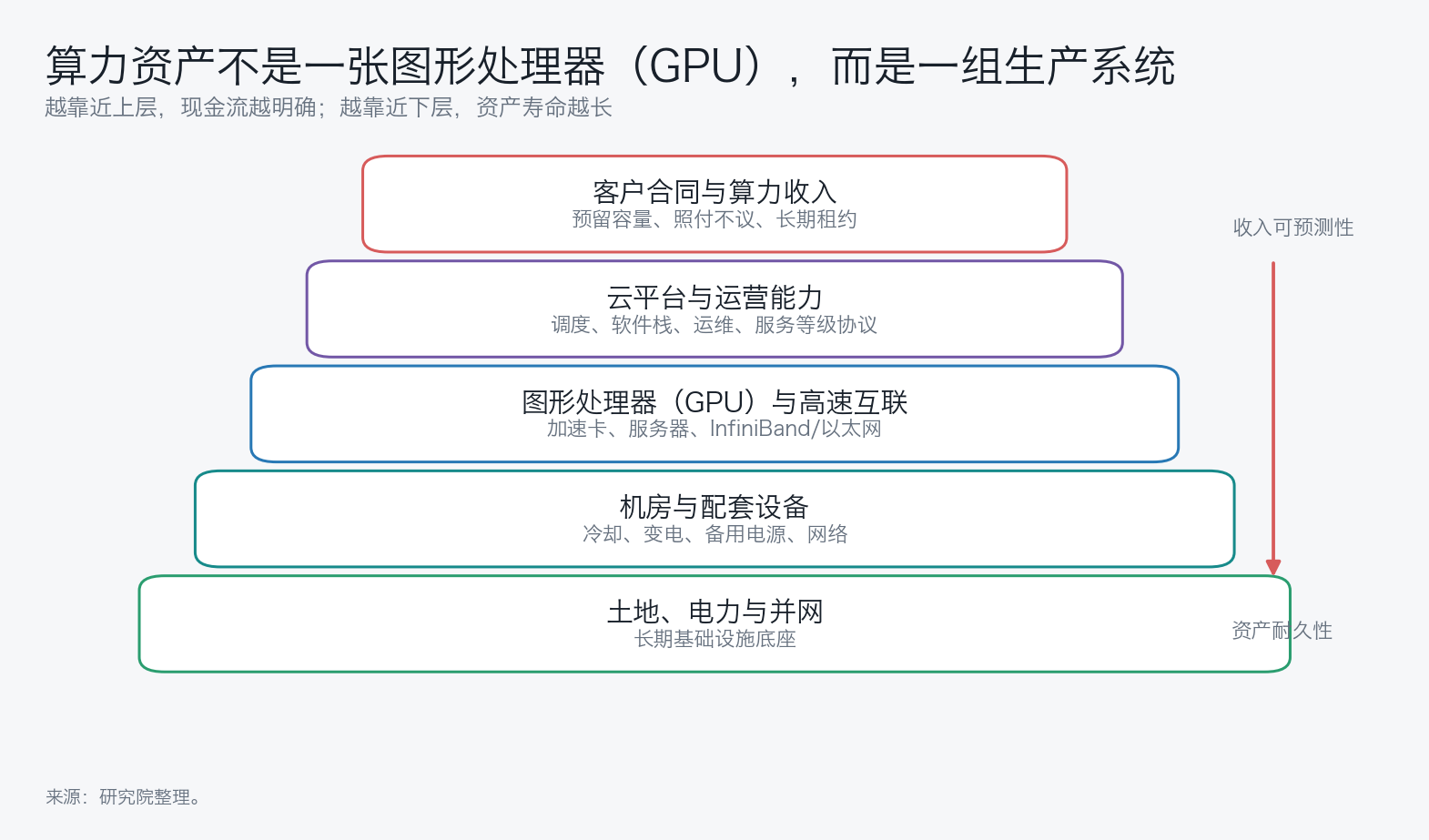
Figure 1. The Five Layer Structure of Computing Power Assets. Source: CoinW Research Institute
1.2 From Purchasing Servers to Purchasing Computing Power: Why Computing Power Begins to Have Asset Attributes
To understand how computing power becomes a financial asset, we can look at a more familiar example. An empty office building is certainly valuable, but financial institutions, in addition to caring about the value of the building itself, will also look at whether there are tenants, how long the leases are, and whether the tenants can consistently pay rent. Because for investors, the building itself is an asset, and the continuous rent received determines how much cash flow this asset can generate. Similar changes are emerging in computing power. Early enterprises built computing infrastructure primarily by purchasing servers, constructing data centers, and then using them themselves. After the popularity of cloud computing, cloud service providers like AWS and Microsoft Azure began to uniformly build data centers and sell computing capabilities by the hour to numerous customers. Servers transitioned from devices used by enterprises themselves to production tools capable of continuously generating service revenue. Enterprises only needed to pay for the computational power they actually used; thus, computational power gradually transformed from a fixed asset within the enterprise to a commodity that could be bought and sold on demand.
Entering the AI era, this model has advanced further. The number of GPUs required for training large models is enormous, and some AI companies and cloud service providers no longer temporarily purchase a few hours of computing resources, but instead lock in large GPU clusters in advance by signing longer-term computing power procurement contracts. This change is particularly important for financial markets. If a computing power operator spends $1 billion on GPUs, but there's uncertainty about whether there will be customers in the future, financial institutions find it difficult to assess how much profit this $1 billion investment will ultimately generate. However, if these GPUs already have customers committed to continuously purchasing computing power for the next few years, future income becomes much easier to estimate.
For financial institutions, the question also changes. Previously, the main focus was on “How much are these GPUs worth?”, now it extends to “How much income can these GPUs generate over the next few years?”. The latter is a question that financial markets are most familiar with. Real estate can be valued based on future rent, solar power plants can finance based on future electricity sales, and airplanes can secure financing based on long-term lease agreements. When computing power also begins to form relatively sustainable and predictable service revenue, it naturally starts to possess similar financial attributes. Thus, the so-called “assetization of computing power” does not simply mean packaging GPUs into a new financial concept, nor does it necessarily imply that GPUs must be tokenized. It primarily signifies that GPUs and the infrastructure behind them can begin to obtain financing and valuation based on future computing revenue. This is a crucial step in the transition of computing power from a technical resource to a financial asset.
1.3 NVIDIA AI Factory: When Computing Power Begins to Become Infrastructure Investment
The concept of AI Factory proposed by NVIDIA integrates GPUs, networks, storage, software, power, and cooling systems into an infrastructure that continuously provides AI training and inference capabilities. In 2026, NVIDIA further proposed to develop AI Factory Compute into an investable asset class and established a computing power financing platform in collaboration with financial institutions such as BlackRock and Apollo, aiming to leverage over $500 billion in third-party capital in the long term. However, this financialization system is still in the development stage and should not equate industrial vision with a mature computing power asset market. In reality, the expansion of AI infrastructure is mainly driven by two types of companies. One type is large cloud providers (Hyperscalers) such as Amazon, Google, and Microsoft, which continuously procure GPUs, obtain power, and build data centers by relying on operational cash flow and issuing long-term bonds; the other type includes new cloud service providers (Neoclouds) like CoreWeave, which relies more on GPU assets, long-term customer contracts, and future computing revenue to obtain debt financing and then invest the funds into a new round of infrastructure expansion, forming a circular leveraged financing model. Both share the common goal of transforming expensive GPU equipment into computing power assets that can be continuously rented out, generating cash flow. This also enables computing infrastructure to begin to share characteristics of traditional infrastructure in terms of financing. GPUs can serve as collateral assets, long-term computing contracts can support credit financing, and future revenues become an important basis for financial institutions to assess repayment capacity. As the investment scale expands, the core issues of the computing power market begin to shift from how to acquire more GPUs to how to finance GPUs, assess computing revenue, and manage equipment depreciation and debt risk. This is the real foundation for Wall Street's accelerated entry into the Compute Finance market.
2. How Wall Street Builds the Financing and Credit Infrastructure for Computing Power
Chapter One explained how computing power evolves from GPU devices into assets that can continuously generate income. Next, let’s examine where the money to build these computing power assets comes from.
2.1 Why Does AI Need Wall Street’s Money More and More
In Chapter One, we mentioned that an AI data center needs land, power, cooling, networks, and other infrastructure in addition to GPU servers. McKinsey estimates that by 2030, the global data center value chain will require approximately $6.7 trillion in capital investment, of which over $4 trillion will flow into computing hardware such as servers and storage. The Bank for International Settlements (BIS) estimated in September 2026 that the top five global technology companies alone will invest over $1 trillion in AI from 2025 to 2026. Technology giants like Microsoft, Amazon, Google, and Meta can rely on their own cash flow and debt issuance to bear a significant amount of investment, but companies in AI infrastructure such as CoreWeave, Crusoe, and Lambda also need to continuously purchase GPUs, build data centers, and secure power resources, which they often cannot support through their own funds alone during rapid expansion. Meanwhile, increasing long-term computing contracts make future income easier to predict. When a computing power operator has already secured customer orders for the next few years but needs to invest billions of dollars today to build infrastructure, Wall Street then finds an opportunity to intervene, providing funding in advance to be gradually repaid through future computing revenue. Thus, Wall Street's entry into the computing market is not merely due to being “bullish on AI,” but also arises from two conditions familiar to financial markets: substantial upfront capital needs and increasingly clear long-term cash flows.
2.2 What Exactly is Wall Street Financing
If we only look at the headlines, “GPU-backed financing” might be easily understood as simply GPU mortgage loans, but the reality is much more complex. Financial institutions are not dealing with an isolated GPU, but a whole set of assets capable of generating computing power revenue. The most understandable is the GPU device. GPUs are expensive, relatively standardized, and hold a certain resale value, making them suitable as collateral in financing. However, GPUs must be deployed in data centers to generate computing power, and the underlying land, facilities, power, cooling, and networks also require substantial capital, with a longer usage cycle, making them closer to traditional infrastructure. Further up are customer contracts. If a computing power company has signed multi-year procurement agreements with large tech firms, these contracts might even have a greater impact on financing capacity than the GPUs themselves. The reason is simple: GPUs tell creditors “what can be sold off if the project fails,” while customer contracts tell creditors “what will sustain repayment during normal project operation.”
Therefore, financial institutions mainly focus on two layers of security. One is the asset values of GPUs, servers, and data centers, i.e., the collateral involved in the financing; the second is the future cash flows, including who will purchase the computing power, how long the contracts last, and whether customers can pay stably. Different assets correspond to different types of capital. GPUs can secure funding via equipment financing and bank loans, while data centers and energy facilities are more suited for infrastructure funds and project financing. Private credit can design more flexible financing structures based on assets and future cash flows. In the future, as computing power debts become more standardized, we may also see the emergence of securitized products. But regardless of how financing tools change, the underlying logic remains the same: combining GPUs, infrastructure, and customer contracts together converts the computing revenue that will be received gradually over the next few years into capital that can be invested in construction today.
2.3 How Does a Computing Power Financing Actually Work
A simplified example can help understand this mechanism. Assume an AI cloud company signs a five-year contract with a large AI enterprise. The customer wants to obtain a dedicated GPU cluster, but the cloud company needs to first invest $2 billion to purchase GPUs, build server clusters, and prepare data centers. The problem is that the customer will not pay all of the money for the next five years upfront; however, GPU suppliers and data center builders will not wait five years to collect payment. Thus, financial institutions provide the funds initially. After obtaining financing, the AI cloud company purchases GPUs and completes the deployment, and the customer starts using the computing power while paying fees continuously as per the contract. The computing company receives income, with part allocated for paying power, data center rent, and operational costs, while another part is used for repaying the principal and interest of the loan. In this way, financial institutions essentially convert a portion of future income over the next five years into capital that can be used today. This highlights the significant importance of long-term customer contracts. Some computing contracts will adopt arrangements similar to take-or-pay, meaning that customers commit to purchase a certain scale of computing power and must pay the corresponding fees as per the agreement, even if their actual usage does not reach the maximum limit. For financial institutions, this is more predictable than “renting GPUs when a customer needs them,” as the uncertainty of future income decreases.
However, financial institutions will not only consider the contract amounts. They will also look at who the contract is signed with, which relates to customer credit. If the payer is a financially sound, high credit-rated large tech firm, financial institutions will have more confidence in expecting payment in the coming years; conversely, if the customer is a cash-strapped startup, even a large contract amount may not carry the same value. Meanwhile, the GPUs also involve Residual Value, which is the value left over. A group of H100s might have a high value today, but three or four years down the line, when a new generation of GPUs has been widely deployed, how much can these devices still sell for? If a customer stops payment, can creditors find other users after taking over these GPUs? Hence, a computing power financing needs to simultaneously address several fundamental questions, including how much the equipment is worth, who is using it, how long the contract can last, whether the customer can pay, and how much these devices will be worth in a few years. These questions together form a complete judgment by Wall Street on a computing power asset.
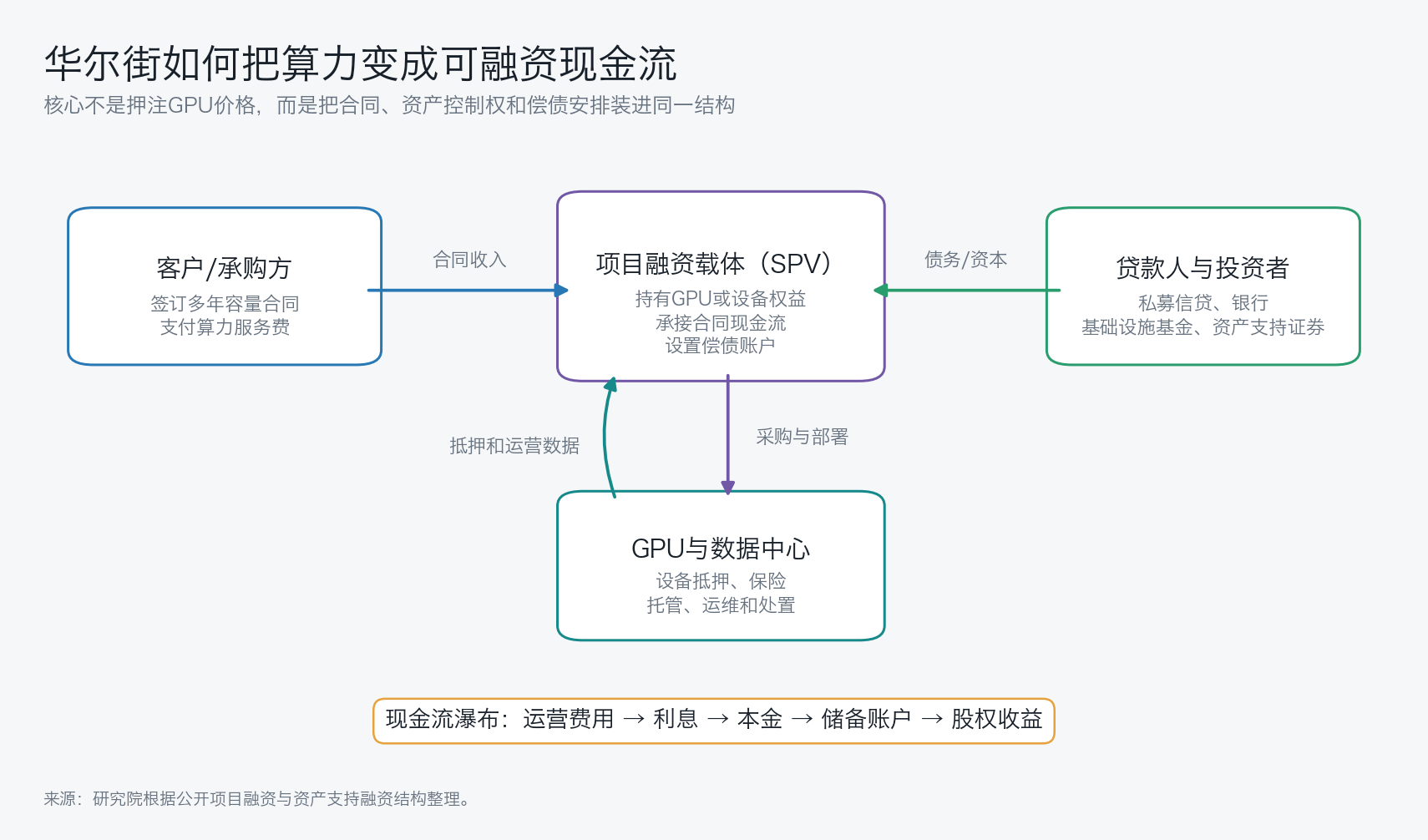
Figure 2. Financing Structure of Computing Projects. Source: CoinW Research Institute
2.4 CoreWeave: How Wall Street Truly Finances GPU and Computing Power Cash Flow
If you want to understand how Wall Street converts computing power into financeable assets, CoreWeave is currently one of the most typical cases. It demonstrates a complete model. First, lock in future computing demand with long-term customer contracts, then build GPU infrastructure around those needs and obtain the funds needed today via future revenue.
From GPU Cloud to Heavy Asset Expansion: Why CoreWeave Needs Continuous Financing
CoreWeave initially was not a traditional cloud computing giant. The company began by utilizing GPUs for cryptocurrency mining but later, with the rapid growth of AI computation demand, gradually shifted to GPU cloud and AI infrastructure services. Compared to comprehensive cloud platforms like AWS and Azure, CoreWeave focuses more on GPU-intensive workloads, providing high-performance computing services for AI labs and large tech firms. This model grows quickly, but it is also capital-intensive. As customers demand more computing power, CoreWeave must pre-purchase GPUs and secure data centers and power resources. The more orders there are, the more infrastructure needs to be constructed, and much of this money often needs to be spent before customers actually start using the computing power. Therefore, CoreWeave faces a typical “timing gap” where customers may be willing to pay in the coming years, but the money for constructing this computing power needs to be spent today. Solving this timing gap is precisely the role of financing.
Long-Term Contracts Become Financing Foundations: Why Wall Street is Willing to Lend
CoreWeave can secure massive financing mainly due to its long-term customer contracts. By the end of 2025, the company had an average weighted contract duration of about five years, with a remaining performance obligation (RPO) reaching $60.7 billion. RPO can be understood as the contract amount that the customer has already signed but that CoreWeave has not yet completed service and recognized revenue for, reflecting the future business scale supported by existing contracts. At the same time, CoreWeave employs a significant number of take-or-pay type contracts, where customers commit to purchasing a certain scale of computing power and undertake corresponding payment obligations, rather than temporarily renting GPUs as needed. This makes future revenue more predictable and provides a basis for financing. The company’s annual report shows that its infrastructure construction mainly employs asset-layer debt financing supported by these types of customer contracts. Simply put, financial institutions not only assess how much CoreWeave is worth as a whole, but also evaluate the specific GPUs and data centers, the underlying customer contracts, and how much cash flow these assets can generate in the future. Therefore, CoreWeave can first establish computing power demand through long-term orders, and then use financing to procure GPUs and build data centers. What Wall Street is financing is not an isolated GPU, but an asset combination consisting of “GPUs and infrastructure + long-term customer contracts + future computing revenue.”
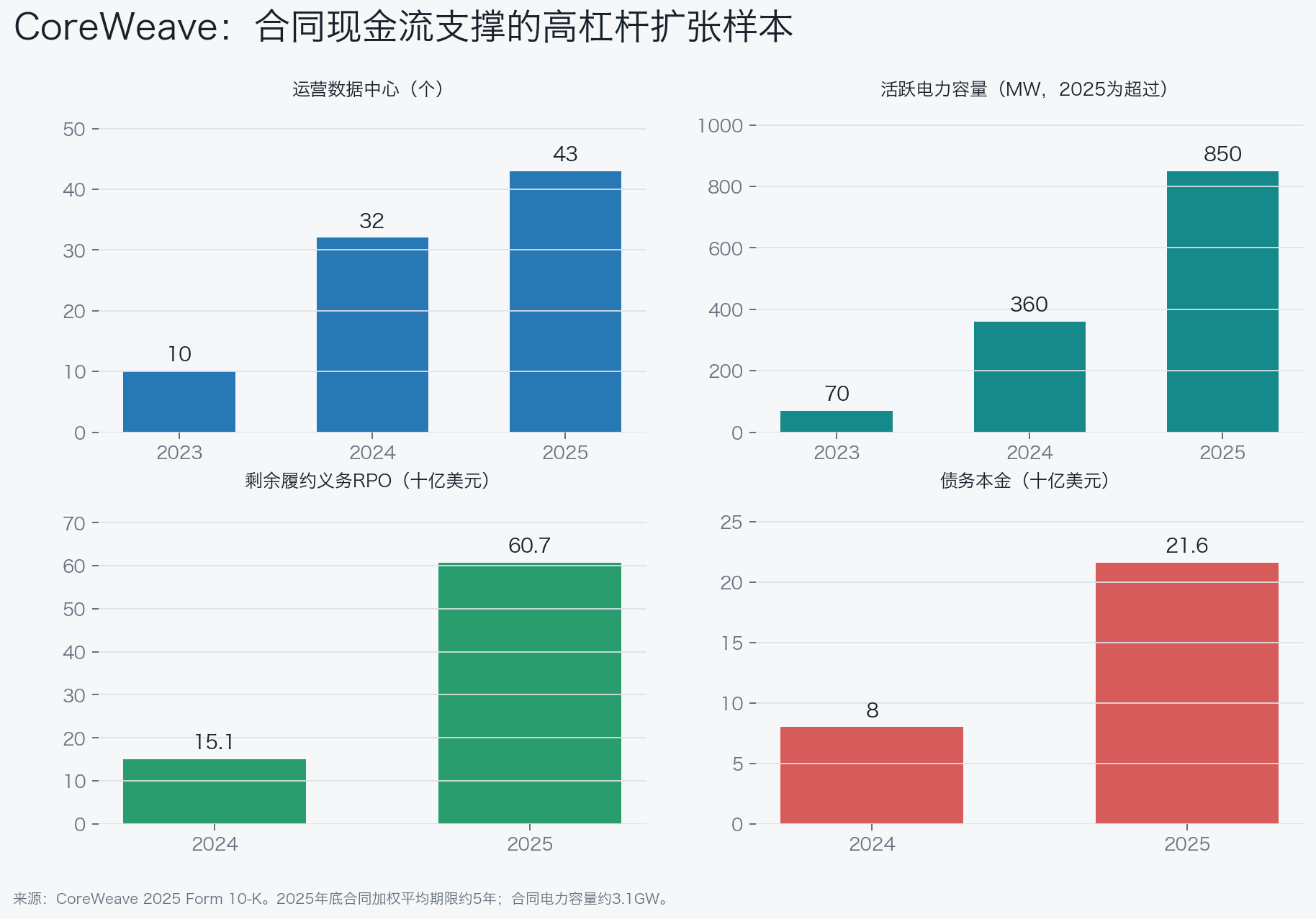
Figure 3. CoreWeave’s Expansion and Leverage. Source: CoinW Research Institute
From $8.5 Billion to $3.1 Billion: Computing Power Debt Begins to be Independently Rated and Traded
In March 2026, CoreWeave completed an $8.5 billion DDTL 4.0 financing. DDTL, or “Delayed Draw Term Loan,” allows enterprises to set their financing limits first and then gradually draw down based on GPU procurement and project construction progress. This financing was supported by HPC (High-Performance Computing) infrastructure and related customer contracts, receiving an A3 rating from Moody's and a A(low) rating from DBRS, marking the first HPC infrastructure financing to achieve investment-grade ratings. More importantly than the $8.5 billion scale, it is noteworthy that it achieved investment-grade rating. This indicates that the market is beginning to independently evaluate GPU, infrastructure, and customer cash flow as a credit asset, rather than simply “lending money to an AI company.” In May 2026, CoreWeave completed a further $3.1 billion DDTL 5.0 financing to support the infrastructure deployment corresponding to two customer contracts, becoming the first publicly syndicated HPC infrastructure-backed financing. In simple terms, multiple financial institutions and investors can participate, and the related debt also meets the conditions for trading in the secondary market. Thus, computing power financing has progressed from “someone is willing to lend” to “more institutions can participate and trade.” However, this financing was rated Ba2 by Moody's and BB+ by Fitch, which is below investment-grade. This indicates that owning GPUs does not mean that the debt is inherently safe. Different customers, assets, and financing structures correspond to different credit risks, and every piece of computing power debt still requires individual assessment and pricing.
Customer Contracts Serve as Financing Support and Potential Risks
Long-term customer contracts are an important foundation for CoreWeave's ability to obtain financing. By the first quarter of 2026, contracts related to OpenAI had committed to pay up to approximately $6.5 billion by 2031; Meta-related commitments once peaked at about $21 billion, covering until around 2032. For financial institutions, these long-term contracts increase the predictability of future computing revenue. However, major customers also pose risks. By the first quarter of 2026, CoreWeave's top two customers contributed approximately 65% of its total revenue. If a major customer reduces AI investments, decreases computing power purchases, or adjusts contracts, the future cash flow supporting financing may also be affected. Therefore, “GPU-backed” does not mean that risks disappear. Financial institutions still need to assess the asset values of GPUs and data centers, customer credit, and CoreWeave's own construction and operational capabilities in tandem to decide financing scale and cost.
CoreWeave Essentially Establishes a “Computing Power - Financing - Expansion” Cycle
Putting the entire case together, CoreWeave’s logic is very clear. Customers first sign long-term computing power contracts, making a portion of future income predictable; CoreWeave then builds GPU clusters and data centers based on these demands; financial institutions provide funds in advance based on the infrastructure, customer contracts, and future cash flows; new computing power goes into operation to generate income, which is then used to cover operational costs and repay debts. As the company receives more customer orders, these contracts can support the next round of infrastructure construction and financing. Therefore, what CoreWeave illustrates is not simply “mortgaging GPUs at a bank,” but rather combining GPUs, data centers, long-term customer contracts, and future computing revenues to transform cash flow that will only gradually emerge over the next few years into capital that can be used for construction and expansion today. This also represents the core value of Wall Street's involvement in AI infrastructure, turning “future customer purchases of computing power” into “capital for constructing computing power today,” thus forming a continuously functioning capital cycle.
2.5 CoreWeave is Not an Isolated Case: Different Versions of Computing Power Financing are Emerging
If only CoreWeave were engaging in this type of financing, it would be hard to imply that a new market is emerging. However, similar logic has started to appear in other AI infrastructure companies, though the specifics of what they are mortgaging and financing do not entirely overlap.
Lambda is more aligned with the “GPU device financing” route. In 2024, Lambda secured GPU-backed financing of up to $500 million, led by Macquarie, to expand its on-demand GPU Cloud, with NVIDIA GPUs themselves constituting significant asset backing. By August 2026, Lambda further completed a $926 million senior secured Term Loan B to purchase and deploy GPU infrastructure for an investment-grade customer. The changes between these two transactions are highly representative. The early market was willing to provide substantial funds based on the GPUs themselves and their income generation capabilities; as long-term customers and more mature asset structures emerge, GPUs, customer contracts, and credit are further bundled, leading financing into a broader institutional market.
Crusoe is closer to “AI infrastructure financing.” It not only operates GPU Cloud, but also takes part in the underlying infrastructure construction involving data centers and energy. In 2025, Crusoe obtained a $750 million credit facility from Brookfield for AI Factory and AI Cloud expansion; that same year, it also partnered with Blue Owl Capital and Primary Digital Infrastructure on a $15 billion joint venture project for the Abilene AI data center in Texas. Here, Wall Street's investment focus evidently extends beyond GPUs, delving deeper into land, data centers, and energy capacity.
Nebius showcases another path. It simultaneously raises capital in public markets and through asset-level financing. Nebius previously financed AI Cloud expansion through stocks and convertible bonds; in July 2026, it completed approximately $775 million in its first senior secured debt financing. This financing was supported by the cash flow generated from its already deployed GPU infrastructure and an investment-grade customer contract, with the company claiming that related customer cash flow and financing together could cover over 100% of the capital expenditure for the underlying GPU infrastructure.
Putting these companies together reveals that the market has not formed a single “GPU financing template.” Lambda demonstrates that GPUs themselves can serve as significant collateral assets; CoreWeave further combines GPUs with long-term customer contracts; Crusoe extends its financing scope to data centers and energy infrastructure; Nebius merges company-level capital market financing with specific GPU assets and customer cash flows. While their paths differ, they all point toward the same change: computing power infrastructure is gradually transitioning from capital expenditures of tech companies to an asset class that financial institutions can divide, evaluate, rate, and allocate.
2.6 NVIDIA × Wall Street: Financing Ability Begins to Be Part of the AI Supply Chain
The cases of CoreWeave, Lambda, and Crusoe illustrate that AI infrastructure companies are actively seeking more external capital. NVIDIA's actions in 2026 further indicate that financing ability itself is becoming a part of the AI supply chain. NVIDIA can produce more GPUs, but whether these GPUs can ultimately be deployed for actual computing power depends on whether customers have sufficient funds to build data centers, purchase servers, and secure power. As AI infrastructure projects reach scales of billions or even hundreds of billions of dollars, capital supply also begins to influence the pace of computing power expansion.
In August 2026, NVIDIA announced a collaboration with Apollo, BlackRock, Blackstone, Brookfield, Goldman Sachs, and KKR to establish an independent AI Compute infrastructure financing platform, aiming to mobilize over $500 billion in third-party capital in the long term. This $500 billion is neither NVIDIA's investment nor a single fund that has already raised capital, but rather the long-term capital scale planned to be mobilized across multiple platforms. The significance of this lies in the addition of a previously less visible “financial layer” to the AI supply chain. Financial institutions provide long-term capital, and AI infrastructure companies use that funding to build GPU clusters and data centers, creating cash flows from the continued computing fees paid by customers to repay financing. Thus, capital becomes a vital link connecting GPUs, data centers, and the ultimate demand for computing power.
From CoreWeave's asset layer financing to NVIDIA actively involving large financial institutions, a credit market built around GPUs, data centers, customer contracts, and future computing revenues is emerging. We can summarize it as Compute Credit, where the core is not to turn the GPUs themselves into financial products, but to let future computing revenues become the credit basis for obtaining capital today. At this point, computing power has transformed from a device to cash flow and then from cash flow to a credit asset. However, to form a more mature financial market, another critical link is still missing: a unified price. How much is an hour of H100 or B200 computing power worth? This will also bring the financialization of computing into the next stage, moving from “capable of financing” to “capable of pricing and trading.”
3. From Benchmark to Futures: How Computing Power Establishes Price and Trading Infrastructure
After the expansion of the financing market, price standardization will become the next hurdle. Lenders need to assess the future rent and residual values of GPUs, operators must decide whether to sign long-term contracts or retain spot capacity, and AI companies also hope to lock in future computing costs. Without credible price benchmarks, these risks can only rely more on bilateral contracts. The price of the same H100 can vary significantly across different cloud platforms, regions, and rental durations. Without relatively unified price references, AI companies find it challenging to estimate future computing costs, and GPU operators struggle to manage price volatility risks. Therefore, for computing power to further enter the financial market, another key change must occur: transitioning from scattered cloud service pricing to standardized pricing that the market can observe and trade.
3.1 Why Does Computing Power Need a Unified Price
Today, purchasing GPU computing power is akin to booking a hotel on different platforms. The same room may have entirely different prices depending on the city, date, and booking method; the same is true for GPU rentals. AWS, Microsoft Azure, Google Cloud, and other Hyperscalers have their own pricing systems, and Neoclouds like CoreWeave have different pricing as well. Even for the same H100, the price for on-demand rental by the hour may differ from that for locking in prices a year in advance; variations in electricity and data center costs, GPU cluster scales, network configurations, and SLAs (Service Level Agreements) further influence final prices. Thus, in the past, there has not been a natural unified answer to “How much does an hour of H100 cost?” This fragmentation is not surprising in the cloud computing market, but it becomes problematic when entering the financial market. If companies don’t know what the market price for H100 might be in the next year, it's difficult to accurately plan for AI training costs; similarly, if investors do not have standardized references, it’s challenging to judge how much revenue a GPU data center can potentially generate. Consequently, financialization must first resolve a foundational issue: converting computing power prices in different markets into comparable, unified units.
3.2 From GPU-hour to Compute Price: A Unified Unit Does Not Equal the Same Commodity
In the past, when discussing GPU value, people most frequently asked, “How much is an H100 worth?” which is essentially pricing hardware. However, for AI companies that actually utilize computing power, a more direct question often is “How much does it cost to use an H100 for an hour?” This is GPU-hour (GPU hour). One GPU running continuously for an hour equals 1 GPU-hour; 100 GPUs running for 10 hours equals 1,000 GPU-hours. This transforms the GPUs from one-time purchase equipment into measurable computing resources based on usage time. For computing power operators, what actually determines income is not just how many GPUs they possess, but also how many hours those GPUs can be rented out for and how much can be charged per hour. Hence, the focus of the market begins to extend from Hardware Price (hardware price) to Compute Price (computing power price), with USD/GPU-hour (USD/GPU-hour) becoming one of the most intuitive pricing units.
However, GPU-hour only tackles the “how to measure” aspect, without fully addressing the “how to compare” issue. The same 1 GPU-hour with H100 and B200 offers different performances; a single card instance and a large cluster connected via high-speed networks are not the same type of service. Training tasks emphasize large-scale interconnect capabilities, while inference focuses on response speed, token throughput, and unit token costs. Regional differences, rental periods, online rates, and network configurations also significantly affect real value. As a result, computing power could eventually involve multiple pricing methods. GPU rentals might use USD/GPU-hour, large-scale training could refer to Cluster GPU-hours, AI inference could utilize Cost per Million Tokens, and data center capacity might be measured in MW-year (megawatt-year). GPU-hour may serve as the first layer standard for the financialization of computing power, but not as the final standard.
3.3 Silicon Data: Computing Power Begins to Establish Benchmarks
Having a unified unit is not enough. Different platforms still have disparate quotations; therefore, the market also requires benchmarks that can reflect the overall pricing level. The market data disclosed by NVIDIA illustrates this variance. The one-year rental price for H100 rose from about $1.70/GPU-hour to around $2.35, and the median price for on-demand quotes across suppliers once peaked around $2.70, while the B200 cloud quotes ranged from approximately $5.30 to $7.05/GPU-hour. These quotes demonstrate that GPU rentals have begun to form a real market price, but due to differences in chip generations, rental durations, and service conditions, they cannot directly form a unified index.
Silicon Data's efforts involve organizing disparate GPU rental quotes into a relatively unified market benchmark. Taking the H100 Rental Price Index as an example, Silicon Data collects prices from various channels, including Neoclouds, Hyperscalers, managed markets, and private leasing platforms, then standardizes differences in equipment configurations, rental durations, platform performance, and regions, ultimately forming an H100 rental price index priced in USD/GPU-hour. Similar indices have also been established for B200. Such mechanisms have proven very mature in traditional finance and commodity markets. Crude oil has benchmark oil prices, interest rate markets have benchmark rates, and stock markets have indices like the S&P 500.
Benchmark itself does not equate to every individual transaction's completed price but provides a “market scale” that everyone can refer to. More importantly, benchmarks convert originally dispersed and incompletely comparable quotations into price standards that can be jointly referenced by financing contracts, investment models, and derivatives. Once the market has benchmarks, the next question will naturally arise: if future H100 prices are subject to rise or fall, can companies lock in prices in advance?
Figure 4. Source: https://www.silicondata.com/
3.4 CME Compute Futures: Computing Power Prices Begin to Enter the Traditional Derivatives Market
In August 2026, CME Group and Silicon Data announced plans to launch H100 and B200 Compute Futures on October 5, which still need to pass regulatory review. As of the writing of this article, these two futures have not officially launched. According to product designs announced by CME, H100 and B200 futures will track Silicon Data's corresponding Neocloud rental price index, with each contract representing 730 GPU-hours, roughly equivalent to one GPU running for a month. The contracts will be cash-settled and are planned to offer monthly contracts with a maximum duration of 36 months.
CME’s trading system has also incorporated GPU-H (GPU Hours) as the corresponding measurement unit. Regulators are beginning to pay attention to this market. On August 19, 2026, the U.S. Commodity Futures Trading Commission (CFTC) publicly sought comments on the listing of compute derivatives contracts, involving issues regarding the scale and liquidity of the compute spot market, market manipulation, customer protection, and perpetual compute futures. This does not imply that compute derivatives have received comprehensive regulatory approval, but indicates that Compute is being studied by regulators as a potential commodity and derivatives subject.
Why does the AI industry need such futures? It can be understood through airlines hedging fuel prices. Airlines need vast amounts of fuel in the future, and if they are concerned about fuel prices rising in six months, they can use futures to manage costs in advance. AI companies face similar issues concerning computing power. Assume a company expects to need a significant amount of H100 for model training six months from now; if, when that time comes, GPUs are in short supply and rental prices rise, the project costs could increase significantly. Through compute futures, companies can theoretically establish corresponding positions in advance, allowing the futures' profits to offset the actual procurement cost increases. Conversely, GPU operators face the opposite risk. If the new generation of GPUs comes online in significant numbers and causes H100 rental prices to drop, futures can help them mitigate income fluctuations.
Future risk management tools may not be limited to futures. For AI companies, sometimes the biggest risk is not GPU price increases but rather the inability to secure sufficient capacity during peak training periods. Capacity Options may thus become another tool. Companies can pay premiums upfront in exchange for the right to call upon a certain scale of GPU clusters in the future while managing price risks and risks of availability. However, whether this market can truly mature remains to be observed. The listing of futures does not guarantee that sufficient liquidity will exist, and the sustainability of the Silicon Data index in representing the real rental market, as well as whether variations across regions, contract durations, GPU configurations, and network performance can effectively map onto a unified future contract, all require further verification. This also constitutes one of the most significant distinctions between computing power and traditional commodities like crude oil. While computing power can increasingly standardize, its complete commoditization remains challenging. The actual purchasing price for a company may always have basis risk in relation to the Benchmark.
3.5 Returning from Price Benchmarks to Financing
At this point, the path of Wall Street's involvement in the computing power market is becoming increasingly clear. Cases such as CoreWeave demonstrate that computing infrastructure can obtain financing based on future cash flows; Silicon Data begins to establish GPU rental price benchmarks; and CME further attempts to allow future computing prices to enter the futures market for cost management and risk hedging. Moreover, price standardization should, in turn, improve the financing market. If lenders can refer to a more transparent GPU rental index to assess future cash flows and use derivatives to manage rental price decline risks, the pricing of GPU loans, private credit, and even future ABS may become more standardized. Therefore, benchmarks and futures are not another market independent of the financing system, but are supplemental infrastructures for pricing and risk management in the computing credit market.
Thus, the path of computing power financialization has been extended further. GPUs (graphics processors) first provide the underlying hardware, which further transforms into Compute (computing power) and generates Revenue (income), and stable cash flows subsequently underpin Credit (credit and financing). As the market expands, GPU rental prices begin to create Benchmarks (price benchmarks), while Derivatives (derivatives) further assist companies in managing price risks. Traditional finance has already started to establish a three-layer foundational infrastructure for financing, price benchmarks, and risk management, while crypto is also participating through Stablecoin Settlement (stablecoin settlement), Tokenization (tokenization), on-chain revenue rights, and Compute Derivatives (compute derivatives).
4. How Crypto is Participating in the Computing Power Market
The relationship between crypto and computing power did not start with “GPU on-chain.” Early Bitcoin mining amassed vast amounts of electrical power and data center resources, DePIN began using blockchain to organize decentralized GPU supply, RWA projects attempted to move GPU loans and revenue rights on-chain, and trading platforms further transformed GPU rental prices into financial assets that could be traded 24/7. Crypto’s involvement in computing power is not just a single path but has already appeared in different segments of physical infrastructure, the computing power market, on-chain credit, and price trading.
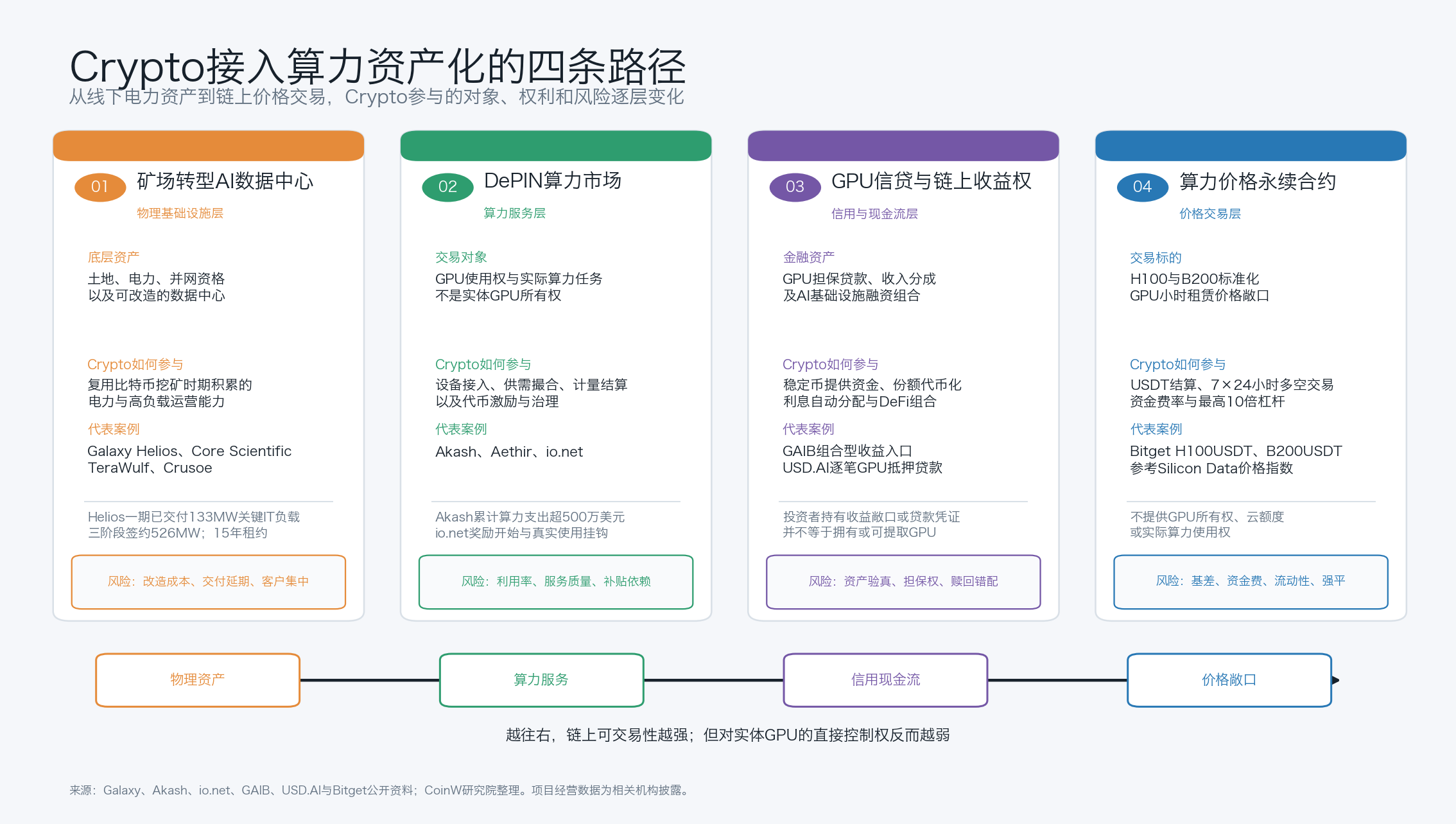
Figure 5. Paths Crypto Accesses the Assetization of Computing Power. Source: CoinW Research Institute
4.1 From Bitcoin Farms to AI Data Centers: The Earliest Integration Occurred Offline
The most direct connection between crypto and AI computing power is electricity and data centers. Bitcoin mining relies heavily on low-cost electricity, and large mining companies have thus amassed land, electricity contracts, grid connections, and high-load equipment operation experience, all crucial resources for constructing AI data centers. However, mining farms cannot simply “unplug mining machines and plug in GPUs.” Bitcoin ASIC mining machines have relatively low requirements for networking and online continuity, while AI training clusters demand high-speed networks, liquid cooling, redundant power, and stricter SLAs (Service Level Agreements). Therefore, while mining farms provide land, power, and infrastructure conditions, substantial renovations are required for any shift to AI.
Galaxy's Helios project is a representative example. Helios initially functioned as a digital asset infrastructure operator; Galaxy later signed a 15-year lease with CoreWeave to gradually convert it into an AI and HPC data center. By July 2026, Phase 1 had delivered approximately 200MW total capacity, of which 133MW constituted critical IT load. CoreWeave has secured a total of 800MW and 526MW critical IT load across three phases. Galaxy estimates that once all related capacities are delivered, these leases may generate an average annual income exceeding $1.2 billion. This figure is a projection made based on contracts and construction plans, not already realized revenue. Similar transformations are also occurring at companies like Core Scientific, TeraWulf, and Crusoe. Together, they reflect a mode of asset migration, where the land, power, and data center resources accumulated around Bitcoin mining are being repurposed for AI and repriced based on long-term computing power demand. Therefore, the earliest large-scale integration of crypto with AI computing does not take place on-chain nor necessitate the issuance of tokens, but rather starts from the physical infrastructure of electricity and data centers.
4.2 DePIN: Organizing Decentralized GPUs into a Computing Power Market
In contrast to mining farm transformations, DePIN (Decentralized Physical Infrastructure Networks) aligns more closely with crypto-native computing modes. It attempts to connect two ends: on one side, data centers, mining farms, and individuals with idle or insufficiently utilized GPUs; on the other side, AI developers and enterprises looking for flexible computing power availabilitiy. GPU owners connect devices, the protocol handles resource matching, metering, and settlement, while tokens are employed for payments, incentives, or governance. Therefore, DePIN primarily functions as a computing power market rather than GPU RWA.
Akash provides an easily understandable example. It functions more like an open cloud computing market, where users submit needed GPU, CPU, memory, and other resources, and suppliers quote based on demand, ultimately forming rental relationships. As of the first quarter of 2026, Akash disclosed a total Computing Spend (computing expenditures) exceeding $5 million since its network's establishment. This figure is not Akash's quarterly income, nor the ultimate profit obtained by suppliers, but at least indicates that a decentralized computing power market has generated real payment demand. Aethir takes a more enterprise-level GPU cloud approach; the project disclosed in 2026 that its network covers 94 countries, over 200 locations, and boasts over 440,000 GPU Containers, claiming annual recurring revenue of approximately $147 million. Here, GPU Containers represent dispatchable computing units within the network, and should not be simply interpreted as 440,000 physical GPUs; ARR is an annualized figure based on current routine business velocity, not cash received to date.
io.net also increasingly emphasizes aggregating GPU sources. Notably, in June 2026, it officially launched the Incentive Dynamic Engine (IDE), beginning to tie supplier rewards more closely to actual GPU usage rather than relying solely on fixed token releases. According to the project design, after suppliers achieve their target dollar value of IO rewards, at least 50% of the remaining income is allocated for token buybacks. This change reflects one of the core challenges of DePIN: it's less significant how many GPUs are in the network than how many are genuinely being utilized and generating payments.
If there is insufficient real demand, token subsidies can attract substantial equipment online in the short term, but if token prices drop, suppliers may swiftly exit. Therefore, to evaluate whether DePIN truly establishes a sustainable computing power market, one should pay attention to actual payment levels, GPU utilization rates, and supplier profits after excluding token subsidies. Compared to centralized GPU clouds such as CoreWeave, DePIN has the advantage of being more open and flexible, but decentralized supply also heightens the managerial challenges around equipment performance, online rates, data privacy, and SLAs (Service Level Agreements). Achieving a balance between open supply and enterprise-level service quality will determine whether such networks can genuinely penetrate the larger AI computing power market.
4.3 From GPU Loans to On-Chain Revenue Rights: Compute Credit Begins to Enter Crypto
DePIN resolves the questions of “where are the GPUs, and who can provide computing power,” while another segment of crypto projects starts tackling more financial issues, investigating whether the funds needed to build these GPUs can be obtained directly from the blockchain. This path closely aligns with the Compute Credit discussed in Chapter Two. The difference lies in the movement of funding sources, asset shares, and revenue distribution onto the blockchain.
GAIB: Bringing AI Infrastructure Financing Revenues On-Chain. GAIB's model can be simply understood as utilizing user funds on-chain for GPU and AI infrastructure financing. Users can enter AID, a synthetic dollar designed by GAIB, using stablecoins like USDC or USDT; they then deposit AID in an ERC-4626 vault to gain exposure to the returns of underlying asset portfolios. GAIB allocates part of these funds to finance GPU cloud service providers and data center operators, such as assisting operators with acquiring H100s, B200s, and other GPUs, earning returns through loan interests and income sharing. After deploying GPUs, operators sell computing power to AI clients and use the computing revenue to cover financing costs, with related income entering GAIB's asset portfolio and reflected in the net asset value (NAV) of sAID. Thus, holding sAID does not equate to owning GPUs or being able to extract physical devices; rather, it represents exposure to the returns of a basket of AI infrastructure financing projects. How much revenue users ultimately obtain still depends on whether underlying operators can operate normally and repay financing, whether GPU and related asset values remain stable, and the liquidity and redemption mechanisms of sAID itself.
Another model is USD.AI, which is closer to piecemeal GPU mortgage loans. According to its public structure, GPU operators initially invest about 20% to 30% of the funds when purchasing equipment, while USD.AI provides around 70% to 80% of senior financing; only after GPUs complete production, transportation, installation, and verification is the hosted funding released, making the loan official. The related GPUs are held by an independent SPV and have first-priority secured interests. USD.AI currently lists typical loan terms of 36 months and continuously monitors GPU operating states and asset conditions. Here, the most crucial aspect is not merely “recording loans on-chain,” but whether on-chain records correspond to real physical assets. If a loan claims to be backed by 100 H100s, investors need to know if those 100 GPUs genuinely exist, where they are stored, whether they have been double mortgaged, and if the borrower can’t repay, whether creditors genuinely have the right to dispose of these devices, among others. Blockchain can record funding flows and asset proofs but cannot automatically resolve these offline issues. GPUs still require custody and verification, security rights need legal documentation, and in case of defaults, someone must step in to take over and sell the devices.
GAIB and USD.AI represent two different directions. GAIB leans towards combining multiple AI infrastructure financing into on-chain revenue assets; USD.AI emphasizes the correspondence between specific GPUs, loans, and legal securities. They collectively illustrate that what crypto may genuinely alter is not “how to determine the safety of a GPU loan,” but who can provide funds, how financing shares circulate, and how interests can be automatically distributed. The credit evaluations, asset verifications, and default disposals traditionally managed by finance do not disappear simply because assets are placed on-chain.
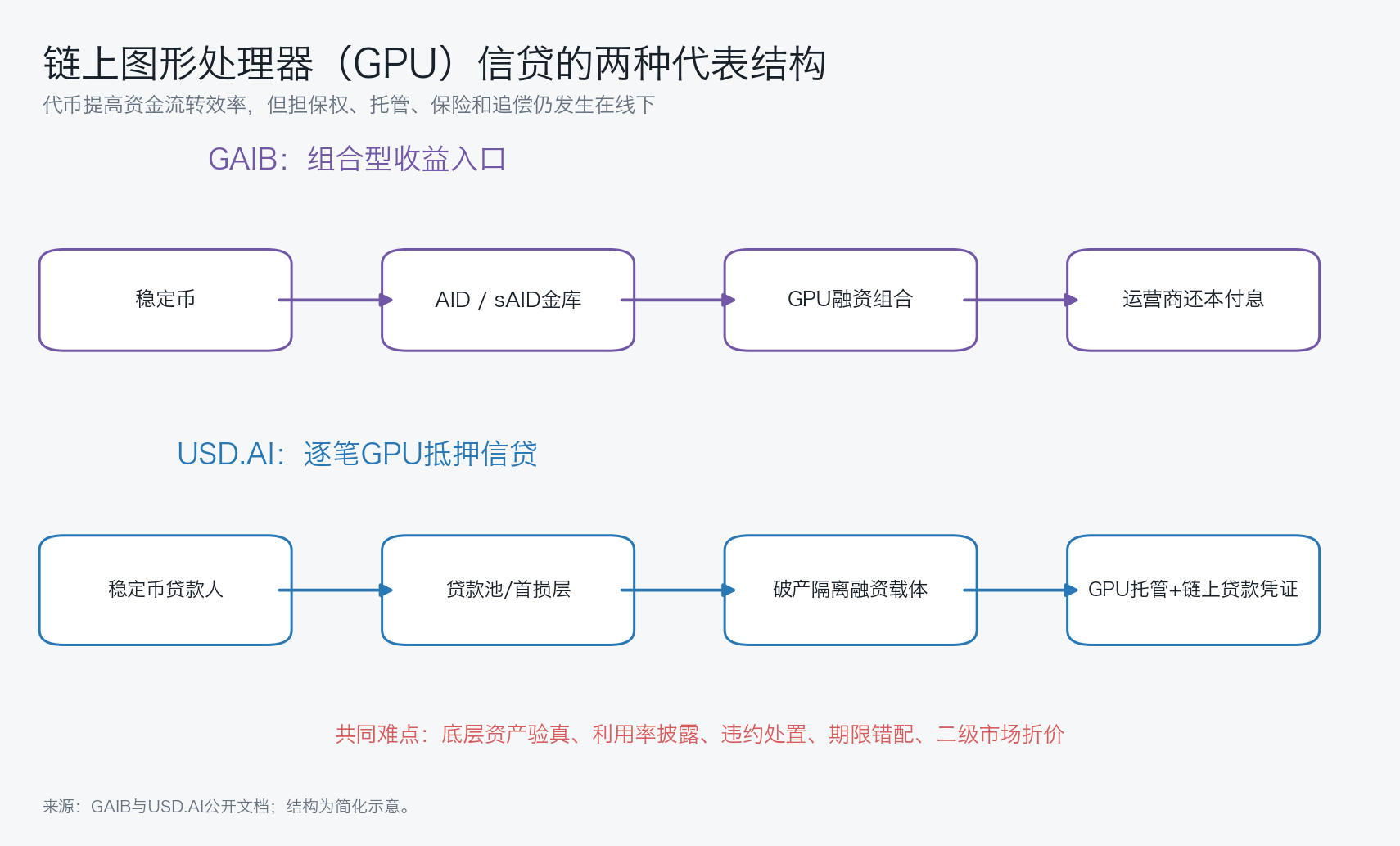
Figure 6. On-Chain GPU Credit Structure. Source: CoinW Research Institute
4.4 Bitget Compute Perps: Computing Power Prices Enter the Crypto Trading Market
The preceding paths relate to actual GPUs or computing services, but a different, lighter form of financialization has emerged in crypto, trading not the GPUs themselves, but directly the GPU rental prices. On September 8, 2026, Bitget launched H100USDT and B200USDT pre-market compute perpetual contracts. Bitget’s product does not involve purchasing computing power. Users buying H100USDT do not receive an H100, nor a cloud server quota or actual GPU usage rights; instead, they establish a financial position related to H100 rental prices. If they anticipate an increase in rental prices, they can go long; conversely, they can short if they predict an increase in GPU supply or a decrease in demand, with profits or losses settled in USDT. H100USDT and B200USDT respectively reference the rental price indices for H100 and B200 published by Silicon Data. What Bitget trades is not the selling price of NVIDIA graphics cards, but the standardized rental price for using an hour of H100 or B200 computing power.
The referenced indices do not imply that Bitget's contract prices will always align perfectly with the indices. Bitget has disclosed that these two products remain in the “Pre-Market” phase, with prices primarily determined by internal market makers at the platform and order matching between users and not yet fully connected to broader external liquidity. Thus, market sentiment, trading depth, and long-short positions may temporarily cause contract transaction prices to deviate from the Silicon Data index. Here, funding rates play a role. H100USDT and B200USDT do not have fixed expiration dates and settle funding fees every eight hours. When the perpetual market shows significantly stronger demand from longs than shorts, funding rates are typically positive, with longs paying fees to shorts; conversely, they could flow from shorts to longs. Its role is to increase the cost of long-term substantial divergence in perpetual prices from reference prices, helping contract prices align with reference markets. However, funding rates do not guarantee persistent price consistency with the Silicon Data index, especially when liquidity is thin before market trading or when the market is one-sided; basis risk may still widen.
In terms of disclosure of partnerships, the current public materials confirm that Bitget’s products reference Silicon Data’s GPU rental price indices. Beyond this, there is limited disclosure. While H100 and B200 are NVIDIA GPU models, Bitget uses “NVIDIA H100 GPU Rental Price” and “NVIDIA B200 GPU Rental Price” in product names; however, as of now, there has been no public announcement revealing NVIDIA's involvement in the design of Bitget's product, the provision of pricing data, market making, or any established product collaboration with Bitget. Therefore, H100USDT and B200USDT are not financial products issued or endorsed by NVIDIA.
This design lowers the threshold for ordinary users to participate in computing power price trading but brings about new risks. The Silicon Data index itself needs to standardize the highly fragmented GPU rental quotes, and newer GPUs like B200 are still in the supply expansion phase, with price representativeness possibly fluctuating as market structures change. After moving onto Bitget, additional factors such as pre-market liquidity, basis differences between contracts and indices, funding rates, trading depth, and derivative risks could exacerbate challenges. Even if users correctly judge the long-term direction of GPU rental prices, they still may incur losses due to short-term basis widening, continuous accumulation of funds, or forced liquidations due to leverage.
The Bitget case illustrates that the financialization of computing power is no longer limited to GPU financing and on-chain revenue rights; GPU rental prices themselves are beginning to be traded as financial assets in the crypto market. Through USDT, perpetual contracts, and 24/7 trading, the computing power price risks that previously primarily existed between AI companies, cloud service providers, and infrastructure operators are entering the crypto trading market. Compared with directly tokenizing physical GPUs, this path is lighter and easier to standardize in trading, but whether the price anchoring, liquidity, and risk management mechanisms are sufficiently mature remains to be continuously validated.
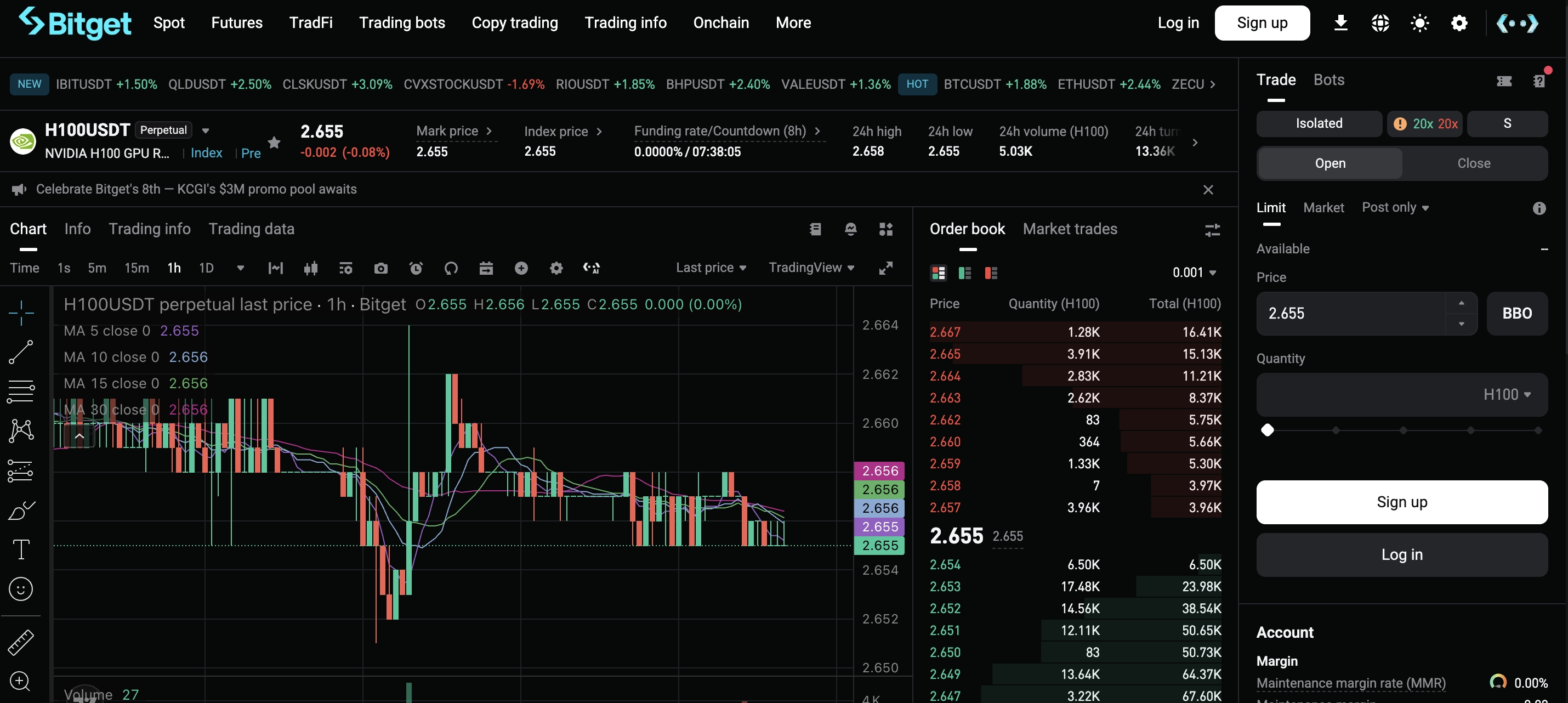
Figure 7. Source: https://www.bitget.com/asia/futures/usdt/H100USDT
4.5 What Crypto Can Supplement, and What It Cannot
When looking at these cases collectively, it becomes clear that the ways crypto participates in computing power are far richer than just “GPU on-chain.” What crypto genuinely adds is a more open funding entrance, round-the-clock settlement, asset fractionalization, automatic revenue distribution, and more flexible trading approaches. However, it cannot substitute for the most critical aspects of the offline world. Whether GPUs exist, whether the equipment is functioning correctly, whether customers continue to pay, and who has the right to manage assets after defaults still requires a coherent legal, auditing, custody, and asset service framework. Therefore, the real focus of the next stage should not be “how many GPUs can be placed on-chain,” but whether these existing infrastructures can further integrate. Can computing power revenues form more standardized on-chain assets? Can Compute Credit enter a larger DeFi market? Can computing derivatives establish stable liquidity? Can AI Agents autonomously purchase, pay for, and hedge their computing costs? As these elements begin to integrate, the fusion of crypto and computing power will further advance from isolated products to a complete financial infrastructure.
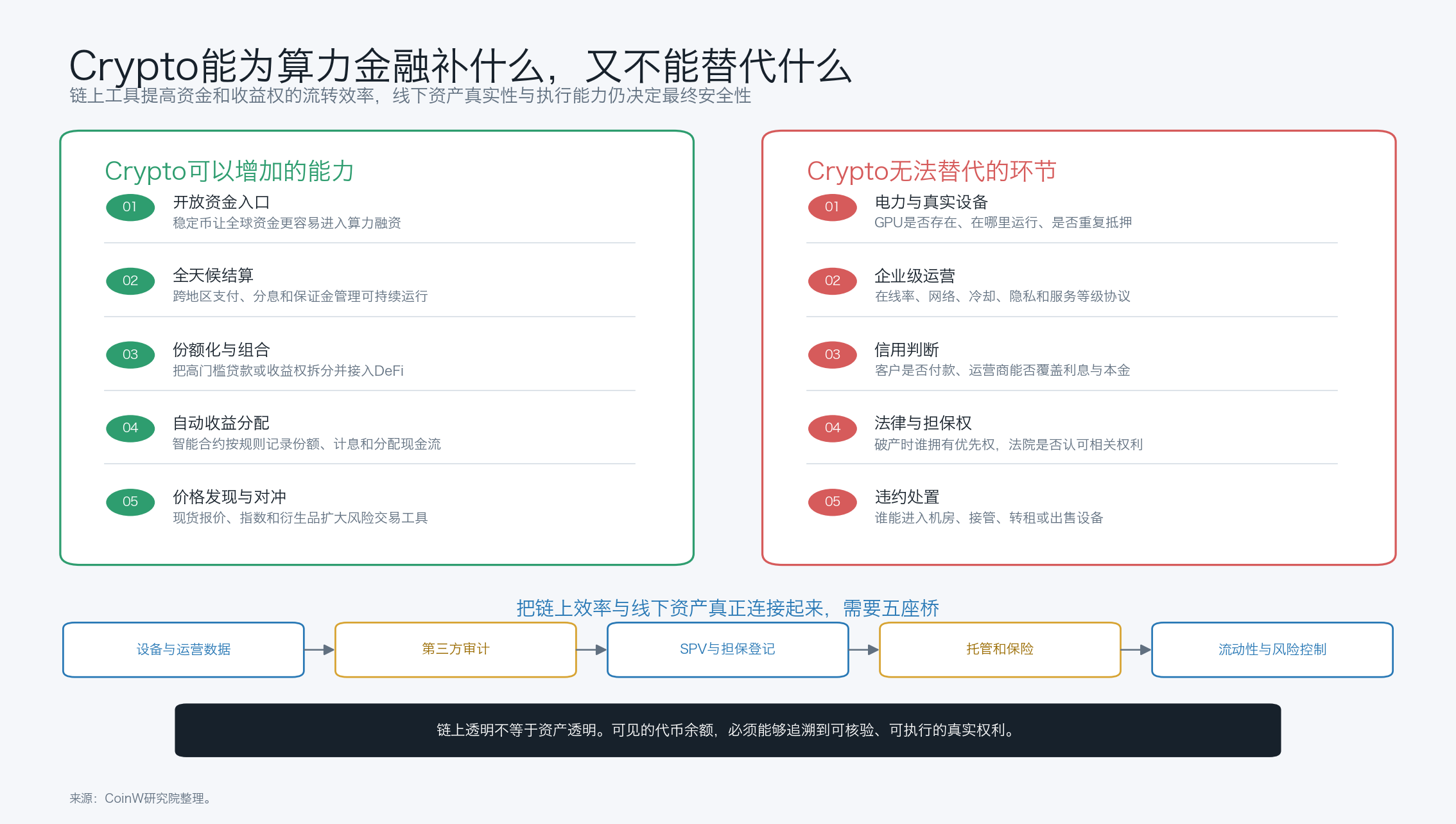
Figure 8. What Crypto Can Supplement and What It Cannot Replace. Source: CoinW Research Institute
5. The Next Steps: In What Areas is Computing Power Most Likely to Truly Integrate with Crypto
The previous examples have shown that the connection between computing power and crypto does not only lead down the “GPU Tokenization” path. In reality, on-chain funds have already begun entering AI infrastructure financing, and GPU rental prices are also becoming trading subjects in crypto. The next step worth focusing on is which models can further scale up from early stages. Based on the existing foundation, stablecoin settlements, on-chain AI infrastructure debts, expansions of computing derivatives, and AI Agent automatic procurement may be more realistic directions.
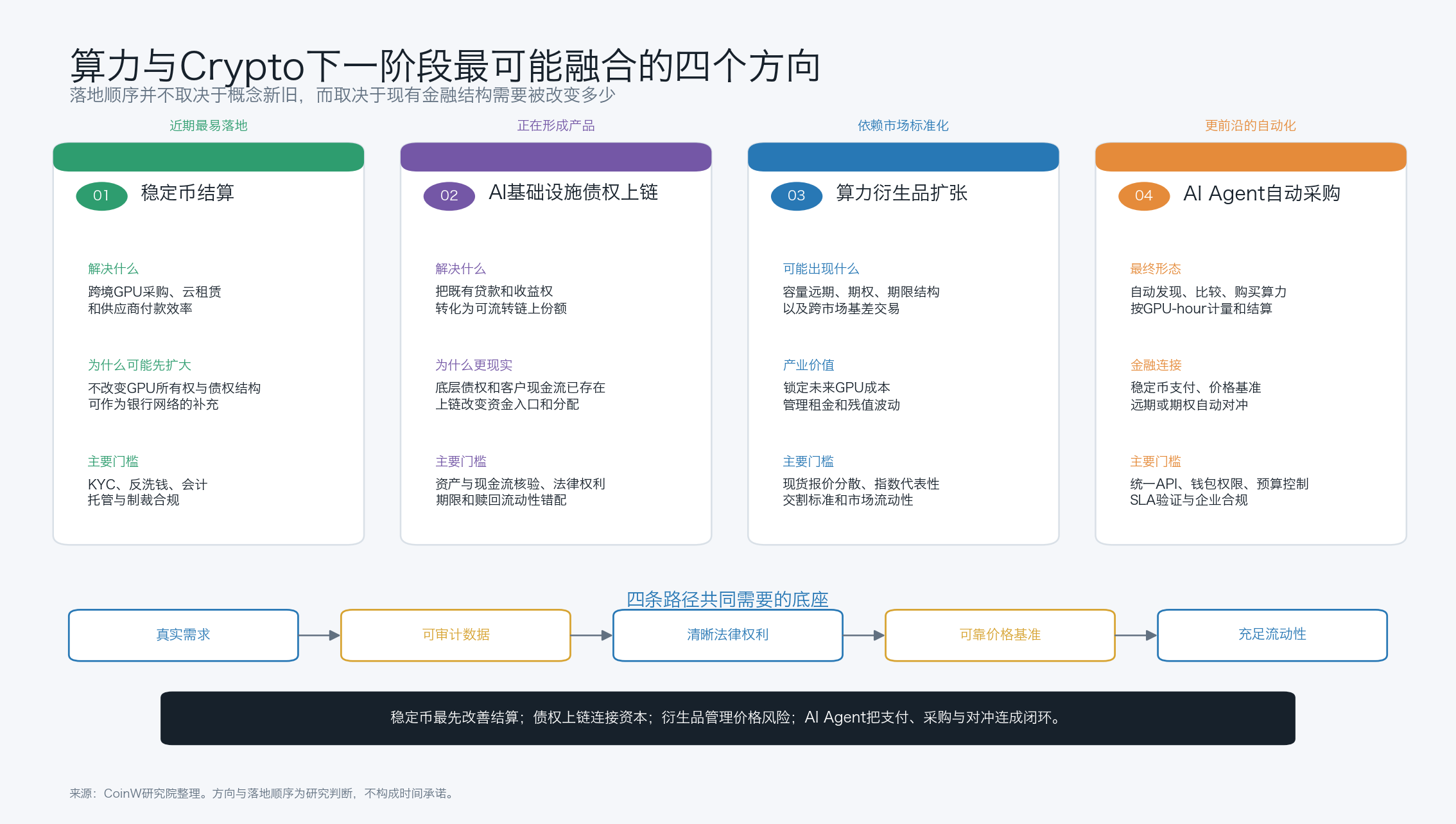
Figure 9. Future Integration Roadmap for Computing Power and Crypto. Source: CoinW Research Institute
5.1 Stablecoin Settlement: Likely to Scale Up Earlier Than GPU Tokenization
The simplest way for crypto to enter the computing power market may be to directly resolve payment and settlement issues. The AI infrastructure itself is a global market. GPU equipment procurement, cloud computing rentals, data center services, and payments to suppliers may involve different countries, currencies, and banking systems. Traditional cross-border payments typically need to pass through multiple accounts and intermediaries, whereas stablecoins like USDC and USDT can serve directly as on-chain settlement tools priced in dollars, shortening fund arrival times and facilitating connections with smart contracts and automation systems. An AI company does not need to hold any “GPU Tokens” to use stablecoins for paying for GPU-hour fees to overseas suppliers; data centers and GPU cloud service providers can also utilize stablecoins for some cross-border settlements. Compared to redesigning complete GPU ownership and revenue rights, this model requires fewer changes to the financial structures, thus likely making it easier to expand early on. However, while stablecoins enhance settlement efficiency, they do not eliminate real-world compliance requirements. Companies still need to handle KYC, anti-money laundering, accounting, custody, and sanction compliance. Therefore, stablecoins are more likely to initially supplement existing banking payment systems rather than completely replace traditional settlement networks.
5.2 On-Chain AI Infrastructure Debt: More Realistic Than GPU Tokenization
From the asset side, the next step that deserves more attention may be bringing existing AI infrastructure debts and revenue rights on-chain. As seen in Chapter Two, Wall Street is currently forming substantial scales around GPU, data centers, long-term customer contracts, and future computing revenues, creating computing credits. Banks and private credit institutions provide financing to operators, who then use future computing revenues to repay principal and interest. Since these debt rights genuinely exist, a more natural entry point for crypto would be to tokenize some of those economic rights. For example, a loan for an AI data center could be held by an SPV (special purpose vehicle), and a portion of the debt rights or revenue rights could be transformed into on-chain shares. An investor would purchase not a specific GPU but the future economic returns from that financing. Projects like GAIB have started experimenting with similar structures, and if scaled further, it essentially represents a movement from Private Credit to Tokenized Private Credit, eventually forming more concrete AI Infrastructure Credit. However, this path's real challenges remain on the offline front. Is the GPU truly existent? Is the borrower paying on time? Are the collateral rights valid? Who is responsible for disposing of assets post-default? What legal rights do on-chain token holders possess? Therefore, the scaling of on-chain AI infrastructure debt will ultimately depend on asset verification, cash flow validation, legal rights clarity, and liquidity management, rather than on how the token itself is designed.
5.3 From Benchmark to a Complete Derivatives Market: The Next Step is Not Just Perpetual
The financialization of computing power prices has already taken the first steps. GPUs like the H100 and B200 are beginning to see standardized rental price benchmarks, and traditional futures and crypto perpetuals have entered the market. Next, we can focus on whether computing power can develop into a more complete price curve and risk management tools. The most closely aligned to industrial demands may be Capacity Forwards. AI enterprises can agree in advance to buy a certain quantity of GPU power at a future time, locking in prices to mitigate cost risks from tightened computing power or rising rental prices later on. Moreover, options may further emerge. For instance, a company expecting to require significant H100 computing power in six months could use options to protect against future price increases while retaining the ability to procure power at lower costs if prices decline. As various terms and trading markets gradually develop, it could further generate more evident term structures and basis trading. Whether future H100 computing prices are higher or lower than today can reflect market judgments about GPU supply and demand and equipment depreciation; discrepancies in prices emerging among traditional futures, crypto perpetuals, and other markets may prompt arbitrage opportunities. However, all these products eventually hinge upon a fundamental condition: the underlying GPU rental market must be sufficiently transparent, and the benchmark must bear representativeness. If spot pricing remains highly fragmented, overly rapid expansions in derivatives might sever financial markets from the real costs of computing power.
5.4 AI Agent Automatic Procurement: Machines May Also Become Buyers in the Computing Power Market
The frontier integration may occur via AI Agents. In the future, when executing tasks, AI Agents could automatically compare computing power prices from different cloud platforms, Neoclouds, and DePINs, choosing the proper GPUs or inference services while making payments via stablecoins and settling based on actual usage. If extended computing power is needed, they may even lock in future costs using forward contracts. As such, the discovery, pricing, procurement, invocation, and settlement of computing power can gradually become an automated trading process. The FLOP Network, driven by BitMEX co-founder Arthur Hayes, is attempting to lay down fundamental financial primitives for this scenario. Its core is Proof-of-Useful-Inference (PoUI), where computing power providers perform real AI inference tasks validated by verifiers, while AI Agents utilize FLOP to pay for computing, storage, and other services. The project hopes to enable AI Agents to autonomously procure computing power within preset permissions without needing explicit human authorization. Compared to simply renting GPUs, FLOP emphasizes verifiable inference services and machine-to-machine payment settlements. However, the project remains in its early development stage, and a complete computing market with verification mechanisms is still pending real-world implementation.
This model attempts to bypass the centralized computing financial system Wall Street is constructing, establishing a decentralized computing economy where AI Agents partake independently. Wall Street mainly transforms computing power into investable and tradeable assets through GPU pledges, long-term computing contracts, credit financing, and derivatives; FLOP seeks to start from the demand side, enabling Agents to discover, purchase, validate, and pay for computing services, reducing reliance on traditional financial intermediaries and centralized trading platforms. If this model can mature, computing power trading may develop through parallel paths: one led by Wall Street, revolving around large infrastructure financing and risk management, and another driven by Agents for small, high-frequency machine-to-machine trading. However, the latter still requires genuine GPUs, power, and data centers, and cannot entirely depart from the existing computing power supply system. This direction also opens up new application scenarios for Compute Finance. Stablecoins or dedicated tokens facilitate payments, decentralized markets handle resource matching, and verifiable computational mechanisms ensure service delivery. Nevertheless, large-scale applications still face challenges including unified APIs, wallet permissions, budget control, service quality verification, and compliance. In the short term, what is more likely to materialize is automated computing power procurement within enterprises or in controlled access environments, rather than the fully autonomous, unlicensed Agent economy.
5.5 From a Few Products to Compute Finance
Integrating the preceding paths, computing power is gradually forming a complete financialization chain. GPUs and data centers provide Physical Compute (physical computing), generating Compute Revenue (computing revenue) through actual use; stable cash flows further support Credit (credit and financing). As the market expands, GPU rental prices start to create Benchmarks (price benchmarks), providing pricing and risk management foundations for Futures (futures), Perpetuals (perpetual contracts), and other Derivatives (derivatives). Additionally, some computing power assets, debts, and revenue rights could be further transitioned onto on-chain markets through Tokenization (asset chain integration), ultimately connecting with Stablecoin Settlement (stablecoin settlement) and DeFi (decentralized finance) applications. As financing, pricing, risk management, asset circulation, and settlement gradually interconnect, a more robust Compute Finance (computing finance) market can emerge. This does not mean that all computing power assets need to go on-chain, but rather that computing power begins to possess financing, pricing, and risk management systems resembling traditional assets. Here, Wall Street is better at long-term financing, credit assessments, and institutional risk management, while crypto can enhance the efficiency of settlement, distribution, and trading of assets, returns, and price risks. Ultimately, the deciding factor in whether this market can scale remains the real assets and demand off-chain. Financial innovations can improve the efficiency of fund and asset circulation, but they cannot produce electricity, GPU utilization, or genuine customer demand.
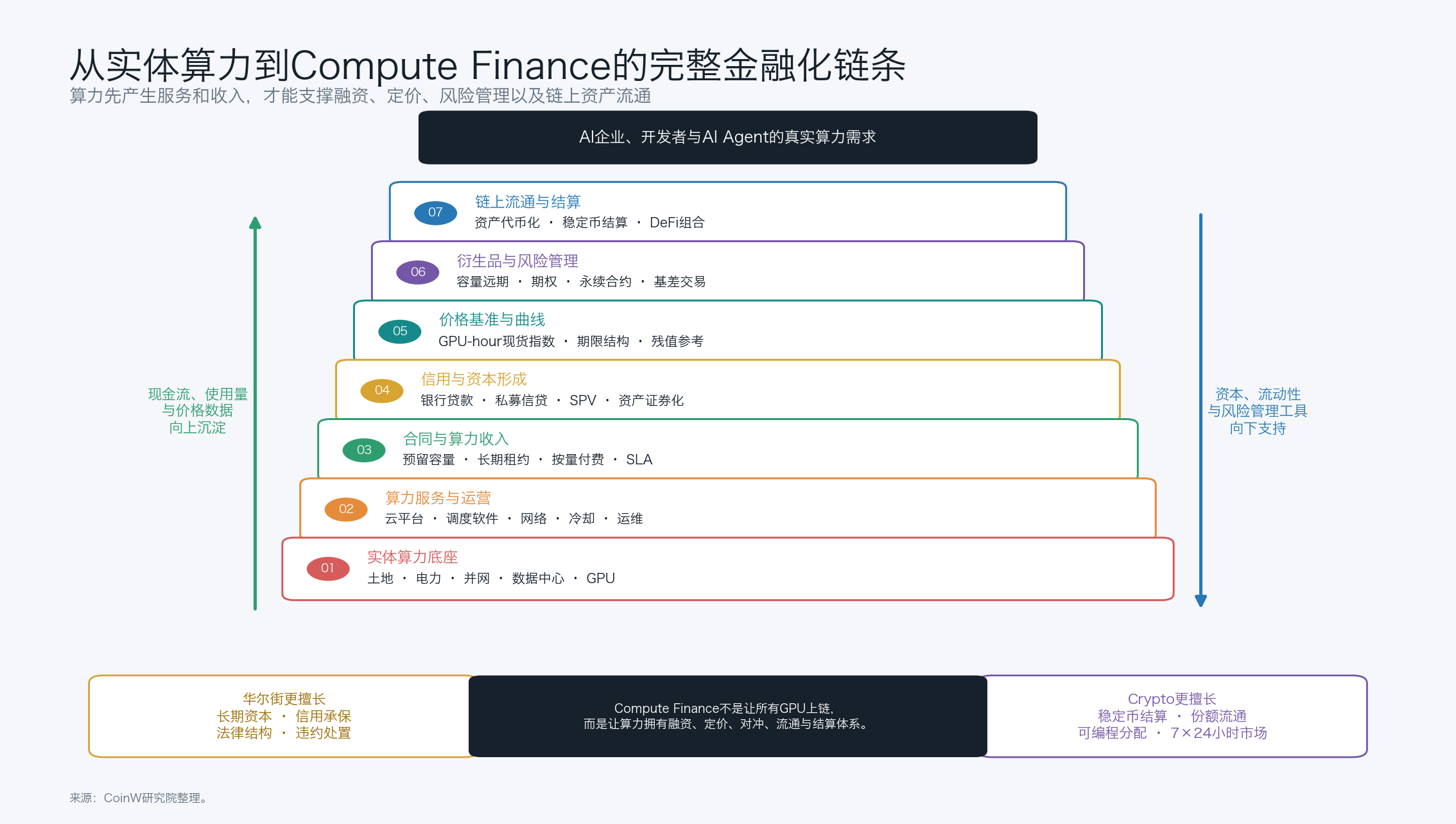
Figure 10. Complete Financialization Chain of Compute Finance. Source: CoinW Research Institute
6. Risks: The Assetization of Computing Power is Not a Risk-Free Printing Press
While computing power has become capable of generating income, supporting financing, and the emergence of price indices and derivatives, this does not mean it is inherently a stable asset. GPU technology iterates quickly, customer concentration is high, and data centers are limited by power and construction cycles. Once credit and crypto products are layered on top, these industrial risks might continue to propagate along the financial chain.
The biggest competitor to GPUs is the next generation of GPUs. The most direct risk to GPUs is technological depreciation. As H100s, H200s, B200s, and subsequent models continue to iterate, new GPUs not only perform better but also may have lower power and computation costs per unit. Old GPUs can still operate, but that doesn’t imply they can maintain their original rental prices and utilization rates. Therefore, computing power financing cannot solely focus on the declining second-hand prices of GPUs. As supply increases or technology shifts, old GPUs may simultaneously face declining rents, decreasing utilizations, and falling residual values. This would mean decreasing revenues for operators and depreciating collateral used to secure loans, consequently amplifying credit risks.
Owning GPUs does not equate to someone using them. The real value of GPUs can only be realized if there's continuous demand for computing power purchases. A data center with a lot of advanced GPUs but low utilization may also fail to cover its power, operating costs, and financing. Thus, assessing the quality of computing power assets cannot rely solely on "how many GPUs there are," but also considers GPU-hour rental prices, equipment utilization rates, and real customer demand. If AI companies reduce their investments, model efficiencies improve, or a large influx of new GPUs overwhelms the market, rental prices and utilization rates may decline simultaneously.
Having many GPUs does not necessarily mean risk diversification. A financing package can collateralize thousands of GPUs, but if most of the computing power revenues stem from a single customer, credit risks remain highly concentrated. The quantity of assets alone doesn’t guarantee payment diversification. Long-term contracts from major customers can enhance future revenue predictability, serving as a vital basis for obtaining financing, but large customers also wield greater bargaining power. Should GPU supply improve or customers adjust their AI investments, contracts could face renegotiation. Thus, assessing contract quality cannot just focus on total amounts and durations but must also consider cancellation rights, delivery conditions, capacity adjustments, and default damages.
Acquiring GPUs does not guarantee timely delivery of computing power. To run an AI data center effectively, land, electricity, grid connections, cooling solutions, and high-speed networks are essential, with electricity becoming an increasingly vital constraint. For financing projects, one must differentiate among three key time points: GPU equipment procurement, formal electrification of the data center, and customer acceptance followed by payment commencement. Delays in any of these stages might create cash flow gaps where financing costs have already occurred, but computing revenue has not yet materialized. Similarly, total MW, secured grid approvals, and critical IT load available for GPUs are not synonymous concepts. Possessing electrical resources does not mean these capacities can immediately convert into sellable AI computing power.
The most dangerous mismatch is between a short technology lifecycle and long debt cycles. One of the core risks in computing power financing is that technological updates occur rapidly while financing terms remain lengthy. GPUs might experience significant performance and price changes in just a few years, yet data center loans, infrastructure financings, and customer contracts often last for many years. If the new generation of GPUs quickly replaces older models or if the computational resources needed per AI task decrease, revenues from old GPUs and residual values may fall faster than the principal repayments. Therefore, the real focus should not solely be on how much a GPU is worth today but on the speed of asset value depreciation vis-à-vis the loan repayment speed. This constitutes a clear distinction between computing power assets and traditional infrastructures like real estate or electricity.
Funding can accelerate AI infrastructure development, but may also magnify industry cycles. As demand for AI surges, GPU rental prices and utilizations rise, prompting more capital influx into GPU procurement and data center construction, further amplifying computing power supply. However, if the added capacity comes online while demand growth slows, GPU rental prices, utilizations, and residual values may decline simultaneously, worsening operators' cash flows and transmitting risks to bank loans, private credit, and on-chain return products. Thus, assessing if the industry is entering a pressure phase should not only involve GPU prices but necessitates monitoring rental prices against utilizations, customer contracts, second-hand GPU liquidity, and the fundamental assets' default situations. If multiple indicators deteriorate consistently, reevaluation of the cash flows supporting computing power financing becomes critical.
The more complex the financial structure, the clearer the regulatory and legal boundaries need to be understood. Computing power itself is a commercial service, but when GPUs are used for collateralized financing, computing prices are designed as derivatives, or future rents and debts are further tokenized, they may fall under various regulatory frameworks involving credits, securities, commodity derivatives, and crypto finance. For investors, it becomes crucial to discern what rights each token represents in terms of GPU ownership, debt rights, revenue rights, or price exposure, along with clarifying who holds the underlying assets, how they are secured and mortgaged, and the order of priority and rights in case of bankruptcy. Blockchain can record tokens but cannot automatically resolve off-chain asset rights and legal enforcement issues. Therefore, whether regulatory classifications and legal rights are clear will directly impact whether the assetization of computing power can genuinely transition into a larger financial market.
Going on-chain does not eliminate risks; it just adds new layers of risk. As computing power rights and revenue rights enter the crypto market, the underlying credit risk remains, while simultaneously amplifying legal, smart contract, oracle, and liquidity risks. Notably, attention must be paid to the risk of term mismatches. On-chain tokens may trade 24/7, but the underlying GPU loans could extend over several years, and data centers and customer contracts may not be liquidated on demand. If the market faces concentrated redemptions, tokens may experience significant price discounts. Investors need to ascertain what rights the tokens truly represent, whether GPUs genuinely exist, whether there’s double pledging, and who retains rights to dispose of assets after defaults. One common misconception in RWA is to equate visible token balances with openly verifiable real assets. Blockchain can enhance the transparency of asset records and transactions but does not automatically affirm the authentic validity of off-chain assets and legal rights.
7. Conclusion
From current developments, the assetization of computing power has begun, but what is genuinely maturing is not GPU Tokenization but the infrastructure financing and credit markets forming around GPUs, data centers, customer contracts, and future computing revenues. GPUs are transitioning from mere hardware devices into productive assets capable of generating cash flow and supporting financing. Concurrently, the financialization of computing prices may advance more swiftly than on-chain GPU ownership. GPU Tokenization must resolve challenges surrounding asset verification, custody, legal rights, and default management, while establishing benchmarks and derivatives around rental prices faces comparatively lower barriers. Real-life products from CME and Bitget have already manifested this trend. Therefore, what crypto should focus on in the future is not just GPU RWAs but also Compute Credits, Stablecoin Settlements, and Compute Derivatives. Wall Street excels in long-term financing, credit assessments, and risk management, while crypto can enhance the efficiency of settlement, distribution, and trading of assets, returns, and price risks, and the two are more likely to form a division of labor rather than replace one another.
From a longer-term perspective, computing power financialization may progressively develop along the path of GPU (graphics processor) → Compute (computing) → Revenue (income) → Credit (credit and financing) → Benchmark (price benchmark) → Derivatives (derivatives) → Tokenization (tokenization/asset on-chain) → Compute Finance (compute finance). GPUs are just the starting point; the crux lies in whether computing power can continuously generate revenues that further support financing, pricing, and trading. Ultimately, regardless of the innovations in financial structures, the judgment criteria must return to the underlying tests: do GPUs genuinely exist, is there ongoing demand for computing power, are payments consistent from customers,
免责声明:本文章仅代表作者个人观点,不代表本平台的立场和观点。本文章仅供信息分享,不构成对任何人的任何投资建议。用户与作者之间的任何争议,与本平台无关。如网页中刊载的文章或图片涉及侵权,请提供相关的权利证明和身份证明发送邮件到support@aicoin.com,本平台相关工作人员将会进行核查。