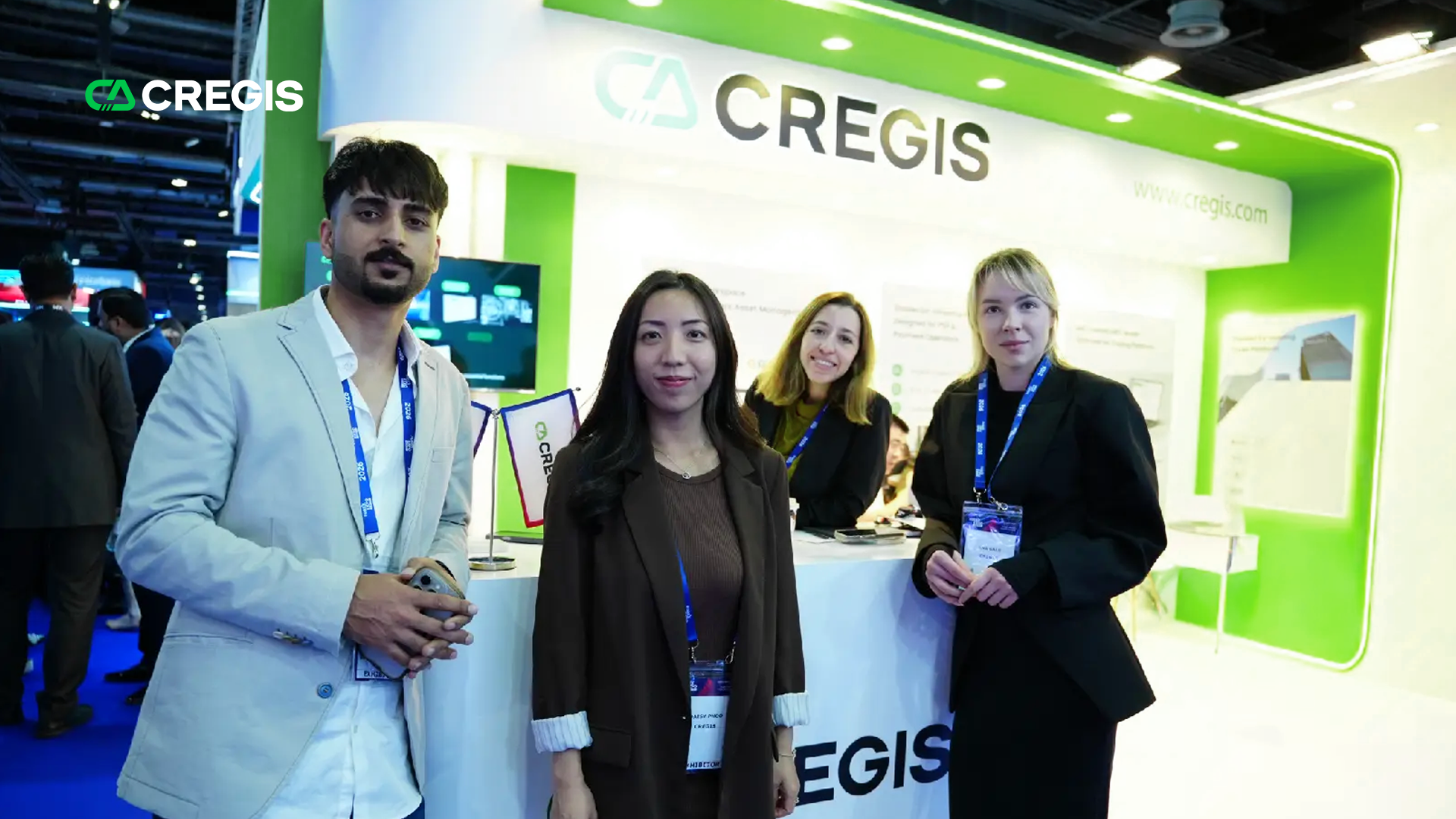
Recently, the enterprise-level digital asset infrastructure platform Cregis made its appearance at Forex Expo Dubai 2026, engaging with businesses from forex brokers, financial institutions, fintech, and payment industries. On the occasion of its two-year mark in the Middle East market, Cregis also disclosed its business progress in the region: it has currently established about 200 long-term service, continuously deploying enterprise clients in the Middle East, with over half coming from the forex and other traditional financial sectors.
As a digital asset infrastructure company founded in 2017 and grown from the Asia-Pacific market, the Middle East is the first stop for Cregis's globalization. Over the past two years, Cregis has accumulated not just customer scale in the region, but more importantly, digital asset infrastructure is gradually entering the daily business systems of traditional financial enterprises. For an increasing number of companies, digital assets are no longer an independent cryptocurrency business, but rather begin to be integrated with existing financial scenarios such as payment, fund management, and cross-border operations.
This trend is also reflected in Cregis's continuously expanding global client base. Cregis's clients cover forex brokers, banks, payment service providers, and fintech companies, including various types of financial market participants such as ATFX Group, Bison Bank, and Interlace. Across the globe, Cregis currently serves over 4,000 enterprises in more than 50 countries and regions, with a cumulative transaction volume exceeding $300 billion.
Shawn Yan, founder and CEO of Cregis, stated that one of the most noticeable changes in the Middle Eastern market over the past two years is that enterprises' attention to digital assets has shifted from "should we use them" to "how to operate them safely and compliantly."
“Three years ago, many companies were concerned about whether to use digital assets. Now, they are more interested in how to really operate digital assets and how to incorporate them into their existing financial business systems,” Shawn Yan said, “This change is especially evident in the Middle East. Forex brokers and financial institutions do not want to transform into a digital currency company but wish to introduce reliable infrastructure to support payment, fund management, and asset operations based on their existing business.”
This change has also driven Cregis's own products and services to continuously extend to broader financial scenarios. For forex brokers, banks, and payment institutions, digital assets are not a standalone business module. Enterprises may need to handle multiple fiat currencies and digital assets, different blockchain networks, and payment channels simultaneously while also meeting internal access management, transaction approval, fund scheduling, and compliance audit requirements.
Therefore, what enterprises truly need is not just a wallet but a set of infrastructure that can integrate into the existing financial business systems and possesses corresponding governance and control capabilities.
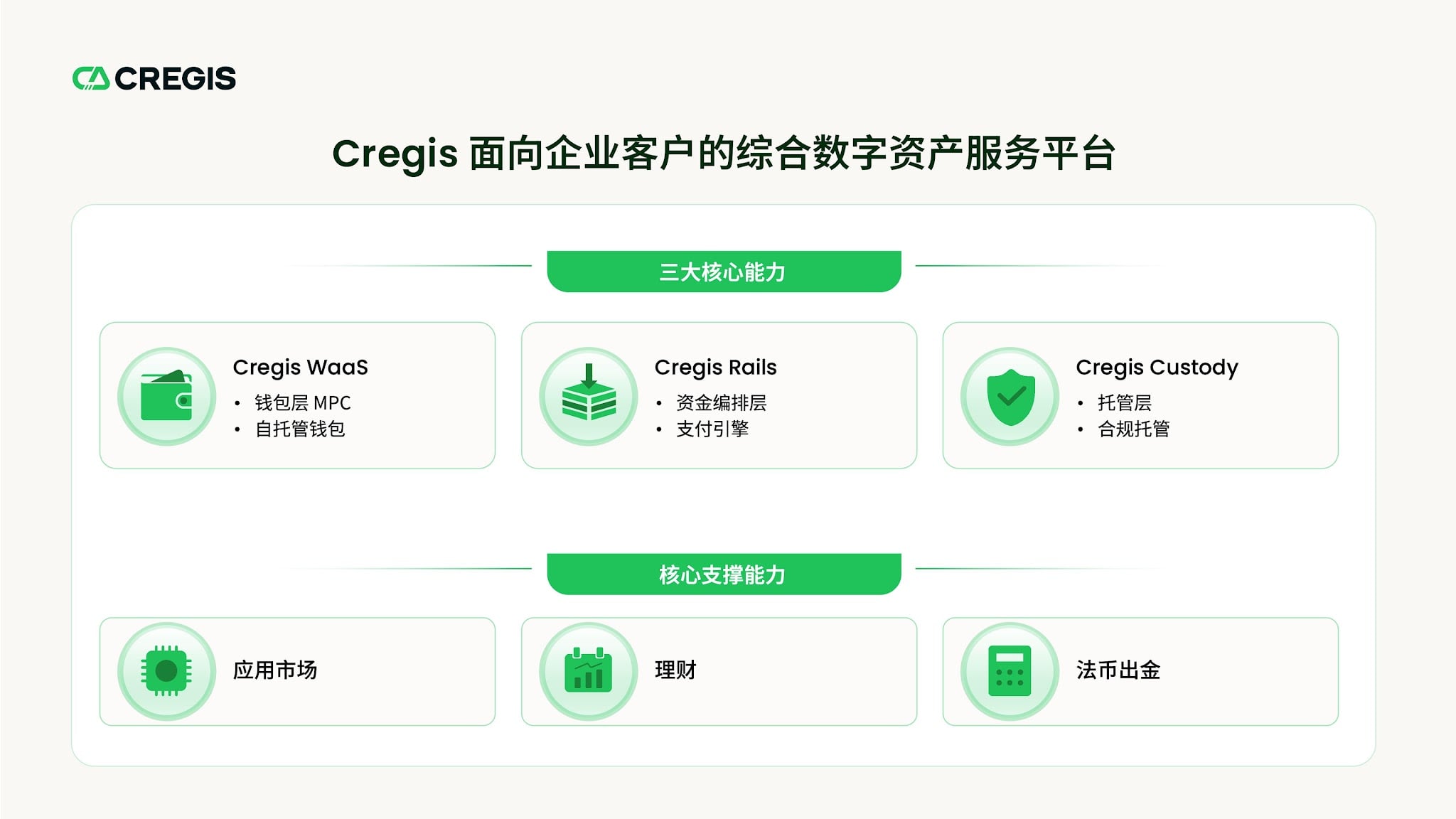
Based on this need, Cregis has built three core capabilities around a unified infrastructure layer: Wallet-as-a-Service (WaaS), Fund Flow Orchestration, and Regulated Custody, supported by operational management and settlement network foundational capabilities.
Among them, WaaS provides enterprises with multi-chain digital asset wallets and related management capabilities; fund flow orchestration covers scenarios such as collection, payment, settlement, and fund circulation; custody capabilities focus on key management, access control, policy execution, and asset governance.
For financial institutions, the core is not just "putting assets on the chain," but more importantly, clarifying who can access the assets, who can initiate and approve transactions, and how the entire process is recorded and audited. Cregis's infrastructure supports role-based access management, approval processes, transaction strategies, and audit trails, enabling enterprises to conduct digital asset business within existing governance and compliance frameworks.
This architecture also enables Cregis to serve high compliance clients such as digital banks, forex brokers, payment service providers, and fintech companies without requiring businesses to build a separate "digital asset operation system." Digital asset capabilities can be embedded into existing financial business processes while maintaining corresponding institutional control.
As traditional financial institutions become important participants in the digital asset market, security and compliance have increasingly become core considerations for enterprises when choosing infrastructure service providers.
The Cregis platform has passed independent audits and meets internationally recognized standards, including SOC 2 Type I, SOC 2 Type II, and ISO 27001. In terms of security architecture, the platform employs technologies such as MPC, HSM, and TEE, providing multi-layered security mechanisms for digital assets, from key protection to access control and transaction execution.
This means that for forex, banking, and payment financial enterprises, digital assets no longer need to exist as a "new system" that is separated from existing business; rather, they can be managed within the existing access, approval, governance, and compliance systems.
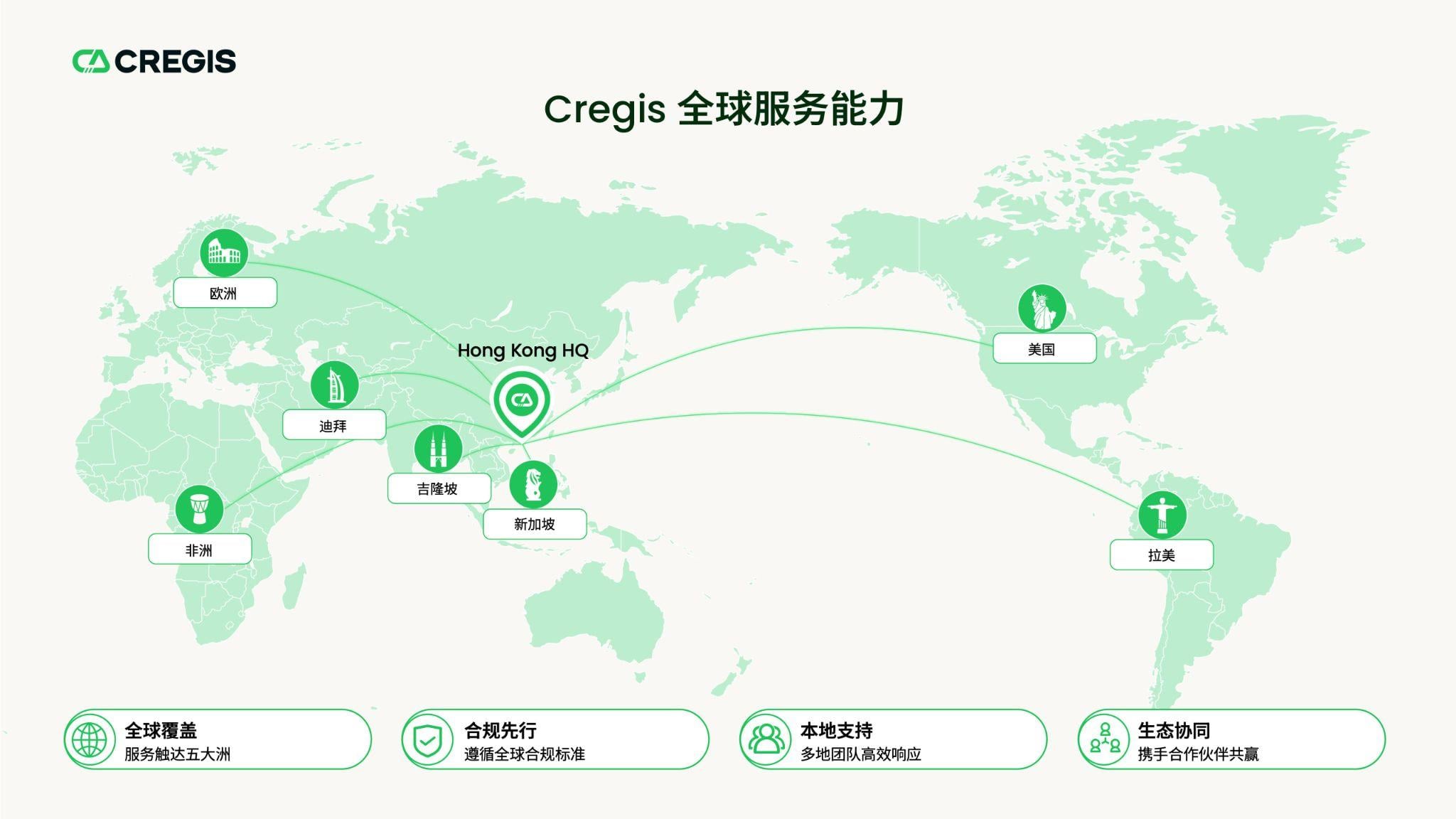
In 2024, Cregis will establish a regional hub in Dubai and form a local team, using the UAE as a pivot to serve the Middle East and surrounding markets. With Dubai's geographic advantage connecting Europe, Africa, South Asia, and the CIS countries and regions, the Middle East is gradually becoming an important node in Cregis's global layout.
As regional business continues to mature, the significance of the Middle East to Cregis has also extended from a single growth market to an important practice for international operations. The local business accumulated over the past two years has allowed Cregis to gain experience in collaborating with different types of financial enterprises, helping the company better understand the differences in regulation, business processes, and customer needs across different markets.
Currently, Cregis has further entered the European, Latin American, African, and American markets, bringing the product, operational, and market experiences accumulated in the Middle East to more regions.
“The Middle East is where we first truly validated whether the infrastructure built in the Asia-Pacific market can operate in a completely different market environment.” Shawn Yan stated, “The experience of the past two years is very straightforward—global infrastructure must first be secure, stable, and scalable, but at the same time, it must truly adapt to the business methods of local enterprises. This is also the basic standard for us to enter the next stage of international development.”
About Cregis
Cregis is a digital asset infrastructure platform that provides technical capabilities related to digital asset collection, payment, and fund operations for enterprises, helping them conduct digital asset business safely, compliantly, and efficiently. The company was founded in 2017, serving financial institutions, payment service providers, forex brokers, fintech companies, and Web3 enterprises. Its business covers multiple markets including Asia, the Middle East, and Latin America, currently serving over 4,000 enterprise clients in more than 50 countries and regions.
免责声明:本文章仅代表作者个人观点,不代表本平台的立场和观点。本文章仅供信息分享,不构成对任何人的任何投资建议。用户与作者之间的任何争议,与本平台无关。如网页中刊载的文章或图片涉及侵权,请提供相关的权利证明和身份证明发送邮件到support@aicoin.com,本平台相关工作人员将会进行核查。


