Author: Steven Cress, Quant Team
Translated by: Shenchao TechFlow
Shenchao Guide: The Seeking Alpha Quant Team believes that a global fuel supply shock has arrived—diesel futures and retail prices have hit record highs, and the crack spread has surged to new heights; even if oil prices decline, refiners may still profit from product premiums. The article specifically names Marathon Petroleum (MPC), Valero (VLO), and PBF Energy as top U.S. refining stocks, indicating they rank highest in the Quant list and the West Coast supply gap.

Supply Shock: Diesel Hits Record, Refining Margins Back in the Spotlight
A global fuel crisis has arrived. In the author's view, U.S. refiners may be among the biggest winners, and this tailwind may last for a while. The issue is not just rising crude oil prices. Tight gasoline and diesel supplies, combined with the increasingly constrained California market, may raise refining margins. Importantly, even if oil prices fall—given the current situation, such a decline does not seem imminent—opportunities for refiners may still remain.
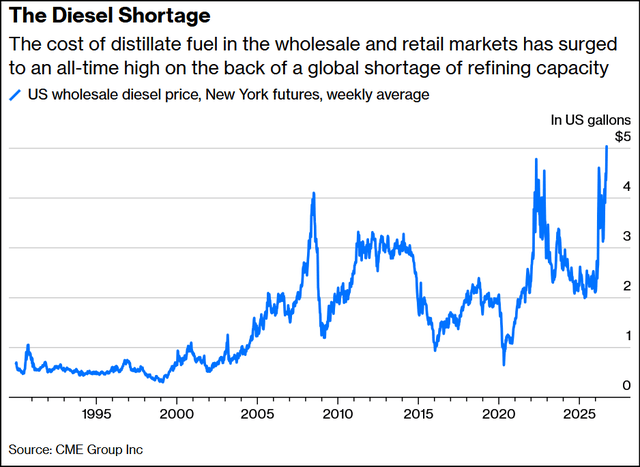
Multiple geopolitical conflicts continue to restrict refining capacity and disrupt supply chains. U.S. refineries are operating near full capacity, yet inventories are declining. This week, U.S. diesel futures settlement prices reached record levels, and retail prices also hit historical highs. The gain in refined products has outpaced crude oil, and the diesel-crude crack spread has soared to new heights.
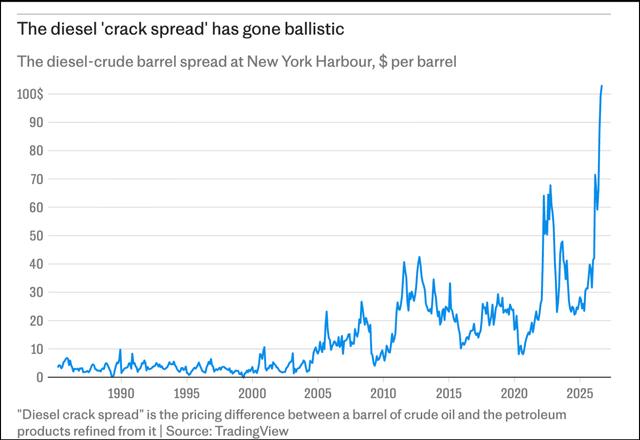
(Energy and Climate Intelligence Unit, ECIU)
Meanwhile, the average retail gasoline price in the U.S. remains above $4.40 per gallon. Goldman Sachs expects diesel prices and margins to continue rising, and believes gasoline may have even greater upside potential—as refineries will prioritize diesel output. In either case, U.S. refiners stand to benefit.
Selected Refining Stocks Amid the Global Fuel Crisis
This global fuel supply shock could particularly provide opportunities for three U.S. refiners: they all have the capacity to absorb the expanding "crack spread"—the difference between crude oil costs and refined product prices. The author first uses the Seeking Alpha stock screener to filter for "strong buy" in the refining sector, then focuses on companies well exposed to the tight fuel situation in the U.S. and globally. The three selected stocks each possess advantages in assets and layout, capable of tapping into globally tight demand, including the increasingly tight gap on the West Coast.
1. Marathon Petroleum (MPC)
Market Cap: $116.24 billion
Industry: Oil and Gas Refining and Marketing
Quant Sector Rank (as of 2026/9/17): 3 out of 226 in the Energy Sector
Quant Industry Rank: 3 out of 17 in the Refining Industry
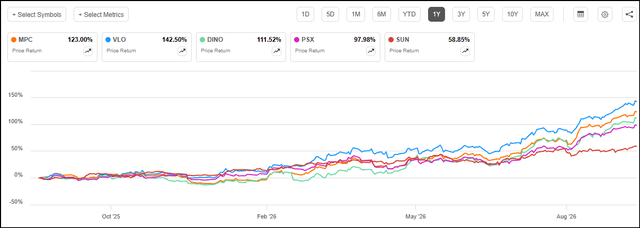
Marathon and the other two refining stocks are among the best performers in the Quant Growth & Income portfolio. Since the portfolio launched in June, Marathon has delivered a total return of +56.82%, Valero Energy (VLO) +56.07%, Phillips 66 (PSX) +46.85%, all significantly outperforming the sector over the past year.
The author believes MPC benefits from a favorable macro environment: the Middle East and Russia-Ukraine conflicts limit global refining capacity, and U.S. gasoline inventories remain significantly below historical averages. Leveraging West Coast assets and an integrated logistics network, MPC is well-positioned to meet California's consumption demand as imports from Asia decline.
Large Refining Stocks: Stock Price Returns in the Past Year
After the widening crack spread boosted refining profits, MPC recorded an adjusted EBITDA of $8.5 billion in Q2 2026, up from $3.2 billion in the same period last year. On the earnings call, the company noted that domestic and international demand for gasoline, diesel, and jet fuel remains strong, and expects refining profitability to persist through the remainder of this year and into 2027.
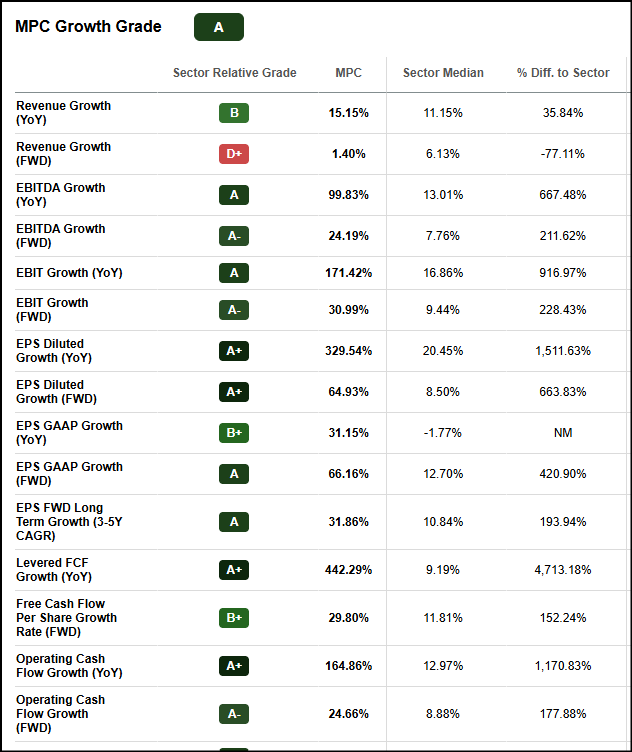
In addition to soaring profits and cash flow, MPC's strong growth rating is built on a long-term EPS growth rate exceeding 64%, well above the sector's approximate 8%. Over the past 90 days, EPS forecasts have been revised up 16 times and never down, indicating continued improvement in profit outlook.
MPC's dividend is secure and well-covered, with a continuous payout for 14 years. Strong cash flow and a conservative payout ratio support an "A" grade for dividend safety, reflecting the company's ability to maintain its current dividend. Although the stock price surge has pushed the dividend yield below 1%, the five-year dividend growth rate remains at 11.51%, and consensus expectations also point to further increases in the next three years.
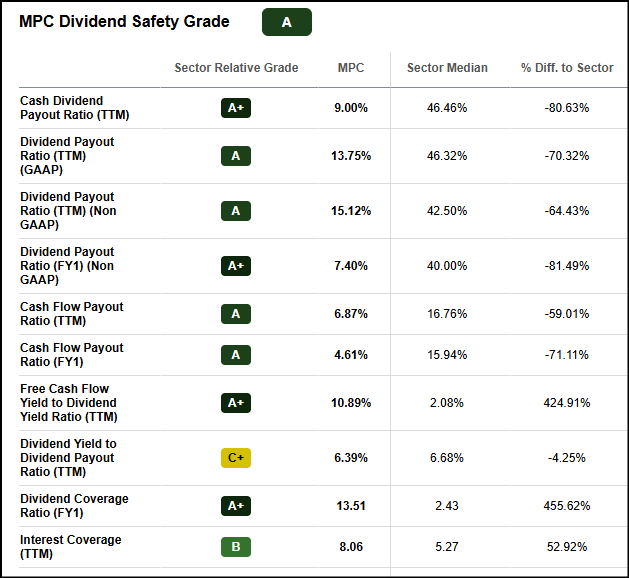
Looking at the PEG (Price/Earnings to Growth) ratio, MPC still appears attractive: the forward PEG is only 0.24, representing a discount of about 78% relative to the sector. The author now turns to another refining stock, also within the QG&I portfolio, which he believes has similar upside potential.
2. Valero Energy (VLO)
Market Cap: $116.12 billion
Industry: Oil and Gas Refining and Marketing
Quant Sector Rank (as of 2026/9/17): 2 out of 226
Quant Industry Rank: 2 out of 17
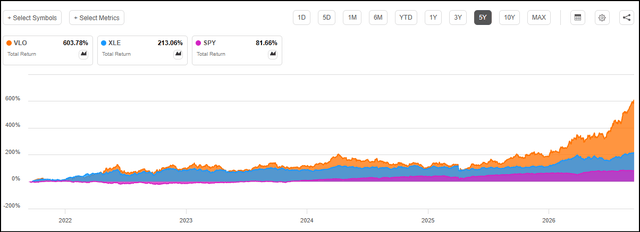
The author believes Valero combines growth and stable dividends: over the past five years, total shareholder returns have exceeded 600%, far surpassing the broader market and the energy sector. It was a holding in Alpha Picks, contributing to portfolio returns early in the Ukraine-Russia conflict when energy supply was tight and demand was strong; the company then continued to outperform expectations and set profit records, benefiting from a supply landscape constrained by geopolitical issues, leading to a continued rise in stock price.
VLO vs S&P 500 and Energy Sector (XLE): Five-Year Total Return
In Q2 2026, Valero's profit surged more than fivefold to $3.72 billion, with refining margins nearly doubling. The company expects refining crack spreads to remain above historical mid-cycle levels due to demand resilience, favorable global refined product supply-demand dynamics, and constrained capacity.
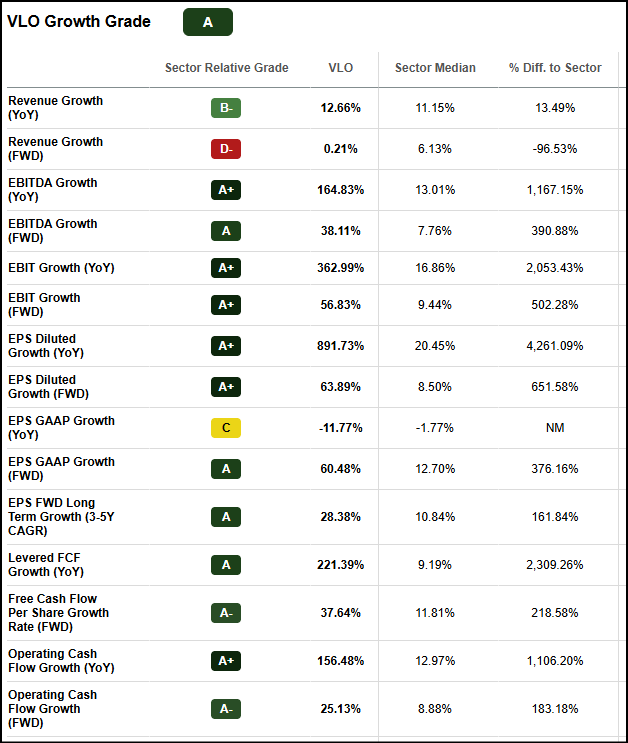
In the past 90 days, EPS has been revised up 19 times and down to 0, supporting significant upward revisions of EPS and revenue expectations for fiscal year 2026, including the next two quarters. Strong operational leverage has helped boost growth ratings: EBIT is rising rapidly, and forward EPS and cash flow growth are also robust.
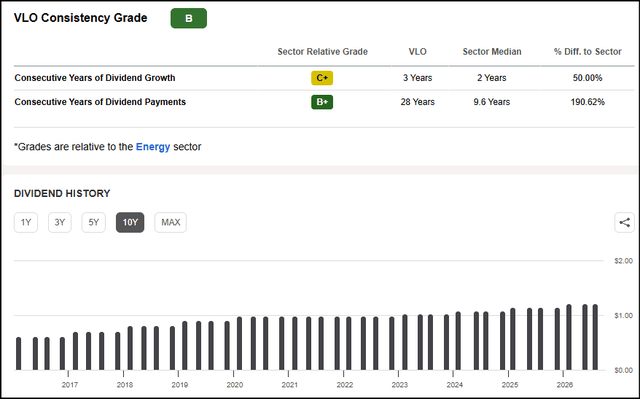
VLO has paid dividends for 28 consecutive years, with a forward dividend yield of approximately 1.19%. The dividend safety rating is A+, backed by excellent coverage, conservative leverage, and sustainable growth rates.
Multiple valuation metrics for VLO still appear attractive, but overall rating is dragged down by a relatively high price-to-book ratio. Based on the forward PEG, there is a discount of about 72% relative to the sector. The author believes that the secure dividend and solid fundamentals make VLO suitable as an upward exposure amidst the ongoing fuel crisis.
3. PBF Energy (PBF)
Market Cap: $9.07 billion
Industry: Oil and Gas Refining and Marketing
Quant Sector Rank (as of 2026/9/17): 1 out of 226
Quant Industry Rank: 1 out of 17
Lastly is PBF Energy: currently the number one ranked energy stock by Quant, and a recent addition to both Alpha Picks and the PRO Quant portfolio. PBF is a leading independent refiner and transportation fuel supplier in the U.S., with two of its six refineries located in California; California relies on imports for about one-third of its gasoline demand, and with the local market being tight, PBF is well positioned.
PBF vs S&P 500 Energy Sector: Stock Price Returns in the Past Year
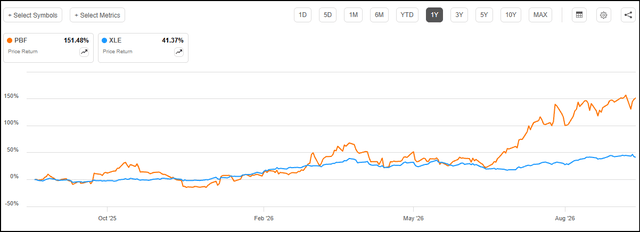
In Q2 2026, revenue surged 56% year-on-year to $11.68 billion, with EPS significantly exceeding expectations; favorable crack spreads and increased processing volumes widened refining margins. The company simultaneously improved its balance sheet, reducing net debt by $1.4 billion, with cash at around $900 million at the end of the quarter.
Forward operating cash flow and EBITDA growth support a high growth rating. Wall Street is becoming increasingly optimistic about fiscal year 2026 outlook, with profit expectations being consistently revised upwards.
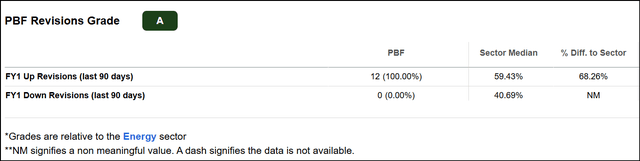
PBF has a forward dividend yield of approximately 1.45%, with cash flow and conservative payout ratio providing ample coverage, resulting in a solid dividend safety score. Even after a significant rise in stock price, the valuation still isn't considered expensive, with a forward price-to-earnings ratio of only about 3.7 times.
PBF encapsulates the author's selection of refining stocks amid the global fuel crisis narrative: all three stocks possess both profitable growth and strong momentum.
Conclusion: Riding the Energy Supply Shock with Refining Stocks
U.S. refiners are positioned to benefit from this global fuel crisis that compresses capacity and raises diesel and gasoline prices. The increase in refined products has outstripped crude oil, while the diesel-crude crack spread has reached an all-time high, directly lifting refining margins. Even if crude oil prices decline, as long as the crack spread remains elevated, opportunities for refiners may still exist. The author is particularly optimistic about three U.S. refiners capitalizing on structural tailwinds, with solid fundamentals and significant upward potential for profits.
免责声明:本文章仅代表作者个人观点,不代表本平台的立场和观点。本文章仅供信息分享,不构成对任何人的任何投资建议。用户与作者之间的任何争议,与本平台无关。如网页中刊载的文章或图片涉及侵权,请提供相关的权利证明和身份证明发送邮件到support@aicoin.com,本平台相关工作人员将会进行核查。


