Author: SafePal
In the world of cryptocurrencies, the strongest fortresses are sometimes not breached by technology but are "opened" by individuals themselves.
Compared to complex on-chain vulnerabilities, regular users are more likely to encounter social engineering attacks (Social Engineering Scam). Attackers do not necessarily need to hack hardware wallets or gain system permissions; they are more skilled at impersonating identities, creating a sense of urgency, and exploiting people's trust and fear of asset loss to induce transfers, click phishing links, download malware, connect wallets, sign transactions, or even voluntarily hand over mnemonic phrases and private keys.
Truly sophisticated social engineering attacks often do not make the scam look like a scam. Instead, they package dangerous operations as normal "safe actions."
1. Common Types of Social Engineering Attacks:
Type One: Impersonation
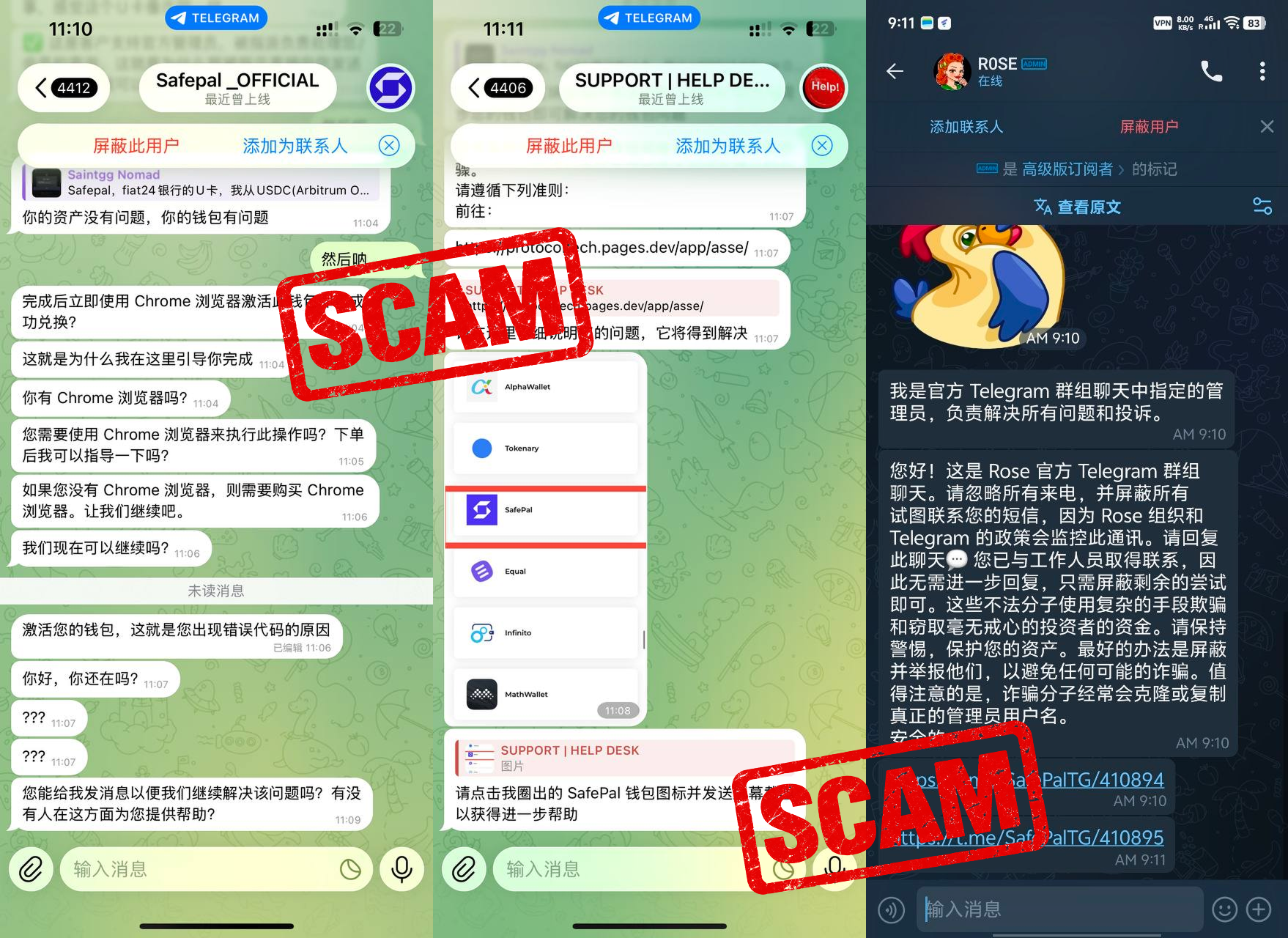
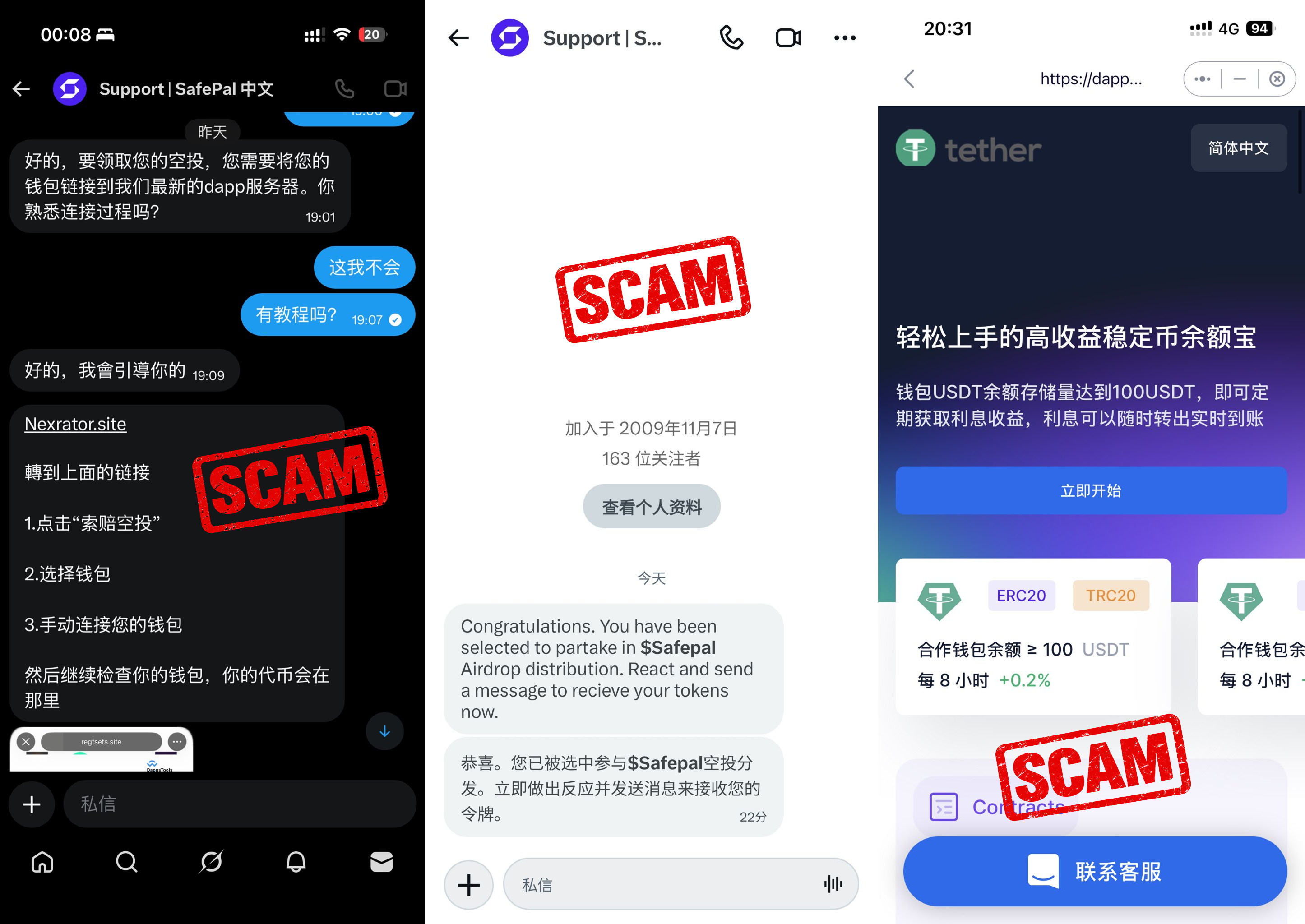
Attackers may impersonate wallets, exchange customer service, project administrators, KOLs, logistics companies, lawyers, or even other organizations, actively contacting users via Telegram, Discord, X, WeChat, phone, etc.
Common phrases include: "We have detected anomalies in your account." "Your wallet needs to be re-verified." "We can help you recover your assets."
Just because the other party knows your name, phone number, order, or account information does not prove their identity is authentic. Real information is more likely to be used by attackers to increase credibility.
The key judgment is not whether the other party "looks like customer service," but rather what they are asking you to do; anyone seeking control of your assets is a scammer.
Even in official communities, there are scammers disguised as customer service. Direct messages are not monitored by officials, making them a common place for scammers to succeed—if you encounter an issue, it’s advisable to ask openly in public channels.
There is a rule in the crypto community that everyone must remember: Real official personnel will never proactively DM you to offer help.
Type Two: Posting Phishing Links, Fake Websites, or Fake Software
Email, text messages, search ads, QR codes, and social media DMs can all become phishing gateways.
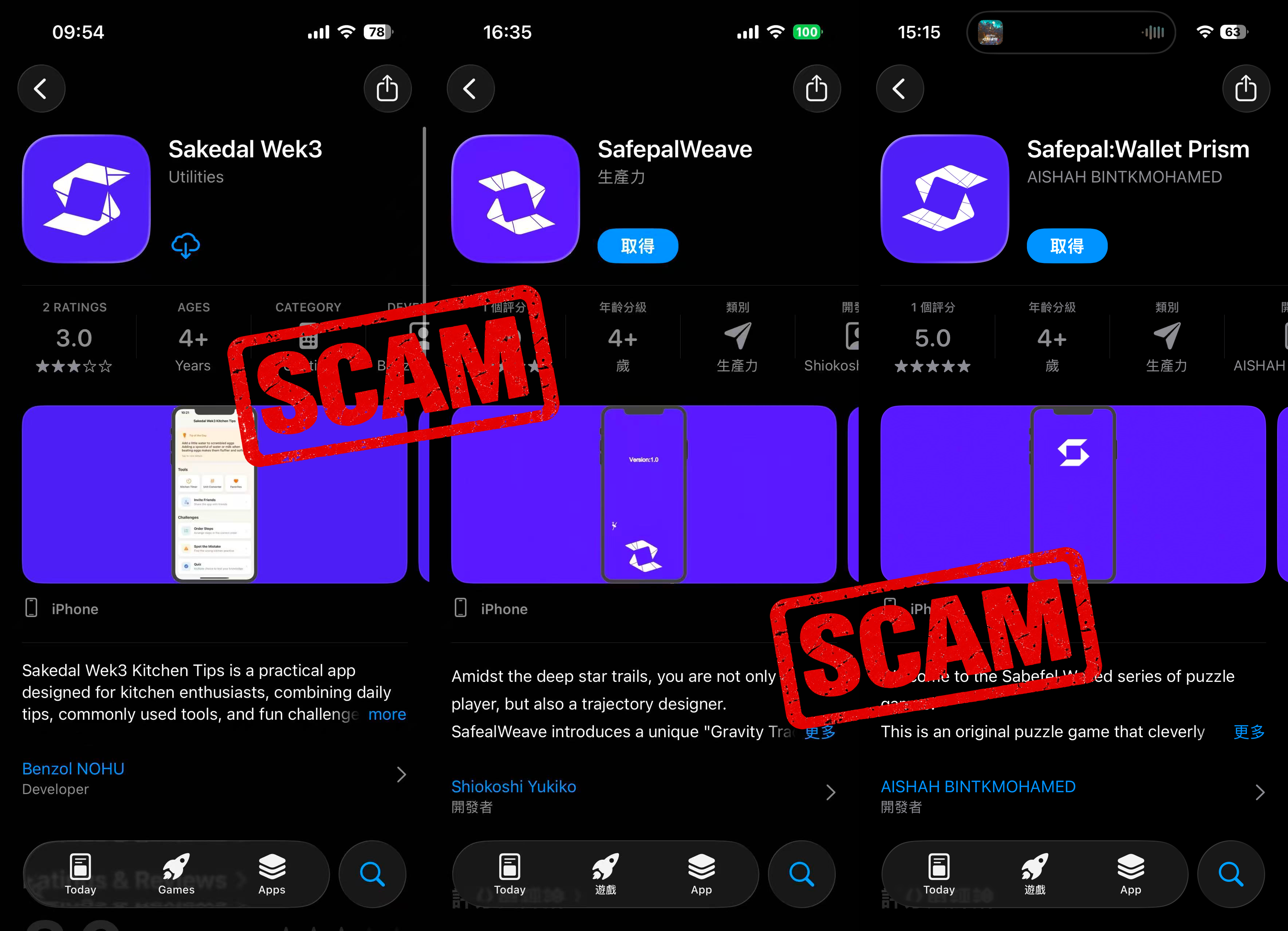
Attackers may create pages almost identical to official websites or post fake wallet apps, browser extensions, desktop clients, and so-called "firmware updates," then induce you to input account information, verification codes, mnemonic phrases, connect your wallet, or sign transactions.
The real flaw may simply be a missing letter or an extra character in the domain name.
Therefore, when it comes to wallet downloads, account logins, browser extensions, and hardware wallet firmwares, do not assume safety just because the page "looks like an official website." You can reduce the risk of accidentally entering phishing sites through the following actions:
After verifying the URL through official certified channels for the first time, manually bookmark it in your browser.
For every subsequent visit, enter via bookmarks to avoid relying on search engines every time you use it. Links at the top of search engine results labeled "Sponsored" or "Ads" are often hotspots for fake websites.
Trust the official download entry of the official website.
When downloading wallet apps or browser extensions, always enter the official application store through the redirect link provided on the official website. Even when searching within the app store, verify developer information and download numbers carefully to prevent downloading counterfeit software with the same name.
Type Three: Creating Fear and Urgency
This is one of the most common psychological tactics in social engineering.
"Assets are being stolen." "The wallet has serious vulnerabilities." "If not addressed within ten minutes, the account will be frozen." "You must upgrade immediately, or the device will become unusable."
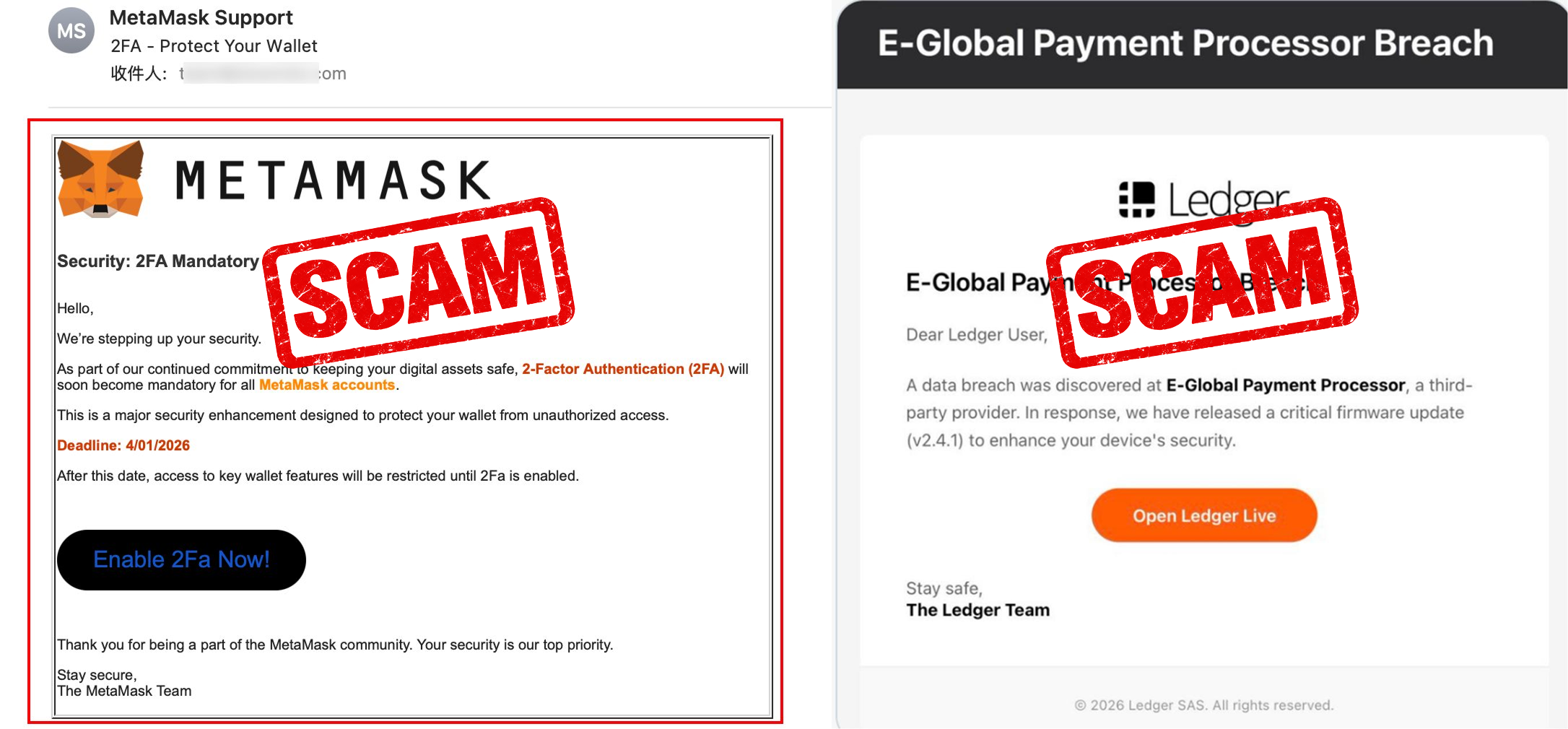
The purpose of these phrases is to prevent you from verifying and push you to follow the steps provided by the other party.
Many times, "safety reminders" are part of the scam.
Attackers first instill the fear of "if you're a second late, the money will be gone," and then present malicious links, fake software, or so-called "safe addresses" as solutions.
So, the more they urge immediate action, the more you should pause to verify.
Type Four: Lurking and Building Long-Term Trust
Not all social engineering attacks create fear; some instead offer benefits.
Free airdrops, NFTs, cashback rewards, high-yield investments, and internal slots can all serve as bait.
Some scams even build relationships through social software, group chats, or dating platforms over the long term, then gradually recommend so-called investment opportunities, trading platforms, or managed trading services.
The most dangerous aspect of this type of attack is that it does not need to rush to get a payoff—attackers may spend weeks or even months building trust until you willingly transfer money in.
For those who have already been scammed, there’s a more insidious “secondary scam”: so-called lawyers, investigative agencies, or asset recovery teams may contact you, claiming funds have been found and that you only need to pay legal fees, taxes, or unfreezing fees.
Type Five: Conducting Social Engineering Attacks Through Offline Channels
Social engineering does not only occur on screens.
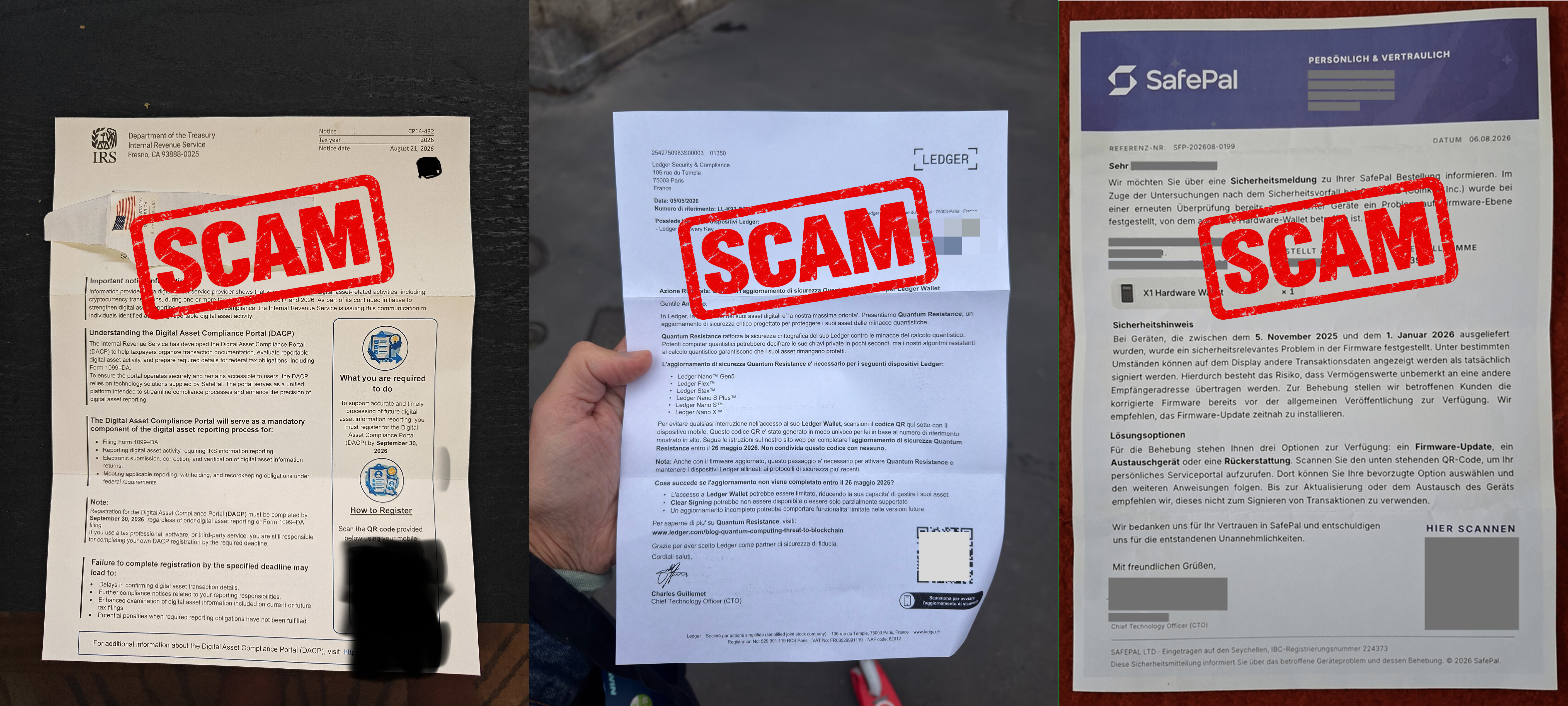
Attackers may use phone calls, physical letters, express deliveries, or even directly send so-called "replacement devices," telling users that there is a risk with the device and they need to scan to upgrade, re-import the wallet, or change hardware.
Therefore, any wallet device that you did not actively purchase or apply for but suddenly receive should not be used directly, especially not to import mnemonic phrases from an existing wallet.
2. How is a Social Engineering Attack Typically Executed?
While there are many formats, most attacks can be broken down into several similar steps.
Step One: Building Credibility
Attackers may impersonate wallets, exchanges, customer service, project parties, logistics companies, or even real personal information, or establish credibility through long-term communication.
Thus, “the other party knows my real information” does not prove their identity is authentic.
Step Two: Creating a Reason That Must Be Addressed
The reason may stem from fear (assets being stolen, account freezing), benefits (airdrops, refunds, assets being recovered), or "help" (I am here to help you solve this).
Regardless of which one, the goal is to compress your independent judgment time and push you into the next step.
Step Three: Implementing the Actual Attack
Ultimately, attackers usually ask you to: visit a specified website, scan a QR code, download software, share your screen, connect your wallet, enter verification codes, sign transactions, provide mnemonic phrases or private keys, or directly transfer to a certain address.
This is also the most important step to assess risk.
Do not just ask, "Does this person look like an official?" Instead, you should ask, "What does he ultimately want me to do?"
If the end result of a "safety notification" is to get you to hand over control of your assets, then no matter how real it seems beforehand, it's still a scam.
3. When Facing Social Engineering Attacks, Uphold Four Bottom Lines
Scam methods can continuously change, but the principles of security are not that complicated.
First: Do not provide anyone with your mnemonic phrase, private key, PIN code, or wallet password.
A mnemonic phrase is not a verification code, not identity authentication data, not proof of a refund, and not so-called "security upgrade codes."
A legitimate self-custodial wallet may require the entry of a mnemonic phrase on a trusted device or official software when restoring the wallet, but that is completely different from sending the mnemonic phrase to customer service or administrators or inputting it on unfamiliar webpages.
Second: Do not verify the other party using the entrance provided by them.
If you receive so-called official emails, do not click on the "official website" in the email to confirm authenticity; if you receive a suspicious phone call, do not continue using the customer service number they provide.
Exit the current information source, and find the official website, official app, or certified account on your own and verify again.
Third: Do not confirm signatures and authorizations you do not understand.
Not leaking your mnemonic phrase does not guarantee safety.
Malicious authorizations, Permit signatures, Token Approve, or even a regular transfer can result in asset loss.
If you don't know what you're authorizing, do not confirm just because "customer service says it needs verification."
Fourth: The more they rush you, the more you should stop.
"Must upgrade immediately," "assets are being stolen," "if not addressed in ten minutes, it will be frozen," these phrases are typical psychological pressure tactics. A truly normal security process can withstand a few more minutes of your verification.
Scammers want you to have no time to think.
4. What to Do If You Have Already Engaged in Suspicious Operations?
If you have only received suspicious emails, text messages, phone calls, or DMs without clicking, signing, or transferring, stop contacting and keep relevant evidence.
If you have already entered account passwords, verification codes, or downloaded suspicious software, you should quickly change the relevant account passwords, reset 2FA, and check the login records of important accounts such as email and exchanges.
If you have connected to an unfamiliar DApp or made suspicious authorizations or signatures, you should promptly check your wallet’s recent transactions and authorizations and revoke permissions you do not recognize or no longer use.
If your mnemonic phrase or private key has been leaked, you should treat the original wallet as already compromised. At this point, create a brand new wallet and mnemonic phrase using a trusted device, and quickly transfer any remaining assets from the original wallet to the new wallet. Previously leaked mnemonic phrases should not be used.
In Conclusion
The most dangerous part of social engineering is not how complex the technology is, but how it understands and exploits human psychology.
In the face of any abnormal contact involving assets, the most important thing is not to remember how many scam tactics there are but to avoid making decisions driven by fear, greed, and urgency.
The more they hurry you, the more you should slow down; the more tempting they are, the more you should confirm.
免责声明:本文章仅代表作者个人观点,不代表本平台的立场和观点。本文章仅供信息分享,不构成对任何人的任何投资建议。用户与作者之间的任何争议,与本平台无关。如网页中刊载的文章或图片涉及侵权,请提供相关的权利证明和身份证明发送邮件到support@aicoin.com,本平台相关工作人员将会进行核查。


